Searching for: Wood

Searching results for “Wood”
396 results found...
Sort By Dropdown Icon

Brock Commons Tallwood House – University of British Columbia Vancouver Campus

A stunning coastal forest in Vancouver, BC is the gateway to the University of British Columbia (UBC) which has provided inspiration for the institution’s long-standing relationship with wood. The result is an enviable inventory of wood buildings interspersed throughout the campus which showcases ground-breaking technologies and sustainable design.

UBC’s commitment to promoting locally sourced, environmentally responsible, leading-edge engineered wood products and building technologies has culminated in the most recent addition to the UBC Vancouver Campus: the Brock Commons Tallwood House. The newest of the UBC’s student residence buildings, Brock Commons Tallwood House currently stands as the tallest contemporary hybrid mass timber building in the world.

Over the years, with an ever-increasing demand for student housing, UBC developed a preferred typology for its student residences, creating mixed-use residential hubs to enhance campus life. For this latest project, the University was determined to demonstrate the applicability of an advanced systems solution to BC’s development and construction industries while advancing its reputation as a hub of sustainable and innovative design.

Wood use from the 18th to the early 20th centuries frequently included seven-storey wood buildings; taller wood structures such as church towers and pagodas were built worldwide earlier still. Today, pushing the envelope of wood use comes with challenges. Authorities having jurisdiction and oversight of the approval process for a new generation of tall wood building designs require comprehensive scientific data to evaluate their safety since there are no prescriptive provisions in the Canadian building codes to permit them. Until such a time as building codes establish provisions for tall wood buildings, performance aspects of their design must be proven on a design-by-design basis.

Natural Resources Canada (NRCan), in recognition of the technical challenges inherent in the design and construction of modern tall wood structures, has provided targeted funding to support demonstration projects that use innovative engineered wood products and construction systems.

Origine – Pointe-Aux-Lièvres Ecocondos – Quebec City

Over the last couple of years Quebec City has witnessed significant population growth and there has been a construction boom to meet the ever-growing demand for housing. In 2003, Quebec City became interested in the land of the Pointe-aux-Lièvres area for new real estate development. This vacant land on the banks of the Saint Charles River and just North of « Nouvo St-Roch » was deemed an ideal location for building a new neighbourhood. Poised between nature and the city, the spot was coveted by many who wanted to create a dynamic living environment. The Quebec City council saw the opportunity to create a new neighbourhood that would showcase sustainable development. The land developers selected by the city were tasked with developing the area sustainably and offering eco-responsible solutions. Therefore, using wood in the structures was natural.

Development has begun. Three projects were launched in the eco-district, in which Origine is the signature building of this new neighbourhood. This 13-storey, 92-unit building stands out thanks to its architecture, as well as its engineering prowess. The NEB Group, which consists of Nordic Structures, EBC, and Synchro Immobilier, wanted to push the boundaries of wood materials. Origine’s great innovation resides in its lateral resistance system made entirely of wood. It is actually thanks to this innovation that the 41-meter high building can boast about being the highest modern building with a 100% solid wood structure. The NEB Group hopes Origine will pave the way for other similar structures. Forest resources are abundant in Quebec, and design professionals’ expertise in wood construction is developing to use them in large-scale structures. Origine has proven the feasibility and safety of using wood in this type of building.

Mid-Rise 2.0 – Innovative Approaches to Mid-Rise Wood Frame Construction

Since the 2009 change to the British Columbia Building Code (BCBC) that increased the permissible height for wood frame residential buildings from four storeys to six, more than 300 of these structures have been completed or are underway around the province.

Most are located in the core of smaller municipalities and in the inner suburbs of larger ones, offering a more sustainable and cost-effective option for densification than concrete or steel equivalents. Most of these buildings have employed wood frame from the ground up, with a five- or six-storey building being constructed on a concrete slab-on-grade, or on top of a concrete basement parking garage; others have been constructed above one or two storeys of commercial accommodation, currently still required to be built in noncombustible construction. This requirement will change when British Columbia adopts the 2015 National Building Code of Canada (NBC), which will allow light wood frame assemblies, mass timber slab elements and wood beams and columns to be used in place of concrete or steel.

Over the past eight years, architects, engineers, municipal authorities and local fire departments have become familiar with the basic parameters of this new building type. Over the same period, market conditions have continued to evolve.

Beyond the energy conservation standards referenced by LEED and mandated by municipalities, there is an increasing interest in ultra-low energy buildings that comply with the Passive House standard, now formally administered in Canada by Passive House Canada.

There is also a growing need to explore new approaches to project delivery, particularly when building on infill lots that have little or no space for vehicles, materials storage and staging, and where the inconvenience to neighbours from the traffic, noise and dust generated by traditional site construction is increasingly disruptive.

Further revisions to the 2015 NBC to be introduced in British Columbia in 2017 will expand the permissible use of six-storey wood construction from multi-family residential (Group C) occupancies to business and personal services occupancies in Group D.

Prior to “modern” building codes, such buildings were often constructed using heavy timber post-and-beam systems, with solid timber floors. However, with the advent of new mass timber panel products, the opportunity has arisen for developers and design teams to explore new forms of wood construction, including hybrid mass timber/light wood frame construction.

In response to these new market conditions, traditional wood frame construction techniques and project delivery methods have been modified or adapted to achieve greater efficiency, economy and performance. This case study looks at three different projects in the Vancouver area, similar in having a predominantly multi-family residential program, but differing considerably in their approach to design, construction details and project delivery

Templar Flats – Hamilton, ON

Templar Flats in Hamilton, Ontario, has the distinction of being the first occupied, modern wood-frame mid-rise building completed in Ontario. It was constructed under provisions (O. Reg. 191.14) added to the province’s Building Code (2012 OBC) that permit wood-frame construction up to 6 storeys, an increase of two storeys over the previous iteration of the code. The 6-storey, mixed-use project offers 25 modern residential units above three street-level restaurants in the city’s downtown core. The City of Hamilton is committed to revitalizing the downtown and developments on King William Street, including Templar Flats, have benefited from infrastructure improvements in the area. Templar Flats brings together the best of the old and new in an innovative, hybrid solution that puts a modern 6-storey building with glass penthouses between two thoughtfully restored heritage buildings that were adapted into a single, unified development.

Seismic Design with Wood: Solutions for British Columbia Schools

Although seismic events occur all over the world, the areas most susceptible to large earthquakes are those that lie along active fault lines. These fault lines are found at the boundaries of the Earth’s tectonic plates, including the so-called ‘Ring of Fire’ (Figure 1.1) that encircles the Pacific Ocean. The Ring passes through British Columbia, as well as other active earthquake zones such as Japan, New Zealand, Chile, California and Alaska. More sophisticated approaches to the seismic design of buildings have been developed as our understanding of earthquake behaviour has evolved. The experience gained from a succession of major earthquake events has confirmed that well-designed, ductile wood buildings performed well, especially from the standpoint of life safety.

Celebrating Edmonton’s Wood Architecture

It is significant that wood played such a large role in this type of complex, which is usually done in other materials. The wood structure is a unifying element between the spaces of the centre. The design is coherent, consistent, elegant and expresses wood beautifully.

The Mosaic Centre for Conscious Community and Commerce – Edmonton, Alberta

Located in Edmonton, Alberta, the Mosaic Centre for Conscious Community and Commerce was designed to be the province’s first “net-zero energy” commercial building and demonstrate the feasibility of low-energy-use buildings in cold climates. The owners challenged the design team to deliver a net-zero energy building capable of gaining certification by the Living Building Institute and LEED® Platinum. In addition, feasibility analysis favoured wood construction to meet all building science challenges and also provide an enhanced interior work environment. Construction started in mid-March 2014 and was completed in the fall of 2015 — three months ahead of schedule and on budget. The 2,790 m2 (30,000 ft.2) building is located in the emerging southwest Edmonton community of Summerside.

Edmonton Transit System – LRT Stations

Edmonton, the capital of Alberta, is a fast-growing city with a population of 1,200,000 people in the overall metropolitan area. It boasts comprehensive bus and light-rail transit (LRT) transportation provided by the Edmonton Transit System (ETS). The North LRT line is a 3.3 km extension of the light rail transit system from the Churchill LRT Station in downtown Edmonton to the Northern Alberta Institute of Technology (NAIT) (Figure 1). It’s the first segment of a planned LRT expansion to the northwest Edmonton city limits. Light rail service on this line will commence in July 2014 and bring two new LRT stations and one bus transfer station into service. The NAIT LRT Station will have modular, temporary shelters until land use planning for the City Centre Airport lands has been completed. The North LRT line to NAIT is expected to serve 13,200 weekday passengers, with many more expected as the new line is eventually extended to the city limit near St. Albert. Wood was used for both structural and architectural elements for the MacEwan and Kingsway/Royal Alex LRT Stations, and for the Kingsway/Royal Alex Bus Transit Station. Glulam decking and beams were used for the platform and building roofs. In addition, the MacEwan LRT Station has a decorative wood ceiling in the main heated waiting area. The roof structures for both LRT stations are cantilevered from pairs of columns located at the centre of the platforms so that the edges of the platforms are not obstructed.

Fire Safety and Insurance In Commercial Buildings

Throughout history, protecting commercial structures from fire has been important. Fire poses risk in terms of safety to occupants, building integrity, business interruption and the economic health of a community. Consequently, reduction in the risk of fire for commercial buildings has been a significant goal for society, achieved through a better understanding of all the factors that contribute to fire risk. Designing and building structures in compliance with building and fire code requirements, and insurance industry guidelines, contributes to the reduction of fire losses. Wood has had a long history of use in commercial construction. Some of the reasons for this are:

high strength-to-weight ratio,

ease of use and constructability,

known performance characteristics,

resource abundance and renewability,

economy in construction, and

architectural aesthetics.

Wood construction that makes use of good design and appropriate fire protection measures provides a level of fire safety that is comparable to other types of construction. This document discusses some of the basic factors that affect fire risk and property insurance rates, as well as some common misconceptions regarding what conditions make commercial buildings fire-safe.

R-Town Vertical 6 | Mass Timber Midrise

The R-Town V6 pilot project is the first 6-storey, mixed-use, multi-unit residential building developed in Ontario that fully employs mass timber as the main structural system. The energy-efficient wood building was designed to Passive House standards and built with lower embodied carbon materials.

The decision to use Cross Laminated Timber (CLT) for the elevator cores and exit stair enclosures helped simplify the build by eliminating the challenge of integrating a noncombustible core into a wood building. It required the team to obtain approval for an alternative solution because this approach to construction currently falls outside the prescriptive requirements for 6-storey combustible construction in Ontario’s building code.

It was the development team’s vision to bring the benefits of offsite manufacturing to the midrise market in Toronto and the panelized, tallwood design developed for R-Town V6 streamlined the assembly process and successfully demonstrated proof of concept for challenging infill developments.

This modern approach to construction accelerates and improves project delivery and the versatile, repeatable design contributes to a sustainable and much-needed increase in density along urban arterial roads, creating more attractive, desirable housing in established, walkable neighbourhoods.

Red Deer College Student Residence – Red Deer, Alberta

Red Deer College (RDC) Student Residence is a 5,800-sq.m. (60,000-sq.ft.), five-storey wooden structure with 145 units, designed and completed to meet the 300-bed demand for the Canada Winter Games in early 2019. RDC envisioned a building that would be a welcoming, fun home base for students; the college was well aware that isolation and lack of community support for students have a negative influence on their ability to perform in the classroom and can negatively impact their mental health and well-being. The goal was to create a “residence” that felt more like a home.

Manasc Isaac Architects, led by Vedran Škopac, proposed a hybrid between a student residence and a set of seven distinct “public gathering spaces,” scattered around the perimeter of all five storeys of the building. As part of the plan, Škopac’s team increased the conventional amount of social space by a factor of 10. The residence also functions as a hotel, providing accommodation for short- and longterm visits.

Another design mandate was to incorporate sustainable features, which influenced the decision to utilize a wood structure with a high performance building envelope that maximizes thermal performance and comfort. With a construction budget of $18.5 million, funding allowed for photovoltaic panels cladding the east, south and west faces, which provides approximately 45 percent of all energy the student residence requires. Although the building was not aiming for certification, it was designed to a LEED Gold standard.

As an example of an innovative approach to dormitory housing, Red Deer College Student Residence prioritizes quality of life and sustainability, while using mass timber construction to achieve both goals. These are some of the reasons it won a 2019 Wood Design & Building Canadian Wood Council Award.

Wood in Civic Buildings

This case study examines two wood buildings, both with primary retail commercial occupancies, but which employ different mass timber products to achieve very different effects. Askew’s Uptown Supermarket in Salmon Arm, BC, features an expansive nail-laminated timber (NLT) roof that appears to float above the retail floor (Figure 1.1), while the Whistler Community Services Society Building in Whistler, BC, uses a robust, utilitarian exposed glued-laminated timber (glulam) and cross-laminated timber (CLT) structure as befits the building’s industrial setting (Figure 1.2).

In April 2019 John Horgan, Premier of British Columbia, announced a new directive to require municipalities and the BC government to strongly consider the use of wood in public buildings, both as a structural material and for interior finishes. The goal of this initiative is to increase demand for BC’s wood products and to assist the forest industry in dealing with the significant impacts of climate change. To date, these have included the mountain pine beetle infestation and an increase in the frequency and severity of forest fires, both of which have had widespread negative consequences for the industry across the province.

When announcing the initiative, Premier Horgan stated: “We will expect the result to maximize the potential of the existing timber supply, maintain jobs, incorporate First Nations’ interests, and address the economic, cultural, recreational and other uses of BC’s land base.” New engineered mass timber products, supported by new legislation, now make it possible for wood to be used in a wide range of projects, both urban and rural.

This case study showcases two recent projects that illustrate the value and versatility of wood, both in its response to technical challenges and in its contribution to economic and social sustainability in communities around the province.

In Vancouver, Fire Hall No. 5 (Figure 1.1) is an example of an innovative response to rising land costs and the shortage of affordable social housing; while in the Kootenay village of Radium Hot Springs, a wealth of local wood products, manufacturing capabilities and craft skills combine in a community hall and library that can truly be called a ‘100-mile building’ (Figure 1.2).

Brock Commons Tallwood House – University of British Columbia Vancouver Campus
Origine – Pointe-Aux-Lièvres Ecocondos – Quebec City
Mid-Rise 2.0 – Innovative Approaches to Mid-Rise Wood Frame Construction
Seismic Design with Wood: Solutions for British Columbia Schools
Celebrating Edmonton’s Wood Architecture
The Mosaic Centre for Conscious Community and Commerce – Edmonton, Alberta
Edmonton Transit System – LRT Stations
R-Town Vertical 6 | Mass Timber Midrise
Red Deer College Student Residence – Red Deer, Alberta
The Engineering Guide for Wood Frame Construction has been produced by CWC to provide guidance to engineers, building designers, building officials, builders, and students of...
Acknowledging the growing importance of designing sustainable buildings and addressing overpopulation concerns, the development of engineered wood products has introduced the...
Wood is the most significant building material we use today that is grown by the sun. When harvested responsibly, wood is arguably one of the best tools architects and...
The Wood Reference Handbook is much more than a guide to the architectural use of wood in building construction – it is a beautifully assembled homage to fine wood...
Engineers, architects, building code officials, builders, developers, students and professors all turn to Introduction to Wood Building Technology – the most current guide...
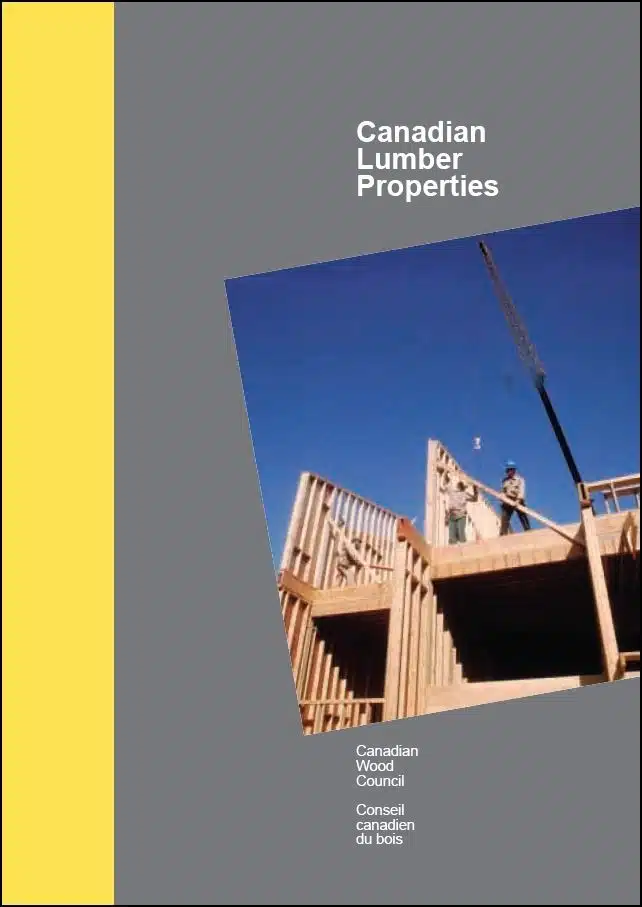
Canadian Lumber Properties is a source of information on the structural properties of Canadian softwood lumber derived from full-size (“in-grade”) tests.
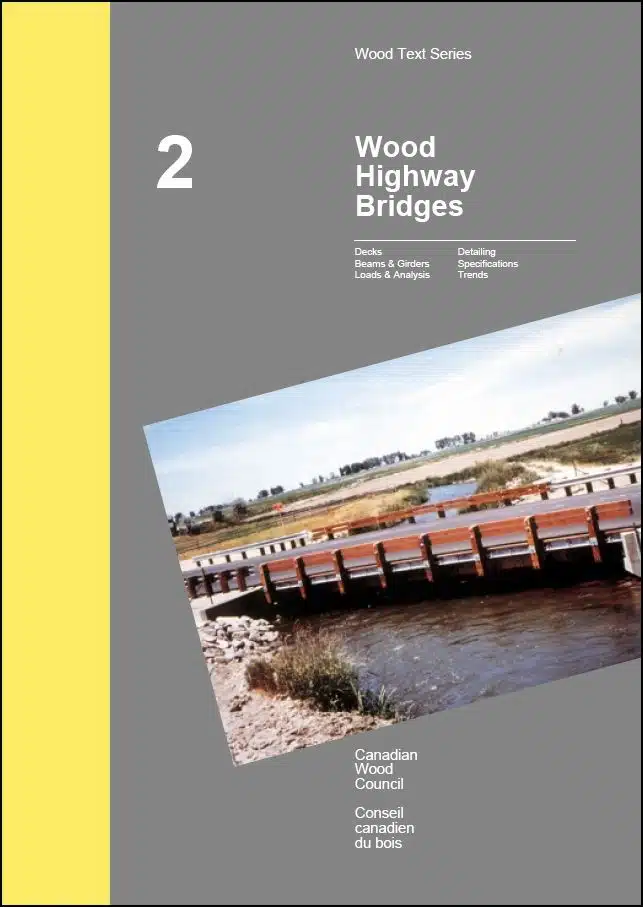
Wood Highway Bridges demonstrates how wood bridges can be designed to be assembled rapidly, resist deterioration caused by de-icing chemicals, and utilize stress-laminating...
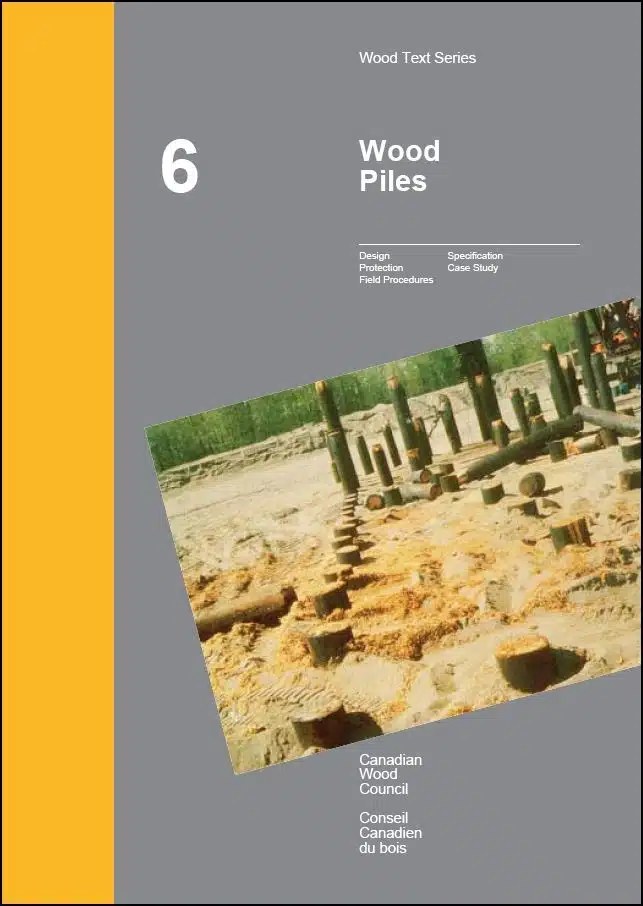
Wood Piles provides clear and concise coverage of a topic that is often considered obscure However, wood piling has been used around the world to support heavy loads for...

Get Access to Our Resources

Stay in the loop and don’t miss a thing!

1
2
3

Get Access to Our Resources

Stay in the loop and don’t miss a thing!

What’s Your Occupation?

Help us personalize the content for you.

What Interests You the Most?

Help us personalize the content for you.

Filters

Expertise Icon
Field of Expertise
Province Icon
Province
Member Type Icon
WoodWork National Partners

Filters

Post Type Icon
Post Type
Persona Icon
Persona
Language Icon
Language
Tags Icon
Tags
Mass Timber Plus Icon Environment Plus Icon Safety Plus Icon Durability Plus Icon Design Systems Plus Icon Budget Plus Icon Construction Management Plus Icon Fire Resistance Plus Icon Tall Buildings Plus Icon Short Buildings Plus Icon
Date Icon
Date
Line Separator