en-ca

[dynamic_title_categories_tags]
15 results found...
Sort By Dropdown Icon

Exposed Mass Timber Calculator

The Canadian Wood Council is pleased to introduce a new design tool: the Exposed Mass Timber Calculator.

Developed to support practitioners working with encapsulated mass timber construction (EMTC), this tool helps determine whether a compartment design aligns with the 2025 edition of the National Building Code of Canada (NBC).

By entering key information about your compartment layout—including size, wall configuration, mass timber elements, and encapsulation details—the calculator evaluates whether the design meets code requirements for exposed mass timber elements.

The tool allows users to:

  • Evaluate permissible percentages of exposed mass timber elements (beams, columns, walls, and ceilings)

  • Confirm compliance within suites or fire compartments

  • Identify potential code issues through automated warnings

  • Visualize compartment configurations with a generated 3-D model

  • Review encapsulation requirements and supporting notes


This practical calculator helps architects, engineers, and code professionals explore compliant design options more efficiently when working with mass timber construction.

Try the Exposed Mass Timber Calculator


Photo © Tom Arban

Wood Design & Building Magazine – Sign Up

Wood Design & Building Magazine - Sign Up


Stay connected to the ideas, projects, and technical insights shaping wood design and construction across Canada and beyond. Wood Design & Building magazine is published six times per year and delivers award-winning projects, expert perspectives, and practical guidance on all forms of wood construction. Whether you’re an architect, engineer, builder, developer, or wood enthusiast, subscribing ensures each issue arrives directly in your inbox—keeping you informed, inspired, and ready to bring more wood into your work.


Wood Design & Building Magazine – Sign Up


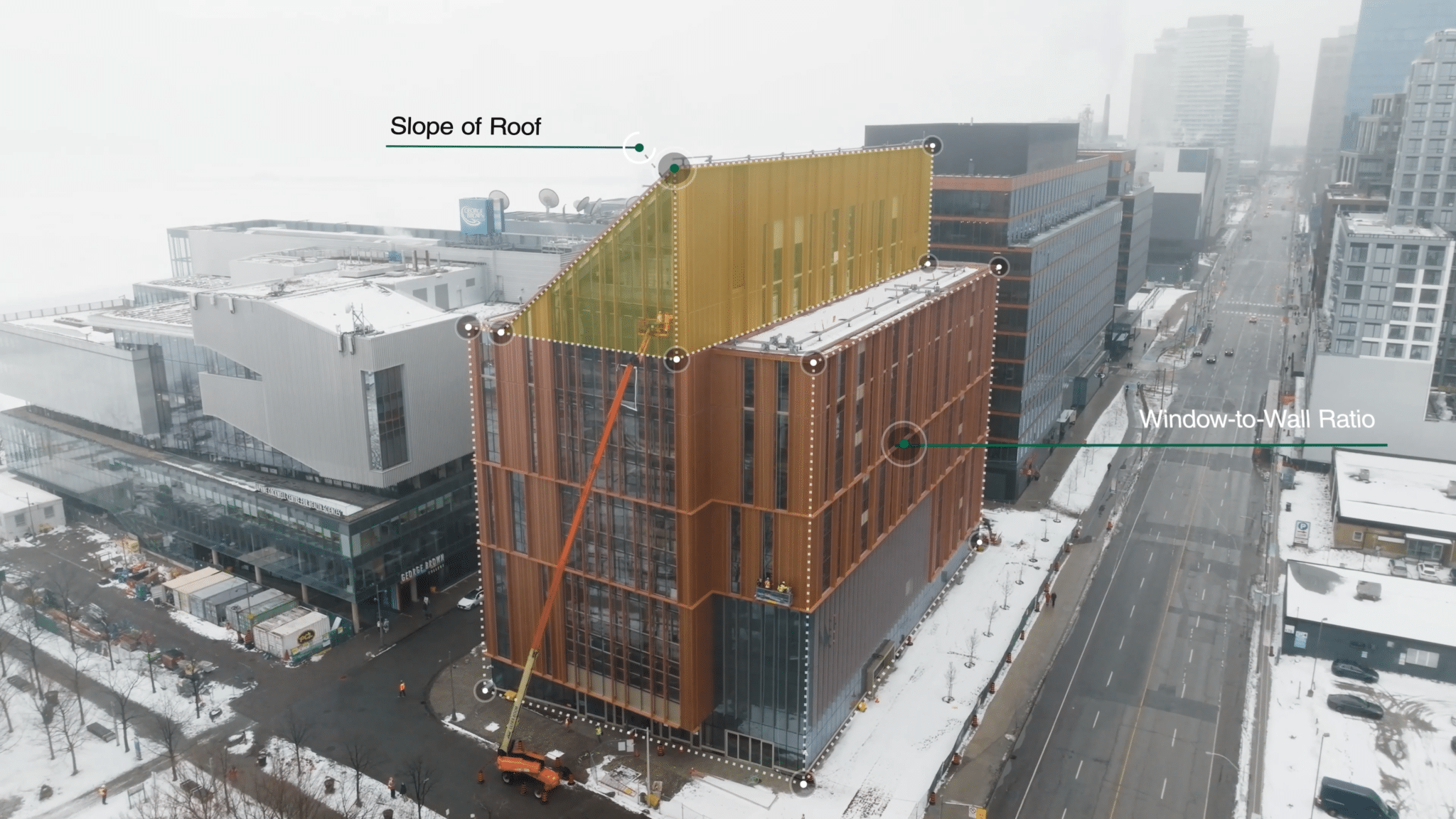
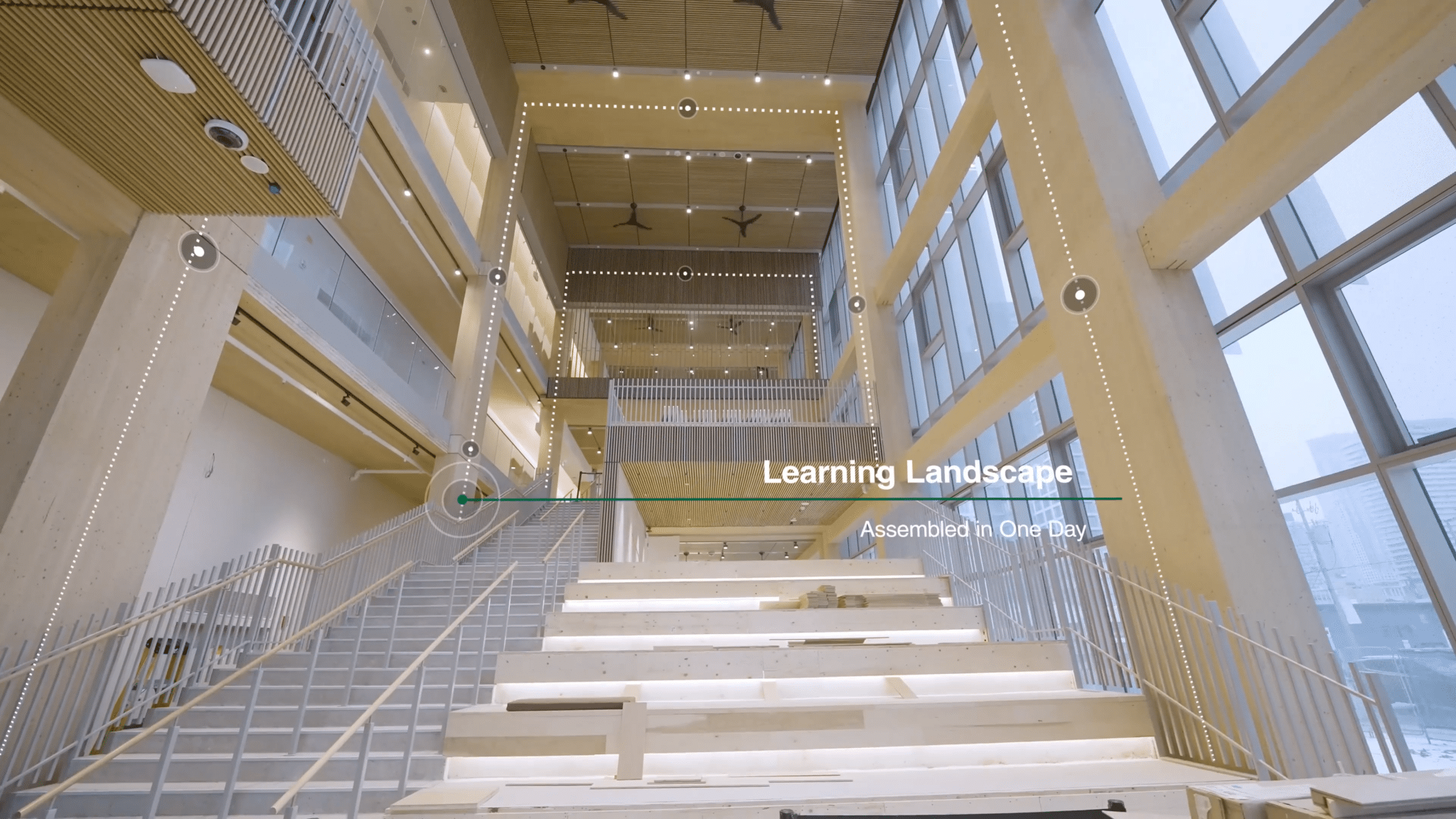
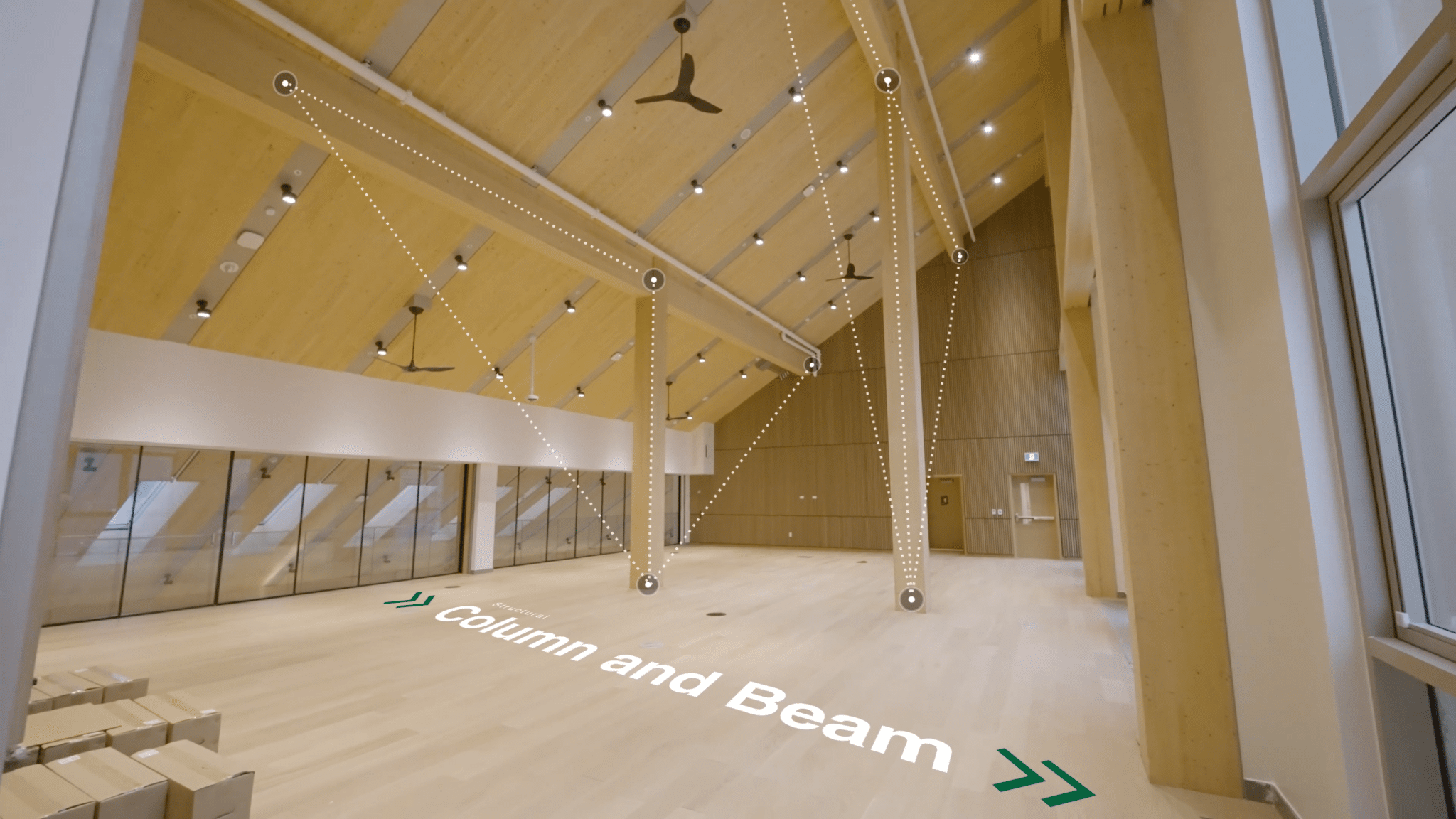
Limberlost Place: Video Case Study

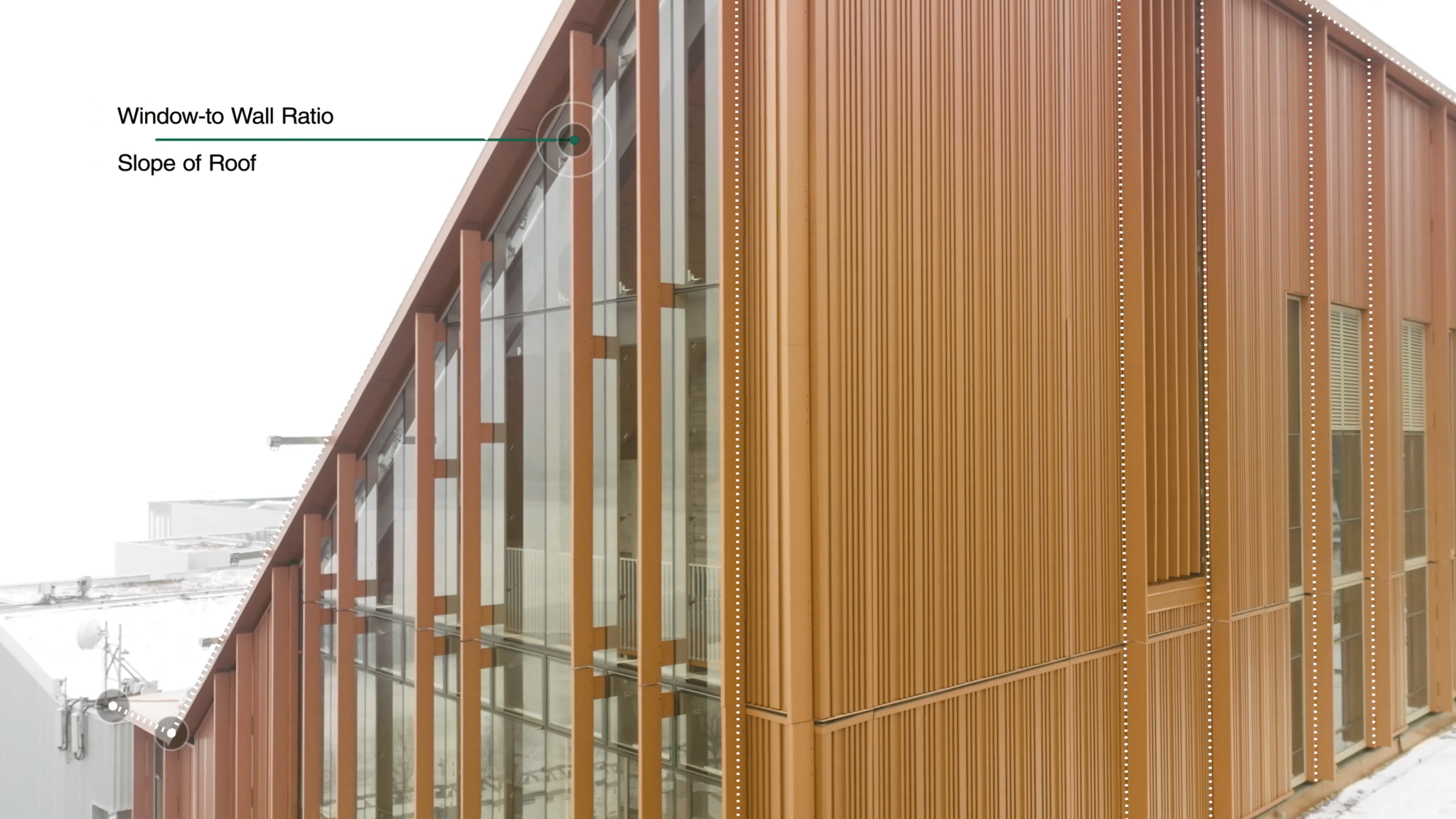
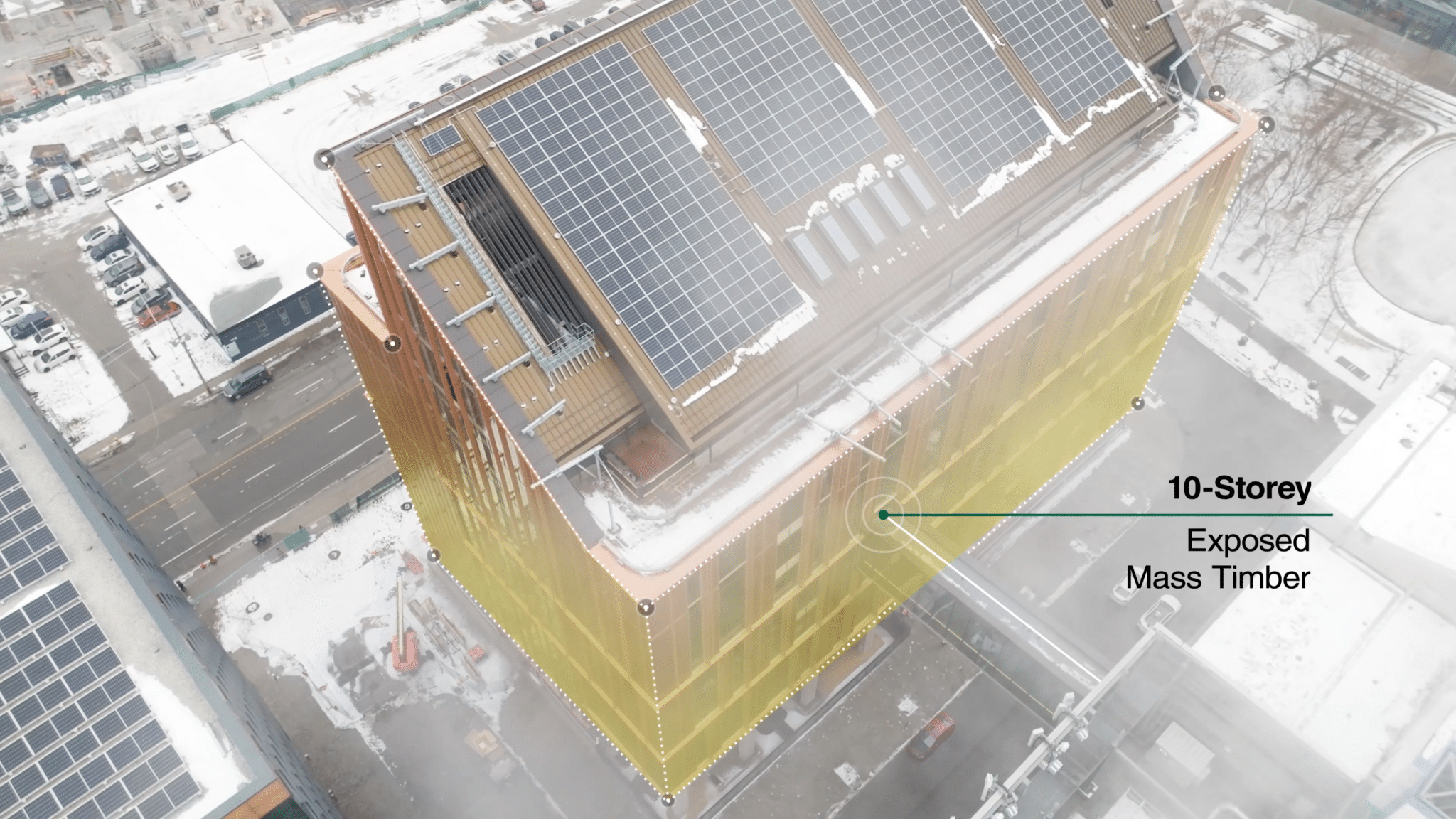
Discover the world’s first 10-storey exposed mass timber academic tower at George Brown College. This landmark project proves that sustainable, innovative, and human-centred design can stand tall together.


Building What’s Possible

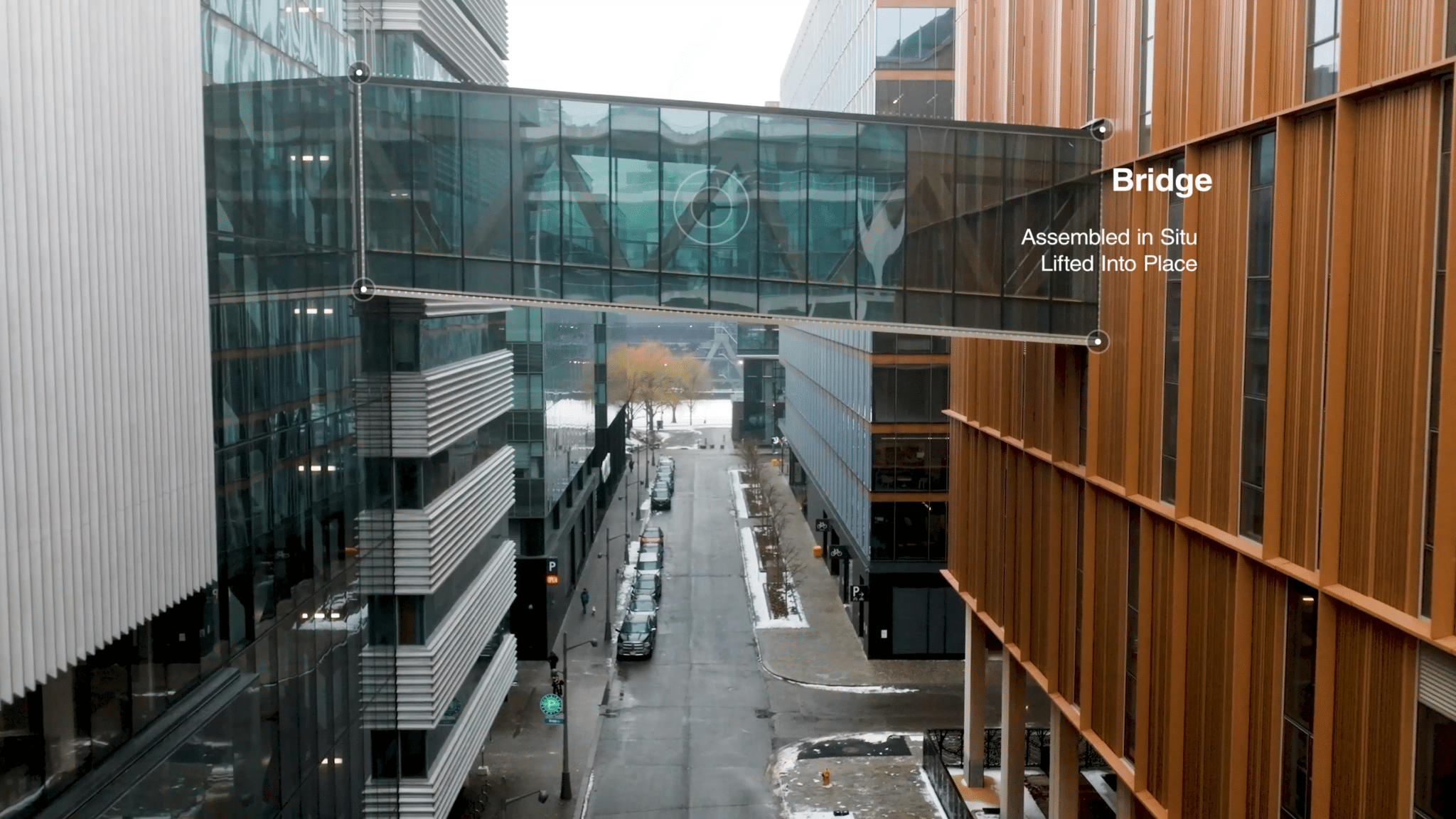
George Brown College’s Limberlost Place redefines what’s possible with mass timber construction. Rising 10 storeys above the college’s Toronto waterfront campus, this project is currently the largest exposed mass timber building of its occupancy type in the world.

Designed by Moriyama & Teshima Architects in joint venture with Acton Ostry Architects, built by PCL Construction, and realized in partnership with George Brown College, Limberlost Place demonstrates how innovation and collaboration can create a new model for sustainable development.


Sustainability at Scale

Mass timber is more than a building material — it’s a climate solution. This project shows that Canada’s design and construction industry is leading the way to a net-zero future.

By prioritizing wood construction, Limberlost:

  • Reduces carbon emissions significantly.
  • Creates healthy, biophilic spaces that support learning and well-being.
  • Proves that large-scale, low-carbon construction is achievable today.


Powered by Partnerships

Limberlost Place was made possible through strong collaboration. George Brown College worked alongside architects, engineers, and construction partners to deliver a bold vision: a living classroom where future designers, builders, and innovators can study inside the very spaces shaping tomorrow’s built environment.


A Blueprint for the Future

Limberlost Place is more than a single project. It’s a blueprint for how to build smarter and faster. By combining mass timber with hybrid engineering solutions, this project has set a new benchmark for low carbon construction in Canada and beyond.


Limberlost Place: Video Case Study

Limberlost Place: Video Case Study

Limberlost Place: Video Case Study

Limberlost Place: Video Case Study

Limberlost Place: Video Case Study

Limberlost Place: Video Case Study


This video case study was made possible through funding support from Natural Resources Canada and the Canadian Wood Council.

Catherine Lalonde Memorial Scholarships

Catherine Lalonde Memorial Scholarships

Call for Submissions: 2025 Catherine Lalonde Memorial Scholarships for Wood Related Research

Catherine Lalonde Memorial Scholarships are presented to graduate students, enrolled at Canadian Universities, who demonstrate excellence in their studies of structural wood products or wood design. The Canadian Wood Council (CWC) invites submissions from graduate students in engineering, architecture, and wood science. Submitted projects must demonstrate their value and impact on Canadian-made structural wood products and/or their role in advancing domestic wood construction.

The CWC will award two scholarships to graduate students whose outstanding wood research not only demonstrates academic excellence but also mirrors the unwavering passion for the wood industry exemplified by Catherine Lalonde, in whose honor the scholarships are named.

Catherine, a professional engineer, was a passionate representative of our industry who relentlessly championed the use of wood in residential and commercial construction during her 10 years with the CWC. She served as president of the CWC from 2000 until 2003 when she tragically lost her battle with cancer. This award was established to commemorate Catherine’s memory and perpetuate the legacy of excellence and advocacy she bestowed upon the Canadian wood products industry throughout her influential tenure at the CWC. 


Scholarship Details and Application Process

1. Scholarship Value
Two scholarships, valued at $3,000 each, will be awarded to outstanding graduate students.


2. Who can apply?
Students enrolled in graduate programs in engineering, architecture, or wood science whose work contributes to the advancement of domestic wood products and construction. 


3. Application Process 

Step  Requirement  Deadline 
Step 1 – Notification of Interest  The Notification of Interest submission period has now closed. Eligible applicants have been notified of their preselection via email.


If you were unable to submit your Notification of Interest before the deadline for reasons beyond your control and expect to complete the full application on time, please contact Ioana Lazea at ilazea@cwc.ca to discuss your situation.

Closed – October 17, 2025 
Step 2 – Full Application Submission  Preselected applicants have been invited to complete the Full Application through a dedicated portal and upload all required documents  (see checklist below).  November 14, 2025 


4. Full Application Submission Checklist

For Step 2, applicants must upload the following documents to the submission portal: 

  • One cover letter. 
  • Official transcripts: 
    • Master’s applicants: undergraduate and graduate transcripts. 
    • Doctoral applicants: master’s transcript. 
  • Two-page description of the project, plus up to two pages of drawings or photos (if applicable). 
  • Two letters of reference, preferably from faculty members or supervisors familiar with the applicant’s work. 


For additional information, please contact Ioana Lazea at ilazea@cwc.ca  

2025 Wood Design & Building Awards

This prestigious awards program recognizes and celebrates the outstanding work of architectural professionals from Canada and around the world for excellence in wood design and construction.


Winning Projects

Honor

  • The Spirit Garden (Toronto, ON) | Gow Hastings Architects in collaboration with Two Row Architects
  • Fraser Mills Presentation Centre (Coquitlam, BC) | Patkau Architects
  • Pacific Northwest Residence (Washington State) | Cutler Anderson Architects
  • Google Borregas (Sunnyvale, CA, USA) | Project Designer: MGA | Michael Green Architecture, Architect of Record: SERA Architects
  • TRUMPF Education Center (Ditzingen, Germany) | Barkow Leibinger
  • Dwelling on the Mountainside: Jiuceng Art Gallery (Lishui, Zhejiang Province, China) | Atelier Lu+Architects


Merit

  • Vesterheim Commons (Decorah, IA, USA) | Snøhetta
  • DogTrot Magnetawan (Magnetawan, ON) | Williamson Williamson
  • Aiken Audubon Research Outpost (Chico Basin Ranch, CO, USA) | ColoradoBuildingWorkshop at CU Denver


Citation

  • Walking Dunes (Amagansett, NY, USA) | Bates Masi + Architects
  • Timbrelyn (Bethel, NY 12720, USA) | Adel Research Group (ARG)
  • sʔitwənx Child Care (Kelowna, BC) | Public Architecture + Design
  • Canadian Canoe Museum (Peterborough, ON) | Unity Design Studio
  • Greenhill School, Rosa O. Valdes STEM + Innovation Center (Addison, TX, USA) | Bohlin Cywinski Jackson
  • Upper Canada College – Lindsay Boathouse (Toronto, ON) | VJAA Inc. (Lead Design Architect) | RDHA (Architect of Record)
  • Winthrop Library (Winthrop, WA, USA) | Johnston Architects (Architect of Record) and Prentiss Balance Wickline Architects (Associate Architect)
  • Toronto and Region Conservation Authority Headquarters (Toronto, ON) | Bucholz McEvoy Architects + ZAS Architects and Interiors
  • MUMO (Museum of Motorcycle) (Puerto Octay, North Patagonia, Chile)) | DRAA

Sansin Sponsored Award

  • Google Borregas (Sunnyvale, CA, USA) | Project Designer: MGA | Michael Green Architecture, Architect of Record: SERA Architects


Sustainable Forestry Initiative Sponsored Awards

  • Wahta’ elementary school (Wendake, QC) | DG3A Architecture
  • Kreher Preserve & Nature Center Environmental Education Building (Auburn, AL, USA) | Leers Weinzapfel Associates Architects, Inc.


Western Red Cedar Sponsored Awards

  • San Juan Islands Residence (Eastsound, WA) | Vandervort Architects
  • The Granary at Southlands (Delta (Tsawwassen) – BC) | MOTIV Architects


Wood Preservation Sponsored Award

  • Catchacoma Cottage (The Kawarthas, Municipality of Trent Lakes, ON) | Dubbeldam Architecture + Design


WoodWorks Ontario Wood Design Awards

  • DogTrot Magnetawan (Magnetawan, ON) | Williamson Williamson
  • Ontario Secondary School Teachers’ Federation (OSSTF) Headquarters and Multi-Tenant Complex (Toronto, ON) | Moriyama Teshima Architects
  • Toronto and Region Conservation Authority Headquarters (Toronto, ON) | Bucholz McEvoy Architects + ZAS Architects and Interiors
  • Upper Canada College – Lindsay Boathouse (Toronto, ON) | VJAA Inc. (Lead Design Architect) | RDHA (Architect of Record)
  • 1120 Ossington (Toronto, ON) | mcCallumSather


WoodWorks BC Wood Design Awards

  • Fraser Mills Presentation Centre (Coquitlam, BC) | Patkau Architects
  • Adams Lake Health + Wellness Centre (Chase, BC) | Unison Architecture Ltd.
  • Kin Park Pavilion and Ice Rink (Fort St. John, BC) | Public Architecture + Design
  • sʔitwənx Child Care (Kelowna, BC) | Public Architecture + Design
  • Point Grey House (Vancouver, BC) | Patkau Architects


WoodWorks Prairie Wood Design Awards

  • F Residence (RM of Stanley, MB) | 1×1 architecture inc.
  • Riel Construction Office (Dugald, MB) | Republic Architecture Inc.
  • Sam Centre (Calgary, AB) | Diamond Schmitt Architects
  • G7 Summit – Interior Renovations (Kananaskis, AB) | 1×1 architecture


Mass Timber Demonstration Fire Tests Program

The Canadian Wood Council partnered with federal and provincial governments and organizations, as well as key experts, to conduct a series of five fire research burns on a full-scale mass timber structure in Ottawa. The five tests occurred in June 2022. The project supports market acceptance of tall and large mass timber buildings in Canada and encourages the construction of buildings that include mass timber.

With the most certified sustainable forests in the world, Canada is a champion of sustainable forest management and in a position to solidify our global leadership in the bioeconomy and forest sector by advancing mass timber adoption. Mass timber is revolutionizing the building industry as a renewable, nature-based construction material. Recognizing mass timber’s vital role in achieving a low carbon, built environment, the Canadian Wood Council and its partners are dedicated to advancing its adoption.


Click here for the final report


Purpose
The project was designed to support market acceptance of tall and large mass timber buildings in Canada and encourage the construction of buildings that include mass timber. By designing and executing a series of demonstration fire research tests on a full-scale mass timber structure, and collecting data from tests, the project:

  • Demonstrated mass timber fire performance to key stakeholders including building officials, fire service and insurance industry
  • Encouraged building code advancements that will allow for taller and larger wood buildings Support the adoption of the 2020 National Building Code introducing new provisions to allow 12 storey mass timber buildings
  • Supported future code change proposals and the development of alternative solutions
  • Encouraged the development of / provide data and information to support the transition toward performance-based codes, long-term strategy
  • Promoted the adoption of mass timber by developing educational materials for targeted audiences
  • Supported the maximum use of exposed mass timber elements (visual aesthetic), leading to cost competitive projects and health and wellness benefits
  • Demonstrated the ability of different mass timber assemblies to maintain structural integrity under, during and post-construction fire scenarios in a way that is comparable to (or superior to) conventional materials.
  • Supported the transition to Performance-based codes

Mass Timber Demonstration Fire Tests Program


Summary of the Mass Timber Demonstration Fire Test #5


Objectives
While there is evidence, research, and case studies that demonstrate the comparable, safety and performance of mass timber construction compared to construction using conventional materials like steel and concrete, misconceptions still circulate. By designing and executing a series of demonstration fire research burns on a full-scale mass timber structure, and collecting data from these burns, our objective was to:

  • Showcase, through fire demonstration tests, that mass timber construction is a safe and viable alternative to other more conventional construction systems (steel & concrete) for constructing large or tall buildings;
  • Support the implementation and adoption of the 2020 edition of the National Building Code of Canada;
  • Support future code change proposals to extend the use of mass timber to other building types, heights, and sizes;
  • Support the transition to Performance-based codes;
  • Use the results and finds from the demonstration tests to develop viable solutions to mitigate construction fire risk.


Targeted Audiences
Various key stakeholders within the construction sector need to be educated through science-based tests that mass timber building systems can be designed to provide a safe building environment when subjected to fire. The key groups targeted by the project include, but are not limited to:

  • Building Code Officials & Regulators
  • Fire Services Professionals
  • Insurance Professionals
  • Building & Construction Industry
  • Sustainability Specialists
  • Building Occupants & Owners


Funders & Stakeholders

  • Natural Resources Canada
  • BC Forestry Innovation Investment
  • Government of British Columbia – Office of Mass Timber Implementation (OMTI)
  • Ontario – Ministry of Northern Development, Mines, Natural Resources and Forestry
  • Alberta – Agriculture, Forestry & Rural Economic Development
  • Québec – Ministère des Forêts, de la Faune et des Parcs
  • Canadian Wood Council
  • FPInnovations


Full Scale Fire Testing and Research
The National Research Council of Canada (NRC) provided support for the technical work and science-based fire tests, as part of its research to inform the advancement of safe and innovative solutions across Canada’s construction industry.


Key Consultants & Contractors

  • GHL Consultants Ltd.
  • CHM Fire Consultants Ltd.
  • ISL Engineering
  • Timmerman Timberworks Inc.


Key Suppliers & Manufacturers
Five mass timber product manufacturers supplied the mass timber materials:

  1. Western Archrib:
    ◦ Glulam beams and columns
    ◦ Westdek panels for the roof
  2. Element5 Modern Timber Buildings
    ◦ Glulam beams and columns
    ◦ CLT floor
  3. Structurlam Mass Timber Corporation
    ◦ Glulam beams and columns
    ◦ CLT floor and walls
  4. StructureCraft: Timber engineering & Construction:
    ◦ DLT floor and roof
  5. Nordic Structures
    ◦ Glulam beams and columns
    ◦ CLT roof and walls


Several key material suppliers also supported the program:

  1. MTC
    ◦ Connectors and fasteners
  2. Rockwool
    ◦ Fire Proof Insulation
  3. Hilti
    ◦ Fireproof material


The structure for the Ottawa Fire Test was built by Timmerman Timberworks Inc.

Wood Education and Workforce Integration Concurrent Workshop @ Woodrise 2025

Wood Education and Workforce Integration Concurrent Workshop @ Woodrise 2025
Woodrise 2025 Registration   |   Official Program   |   Offsite Tours


Workshop on Wood Education and Workforce Integration

Date: September 24th, 2025
Time: 2 p.m. – 6 p.m.
Duration: 4 hours
Speakers: Alexander Opazo Vega, Blériot Feujofack, Craig Applegath, Ghasan Doudak, Guido Wimmers, Michael David Burnard, Peter Moonen, Pierre Quenneville


Description:

This workshop will bring together international experts to explore advancements in wood design and construction education, highlighting the multifaceted challenges and, most importantly, showcasing and discussing innovative solutions. The workshop will feature perspectives on timber engineering education in New Zealand, the New European Bauhaus Pioneer Hub and its role in shaping Europe’s future workforce, seismic considerations in timber engineering education in Chile, strategies for integrating design, engineering, and construction in North American wood education, as well as workforce integration and the challenges of engaging young professionals in the field. These discussions will also address key strategies for developing and retaining talent within the sector.

An interactive panel discussion will follow, bringing together all speakers to address the complex landscape of wood education and workforce integration. The panel will explore the evolution of curricula, the integration of emerging technologies, and effective strategies for engaging the next generation in wood design and construction. This will also provide the audience with a valuable opportunity to engage directly with the panelists through questions and discussion.

The workshop will conclude with a one-hour roundtable dedicated to shaping an international platform for collaboration. This platform is envisioned to bring together leading experts from around the world, harmonize curricula across institutions, and share high-quality resources to elevate wood education globally. By participating in this roundtable, you will help establish the foundation for a lasting network that fosters innovation, strengthens training, and ensures the next generation of manufacturers, architects, engineers, and builders are well-prepared to design, construct, and maintain advanced wood structures.

In preparation for the workshop, a global survey has been developed to gather insights from educators on wood design and construction. The survey aims to explore current practices, challenges, and technological innovations in wood education. Its findings will provide a data-driven foundation for the workshop discussions, focusing on key topics such as post-secondary education structures, curriculum integration, industry partnerships, and the adoption of new technologies in wood education programs. If you are an educator or professional and would like to share your experiences and perspectives, we invite you to complete the survey by clicking on the following link: Survey Link Here!

This workshop promises to be a pivotal event for shaping the future of wood education, combining academic and industry perspectives to create a unified global approach to training the next generation of professionals in the wood sector.


Agenda:

2:00 – 2:10 PM

  • Introduction – Peter Moonen, Canadian Wood Council; Guido Wimmers, BCIT;  Blériot Feujofack, Canadian Wood Council


2:10 – 3:45 PM

  • Expert presentations
    • Innovations in Timber Engineering Education: Insights from New Zealand – Dr. Pierre Quenneville, University of Auckland
    • Workforce Integration in Wood Design and Construction: Challenges and Solutions for Engaging Young Professionals – Craig Applegath, DIALOG
    • Empowering Graduates: The Role of the New European Bauhaus Pioneer Hub on Sustainable Built Environment with Renewable Materials – Dr. Michael Burnard, InnoRenew CoE
    • Advancing Timber Engineering Education in Seismic Regions: Insights from Chile’s Academic and Research Initiatives – Dr. Alexander Opazo Vega, University of Bío-Bío
    • Advancing Wood Education in Canada and North America: Integrating Design, Engineering, and Construction – Dr. Ghasan Doudak, University of Ottawa


4:15 – 5:00 PM

  • Panel Discussion – Moderated by Blériot Feujofack, Canadian Wood Council


5:00 – 5:55 PM

  • Round Table – Led by Peter Moonen, Canadian Wood Council; Guido Wimmers, BCIT;  Blériot Feujofack, Canadian Wood Council


5:55 – 6:00 PM

  • Summary of Activities and Wrap-Up


Featuring:

Wood Education and Workforce Integration Concurrent Workshop @ Woodrise 2025 Wood Education and Workforce Integration Concurrent Workshop @ Woodrise 2025

Blériot Feujofack

Manager Wood Education
Canadian Wood Council

Peter Moonen

National Sustainability Manager
Canadian Wood Council

Wood Design and Building Awards

We are pleased to open our Call for Entries and invite North American and International submissions to the 2026 Wood Design and Building Awards program celebrating excellence in wood architecture and construction.

Entries should showcase the use of wood products in any, or several, of their many forms and applications, demonstrating an understanding of the special properties of wood including strength, durability, beauty, and cost-effectiveness. To be eligible, projects must have been completed within the past three years and must be fully constructed by July 1, 2026.

Awards will be presented at the discretion of the jury in the following categories: Honor, Merit, and Citation. Winners will receive a custom wood trophy recognizing their achievement and will also:

  • Be announced in a media release and on social media
  • Receive a feature profile on the Wood Innovation Network
  • Be showcased in a dedicated video posted across various media platforms
  • Be featured in Wood Design & Building Magazine (digital)
  • An invitation to an exclusive Awards Reception, where winners are celebrated among industry leaders—offering valuable exposure, networking opportunities, and a memorable evening in recognition of your success.


Projects can be submitted in the following categories:

  • Non-residential
  • Residential
  • Adaptive Reuse, Additions, and Renovations
  • International Building
  • Other (Exterior Structures, Bridges etc.)


Plus, don’t miss our specialty awards:

Sponsored by WoodWorks
Sustainable Forestry Initiative (SFI)
Sansin
Real Cedar
Wood Preservation Canada (WPC)

Ontario region
British Columbia region
Prairie region

Note: The WoodWorks Awards (ON, BC & Prairie) recognize and award projects with a focus on institutional, commercial and industrial projects, including tall residential / mixed use; 5-6 storey LWF (any use of prefab components is welcome).

Entry Fees

Early Bird Entry Fees
(applicable until May 31, 2026)
Regular Entry Fees
First Entry – $150.00 USD
Subsequent Entries – $140.00 USD
First Entry – $175.00 USD
Subsequent Entries – $165.00 USD

Deadline to Submit: June 26, 2026, at midnight PST


Camosun College

Province: British Columbia
City: Victoria
Project Category: Educational

Description:

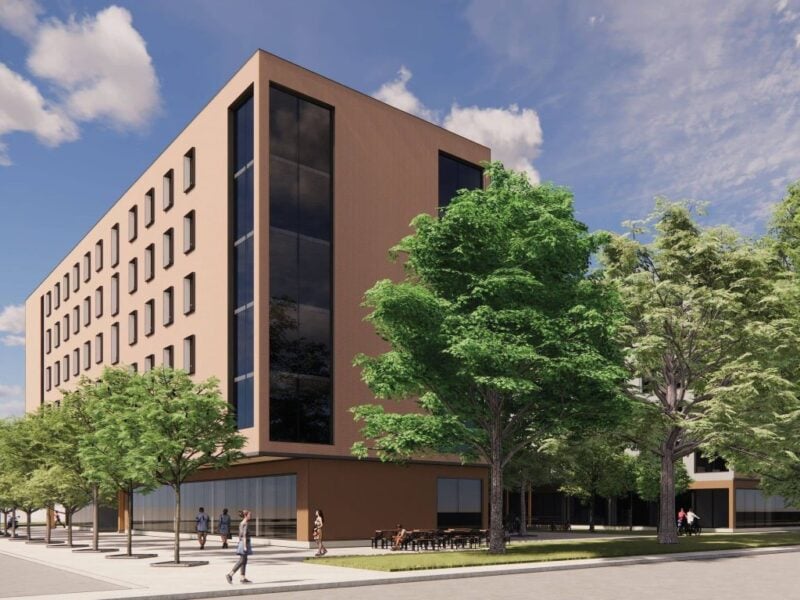
In July 2024, the B.C. government committed to fund $151.7 million for student housing at Camosun College’s Lansdowne Campus. The College will contribute an additional $3 million, for a total project cost of $154.7 million. According to a College press release, the six-storey building will be constructed using mass timber and will have more than 400 student beds (dormitory-style, single suite, and four-bedroom apartment-style) in addition to reflection rooms, universal washrooms, and communal kitchens. The College is currently in the process of choosing a main consultant to lead the design phase; it anticipates the consultant will be in place in 2025. Project completion is expected for fall 2027.

The Exchange

ARCHITECT: Faction Architecture Inc.

STRUCTURAL ENGINEER: RJC Engineers

DEVELOPER: Faction Projects Inc.

CONSTRUCTION MANAGER: Faction Construction

BUILDING CODE CONSULTANT: GHL Consultants Ltd.

PHOTOS: Courtesy of naturally:wood

The Exchange

In Kelowna, British Columbia’s evolving industrial north end, The Exchange stands as a forward-thinking demonstration of what’s possible when architectural ambition meets technical precision. Designed and developed by Faction Architecture and Faction Projects, the building blends mass timber with conventional materials in a hybrid system that highlights both structural performance and environmental responsibility.

At the heart of the structural system is nail-laminated timber (NLT), used for both floor and roof assemblies. NLT is a mass timber product formed by mechanically fastening dimensional lumber together to create solid panels—an approach well-suited to exposed timber applications that value durability, texture, and straightforward fabrication. For this project, the team fabricated the panels in-house using locally sourced materials and trades. While this gave them greater control over cost and scheduling, it also introduced design and compliance challenges.

The team opted for a fluted NLT profile to enhance visual appeal and improve acoustic performance. Because the panel design differed from prescriptive norms, it required approval as an  alternative solution under the BC Building Code. Extensive analysis was conducted to demonstrate compliance with fire-resistance, vibration, and load-bearing requirements. Informed by existing NLT fire test data, the design team minimized voids between laminations to enhance charring behaviour and performed physical load testing at Okanagan College to confirm strength and stiffness performance.

Complementing the NLT panels is a glulam post-and-beam system that forms the substructure, supported by concrete elevator and stair cores. Together, these elements support a program that includes retail and light industrial space at grade, with two to three storeys of open-plan office space above. A rooftop patio offers sweeping views, reinforcing the project’s appeal to creative businesses and environmentally conscious tenants.

The Exchange also showcases a thoughtful approach to the building envelope, a key factor in achieving Step 3 of the BC Energy Step Code—the highest step currently applicable to non-residential buildings in the region. The high-performance envelope includes a combination of weathering steel and corrugated metal cladding, high-performance glass windows, semi-rigid exterior insulation, breathable weather barrier, plywood sheathing, lumber studs, batt insulation, gypsum board and a polyethylene vapour barrier.  The light-frame wood walls contribute to envelope performance in two important ways: 1) wood has lower thermal conductivity than other materials, so thermal bridging is dramatically reduced, and 2) the stud wall configuration allowed for thicker insulation in the cavities between studs.

This integrated approach—combining exposed timber construction, envelope efficiency, and locally supported fabrication—enabled the project team to deliver a space that performs as well technically as it does aesthetically. And with over 90% of the leasable area spoken for at completion, it’s clear that tenants are responding to both the look and the logic of the building.

The Exchange sets a precedent for accessible mass timber construction in smaller markets, particularly in contexts where a streamlined fabrication process and strong design-control loop can help close the gap between sustainable ambition and budgetary constraints.

As Faction Projects continues work on the remaining phases of the development, The Exchange stands as both a technical prototype and a commercial success—proof that high-performance, low-carbon construction can be as practical as it is inspiring.


Privacy Policy

We are pleased to open our Call for Entries and invite North American and International submissions to the 2025 Wood Design and Building Awards program celebrating excellence in wood architecture and construction.

The Canadian Wood Council (“CWC”) is committed to upholding the confidentiality and security of your personal information. The CWC respects your right to privacy and have instituted best practices to help ensure that your personal information is handled responsibly. This Policy explains how CWC collects, uses, and discloses personal information that you knowingly provide while using this website and website content (the “Website”) and in any electronic publications, newsletters, or announcements made by it (“Electronic Communications”). By using CWC’s Web sites, you consent to our collection, use, and disclosure of the information you provide, as set out in this Privacy Policy. Any personal information provided to CWC through the Web sites will be treated with care, and subject to this Policy will not be used or disclosed in ways not consented.

1. Scope of this Policy

  • This Privacy Policy applies to the CWC and its subsidiaries with the Canadian Wood WORKS! program.

2. Information Automatically Collected

  • Non-Identifiable Information — The Website may automatically collect certain non-identifiable information regarding Website users. This non-identifiable information is used for Website and system administration purposes and to improve the Website. Your non-identifiable information may be disclosed to others and permanently archived for future use.
  • Cookies — The Website may use “cookies”, to enhance the convenience and use of the Website. You may choose to decline cookies if your browser permits, but doing so may affect your use and ability to access certain features of the Website.

3. Personal Information You Specifically Provide to the Website

  • Your Personal Information — During your use of the Website, you may be asked to voluntarily provide certain personal information (such as your name, e-mail address, postal address, and telephone number) for purposes such as facilitating communications with you and allowing you to use certain functionality of the Website.
  • Use of Your Personal Information — CWC may use your personal information to contact and correspond with you, and as otherwise permitted by law.
  • E-mails from CWC — If you provide your e-mail address, CWC may send you, from time to time, e-mail containing information about CWC and other matters it believes will interest you. At any time you may ask CWC to stop sending you e-mails and other information by contacting helpdesk@cwc.ca.
  • Tracking Information — CWC may use non-personal information to create aggregate tracking information reports regarding Website user demographics and Website traffic patterns. None of the tracking information in the reports can be connected to the identities or other personal information of individual users. CWC may also link tracking information with Website users’ personal information. Once such a link is made, all of the linked information is treated as personal information and will be used and disclosed only in accordance with this Policy, and in accordance with the law.
  • Disclosure of Your Personal Information — CWC may disclose your personal information to a government institution that has asserted its lawful authority to obtain the information or where CWC has reasonable grounds to believe the information could be useful in the investigation of unlawful activity, or to comply with a subpoena or warrant or an order made by a court, person or body with jurisdiction to compel the production of information, or to comply with court rules regarding the production of records and information, or to protect CWC’s rights and property. If CWC is involved in a merger or other reorganization, CWC may disclose your personal information to the resulting organization.
  • Storing and Securing Your Information — CWC may store and process your personal information at CWC’s office in Canada or through a third party service provider, which may or may not be located in Canada. To help protect the confidentiality of your personal information, CWC employs security safeguards appropriate to the sensitivity of the information. Nevertheless, due to the nature of the Internet and Internet technologies, security and privacy risks cannot be eliminated and CWC cannot guarantee that your personal information will not be disclosed in ways not otherwise described in this Policy.
  • Accessing Your Personal Information — You may request access to your personal information and information about CWC’s collection, use and disclosure of that information by contacting CWC at helpdesk@cwc.ca. CWC has a Privacy Officer who is responsible for the protection of personal information and compliance with privacy-related legislation in various jurisdictions. Your enquiries will be forwarded to the Privacy Officer when it is received. Subject to certain exceptions prescribed by law, you will be given reasonable access to your personal information, and will be entitled to challenge the accuracy and completeness of the information and to have it amended as appropriate. You can help CWC maintain the accuracy of your information by notifying CWC of any changes to your personal information.
  • Withdrawal of Consent — In some jurisdictions, you may withdraw your consent to the use and intention of personal information. To do this, please contact our Privacy Officer at helpdesk@cwc.ca. Additionally, we routinely provide “opt out” or “unsubscribe” instructions on our electronic communications to provide for removal of your name from future transmissions.

4. Other Matters

Your Comments — If you have any comments or questions about this Policy or your personal information, please contact CWC at helpdesk@cwc.ca.

Other Websites — The Website may contain links to other Websites or Internet resources. When you click on one of those links you are contacting another Website or Internet resource that may collect information about you voluntarily or through cookies or other technologies. CWC has no responsibility or liability for, or control over those other Websites or Internet resources or their collection, use and disclosure of your personal information.

Website Terms of Use — The Terms of Use governing your use of the Website contains important provisions disclaiming and excluding the liability of CWC and others regarding your use of the Website and provisions determining the applicable law and exclusive jurisdiction for the resolution of any disputes regarding your use of the Website. Each of those provisions also applies to any disputes that may arise in relation to this Policy and the collection, use and disclosure of your personal information, and are of the same force and effect as if they had been reproduced directly in this Policy.

Former Users — If you stop using the Website or your permission to use the Website is terminated by CWC, CWC may continue to use and disclose your personal information in accordance with this Policy as amended from time to time, and subject to compliance with the law.

Privacy Policy Changes — This Policy may be changed by CWC from time to time, without any prior notice or liability to you or any other person. The collection, use and disclosure of your personal information by CWC will be governed by the version of this Policy in effect at that time. New versions of this Policy will be posted here. Your continued use of the Website and receipt or request of any electronic communication subsequent to any changes to this Policy will signify that you consent to the collection, use and disclosure of your personal information in accordance with the changed Policy. Accordingly, when you use the Website or receive or request any electronic communication, you should check the date of this Policy and review any changes since the last version.

1 2

Get Access to Our Resources

Stay in the loop and don’t miss a thing!

1
2
3

Get Access to Our Resources

Stay in the loop and don’t miss a thing!

What’s Your Occupation?

Help us personalize the content for you.

What Interests You the Most?

Help us personalize the content for you.

Filters

Expertise Icon
Field of Expertise
Province Icon
Province
Member Type Icon
WoodWork National Partners

Filters

Persona Icon
Persona
Tags Icon
Tags
Annual Reports Plus Icon
Award Book Plus Icon
Case Studies Plus Icon
Free Publications Plus Icon
Magazine Plus Icon
Building Systems Plus Icon
Codes & Standards Plus Icon
Industry News Plus Icon
Why Wood (FAQ) Plus Icon
Wood Products Plus Icon
Acoustics Plus Icon
Design Examples Plus Icon
Engineering Plus Icon
Fire Resistance Plus Icon
Insurance Plus Icon
Mass Timber Plus Icon
Date Icon
Date
Line Separator