Searching for: Mass Timber

Searching results for “Mass Timber”
158 results found...
Sort By Dropdown Icon

Canadian Wood Council Applauds Nova Scotia’s Prioritization of Wood Products for Construction and Heating in Public Buildings

OTTAWA, ON, 18 July 2025 – The Canadian Wood Council (CWC) applauds the Province of Nova Scotia’s recent announcement regarding the prioritization of wood products for construction and heating in public buildings – a strategic move that supports economic growth, climate resilience, and innovation in the province’s forestry sector.

By committing to mass timber and other solid wood products for construction, alongside the use of wood pellets, biomass, and other products made from forest residuals for heat and energy, Nova Scotia is taking a leadership approach to development that aligns environmental stewardship with economic opportunity.

This initiative reinforces the principles of a circular economy built on sustainable forest management. This comprehensive approach to fibre utilization ensures the province is maximizing the value of harvested wood and reducing waste while simultaneously supporting jobs, stimulating rural economies, and strengthening local and regional supply chains across the forestry and construction sectors.

“This commitment from the province of Nova Scotia not only supports local forestry and bioeconomy innovation, but also delivers practical solutions to reduce emissions, improve energy security, and build with a lighter carbon footprint,” says Rick Jeffery, President & CEO of the Canadian Wood Council. It’s a smart and timely commitment to sustainability that will strengthen local industries while advancing practical, low-carbon building solutions.”

View the announcement from Nova Scotia Public Works and Nova Scotia Natural Resources here: https://news.novascotia.ca/en/2025/07/17/government-promotes-wood-construction-heating

Feasibility of Point-Supported Mass Timber

Tall wood buildings offer tremendous potential for low-carbon, high-performance construction, but they also introduce a distinct set of challenges not typically encountered in conventional approaches. Design teams new to this form of construction may be unfamiliar with the systematic approach needed to enhance affordability and efficiency in these buildings.

Within the spectrum of structural solutions for mass timber, point-supported CLT is a compelling option for tall building applications. Teams must understand how to harness its unique benefits and navigate its limitations to unlock its full potential. When applied effectively, point-supported approaches can improve efficiency, reduce material usage, and unlock new pathways to cost-competitive tall timber construction.

Case Study: Academic Tower University of Toronto

Setting a new standard in Canada’s tallest mass timber structure, Soprema Insonomat system provided an ideal balance of sustainability, safety, and superior sound insulation.

Case Study: 283 Greene Avenue

AcoustiTECH’s innovative and effective acoustic solutions made New York’s first mass timber residential project a triumph of modern design and sound comfort. Discover how the AcoustiTECH Lead 6 and  AcoustiTECH SOFIX system harmonized natural aesthetics with high acoustic performance.

Canadian Wood Council Supports Ontario’s Advanced Wood Construction Action Plan

KITCHENER, ON — The Canadian Wood Council (CWC) was proud to participate in a significant announcement by the Government of Ontario yesterday, where the Honourable Mike Harris, Minister of Natural Resources, and the Honourable Kevin Holland, Associate Minister of Forestry and Forest Products, launched Ontario’s Advanced Wood Construction Action Plan.

The Action Plan outlines a strong, strategic commitment to advancing the use of mass timber and prefabricated wood systems—technologies that can deliver high-performance buildings while supporting job creation and investment across Ontario’s forestry, manufacturing, and construction sectors.

As the national association representing manufacturers of Canadian wood products, CWC welcomes this important step forward. Through its technical resource program, WoodWorks, the Council is committed to supporting the growth of advanced wood construction by providing guidance, education, and project support to professionals across the building sector.

“This is about solving today’s challenges while laying the groundwork for long-term economic growth—with industrialized wood construction driving that transformation forward,” said Steven Street, Executive Director of WoodWorks Ontario.

The Action Plan includes investments in research, education, training, and manufacturing, positioning Ontario as a leader in low-carbon, efficient, and sustainable construction. CWC applauds the province’s leadership and looks forward to continuing its collaboration with public and private partners to advance the adoption of made-in-Ontario wood solutions.

To read the full plan, visit: https://www.ontario.ca/page/advanced-wood-construction-action-plan

Mass Timber Course of Construction Insurance Project Questionnaire + Checklist

Who can use this document:
Contractors, Developers, Owners and Design Teams.

How to use this document:
This document is an editable form that teams can fill out to aid in collecting mass timber project-specific information to share with their insurance team.

When to use this document:
A project team should engage a broker or underwriter as early as possible in the planning stages of a construction project, ideally during the initial design phase or when the project scope is being defined.

How will this help me:
The goal is to provide project-specific information about mass timber, pre-emptively addressing some of the common questions and concerns insurers may have to pave the way for a more efficient and informed process when working with your broker or underwriter. Keep in mind that this document is not intended to address all topics nor be a universally accepted form that provides all necessary information to insurers.

Mass Timber Construction Success Checklist

Mass timber construction offers speed, sustainability, and design flexibility – but it also requires a higher level of coordination than traditional structural systems. Its prefabricated components and tight tolerances call for early planning, clear communication, and a shared understanding across the project team. Ensuring that all partners – including those less familiar with timber construction – are aligned on these unique requirements helps avoid costly delays and, more importantly, positions the team to fully capitalize on the benefits mass timber has to offer.

Exploring the Role of Mass Timber – Industrial Buildings and Warehouse Construction

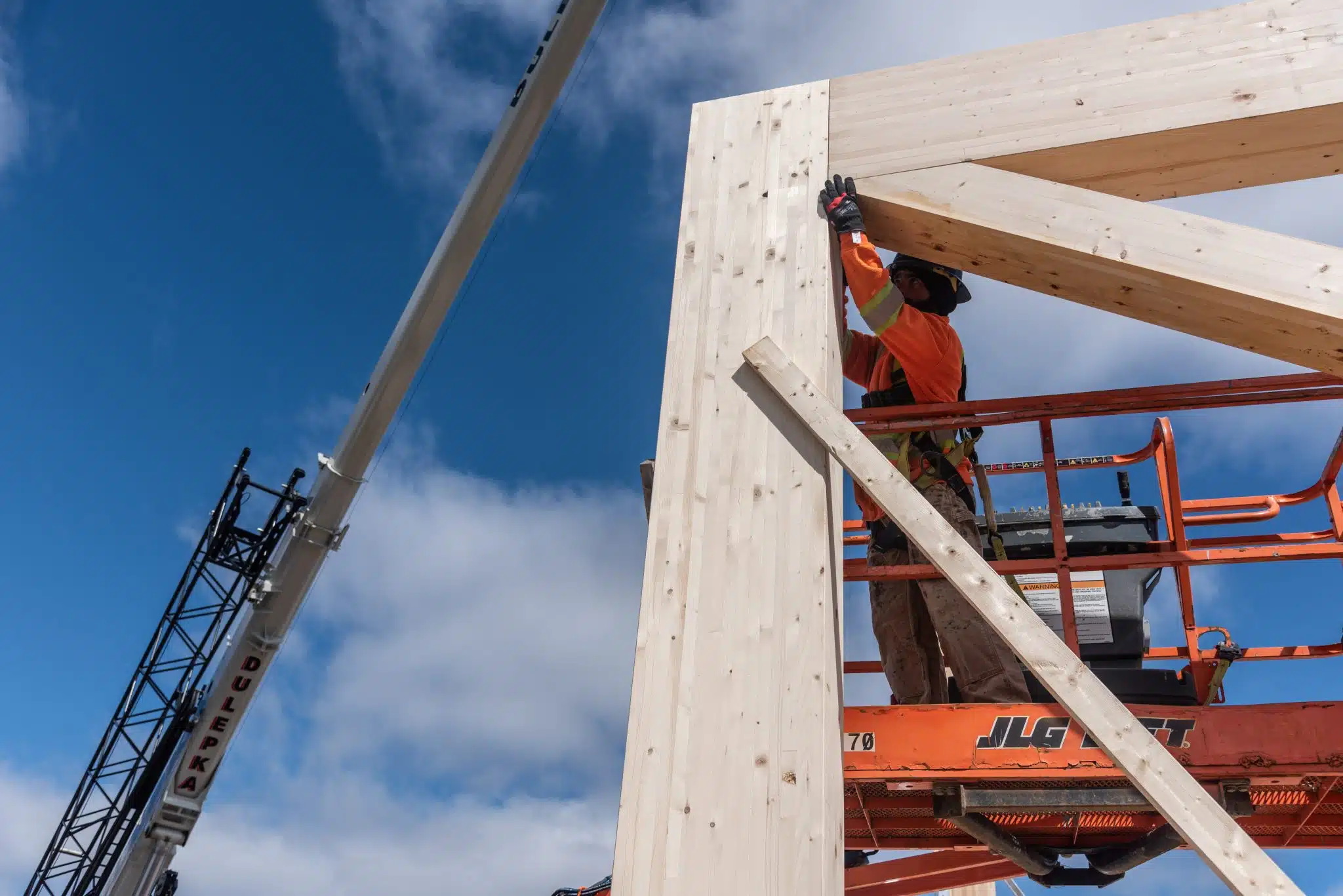
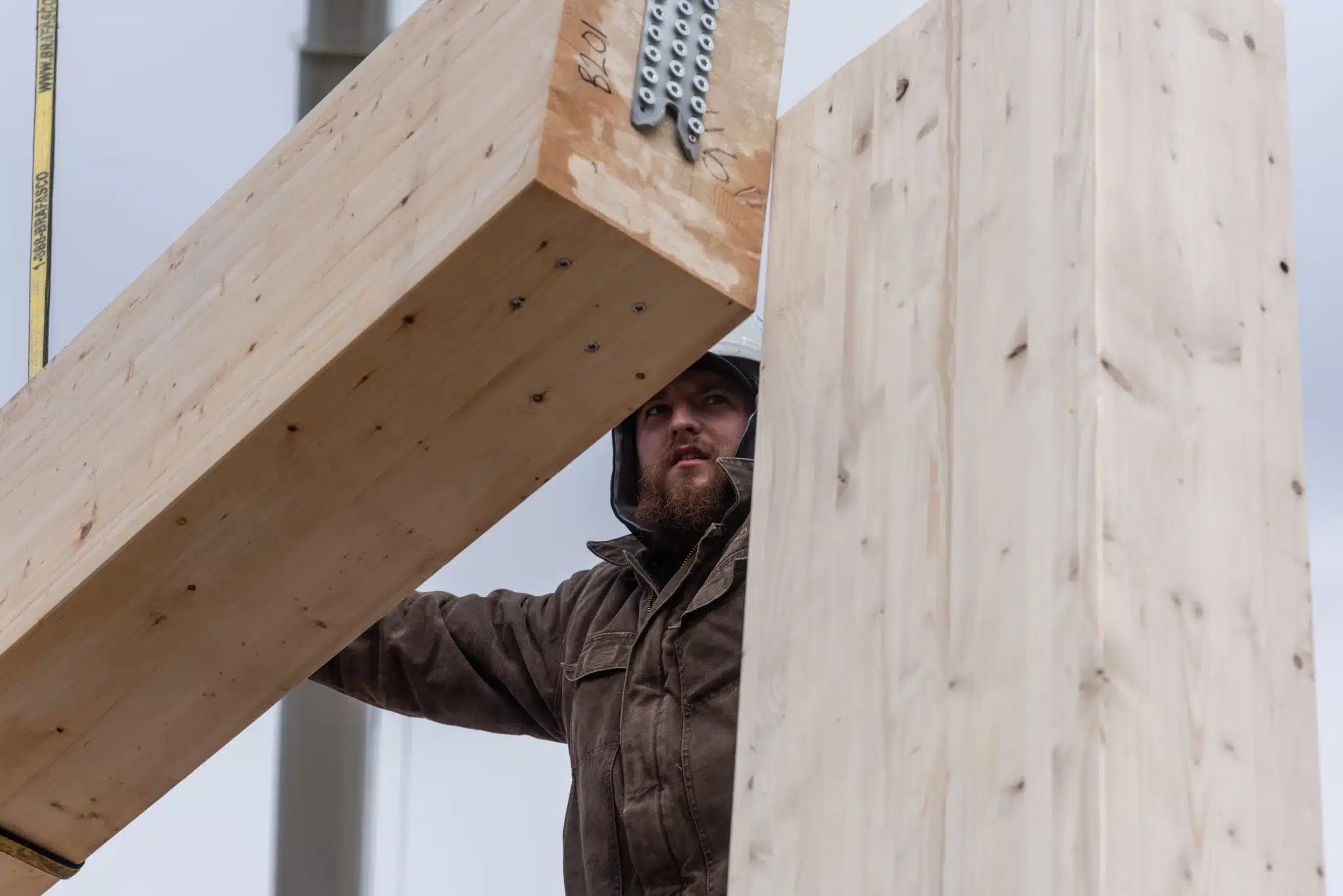
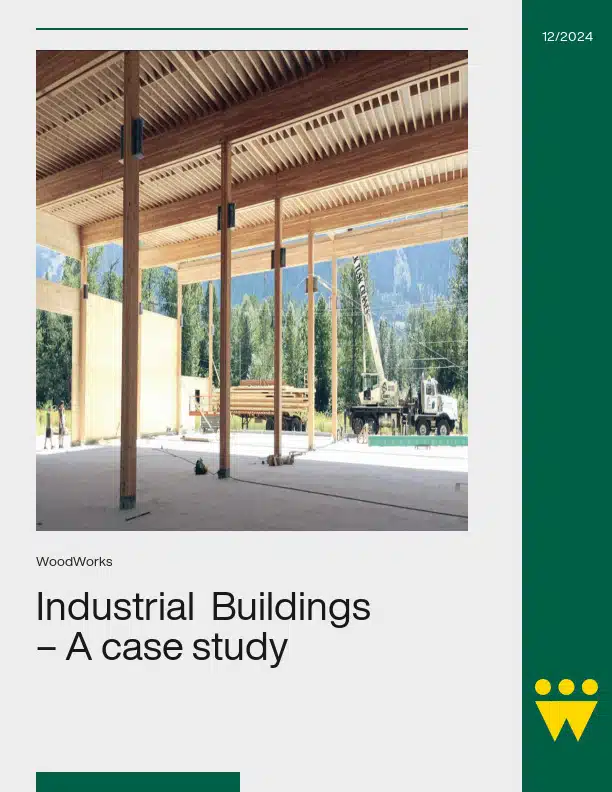
The emerging use of mass timber in industrial buildings presents promising opportunities that are shaping the future of construction in this sector. As a sustainable and economically competitive alternative, mass timber is redefining industrial construction, a field traditionally dominated by prefabricated steel. An analysis of two cutting-edge projects in Sudbury, Ontario, highlights key advantages, including cost competitiveness, reduced embodied carbon, and aesthetic appeal. The insights from these two projects present stakeholders with helpful considerations and valuable strategies for integrating mass timber into future developments.

Wood Design & Building Magazine, vol 24, issue 96

Buildings that stand the test of time aren’t just durable—they are cherished. When we invest in quality materials and good design, we can create buildings that people connect with. As you’ll discover in this issue, many heavy timber warehouses and factories constructed in the early 1900s remain a vital part of our cities today—not because they still serve their original purpose, but because people valued them enough to adapt, restore, and reuse them, giving them a new purpose.

Fast forward a hundred years and resilient structures include many new forms. Modular construction, for example, has seen significant growth in recent years as this form of construction has transformed from a building method once considered inferior, into a method relied upon to deliver high-performance durable buildings.

Alongside our features on historic timber buildings and modular construction, this issue also highlights notable projects and emerging trends shaping today’s built environment. From innovative mass timber structures to forward-thinking design solutions, we explore how thoughtful craftsmanship and smart engineering continue to define the spaces we build—and the ones we keep.

Camosun College

Province: British Columbia
City: Victoria
Project Category: Educational

Description:

In July 2024, the B.C. government committed to fund $151.7 million for student housing at Camosun College’s Lansdowne Campus. The College will contribute an additional $3 million, for a total project cost of $154.7 million. According to a College press release, the six-storey building will be constructed using mass timber and will have more than 400 student beds (dormitory-style, single suite, and four-bedroom apartment-style) in addition to reflection rooms, universal washrooms, and communal kitchens. The College is currently in the process of choosing a main consultant to lead the design phase; it anticipates the consultant will be in place in 2025. Project completion is expected for fall 2027.

Canadian Wood Council Applauds Strategic Federal Investments in B.C.’s Forest Industry

OTTAWA, March 25, 2025 – The Canadian Wood Council welcomes the Government of Canada’s announcement of over $20 million in funding for 67 projects that support the growth and resilience of British Columbia’s forest sector.

While the announcement includes several strategic large-scale investments in advanced wood manufacturing, a significant strength of this initiative lies in the breadth of smaller-scale, high-impact projects that are collectively transforming communities across the province. From feasibility studies for Indigenous-led forest product businesses to the development of next-generation building technologies, these projects are advancing wood innovation, supporting workforce development, and expanding the role of wood in low-carbon construction.

Administered through Natural Resources Canada, this Green Construction through Wood (GCWood) funding supports a wide range of initiatives—from fire-testing mass timber connections and refining modelling guides for timber structures, to developing bioenergy solutions and value-added wood processing in Indigenous communities.

This announcement underscores the importance of decentralized innovation, where targeted investments in communities and research institutions alike contribute to a stronger, more sustainable forest sector. The Canadian Wood Council applauds this commitment and looks forward to continuing its work with design professionals, governments, and industry partners to support the expanded use of wood in the province through its market-leading WoodWorks program.

View the announcement from Natural Resources Canada here:
https://www.canada.ca/en/natural-resources-canada/news/2025/03/canada-announces-support-for-british-columbias-forest-sector.html https://www.canada.ca/en/natural-resources-canada/news/2025/03/canada-announces-support-for-british-columbias-forest-sector.html

Canadian Wood Council Applauds Federal-Provincial Investment in Advanced Wood Construction in Quebec

OTTAWA, March 24, 2025 – The Canadian Wood Council (CWC) applauds the joint investment of over $8.5 million by Natural Resources Canada and Quebec’s Ministry of Natural Resources and Forests in four innovative wood construction-related projects across Quebec. These strategic initiatives will help strengthen the manufacturing sector and accelerate the adoption of low-carbon, Canadian-made wood products and technologies in residential construction and other critical community infrastructure.

By supporting advanced wood construction methods—including modular mass timber housing, artificial intelligence to modernize engineered wood manufacturing, and the design of tall wood residential buildings—this investment reinforces the essential role of wood in delivering high-performance, low-carbon construction solutions. From a 20-unit modular development and a 21-storey design study to the cultural leadership of the Cree First Nation of Waswanipi in forest-to-form construction, these projects demonstrate how innovative wood technologies can meet urgent housing needs in a sustainable way, through scalable and repeatable, locally driven approaches.

The Canadian Wood Council commends both levels of government for recognizing the critical role of Canada’s forest sector in delivering smart, climate-friendly building systems. These investments demonstrate how advanced wood technologies can contribute to addressing urgent housing needs while helping to lower the carbon footprint of the built environment.

Design and construction professionals in Quebec can access free technical support related to wood design and construction through the market-leading resource program, Cecobois. The CWC is pleased to provide support further expand the use of wood in residential, commercial, and institutional buildings throughout the rest of Canada through its WoodWorks program.

View the announcement from Natural Resources Canada here:
https://www.canada.ca/en/natural-resources-canada/news/2025/03/canada-and-quebec-invest-in-sustainable-wood-construction.html

Quiet by Design
Wood Design & Building Magazine, vol 24, issue 99
Mass Timber Industrial Buildings and Warehouses
Emerging Solutions for Mass Timber in Healthcare 
Mass Timber Business Case Studies
Canadian Wood Council’s WoodWorks Program Welcomes Rothoblaas Canada as National Partner
Canadian Wood Council’s WoodWorks Program Welcomes Nordic Structures as National Partner
Canadian Wood and Forestry Resources
Canada’s Wood Industry Welcomes New Build Canada Homes Agency to Drive Rapidly Deployable Housing
Mass Timber Demonstration Fire Tests Program
Wood Bridge Design
Wood Bridge Design
The provision of fire safety in a building is a complex matter; far more complex than the relative combustibility of the main structural materials used in a building. To...
In addition to combustible, heavy timber and noncombustible construction, a new construction type is presently being considered for inclusion into the National Building Code...
A structure must be designed to resist all the loads expected to act on the structure during its service life. Under the effects of the expected applied loads, the structure...
Non-Pressure Treated Wood For most treated wood, preservatives are applied in special facilities using pressure. However, sometimes this isn’t possible, or the need for...
Ottawa, ON, December 12, 2024 – The Canadian Wood Council (CWC) announced the recipients of the 2024 Catherine Lalonde Memorial Scholarships: Laura Walters (McMaster...
Ottawa, Ontario – September 17, 2024 — The Canadian Wood Council (CWC) and Woodsure (A division of Axis Insurance Managers Inc.) are pleased to announce a new partnership...
Over the past two decades, new engineered mass timber products and construction techniques have changed the way we think about wood as a building material. Historic...
A stunning coastal forest in Vancouver, BC is the gateway to the University of British Columbia (UBC) which has provided inspiration for the institution’s long-standing...
Since the 2009 change to the British Columbia Building Code (BCBC) that increased the permissible height for wood frame residential buildings from four storeys to six, more...
Located on the southern tip of Vancouver Island, Langford is the third largest municipality in British Columbia’s Capital Regional District. It is rapidly transitioning...
The R-Town V6 pilot project is the first 6-storey, mixed-use, multi-unit residential building developed in Ontario that fully employs mass timber as the main structural...
Red Deer College (RDC) Student Residence is a 5,800-sq.m. (60,000-sq.ft.), five-storey wooden structure with 145 units, designed and completed to meet the 300-bed demand for...

Get Access to Our Resources

Stay in the loop and don’t miss a thing!

1
2
3

Get Access to Our Resources

Stay in the loop and don’t miss a thing!

What’s Your Occupation?

Help us personalize the content for you.

What Interests You the Most?

Help us personalize the content for you.

Filters

Expertise Icon
Field of Expertise
Province Icon
Province
Member Type Icon
WoodWork National Partners

Filters

Post Type Icon
Post Type
Persona Icon
Persona
Language Icon
Language
Tags Icon
Tags
Mass Timber Plus Icon Environment Plus Icon Safety Plus Icon Durability Plus Icon Design Systems Plus Icon Budget Plus Icon Construction Management Plus Icon Fire Resistance Plus Icon Tall Buildings Plus Icon Short Buildings Plus Icon
Date Icon
Date
Line Separator