Searching for: Wood

Searching results for “Wood”
326 results found...
Sort By Dropdown Icon

Wood Design Awards 2018

Wood Design Awards 2017

Wood Design Awards 2016

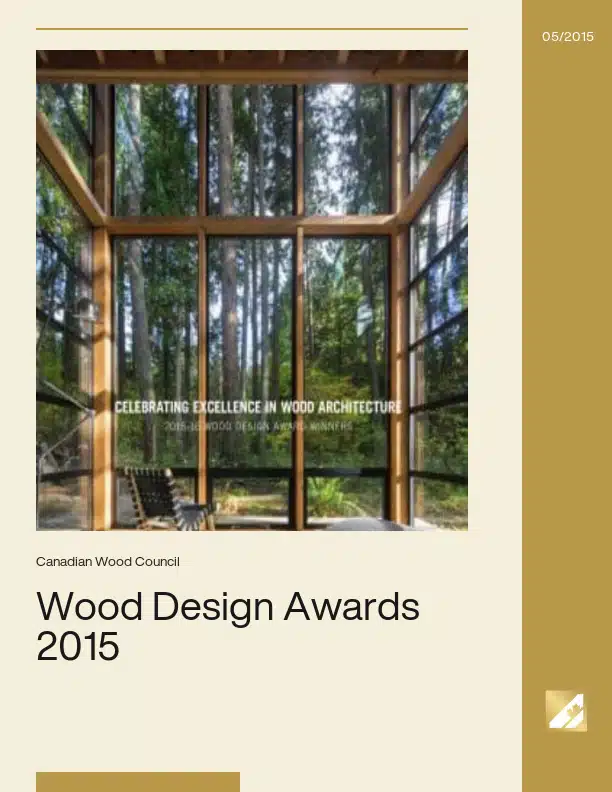
Wood Design Awards 2015

Wood Design Awards 2014

Wood Design Awards 2013

Wood Design Awards 2012

Wood Design Awards 2011

Wood Design Awards 2010

Mid Rise Structural Design

Course Overview

Examining recent 6-storey projects, this presentation will highlight specific challenges, important details and procedures, and to illustrate how various engineered wood products were applied strategically to ensure success.

Learning Objectives

  1. Gain insight into some of the critical structural challenges for wood framed mid‐rise buildings.
  2. Understand how use of Engineered Lumber (particularly LSL) can assist in decreasing building shrinkage and resisting higher loads.
  3. Know what a qualified ELP supplier can provide to assist in these projects.
  4. Examine a few emerging technologies that may impact this type of construction in the future.

Course Video

https://vimeo.com/1046545158

Speaker Bio

Steve McManus, P. Eng.
Weyerhaeuser

Global Lessons from Local Forests

Course Overview

Through the example of the Biomass Power Plant at Hotchkiss School this presentation highlights distinctive and sustainable infrastructure. This Biomass Power Plant was designed to do double duty as a living classroom. It exposes ecologically friendly technologies and sustainable construction materials to students and community groups through public tours. Attendees will see how an industrial building can also be beautiful and how sustainable and local materials can be incorporated into local infrastructure in ways that include and invite the community into the building and the operations of a Biomass facility.

Learning Objectives

  1. How wood structure can complement sustainable design.
  2. Appropriate uses for Glulam in the design of industrial and institutional construction.
  3. Conservation features under LEED that include: a renewable, laminated wood structural system; water-conserving plumbing fixtures; use of local materials with a high recycled content; an abundance of daylight inside; and highly efficient mechanical systems, lighting, and exterior skin.
  4. Infrastructure that connects and informs the local community and visitors, how the facility has become an integral part of the school’s commitment to becoming a carbon neutral campus by 2020.

Course Video

https://vimeo.com/1109954539?share=copy#t=0

Speaker Bio

Alan D Paradis, RA, Leed AP
Associate
Centerbrook Architects and Planners, LLP. – Connecticut, USA

National Model Codes in Canada

On behalf of the Canadian Commission on Building and Fire Codes (CCBFC) the National Research Council (NRC) Codes Canada publishes national model codes documents that set out minimum requirements relating to their scope and objectives. These include the National Building Code (NBC), the National Fire Code (NFC), the National Energy Code for Buildings (NECB), the National Plumbing Code (NPC) and other documents. The Canadian Standards Association (CSA) publishes other model codes that address electrical, gas and elevator systems.

The NBC is the model building code in Canada that forms the basis of most building design in the country. The NBC is a highly regarded model building code because it is a consensus-based process for producing a model set of requirements which provide for the health and safety of the public in buildings. Its origins are deeply entrenched within Canadian history and culture and a need to house the growing population of Canada safely and economically. Historical events have shaped many of the health and safety requirements of the NBC.

Model codes such as the NBC and NECB have no force in law until they are adopted by a government authority having jurisdiction. In Canada, that responsibility resides within the provinces, territories and in some cases, municipalities. Most regions choose to adopt the NBC, or adapt their own version derived from the NBC to suit regional needs.

The model codes in Canada are developed by experts, for experts, through a collaborative and consensus-based process that includes input from all segments of the building community. The Canadian model codes build on the best expertise from across Canada and around the world to provide effective building and safety regulations that are harmonized across Canada.

The Codes Canada publications are developed by the Canadian Commission on Building and Fire Codes (CCBFC). The CCBFC oversees the work of a number of technical standing committees. Representing all major facets of the construction industry, commission members include building and fire officials, architects, engineers, contractors and building owners, as well as members of the public. Canadian Wood Council representatives hold membership status on several of the standing committees and task groups acting under the CCBFC and participate actively in the technical updates and revisions related to aspects of the Canadian model codes that apply to wood building products and systems.

During any five-year code-revision cycle, there are many opportunities for the Canadian public to contribute to the process. At least twice during the five-year cycle, proposed changes to the Code are published and the public is invited to comment. This procedure is crucial as it allows input from all those concerned and broadens the scope of expertise of the Committees. Thousands of comments are received and examined by the Committees during each cycle. A proposed change may be approved as written, modified and resubmitted for public review at a later date, or rejected entirely.

Durability
...North American buildings built in the 1800s, wood construction has proven it can stand the test of time. Although wood building technology has been changing over time, wood’s natural durability...
Wood in non-combustible buildings
...of Non-Combustibility in Building Materials.” For further information, refer to the following resources: Wood Design Manual, Canadian Wood Council National Building Code of Canada CAN/ULC-S114 Test for Determination of Non-Combustibility...
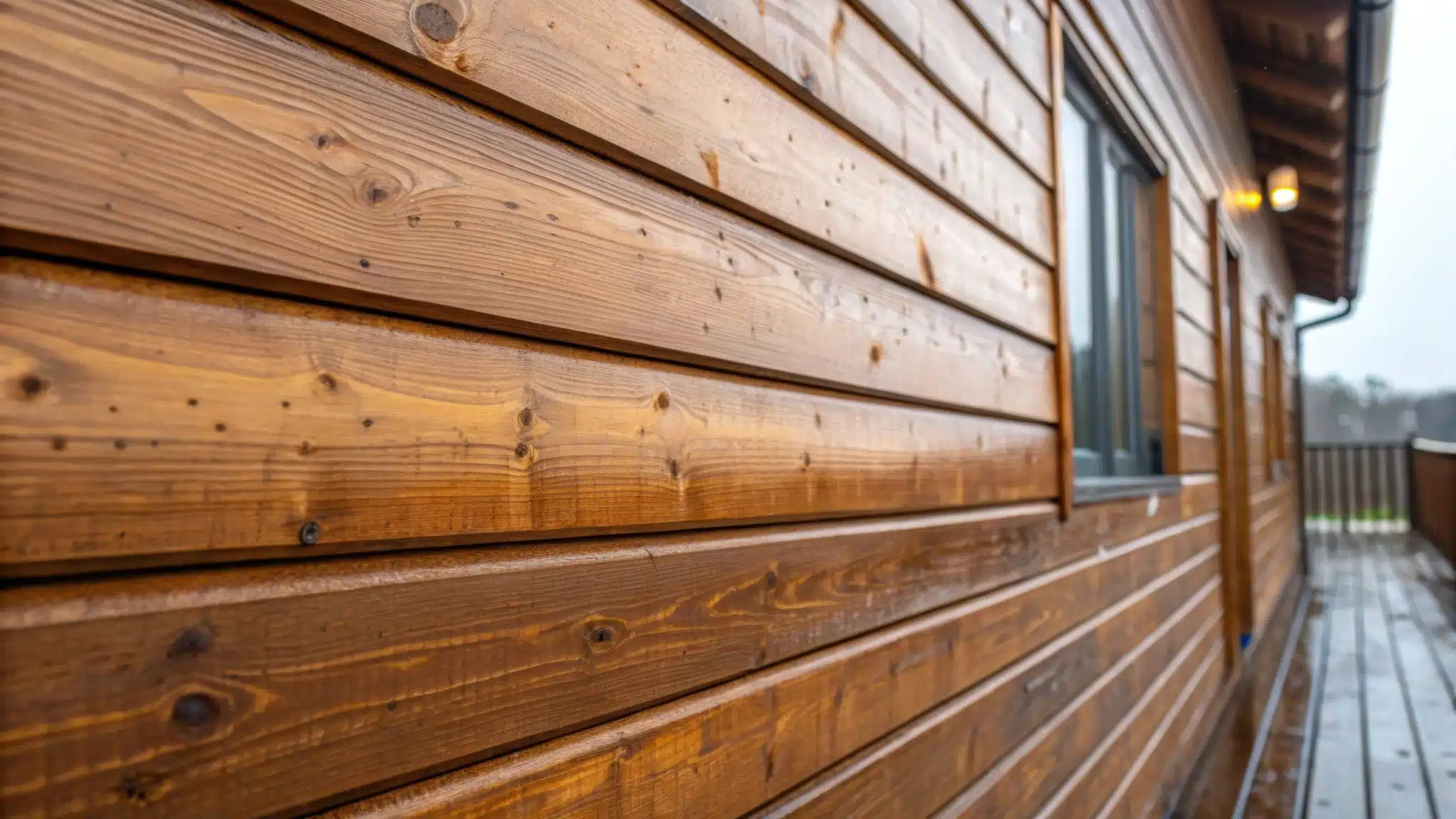
Choosing and Applying Exterior Wood Coatings
...and follow all manufacturer’s instructions. Surface Preparation for Aged Wood Wood coatings need a fresh surface or the coating simply won’t last. The longer wood has been allowed to weather, the poorer...
Performance Factors
...use of treated wood apply when coating preservative-treated wood. Effect of bluestain Bluestain is caused by fungi, and bluestained wood is more permeable than unstained wood, therefore it may absorb...
Treatability
...Heartwood White Spruce 2 3-4 Heartwood Engelmann Spruce 2 3-4 Heartwood Black Spruce 2 4 Heartwood Red Spruce 2 4 Heartwood Sitka Spruce 2 3 Heartwood Lodgepole Pine 1 3-4...
Finishing Exterior Wood
...with decay (rot) caused by decay fungi, which can penetrate deeply into wood and significantly reduce wood strength in a relatively short period.  In contrast, weathering of wood is caused...
Plywood
...Adjustment Factors for Fire-Retardant-Treated Plywood Roof Sheathing National Building Code of Canada Example Specifications for Plywood Plywood Grades Plywood Handling and Storage Plywood Manufacture Plywood Sizes Quality Control of Plywood...
Wood Decay and Repair
...this will be quite obvious. The wood will be soft and perhaps even be breakable by hand. Decayed wood breaks with a carrot-like snap versus the splintering of sound wood....
Fasteners
...environments.  For borate-treated wood used inside buildings, the same connectors can be used as for untreated wood. Recommendations on Fasteners for Treated Wood Fasteners for use in treated wood that...
Non-Pressure Treated Wood
...very rapidly in wet wood. Copper moves more slowly because it reacts with the wood. For dryer wood, glycols can be added to borate formulations to improve penetration. Over-the-counter wood...
Lumber
...end of wood members. When a wood member dries, moisture is lost very rapidly from the end of the member. At midlength, however, the wood is still at a higher...
Moisture and Wood
The durability of wood is often a function of water, but that doesn’t mean wood can never get wet. Quite the contrary, wood and water usually live happily together. Wood...
In the National Building Code of Canada (NBC) “fire-resistance rating” is defined in part as: “the time in minutes or hours that a material or assembly of materials...
Many historic structures in North America were built at a time when metal fasteners were not readily available. Instead, wood members were joined by shaping the adjoining...
Safe Handling Using common sense and standard safety equipment (personal protection and wood-working machinery) applies when working with any building products. Gloves, dust...
What do the experts have to say about wood-frame mid-rise construction? Graham Finch, Building Science Research Engineer Michael Green, Principal, Michael Green Architecture...
For outdoor applications of wood, we have a strong tradition here in North America of using our naturally durable species: Western red cedar, Eastern white cedar, yellow...
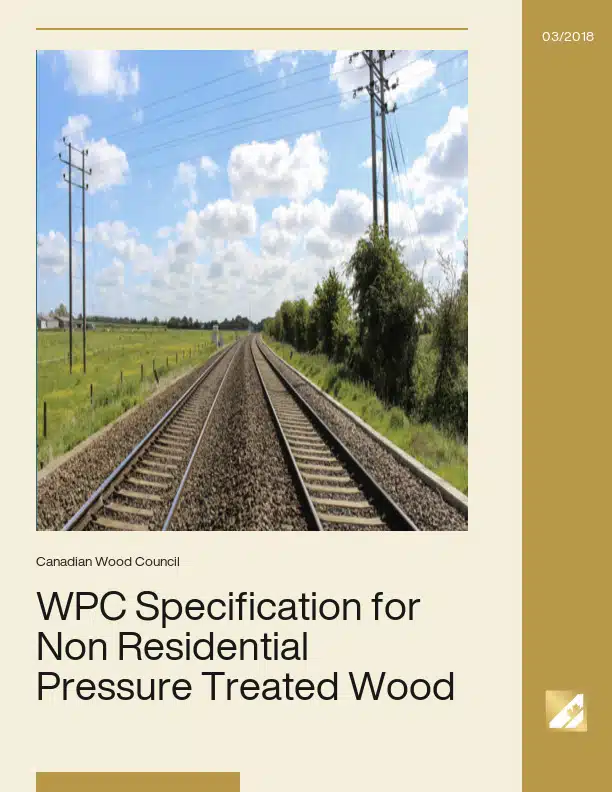
Course Overview One important aspect for all building products is proper specification. The Canadian Wood Council partnered with Wood Preservation Canada to publish a...
Course Overview In late 2014, following years of research and development in advanced wood products and systems, amendments to the 2012 edition of the Ontario Building Code...
Wood-frame construction is an important option for school buildings as well as an important choice toward meeting a sustainable future for Ontario. The facts behind this...
Course Overview Born out of years of research and real world experience Les Jezsa applies his unique perspective in exploring the wood quality attributes of: strength...
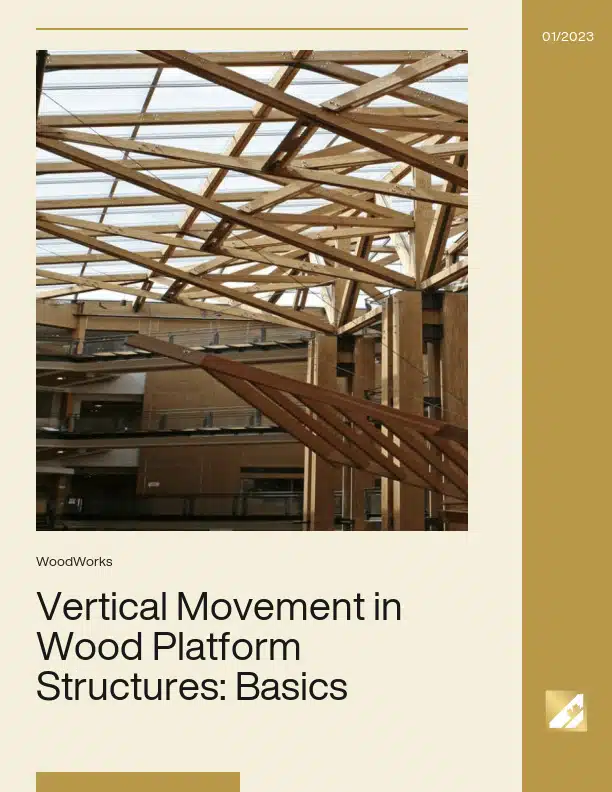
Movement in structures due to environmental condition changes and loads must be considered in design. Temperature changes will cause movement in concrete, steel and masonry...
Wood is the only renewable building material within the three major building material types. In exterior applications, wood is subject to deterioration from natural elements...
Timber bridges have a long history as vital components of the roadway, railway and logging road networks within Canada. Dependent on the availability of materials...
1
2
3

Get Access to Our Resources

Stay in the loop and don’t miss a thing!

What’s Your Occupation?

Help us personalize the content for you.

What Interests You the Most?

Help us personalize the content for you.

Filters

Expertise Icon
Field of Expertise
Province Icon
Province
Member Type Icon
WoodWork National Partners

Filters

Post Type Icon
Post Type
Persona Icon
Persona
Language Icon
Language
Tags Icon
Tags
Mass Timber Plus Icon Environment Plus Icon Safety Plus Icon Durability Plus Icon Design Systems Plus Icon Budget Plus Icon Construction Management Plus Icon Fire Resistance Plus Icon Tall Buildings Plus Icon Short Buildings Plus Icon
Date Icon
Date
Line Separator