Searching for: Wood

Searching results for “Wood”
326 results found...
Sort By Dropdown Icon

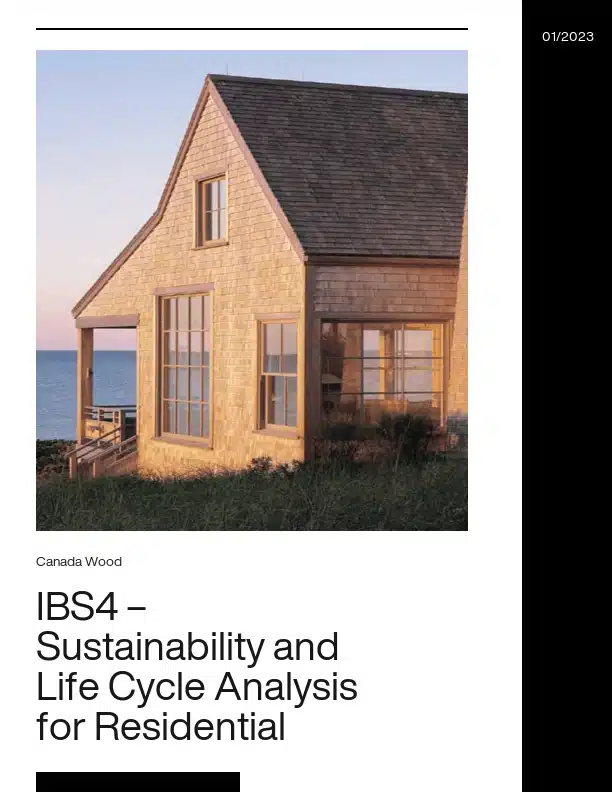
IBS4 – Sustainability and Life Cycle Analysis for Residential Buildings

Environmental awareness in building design, construction and operation is stronger than ever. But how can we meet the world’s rapidly growing need for buildings and still be environmentally responsible? Although construction is never fully benign for the environment, designers and builders can make choices to minimize the impact. Wood plays an important part in sustainable design, as shown by scientific analysis.

The Historical Development of the Building Size Limits in the National Building Code of Canada

The use of wood is limited in larger and taller buildings by the National Building Code of Canada (NBCC) based on concern of increased fire risk. The current requirements were developed long ago, under much different conditions than today. Since then the industry’s knowledge of fire science has evolved considerably, fire service equipment and capabilities have improved, detection and suppression systems have advanced, construction materials and techniques have changed significantly, and public awareness and education regarding fire safety has increased.

Having an understanding of the knowledge, capability, materials and methods used to develop the height and area limits and the risks they were intended to mitigate, sets the basis for re-examination of those limits in a current context. This can be achieved through a historical examination of the development of the limits and their bearing on the use of combustible construction in buildings.

Durability
...North American buildings built in the 1800s, wood construction has proven it can stand the test of time. Although wood building technology has been changing over time, wood’s natural durability...
Wood in non-combustible buildings
...of Non-Combustibility in Building Materials.” For further information, refer to the following resources: Wood Design Manual, Canadian Wood Council National Building Code of Canada CAN/ULC-S114 Test for Determination of Non-Combustibility...
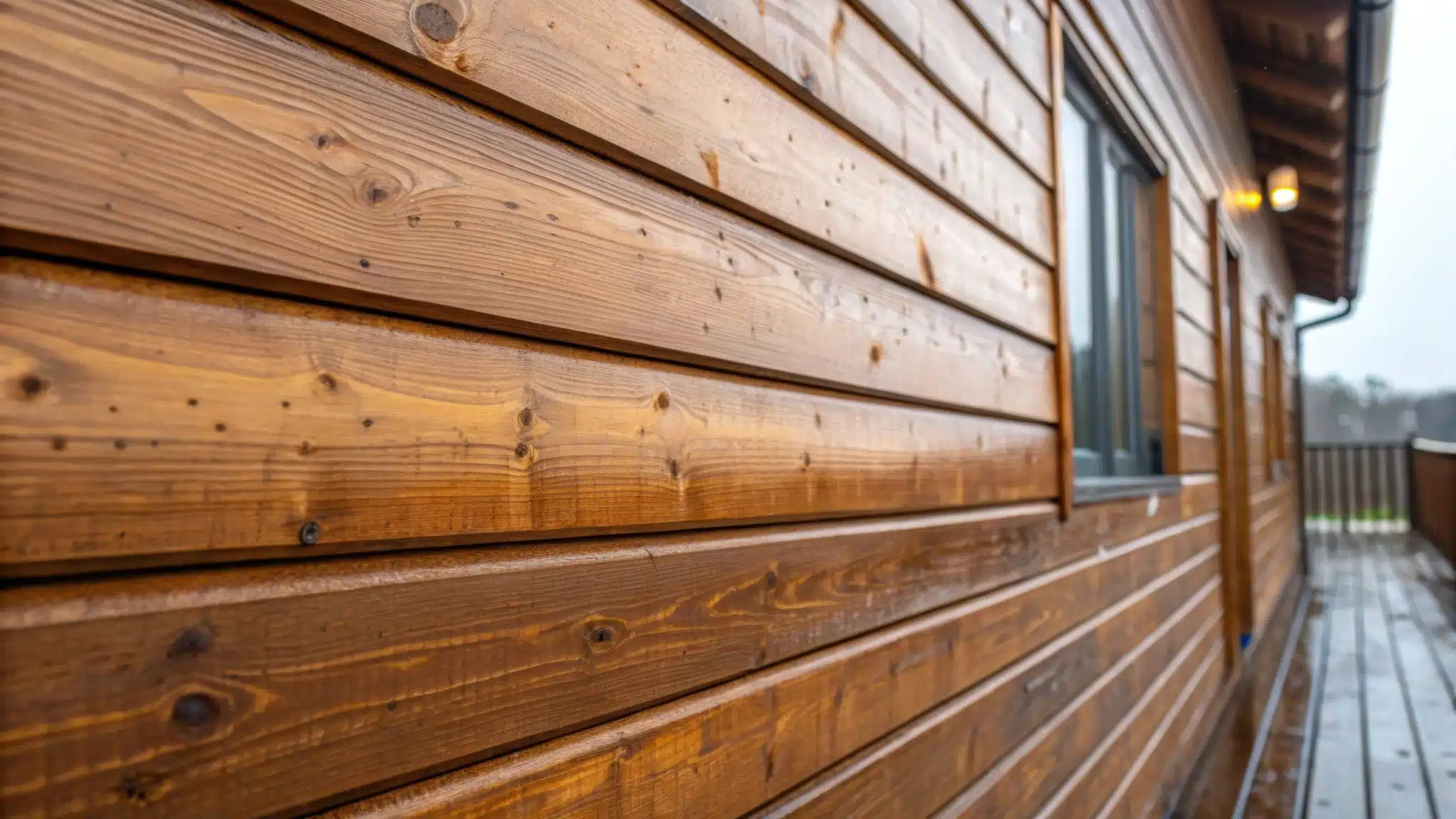
Choosing and Applying Exterior Wood Coatings
...and follow all manufacturer’s instructions. Surface Preparation for Aged Wood Wood coatings need a fresh surface or the coating simply won’t last. The longer wood has been allowed to weather, the poorer...
Performance Factors
...use of treated wood apply when coating preservative-treated wood. Effect of bluestain Bluestain is caused by fungi, and bluestained wood is more permeable than unstained wood, therefore it may absorb...
Treatability
...Heartwood White Spruce 2 3-4 Heartwood Engelmann Spruce 2 3-4 Heartwood Black Spruce 2 4 Heartwood Red Spruce 2 4 Heartwood Sitka Spruce 2 3 Heartwood Lodgepole Pine 1 3-4...
Finishing Exterior Wood
...with decay (rot) caused by decay fungi, which can penetrate deeply into wood and significantly reduce wood strength in a relatively short period.  In contrast, weathering of wood is caused...
Plywood
...Adjustment Factors for Fire-Retardant-Treated Plywood Roof Sheathing National Building Code of Canada Example Specifications for Plywood Plywood Grades Plywood Handling and Storage Plywood Manufacture Plywood Sizes Quality Control of Plywood...
Wood Decay and Repair
...this will be quite obvious. The wood will be soft and perhaps even be breakable by hand. Decayed wood breaks with a carrot-like snap versus the splintering of sound wood....
Fasteners
...environments.  For borate-treated wood used inside buildings, the same connectors can be used as for untreated wood. Recommendations on Fasteners for Treated Wood Fasteners for use in treated wood that...
Non-Pressure Treated Wood
...very rapidly in wet wood. Copper moves more slowly because it reacts with the wood. For dryer wood, glycols can be added to borate formulations to improve penetration. Over-the-counter wood...
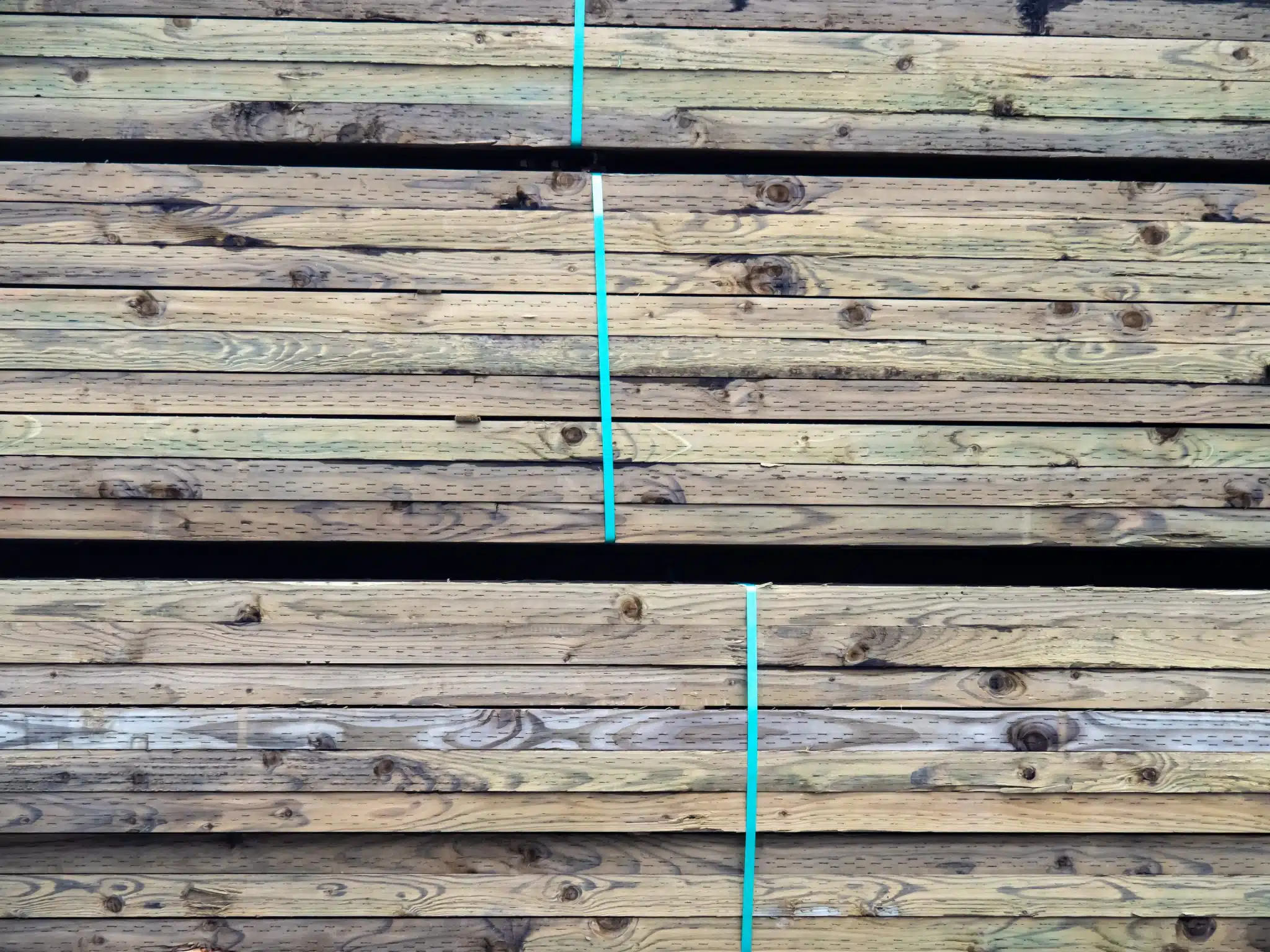
Lumber
...end of wood members. When a wood member dries, moisture is lost very rapidly from the end of the member. At midlength, however, the wood is still at a higher...
Moisture and Wood
The durability of wood is often a function of water, but that doesn’t mean wood can never get wet. Quite the contrary, wood and water usually live happily together. Wood...
Studies General “The Historical Development of the Building Size Limits in the National Building Code of Canada“, by Sereca for CWC (2015)  (17 Mb) Structural &...
CSA S406 Specification of permanent wood foundations for housing and small buildings CSA S406 is the design and construction standard for permanent wood foundations (PWF)...
By using roundwood that is often not be suitable for lumber production, wood-based panels make efficient use of the forest resource by providing engineered wood products with...
Laminated Strand Lumber (LSL) is one of the more recent structural composite lumber (SCL) products to come into widespread use. LSL provides attributes such as high strength...
Oriented Strand Lumber (OSL) Oriented Strand Lumber (OSL) provides attributes such as high strength, high stiffness and dimensional stability. The manufacturing process of...
Resource Description A structured undergraduate timber engineering course designed to introduce students to the fundamental material properties of wood and the principles of...
Course Overview This session will feature thought leaders in a podcast-style conversation exploring the evolving role of wood in Canadian construction. Through a series of...
Wood is resistant to some of the chemicals destructive to steel and concrete. For example, wood is often the material of choice when exposed to: organic compounds, hot or...
Course Overview Concrete, steel, and aluminum are responsible for 23% of the world’s total CO2 emissions. While a portion of those emissions come from other industries, the...
Course Overview This session brings together a panel of experts to discuss lessons learned and visions for wood-based manufactured housing solutions. The panel will address...
FPInnovations has been field testing the performance of treated wood products for years. Click one of these categories for performance data from our field tests....
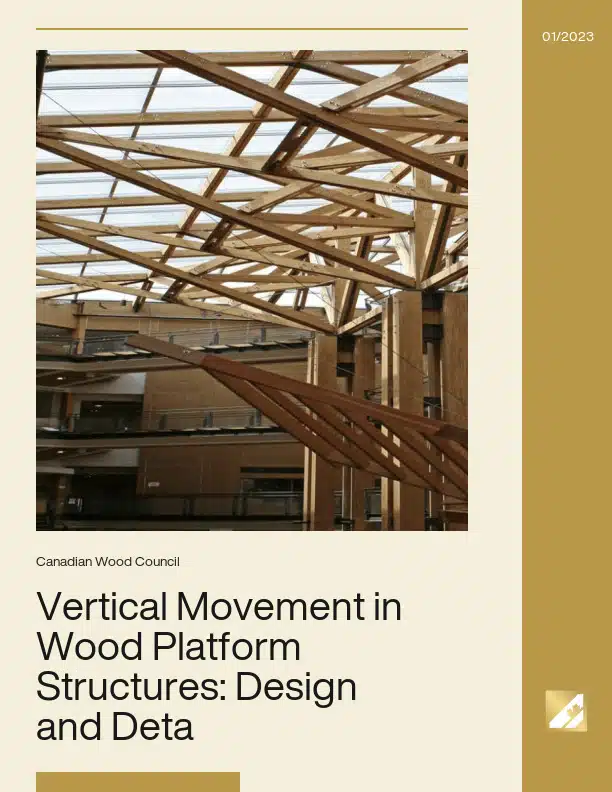
Most buildings are designed to accommodate a certain range of movement. In design, it is important for designers to identify locations where potential differential movement...
1
2
3

Get Access to Our Resources

Stay in the loop and don’t miss a thing!

What’s Your Occupation?

Help us personalize the content for you.

What Interests You the Most?

Help us personalize the content for you.

Filters

Expertise Icon
Field of Expertise
Province Icon
Province
Member Type Icon
WoodWork National Partners

Filters

Post Type Icon
Post Type
Persona Icon
Persona
Language Icon
Language
Tags Icon
Tags
Mass Timber Plus Icon Environment Plus Icon Safety Plus Icon Durability Plus Icon Design Systems Plus Icon Budget Plus Icon Construction Management Plus Icon Fire Resistance Plus Icon Tall Buildings Plus Icon Short Buildings Plus Icon
Date Icon
Date
Line Separator