Searching for: Wood

Searching results for “Wood”
326 results found...
Sort By Dropdown Icon

Wood Design Awards 2018

Wood Design Awards 2017

Wood Design Awards 2016

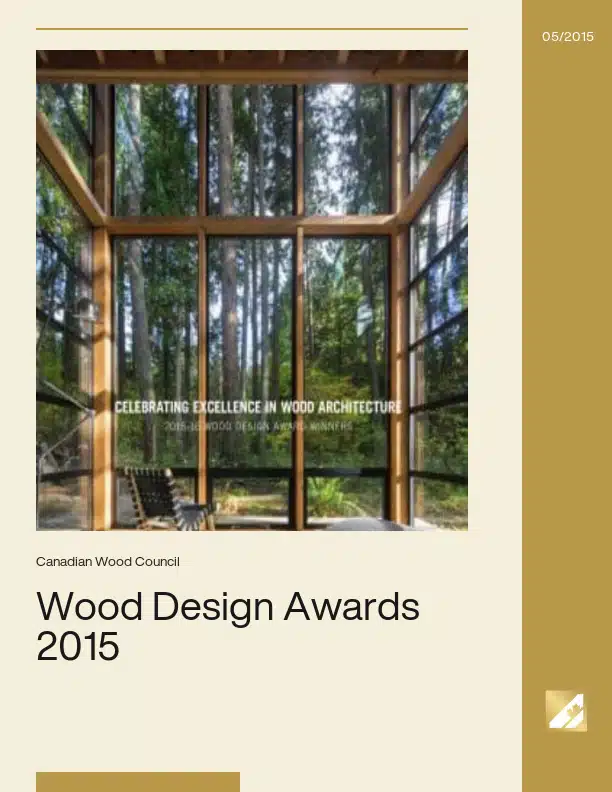
Wood Design Awards 2015

Wood Design Awards 2014

Wood Design Awards 2013

Wood Design Awards 2012

Wood Design Awards 2011

Wood Design Awards 2010

Mid Rise Structural Design

Course Overview

Examining recent 6-storey projects, this presentation will highlight specific challenges, important details and procedures, and to illustrate how various engineered wood products were applied strategically to ensure success.

Learning Objectives

  1. Gain insight into some of the critical structural challenges for wood framed mid‐rise buildings.
  2. Understand how use of Engineered Lumber (particularly LSL) can assist in decreasing building shrinkage and resisting higher loads.
  3. Know what a qualified ELP supplier can provide to assist in these projects.
  4. Examine a few emerging technologies that may impact this type of construction in the future.

Course Video

https://vimeo.com/1046545158

Speaker Bio

Steve McManus, P. Eng.
Weyerhaeuser

Global Lessons from Local Forests

Course Overview

Through the example of the Biomass Power Plant at Hotchkiss School this presentation highlights distinctive and sustainable infrastructure. This Biomass Power Plant was designed to do double duty as a living classroom. It exposes ecologically friendly technologies and sustainable construction materials to students and community groups through public tours. Attendees will see how an industrial building can also be beautiful and how sustainable and local materials can be incorporated into local infrastructure in ways that include and invite the community into the building and the operations of a Biomass facility.

Learning Objectives

  1. How wood structure can complement sustainable design.
  2. Appropriate uses for Glulam in the design of industrial and institutional construction.
  3. Conservation features under LEED that include: a renewable, laminated wood structural system; water-conserving plumbing fixtures; use of local materials with a high recycled content; an abundance of daylight inside; and highly efficient mechanical systems, lighting, and exterior skin.
  4. Infrastructure that connects and informs the local community and visitors, how the facility has become an integral part of the school’s commitment to becoming a carbon neutral campus by 2020.

Course Video

https://vimeo.com/1109954539?share=copy#t=0

Speaker Bio

Alan D Paradis, RA, Leed AP
Associate
Centerbrook Architects and Planners, LLP. – Connecticut, USA

National Model Codes in Canada

On behalf of the Canadian Commission on Building and Fire Codes (CCBFC) the National Research Council (NRC) Codes Canada publishes national model codes documents that set out minimum requirements relating to their scope and objectives. These include the National Building Code (NBC), the National Fire Code (NFC), the National Energy Code for Buildings (NECB), the National Plumbing Code (NPC) and other documents. The Canadian Standards Association (CSA) publishes other model codes that address electrical, gas and elevator systems.

The NBC is the model building code in Canada that forms the basis of most building design in the country. The NBC is a highly regarded model building code because it is a consensus-based process for producing a model set of requirements which provide for the health and safety of the public in buildings. Its origins are deeply entrenched within Canadian history and culture and a need to house the growing population of Canada safely and economically. Historical events have shaped many of the health and safety requirements of the NBC.

Model codes such as the NBC and NECB have no force in law until they are adopted by a government authority having jurisdiction. In Canada, that responsibility resides within the provinces, territories and in some cases, municipalities. Most regions choose to adopt the NBC, or adapt their own version derived from the NBC to suit regional needs.

The model codes in Canada are developed by experts, for experts, through a collaborative and consensus-based process that includes input from all segments of the building community. The Canadian model codes build on the best expertise from across Canada and around the world to provide effective building and safety regulations that are harmonized across Canada.

The Codes Canada publications are developed by the Canadian Commission on Building and Fire Codes (CCBFC). The CCBFC oversees the work of a number of technical standing committees. Representing all major facets of the construction industry, commission members include building and fire officials, architects, engineers, contractors and building owners, as well as members of the public. Canadian Wood Council representatives hold membership status on several of the standing committees and task groups acting under the CCBFC and participate actively in the technical updates and revisions related to aspects of the Canadian model codes that apply to wood building products and systems.

During any five-year code-revision cycle, there are many opportunities for the Canadian public to contribute to the process. At least twice during the five-year cycle, proposed changes to the Code are published and the public is invited to comment. This procedure is crucial as it allows input from all those concerned and broadens the scope of expertise of the Committees. Thousands of comments are received and examined by the Committees during each cycle. A proposed change may be approved as written, modified and resubmitted for public review at a later date, or rejected entirely.

Mid-Rise Buildings
...British Columbia (Canadian Wood Council) National Building Code of Canada Wood Design Manual (Canadian Wood Council) CSA O86 Engineering design in wood Wood for Mid-Rise Construction (Wood WORKS! Atlantic) Fire...
Assessing and Restoration of Decay
...sure why. If wood is badly decayed, this will be quite obvious. The wood will be softer than normal and perhaps even be breakable by hand. Decayed wood often has...
Preservative Treated Wood
...www.durable-wood.com Wood Preservation Canada Canadian Wood Preservation Association CSA O80 Series Wood preservation CSA O86 Engineering design in wood Pest Management Regulatory Agency of Health Canada American Wood Protection Association...
Green Construction through Wood: Accelerating Mass Timber Adoption in Canada
...both light wood frame and mass timber. Simon Bellavance Technical Advisor Cecobois Simon T. Bellavance holds a bachelor’s degree in wood engineering from Laval University, specializing in wood structures. Before...
CSA 080 Wood Preservation
...O80 Wood preservation Wood Preservation Canada National Building Code of Canada Pest Management Regulatory Agency American Wood Protection Association ISO 21887 Durability of wood and wood-based products — Use classes...
Wood’s Durable Heritage
...of how to protect wood from decay and fire, we can expect today’s wood buildings to be around for as long as we wish. While wood does not have the...
Structural Design
...refer to the following resources: Introduction to Wood Design (Canadian Wood Council) Wood Design Manual (Canadian Wood Council) CSA O86 Engineering design in wood National Building Code of Canada www.woodworks-software.com...
Durability by treatment
...of Wood Preservative Products Lonza Wood Protection Timber Specialties  Viance LLC  Genics Inc.  Kop-Coat   Rio Tinto Minerals Nisus   Creosote council   KMG Chemicals   Wood Preservation Canada  ...
Climate Change
...Forest Products Industry “30 by 30” Climate Change Challenge (Forest Products Association of Canada) www.naturallywood.com www.thinkwood.com Building with wood = Proactive climate protection (Binational Softwood Lumber Council and State University...
Tall Wood Buildings
...Wood Innovation and Design Centre (Canadian Wood Council) Technical Guide for the Design and Construction of Tall Wood Buildings in Canada (FPInnovations) Ontario’s Tall Wood Building Reference (Ministry of Natural...
Finishing Quick Tips
For new wood, remember: The wood must be dry. Drying time depends on a few factors. Ideally the wood should be kiln-dried (stamped “S-DRY”, “KD” or “KDAT”, see glossary of...
Permanent Wood Foundations
...Durable, Comfortable, Adaptable, Energy efficient, Economical (Wood Preservation Canada and Canadian Wood Council) Wood Design Manual (Canadian Wood Council) Wood Preservation Canada CSA S406 Specification of permanent wood foundations for...
In the early 1900s, light-frame wood construction and heavy timber, up to ten-storeys in height, was commonplace in major cities throughout Canada. The longevity and...
Sometimes it happens – wood in service suffers from decay. How can you identify decayed wood and what are the recommended actions to take? First, be sure you actually have...
Preservative-treated wood is surface coated or pressure impregnated with chemicals that improve the resistance to damage that can result from biological deterioration (decay)...
Course Overview Advancing mass timber construction is critical to achieving Canada’s climate, housing, and economic goals. This course explores how innovative wood-based...
The National Building Code of Canada (NBC) contains requirements regarding the use of treated wood in buildings and the CSA O80 Series of standards is referenced in the NBC...
There’s no reason a wood structure can’t last virtually forever – or, at least hundreds of years, far longer than we may actually need the building. With a good...
A structure must be designed to resist all the loads expected to act on the structure during its service life. Under the effects of the expected applied loads, the structure...
Treating Methods There are two basic methods of treating: with and without pressure. Non-pressure methods are the application of preservative by brushing, spraying or dipping...
Concerns about climate change are encouraging decarbonization of the building sector, including the use of construction materials responsible for fewer greenhouse gas (GHG)...
With advanced construction technologies and modern mass timber products such as glued-laminated timber, cross-laminated timber and structural composite lumber, building tall...
For new wood, remember: The wood must be dry.  Drying time depends on a few factors. Ideally the wood should be kiln-dried (stamped “S-DRY”, “KD” or “KDAT”, see...
A permanent wood foundation (PWF) is an engineered construction system that uses load-bearing exterior light-frame wood walls in a below-grade application. A PWF consists of...
1
2
3

Get Access to Our Resources

Stay in the loop and don’t miss a thing!

What’s Your Occupation?

Help us personalize the content for you.

What Interests You the Most?

Help us personalize the content for you.

Filters

Expertise Icon
Field of Expertise
Province Icon
Province
Member Type Icon
WoodWork National Partners

Filters

Post Type Icon
Post Type
Persona Icon
Persona
Language Icon
Language
Tags Icon
Tags
Mass Timber Plus Icon Environment Plus Icon Safety Plus Icon Durability Plus Icon Design Systems Plus Icon Budget Plus Icon Construction Management Plus Icon Fire Resistance Plus Icon Tall Buildings Plus Icon Short Buildings Plus Icon
Date Icon
Date
Line Separator