Searching for: Wood

Searching results for “Wood”
326 results found...
Sort By Dropdown Icon

Wood Design Awards 2018

Wood Design Awards 2017

Wood Design Awards 2016

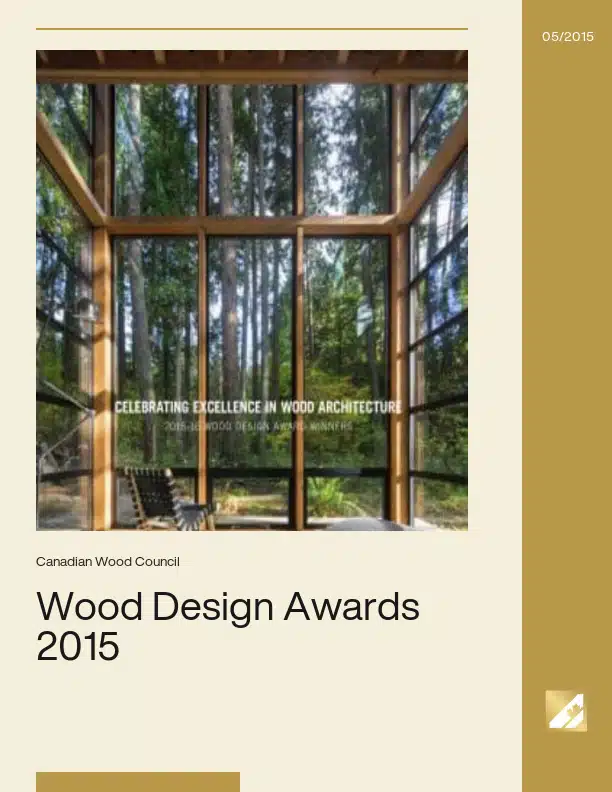
Wood Design Awards 2015

Wood Design Awards 2014

Wood Design Awards 2013

Wood Design Awards 2012

Wood Design Awards 2011

Wood Design Awards 2010

Mid Rise Structural Design

Course Overview

Examining recent 6-storey projects, this presentation will highlight specific challenges, important details and procedures, and to illustrate how various engineered wood products were applied strategically to ensure success.

Learning Objectives

  1. Gain insight into some of the critical structural challenges for wood framed mid‐rise buildings.
  2. Understand how use of Engineered Lumber (particularly LSL) can assist in decreasing building shrinkage and resisting higher loads.
  3. Know what a qualified ELP supplier can provide to assist in these projects.
  4. Examine a few emerging technologies that may impact this type of construction in the future.

Course Video

https://vimeo.com/1046545158

Speaker Bio

Steve McManus, P. Eng.
Weyerhaeuser

Global Lessons from Local Forests

Course Overview

Through the example of the Biomass Power Plant at Hotchkiss School this presentation highlights distinctive and sustainable infrastructure. This Biomass Power Plant was designed to do double duty as a living classroom. It exposes ecologically friendly technologies and sustainable construction materials to students and community groups through public tours. Attendees will see how an industrial building can also be beautiful and how sustainable and local materials can be incorporated into local infrastructure in ways that include and invite the community into the building and the operations of a Biomass facility.

Learning Objectives

  1. How wood structure can complement sustainable design.
  2. Appropriate uses for Glulam in the design of industrial and institutional construction.
  3. Conservation features under LEED that include: a renewable, laminated wood structural system; water-conserving plumbing fixtures; use of local materials with a high recycled content; an abundance of daylight inside; and highly efficient mechanical systems, lighting, and exterior skin.
  4. Infrastructure that connects and informs the local community and visitors, how the facility has become an integral part of the school’s commitment to becoming a carbon neutral campus by 2020.

Course Video

https://vimeo.com/1109954539?share=copy#t=0

Speaker Bio

Alan D Paradis, RA, Leed AP
Associate
Centerbrook Architects and Planners, LLP. – Connecticut, USA

National Model Codes in Canada

On behalf of the Canadian Commission on Building and Fire Codes (CCBFC) the National Research Council (NRC) Codes Canada publishes national model codes documents that set out minimum requirements relating to their scope and objectives. These include the National Building Code (NBC), the National Fire Code (NFC), the National Energy Code for Buildings (NECB), the National Plumbing Code (NPC) and other documents. The Canadian Standards Association (CSA) publishes other model codes that address electrical, gas and elevator systems.

The NBC is the model building code in Canada that forms the basis of most building design in the country. The NBC is a highly regarded model building code because it is a consensus-based process for producing a model set of requirements which provide for the health and safety of the public in buildings. Its origins are deeply entrenched within Canadian history and culture and a need to house the growing population of Canada safely and economically. Historical events have shaped many of the health and safety requirements of the NBC.

Model codes such as the NBC and NECB have no force in law until they are adopted by a government authority having jurisdiction. In Canada, that responsibility resides within the provinces, territories and in some cases, municipalities. Most regions choose to adopt the NBC, or adapt their own version derived from the NBC to suit regional needs.

The model codes in Canada are developed by experts, for experts, through a collaborative and consensus-based process that includes input from all segments of the building community. The Canadian model codes build on the best expertise from across Canada and around the world to provide effective building and safety regulations that are harmonized across Canada.

The Codes Canada publications are developed by the Canadian Commission on Building and Fire Codes (CCBFC). The CCBFC oversees the work of a number of technical standing committees. Representing all major facets of the construction industry, commission members include building and fire officials, architects, engineers, contractors and building owners, as well as members of the public. Canadian Wood Council representatives hold membership status on several of the standing committees and task groups acting under the CCBFC and participate actively in the technical updates and revisions related to aspects of the Canadian model codes that apply to wood building products and systems.

During any five-year code-revision cycle, there are many opportunities for the Canadian public to contribute to the process. At least twice during the five-year cycle, proposed changes to the Code are published and the public is invited to comment. This procedure is crucial as it allows input from all those concerned and broadens the scope of expertise of the Committees. Thousands of comments are received and examined by the Committees during each cycle. A proposed change may be approved as written, modified and resubmitted for public review at a later date, or rejected entirely.

Fire Resistance
...to the following resources: Wood Design Manual (Canadian Wood Council) Fire Safety Design in Buildings (Canadian Wood Council) National Building Code of Canada National Fire Code of Canada CSA O86,...
Timber Joinery
...the ends of timbers are carved out so that they fit together like puzzle pieces. The variations and configurations of wood-to-wood joints is quite large and complex. Some common wood-to-wood...
Environmental Issues
...with all woodworking. Here are a few key points specific to treated wood: Pressure-treated wood is not a pesticide, and it is not a hazardous product. In most municipalities, you...
Mid-Rise FAQs
...at a changing landscape (Part 1) Mid-rise Wood Construction – a detailed look at a changing landscape (Part 2) Seven-storey wood-frame earthquake test BC Housing is supporting wood-frame construction for seniors’ rental...
Durability by nature
...are chemicals that are deposited in the heartwood of certain tree species as they convert sapwood to heartwood. In addition to providing the wood with decay resistance, extractives also often...
The Importance of Proper Specification: Agricultural, Commercial, and Industrial Applications for Pressure Treated Wood
...associations including the Canadian Standards Association, the American Wood Preservation Association, Wood Preservation Canada, and was past President for the Canadian Wood Preservation Association. Craig was an integral part of...
Mid-Rise Wood Construction in Ontario: Navigating 2024 Ontario Building Code Updates
...practice resources for mid-rise wood construction and how to access free WoodWorks project support. Course Video https://vimeo.com/1198518622 Speakers Bio Hailey Quiquero Senior Manager WoodWorks ON / Canadian Wood Council Hailey...
Wood Use In Low Rise Educational Buildings Ontario Reference Guide 2012
...as they pertain to wood construction are elaborated upon. All references to the Ontario Building Code are based on an extensive review of the OBC as it pertains to wood...
Practical Aspects of Wood Quality for Architects and Engineers
...wood production and wood quality. Intensive tree sampling techniques provided information on stem size, stem taper, branch size, heartwood-sapwood distribution, and juvenile- mature-wood classification. His three-dimensional analysis of ring width,...
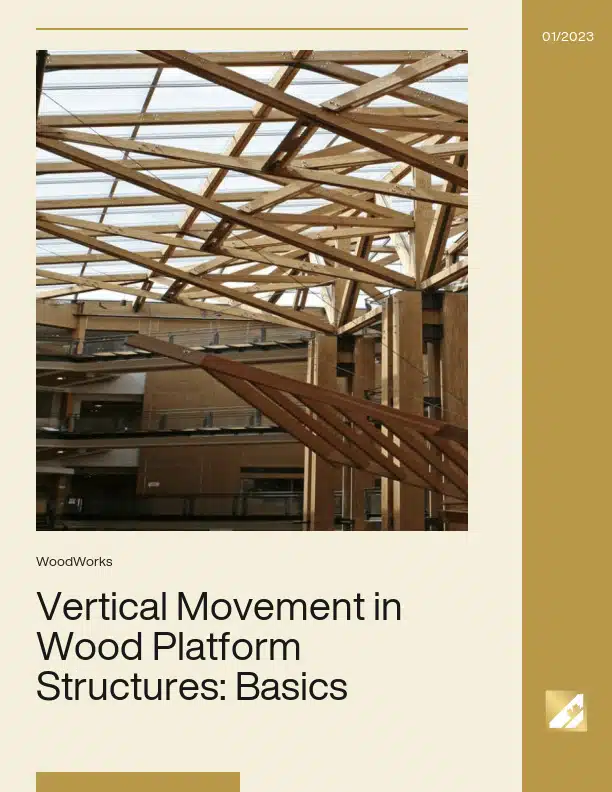
Vertical Movement in Wood Platform Structures: Basics
...is primarily related to shrinkage or swelling caused by moisture loss or gain when the moisture content is below 28% (wood fiber saturation point). Other movement in wood structures may...
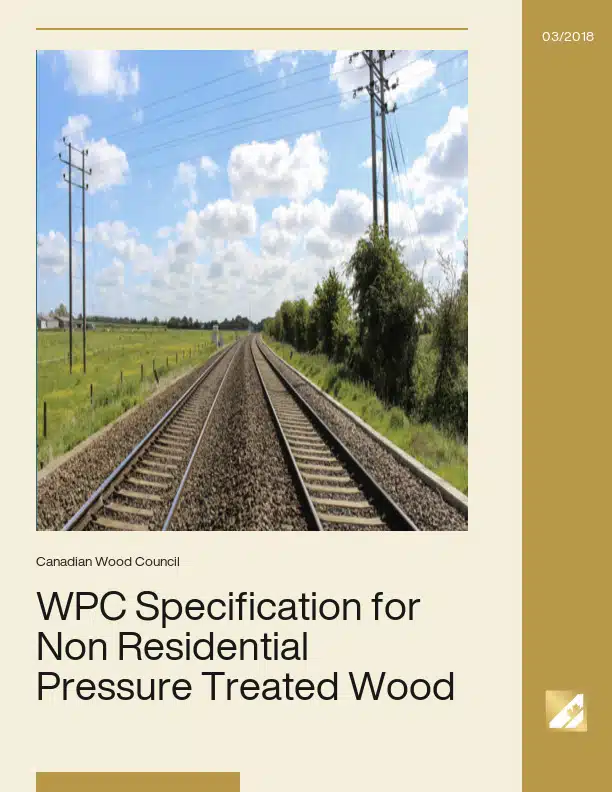
WPC Specification Guide for Non Residential Pressure Treated Wood Products Web
...properly protected, its service life can be extended for many years. The most effective way of protecting exposed wood is the use of wood preservatives. Preserved wood products can have...
Bridges
...the following resources: Wood Highway Bridges (Canadian Wood Council) Ontario Wood Bridge Reference Guide (Canadian Wood Council) CSA S6 Canadian Highway Bridge Design Code CSA O86 Engineering design in wood...
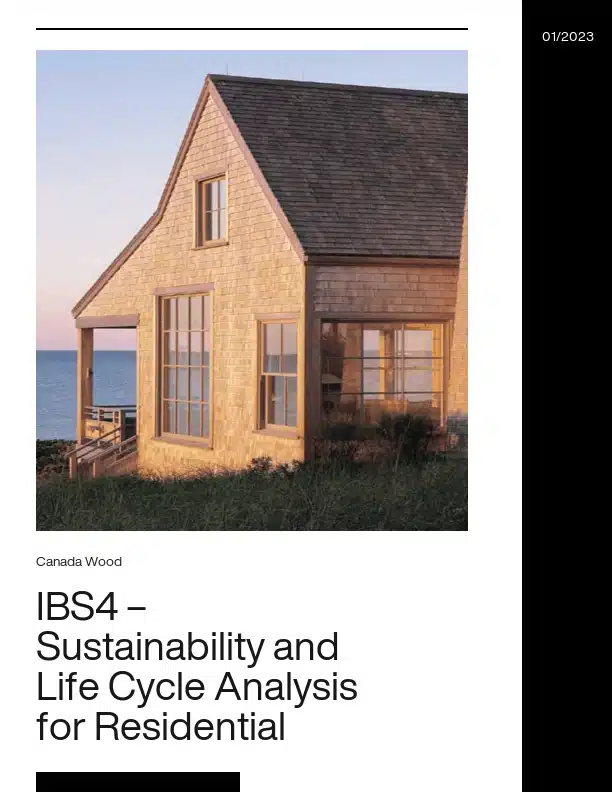
Environmental awareness in building design, construction and operation is stronger than ever. But how can we meet the world’s rapidly growing need for buildings and still...
The use of wood is limited in larger and taller buildings by the National Building Code of Canada (NBCC) based on concern of increased fire risk. The current requirements...
1
2
3

Get Access to Our Resources

Stay in the loop and don’t miss a thing!

What’s Your Occupation?

Help us personalize the content for you.

What Interests You the Most?

Help us personalize the content for you.

Filters

Expertise Icon
Field of Expertise
Province Icon
Province
Member Type Icon
WoodWork National Partners

Filters

Post Type Icon
Post Type
Persona Icon
Persona
Language Icon
Language
Tags Icon
Tags
Mass Timber Plus Icon Environment Plus Icon Safety Plus Icon Durability Plus Icon Design Systems Plus Icon Budget Plus Icon Construction Management Plus Icon Fire Resistance Plus Icon Tall Buildings Plus Icon Short Buildings Plus Icon
Date Icon
Date
Line Separator