Searching for: Wood

Searching results for “Wood”
520 results found...
Sort By Dropdown Icon

Finishing Quick Tips

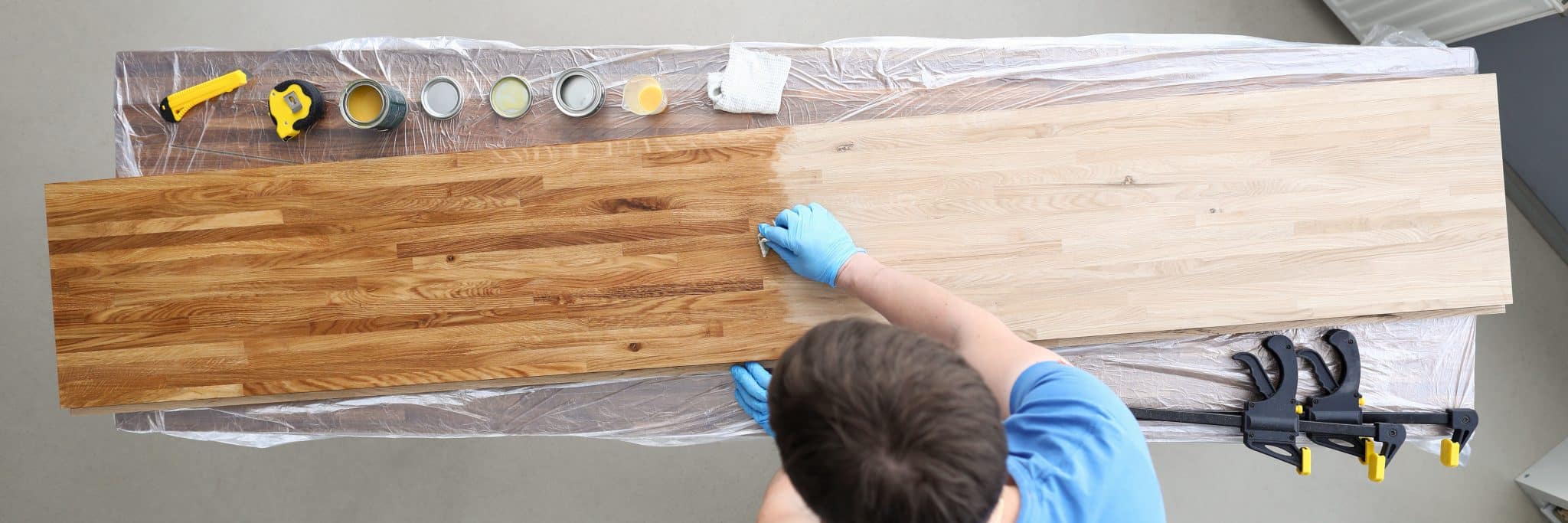
For new wood, remember:

  • The wood must be dry.  Drying time depends on a few factors.
    • Ideally the wood should be kiln-dried (stamped “S-DRY”, “KD” or “KDAT”, see glossary of “dry lumber”). If the wood is surface wet from rain or washing, let dry 1 to 2 days.
    • If the wood is wet through (green lumber, pressure-treated lumber not stamped “KDAT”), 2 days of drying is acceptable if using a “damp-friendly” coating.  Otherwise:
    • The wood must be allowed to thoroughly dry to a stable outdoor moisture content; about 15% in most climates. The characteristics of the wood and the climatic characteristics of its environment are so variable that drying time is hard to predict.  The common way to determine wood moisture content is with a moisture meter. (Note: specific correction factors should be applied if a moisture meter is used on preservative-treated wood.)
  • Weather conditions during coating application can affect the coating’s drying, appearance and performance. Follow the coating manufacturer’s recommendation.
  • Coat as soon as possible after the wood has been planed or sanded.  Apply finishes within two weeks of exposure, or sooner if possible (Surface Preparation for Fresh Wood).  Otherwise, follow the instructions for aged (weathered) wood below.
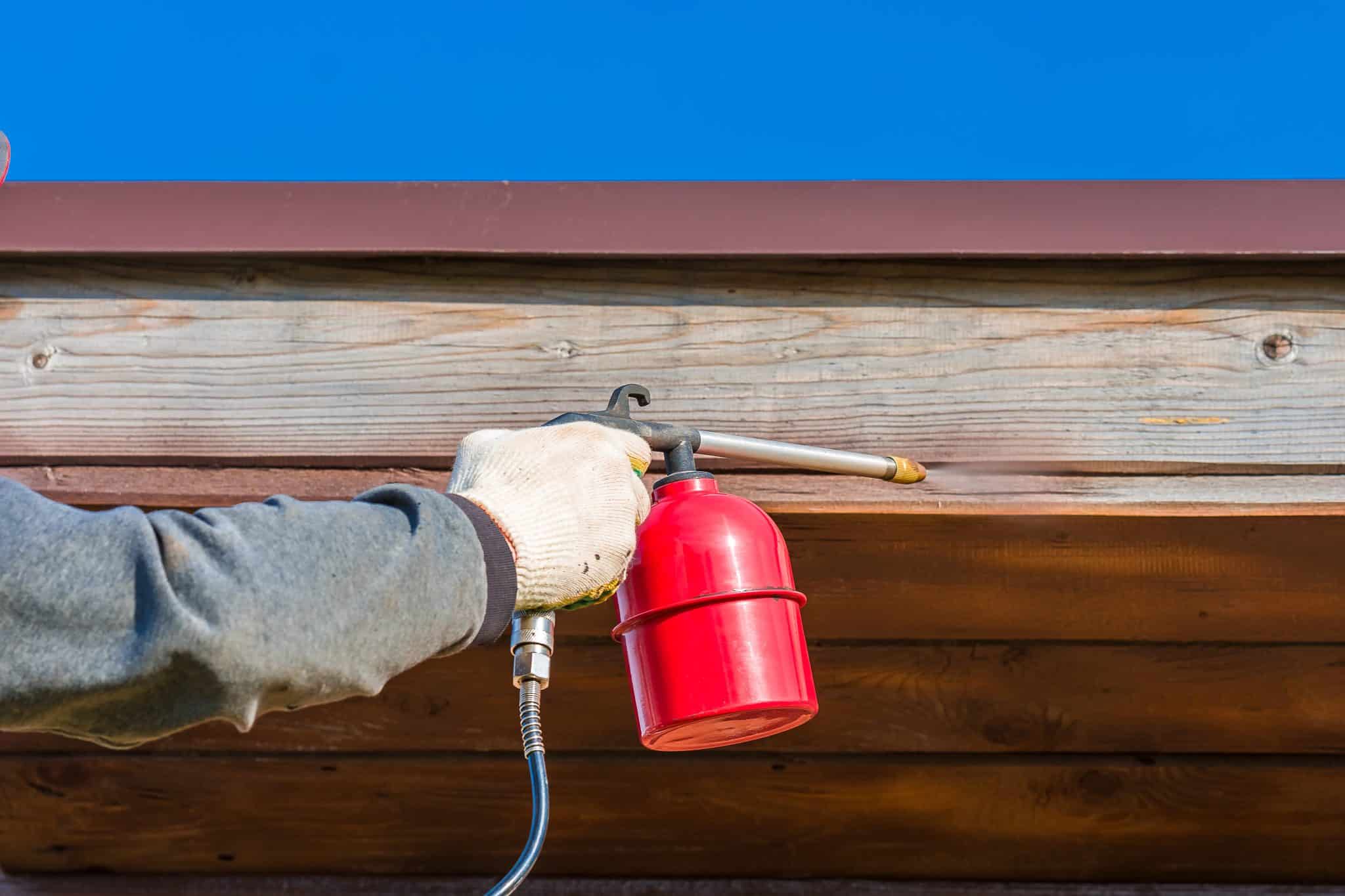
  • If the wood is very smooth, lightly sand it to roughen the surface with 100-120 grit sand paper.  This greatly improves the coating bond.  Brush free of dirt and sawdust.
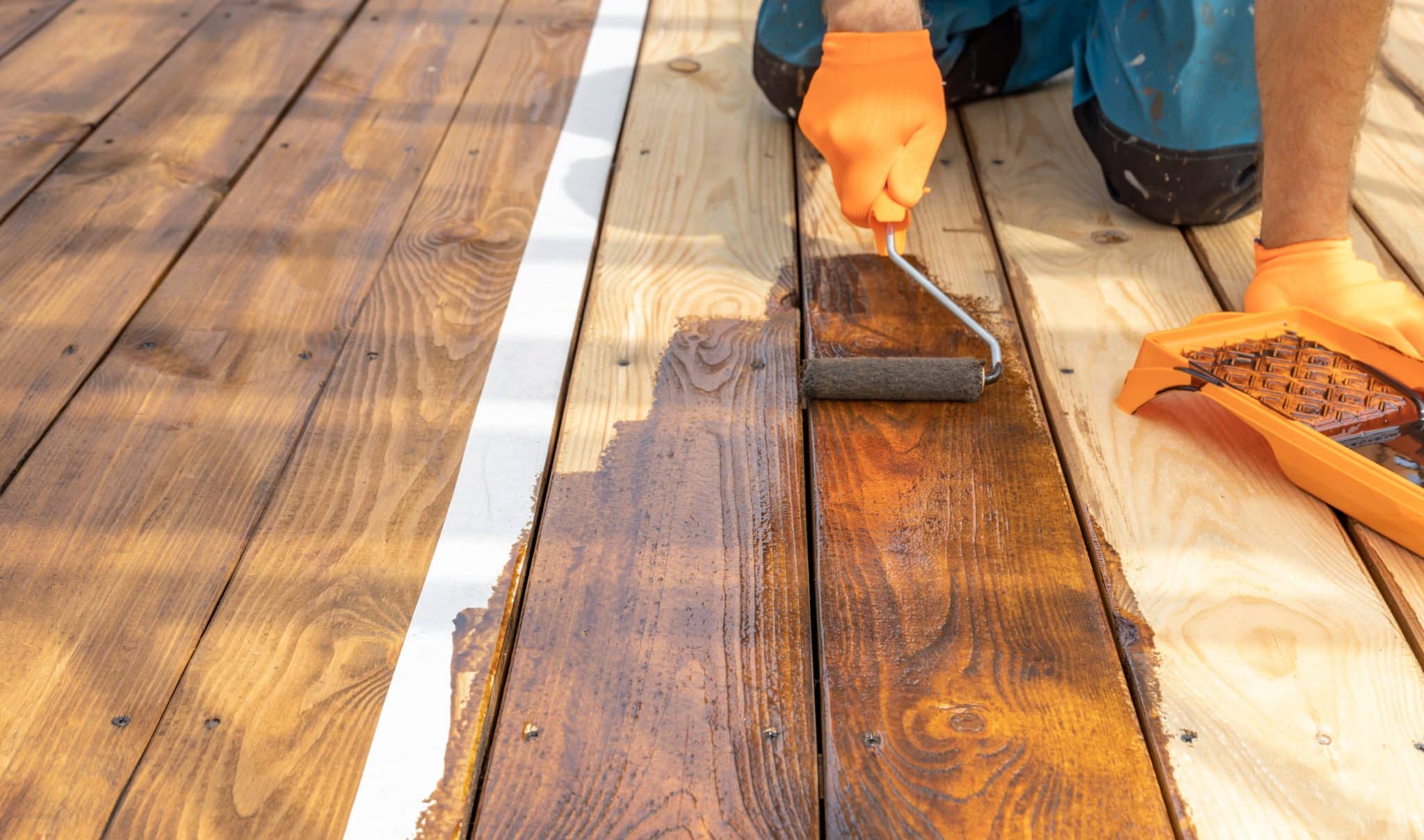
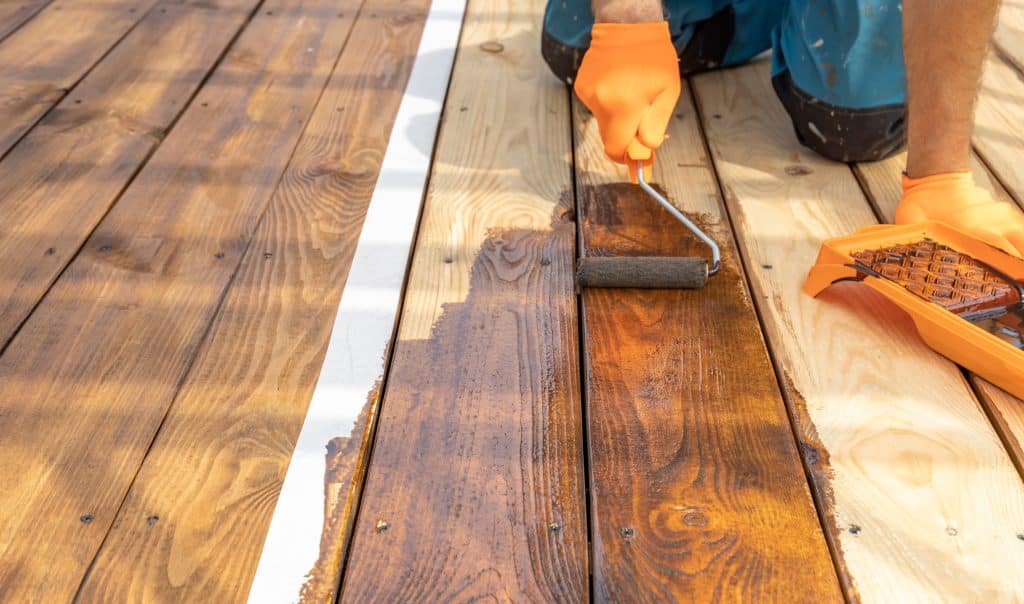
  • If painting the wood, apply a primer coat. Use an extractive-blocking primer, if needed (for example, with western red cedar or redwood) over the entire piece, or a knot sealing primer if needed (Special Considerations).  When dry, apply two coats of top quality paint. For stains and water repellents, follow the  instructions on the can regarding number of coats.
  • Carefully follow the instructions on the can regarding best environmental conditions for coating, application recommendations, safety precautions and clean-up.

For aged (weathered) wood, remember:

  • For wood that has been previously coated, please read about refinishing.
  • Clean the wood and remove discolourations such as iron stain, if desired.  Expose fresh wood because coatings perform best when applied to freshly exposed wood surfaces.  Allow to dry. See Surface Preparation for Aged Wood.
  • Brush free of dirt and sawdust, and proceed with application of the coating.

When maintaining or refinishing, remember:

  • Avoid the need to refinish by keeping an eye on the coating and adding a fresh coat before the previous coat wears away, cracks or peels.  This may be as frequent as every six months with water repellents, every year or two with stains, and every few years with paint (See Maintenance).
  • Spot-treat worn areas to extend the period between full applications of a fresh coat.  Sand away any failed coating and any weathered wood, and re-apply the coating (See Maintenance).
  • If the coating has failed on a large scale, or the coating is getting too thick for refinishing, or if a change in type of coating is desired, completely strip away the old coating – please read about refinishing.
Glossary

Acrylic

A type of water-borne coating product containing acrylic polymers.

Alkyd

A type of polyester resin. Term often used to signify solvent-borne coatings, e.g., oil paints.

Backpriming

The application of a finish coat to the back side of wood such as shingles or siding.

Binder

The non-volatile film-forming solid portion in a coating, which binds the pigment particles together after the film is dry and creates the bond with the substrate.  Typical binders include alkyd resins, acrylic resins and polyurethane resins.

Bleeding

When the colour of a discolouration or other material works up through a coating to the surface.  Commonly used to describe leaching of tannins in extractive species like western red cedar and redwood (typically happens for the first year or so if not stain blocked).

Blistering

When a coating forms bubbles due to air, water vapour or solvent under the film.

Dry lumber

Lumber which has been dried to a moisture content of 19% or less. Any 4” and thinner boards or dimension lumber surfaced at a moisture content (MC) of 19% or less may be stamped “S-DRY” and stamped “KD” if kiln-dried to a maximum moisture content of 19%.  Lumber in the USA may be stamped “KDAT” if kiln-dried after pressure treatment with preservatives.

Enamel

Generic term for an alkyd-based pigmented coating that dries to a smooth, hard, glossy finish.  The term is often more broadly used for a coating which gives a hard, stain-resistant film.

Extractives

Soluble chemicals particularly present in the heartwood of some species which provide the wood with resistance to decay and insects.

Fungicide

A substance which inhibits the growth of fungus.  Often added to coatings to protect the coatings themselves from fungal growth.

Latex

Term used to signify water-borne paints.

Lacquer

Coating material characterized by rapid evaporation of the solvent to produce a thin, hard film.

Linseed oil

Obtained by crushing flax seeds, this natural oil can be used as a vehicle in paints, as a softening agent for the resins in varnishes, or can be used alone as a wood finish material.  Raw linseed oil is a food source for fungi and must be boiled to destroy these nutrients. Most “boiled” linseed oil is not boiled but contains metallic dryers and biocides.

Oil-based paints

Paints using natural oils such as linseed or tung oil as the binder, with turpentine as the usual solvent.  The term is now usually used to refer to paints with both alkyds and oil as the binders, and with a carrier of mineral spirits or other solvents.

Paint

An opaque coating generally made with a binder, liquids, additives and pigments. Applied in liquid form, it dries to form a continuous film that protects and improves the appearance of the substrate.

Pigment

Finely ground solids that impart colour, hiding power (opacity) and ultraviolet protection.

Pitch

Also called resin, this sticky substance is a mixture of rosin and turpentine and is found in most softwoods but particularly the pines, spruces and Douglas-fir.  Can ooze from the pitch pockets and sometimes the knots for a year or two if not set by kiln-drying.  Resin can bleed through finishes and will harden into beads, but this can be cleaned up with mineral spirits and will stop eventually.

Primer

The first complete coat of paint applied in a painting system. Many primers are designed to enhance adhesion between the surface and subsequent topcoats. Most primers contain some pigment, some lend uniformity to the topcoat, some inhibit corrosion of the substrate, and some stop the discolouration of the topcoat.

Resin

For tree resin, see Pitch. In coatings, see Binder.

Sealer

A liquid that seals wood pores so they will not absorb subsequent coats.  Sealers may be transparent, and can act as primers. Some sealers are designed to be left uncoated.

Semi-transparent stain

Stain that alters the natural colour of the wood, yet allows the grain and texture to show through. The term is generally applied to exterior products, but technically applies also to interior wiping stains used for trim, furniture and floors.

Shellac

Alcohol-soluble, clear to orange-coloured resin derived from lac, a substance secreted by insects.  Previously used as a sealer and clear finish for floors, for sealing knots, and in “alcohol-borne” primers; rarely in use anymore. Thinner is denatured alcohol. It is an environmentally friendly product and usually available from finish suppliers.

Solid-colour stain

Exterior stain that obscures the natural colour and grain of wood, but still allows the texture to show through – essentially, a thin paint.

Stain

A coating product which can either be opaque such as a solid colour stain or partly transparent such as a semi-transparent stain. Also refers to wood discolourations such as discolourations caused by tannins in wood extractives, or stain caused by fungi such as bluestain.

Solvent

In generic coatings terminology, refers to the volatile liquid used to improve the working properties of a coating, typically water or hydrocarbons.  In “solvent-borne” coatings, refers specifically to a coating based on hydrocarbons.

Tung oil

Obtained from the nut of the Asian tung tree. Hardly ever used in the raw state as it dries to a non-lustrous finish.  Used in varnishes.

Varnish

Generic term for clear film-forming finish. Transparent or translucent liquids applied as a thin film, which harden.  Can be solvent or water-borne.

VOC

Volatile organic compound.  VOCs are organic chemical compounds that have high enough vapour pressures under normal conditions to significantly vaporize and enter the atmosphere where they may participate in photochemical reactions. They are often associated with solvents, typically considered to be pollutants, and are the subject of regulations in many jurisdictions.

Canadian Preservation Industry

Canada has had a wood preservation industry for about 100 years.  Canada is tied with the UK as the world’s second largest producer of treated wood (the USA is first, by a large margin).  In 1999, the most recent year for which we have data, Canada produced 3.5 million cubic metres of treated wood.  There are about 65 treating plants in Canada.

As with most other industrialized countries, Canada developed a wood preservation industry using creosote, initially to service railroads (the ties holding the rails) and then utilities (power poles).  Creosote production began declining by the 1950s, and by the 1970s was being somewhat replaced for these traditional uses by pentachlorophenol.  Today, these oil-borne preservatives only constitute 17% of Canadian treated wood production.

The remaining 83% of production uses water-borne preservatives such as CCA, ACQ and CA.  The industry began its substantial shift to the water-borne products in the 1970s, as consumer interest in decks and other residential outdoor structures dramatically increased.  For many years, CCA was by far the dominant preservative for both residential and industrial applications.

In 2004, CCA regulations were changed such that CCA is no longer available for many residential applications.  Subsequently, Canadian treaters have shifted about 80% of their previous CCA production to ACQ or CA.

Most of Canada’s treated wood is used domestically; Canada exports only 10% of its production.

Canada has its own wood preservation standards, supports several technical and marketing organizations, and maintains a lead position in certain areas of wood preservation research.  A major focus of the industry has been in response to increasing levels of health and environmental protection regulations.

Durability Research and Development

FPInnovations has been field testing the performance of treated wood products for years. Click one of these categories for performance data from our field tests.

Borate-treated Wood vs. Termites

Durability Research and Development
Round Wood Posts
Durability Research and Development
Sawn Wood Posts


Durability Research and Development
Lumber vs. termites
Durability Research and Development
Shakes


Durability Research and Development
Marine Pilings
Durability Research and Development
Field Cuts


Naturally Durable Species

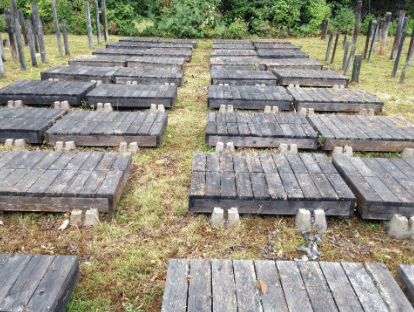
The heartwood of species reported to have some natural durability was evaluated in ground contact (stakes) and above-ground (decking) tests. 

Durability Research and Development

Commodity: 2×4 and 2×6 lumber from naturally durable species: Western redcedar, yellow cypress, eastern white cedar, larch, tamarack, Douglas-fir

Control species: Ponderosa pine sapwood

Test method: Stake test (AWPA E7) and Decking test (AWPA E25)

Test sites: FPInnovations – Maple Ridge, BC; Petawawa, ON

Michigan Technological University – Gainesville, Florida; Kipuka, Hawaii 

Date of installation: 2004-2005


Estimated service life: In the ground-contact stake test, after 5 years moderate to high levels of decay were found in all species at all sites. Yellow cypress and western redcedar were the most durable at all site. Eastern white cedar had similar durability at the Canadian and Florida sites, but was less durable in Hawaii. There were no major performance differences observed between old-growth and second-growth materials used in this study. Untreated naturally durable heartwood is not recommended for long-term performance in ground contact.

In the above ground decking test, at the Canadian test sites after 10 years only small amounts of decay were observed in any of the naturally durable heartwoods tested. In contrast, the ponderosa pine controls had moderate to advanced decay. Decay was more rapid at the Florida and Hawaii test sites, with moderate to advanced decay present in all material types after 7 years. Untreated naturally durable heartwood is not recommended for long-term performance in exposed above ground applications in high decay hazard areas such as Florida and Hawaii. However, in temperate climates these naturally durable heartwoods can provide service lives greater than 10 years.

References:

Morris, P. I., Ingram, J., Larkin, G., & Laks, P. (2011). Field tests of naturally durable species. Forest Products Journal61(5), 344-351.

Morris, P. I., Laks, P., Larkin, G., Ingram, J. K., & Stirling, R. (2016). Aboveground decay resistance of selected Canadian softwoods at four test sites after 10 years of exposure. Forest products journal66(5), 268-273.

Mid-Rise Buildings

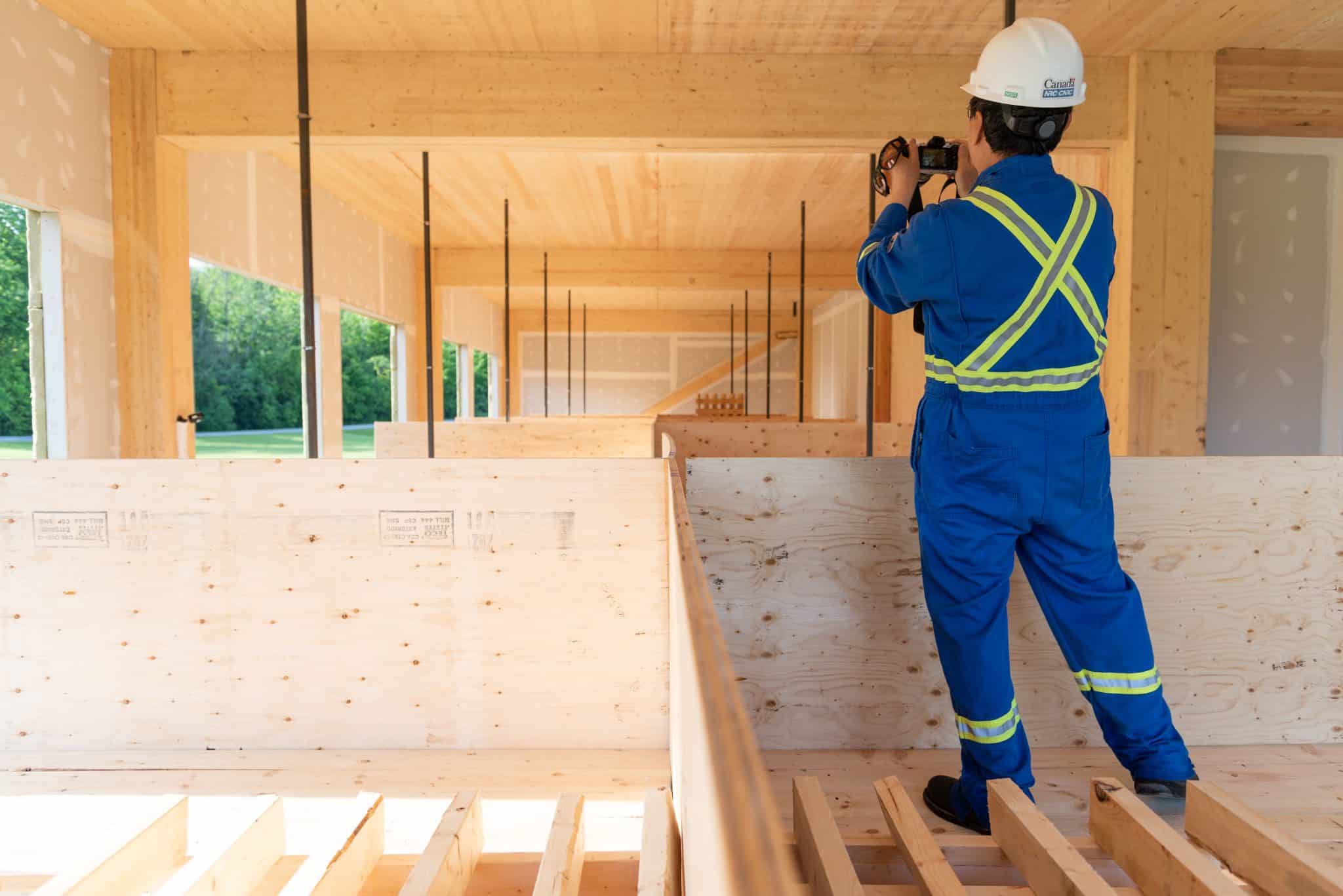
In the early 1900s, light-frame wood construction and heavy timber, up to ten-storeys in height, was commonplace in major cities throughout Canada. The longevity and continued appeal of these buildings types is apparent in the fact that many of them are still in use today. Over the past decade, there has been a revival in the use of wood for taller buildings in Canada, including mid-rise light-frame wood construction up to six-storeys in height.

Mid-rise light-frame wood construction is more than basic 2×4 framing and wood sheathing panels. Advances in wood science and building technology have resulted in stronger, safer, more sophisticated engineered building products and systems that are expanding the options for wood construction, and providing more choices for builders and designers. Modern mid-rise light-frame wood construction in incorporates well researched and safe solutions. The engineering design and technology that has been developed and brought to market is positioning Canada as a leader in the mid-rise wood-frame construction industry.

In 2009, via its provincial building codes, British Columbia became the first province in Canada to allow mid-rise buildings to be made from wood. Since this change to the British Columbia Building Code (BCBC), which increased the permissible height for wood frame residential buildings from four- to six-storeys, more than 300 of these structures have been completed or are underway with BC. In 2013 and 2015, Québec, Ontario, and Alberta, respectively, also moved to permit mid-rise wood-frame construction up to six-storeys in height. These regulatory changes indicate that there is clear market confidence in this type of construction.

Scientific evidence and independent research has shown that mid-rise wood-frame buildings can meet performance requirements in regard to structural integrity, fire safety, and life safety. That evidence has now also contributed to the addition of new prescriptive provisions for wood construction, as well as paved the way for future changes that will include more permissible uses and ultimately greater permissible heights for wood buildings. As a result of this research, and the successful implementation of many mid-rise wood-frame residential buildings, primarily in British Columbia and Ontario, the Canadian Commission on Building and Fire Codes (CCBFC) approved similar changes to the National Model Construction Codes. The 2015 edition of the National Building Code of Canada (NBC) permits the construction of six-storey residential, business, and personal services buildings using traditional combustible construction materials. The NBC changes recognize the advancements in wood products and building systems, as well as in fire detection, suppression, and containment systems.

In relation to mid-rise wood-frame buildings, several changes to the 2015 NBC are designed to further reduce the risks posed by fire, including:

  • increased use of automatic sprinklers in concealed areas in residential buildings;
  • increased use of sprinklers on balconies;
  • greater water supply for firefighting purposes; and
  • 90 percent noncombustible or limited-combustible exterior cladding on all storeys.

Most mid-rise wood-frame buildings are located in the core of smaller municipalities and in the inner suburbs of larger ones, offering economic and sustainability advantages. Mid-rise wood-frame construction supports the goals of many municipalities; densification, affordable housing to accommodate a growing population, sustainability in the built environment and resilient communities.

Many of these buildings have employed light-frame wood construction from the ground up, with a five- or six-storey wood-frame structure being constructed on a concrete slab-on-grade, or on top of a concrete basement parking garage; others have been constructed above one- or two-storeys of noncombustible commercial occupancy.

Mid-rise wood buildings are inherently more complex and involve the adaptation of structural and architectural details that address considerations related to structural, acoustic, thermal and fire performance design criteria. Several key aspects of design and construction that become more critical in this new generation of mid-rise wood buildings include:

  • increased potential for cumulative shrinkage and differential movement between different types of materials, as a result of the increased building height;
  • increased, dead, live, wind and seismic loads that are a consequence of taller building height;
  • requirements for continuous stacked shearwall layouts;
  • increased fire-resistance ratings for fire separations, as required for buildings of greater height and area;
  • ratings for sound transmission, as required for buildings of multi-family residential occupancy, as well as other uses;
  • potential for longer exposure to the elements during construction;
  • mitigation of risk related to fire during construction; and
  • modified construction sequencing and coordination, resulting from the employment of prefabrication technologies and processes.

There are many alternative approaches and solutions to these new design and construction considerations that are associated with mid-rise wood construction systems. Reference publications produced by the Canadian Wood Council provide more detailed discussion, case studies and details for mid-rise design and construction techniques.


For further information, refer to the following resources:

Mid-Rise Best Practice Guide (Canadian Wood Council)

2015 Reference Guide: Mid-Rise Wood Construction in the Ontario Building Code (Canadian Wood Council)

Mid-Rise 2.0 – Innovative Approaches to Mid-Rise Wood Frame Construction (Canadian Wood Council)

Mid-Rise Construction in British Columbia (Canadian Wood Council)

National Building Code of Canada

Wood Design Manual (Canadian Wood Council)

CSA O86 Engineering design in wood

Wood for Mid-Rise Construction (Wood WORKS! Atlantic)

Fire Safety and Security: A Technical Note on Fire Safety and Security on Construction Sites in British Columbia/Ontario (Canadian Wood Council)

Mid-Rise FAQs

What do the experts have to say about wood-frame mid-rise construction?

Is mid-rise and tall wood building construction a new phenomenon:

Wood-frame and heavy timber construction (up to ten storeys) was the norm in the early 1900’s, and many of these buildings still exist and are in use in many Canadian cities.

Over the past 10 years, there is a revival in the use of wood for both mid-rise (up to six-storeys) and tall buildings. In British Columbia alone, as of December 2013, there were over 250 five- and six-storey wood product based mid-rise buildings either in the design or construction phase.

Why have code change proposals?

This 2015 building code change is not about favoring wood over other building materials; it’s about acknowledging, via the highly thorough code process, that science-based innovation in wood products and building systems can and will lead to more choices for builders and occupants.

Are these buildings safe?

Regardless of the building material in question, nothing gets built unless it meets code. Mid-rise wood-frame buildings reflect a new standard of engineering in that structural, fire and seismic concerns have all been addressed by the expert committees of the Canadian Commission on Building and Fire Codes. As an example, when it comes to concerns from firefighters, there is increased sprinkler protection for concealed spaces and balconies, greater water supply for fire protection, restrictions on types of building claddings used and increased consideration for access by firefighters . In the end,  when occupied, these buildings fully meet the same requirements of the Building Code as any other type of construction from the perspective of health, safety and accessibility.

What are some of the new safety provisions being proposed?

Fire safety:

  • Increased level of sprinkler / water protection:
  • More  concealed spaces sprinklered
  • Balconies must be sprinklered
  • Greater water supply for fire protection
  • Non-combustible or limited combustible exterior wall cladding on 5th and 6th storey
  • 25% of perimeter must face one street (within 15m of street) for firefighter access

Seismic and wind provisions:

  • Similar to BC Building Code
  • Guidance (Appendix) on impact of increased rain and wind loads for 5- and 6-storey

Acoustics:

  • Requirements for Apparent Sound Transmission Class (ASTC)
  • Supported by science from FPInnovations, NRC and many others.

Doesn’t wood burn?

No building material is impervious to the effects of fire. The proposed code changes go above and beyond the minimum requirements outlined in the NBCC. Health, safety, accessibility, fire and structural protection of buildings remain the core objectives of the NBCC and wood industry at large.

What about construction site safety?

The Canadian Wood Council has developed construction site fire safety guides which outline best practices and safety precautions to take during the construction phase of a building.

Are mid-rise wood-frame buildings cost effective?

For the most part, yes. Mid-rise wood-frame buildings are often a less expensive construction option for builders. This is good news for main-street Canada where land is so expensive. The recommended changes to the National Building Code of Canada (NBCC) would give the opportunity to erect safe, code compliant buildings that would otherwise not be possible. The net benefit of reduced construction costs is increased affordability for home buyers. In terms of new economic opportunity, the ability to move forward “now” creates new construction jobs in cities and supports employment in forestry communities. This also offers increased export opportunities for current and innovative wood products, where adoption in Canada provides the example for other countries.

National Model Codes in Canada

On behalf of the Canadian Commission on Building and Fire Codes (CCBFC) the National Research Council (NRC) Codes Canada publishes national model codes documents that set out minimum requirements relating to their scope and objectives. These include the National Building Code (NBC), the National Fire Code (NFC), the National Energy Code for Buildings (NECB), the National Plumbing Code (NPC) and other documents. The Canadian Standards Association (CSA) publishes other model codes that address electrical, gas and elevator systems.

The NBC is the model building code in Canada that forms the basis of most building design in the country. The NBC is a highly regarded model building code because it is a consensus-based process for producing a model set of requirements which provide for the health and safety of the public in buildings. Its origins are deeply entrenched within Canadian history and culture and a need to house the growing population of Canada safely and economically. Historical events have shaped many of the health and safety requirements of the NBC.

Model codes such as the NBC and NECB have no force in law until they are adopted by a government authority having jurisdiction. In Canada, that responsibility resides within the provinces, territories and in some cases, municipalities. Most regions choose to adopt the NBC, or adapt their own version derived from the NBC to suit regional needs.

The model codes in Canada are developed by experts, for experts, through a collaborative and consensus-based process that includes input from all segments of the building community. The Canadian model codes build on the best expertise from across Canada and around the world to provide effective building and safety regulations that are harmonized across Canada.

The Codes Canada publications are developed by the Canadian Commission on Building and Fire Codes (CCBFC). The CCBFC oversees the work of a number of technical standing committees. Representing all major facets of the construction industry, commission members include building and fire officials, architects, engineers, contractors and building owners, as well as members of the public. Canadian Wood Council representatives hold membership status on several of the standing committees and task groups acting under the CCBFC and participate actively in the technical updates and revisions related to aspects of the Canadian model codes that apply to wood building products and systems.

During any five-year code-revision cycle, there are many opportunities for the Canadian public to contribute to the process. At least twice during the five-year cycle, proposed changes to the Code are published and the public is invited to comment. This procedure is crucial as it allows input from all those concerned and broadens the scope of expertise of the Committees. Thousands of comments are received and examined by the Committees during each cycle. A proposed change may be approved as written, modified and resubmitted for public review at a later date, or rejected entirely.

Supplemental Treatment

Supplementary treatment may be added wherever on-site cutting or drilling of wood is unavoidable, or where it is suspected the original protection measures may be inadequate. This is most commonly done in applications such as wood foundations, agricultural buildings, or non-residential long-life applications such as utility poles and bridge timbers.

For wood foundations and agricultural buildings, it is normal to expect some end cutting and boring for bolts, pipes or electrical wiring. Typically copper naphthenate is brushed on the cut ends or holes in the treated wood to protect the exposed surfaces. Experience has shown that this is adequate for the limited exposure resulting from such cases.

For cases such as poles or bridge timbers, the original preservative protection can be lost over time due to degradation or depletion of the active ingredients. A need for supplementary treatment may be indicated by damage to similar structures in the same area. Or there may be evidence that the risk of damage has increased, for example, if new termites move into the area.

In cases like utility poles, where these are part of the physical infrastructure of an organization, inspection, maintenance and remediation are regularly practiced to ensure continued safety in use and to schedule replacement. Often the cost of supplementary treatment is relatively small compared to the cost of inspection, and is a very small fraction of the cost of premature failure. Supplementary treatment may also be prudent in terms of due diligence (reducing legal liability). During inspection of these structures, drills or increment borers may be used to determine the condition of the interior of the wood members. It is advised to treat these holes, to avoid infection from non-sterilized drills and borers. In addition, as holes are typically drilled where decay is suspected or anticipated, treating the holes is wise to supplement protection at that site.

Solids

Borate, copper/borate and fluoride rods have seen increasingly widespread use as supplementary treatments for internal decay due to their convenience in handling and very low toxicity. Copper moves more slowly in the wood than borate, providing protection to the zone around the rod if the borate is removed over time through mass flow of water. This is mainly of concern for utility poles in wet climates, where moisture moves into the pole from the soil, wicks up the pole and evaporates above ground, moving the borate up the pole with it – this leaves the borate in a part of the pole not especially at risk for decay. The rate of water flow may be relatively slow in Douglas fir (an impermeable wood species) treated with an oil-borne preservative having some water repellency. It may be more rapid in southern pine (a very permeable wood species) treated with a waterborne preservative.

Liquids, Pastes and Gels

Spray and foam application of liquids and gels are increasingly used for supplementary treatment of wood frame buildings against termites and wood boring beetles. Holes are drilled into each stud space and the liquids or gels are pumped in under pressure. Coverage cannot be expected to be as effective as that achieved by spray treatment during construction. Liquids can be poured or pumped into drilled holes to treat internal decay in utility poles or timbers. Typically the loading of preservative that can be achieved is limited in the first case by the size and location of the holes and the solubility of the chemical, and in the second case by the permeability of the wood. Another approach is to leave a pressurized device attached to the pole below ground, which pushes a larger amount of liquid into the pole over a longer time period. Care must be taken to ensure that drilled holes do not intersect voids or checks leading to the surface of the wood; otherwise, the liquids can flow out. Pastes can be packed into drilled holes to treat internal decay. Alternatively, they can be brushed or trowelled on or applied on bandages to treat external decay.

Fumigants

Fumigant treatments have been used successfully for decades on utility poles and timber structures. The gas moves rapidly through the wood, adsorbing to the lignocellulose and providing several years of residual protection.

Fasteners

Fasteners, Connectors and Flashing for Wood Treated With Copper-Based Preservatives

The presence of moisture is a precondition for corrosion of metals. Treated wood is typically used in applications where it may be exposed to moisture for considerable periods so any fasteners and connectors used with treated wood must also be resistant to these conditions.  In addition, most wood preservatives designed for exterior use contain copper that may react with the metals used to fabricate fasteners and connectors therefore, it is important to use the right type of fastener and/or connectors. Where treated wood is used in dry environments to prevent damage by wood-destroying insects, including termites, corrosion is of less concern.

Users and specifiers should also be aware that corrosive industrial, or salt air, environments may also require the use of appropriate corrosion resistant metals.

Types of Wood Preserving Treatments

Most copper-based preservatives are corrosive to unprotected fasteners and connectors. More recent systems such as MCA where the copper isn’t introduced in an ionic salt form, are designed to reduce the corrosion of metals, and the preserved wood is approved for use in contact with aluminum (e.g. brackets or outdoor furniture legs). Borate treatments do not increase the risk of corrosion.

Recommendations on Connectors for Treated Wood

Connectors used for wood treated with a copper-based preservative must be manufactured from steel either hot–dipped galvanized in accordance with ASTM A653 or hot dipped galvanized after manufacture in accordance with ASTM A123.  Galvanizing nails and screws is actually a sacrificial coating to protect the structural integrity of the fastener, and the presence of some white corrosion product on the surface is normal. Red rust appearing is an indicator of coating failure. The service life of these components can be extended by using a barrier membrane between the connector and the treated wood surface. Stainless steel connectors (type 304 or 316) should be used for maximum service life, for high preservative retentions (i.e. ground contact products) or severe applications such as salt spray environments.  For borate-treated wood used inside buildings, the same connectors can be used as for untreated wood.

Recommendations on Fasteners for Treated Wood

Fasteners for use in treated wood that will be exposed to the weather should be selected to withstand weathering as long as the treated wood itself

As a minimum, nails for wood treated with a copper-based preservative must be hot-dipped galvanized in accordance with ASTM A153. Hot-dipped galvanized nails should not be fastened using a high pressure nail gun due to the risk of damage to the coating during firing. The protective coating on electroplated galvanized fasteners is too thin and will perform poorly, and common nails will corrode rapidly after fastening most copper-based treated wood.  Stainless steel should be used for maximum service life, for high preservative retentions or severe applications such as salt spray environments. Where appropriate, copper fasteners may also be used. Fasteners used in combination with metal connectors must be the same type of metal to avoid galvanic corrosion caused by dissimilar metals.  For example stainless steel fasteners should not be used in combination with galvanized connectors.

Screws intended for use on wood treated with a copper-based preservative must be hot dipped galvanized in accordance with ASTM A153 or, if recommended by the manufacturer and the preservative supplier, high-quality polymer coated. Stainless steel should be used for maximum service life, for high preservative retentions or severe applications such as salt spray environments.

For borate treated wood used inside buildings, the same fasteners can be used as for untreated wood.

As a general rule aluminum fasteners should not be used with treated wood, except new generation products (MCA treated) specifically tested, approved and labelled as suitable for contact with Aluminum. 

Recommendations on Flashing for Treated Wood

Flashing used in contact with treated wood must be compatible with the treated wood and be last long enough to be suitable for the intended application.  Flashing must also be of the same type of metal as any fasteners that penetrate through them to avoid galvanic corrosion. Copper and stainless steel are the most durable metals for flashing.  Galvanized steel, in accordance with ASTM A653, G185 designation, is also suitable for use as flashing.

Other Fasteners, Connectors or Hardware as Recommended by the Manufacturer

There may be additional products such as polymer or ceramic coatings for fasteners, or vinyl or plastic flashings that are suitable for use with treated wood products.  Consult the individual fastener, connector or flashing manufacturer for recommendations for use of their products with treated wood.

Current Recommendations for Drying and Conditioning of Treated Wood Prior to Construction.

Wood treated with copper-based preservatives should be at the least surface dried at the treating plant, in the store or at the job site before attachment of fasteners, connectors, flashing or other hardware. A moisture meter with a calibration for preservative treated wood should be used to verify that the wood is within a similar moisture content range to untreated construction lumber (i.e. about 12 to 18%) otherwise the treated wood can undergo similar shrinkage related cracking and deformation as incorrectly conditioned untreated lumber.

Canadian Preservation Industry

Canada has had a wood preservation industry for more than 100 years.  Canada is tied with the UK as the world’s second largest producer of treated wood (the USA is first, by a large margin).  In 1999, the most recent year for which we have data, Canada produced 3.5 million cubic metres of treated wood.  There are about 60 treating plants in Canada.

As with most other industrialized countries, Canada developed a wood preservation industry using creosote, initially to service railroads (the ties holding the rails) and then utilities (power poles).  Creosote production began declining by the 1950s, and by the 1970s was being somewhat replaced for these traditional uses by pentachlorophenol.  Today, these oil-borne preservatives only constitute 17% of Canadian treated wood production.

The remaining 83% of production uses water-borne preservatives such as CCA, ACQ, CA and MCA.  The industry began its substantial shift to the water borne products in the 1970s, as consumer interest in decks and other residential outdoor structures dramatically increased.  For many years, CCA was by far the dominant preservative for both residential and industrial applications.

In 2004, CCA regulations were changed such that CCA is no longer available for many residential applications.  Subsequently, Canadian treaters have shifted about 80% of their previous CCA production to ACQ, CA or MCA.

Most of Canada’s treated wood is used domestically; Canada exports only 10% of its production. Canada has its own wood preservation standards, supports several technical and marketing organizations, and maintains a lead position in certain areas of wood preservation research.  A major focus of the industry has been in response to increasing levels of health and environmental protection regulations.


More Information

For information on fasteners:

MiTek www.mitek.ca

Simpson Strong Tie

International Staple, Nail, And Tool Association

http://www.isanta.org/

Preservative supplier links

https://woodpreservation.ca

http://www.goodfellowinc.com/

http://www.uspconnectors.com/  

http://www.strongtie.com/ 

http://www.isanta.org/ 


Treatability

Treatability of Major North American Softwoods

Some wood is easier to treat than others. The particular structure of the cells for a given piece of wood will determine how permeable the wood is to chemicals. This table describes the permeability of common softwoods used in North America. The permeability ratings are:

1 – Permeable
2 – Moderately Impermeable
3 – Impermeable
4 – Extremely Impermeable

Tree Permeability Permeability Predominant in the Tree
  Sapwood Heartwood  
Douglas Fir 2 4 Heartwood 
Western Hemlock 2 3 Heartwood
Eastern Hemlock 2 4 Heartwood
White Spruce 2 3-4 Heartwood
Engelmann Spruce 2 3-4 Heartwood
Black Spruce 2 4 Heartwood
Red Spruce 2 4 Heartwood
Sitka Spruce 2 3 Heartwood
Lodgepole Pine 1 3-4 Heartwood
Jack Pine 1 3 Heartwood
Red Pine 1 3 Sapwood
Southern Pine 1 3 Sapwood
Ponderosa Pine 1 3 Sapwood
Amabilis Fir (Pacific silver fir) 2 2-3 Heartwood
Alpine Fir 2 3 Heartwood
Balsam Fir 2 4 Heartwood
Western Red Cedar 2 3-4 Heartwood
Eastern White Cedar 2 3-4 Heartwood
Yellow Cypress 1 3 Heartwood
Western S-P-F 2 3-4 Heartwood
Eastern S-P-F 2 4 Heartwood
Hem-Fir 2 3 Heartwood
Western Larch 2 4 Heartwood
Tamarack 2 4 Heartwood

Incising

We can improve the penetration of preservative into impermeable wood by making little cuts in the wood. A series of small, shallow slits are cut into the wood by an incising machine. This is an effective way of increasing the treatability of lumber pieces which are predominantly heartwood. Species with heartwood permeability ratings of higher than 3 require high density incising (over 7,500 incisions per square meter). Incising does reduce the strength of lumber and this effect must be taken into account in engineering calculations.

Drying to Maximise Treatabilty

Unless the purchaser can be assured that lumber for treatment will be air dried to less than 30% moisture content, the specification of KD lumber for preservative treatment is strongly recommended. The problem with treating lumber which is not kiln dried is that the practicalities of production and delivery lead to the potential for poor product quality. The durability of treated Canadian lumber relies on a shell of preservative treatment preventing access by wood-rotting fungi to the untreated core. If the treated shell fails to prevent penetration by checks or abrasion or if the wood-rotting fungus is already in the untreated core, premature failure can result. There are four major pitfalls in treating green lumber: saturated sapwood, frozen lumber, check development and pre-treatment infection.

Saturated Sapwood

In order for the preservative to penetrate the wood cells, they must be empty of water, that is, the wood must be below 30% moisture content. In green lumber the sapwood cells may be too full of sap to accept any preservative. The sapwood is the part most susceptible to decay and most in need of preservative penetration. Partial air or kiln drying to between 20 and 30% moisture content is ideal, but there is seldom the time or the conditions necessary to do this. Purchasing commercial KD material (maximum 20%) is normally the only option to ensure the sapwood will accept treatment.

Frozen Lumber

The overwhelming majority of production is treated over the winter to prepare for the spring and summer outdoor construction season. With the exception of coastal British Columbia, most regions of Canada will be dealing with frozen wood at this time. Many treating plants do not have dry kilns, thus material is treated in the condition it is delivered to the plant. Preservative will not penetrate through ice until it is fully thawed. This typically occurs in contact with the treating solution. Frozen green lumber contains a lot of ice and there is insufficient time for this to thaw during typical commercial treating cycles. The residual moisture (12 – 20%) in kiln-dried lumber is in the cell walls and will not impede preservative penetration even if it is frozen.

Check Development

Checks only develop when the moisture content of wood drops below about 28%. If lumber is treated green and then dries, checks will penetrate the treated zone exposing the untreated core. If lumber is kiln-dried to the in-service moisture content, typically around 16% in exterior exposure, the checks will be largely developed prior to treatment. This means that the checks will be lined with a treated zone and the shell of treatment will remain intact.

Pre-treatment Infection

A lesser problem than the above three, but still of some concern, is the potential for survival through the manufacturing process of wood-rotting fungi that may have infected in the tree, log or lumber storage stages. At worst, this might only apply to 10% or fewer of pieces. Nevertheless, we have seen examples where treatment of green lumber without application of heat (60°C or more) fails to kill wood-rotting fungi already in the product, leading to premature failure in service. This can occur in as little as 4 years. CCA treatment is a cool process, but most kiln-drying schedules will kill all wood-rotting fungi.

Resilience

Individuals in the design and construction community are increasingly choosing materials, design techniques and construction procedures that improve a structure’s ability to withstand and recover from extreme events such as intense rain, snow and wind, hurricanes, earthquakes and wildfire. As a result, specifying robust materials and design details, and constructing flexible and easily repairable buildings are becoming important design criteria.

Resilience is the ability to prepare and plan for, absorb, recover from, and more successfully adapt to adverse events. For a building, this means being designed to withstand and recover quickly from adverse situations such as flooding and high winds, with an acceptable level of functionality. A structure built to withstand such natural disasters with minimal damage is easier to repair and can contribute to sustainable development. Designing for resilience can contribute to minimizing human risk, reducing material waste and lowering restoration costs.

As a result of shifting weather patterns due to climate change, there is a growing interest in adaptation and designing for resilience. Higher temperatures can increase the odds of more extreme weather events, including severe heat waves and regional changes in floods, droughts and potential for more severe wildfires. There are more intense and more frequent hurricanes, and precipitation often comes in the form of intense single-day events. Warmer winter temperatures cause water to evaporate in the air and if the temperature is still below freezing, this can lead to unusually heavy snow, sleet or freezing rain, even in years when snowfall is lower than average.

A resilient building is able to deal with changes such as a heavier snow load, wider temperature fluctuations, and more extreme wind and rain. Existing wood buildings can be easily adapted or retrofitted if there is a need for increased wind or snow loading. Wood buildings that are properly designed and constructed perform well in all types of climates, even the wettest. Wood tolerates high humidity and can absorb or release water vapour without compromising the structural integrity.

In some regions, climate change is seen to be contributing to increasingly complex wildfire seasons, which results in greater risk of extreme wildfire events. Some wildland fire regulations target specific construction features in wildland-urban interface areas, such as exterior decks, roof coverings, and cladding. A number of wood products meet these regulations for various applications, including heavy timber elements, fire retardant treated wood and some wood species that demonstrate low flame spread ratings (less than 75).


For further information, refer to the following resources:

Resilient and Adaptive Design Using Wood (Canadian Wood Council)

American Wood Council

American Institute of Architects

Remedial Treatment

Since remedial treatment is intended to solve a known insect or decay problem, the first thing to do is investigate the extent of the problem and, if necessary, provide temporary structural support. The investigation phase should also identify the causal factors so that these can be eliminated, where possible. Also during the investigation, the parts of the wood that have lost strength may be removed. Be aware that a wood decay fungus may have penetrated well beyond the boundaries of the visibly rotted wood. Since deterioration is underway, a rapid response is normally required. This means that where the deteriorated and infected wood cannot be removed and replaced with sound wood, the remedial treatment must be capable of rapidly penetrating the wood and killing the fungi or insects.

Solids

Since solids take time to dissolve and move, they are commonly supplemented by liquid treatments for more rapid eradication of the decay fungus or insect. Borate and copper/borate rods are the only solid remedial treatment method available to the homeowner.

Liquids, Pastes and Gels

Liquids, pastes and gels work rapidly as they do not have to rehydrate or dissolve to start moving and working. Since all visibly decayed wood should be removed wherever possible, these treatments are often used primarily to kill and contain any residual infection inadvertently left behind. Brush or spray applications are quite appropriate for this use. Gels are commonly applied to paint cracks in window joints and to the bottom of door frames, locations where moisture may get into the wood. Where decayed wood is present inside poles and timbers and cannot be removed, liquids, pastes or gels must be inserted deep into the wood for rapid action.

Fumigants

Gases move the most rapidly and therefore have a faster eradicant action.

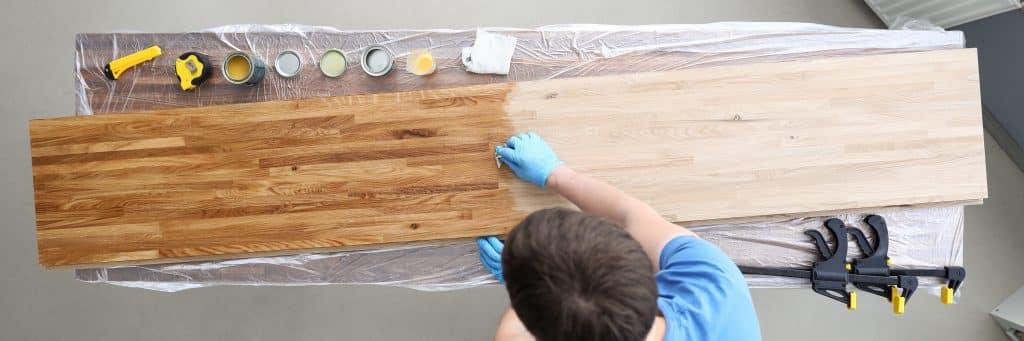
Finishing Quick Tips
Glossary
Canadian Preservation Industry
Durability Research and Development
National Model Codes in Canada
Supplemental Treatment
Resilience
For new wood, remember: The wood must be dry.  Drying time depends on a few factors. Ideally the wood should be kiln-dried (stamped “S-DRY”, “KD” or “KDAT”, see...
Acrylic A type of water-borne coating product containing acrylic polymers. Alkyd A type of polyester resin. Term often used to signify solvent-borne coatings, e.g., oil...
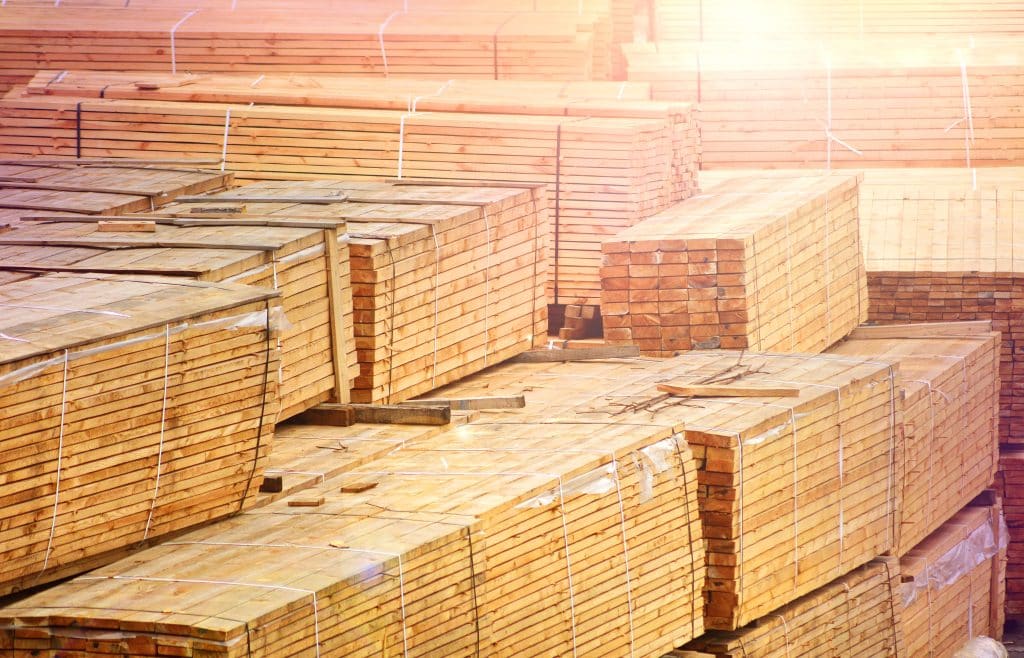
Canada has had a wood preservation industry for about 100 years.  Canada is tied with the UK as the world’s second largest producer of treated wood (the USA is first...
FPInnovations has been field testing the performance of treated wood products for years. Click one of these categories for performance data from our field tests....
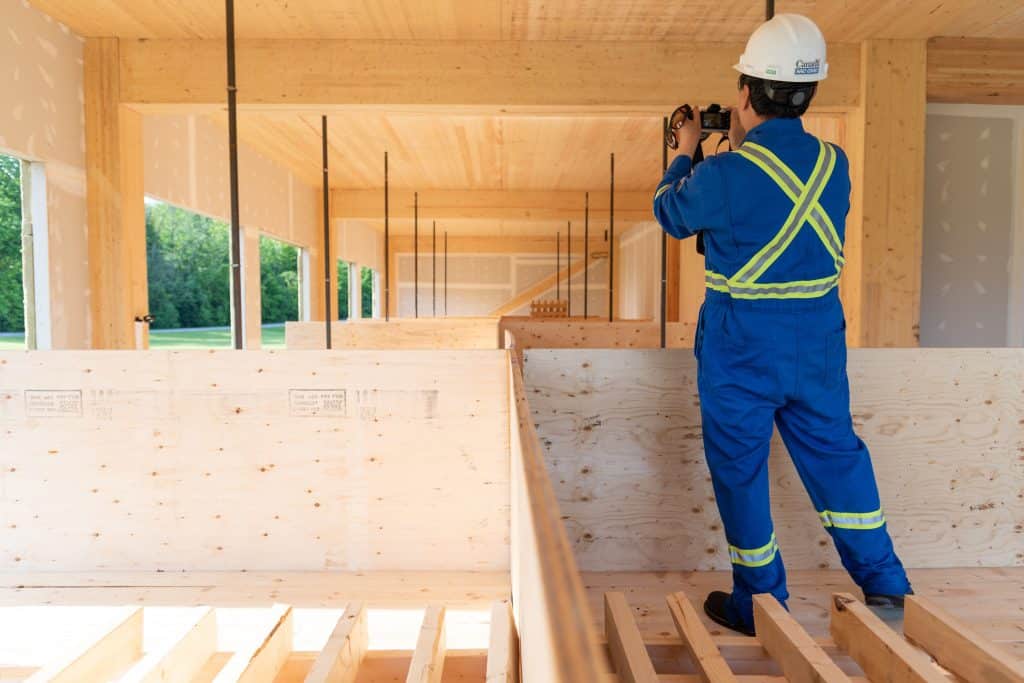
In the early 1900s, light-frame wood construction and heavy timber, up to ten-storeys in height, was commonplace in major cities throughout Canada. The longevity and...
What do the experts have to say about wood-frame mid-rise construction? Graham Finch, Building Science Research Engineer Michael Green, Principal, Michael Green Architecture...
On behalf of the Canadian Commission on Building and Fire Codes (CCBFC) the National Research Council (NRC) Codes Canada publishes national model codes documents that set out...
Supplementary treatment may be added wherever on-site cutting or drilling of wood is unavoidable, or where it is suspected the original protection measures may be inadequate....
Fasteners, Connectors and Flashing for Wood Treated With Copper-Based Preservatives The presence of moisture is a precondition for corrosion of metals. Treated wood is...
Treatability of Major North American Softwoods Some wood is easier to treat than others. The particular structure of the cells for a given piece of wood will determine how...
Individuals in the design and construction community are increasingly choosing materials, design techniques and construction procedures that improve a structure’s ability...
Since remedial treatment is intended to solve a known insect or decay problem, the first thing to do is investigate the extent of the problem and, if necessary, provide...

Get Access to Our Resources

Stay in the loop and don’t miss a thing!

1
2
3

Get Access to Our Resources

Stay in the loop and don’t miss a thing!

What’s Your Occupation?

Help us personalize the content for you.

What Interests You the Most?

Help us personalize the content for you.

Filters

Expertise Icon
Field of Expertise
Province Icon
Province
Member Type Icon
WoodWork National Partners

Filters

Post Type Icon
Post Type
Persona Icon
Persona
Language Icon
Language
Tags Icon
Tags
Mass Timber Plus Icon Environment Plus Icon Safety Plus Icon Durability Plus Icon Design Systems Plus Icon Budget Plus Icon Construction Management Plus Icon Fire Resistance Plus Icon Tall Buildings Plus Icon Short Buildings Plus Icon
Date Icon
Date
Line Separator