Searching for: Wood

Searching results for “Wood”
326 results found...
Sort By Dropdown Icon

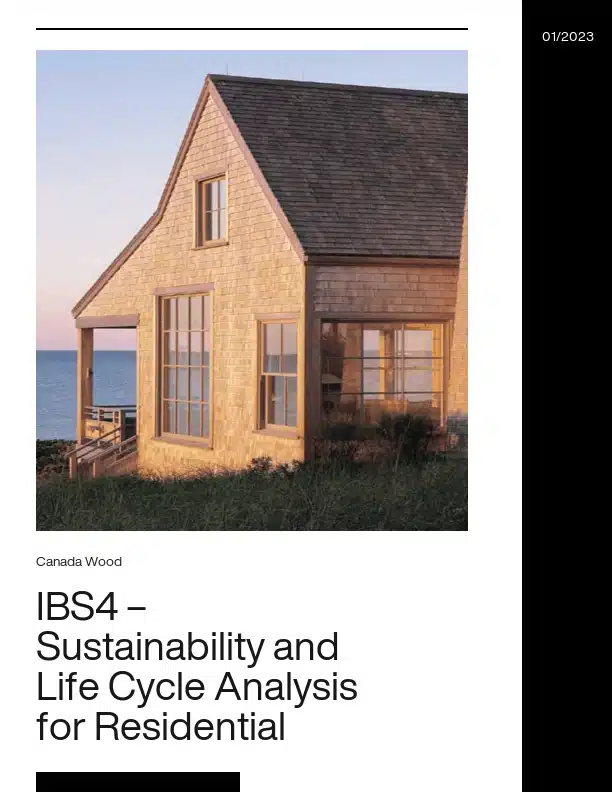
IBS4 – Sustainability and Life Cycle Analysis for Residential Buildings

Environmental awareness in building design, construction and operation is stronger than ever. But how can we meet the world’s rapidly growing need for buildings and still be environmentally responsible? Although construction is never fully benign for the environment, designers and builders can make choices to minimize the impact. Wood plays an important part in sustainable design, as shown by scientific analysis.

The Historical Development of the Building Size Limits in the National Building Code of Canada

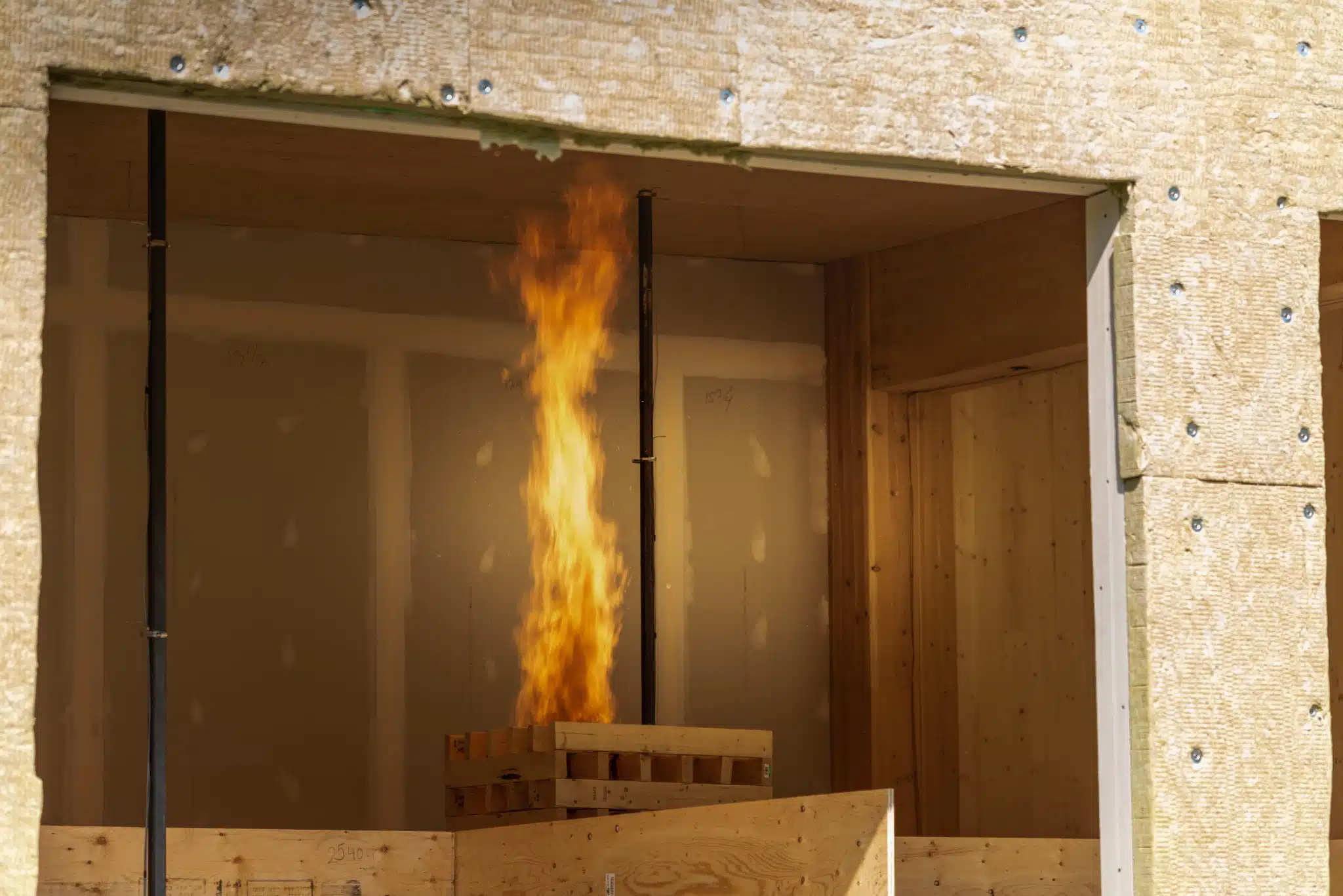
The use of wood is limited in larger and taller buildings by the National Building Code of Canada (NBCC) based on concern of increased fire risk. The current requirements were developed long ago, under much different conditions than today. Since then the industry’s knowledge of fire science has evolved considerably, fire service equipment and capabilities have improved, detection and suppression systems have advanced, construction materials and techniques have changed significantly, and public awareness and education regarding fire safety has increased.

Having an understanding of the knowledge, capability, materials and methods used to develop the height and area limits and the risks they were intended to mitigate, sets the basis for re-examination of those limits in a current context. This can be achieved through a historical examination of the development of the limits and their bearing on the use of combustible construction in buildings.

Codes & Standards
...of Canada Wood in non-combustible buildings Wood Standards CSA O86 Engineering design in wood CSA S-6 Canadian Highway Bridge Design Code CSA S406 Permanent Wood Foundations CSA 080 Wood Preservation...
Adhesives
Adhesives can also be referred to as resins. Many engineered wood products, including finger-joined lumber, plywood, oriented strand board (OSB), glulam, cross-laminated timber (CLT), wood I-joists and other structural composite...
Decay
...wood however they do not significantly damage the wood structurally. Soft-rot fungi and wood-rotting basidiomycetes can cause strength loss in wood, with the basidiomycetes the ones responsible for decay problems...
Glulam
Glulam
...characteristics. Moisture Control of Glulam The checking of wood is due to differential shrinkage of the wood fibres in the inner and outer portions of a wood member. Glulam is...
Flame Spread
...further information, refer to the following resources: Wood Design Manual (Canadian Wood Council) Fire Safety Design in Buildings (Canadian Wood Council) National Building Code of Canada National Fire Code of...
CSA O86 Engineering design in wood
...information, refer to the following resources: Wood Design Manual (Canadian Wood Council) Introduction to Wood Design (Canadian Wood Council) National Building Code of Canada CSA O86 Engineering design in wood...
fire-retardant-treated wood
Fire-Retardant-Treated Wood
...use of FRTW Fire retardant coatings Fire-retardant-treated wood roof systems Flame-spread rating   For more information on FRTW, visit the manufacture’s websites: Arch Wood Protection, Lonza: www.wolmanizedwood.com Viance LLC: www.treatedwood.com...
Architectural Assemblies Simplified: Understanding Structural Grids, Acoustics and Envelopes in Wood Buildings
...Ratzlaff, P.Eng., Struct.Eng., PE Technical Director, WoodWorks BC Canadian Wood Council Derek began his career in the wood industry in high school working on single and multi-family light wood construction,...
Termites
...flying ants by the equal size of all four termite wings. Three types of termites can be distinguished on the basis of their moisture requirements: Damp-wood termites Dry-wood termites Subterranean...
Brock Commons Tallwood House – University of British Columbia Vancouver Campus
...wood buildings; taller wood structures such as church towers and pagodas were built worldwide earlier still. Today, pushing the envelope of wood use comes with challenges. Authorities having jurisdiction and...
Supplemental Treatment
...done in applications such as wood foundations, agricultural buildings, or non-residential long-life applications such as utility poles and bridge timbers. For wood foundations and agricultural buildings, it is normal to...
Pressure Treated Wood
...processes vary depending on the type of wood being treated and the preservative being used. In general, wood is first conditioned to remove excess water from the wood. It is...
Since remedial treatment is intended to solve a known insect or decay problem, the first thing to do is investigate the extent of the problem and, if necessary, provide...
Select heartwood where possible to minimize nutrient content of wood surfaces and prevent nutrients migrating through the coating to support fungal growth on the surface....
Acrylic A type of water-borne coating product containing acrylic polymers. Alkyd A type of polyester resin. Term often used to signify solvent-borne coatings, e.g., oil...
What does it take to deliver better buildings? In this issue, we explore that question from a couple of different angles—primarily through a look at standout wood projects...
Resource Description This comprehensive pedagogical resource presents two detailed mass timber projects, developed to support educators in teaching advanced wood construction...
Course Overview While many designers are familiar with engineered wood products such as I‐joists and structural composite lumber, it is important to understand the...
Individuals in the design and construction community are increasingly choosing materials, design techniques and construction procedures that improve a structure’s ability...
Course Overview In Canada, we are fortunate to have both structural engineers and architects who, because of the numerous benefits, would like to work with wood whenever they...
Since the 2009 change to the British Columbia Building Code (BCBC) that increased the permissible height for wood frame residential buildings from four storeys to six, more...
When you want to use wood that is not naturally decay resistant in a wet application (outdoors, for example) or where it may be at risk for insect attack, you need to specify...
Of all the energy used in North America, it is estimated that 30 to 40 percent is consumed by buildings. In Canada, the majority of operational energy in residential...
Nailing is the most basic and most commonly used means of attaching members in wood frame construction. Common nails and spiral nails are used extensively in all types of...
1
2
3

Get Access to Our Resources

Stay in the loop and don’t miss a thing!

What’s Your Occupation?

Help us personalize the content for you.

What Interests You the Most?

Help us personalize the content for you.

Filters

Expertise Icon
Field of Expertise
Province Icon
Province
Member Type Icon
WoodWork National Partners

Filters

Post Type Icon
Post Type
Persona Icon
Persona
Language Icon
Language
Tags Icon
Tags
Mass Timber Plus Icon Environment Plus Icon Safety Plus Icon Durability Plus Icon Design Systems Plus Icon Budget Plus Icon Construction Management Plus Icon Fire Resistance Plus Icon Tall Buildings Plus Icon Short Buildings Plus Icon
Date Icon
Date
Line Separator