en-ca

Searching for: wood

Searching results for “wood”
250 results found...
Sort By Dropdown Icon

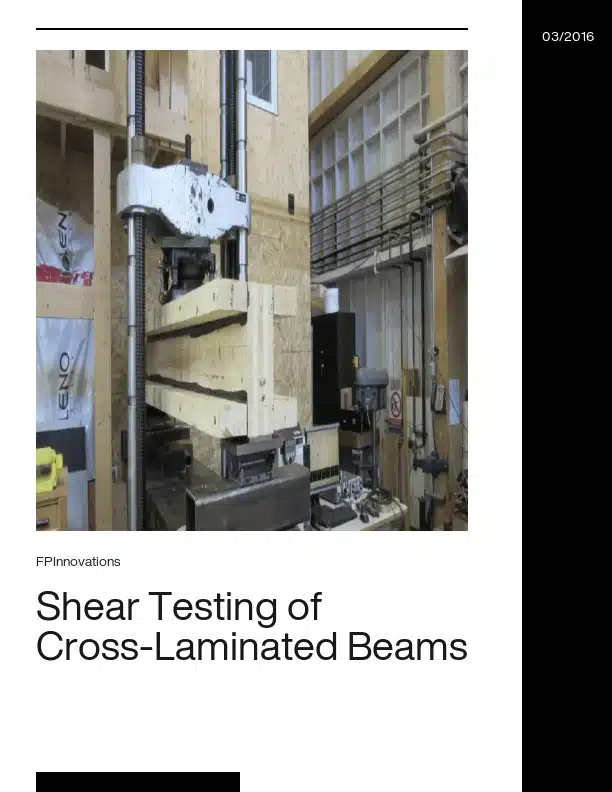
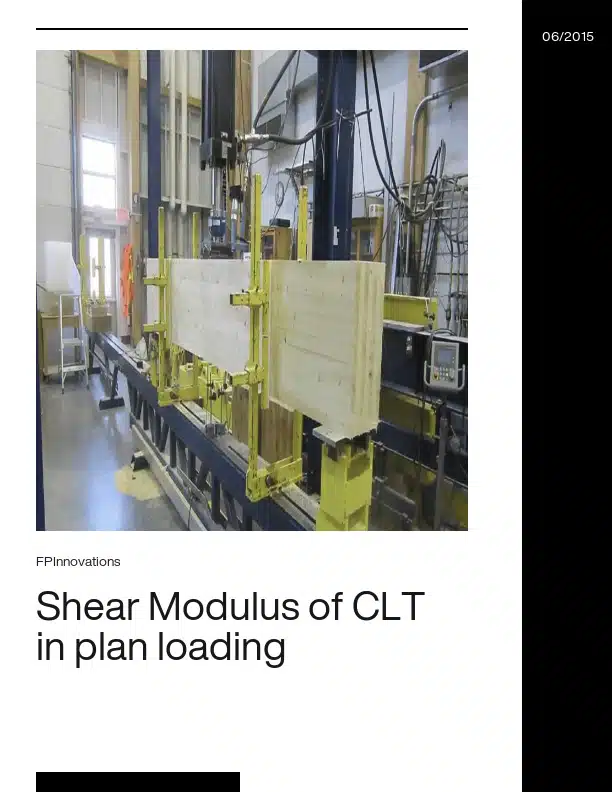
Shear Modulus of CLT in plan loading

A testing program was carried out by the Advanced Building Systems (ABS) Department of FPInnovations in response to a request made by Mrs. Julie Frappier of Nordic Engineered Wood Products for the evaluation of the effective shear modulus of eight (8) different Cross-laminated Timber (CLT) configurations or series. The test matrix consisted of a total seventy (70) specimens and each specimen was submitted to four (4) bending tests, resulting in a total two hundred and eighty (280) tests. All specimens were manufactured by Nordic Engineered Wood Products and delivered to FPInnovations’ testing facilities in Québec City.

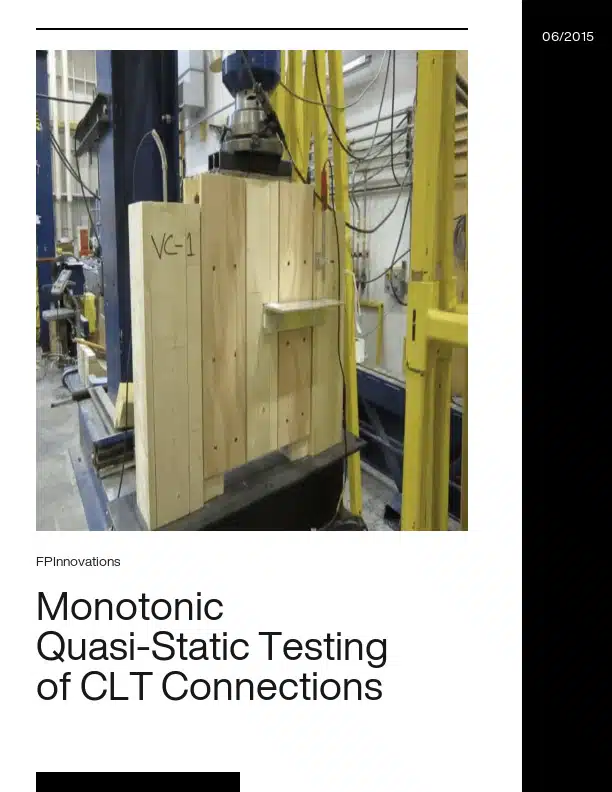
Monotonic Quasi-Static Testing of CLT Connections

This testing program was carried out by the Advanced Building Systems (ABS) Department of FPInnovations in response to a request from Mrs. Julie Frappier from Nordic Engineered Wood for the evaluation of the mechanical properties of three (3) different assemblies for attaching Cross Laminated Timber (CLT) panels. Each of the assemblies consisted of six (6) specimens for a total of eighteen (18) tests. All specimens were manufactured by Nordic Engineered Wood and delivered to FPInnovations’ laboratory in Québec City.

The key objective was to evaluate the mechanical properties pertinent for the design of CLT panel connections exposed to in-plane loading such as diaphragms or shear walls. The evaluation of the ultimate loading capacity (𝐏𝐮𝐥𝐭) and the stiffness (K) of the connections are thus the main focus of this study.

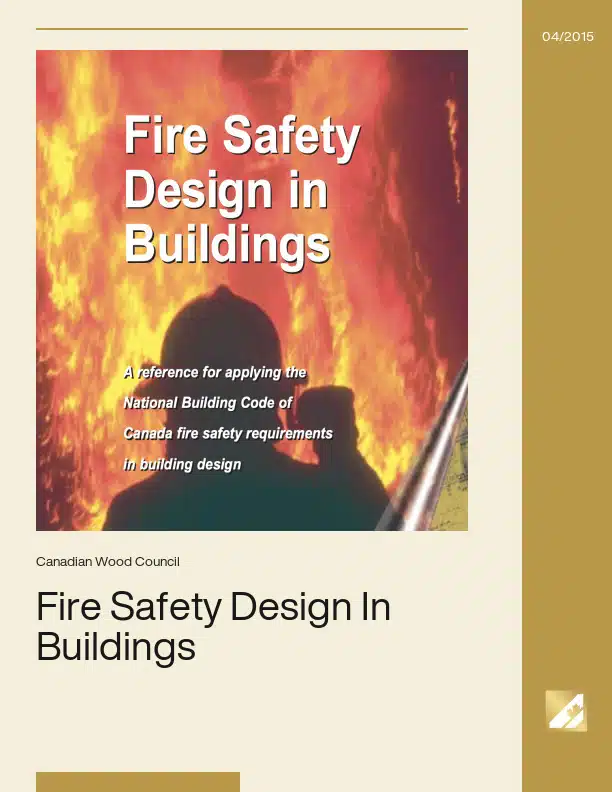
Fire Safety Design In Buildings

In a recent survey of building specifiers, the majority perceived wood to be the most environmentally friendly building material. Compared to other major building materials, this is due mainly to:

  • the renewability of wood
  • the low energy consumption required for production
  • the low levels of pollutant emission during manufacture

Lately, environmental considerations have acquired more importance in the specification of materials. Technical and economic aspects of building materials have always been primary considerations for specifiers. Increasingly, however, they are considering the environmental effects when selecting appropriate building materials for their designs.

Architects, engineers and designers require accurate information to assess the true environmental consequences of the materials they specify.

The environmental impacts of various building materials have been examined by a Canadian Research Alliance using the internationally accepted method called Life-Cycle Analysis (LCA). The Alliance consists of researchers from the wood, steel and concrete industries as well as university groups and consultants.

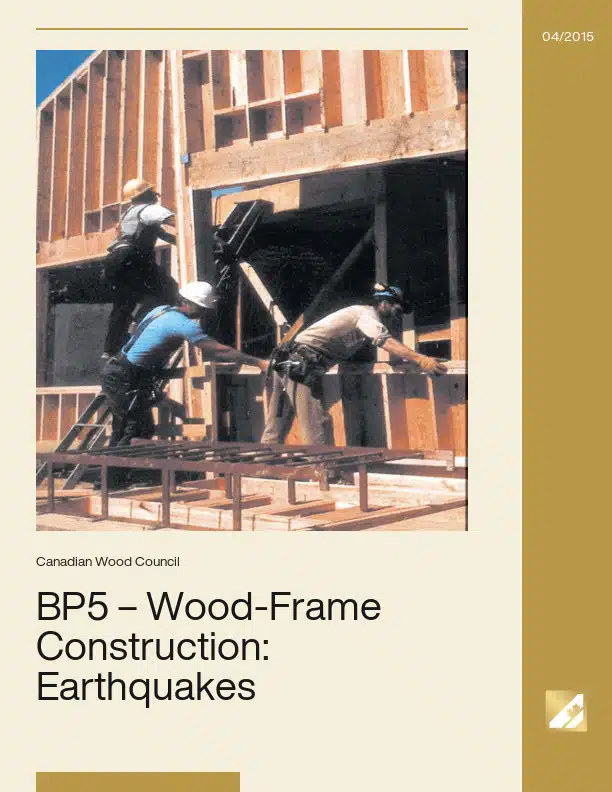
BP5 – Wood-Frame Construction: Meeting The Challenge of Earthquakes

North American single-family homes are considered by many to be the safest place to be in an earthquake. This is not surprising considering that North American housing is almost synonymous with wood-frame construction. The lightweight and high energy absorbing capabilities of wood framing provides a system strong enough to withstand the effects of powerful earthquakes. Experience from strong earthquakes, in North America and around the world, has shown that well-constructed wood-frame buildings provide safety to their occupants.

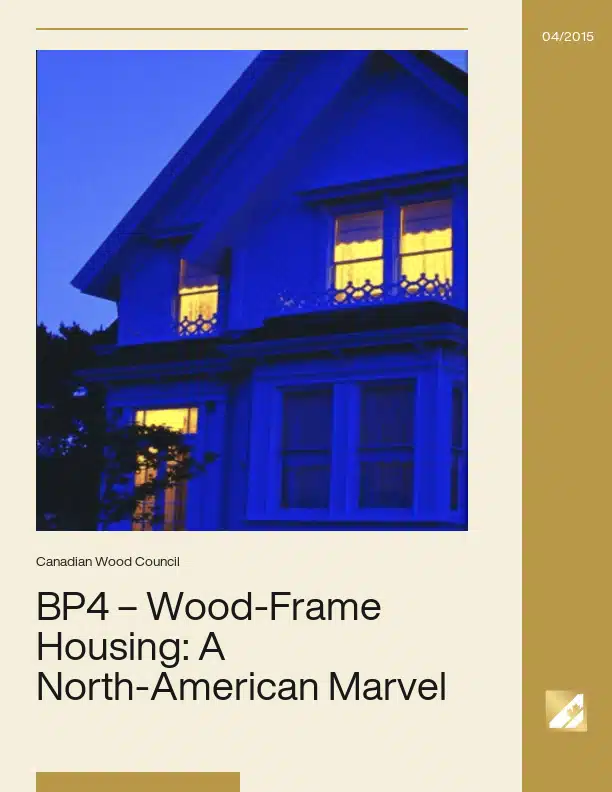
BP4 – Wood-Frame Housing: A North-American Marvel

North Americans enjoy the highest standard of safe and comfortable housing in the world. This is not by chance – wood-frame construction is the residential building system of choice and many countries wishing to improve the comfort and security of their citizens are adopting it.

North America is blessed with resources of all kinds. A continuing abundance of forest resources has, since the earliest settlers, encouraged using wood to build housing.

Today, as designers, builders and homeowners pursue safe, energy efficient housing that is easy on the environment and can perform in the face of major challenges like high winds and earthquakes, there are stronger reasons than ever to build with wood.

Wood-frame construction is strong, durable, easy to insulate, easy to renovate and delivers value. It is backed by two hundred years of proven performance and a wealth of research and new product development to make it better than ever. And it is the only major building material that is renewable.

Strong winds… heavy snow loads… high humidity… extreme temperatures – whatever your building challenges, wood-frame housing has proven technical solutions to overcome any problem.

Wood sells houses. In addition to the shelter, warmth and safety provided by the wood structure, buyers recognize and appreciate the aesthetic value of wood for exposed applications like cabinetry, flooring, furniture and moldings.

Not only is wood builder-friendly, it is also environmentally friendly. Wood products take less energy to manufacture, affect the environment less than other materials, and they come from North American forests that are abundant and increasing in size.

BP3 – Termite Control and Wood-Frame Buildings

Wood products have long been the building materials of choice for home construction in North America. The wood-frame construction system has a solid history of producing housing of the highest standards: It is easy to build, delivers economic value, has excellent strength in earthquake or high-wind conditions, is energy efficient, and is derived from a renewable resource. Modern wood-frame construction includes several types of engineered wood products that are economically viable in multi-story residential buildings and non-residential projects. Moreover, as described in Bulletins No. 1 and 2 in the Building Performance Series, wood framing supplies durability and fire safety performance where environmental and building code requirements are met. This bulletin describes how wood framing can also be used in areas of North America subject to insect attack, a threat to all types of buildings. It builds on the concept of integrated pest management that will provide long-term protection for wood-frame and other buildings against damage caused by insects, specifically Formosan and other subterranean termites. Also included is practical advice for building designers, contractors and owners to assist in assessing risk, and choosing appropriate mitigation measures.

BP2 – Fire Safety In Residential Buildings

Since wood-frame construction was first used in the early 1800’s, North Americans have developed and been sheltered by wood-frame building technology — from single family homes and progressing over the decades to larger, multi-storey apartment buildings and townhouses. In fact, over 90% of the 1.5 million homes built in North America each year are constructed using woodframe construction. Wood-frame construction provides North Americans with the world’s highest housing standards. There are many reasons for the success of the wood frame system:

It is easy to build

It has a proven track record

It delivers excellent value

It has a high strength to weight ratio

It is energy efficient

It is one of the safest building systems in extreme conditions like earthquakes

Wood is an abundant renewable resource

In addition, modern wood-frame construction provides a comparable level of fire safety to non-combustible construction. This technical bulletin will discuss some of the basic principles of fire safety, and dispel some myths about what makes residential buildings fire-safe for both single family homes and multi-family residential buildings.

BP1 – Moisture and Wood-Frame Buildings

Throughout history, wherever wood has been available as a resource, it has found favor as a building material for its strength, economy, workability and beauty, and its ability to last has been demonstrated again and again. From the ancient temples of Japan and the great stave churches of Norway to the countless North American buildings built in the 1800s, wood construction has proven it can stand the test of time. The art and technology of wood building, however, has been changing through time. Can modern wood-frame buildings perform as well?

Protection of buildings from moisture is an important design criterion, as important as protection from fire or structural collapse. Designers, builders and owners are gaining a deeper appreciation for the function of the building envelope (exterior walls and roof). This includes the performance of windows, doors, siding, sheathing membranes, air and vapour barriers, sheathing, and framing. The capabilities and characteristics of wood and other construction materials must be understood, and then articulated in the design of buildings, if proper and durable construction is to be assured.

This guide will help design and construction professionals, and building owners understand moisture issues related to the design and construction of wood-frame buildings. The primary objective is to provide ideas and solutions to ensure wood-frame buildings perform as expected. The primary focus of the guide will be on the control of rainwater penetration in exterior walls, particularly for climates subject to high moisture exposure.

IBS5 – Thermal Performance of Light-Frame Assemblies

“A man’s home is his castle” is an old familiar phrase, but if truth be told, the castles of old were cold and draughty. Today’s homes are now havens of comfort with efficient central heating systems and well insulated building envelopes. We count on the walls and roofs of our houses to keep the heat in during the winter months and the heat out during the sweltering days of summer. Today’s home buyers demand energy efficient houses with high insulation values. “Lowering energy use” has become the goal as the cost and environmental implications of energy use are considered. Insulation levels are now being required by many code authorities. Stricter thermal requirements mean that designers must understand the impact of the materials and assemblies used on thermal performance. Because of its long history of use, wood-frame construction has well established insulating properties and record of performance. The effect of other construction systems on insulation properties is not widely known or understood. This publication will examine current knowledge of the thermal performance of wood and other framing techniques. This information will assist designers and builders to select construction techniques that provide the best thermal performance.

IBS3 – Fire Resistance and Sound Transmission

Fire is an ever-present danger for building occupants. Research and experience confirm that fire safety in a house or apartment has little to do with the combustibility of the structural materials used in its construction. In fact, the occupants’ safety is far more dependent on their own awareness of fire hazards (open flames, etc.), the contents of their home (furniture, etc.), and the fire protection measures designed into the building. Minimization of sound transmission in single- and multi-family residential buildings is also an important factor to ensure occupant comfort, and is closely related to fire-resistant construction. The intent of this brochure is to demonstrate how wood frame buildings meet code requirements by providing examples of wood-based light frame building systems designed to maximize fire safety and minimize sound transmission.

IBS2 – Wood Trusses – Strength, Economy, Versatility

Wood trusses are engineered frames of lumber joined together in triangular shapes by galvanized steel connector plates, referred to commonly as truss plates.

Wood trusses are widely used in single- and multi-family residential, institutional, agricultural and commercial construction. Their high strength-to-weight ratios permit long spans, offering greater flexibility in floor plan layouts. They can be designed in almost any shape or size, restricted only by manufacturing capabilities, shipping limitations and handling considerations.

Metal plate connected roof trusses were first introduced into the North American market in the 1950’s. Today, the majority of house roofs in Canada and the United States are framed with wood trusses and increasingly, wood floor trusses are being used in residential and commercial applications. Wood truss use is not limited to North America. They are gaining acceptance around the world and are widely used in Europe and Japan.

The Historical Development of the Building Size Limits in the National Building Code of Canada

The use of wood is limited in larger and taller buildings by the National Building Code of Canada (NBCC) based on concern of increased fire risk. The current requirements were developed long ago, under much different conditions than today. Since then the industry’s knowledge of fire science has evolved considerably, fire service equipment and capabilities have improved, detection and suppression systems have advanced, construction materials and techniques have changed significantly, and public awareness and education regarding fire safety has increased.

Having an understanding of the knowledge, capability, materials and methods used to develop the height and area limits and the risks they were intended to mitigate, sets the basis for re-examination of those limits in a current context. This can be achieved through a historical examination of the development of the limits and their bearing on the use of combustible construction in buildings.

Mid-Rise FAQs
...at a changing landscape (Part 1) Mid-rise Wood Construction – a detailed look at a changing landscape (Part 2) Seven-storey wood-frame earthquake test BC Housing is supporting wood-frame construction for seniors’ rental...
National Model Codes in Canada
...as well as members of the public. Canadian Wood Council representatives hold membership status on several of the standing committees and task groups acting under the CCBFC and participate actively...
Wood design in the National Building Code of Canada
...expected to foster a spirit of innovation and create new opportunities for Canadian manufacturers. Requirements related to the specification of structural wood products and wood building systems that relates to...
Supplemental Treatment
...done in applications such as wood foundations, agricultural buildings, or non-residential long-life applications such as utility poles and bridge timbers. For wood foundations and agricultural buildings, it is normal to...
Fasteners
...environments.  For borate-treated wood used inside buildings, the same connectors can be used as for untreated wood. Recommendations on Fasteners for Treated Wood Fasteners for use in treated wood that...
Treatability
...Heartwood White Spruce 2 3-4 Heartwood Engelmann Spruce 2 3-4 Heartwood Black Spruce 2 4 Heartwood Red Spruce 2 4 Heartwood Sitka Spruce 2 3 Heartwood Lodgepole Pine 1 3-4...
Resilience
...and some wood species that demonstrate low flame spread ratings (less than 75).   For further information, refer to the following resources: Resilient and Adaptive Design Using Wood (Canadian Wood...
Remedial Treatment
...lost strength may be removed. Be aware that a wood decay fungus may have penetrated well beyond the boundaries of the visibly rotted wood. Since deterioration is underway, a rapid...
Surface Pre-treatment
...deep into the wood. In New Zealand, framing lumber has been treated with borates using this process since the 1950s. Dip-diffusion works well with wood species that are mostly sapwood...
Decay
...wood however they do not significantly damage the wood structurally. Soft-rot fungi and wood-rotting basidiomycetes can cause strength loss in wood, with the basidiomycetes the ones responsible for decay problems...
Termites
...flying ants by the equal size of all four termite wings. Three types of termites can be distinguished on the basis of their moisture requirements: Damp-wood termites Dry-wood termites Subterranean...
Controlling Termites
...and regional building codes, an overview of such measures may be of use to Canadian marketers of wood products and manufactured homes. Termite control measures can be broadly grouped into...
What do the experts have to say about wood-frame mid-rise construction? Graham Finch, Building Science Research Engineer Michael Green, Principal, Michael Green Architecture...
On behalf of the Canadian Commission on Building and Fire Codes (CCBFC) the National Research Council (NRC) Codes Canada publishes national model codes documents that set out...
The current edition of the National Building Code of Canada (NBC) is published in an objective-based format intended to allow more flexibility when evaluating non-traditional...
Supplementary treatment may be added wherever on-site cutting or drilling of wood is unavoidable, or where it is suspected the original protection measures may be inadequate....
Fasteners, Connectors and Flashing for Wood Treated With Copper-Based Preservatives The presence of moisture is a precondition for corrosion of metals. Treated wood is...
Treatability of Major North American Softwoods Some wood is easier to treat than others. The particular structure of the cells for a given piece of wood will determine how...
Individuals in the design and construction community are increasingly choosing materials, design techniques and construction procedures that improve a structure’s ability...
Since remedial treatment is intended to solve a known insect or decay problem, the first thing to do is investigate the extent of the problem and, if necessary, provide...
Liquid application: Dip diffusion treatment of green (wet) lumber Dip-diffusion treatment involves immersion of freshly cut lumber, still wet from the tree, in a concentrated...
Wood is biodegradable – that’s a characteristic we normally consider to be one of the benefits of choosing natural materials. Organisms exist that can break down wood...
Termites, sometimes called “white ants” are a social insect, more closely related to cockroaches than ants. They can be distinguished from ants by the absence of a narrow...
Fortunately for Canada, most of this country lies north of the limit for termites on the North American continent. However, because termites and people both prefer the warmer...

Get Access to Our Resources

Stay in the loop and don’t miss a thing!

1
2
3

Get Access to Our Resources

Stay in the loop and don’t miss a thing!

What’s Your Occupation?

Help us personalize the content for you.

What Interests You the Most?

Help us personalize the content for you.

Filters

Expertise Icon
Field of Expertise
Province Icon
Province
Member Type Icon
WoodWork National Partners

Filters

Post Type Icon
Post Type
Persona Icon
Persona
Language Icon
Language
Tags Icon
Tags
Mass Timber Plus Icon Environment Plus Icon Safety Plus Icon Durability Plus Icon Design Systems Plus Icon Budget Plus Icon Construction Management Plus Icon Fire Resistance Plus Icon Tall Buildings Plus Icon Short Buildings Plus Icon
Date Icon
Date
Line Separator