

Welcome to the Canadian Wood Council
Technical & Educational
Resource Hub for Wood Construction
Explore the benefits of building with wood through expert resources, sustainable practices, and innovative solutions for modern construction
What are we looking for today?
Popular Topics: Get Started Mass Timber Fire Safety Sustainability Events
Popular Topics

Learn why wood is the go-to material for sustainable, strong, and efficient building solutions.

Find the latest building codes and standards to ensure your projects meet regulations.

Explore the wide range of wood products and their applications in modern construction.

Discover innovative building systems designed for strength, efficiency, and sustainability.

Stay updated on the latest trends, innovations, and stories in the wood construction industry.

Learn about fire-resistant wood solutions to enhance safety and meet building requirement.

Understand how insurance applies to wood projects and mitigate potential risks effectively
Featured Articles Selected for You
Curated articles to help you stay informed about the latest trends, techniques, and innovations in wood construction and design. Explore our resources handpicked for your needs.

OTTAWA, Ontario – September 27, 2023 – The Canadian Wood Council (CWC) is delighted to announce the launch of an updated brand identity for its WoodWorks program. This reimagined look created in partnership with agency partner BBDO Canada, improves the accessibility of the brand and establishes an independent visual identity for the Canadian WoodWorks program within a rapidly evolving marketplace.
With its simplified, modern design, the brand embraces inclusivity and invites a broader audience to explore the benefits of wood construction and the important role it must play in the future of sustainable development. The newly unveiled brand identity embodies the WoodWorks program’s dedication to technical excellence, environmental responsibility, and service to communities and individuals across Canada.
Martin Richard, Vice-President Communications and Market Development at the Canadian Wood Council, expressed his enthusiasm for the rebrand, stating, “We are pleased to launch this new brand identity which better reflects the quality of WoodWorks’s technical leadership and purpose of the program while signaling our commitment to the environment and people the program serves. It’s an exciting step toward ensuring that the program is clear and accessible to all, reinforcing our dedication to advancing wood construction and sustainable development in Canada and beyond.”
The WoodWorks program, under its new brand identity, is focused on expert led technical support to developers, architects, engineers, builders, and other industry professionals who want to expand their capacity for wood design and construction. The program remains committed to the pursuit of technical excellence and to connecting professionals with the information and resources they need to pursue wood construction in all its forms as well as providing valuable resources and educational opportunities.
The design ethos of the new brand identity pays homage to Canadian Modernism, honouring a style that is timeless in its simplicity and functionality. The symbol showcases the strength of our collaboration with the AEC+D community in enabling construction with wood. The refreshed colour palette draws inspiration from the organic hues found in our forests, wood products and the many construction sites across Canada.
The Canadian Wood Council invites everyone to reacquaint themselves with the WoodWorks program and its new brand identity.
High-resolution images of the new brand identity and logos are available upon request.

OTTAWA, Ontario – 27 septembre 2023 – C’est avec grand plaisir que le Conseil canadien du bois (CCB) a annoncé le lancement de la nouvelle identité de marque du programme WoodWorks. Le nouveau look a été créé en collaboration avec notre partenaire BBDO Canada dans le but de rendre la marque plus accessible et de lui donner une identité visuelle indépendante dans un contexte qui évolue rapidement.
Avec son design moderne et épuré, la marque se veut inclusive et invite un public plus vaste à découvrir les avantages de la construction en bois ainsi que son rôle essentiel dans l’avenir du développement durable. Sa nouvelle identité incarne l’engagement du programme envers l’excellence technique et la responsabilité environnementale, ainsi que sa volonté de se mettre au service des communautés et des Canadiens et Canadiennes.
Martin Richard, vice-président, Communications et développement des marchés du Conseil canadien du bois, s’est dit enchanté par le repositionnement de marque : « Nous sommes très heureux de lancer la nouvelle identité de marque. Elle traduit mieux la qualité du leadership technique de WoodWorks et l’objectif du programme, tout en démontrant notre engagement envers les gens qu’il sert et l’environnement. Nous voulons que le programme soit simple et accessible à tous en insistant sur notre détermination envers le progrès de la construction en bois ainsi que le développement durable au Canada et à l’extérieur de nos frontières. L’annonce d’aujourd’hui est une étape importante pour y arriver. »
Le programme WoodWorks, sous sa nouvelle identité de marque, est axé sur le soutien technique d’experts à l’intention des promoteurs, des architectes, des ingénieurs, des constructeurs de bâtiments et des autres professionnels de l’industrie qui cherche à élargir leur capacité de conception et de construction en bois. Une des grandes priorités du programme reste la poursuite de l’excellence technique et la mise en relation des professionnels avec les renseignements et les ressources nécessaires à la construction en bois sous toutes ses formes, en plus de fournir des ressources et de la formation.
L’éthos de la nouvelle identité de marque rend hommage au modernisme canadien avec un style intemporel dans sa simplicité et sa fonctionnalité. Le symbole représente la force commune de la communauté de l’architecture, de l’ingénierie, de la construction et des promoteurs pour rendre possible la construction avec le bois. La palette de couleur s’inspire des couleurs naturelles de nos forêts, des produits du bois et des nombreux chantiers de construction partout au Canada.
Le Conseil canadien du bois vous invite à refaire connaissance avec le programme WoodWorks et à découvrir sa nouvelle identité de marque.
Des images haute résolution de la nouvelle identité de marque et des logos sont disponibles sur demande.
Pour d’autres renseignements ou pour les demandes médiatiques, vous pouvez communiquer avec :

Ottawa, Toronto | 27 March 2024] – The Canadian Wood Council (CWC) and George Brown College’s Brookfield Sustainability Institute (BSI) are thrilled to announce a strategic partnership aimed at fostering education in sustainable construction practices.
Under this partnership, the CWC and BSI will join forces on various initiatives dedicated to accelerating the adoption of sustainable wood construction. Central to this effort is the WoodWorks Summit, which the organizations will co-host in Toronto October 21-25, 2024.
The Summit promises to be a dynamic collection of events that will bring together industry leaders, practitioners, academics, and policymakers to explore the latest advancements, challenges, and opportunities in wood construction and sustainability.
“We are excited to embark on this collaborative journey with the Brookfield Sustainability Institute,” said Martin Richard, VP of Market Development and Communications at the Canadian Wood Council. “Together, we aim to drive innovation, share knowledge, and accelerate the adoption of sustainable wood construction.”
The WoodWorks Summit will feature an engaging lineup of events, including keynote speeches, panel discussions, tours, and networking sessions. Attendees can expect to engage with cutting-edge research, best practices, and real-world case studies, all aimed at demonstrating the use of wood as an innovative, high-performance, sustainable building material.
“Our partnership with the Canadian Wood Council underscores our commitment to advancing sustainability in the built environment,” remarked Jacob Kessler, Director of Business Development & Account Management at the Brookfield Sustainability Institute. “By combining our expertise and resources, we can make significant strides to empower the design and construction community with the practical knowledge and technical resources needed to create healthier, more resilient communities with a reduced carbon footprint.”
Through this collaboration, the CWC and BSI aim to catalyze positive change within the construction industry. For more information about the WoodWorks Summit, please visit www.woodworkssummit.ca.

Vancouver, BC, September 19, 2024 – Informa Connect and the Canadian Wood Council announce their collaboration, WoodWorks at BUILDEX, integrating WoodWorks’ technical expertise and wood products industry representation into BUILDEX Vancouver, February 26 – 27, 2025. This initiative builds on a shared commitment to advancing Canada’s built environment and expands BUILDEX’s focus on innovative materials, design, and construction practices.
WoodWorks at BUILDEX offers an exceptional opportunity for all professionals of the built environment to immerse themselves in the latest innovations in wood-based design and construction through:
- 14 hours of accredited educational seminars solely dedicated to wood product construction
- Direct access to technical expertise from suppliers, manufacturers, and wood engineering consultants
- A new expo pavilion experience dedicated to structural and finishing wood products at the heart of Western Canada’s largest building and construction event
Rick Jeffery, President and CEO, Canadian Wood Council, emphasized the importance of this collaboration: “Working with Informa Connect to bring WoodWorks to BUILDEX Vancouver in 2025 allows us to concentrate on one of our core strengths—delivering industry-leading educational content, technical support, and access to leading wood product providers—at Canada’s most progressive design, construction and real estate event.”
Sherida Sessa, SVP for North America at Informa Connect, added “British Columbia is recognized as a global leader in wood-based design and construction, and this partnership solidifies BUILDEX as a key destination for technical expertise, innovation and leadership in the wood products industry.”
WoodWorks at BUILDEX amplifies BUILDEX Vancouver’s core offering to Canadian and North America’s design and construction leaders: timely market insights, respected technical knowledge, transformative networking, and exposure to the materials and technologies at the forefront of Canada’s built environment.
BUILDEX Vancouver will take place February 26 – 27, 2025, at the Vancouver Convention Centre West, attracting over 8,500 developers, architects, engineers, builders, designers, suppliers, and real estate professionals. Register now at www.BUILDEXVancouver.com to secure your place and witness the latest in progressive design and construction trends.

Toronto, ON – The Canadian Wood Council is pleased to announce the winning projects of the 40th annual Wood Design & Building Awards program. This prestigious awards program recognizes and celebrates the outstanding work of architectural professionals from around the world who achieve excellence in wood design and construction.
“We’re proud to recognize leading innovators in wood design through our awards program,” says Martin Richard, Vice President of Communications and Market Development at the Canadian Wood Council. “This year’s submissions were remarkable in their scope, quality, and variety. They reflect a rising interest in biomaterials and highlight the importance of wood as a versatile, low-carbon, high-performance material, driving the next generation of sustainable buildings.”
The jurors for the Wood Design & Building Awards were:
- Marlon Blackwell, Principal at Marlon Blackwell Architects
- Veronica Madonna, Director and Principal at Studio VMA
- Alfred Waugh, Principal at Formline Architecture + Urbanism
A total of 19 winning projects from a diverse group of creators were selected from the impressive field of entries.
New this year, the regional WoodWorks program awards from Ontario, British Columbia, and Alberta were integrated with the Wood Design & Building Awards.
The jurors for the WoodWorks awards were:
- Duncan Bourke, Vice President of Development at Cityflats
- Melissa Higgs, Principal at hcma
- Steve Oosterhof, Partner and Structural Engineer at Dialog
Fifteen winning projects were selected, with five from each regional program. The creativity and talent of these winning teams, as well as the beauty and diversity of their wood projects, are transforming the built environment.
In total, 33 award winners from around the globe were celebrated for excellence in wood design at the Wood Design and Building Awards celebration hosted at the WoodWorks Summit on October 22, 2024.
COMPLETE LIST OF AWARD-WINNING PROJECTS FOLLOWS:
Honor
- Arbour House (Victoria, BC) | Patkau Architects
- Hilltop Cottage (NB) | MacKay-Lyons Sweetapple Architects Ltd.
- Mohegan Trail (Block Island, RI, USA) | Bates Masi + Architects
- The Nest (Bayfield County, WI, USA) | SALA Architects, Inc.
- Prepared Rehmannia Root Crafts Exhibition Hall (Houyanmen Village, , Henan Province, China | Luo Studio
- Wisdome Stockholm (Stockholm, Sweden) | Elding Oscarson Architects
Merit
- Covered ice rink in Saint-Apollinaire (Saint-Apollinaire, QC) | ABCP architecture et urbanisme
- Cheko’nien House (Victoria, BC) | Perkins&Will
- House In A Garden (Coconut Grove, , FL, USA) | Atelier Mey Architects
- Quantum Institute (Sherbrooke, QC) | Saucier + Perrotte
Citation
- Cunard Street Live / Work / Grow (Halifax, NS) | FBM
- Des Cerisiers Elementary School (Maskinongé, QC) | Lucie Paquet architecte, Paulette Taillefer architecte, Leclerc architectes
- LP Hotel with a View (Lodeynoe Pole, Russian Federation) | RHIZOME
Sansin Sponsored Awards
- Galien River Retreat (New Buffalo, MI, USA) | Wheeler Kearns Architects
- Arbour House (Victoria, BC) | Patkau Architects
Sustainable Forestry Initiative Sponsored Award
- 619 Ponce (Atlanta, GA) | Handel Architects
Western Red Cedar Sponsored Award
- Bunkie on the Hill (Muskoka, ON | Dubbeldam Architecture + Design
Wood Preservation Sponsored Award
- #Ferndale_Flightdeck (Ottawa, ON) | 25:8 Architecture + Urban Design
WoodWorks Ontario Category
- Bunkie on the Hill (Muskoka, ON | Dubbeldam Architecture + Design
- Centennial College A-Building Expansion (Toronto, ON) | DIALOG in collaboration with Smoke Architecture
- New Tecumseth Municipal Offices Adaptive Re-Use (Alliston, ON) | +VG Architects
- Queen’s University Indigenous Gathering Space (Kingston, ON) | Smoke Architecture
- Science Collaboration Centre at Chalk River (Chalk River, ON) | HDR
WoodWorks BC Category
- Arbour House (Victoria, BC) | Patkau Architects
- Nuxalk Mask, song and dance (Bella Coola, BC) | Mackin Architects Ltd.
- Pyrrha (Vancouver, BC) | Birmingham & Wood Architects Planners LLP
- Rosemary Brown Recreation Centre (Burnaby, BC) | hcma architecture + design
- təməsew̓txʷ Aquatic and Community Centre (New Westminster, BC) | hcma architecture + design
WoodWorks Alberta, Prairie Category
-
- Canopy (Edmonton, AB) | Jonathan Monfries
- Olds College, Werklund Agriculture and Technology Centre (Olds, AB) | GGA-Architecture
- Saddle Lake Onchaminahos Elementary School (Saddle Lake Cree Nation, AB) | Reimagine Architects
- The Station at Cochrane Crossing (Cochrane, AB) | GEC Architecture
- V Residence (Winnipeg, MB) | 1×1 architecture inc.
Watch our Awards Videos

June 13, 2024 (Ottawa)– Earlier today, The Transition Accelerator unveiled The Mass Timber Roadmap at the Press Conference Room in the West Block on Parliament Hill. The comprehensive report outlines an ambitious and strategic vision for the future of mass timber in Canada and its potential to transform green construction and drive economic growth across the country.
Developed in partnership with Canadian Wood Council (CWC), Forest Products Association of Canada (FPAC), and Energy Futures Lab (EFL), The Mass Timber Roadmap comes after more than a decade of collaborative efforts to unlock and demonstrate potential of mass timber and lays out a visionary plan to increase the mass timber market – both domestic and exports – to $1.2 billion by 2030 and to $2.4 billion by 2035.
This ambitious growth aligns with increasing market demand in North America and around the world. By leveraging the power of mass timber solutions, Canada has a unique opportunity to enable the construction of residential and commercial structures at greater speeds, with lower costs, and with a lighter carbon footprint; all while capturing a share of the rapidly growing global market.
Achieving targets laid out in The Mass Timber Roadmap requires coordinated efforts across three critical action areas and the report provides actionable next steps, including:
- Public-Private Collaboration: The Mass Timber Roadmap calls for a partnership between public and private sectors to develop and advance a comprehensive policy package that will enhance the value of Canada’s forest resources while building domestic capacity along the supply chain.
- Standardization: There is a need to standardize building archetypes, wood specifications, and connectors throughout the supply chain to streamline processes and reduce costs.
- Skills Development: Implementing a robust skills development plan that encompasses all aspects of the supply chain is essential to support the sector’s growth.
Today’s event on Parliament Hill featured the following speakers who highlighted the roadmap’s goals and the promising future for mass timber in Canada, followed by an engaging Q&A session with journalists:
- Derek Eaton, Director of Future Economy, The Transition Accelerator
- Derek Nighbor, President and CEO, Forest Products Association of Canada (FPAC)
- Kate Lindsay, Senior Vice President and Chief Sustainability Officer, Forest Products Association of Canada (FPAC)
- Rick Jeffery, President and CEO, Canadian Wood Council (CWC)
Key Quotes:
“The mass timber sector provides a perfect example of how Canada can add value to its primary resources through innovative technologies and advanced skills. If we act strategically and quickly, we have the opportunity to build an industry that reduces emissions, addresses urgent needs, and positions Canada to win in emerging global value chains.” – Derek Eaton, The Transition Accelerator
“To build a world-class mass timber sector, Canada must adopt a strategic approach to ensure we can compete and win globally. This is about smart policy here at home and bringing more Canadian wood to our cities and to the world. By enabling faster, cost-effective, and environmentally-friendly construction with mass timber we can grow jobs, help address the affordable housing crunch, and reduce emissions.” – Kate Lindsay, Forest Products Association of Canada (FPAC)
“The potential for Canadian wood products to reduce the carbon footprint of the built environment and drive the growth of a sustainable and prosperous wood industry is immense; however, global competition to capitalize on the significant economic opportunities mass timber presents in the transition to a lower-carbon world will require us to act swiftly to stay competitive and meet rapidly emerging domestic demand.” – Rick Jeffery, Canadian Wood Council (CWC)
eLearning Centre
Grow & Learn With Us!
Join us to expand your expertise in wood design and construction. Access interactive courses that empower you to excel in your projects and achieve your goals.

Get First and 5-Star Access to our Resources!
Stay in the loop and don’t miss a thing!
Our Best Resources, Just for You
Access an extensive library of tools, guides, and insights designed to support your wood construction and design projects. Start exploring today and unlock your full potential..

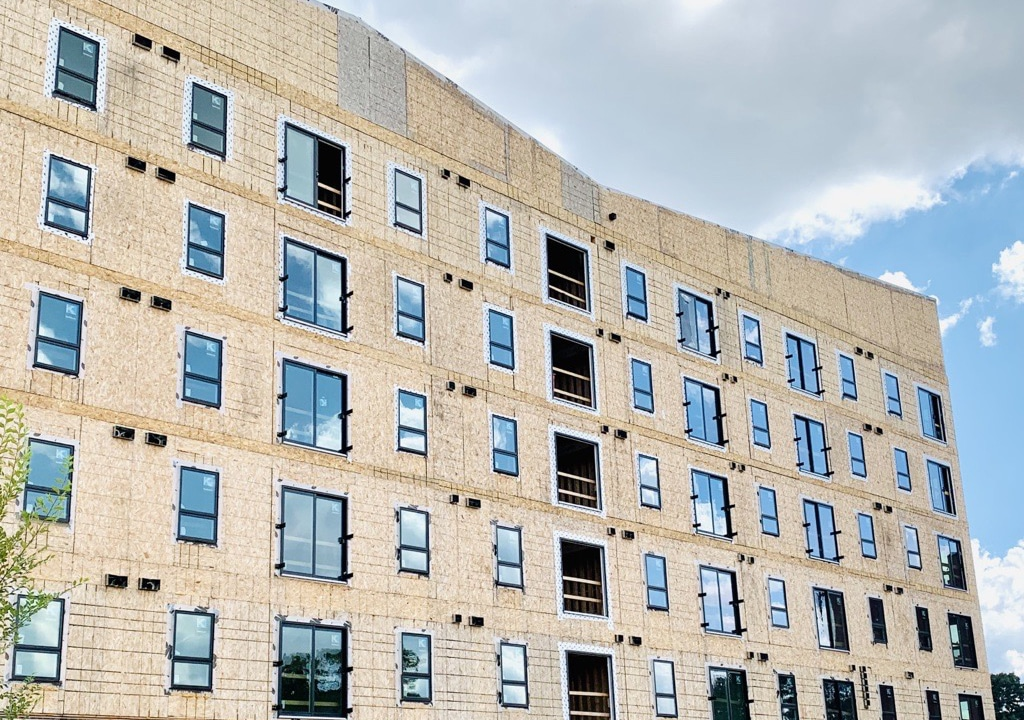
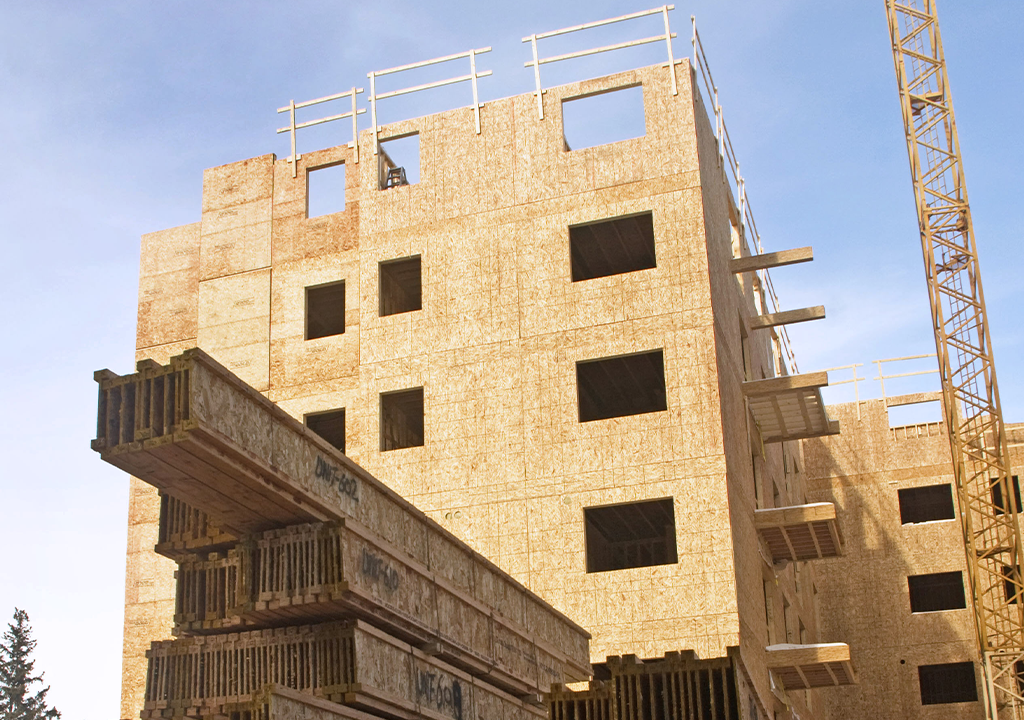

WoodWorks returns to The Buildings Show in 2026 bringing technical expertise and industry insight through a new partnership with CWC.

OTTAWA, ON, June 18, 2026 – The Canadian Wood Council (CWC) announces that Rick Jeffery will retire from his role as President and Chief Executive Officer of the CWC effective June 30, 2026, following a distinguished career of leadership and service to Canada’s wood products industry.
“Rick Jeffery’s tenure at CWC has been characterized by strategic vision, consistent leadership, and an unwavering dedication to promoting wood construction across Canada,” says Board Chair, Philippe Clune. “Under his direction, the CWC advanced codes and standards, strengthened its partnership with the Forest Products Association of Canada (FPAC), and raised the profile of the WoodWorks program from coast to coast. Rick leaves behind a more resilient, unified organization and an industry better positioned to help Canada achieve its housing and sustainability goals. He will be sincerely missed, but his legacy will continue to shape the future of wood construction for years to come.”
CWC Past Chair, Kevin Pankratz, agrees. “Over the last 4 years, Rick has led the organization through very challenging times in our industry. The legacy of strong leadership that he leaves behind will ensure the future success of the CWC.”
The Canadian Wood Council’s Board of Directors, staff, members, and partners extend their sincere gratitude to Rick for his many contributions to the organization and wish him every success and happiness in retirement.
“It has been a privilege to serve as President and CEO of the Canadian Wood Council and to work alongside such a dedicated team of staff, members, partners, and industry leaders,” said Rick Jeffery. Together, we have advanced the use of wood in the built environment, strengthened the voice of our industry, and built a strong foundation for future growth. I am proud of what we have accomplished and deeply grateful for the relationships and friendships developed along the way. I leave knowing the organization is in capable hands and well positioned to continue creating opportunities for Canada’s wood products sector.”
The CWC Board of Directors has appointed Derek Nighbor as President and Chief Executive Officer, effective July 1, 2026. Derek currently serves as President and Chief Executive Officer of FPAC, a role he has held since March 2016 and will retain. He has worked closely with CWC leadership in recent years, and his appointment reflects the importance of increased collaboration across the forest sector and wood building construction value chains to deliver on affordable housing, increase the use of Canadian wood in building construction, and strengthen the domestic industry in the face of growing geo-political and trade challenges.
“As an industry and as a country, we find ourselves in a critical moment – we need to build more affordable homes, accelerate innovation to develop future-ready building systems and communities, and protect and grow jobs to make our economy more resilient for the long-term,” says Nighbor. “In crisis there is always opportunity. We are fortunate to have among the best technical minds in the wood building construction space at CWC and across the regional WoodWorks and Cecobois networks. I’m excited to get to work with them to grow our on-the-ground partnerships and to build more Canadian homes and infrastructure with Canadian wood.”
The Canadian Wood Council remains committed to advancing the use of wood in the built environment and supporting a strong, innovative, and competitive wood products industry across Canada. Under Derek’s leadership, CWC will continue delivering the programs, services, and results that members and partners rely upon.
About the Canadian Wood Council
The Canadian Wood Council (CWC) is Canada’s unifying voice for the wood products industry. As a national federation of associations, its members represent hundreds of manufacturers across the country. CWC supports its members by accelerating market demand for wood products and championing responsible leadership through excellence in codes, standards, and regulations. CWC also delivers technical support and knowledge transfer for the construction sector through its market leading WoodWorks program.
For more information, please contact:
Sarah Hicks, Communications & Outreach Manager, CWC
[email protected] | 1-705-796-3381

Ottawa, ON – June 17, 2026 – The Canadian Wood Council (CWC) is pleased to announce that Philippe Clune was appointed to the role of Board Chair at the organization’s Annual General Meeting today.
Clune succeeds Kevin Pankratz, who has completed his term as Chair after providing dedicated service to the organization and Canada’s wood products sector.
“On behalf of the CWC, I would like to thank Kevin for his leadership and valuable contributions during his tenure as Chair,” said Derek Nighbor, President and CEO of the CWC. “Kevin has been a strong advocate for collaboration across the industry and has helped guide the organization through an important period of growth and alignment.”
Nighbor also welcomed Clune to the role. “As Vice President of Sales & Marketing at Domtar, Philippe brings extensive industry knowledge, strategic insight, and a commitment to advancing the use of wood in the built environment,” said Nighbor. “I look forward to working with him as we continue strengthening CWC’s role as a national voice for the wood products industry and delivering value for our members and partners.”
As a member of the CWC Board of Directors, Clune has been actively engaged in shaping the organization’s strategic priorities and supporting its work on behalf of Canada’s wood products industry.
“I am honoured to serve as Chair of the Canadian Wood Council’s Board of Directors,” said Clune. “I would like to thank Kevin for his leadership and contributions over the past three years. I look forward to working with my fellow directors, member delegates, and the CWC team to continue advancing the use of wood in the built environment and supporting a strong future for Canada’s wood products industry.”
About the Canadian Wood Council
Founded in 1959, the Canadian Wood Council (CWC) is Canada’s unifying voice for the wood products industry. As a national federation of associations, its members represent hundreds of manufacturers across the country. CWC supports its members by expanding market opportunities for wood products and championing excellence in codes, standards, regulations, technical support, and education.
For more information, please contact:
Sarah Hicks, Communications & Outreach Manager, CWC
[email protected] | 1-705-796-3381

WoodWorks is once again partnering with BUILDEX Vancouver in 2027 to deliver WoodWorks at BUILDEX — a dedicated program that brings together wood design innovation, technical expertise, and industry perspectives from across Western Canada.
This two-day collaboration within BUILDEX is designed to equip architects, engineers, developers, and builders with the latest strategies, technologies, and lessons learned from the field.

This issue of Wood Design & Building is, in many ways, about relationships. Relationships between materials and place, between education and practice, and between forestry and the built environment. And perhaps most importantly, the relationships being built by the people at all points along the path from forest to finished building who are sharing their knowledge, experience and passion for wood buildings.
That exchange of knowledge is strengthening confidence, capability, and collaboration throughout the design and construction community. In our interview with Dr. Blériot Feujofack, Education Manager at the Canadian Wood Council, we explore how new learning opportunities and accessible industry knowledge are helping prepare the next generation of designers and builders.
In Lloyd Alter’s article, A Treehugger Goes Logging, we are reminded that building with wood also means understanding where the material comes from and appreciating the depth of knowledge required to manage forests sustainably. By sharing perspectives across forestry, manufacturing, and construction, the article highlights the people and practices that shape the material long before it reaches the built environment.
That spirit of collaboration and shared learning is also reflected in our featured projects. In Saskatoon, the misiwe-kisik | One Sky school demonstrates how a project team’s commitment to doing something special for the community helped foster the collaboration and innovation required to use century-old, reclaimed nail-laminated timber from decommissioned grain elevators. The project’s Cree name, reflecting connection, belonging, and relationship across communities, feels equally fitting for a sector increasingly shaped by collaboration and shared ambition.
What makes this moment remarkable is not only what we are building, but how we are learning to build it together.

Save the date! WoodWorks Alberta and the Canadian Wood Council are bringing the Wood Solutions Conference to Calgary in November — and you won’t want to miss it.
Tickets will be available this fall! Stay tuned for updates on Early Bird registration and event details.

Mark your calendars! WoodWorks Atlantic and the Canadian Wood Council are pleased to present the Wood Solutions Conference in Moncton this fall — and we want you there.

Mass Timber Insurance Action Plan – Phase 1 Report examines one of the most significant barriers to scaling mass timber construction in Canada: access to affordable and reliable insurance.
While mass timber offers clear advantages in sustainability, performance, and long-term value, course-of-construction insurance rates remain disproportionately high—often several times those of concrete and steel—driven largely by limited data and insurer unfamiliarity rather than demonstrated risk.
Led by the Climate Smart Buildings Alliance and the Canadian Wood Council, and supported by Natural Resources Canada, this report summarizes the findings from Phase 1 of a national action plan developed in collaboration with insurance and building industry stakeholders. It evaluates the feasibility of four targeted solutions focused on data sharing, insurer-relevant research, contractor verification, and expanding insurance capacity.
Bringing together technical insight and industry perspectives, the report outlines practical pathways to reduce risk perception, improve market confidence, and unlock greater adoption of mass timber construction across Canada.

Tall Wood Feasibility Study: Mass Timber and Concrete explores the economic, construction, and environmental performance of a proposed 12-storey residential development in Dartmouth, Nova Scotia.
Developed through a side-by-side comparison of optimized mass timber and concrete schemes, this study examines how material choice influences project cost, schedule, financial returns, and embodied carbon. Beyond a direct cost comparison, it provides insight into how mass timber can support construction efficiency, earlier occupancy, long-term asset value, and meaningful product differentiation in the rental market.
The publication includes detailed analysis of design strategy, risk mitigation, development economics, scheduling, and structural carbon impacts—offering developers, investors, designers, and project teams practical data that demonstrates the viability of tall wood construction at this scale.

OTTAWA, ON, April 15, 2026 – The Canadian Wood Council is accepting submissions for the 2026 Wood Design & Building Awards. The prestigious annual program, now in its 42nd year, invites architects, designers, and project teams from across North America and around the world to submit their most inspiring wood projects for consideration.
“The program is a celebration of architectural excellence,” says Ioana Lazea, Senior Manager for the program at the Canadian Wood Council. “Year after year, it brings forward the creativity, ambition, and craft of the industry’s leading designers, those pushing wood to new heights and redefining what’s possible in the built environment.”
In a time when technology is rapidly transforming how we design and build, wood architecture is evolving in remarkable ways. Each year, the program showcases some of the most compelling and beautiful buildings in the world, but increasingly, these projects are also defined by the sophistication of the systems behind them.
Advances in wood products, engineering, and prefabrication are enabling new forms, greater efficiency, and expanded possibilities, while still delivering spaces that feel warm, natural, and deeply human. Wood design innovation is happening at every scale, from refined small projects to ambitious, city-shaping developments. Together they celebrate a material uniquely positioned to respond to some of the most pressing challenges facing the architectural profession today.
Submissions will be reviewed by a distinguished jury of Canadian and American architects. Projects will be evaluated based on creativity, design excellence, and the innovative and appropriate use of wood to achieve project objectives.
Award categories for 2026 include:
- Non-residential
- Residential
- Adaptive Reuse, Additions, and Renovations
- International Building
- Other (e.g. exterior structures, bridges)
The program also includes several specialty awards:
- Sustainable Forestry Initiative (SFI) Award
- Real Cedar Award
- Wood Preservation Canada (WPC) Award
- Regional WoodWorks Awards for Ontario, British Columbia, and the Prairies
Winners will receive a custom wood trophy and be recognized through a media announcement, social media, a feature profile on the Wood Innovation Network, and editorial coverage in Wood Design & Building Magazine (digital edition).
Key Dates:
Early Bird Deadline – May 31, 2026
Submission Deadline – June 26, 2026
For more information and to submit your project, please visit:
https://cwc.ca/wood-design-and-building-awards/
For media inquiries, please contact:
Sarah Hicks
Communications and Outreach Manager
Canadian Wood Council
[email protected] | 1-705-796-3381
About the Canadian Wood Council
The Canadian Wood Council (CWC) is Canada’s unifying voice for the wood products industry. As a national federation of associations, our members represent hundreds of manufacturers across the country. Our mission is to support our members by accelerating market demand for wood products and championing responsible leadership through excellence in codes, standards, and regulations. We also deliver technical support and knowledge transfer for the construction sector through our market leading WoodWorks program.
Need Free Technical Support?
Get expert advice and solutions for your wood construction projects. Our team is here to help you succeed—reach out today.

