

Wood Innovation and Design Centre
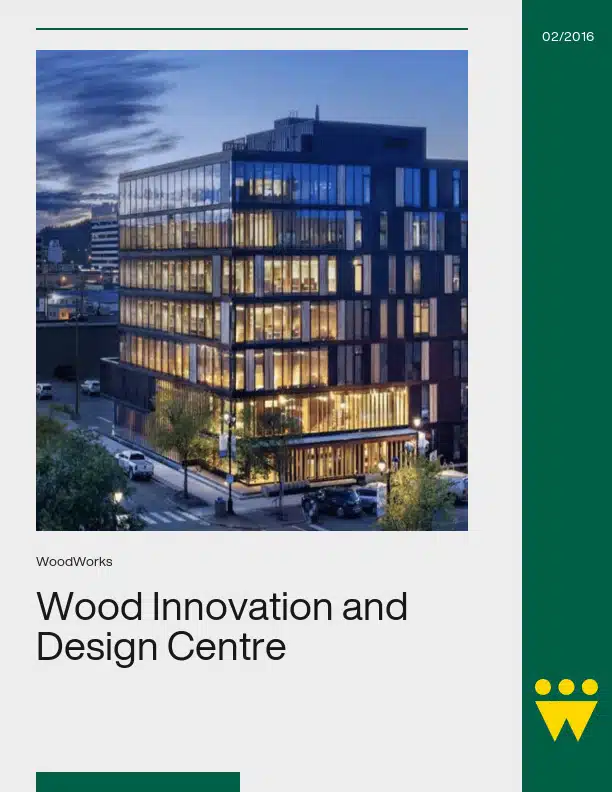
With a height of 29.5 metres, the Wood Innovation and Design Centre (WIDC) is the tallest contemporary wood building in North America. Located in the city of Prince George in northern British Columbia, the WIDC was conceived as a showcase for local wood products and as a demonstration of the province’s growing expertise in the design and construction of large wood buildings. The building has eight levels (six storeys, plus a ground floor mezzanine and a rooftop mechanical penthouse). The lower levels will accommodate faculty and students enrolled in the new Master of Engineering in Integrated Wood Design (MEng), to be launched by the University of Northern British Columbia (UNBC) in January 2016 and the new Centre for Design Innovation and Entrepreneurship to be launched by Emily Carr University of Art and Design in fall 2016. Academic facilities include a research/teaching lab that will support the design, fabrication and testing of wood products; a 75-seat lecture theatre; classrooms; a student lounge; gathering and meeting areas; and a learning resource centre. The upper floors will provide office space for public and private sector organizations associated with the wood industry. Over the long term, the WIDC will advance wood education and innovation in the province, enhance expertise in wood manufacturing, product development and engineering – all of which will help to expand opportunities for international exports of products and services. In addition, its striking presence in the heart of the city will assist in the revitalization of downtown Prince George. This case study describes the most important innovations that were implemented to meet design and safety criteria in what is a new class of buildings for British Columbia. These innovations included: A set of site-specific regulations to ensure life safety and structural integrity; The use of vertical cross-laminated timber (CLT) elements (including mechanical, elevator and stair shafts) to provide lateral stability to the structure; The use of double layer CLT floors to meet structural requirements and contribute to acoustic isolation and efficient services distribution; The use of superimposed (end grain-to-end grain bearing) columns to control shrinkage over the height of the building; and, The use of high strength proprietary connectors to speed construction and improve structural performance.
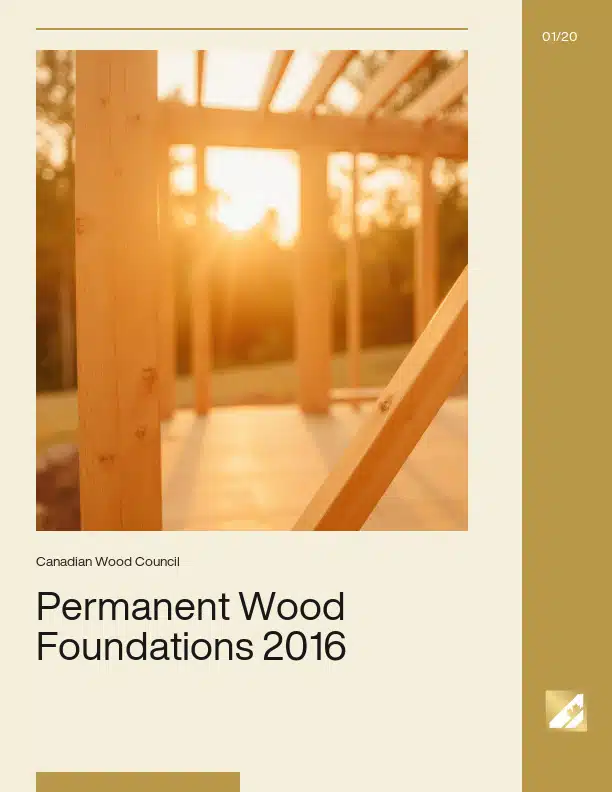
Permanent Wood Foundations 2016
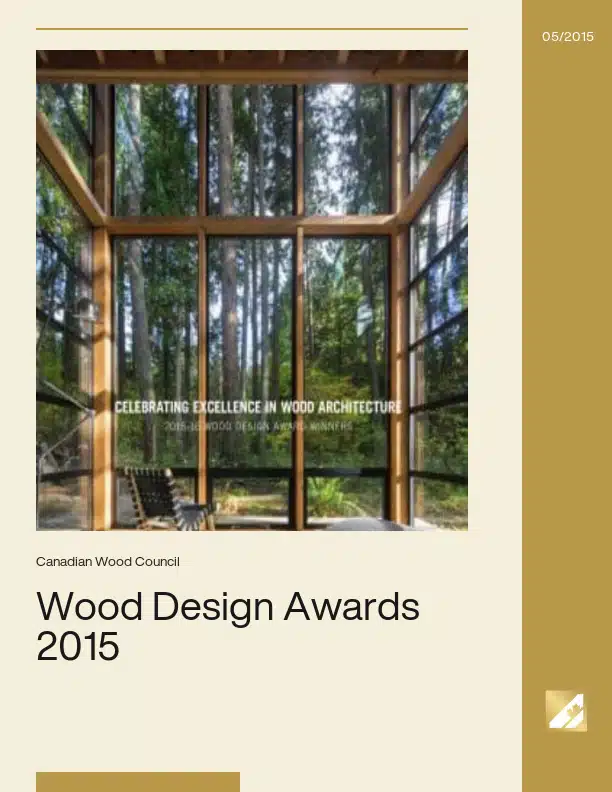
Wood Design Awards 2015
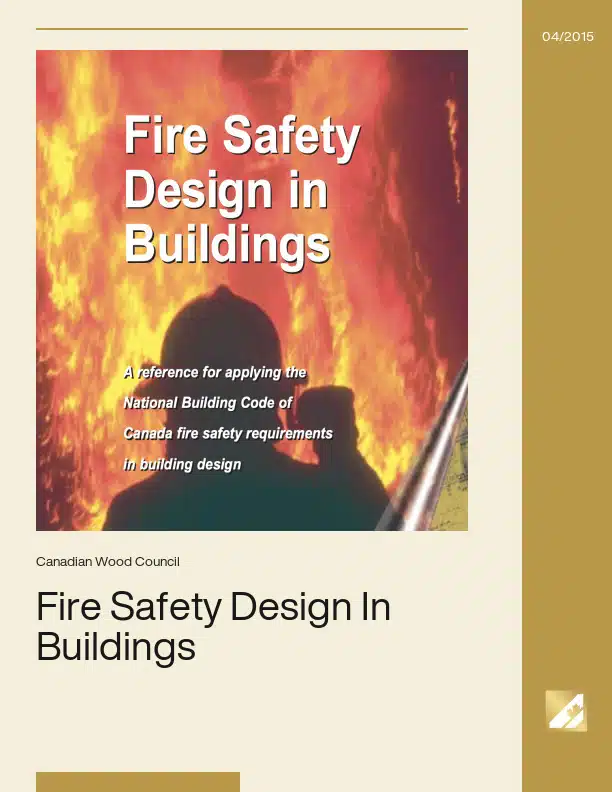
Fire Safety Design In Buildings
In a recent survey of building specifiers, the majority perceived wood to be the most environmentally friendly building material. Compared to other major building materials, this is due mainly to: the renewability of wood the low energy consumption required for production the low levels of pollutant emission during manufacture Lately, environmental considerations have acquired more importance in the specification of materials. Technical and economic aspects of building materials have always been primary considerations for specifiers. Increasingly, however, they are considering the environmental effects when selecting appropriate building materials for their designs. Architects, engineers and designers require accurate information to assess the true environmental consequences of the materials they specify. The environmental impacts of various building materials have been examined by a Canadian Research Alliance using the internationally accepted method called Life-Cycle Analysis (LCA). The Alliance consists of researchers from the wood, steel and concrete industries as well as university groups and consultants.
Fire Safety and Security: A Technical Note on Fire Safety and Security on Construction Sites In British Columbia

The construction phase of any building represents a relatively short period of time in the lifespan of the structure during which a unique set of risk scenarios are present. The risks and hazards found on a construction site differ in both nature and potential impact from those in a completed building. This occurs during a time in which the fire prevention and protection elements that are designed to be part of the completed building are not yet in place. For these reasons, construction site safety includes some unique challenges. However, an understanding of the hazards and their potential risks is the first step towards fire prevention and mitigation. While there are many types of hazards and risks that require consideration during the construction of all buildings, this Technical Note focuses solely on fire-related aspects.
Fire Safety and Security: A Technical Note on Fire Safety and Security on Construction Sites In Ontario

The construction phase of any building represents a relatively short period of time in the lifespan of the structure during which a unique set of risk scenarios are present. The risks and hazards found on a construction site differ in both nature and potential impact from those in a completed building. This occurs during a time in which the fire prevention and protection elements that are designed to be part of the completed building are not yet in place. For these reasons, construction site safety includes some unique challenges. However, an understanding of the hazards and their potential risks is the first step towards fire prevention and mitigation. While there are many types of hazards and risks that require consideration during the construction of all buildings, this Technical Note focuses solely on fire-related aspects.
BP5 – Wood-Frame Construction: Meeting The Challenge of Earthquakes
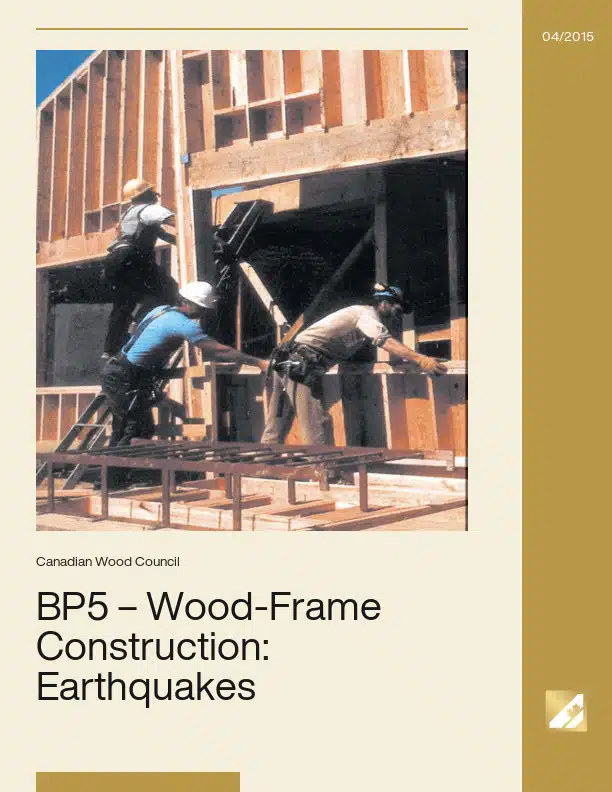
North American single-family homes are considered by many to be the safest place to be in an earthquake. This is not surprising considering that North American housing is almost synonymous with wood-frame construction. The lightweight and high energy absorbing capabilities of wood framing provides a system strong enough to withstand the effects of powerful earthquakes. Experience from strong earthquakes, in North America and around the world, has shown that well-constructed wood-frame buildings provide safety to their occupants.
BP4 – Wood-Frame Housing: A North-American Marvel
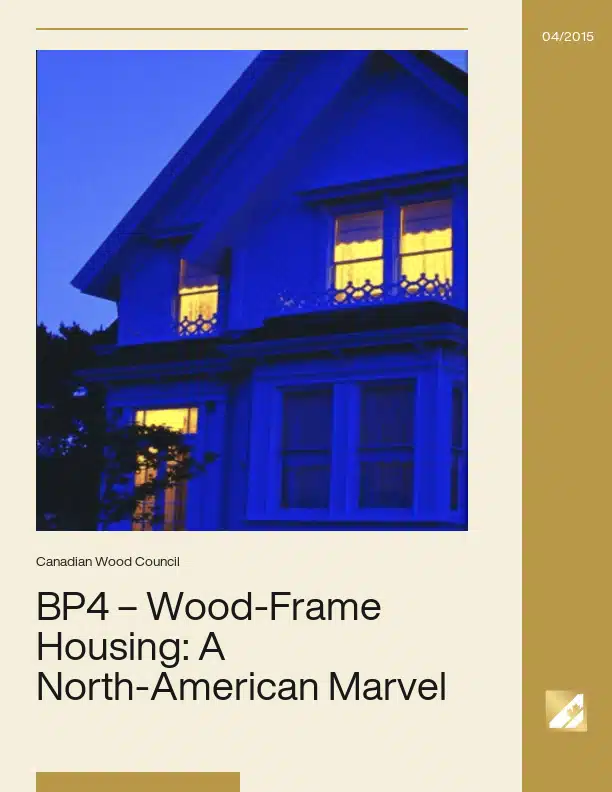
North Americans enjoy the highest standard of safe and comfortable housing in the world. This is not by chance – wood-frame construction is the residential building system of choice and many countries wishing to improve the comfort and security of their citizens are adopting it. North America is blessed with resources of all kinds. A continuing abundance of forest resources has, since the earliest settlers, encouraged using wood to build housing. Today, as designers, builders and homeowners pursue safe, energy efficient housing that is easy on the environment and can perform in the face of major challenges like high winds and earthquakes, there are stronger reasons than ever to build with wood. Wood-frame construction is strong, durable, easy to insulate, easy to renovate and delivers value. It is backed by two hundred years of proven performance and a wealth of research and new product development to make it better than ever. And it is the only major building material that is renewable. Strong winds… heavy snow loads… high humidity… extreme temperatures – whatever your building challenges, wood-frame housing has proven technical solutions to overcome any problem. Wood sells houses. In addition to the shelter, warmth and safety provided by the wood structure, buyers recognize and appreciate the aesthetic value of wood for exposed applications like cabinetry, flooring, furniture and moldings. Not only is wood builder-friendly, it is also environmentally friendly. Wood products take less energy to manufacture, affect the environment less than other materials, and they come from North American forests that are abundant and increasing in size.
BP3 – Termite Control and Wood-Frame Buildings
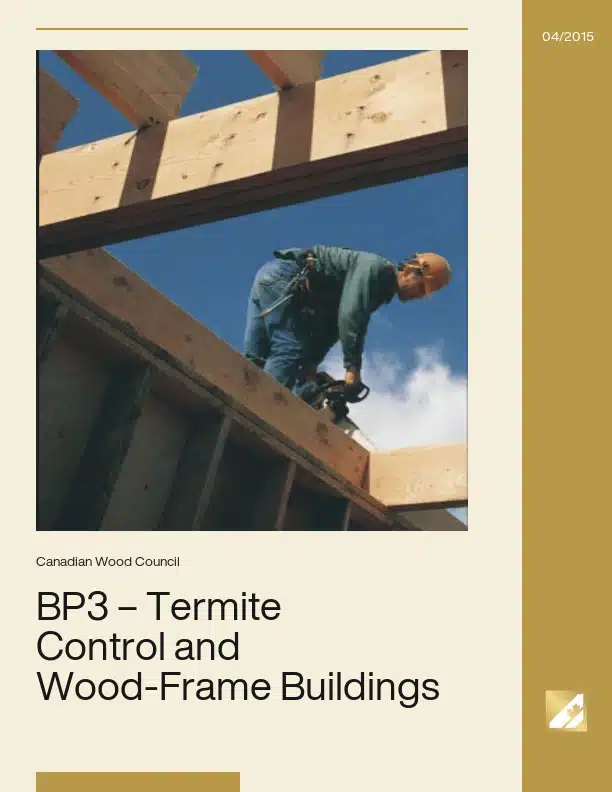
Wood products have long been the building materials of choice for home construction in North America. The wood-frame construction system has a solid history of producing housing of the highest standards: It is easy to build, delivers economic value, has excellent strength in earthquake or high-wind conditions, is energy efficient, and is derived from a renewable resource. Modern wood-frame construction includes several types of engineered wood products that are economically viable in multi-story residential buildings and non-residential projects. Moreover, as described in Bulletins No. 1 and 2 in the Building Performance Series, wood framing supplies durability and fire safety performance where environmental and building code requirements are met. This bulletin describes how wood framing can also be used in areas of North America subject to insect attack, a threat to all types of buildings. It builds on the concept of integrated pest management that will provide long-term protection for wood-frame and other buildings against damage caused by insects, specifically Formosan and other subterranean termites. Also included is practical advice for building designers, contractors and owners to assist in assessing risk, and choosing appropriate mitigation measures.
BP2 – Fire Safety In Residential Buildings
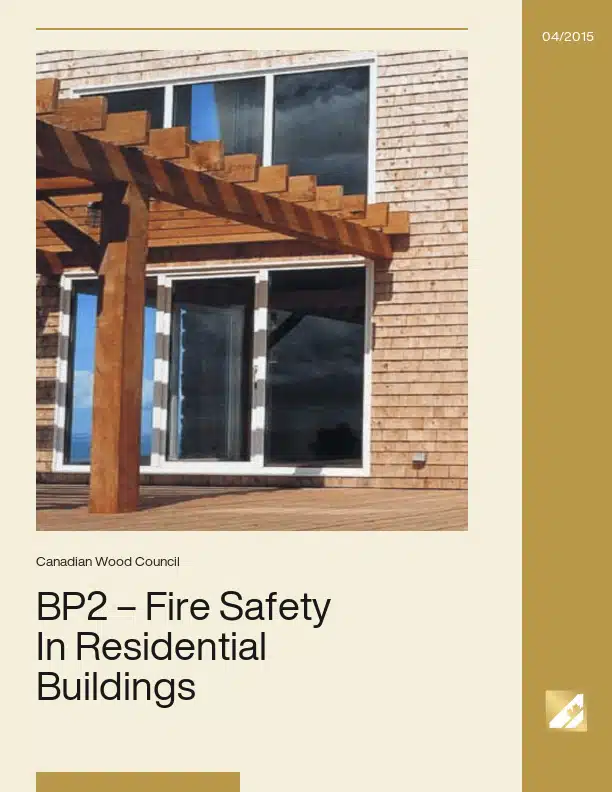
Since wood-frame construction was first used in the early 1800’s, North Americans have developed and been sheltered by wood-frame building technology — from single family homes and progressing over the decades to larger, multi-storey apartment buildings and townhouses. In fact, over 90% of the 1.5 million homes built in North America each year are constructed using woodframe construction. Wood-frame construction provides North Americans with the world’s highest housing standards. There are many reasons for the success of the wood frame system: It is easy to build It has a proven track record It delivers excellent value It has a high strength to weight ratio It is energy efficient It is one of the safest building systems in extreme conditions like earthquakes Wood is an abundant renewable resource In addition, modern wood-frame construction provides a comparable level of fire safety to non-combustible construction. This technical bulletin will discuss some of the basic principles of fire safety, and dispel some myths about what makes residential buildings fire-safe for both single family homes and multi-family residential buildings.
BP1 – Moisture and Wood-Frame Buildings

Throughout history, wherever wood has been available as a resource, it has found favor as a building material for its strength, economy, workability and beauty, and its ability to last has been demonstrated again and again. From the ancient temples of Japan and the great stave churches of Norway to the countless North American buildings built in the 1800s, wood construction has proven it can stand the test of time. The art and technology of wood building, however, has been changing through time. Can modern wood-frame buildings perform as well? Protection of buildings from moisture is an important design criterion, as important as protection from fire or structural collapse. Designers, builders and owners are gaining a deeper appreciation for the function of the building envelope (exterior walls and roof). This includes the performance of windows, doors, siding, sheathing membranes, air and vapour barriers, sheathing, and framing. The capabilities and characteristics of wood and other construction materials must be understood, and then articulated in the design of buildings, if proper and durable construction is to be assured. This guide will help design and construction professionals, and building owners understand moisture issues related to the design and construction of wood-frame buildings. The primary objective is to provide ideas and solutions to ensure wood-frame buildings perform as expected. The primary focus of the guide will be on the control of rainwater penetration in exterior walls, particularly for climates subject to high moisture exposure.
IBS5 – Thermal Performance of Light-Frame Assemblies

“A man’s home is his castle” is an old familiar phrase, but if truth be told, the castles of old were cold and draughty. Today’s homes are now havens of comfort with efficient central heating systems and well insulated building envelopes. We count on the walls and roofs of our houses to keep the heat in during the winter months and the heat out during the sweltering days of summer. Today’s home buyers demand energy efficient houses with high insulation values. “Lowering energy use” has become the goal as the cost and environmental implications of energy use are considered. Insulation levels are now being required by many code authorities. Stricter thermal requirements mean that designers must understand the impact of the materials and assemblies used on thermal performance. Because of its long history of use, wood-frame construction has well established insulating properties and record of performance. The effect of other construction systems on insulation properties is not widely known or understood. This publication will examine current knowledge of the thermal performance of wood and other framing techniques. This information will assist designers and builders to select construction techniques that provide the best thermal performance.


