
Exploring the Feasibility of Point-Supported Mass Timber for Tallwood Construction
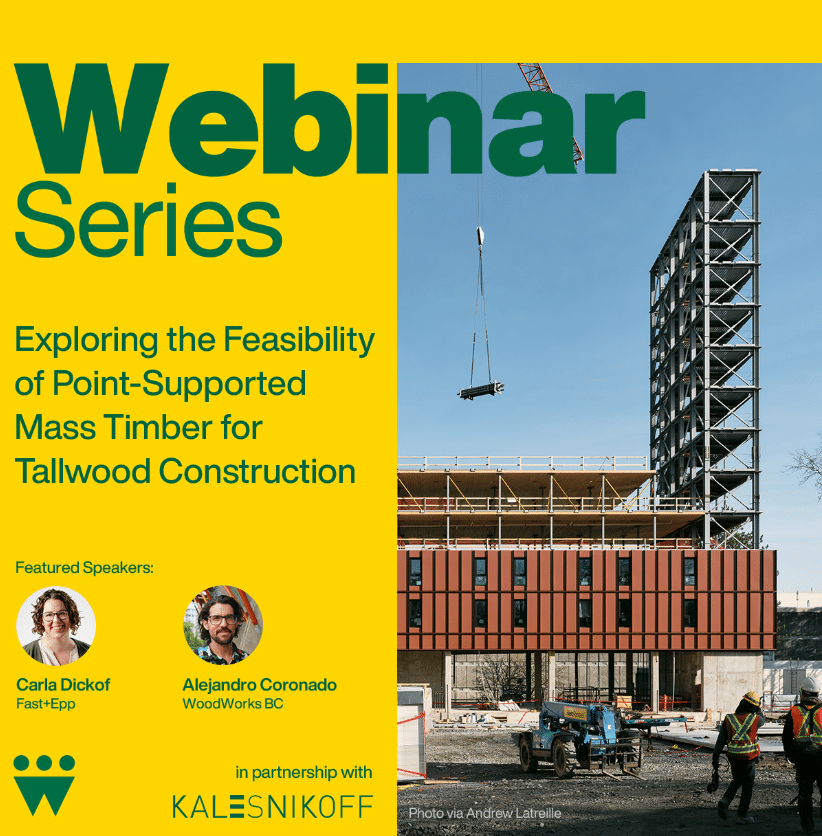
Course Overview This session examines the growing potential of point-supported mass timber systems in tall building construction, contrasting them with traditional timber framing and conventional steel and concrete approaches. It highlights regulator advancements, the role of mass timber in addressing mid-density housing needs, and the structural fundamentals of gravity and lateral systems. Through cost and schedule comparisons, design principles like bi-axial bending and punching shear, and insights from ongoing Canadian codification efforts, the presentation offers a comprehensive overview supported by real-world projects such as VAHA Burrard and BCIT Tall Timber. Learning Objectives Evaluate the opportunities and constraints for point-supported mass timber when compared to traditional timber framing schemes. Analyze the schedule and cost benefits of point-supported mass timber systems versus steel and concrete in tall construction projects. Explore state-of-the-art design methodologies and ongoing efforts towards codification in Canada. Course Video Speakers Bio Carla Dickof, P.Eng., M.A.Sc. Associate Principal | Director of Research & Development Fast+Epp Carla Dickof is the Associate Principal & Director of Research and Development at Fast + Epp, where she leads the Testing Team at Fast + Epp’s R&D hub, Concept Lab, and uses the data gleaned from research programs to regularly contribute to academic journals and conferences. Carla completed her Master’s degree studies at the University of British Columbia, where her thesis research focused on hybrid systems, specifically those combining steel and mass timber (CLT). Her experience as an engineer spans commercial, recreational, educational, and residential projects – and, since joining Fast + Epp in 2012, Carla has gained a robust fluency in all major building materials, including concrete, steel, light-framed wood, heavy timber, and mass timber. Her understanding of building physics and materials brings invaluable insights to her projects. Alejandro Coronado, P.Eng. Technical Advisor WoodWorks BC Alejandro Coronado is a Technical Advisor with a multidisciplinary background spanning contracting, supply, and consulting engineering. With both a Diploma and a Bachelor’s Degree in Structural Engineering from BCIT, Alejandro began his career in single-family residential design and steadily advanced to contribute to landmark projects such as the Centre Block Base Isolation at Parliament Hill, the UBC Museum of Anthropology Great Hall Renewal, the Royal BC Museum PARC Campus, and a mass timber campus in Silicon Valley. Initially drawn to mass timber for its expressive architectural potential, Alejandro quickly recognized its broader value in addressing today’s social and environmental challenges. Through many years of hands-on experience, Alejandro has become a champion for sustainable construction and simple yet effective structural solutions.
Design and Construction of Permanent Wood Foundations
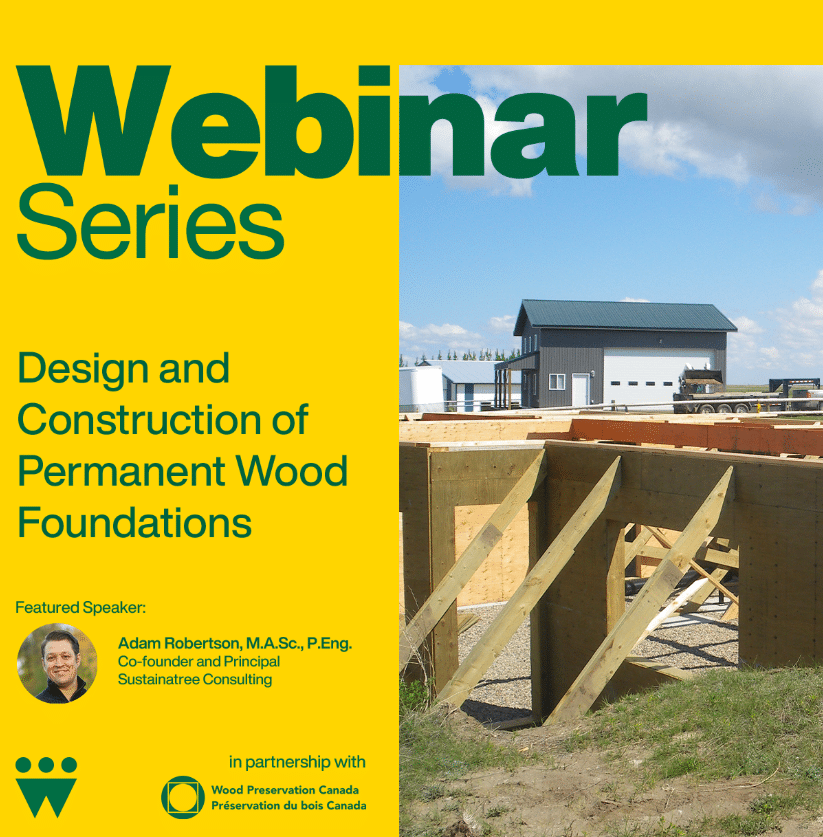
Course Overview This course will provide guidance on the design and construction of permanent wood foundations (PWF) based on the Canadian standard CSA S406-16 – Specification of Permanent Wood Foundations for Housing and Small Buildings. Topics will include site selection, backfilling, PWF floor systems, air and vapour barriers, insulation techniques, crawl spaces, and design considerations for high wind and seismic zones. The course will give attendees a comprehensive overview of the structural and building science requirements for designing and constructing PWF systems. Learning Objectives History of PWF construction. Wood preservatives and material requirements for PWF. Overview of pertinent design and construction aspects of PWF. Standardization of PWF as per CSA S406.
Understanding Glulam: The structural and architectural capabilities of mass timber
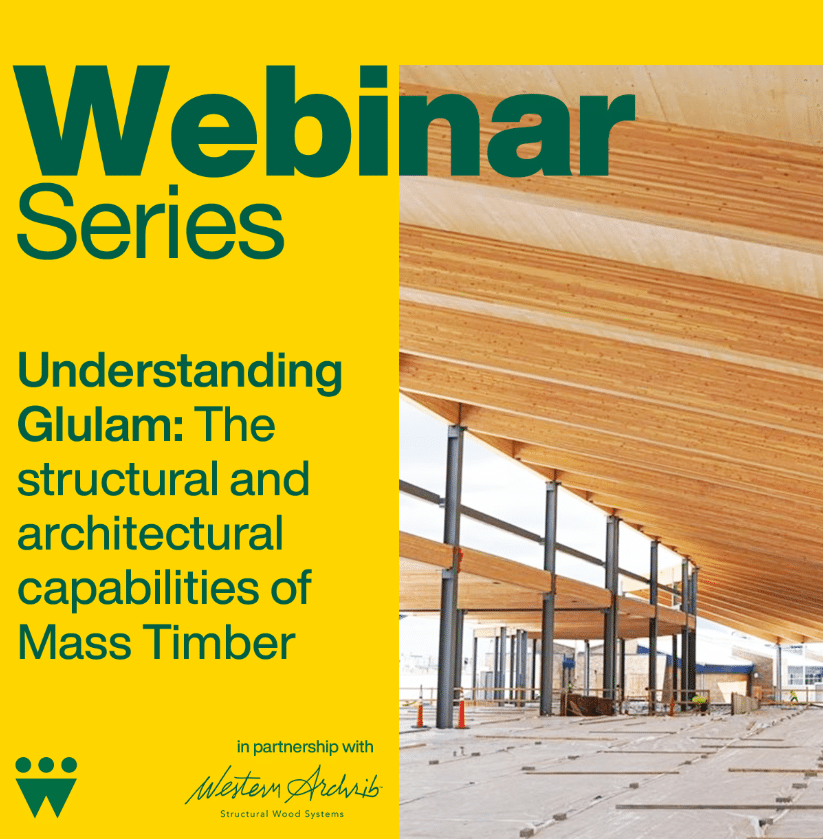
Course Overview In this course, you’ll gain insight into the design and manufacturing considerations involved in using glulam in buildings. As one of the oldest mass timber products used in Canada, glulam offers exceptional flexibility and can be incorporated into a wide range of building types—particularly where curvature and expressive geometry are key. Presenters will outline design and manufacturing strategies for creating efficient structures, showing how glulam can be used not just as columns and beams, but as the primary structure in today’s innovative buildings—whether architecturally driven or focused on value and efficiency. They will also cover the availability of glulam products across Canada and explain how to maximize the value of the timber used. Practical tips will be shared to help designers and specifiers take full advantage of glulam’s attributes in a cost-efficient way. Learning Objectives Participants will learn the design strategies employed when using curvature and geometry in buildings and gain an understanding of what is possible with expressive architecture. Participants will understand the practical constraints of glulam manufacturing, including how to approach the design and specification of glulam members. Participants will learn how different wood species and strength grades are applied in glulam design, and how to use them efficiently for optimal performance. Participants will understand how geometry, fire ratings, and member layups influence the cost-efficiency and design potential of glulam systems. Course Video Speakers Bio Andre Lema Manager of Business Development Western Archrib Andre Lema, a seasoned professional in the wood industry, brings decades of experience and expertise. Starting as a carpenter and advancing through a degree in Construction Engineering at NAIT, Andre has been instrumental in driving the success of Western Archrib. His passion for wood and dedication to fostering client relationships have made him a key figure in the industry. Alejandro Coronado, P.Eng. Technical Advisor WoodWorks BC Alejandro Coronado is a Technical Advisor with a multidisciplinary background spanning contracting, supply, and consulting engineering. With both a Diploma and a Bachelor’s Degree in Structural Engineering from BCIT, Alejandro began his career in single-family residential design and steadily advanced to contribute to landmark projects such as the Centre Block Base Isolation at Parliament Hill, the UBC Museum of Anthropology Great Hall Renewal, the Royal BC Museum PARC Campus, and a mass timber campus in Silicon Valley. Initially drawn to mass timber for its expressive architectural potential, Alejandro quickly recognized its broader value in addressing today’s social and environmental challenges. Through many years of hands-on experience, Alejandro has become a champion for sustainable construction and simple yet effective structural solutions.
A Zero Carbon Hybrid Wood Supertall Future

Course Overview With buildings generating 40% of global carbon emissions, we need to achieve net-zero by 2050 to meet the Paris Agreement target and limit global warming to 2°C. Timber sequesters an average of 1.9 metric tons of carbon-dioxide equivalent emissions per cubic meter (Sathre & O’Connor, 2010). While a purely mass timber tall building may not be the most cost-efficient solution, a hybrid structure can maximize the overall use of wood by volume in the most cost-efficient manner. Floor systems in buildings contribute as much as 73% of the environmental impact of a high-rise building’s structure (Lankhorst et al., 2019), making them an excellent target for reducing embodied carbon. DIALOG’s patent- pending Hybrid Timber Floor System (HTFS) takes advantage of the benefits of cross-laminated timber (CLT) combined with pre-stressed concrete to achieve a 12-metre column-free span. The HTFS is proposed as part of our Hybrid Timber Tower, a 105-storey mixed-use prototype that is being evaluated and tested by DIALOG and EllisDon. The prototype structure consists of the hybrid timber floor, combined with a concrete core and an external steel frame. Fire safety is achieved in the floor panels as the exposed wood chars to form a protective layer, while the non-combustible concrete and steel band continues to support the panel. The exposed CLT panels also provide a biophilic appeal, which has shown to support cognitive function as well as physical and psychological well-being (Vidovich, 2020). DIALOG, EllisDon, FPInnovations and other partners have completed the first phase of small-scale testing on over 40 panels. We are scheduled for fire testing of the panels in Ottawa with NRCan this fall with full scale testing of the 12-meter panels starting in late 2022. Learning Objectives Describe how hybrid mass timber systems—such as the Hybrid Timber Floor System (HTFS)—reduce embodied carbon and support zero‑carbon goals in high-rise, mixed-use developments. Explain the structural, fire safety, and performance characteristics of hybrid CLT–concrete floor assemblies, including how charring, concrete bands, and steel elements contribute to long-span capability and code compliance. Evaluate the role of multidisciplinary research, prototyping, and large-scale testing in validating hybrid timber technologies for supertall applications, including their impacts on sustainability, biophilia, and cost efficiency. Course Video Speaker Bio Craig Applegath, BSc, BArch, MArchUD, PPOAA, AIBC, NSAA, AIA, FRAIC, LEED® APBD+C Founding Partner & Architect DIALOG Craig Applegath is the founding principal of DIALOG’s Toronto Studio, and a passionate designer who believes in the power of built form to meaningfully improve the wellbeing of communities and the environment they are part of. Since graduating from the Graduate School of Design at Harvard University with a Master of Architecture in Urban Design Craig has focused his energies on leading innovative planning and design projects that address the complex challenges facing our communities, as well as on his advocacy of sustainable building design and urban regeneration and symbiosis. Craig’s area of practice includes the master planning and design of institutional projects, including post secondary education, healthcare facilities, as well as the design of innovative mixed-use- facilities. Craig was a founding Board Member of Sustainable Buildings Canada, a Past President of the Ontario Association of Architects, and the current moderator of SymbioticCities.net. Craig has lectured or taught at Harvard, the University of Toronto, the University of Waterloo, as well as at many professional and sector related conferences around the world. In 2001 Craig was made a Fellow of the Royal Architectural Institute of Canada for his contributions to the profession of architecture. In 2017 he was presented with the OALA Honourary Membership Award for his contributions to the cause of landscape architecture in Ontario. Neel Bavishi, PEng, CEM Building Performance Analysis, Associate DIALOG Neel is passionate about applying the art and science of building performance simulation and data-driven design to produce positive outcomes for the built environment. He embraces holistic solutions that minimize the environmental impact of building assets while providing enhanced value to building owners, developers, policymakers, and designers through improved well-being and reduced total cost of ownership. Neel believes that an integrated and collaborative approach that incorporates diverse perspectives is essential for delivering high-performance buildings. A mechanical engineer by training, Neel is well-versed in whole-building energy modelling for both new and existing buildings and lifecycle cost analysis, design optimization, and data visualization. His experience includes developing energy models for green building certification programs, carbon-neutral retrofit studies and district energy strategies, and the development of net-zero energy and emissions policies and standards for municipal, provincial, and federal government bodies. His projects span various asset classes, including recreational facilities, commercial high-rise towers, multi-unit residential buildings, hospitals, data centres, and transit facilities. He is a licensed Professional Engineer in the province of Ontario and is a Certified Energy Manager. Cameron Ritchie, PEng, PE, PhD, BSE Structural Engineer, Associate DIALOG Cameron is an Associate on the Structural Engineering team in DIALOG’s Toronto studio. Since graduating with a PhD from the University of Toronto, Cameron has acted as a structural design engineer and project manager across a variety of sectors and project types, including healthcare, institutional, government, and retail. He has experience in all stages of a project delivery, from feasibility studies through construction administration and management. Cameron is DIALOG’s project manager for the hybrid timber floor system (HTFS) research program, working closely with industry partners EllisDon. He is passionate about exploring mass timber wherever possible as a sustainable solution to our building needs.
Aspen Art Museum: Creating an Innovative Wood Structure
Course Overview The Aspen Art Museum, designed by architect Shigeru Ban, includes a long-span three-dimensional wood space-frame roof. Ban’s charge was to create a wood space frame with spans of more than 50 feet and cantilevers of 14 feet, in a structural depth of 3 feet. The space frame was to have two planes of intersecting diagonal webs of curved members that undulated up and down to touch the planes of the top and bottom chords with no visible connectors. This case study presentation will describe the design and construction of the wood structure, including paths explored but not chosen for the final design. Learning Objectives Articulate the particular demands associated with creating a 3-dimensional space frame entirely in wood. Recognize the advantages and disadvantages of several wood connection strategies in space-frame structures. Be aware of manufacturing capabilities and limitations that influenced the design of the Aspen Art Museum roof structure. Understand the importance of early engagement of manufacturing and engineering partners in the design process for innovative wood structures. Course Video Speaker Bio Gregory R. Kingsley, PhD, PE President and CEO KL&A Inc. Gregory is the president and CEO of KL&A Inc., Structural Engineers and Builders in Golden, Colorado, a firm of 65 that includes structural engineers, steel detailers, and construction managers. He enjoys working with design architects on innovative structures, especially wood and steel.