
Scaling Affordable Rental Housing with Tall Mass Timber
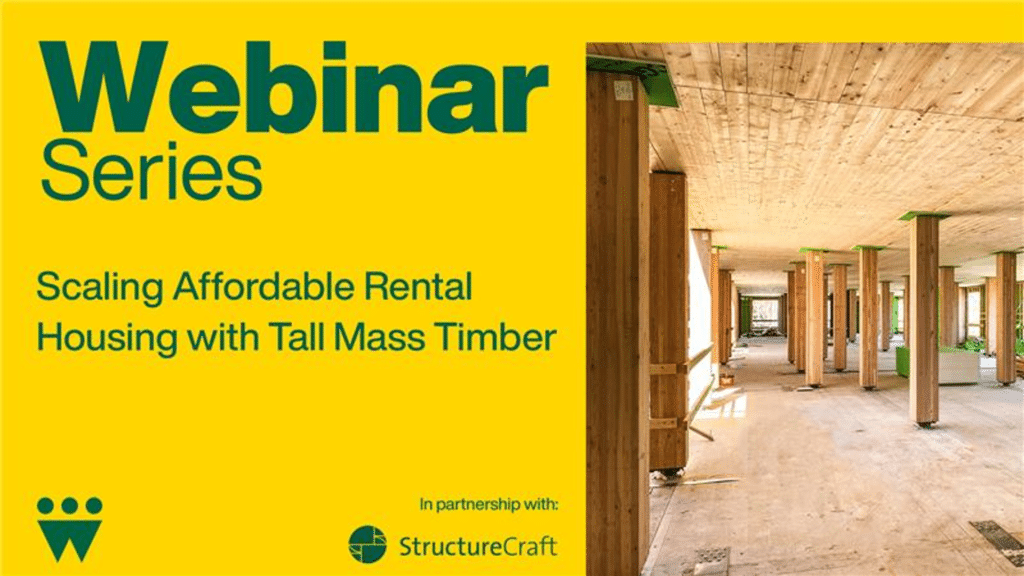
Course Overview As cities face growing pressures around affordability, climate resilience and livability, innovative projects like Catalyst’s 18-storey CLT rental development in North Vancouver offer necessary solutions. Targeted toward architects, engineers, developers and municipal leaders this session explores mass timber construction as an affordable housing solution. Attendees will gain insight into the use of CLT in construction and the associated challenges, including structural grid constraints, moisture protection, and prefabricated balcony systems. The session will also highlight how the project achieved near cost parity with comparable concrete buildings, integrated mixed-use programming, and leveraged BIM to support coordination and the permitting process. Participants will leave with practical takeaways for applying these approaches to similar projects in other cities. Learning Objectives Understand how tall mass timber hybrid systems can support affordable and mixed-use housing Identify key architectural, structural, and construction challenges unique to CLT buildings Learn practical strategies for permitting, procurement, coordination, and construction Course Video Speakers Bio Annabelle Hamilton Executive Director WoodWorks BC Harrison Glotman Principal Glotman Simpson Consulting Engineers Rhys Leitch Principal Integra Architecture Inc. Sean Binns Project Director Kindred Construction
Offsite Construction Handbook
Course Overview Offsite construction is transforming the building industry by shifting key processes from traditional sites to controlled factory environments. This approach enhances productivity, quality, and sustainability, addressing challenges like labor shortages and environmental impact. The delivery process emphasizes early collaboration, integrated design, and robust project management to optimize efficiency and risk management. Durability and energy efficiency are achieved through advanced material selection, moisture management, and airtight, highly insulated assemblies. Construction logistics, quality control, and commissioning are tailored for offsite methods, ensuring rapid, reliable project delivery. Life cycle analysis shows offsite construction can reduce embodied carbon and waste, supporting climate goals. Canada’s evolving policies and market trends position offsite construction as a key solution for affordable, sustainable housing. Learning Objectives Understand how offsite construction improves the durability, moisture control, and energy performance of wood building systems. Identify the structural and sustainability benefits of early design integration in offsite wood construction projects. Evaluate the role of life-cycle analysis and embodied carbon in positioning offsite wood construction as a solution for sustainable and affordable housing in Canada. Course Video Speakers Bio Dorian Tung Manager, Technology Assessment FPInnovations Dorian Tung is currently the Manager of Technology Assessment at FPInnovations. Prior to this, he worked as a structural consultant in Canada and the US. As a manager, he has been working with scientists on projects related to structure, seismic, durability, energy, fire, acoustic, and vibration. With the evolving ecosystem, Dorian is active in many working groups to facilitate discussions, remove duplicates, accelerate processes, with the goal to maximize impacts for the forest industry NOW using research data. He is also the editor of the Offsite Wood Construction Handbook published by FPInnovations. Helen Goodland Principal. Head of Research and Innovation SCIUS Advisory Helen Goodland is an architect registered in the UK and has an MBA from the University of BC. Helen is firmly committed to achieving truly sustainable buildings within the next decade. She is also passionate about advancing leadership opportunities for women in construction technology. To this end, she participates on numerous boards and committees. Currently she serves on the Board of Directors of Building Transformations (formerly CanBIM), the BC Digital Advisory Council, the BCIT Mass Timber Education Advisory Board and the University of Victoria’s Green Civil Engineering Advisory Council. She is also past chair of the UN Sustainable Buildings Initiative’s Materials Technical Committee. Adam Robertson Co-founder and Principal Sustainatree Adam completed his Bachelor of Applied Science in Civil Engineering at the University of Toronto and also holds a Master of Applied Science degree from the Department of Wood Science at the University of British Columbia. He is the past Chair of the CSA Subcommittee on Permanent Wood Foundations and acted as a primary author and editor during the update and revisions to the Canadian Wood Council’s Permanent Wood Foundations publication. He is the co-founder and principal of Sustainatree Consulting, a small firm specializing in sustainability and engineering design of wood building systems. Prior to opening his own practice, Adam was previously employed by the Canadian Wood Council and has also worked as a consulting structural engineer and within the building development and construction management fields.
Exploring the Feasibility of Point-Supported Mass Timber for Tallwood Construction
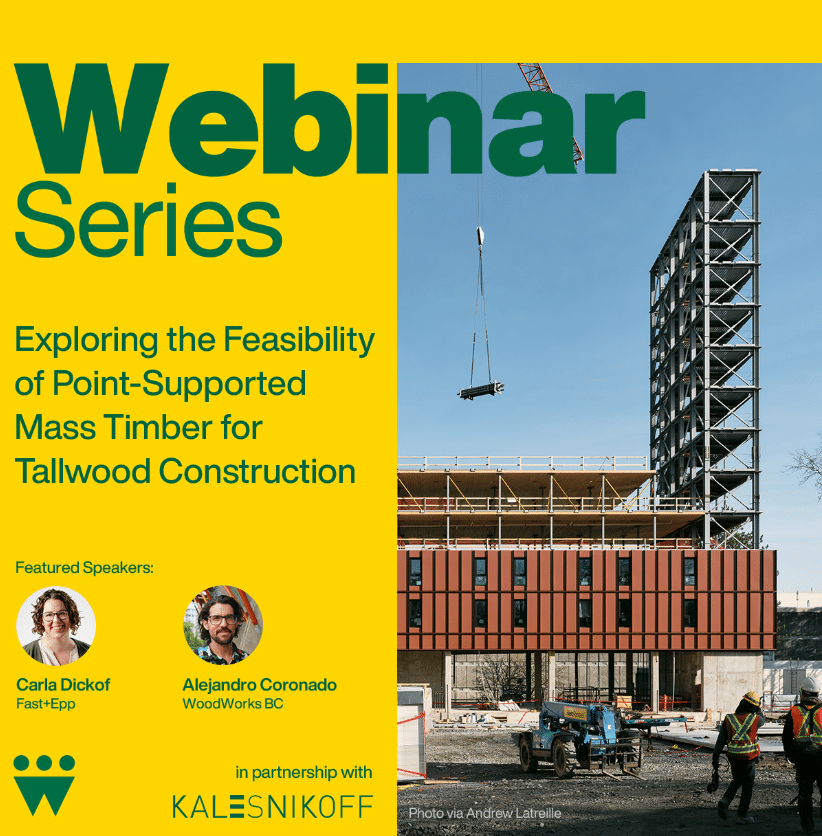
Course Overview This session examines the growing potential of point-supported mass timber systems in tall building construction, contrasting them with traditional timber framing and conventional steel and concrete approaches. It highlights regulator advancements, the role of mass timber in addressing mid-density housing needs, and the structural fundamentals of gravity and lateral systems. Through cost and schedule comparisons, design principles like bi-axial bending and punching shear, and insights from ongoing Canadian codification efforts, the presentation offers a comprehensive overview supported by real-world projects such as VAHA Burrard and BCIT Tall Timber. Learning Objectives Evaluate the opportunities and constraints for point-supported mass timber when compared to traditional timber framing schemes. Analyze the schedule and cost benefits of point-supported mass timber systems versus steel and concrete in tall construction projects. Explore state-of-the-art design methodologies and ongoing efforts towards codification in Canada. Course Video Speakers Bio Carla Dickof, P.Eng., M.A.Sc. Associate Principal | Director of Research & Development Fast+Epp Carla Dickof is the Associate Principal & Director of Research and Development at Fast + Epp, where she leads the Testing Team at Fast + Epp’s R&D hub, Concept Lab, and uses the data gleaned from research programs to regularly contribute to academic journals and conferences. Carla completed her Master’s degree studies at the University of British Columbia, where her thesis research focused on hybrid systems, specifically those combining steel and mass timber (CLT). Her experience as an engineer spans commercial, recreational, educational, and residential projects – and, since joining Fast + Epp in 2012, Carla has gained a robust fluency in all major building materials, including concrete, steel, light-framed wood, heavy timber, and mass timber. Her understanding of building physics and materials brings invaluable insights to her projects. Alejandro Coronado, P.Eng. Technical Advisor WoodWorks BC Alejandro Coronado is a Technical Advisor with a multidisciplinary background spanning contracting, supply, and consulting engineering. With both a Diploma and a Bachelor’s Degree in Structural Engineering from BCIT, Alejandro began his career in single-family residential design and steadily advanced to contribute to landmark projects such as the Centre Block Base Isolation at Parliament Hill, the UBC Museum of Anthropology Great Hall Renewal, the Royal BC Museum PARC Campus, and a mass timber campus in Silicon Valley. Initially drawn to mass timber for its expressive architectural potential, Alejandro quickly recognized its broader value in addressing today’s social and environmental challenges. Through many years of hands-on experience, Alejandro has become a champion for sustainable construction and simple yet effective structural solutions.