
Scaling Affordable Rental Housing with Tall Mass Timber
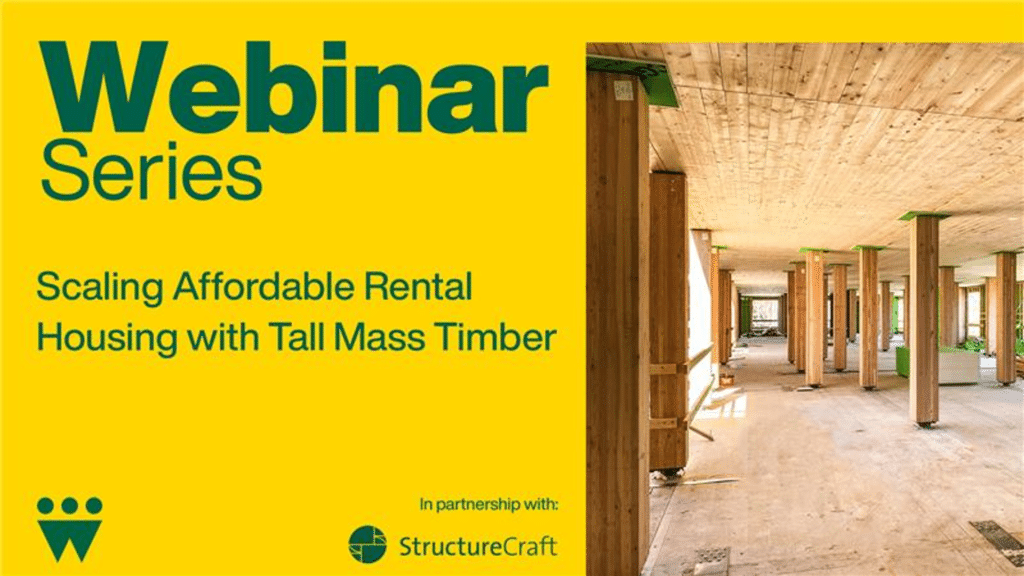
Course Overview As cities face growing pressures around affordability, climate resilience and livability, innovative projects like Catalyst’s 18-storey CLT rental development in North Vancouver offer necessary solutions. Targeted toward architects, engineers, developers and municipal leaders this session explores mass timber construction as an affordable housing solution. Attendees will gain insight into the use of CLT in construction and the associated challenges, including structural grid constraints, moisture protection, and prefabricated balcony systems. The session will also highlight how the project achieved near cost parity with comparable concrete buildings, integrated mixed-use programming, and leveraged BIM to support coordination and the permitting process. Participants will leave with practical takeaways for applying these approaches to similar projects in other cities. Learning Objectives Understand how tall mass timber hybrid systems can support affordable and mixed-use housing Identify key architectural, structural, and construction challenges unique to CLT buildings Learn practical strategies for permitting, procurement, coordination, and construction Course Video Speakers Bio Annabelle Hamilton Executive Director WoodWorks BC Harrison Glotman Principal Glotman Simpson Consulting Engineers Rhys Leitch Principal Integra Architecture Inc. Sean Binns Project Director Kindred Construction
FRAMEWORK for Success: Prefabricated Wood Systems and Design Innovation
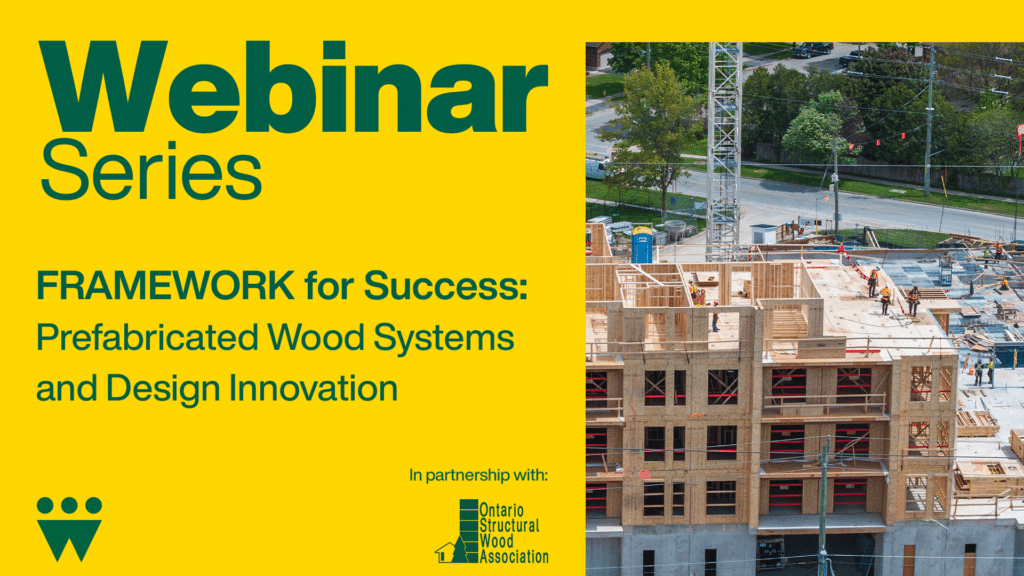
Course Overview This presentation explores the transformative impact of prefabricated light wood frame construction systems in multi-residential development, focusing on VanMar’s FRAMEWORK methodology and its application in the new 150 Wissler Road project in Waterloo. FRAMEWORK is a highly efficient, panelized light wood frame system designed for buildings up to six storeys, delivering rapid, sustainable, and cost-effective construction that meets and exceeds energy and greenhouse gas reduction targets. The session will highlight VanMar’s extensive experience in affordable housing, the advantages of offsite prefabrication, and the collaborative process that accelerates project delivery. Learning Objectives Participants will understand the benefits of prefabricated wood frame construction for multi-residential buildings. Participants will understand the FRAMEWORK system’s approach to speed, cost-effectiveness, and sustainability. Participants will be shown how collaborative offsite construction methods accelerated the 150 Wissler Road project. Participants will learn strategies for overcoming design challenges and achieving efficiencies in fire walls, shafts, and acoustics. Course Video Speakers Bio Jordan Zekveld Director of Preconstruction VanMar Constrcutors ON Jordan is a construction and development professional with deep experience in estimating, preconstruction, and cost strategy for multi-unit residential projects. At VanMar Constructors, he helps developers, REITs, and non-profits bring condominium, rental, and affordable housing projects from concept to construction. Drawing on VanMar’s integrated design-build expertise, Jordan leads collaborative preconstruction processes that align design intent, feasibility, and cost efficiency. His experience spans concrete high-rise and innovative mid-rise wood-frame developments, including the Framework system — VanMar’s sustainable, fast, and cost-effective building solution. With a focus on clarity, constructability, and long-term value, Jordan works at the intersection of planning, design, and execution to help deliver housing that’s efficient, affordable, and built to last. Mike Philips Executive Director Ontario Structural Wood Association (OSWA) Mike Phillips has served as Executive Director of OSWA since 2008. Under his leadership, the association has evolved from a truss-fabricator-focused group into Ontario’s leading voice for structural wood component manufacturing. Today, the province is home to 70 certified truss plants and 40 wood-panel manufacturers, with engineered wood products now the preferred choice for floor systems. At the same time, Ontario’s building code has never been more prepared to accommodate advanced wood-construction methods. Mike is a strong advocate for the industrialization of construction and the expanding role of off-site building systems—critical drivers of wood construction’s future growth. Paul Marchesani Operations Manager Panelized Building Solutions Inc. Paul Marchesani is the Vice President of Panelized Building Solutions Inc., a family run business where he plays a key leadership role in driving operational excellence, strategic growth, and project execution across the company. Known for his strong work ethic, hands-on approach, and deep industry knowledge, Paul oversees day-to-day operations while supporting long-term planning that aligns with the company’s vision. Before joining Panelized Building Solutions, Paul held key roles in project management and operations within manufacturing and construction environments, where he oversaw production teams, implemented process improvements, and helped streamline workflow efficiencies. His ability to manage both people and complex technical projects made him a natural fit for leadership. Respected by colleagues, clients, and trade partners alike, Paul combines technical expertise with strong leadership, making him an essential pillar of the company’s continued success.
Design and Construction of Permanent Wood Foundations – The Buildings Show 2025
Course Overview This session will provide requirements and guidance on the design and construction of permanent wood foundations (PWF) based on the Canadian standard; CSA S406-16 – ‘Specification of permanent wood foundations for housing and small buildings’. Further information on site selection, backfilling, PWF floor systems, air and vapour barriers, insulation techniques, crawl spaces and design requirements for high wind and seismic zones will be discussed. This session will provide attendees with an overview of the design requirements and construction methods for PWF, with a focus on the structural system and building science considerations. Learning Objectives Apply the design requirements of CSA S406-16 for permanent wood foundations in housing and small buildings. Identify key building-science considerations for PWF systems, including drainage, air and vapour control, insulation, and crawl space design. Evaluate site and structural requirements for permanent wood foundations in high wind and seismic regions. Course Video Speakers Bio Adam Robertson Co-founder and Principal Sustainatree Adam completed his Bachelor of Applied Science in Civil Engineering at the University of Toronto and also holds a Master of Applied Science degree from the Department of Wood Science at the University of British Columbia. He is the past Chair of the CSA Subcommittee on Permanent Wood Foundations and acted as a primary author and editor during the update and revisions to the Canadian Wood Council’s Permanent Wood Foundations publication. He is the co-founder and principal of Sustainatree Consulting, a small firm specializing in sustainability and engineering design of wood building systems. Prior to opening his own practice, Adam was previously employed by the Canadian Wood Council and has also worked as a consulting structural engineer and within the building development and construction management fields.
Offsite Construction Handbook
Course Overview Offsite construction is transforming the building industry by shifting key processes from traditional sites to controlled factory environments. This approach enhances productivity, quality, and sustainability, addressing challenges like labor shortages and environmental impact. The delivery process emphasizes early collaboration, integrated design, and robust project management to optimize efficiency and risk management. Durability and energy efficiency are achieved through advanced material selection, moisture management, and airtight, highly insulated assemblies. Construction logistics, quality control, and commissioning are tailored for offsite methods, ensuring rapid, reliable project delivery. Life cycle analysis shows offsite construction can reduce embodied carbon and waste, supporting climate goals. Canada’s evolving policies and market trends position offsite construction as a key solution for affordable, sustainable housing. Learning Objectives Understand how offsite construction improves the durability, moisture control, and energy performance of wood building systems. Identify the structural and sustainability benefits of early design integration in offsite wood construction projects. Evaluate the role of life-cycle analysis and embodied carbon in positioning offsite wood construction as a solution for sustainable and affordable housing in Canada. Course Video Speakers Bio Dorian Tung Manager, Technology Assessment FPInnovations Dorian Tung is currently the Manager of Technology Assessment at FPInnovations. Prior to this, he worked as a structural consultant in Canada and the US. As a manager, he has been working with scientists on projects related to structure, seismic, durability, energy, fire, acoustic, and vibration. With the evolving ecosystem, Dorian is active in many working groups to facilitate discussions, remove duplicates, accelerate processes, with the goal to maximize impacts for the forest industry NOW using research data. He is also the editor of the Offsite Wood Construction Handbook published by FPInnovations. Helen Goodland Principal. Head of Research and Innovation SCIUS Advisory Helen Goodland is an architect registered in the UK and has an MBA from the University of BC. Helen is firmly committed to achieving truly sustainable buildings within the next decade. She is also passionate about advancing leadership opportunities for women in construction technology. To this end, she participates on numerous boards and committees. Currently she serves on the Board of Directors of Building Transformations (formerly CanBIM), the BC Digital Advisory Council, the BCIT Mass Timber Education Advisory Board and the University of Victoria’s Green Civil Engineering Advisory Council. She is also past chair of the UN Sustainable Buildings Initiative’s Materials Technical Committee. Adam Robertson Co-founder and Principal Sustainatree Adam completed his Bachelor of Applied Science in Civil Engineering at the University of Toronto and also holds a Master of Applied Science degree from the Department of Wood Science at the University of British Columbia. He is the past Chair of the CSA Subcommittee on Permanent Wood Foundations and acted as a primary author and editor during the update and revisions to the Canadian Wood Council’s Permanent Wood Foundations publication. He is the co-founder and principal of Sustainatree Consulting, a small firm specializing in sustainability and engineering design of wood building systems. Prior to opening his own practice, Adam was previously employed by the Canadian Wood Council and has also worked as a consulting structural engineer and within the building development and construction management fields.
Offsite Construction in Ontario: A Practical and Diligent Path Forward
Course Overview From the housing supply deficit to affordability issues and labour challenges, several conditions have been supporting a renewed interest for innovation in construction practices. Offsite construction is often identified as a promising approach to improve the way we build. This session explores the current market characteristics which are conducive to offsite practices, including the consistent shift towards multifamily construction in Ontario. It also identifies the numerous potential benefits of shifting the construction process from site to factory. The speakers will discuss underlying assumptions and conditions and questions such as: Are the promised benefits tangible and quantifiable? Do savings actually reach a project’s bottom line? Do all of the benefits apply to specific applications? Learning Objectives Identify market, labour, and housing conditions in Ontario that are driving interest in offsite and wood-based construction systems. Evaluate the practical benefits and limitations of offsite construction using mass timber and panelized wood systems. Assess when offsite construction provides measurable value at the project level, including cost, schedule, quality, and risk considerations. Course Video Speakers Bio Mike Schmidt President Auto Construct Incorporated A Tool & Die Maker with a Masters’ Degree in Business Administration, Mike understands manufacturing from the ground up. He spent his formative years as an executive in the automotive industry; working for world-class, multinational corporations such as Magna International and ArcelorMittal. In 2017, Mike established Auto Construct Incorporated (ACI), a management consulting firm, to accelerate the industrialization of residential construction. Specializing in the conversion from stick-built to offsite construction, Mike has led and facilitated the growth of several companies to become dominant players in their respective fields. ACI provides education, guidance, and implementation support in the areas of business development, manufacturing systems, technology selection, and factory start-ups. ACI serves a broad range of land developers, construction firms, homebuilders, and manufacturing companies throughout Canada and the United States.
Construction Moisture Management of Mass Timber Buildings
Course Overview Mass timber buildings are transforming the way we build—but with new materials come new challenges. This session will explore how moisture risks in mass timber construction and how to take a proactive approach to moisture management. Participants will gain practical insights into effective protection strategies during the construction phase and learn how to develop a tailored moisture management plan to safeguard both the mass timber structure and project timelines. Learning Objectives Identify key moisture risks specific to mass timber construction and understand how they differ from traditional structural systems. Apply practical construction-phase moisture protection strategies that align with project sequencing, site conditions, and contractor workflows. Develop or evaluate a project-specific moisture management plan to protect mass timber elements, reduce delays, and ensure long-term durability. Course Video Speakers Bio David Stanton Associate, Senior Engineer – Building Enclosure RDH Building Science Inc. David is an Associate and Senior Building Science Engineer in RDH Building Science’s Toronto office. David’s exposure to mass timber projects started with the Brock Commons project in BC as a coop student and then with the Catalyst building in Spokane, WA—a 4-storey mass timber building for Eastern Washington University—when he started working full-time in the Building Science field. Since moving back to Toronto, David has continued to work on large scale mass timber projects, including the Lawson Center for Sustainability and the Academic Wood Tower projects at UofT. Sean Carroll Senior Superintendent Graham Construction Sean Carroll is a Senior Superintendent with Graham Construction, bringing over 32 years of experience across Canada, Europe, and the UK. A civil engineer and journeyman carpenter, Sean has led complex projects in the commercial, residential, pharmaceutical, and educational sectors—including several involving advanced Mass Timber construction. Over his 11 years with Graham, split between Alberta and Ontario, Sean has been at the forefront of integrating sustainable building methods, particularly in the use of engineered timber systems. He brings a deep understanding of Mass Timber coordination, sequencing, and tolerances, along with a strong commitment to safety, quality, and team leadership. Known for his hands-on approach and global perspective, Sean combines technical precision with a collaborative leadership style—driving successful project outcomes from concept through completion. Natasha Jeremic Manager, Codes and Standards – Sustainability Canadian Wood Council Natasha Jeremic is a Professional Engineer in the building industry, with a background in design, building performance, and project management. She is currently the Sustainability Manager for Codes and Standards at the Canadian Wood Council, where she leads strategic initiatives focused on low-carbon construction, energy efficiency, durability, and circularity. Natasha leverages her expertise in structural design, building envelope consulting, and whole life carbon accounting to showcase how wood products contribute to a sustainable, low-carbon built environment. She is passionate about raising awareness of wood’s role as a viable solution in advancing climate-conscious construction.
Mass Timber Economics: Why One Line Item Doesn’t Tell the Whole Story
Course Overview Mass timber buildings are often perceived as premium projects, but assumptions based on a single cost line can be misleading. This session explores the complexities of costing mass timber construction and highlights why a holistic, team-based approach is essential from the earliest stages of design. Attendees will gain insights into common pitfalls for cost consultants and learn how early architectural decisions such as grid spacing and aesthetic goals can significantly influence both cost and structural efficiency. The speakers will emphasize the importance of clear project objectives when setting the initial budget and outline best practices for cost predictability, including robust scope management, design reviews, and obtaining competitive bids from multiple timber suppliers. The session will also examine the role of architects in informing cost decisions, strategies for improved procurement and scheduling, and how to leverage mass timber’s expedited on-site phase. Learning Objectives Understand the complexities of mass timber costing: Participants will be able to explain why relying on a single cost line item is misleading and identify key factors—such as grid spacing and aesthetic goals—that influence overall project cost and structural efficiency. Apply best practices for cost predictability in mass timber projects: Learners will be able to outline strategies for achieving accurate budgets, including robust scope management, design reviews, and obtaining competitive bids from multiple timber suppliers. Recognize the role of collaboration in successful mass timber delivery: Attendees will be able to describe how architects, developers, and contractors can work together from early design stages to improve procurement, scheduling, and leverage mass timber’s expedited on-site phase. Course Video Speakers Bio Marlon Bray Executive Vice President Clark Construction Management Inc. Mass timber buildings are often perceived as premium projects, but assumptions based on a single cost line can be misleading. This session explores the complexities of costing mass timber construction and highlights why a holistic, team-based approach is essential from the earliest stages of design. Attendees will gain insights into common pitfalls for cost consultants and learn how early architectural decisions such as grid spacing and aesthetic goals can significantly influence both cost and structural efficiency. The speakers will emphasize the importance of clear project objectives when setting the initial budget and outline best practices for cost predictability, including robust scope management, design reviews, and obtaining competitive bids from multiple timber suppliers. The session will also examine the role of architects in informing cost decisions, strategies for improved procurement and scheduling, and how to leverage mass timber’s expedited on-site phase. Mathieu Fleury Partner Leader Lane Developments Mathieu combines a merchant developer mentality with institutional discipline to drive Leader Lane Developments’ ambitious urban projects. He holds a Masters in Real Estate Finance from The University of Cambridge and has over 15 years of experience with industry leaders, including Loblaw Properties Limited, Great Gulf, and Dream Unlimited. Over the course of his career, Mathieu has shaped over 15,000 residential units and 7 million square feet of development across Canada. With his entrepreneurial spirit and analytical mindset, he steers Leader Lane’s growth in Toronto’s dynamic mid-rise sector. Mathieu’s strategic leadership ensures each project balances innovation with strong financial performance, delivering communities that enhance the urban experience while maximizing investor value. Jonathan King Principal BNKC Architects Inc. An architect and design leader with nearly 30 years of experience, Jonathan has worked across the full spectrum of residential, institutional, and cultural projects across Canada—from university buildings and theatres to large-scale multi-residential developments. He’s led teams at firms such as Diamond and Schmitt, HOK, and Core Architects, and is now a Principal at BNKC, where he helps steer complex projects from early concept through to completion. Jonathan’s recent work has included multiple mid- and high-rise residential and commercial buildings that integrate new construction technologies—including hybrid and mass timber structures—within tight urban contexts. His background brings a deep understanding of how codes, construction logistics, and market realities shape design decisions. He’s particularly interested in how architects can help unlock the potential of mass timber by working more collaboratively with clients, engineers, and municipalities to address the barriers standing.
Design Best Practices for Mid-Rise Light Wood Frame Structures
Course Overview Light wood frame (LWF) construction is an accessible, cost-effective, low-carbon solution for mid-rise multi-family buildings. This session will clarify fundamental differences in approach between traditional low-rise LWF construction and modern mid-rise construction methods. LWF is an attractive option for mid-rise development and participants will gain practical insights into design efficiencies, from meeting seismic demands and other key structural considerations to how engineered wood products and specialty hardware can be used to optimize design. The session will also explore prefabrication strategies, highlighting the challenges and opportunities offsite construction presents for streamlined, higher-quality construction. Whether attendees are new to mid-rise wood design or looking to optimize their next project, this session will share valuable information they can apply to their next mid-rise building. Learning Objectives Distinguish key differences between traditional low-rise and modern mid-rise light wood frame construction, including changes in design loads, seismic requirements, and code updates. Apply practical design strategies to optimize mid-rise wood structures—such as efficient stacked framing, engineered wood products, specialty hardware, and solutions for wood shrinkage and differential movement. Evaluate prefabrication and offsite construction methods for mid-rise projects, identifying both challenges and opportunities to improve construction quality, speed, and coordination. Course Video Speakers Bio Sean Henry Director – Mid-Rise, Principal Tacoma Engineers Sean is the Director of Mid-Rise and a Principal at Tacoma Engineers, bringing 20 years of structural engineering experience to the role. Since joining the firm in 2005, Sean has led the design of a wide range of building types, with a particular focus on mid-rise developments including multi-family, seniors and affordable housing projects. He is especially recognized for his expertise in light wood frame construction with multiple projects designed and built since the adoption of 6 storey wood framed buildings in Ontario. He also has extensive experience with cold-formed steel, structural steel, reinforced concrete, precast, and concrete block building systems. Sean focuses on delivering practical, efficient structural solutions that support design intent while meeting the demands of constructability and cost-effectiveness.
Benefits of Building with Mass Timber

Course Overview Building with mass-timber elements affords a contractor many benefits including quality, accuracy and time. But contractors are often unaware of these benefits until immersed in a new project. With the conversion experience had by Willmott Dixon the company advanced its skills has served to inform their clients and the designers with whom they work. Learning Objectives How a large construction company – transitioned to include mass timber projects in its portfolio. How to evaluate key business considerations — cost, time, environment. How building with mass timber can change the construction planning process — engaging with design teams and clients. How mass-timber projects came to fruition. Course Video Speaker Bio Duncan Purvis With nearly a quarter of a century of experience in the construction industry in operational, commercial, sales, bid writing, marketing and most aspects of the delivery of complex construction projects and offers a 100% customer journey that is built on true trust. With many construction projects from Four Seasons Miami, Natural History Museum London, Pfizer’s European headquarters and many more high-prestige projects. Duncan is proudest of the Multiple Schools projects, that with his Structured Timber Solution, are providing high quality teaching environments that are not only fully sustainable and highly efficient, but also work out as some of the most economical teaching spaces available in Europe.
Advancing North American Mass Timber Projects: Harnessing the Strength of Local Expertise

Course Overview As global adoption of mass timber construction accelerates, a growing number of solutions are available in the marketplace that can contribute to the success of your project. This session, presented by Simpson Strong-Tie, will explore some of the unique challenges faced by North American projects and some of the domestically developed solutions available to meet those challenges. Learning Objectives Understand the need for greater tolerance on concealed beam hangers, the importance of ensuring connectors are easy to install, and the specific requirements for large elements in North American buildings. Understand the advantages domestic suppliers can bring to your project, including the rapid delivery of hardware to job sites. Learn about the necessity for effective installation tools and processes tailored to the scale of large North American projects. Learn about the need for effective moisture mitigation and the systems and strategies that can prevent unnecessary exposure of mass timber to the elements during construction. Course Video Speaker Bio Adrian Mitchell Chair of Simpson’s internal Mass Timber Focus Market Committee Simpson Strong-Tie Adrian is a mass timber and off-site business specialist with a principal focus on the rapidly expanding mass timber segment, for which he serves as Chair of Simpson’s internal Mass Timber Focus Market Committee. Adrian has spent the bulk of his 20-year career in the off-site, mass timber, and modular spaces, primarily as a business development leader and private consultant. With professional experiences ranging from heavy civil, oil and gas, high-end custom homes to large-scale mass timber missed-use projects and artificial intelligence in BIM, he has a unique and well-rounded background in wood and steel applications in off-site construction. Adrian is a native of Vancouver, Canada, and a graduate of the British Columbia Institute of Technology’s School of Business, he enjoys all the typical Canadian pastimes like playing hockey, building things from wood, and mountain biking.