
International Perspectives on Sustainable Housing Development
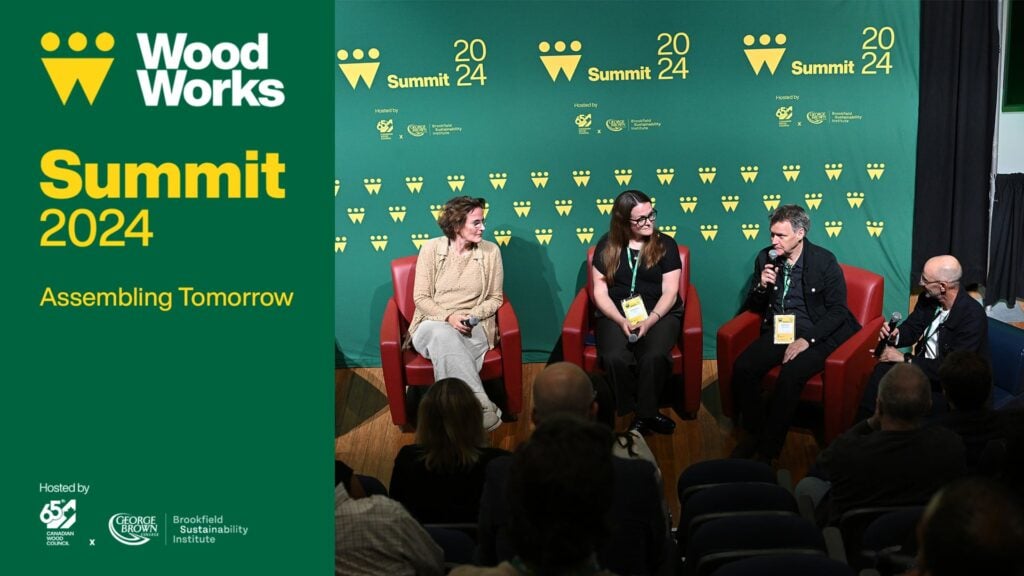
Course Overview Around the world there is a significant and growing housing shortage that is exacerbated by rapid urbanization and population growth. This challenge demands innovative solutions that prioritize sustainability, occupant comfort, and efficient land use. This panel discussion brings together three internationally renowned architects: Francine Houben (Mecanoo, the Netherlands), Christophe Ouhayoun (KOZ Architects, France), and Geoff Denton (White Arkitekter, Sweden) to explore their approaches to sustainable housing. Each panelist will share their unique perspective on how to address housing shortages and sustainable densification, offering insights into the latest design strategies, materials, and technologies that can contribute to more resilient and equitable urban environments. Join us for a dynamic conversation that will delve into the future of housing and the role of architecture in creating livable, sustainable cities. Learning Objectives Understand how international architects approach sustainable housing development, including wood‑based construction, urban densification, and low‑carbon strategies. Compare differing regulatory, cultural, and construction‑industry conditions that influence mass timber, modularity, prefabrication, and approval processes in Sweden, France, and Canada. Identify urban‑design principles used to create healthy, community‑oriented neighborhoods. Course Video Speakers Bio Francine Houben Founding Partner, Creative Director Mecanoo, the Netherlands Francine Houben is founding partner of Mecanoo (1984) and has led the firm to success in The Netherlands and abroad, amassing a portfolio of work that is wide-ranging, inspired by global challenges and with a sustainable view on society. Mecanoo combines the disciplines of architecture, urban planning, landscape architecture and interior design to produce unorthodox design solutions born from a strong sensitivity to context and a highly interdisciplinary design process. Each of her projects illustrates the four fundamental elements of her architectural vision: People, Place, Purpose, Poetry. Francine Houben was professor of mobility aesthetics at Delft University of Technology and taught at the universities of Harvard, Yale and Mendrisio. As curator of the First International Architecture Biennale Rotterdam (2003), she brought the theme of the aesthetics of mobility to the forefront of international design consciousness. Francine holds Honorary Fellowships of the Royal Institute of British Architects (RIBA), the American Institute of Architects (AIA), the Royal Architectural Institute of Canada (RAIC) and was granted lifelong membership to the Akademie der Künste in Berlin as well as receiving the International Honorary Fellow Award by the Architecture Institute of Taiwan. In 2014 Francine was named Woman Architect of the Year by the Architects’ Journal and in November 2015 Queen Máxima of The Netherlands presented her with the Prins Bernhard Cultuurfonds Prize for her wide-ranging career. Francine was awarded Honorary Doctorates from the Université de Mons, Belgium (2017) and the Utrecht University (2016). In 2018 she received the BNA Kubus Award for her oeuvre; the International Prize, Prix des Femmes Architectes (2019) and distinguished with the TU Delft Alumnus of the Year (2020). In 2024, King Willem-Alexander appointed Francine Houben as a Knight in the Order of the Netherlands Lion. Christophe Ouhayoun Founding Partner Architect KOZ Architects, France Christophe Ouhayoun is a graduate of the École Nationale Supérieure d’Architecture de Paris-Belleville. He currently serves as a State Architect Advisor in the Aveyron department. In 1999, he co-founded KOZ Architectes with Nicolas Ziesel. A pioneer in wood architecture since 2001, he recently delivered Lot E of the Paris 2024 Athletes’ Village as co-coordinator within the Nexity-Eiffage team. In addition to his architectural work, he co-founded: KOZTO, a workshop dedicated to the creation of up-cycled furniture. PLAN01, a collaborative “”second office”” active from 2003 to 2014, in partnership with Atelier du Pont, BP Architectures, and Philéas. PLAN02, an integrated environmental consulting firm. Alongside his private practice, Christophe Ouhayoun works as a visiting professor at the École Nationale Supérieure d’Arts et Métiers and at the École spéciale d’architecture de Paris. Geoff Denton Partner Architect White Arkitekter, Sweden Geoff Denton is an architect and urban designer who has led residential, educational and mixed-use urban design and architectural projects across the UK, Europe and North America. Educated at Sheffield University in the UK, his career in Sweden notably led him to the role of lead architect for the implementation of Greenwich Millennium Village for Ralph Erskine Architect. This project marked the beginning of his focus on socially and environmentally sustainable urban development and regeneration. He joined White Arkitekter in 2011 and is now a partner and member of the board of directors. During his time at White he has led award winning urban design projects and was responsible for starting White Arkitekter’s London Studio. The studio has been built on the goal to share knowledge and experience of sustainable development and offsite fabrication methods used throughout the Nordics. Key projects developed during the first years of the London studio include the Climate Innovation District in Leeds and the Gascoigne estate regeneration in London. Geoff is now based in Stockholm where he works with diverse complex international projects. His approach to architecture is collaborative and he strongly believes that good design solutions are very much about creating places where people feel secure and invigorated.
Building Success: The Nshwaasnangong Child Care and Family Centre Story
Course Overview This session will explore the transformative journey of the Nshwaasnangong Child Care & Family Centre, a project that began as a response to the Truth and Reconciliation Commission’s Calls to Action. Led by Two Row Architect and supported by various community partners, the project highlights the innovative use of mass timber to create culturally meaningful and sustainable spaces. Attendees will learn about the collaborative design process, the integration of traditional materials with modern building practices, and the impact of the centre on the local community. The session will also provide insights into accessing technical resources and project support for wood construction through WoodWorks Ontario. Learning Objectives Explore the use of mass timber to create culturally meaningful and sustainable spaces, demonstrated through the Nshwaasnangong Child Care & Family Centre. Understand the collaborative design and prefabrication process, integrating community input, modern construction practices, and workflow planning with mass‑timber manufacturers for complex geometries. Course Video Speakers Bio Matthew Hickey Architect Two Row Architect Matthew Hickey is Mohawk from the Six Nations First Nation and is a licensed architect with 12 years of experience working in an on-reserve architecture firm. He received his Masters of Architecture from the University of Calgary and his Bachelor of Design from Ontario College of Art and Design, winning both the Alberta Association of Architects Presidents Medal and the Medal for Best Thesis, respectively. Mr. Hickey’s focus is on regenerative design – encompassing ecological, cultural, and economic principles. His research includes Indigenous history and the adaptation of traditional sustainable technologies to the modern North American climate. He currently instructs at OCAD U, for the OAA and the Canada Green Building Council.
Mid rise Engineering Considerations for Engineered Wood Products
Course Overview While many designers are familiar with engineered wood products such as I‐joists and structural composite lumber, it is important to understand the structural requirements associated with each in order to achieve proper performance—especially in mid‐rise Construction. With an emphasis on products used in commercial and multi‐family buildings, this presentation will cover engineered wood product acceptance, testing requirements, lateral design, and proper detailing. Learning Objectives Testing requirements and acceptance of wood I‐joists and structural composite. Lumber (SCL) products; Dimension stability in regards to moisture content changes and the differences between solid wood products. Lateral design, including information on I‐joist diaphragm capacities and the detailing of rim board connections. Fire resistance design, including wood I‐joist assembly requirements and SCL char rate equivalency to solid wood. Course Video Speaker Bio Jeff Olson, P.E., P.Eng. Technical Services Manager – Boise Cascade, Engineered Wood Products Division Boise Cascade White City, OR Jeff is currently the Technical Services Manager for Boise Cascade, Engineered Wood Products division. He has over 30 years of experience in the design and testing of engineered wood products and is licensed as a Professional Engineer in several western Canadian provinces and U.S. states.