
Branching Traditions: Innovative Mass Timber in Indigenous Inspired Architecture
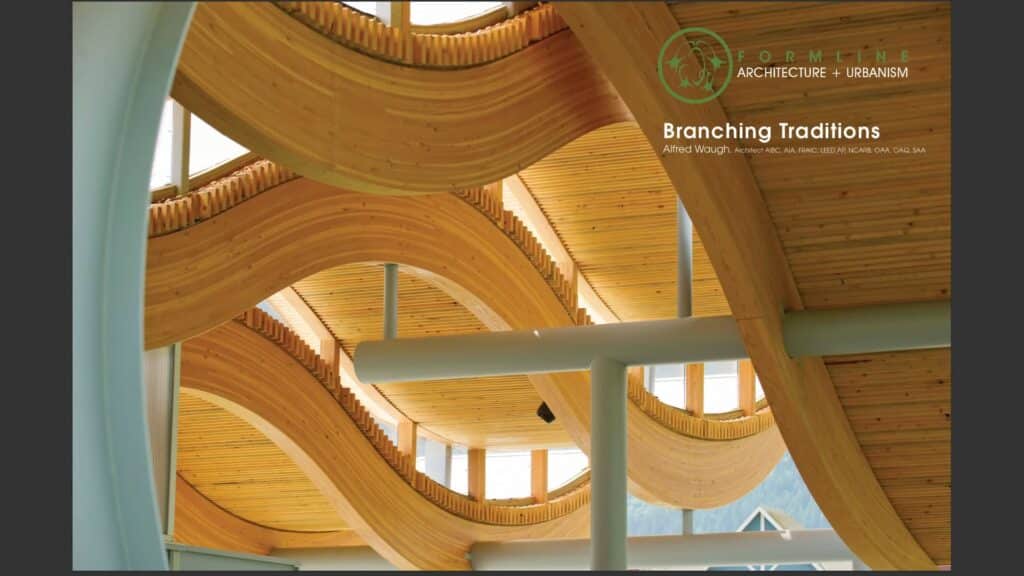
Course Overview Discover the transformative vision of Saskatoon’s New Central Library, a 150,000-square-foot, four-story beacon anchoring downtown’s northern edge. Inspired by Métis and Indigenous cultures, this community living room echoes the South Saskatchewan River’s rhythms, blending organic forms to connect urban vitality with the prairie landscape. As a place of healing and inclusiveness, it sparks renewal with a south-facing plaza featuring river-inspired flora for community events and a northern Indigenous landscape. This project honours the land’s stewards, fostering a welcoming hub that celebrates Saskatoon’s diverse heritage and unites all in shared cultural expression. Dive into the mass timber innovations of Saskatoon’s New Central Library in the lecture “Branching Traditions,” evoking leaf-like five-ply CLT floor plates radiating outward, distributing services via a central spine supported by a concrete core for rigidity. Explore value engineering evolution, overcoming manufacturing constraints, shipping logistics, and broad CLT floor plates without shear walls for concise structure. Celebrate adapting timber to cultural geometries, inspiring architects and engineers with sustainable, expressive insights honoring Indigenous and Métis heritage. Learning Objectives Integration of cultural expression within the rigid limitations of mass timber Designing mass timber structures under manufacturing and shipping logistics restraints Developing design strategies for a CLT and glulam column-and-beam system in organic architecture Course Video Speakers Bio Alfred Waugh, Architect AIBC, AAA, OAA, SAA, FRAIC, AIA Owner/ Principal Formline Architecture + Urbanism Waugh’s diverse and innovative designs have prompted national acclaim as one of the most inventive Canadian architects of his generation. As project designer for Busby Perkins Will, his Nicola Valley Institute of Technology project won a Governor-General’s Medal for architecture in 2004. Both the 2009 Squamish Lil’Wat Cultural Centre in Whistler and the 2010 First Peoples House on the University of Victoria campus have inspired locals and visitors from all backgrounds with their strong form-making and gracious interiors. Alfred Waugh is one of the few Indigenous Architects in Canada. His firm Formline Architecture + Urbanism is leading the way in defining contemporary Indigenous Architecture. His stature within Indigenous and academic communities was proven receiving a Governor-General’s Medal for the 2017 Indian Residential School History and Dialogue Centre (IRSHDC) at the heart of the University of British Columbia campus. This leading directly to his current work on the Indigenous House for the Scarborough campus of the University of Toronto and the New Central Library for Saskatoon. IRSHDC has been lauded for its integration of building and landscape, the symbolic uses of materials such as copper, and its rising to the challenge of a contemporary Indigenous design, without making specific architectural reference to any one of Canada’s many and diverse First Nations. Waugh’s creativity and independence are born of his background and education. Born in Yellowknife, Waugh enjoyed summers fishing and hunting on the East Arm of Great Slave Lake. His father, who is of English heritage, is a retired prospector, while his mother, who’s family originated in northern Saskatchewan, is a registered member of the Fond Du lac Denesuline First Nation. Waugh has an undergraduate degree in Urban and Regional Planning from the University of Lethbridge. Graduating with honours, he is the first Full Status person to graduate from UBC’s School of Architecture.
Building Success: The Nshwaasnangong Child Care and Family Centre Story
Course Overview This session will explore the transformative journey of the Nshwaasnangong Child Care & Family Centre, a project that began as a response to the Truth and Reconciliation Commission’s Calls to Action. Led by Two Row Architect and supported by various community partners, the project highlights the innovative use of mass timber to create culturally meaningful and sustainable spaces. Attendees will learn about the collaborative design process, the integration of traditional materials with modern building practices, and the impact of the centre on the local community. The session will also provide insights into accessing technical resources and project support for wood construction through WoodWorks Ontario. Learning Objectives Explore the use of mass timber to create culturally meaningful and sustainable spaces, demonstrated through the Nshwaasnangong Child Care & Family Centre. Understand the collaborative design and prefabrication process, integrating community input, modern construction practices, and workflow planning with mass‑timber manufacturers for complex geometries. Course Video Speakers Bio Matthew Hickey Architect Two Row Architect Matthew Hickey is Mohawk from the Six Nations First Nation and is a licensed architect with 12 years of experience working in an on-reserve architecture firm. He received his Masters of Architecture from the University of Calgary and his Bachelor of Design from Ontario College of Art and Design, winning both the Alberta Association of Architects Presidents Medal and the Medal for Best Thesis, respectively. Mr. Hickey’s focus is on regenerative design – encompassing ecological, cultural, and economic principles. His research includes Indigenous history and the adaptation of traditional sustainable technologies to the modern North American climate. He currently instructs at OCAD U, for the OAA and the Canada Green Building Council.