
FRAMEWORK for Success: Prefabricated Wood Systems and Design Innovation
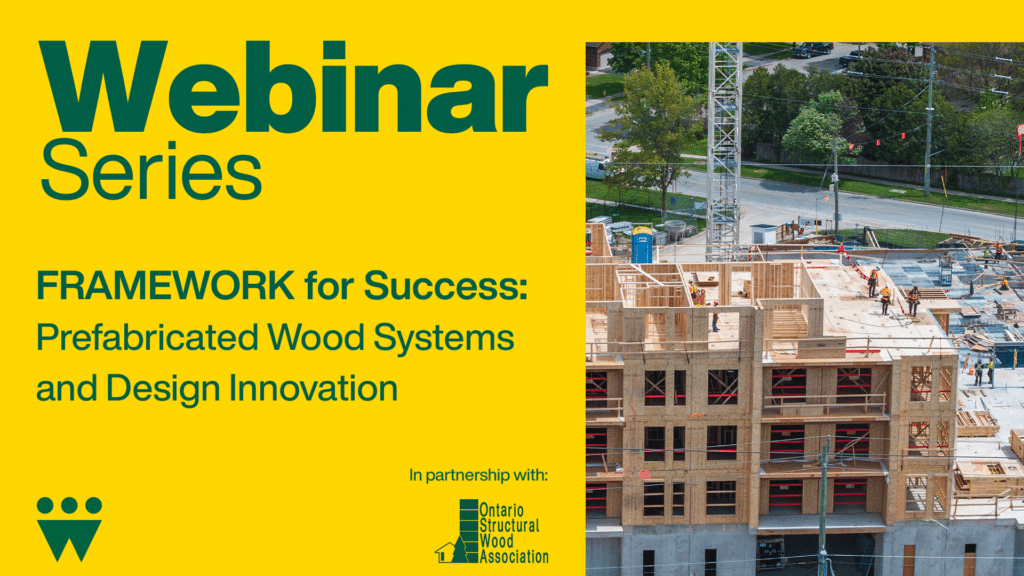
Course Overview This presentation explores the transformative impact of prefabricated light wood frame construction systems in multi-residential development, focusing on VanMar’s FRAMEWORK methodology and its application in the new 150 Wissler Road project in Waterloo. FRAMEWORK is a highly efficient, panelized light wood frame system designed for buildings up to six storeys, delivering rapid, sustainable, and cost-effective construction that meets and exceeds energy and greenhouse gas reduction targets. The session will highlight VanMar’s extensive experience in affordable housing, the advantages of offsite prefabrication, and the collaborative process that accelerates project delivery. Learning Objectives Participants will understand the benefits of prefabricated wood frame construction for multi-residential buildings. Participants will understand the FRAMEWORK system’s approach to speed, cost-effectiveness, and sustainability. Participants will be shown how collaborative offsite construction methods accelerated the 150 Wissler Road project. Participants will learn strategies for overcoming design challenges and achieving efficiencies in fire walls, shafts, and acoustics. Course Video Speakers Bio Jordan Zekveld Director of Preconstruction VanMar Constrcutors ON Jordan is a construction and development professional with deep experience in estimating, preconstruction, and cost strategy for multi-unit residential projects. At VanMar Constructors, he helps developers, REITs, and non-profits bring condominium, rental, and affordable housing projects from concept to construction. Drawing on VanMar’s integrated design-build expertise, Jordan leads collaborative preconstruction processes that align design intent, feasibility, and cost efficiency. His experience spans concrete high-rise and innovative mid-rise wood-frame developments, including the Framework system — VanMar’s sustainable, fast, and cost-effective building solution. With a focus on clarity, constructability, and long-term value, Jordan works at the intersection of planning, design, and execution to help deliver housing that’s efficient, affordable, and built to last. Mike Philips Executive Director Ontario Structural Wood Association (OSWA) Mike Phillips has served as Executive Director of OSWA since 2008. Under his leadership, the association has evolved from a truss-fabricator-focused group into Ontario’s leading voice for structural wood component manufacturing. Today, the province is home to 70 certified truss plants and 40 wood-panel manufacturers, with engineered wood products now the preferred choice for floor systems. At the same time, Ontario’s building code has never been more prepared to accommodate advanced wood-construction methods. Mike is a strong advocate for the industrialization of construction and the expanding role of off-site building systems—critical drivers of wood construction’s future growth. Paul Marchesani Operations Manager Panelized Building Solutions Inc. Paul Marchesani is the Vice President of Panelized Building Solutions Inc., a family run business where he plays a key leadership role in driving operational excellence, strategic growth, and project execution across the company. Known for his strong work ethic, hands-on approach, and deep industry knowledge, Paul oversees day-to-day operations while supporting long-term planning that aligns with the company’s vision. Before joining Panelized Building Solutions, Paul held key roles in project management and operations within manufacturing and construction environments, where he oversaw production teams, implemented process improvements, and helped streamline workflow efficiencies. His ability to manage both people and complex technical projects made him a natural fit for leadership. Respected by colleagues, clients, and trade partners alike, Paul combines technical expertise with strong leadership, making him an essential pillar of the company’s continued success.
Design and Construction of Permanent Wood Foundations – The Buildings Show 2025
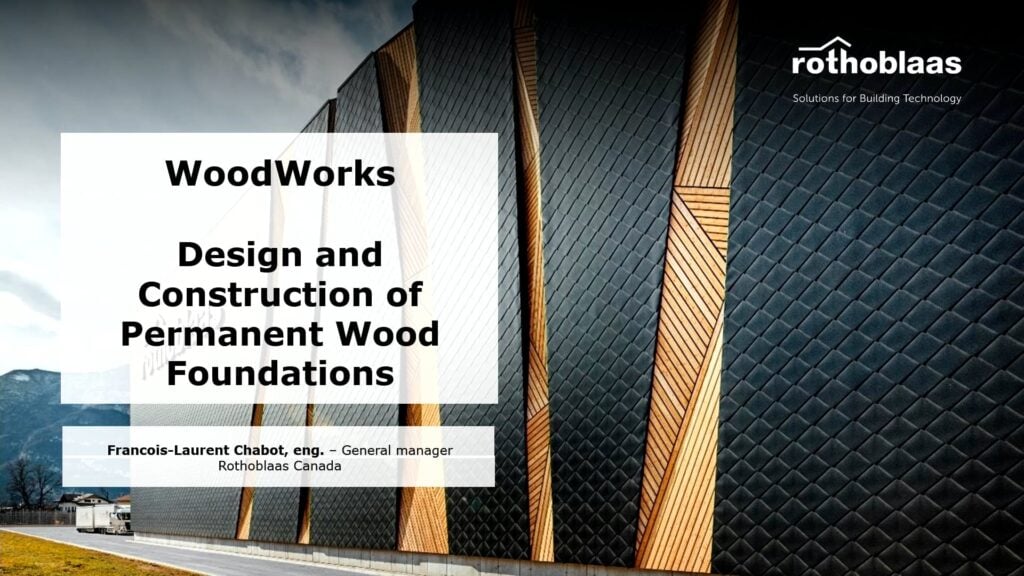
Course Overview This session will provide requirements and guidance on the design and construction of permanent wood foundations (PWF) based on the Canadian standard; CSA S406-16 – ‘Specification of permanent wood foundations for housing and small buildings’. Further information on site selection, backfilling, PWF floor systems, air and vapour barriers, insulation techniques, crawl spaces and design requirements for high wind and seismic zones will be discussed. This session will provide attendees with an overview of the design requirements and construction methods for PWF, with a focus on the structural system and building science considerations. Learning Objectives Apply the design requirements of CSA S406-16 for permanent wood foundations in housing and small buildings. Identify key building-science considerations for PWF systems, including drainage, air and vapour control, insulation, and crawl space design. Evaluate site and structural requirements for permanent wood foundations in high wind and seismic regions. Course Video Speakers Bio Adam Robertson Co-founder and Principal Sustainatree Adam completed his Bachelor of Applied Science in Civil Engineering at the University of Toronto and also holds a Master of Applied Science degree from the Department of Wood Science at the University of British Columbia. He is the past Chair of the CSA Subcommittee on Permanent Wood Foundations and acted as a primary author and editor during the update and revisions to the Canadian Wood Council’s Permanent Wood Foundations publication. He is the co-founder and principal of Sustainatree Consulting, a small firm specializing in sustainability and engineering design of wood building systems. Prior to opening his own practice, Adam was previously employed by the Canadian Wood Council and has also worked as a consulting structural engineer and within the building development and construction management fields.
Design Best Practices for Mid-Rise Light Wood Frame Structures
Course Overview Light wood frame (LWF) construction is an accessible, cost-effective, low-carbon solution for mid-rise multi-family buildings. This session will clarify fundamental differences in approach between traditional low-rise LWF construction and modern mid-rise construction methods. LWF is an attractive option for mid-rise development and participants will gain practical insights into design efficiencies, from meeting seismic demands and other key structural considerations to how engineered wood products and specialty hardware can be used to optimize design. The session will also explore prefabrication strategies, highlighting the challenges and opportunities offsite construction presents for streamlined, higher-quality construction. Whether attendees are new to mid-rise wood design or looking to optimize their next project, this session will share valuable information they can apply to their next mid-rise building. Learning Objectives Distinguish key differences between traditional low-rise and modern mid-rise light wood frame construction, including changes in design loads, seismic requirements, and code updates. Apply practical design strategies to optimize mid-rise wood structures—such as efficient stacked framing, engineered wood products, specialty hardware, and solutions for wood shrinkage and differential movement. Evaluate prefabrication and offsite construction methods for mid-rise projects, identifying both challenges and opportunities to improve construction quality, speed, and coordination. Course Video Speakers Bio Sean Henry Director – Mid-Rise, Principal Tacoma Engineers Sean is the Director of Mid-Rise and a Principal at Tacoma Engineers, bringing 20 years of structural engineering experience to the role. Since joining the firm in 2005, Sean has led the design of a wide range of building types, with a particular focus on mid-rise developments including multi-family, seniors and affordable housing projects. He is especially recognized for his expertise in light wood frame construction with multiple projects designed and built since the adoption of 6 storey wood framed buildings in Ontario. He also has extensive experience with cold-formed steel, structural steel, reinforced concrete, precast, and concrete block building systems. Sean focuses on delivering practical, efficient structural solutions that support design intent while meeting the demands of constructability and cost-effectiveness.
From Trees to Keys: Scaling Industrialized Wood Construction
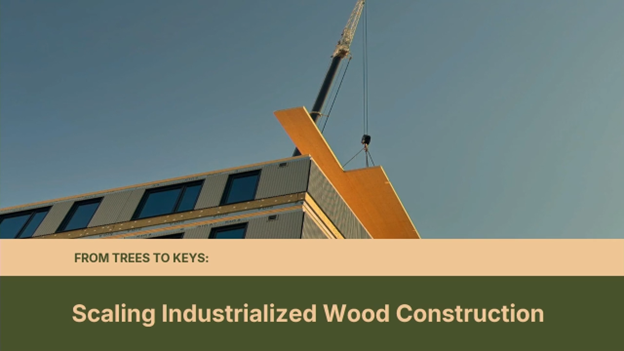
Course Overview This session brings together a panel of experts to discuss lessons learned and visions for wood-based manufactured housing solutions. The panel will address key challenges in scaling modular and panelized wood construction, including design for manufacture and assembly, systems integration, workforce transformation, and product standardization. Innovators throughout the supply chain will explore requirements for bringing scalable mass timber housing into the mainstream, from procurement to policy and from urban infill to supply chain readiness. The discussion will focus on how factory-built housing and wood innovation can contribute to addressing Canada’s housing crisis. Learning Objectives Assess practical lessons learned from implementing modular, panelized, and mass-timber housing projects, including challenges related to design coordination, manufacturing constraints, and on-site assembly. Explain how integrated approaches across structure, envelope, and mechanical systems enable scalable, high-performance wood-based housing solutions, drawing on examples from factory-built and turnkey delivery models. Evaluate the roles of standardization, procurement models, workforce capabilities, and policy alignment in advancing wood-based manufactured housing as a viable response to Canada’s housing crisis. Course Video Speakers Bio Hailey Quiquero Technical Manager WoodWorks Ontario Hailey is a structural engineer and has focused her career specializing in sustainable architecture and the advancement of timber building systems. Hailey spent several years of her career in research on the behaviour and fire safety of mass timber, as a structural designer with Entuitive in Toronto, and working to develop affordable housing products built of high-performance timber panels, contributing to the successful completion of several turnkey housing projects with Assembly Corp. (previously R-Hauz). In her current role as a Technical Manager for the Canadian Wood Council’s WoodWorks program, Hailey works with the team to aid project teams with technical support and to bring resources and education to industry stakeholders, advocating for the successful implementation of a beautiful and sustainable building material in our built environment. Ben Chicoine President Fab Structures Ben Chicoine is an accomplished entrepreneur with over 20 years of hands-on experience in the construction industry. As the co-founder of Fab Structures, he has built a multi-million dollar company specializing in mass timber and panelized construction, with energy efficiency at its core. Certified in Passive House design, Ben now consults on high-performance building strategies, championing innovative solutions that push the boundaries of sustainable construction in Canada. Kyle Power Director of Construction Assembly Corp. Kyle is Director of Construction at Assembly. He brings 15+ years of end-to-end construction management experience with Canada’s largest general contractor. Kyle held key leadership roles in the delivery of several high-profile projects in the GTA, including commercial high rise, complex retail renovations, and high rise residential. He is responsible for successful project construction delivery from the pre-construction planning stages to close-out. Kyle successfully executes the construction of Assembly’s unique end-to-end housing product and the delivery strategy underpinning its mission of creating faster, more sustainable housing. Cara Sloat Mechanical Principal Hammerschlag and Joffe Inc. Cara Sloat brings over 20 years of increasingly complex experience in high-performance mechanical design and energy efficiency expertise to Hammerschlag and Joffe. She has worked extensively with decarbonizing building portfolios, including for Fortune 50 companies, and has worked in high-performance mechanical system design, with a career focus on energy efficiency, energy exchange, and indoor environmental quality. In our current housing crisis, she is also passionate about finding better mechanical solutions for the Canadian housing market. She delivers projects at every scale, and believes every building deserves a quality and well thought out mechanical system. She has LEED certified over half a million square feet of new construction real estate projects, and provided energy audits for over 5 million square feet of commercial properties, identifying millions in potential energy savings.
Timber and Off-Site Construction
Course Overview Join WoodWorks and prefab panel supplier, Ron Anderson + Sons, as they discuss strategies for navigating the world of off-site construction, explaining the challenges and benefits of prefabrication and how they impact the design and construction process. Learn about different strategies for navigating code compliance and coordinating with a prefabricated component supplier. The discussion will also cover common constraints like high seismic forces and high efficiency envelopes and how to address these with off-site construction. This one-hour presentation will provide a deeper understanding of the off-site construction process and its implications for your role in designing and constructing wood buildings. Learning Objectives Learn when off-site construction can deliver cost and schedule savings. Learn how to ensure design coordination and specifications align with project requirements and prefabricated component supplier constraints. Learn how construction strategies and detailing are affected when using prefabricated components and how to ensure successful project outcomes. Course Video Speakers Bio Derek Ratzlaff, P.Eng., Struct.Eng., PE Technical Director WoodWorks BC Derek began his career in the wood industry in high school working on single and multi-family light wood frame construction. After university, and almost 20 years of structural consulting experience, Derek has worked in all types of wood construction and played key roles in the delivery of iconic BC wood structures including the Richmond Olympic Oval and Grandview Heights Aquatic Centre. He brings his experience in design and construction to support the industry as a Technical Director for Woodworks BC. Jack Downing President and CEO Ron Anderson and Sons Ltd. Wood Framing Jack’s journey in the framing industry spans over 20 years. He joined RAS in 2012 and his adeptness in orchestrating large sites and coordinating multiple crews immediately made him an invaluable asset to the company. His dedication and strong leadership led to his appointment as President and CEO of RAS in 2019. His journey from a skilled professional to respected industry leader exemplifies the ethos of growth and opportunity that defines RAS’s company culture. Under Jack’s leadership RAS is poised for continuous growth and innovation in the construction industry.
Application of CLT in high‐end custom homes and mixed‐use residential buildings
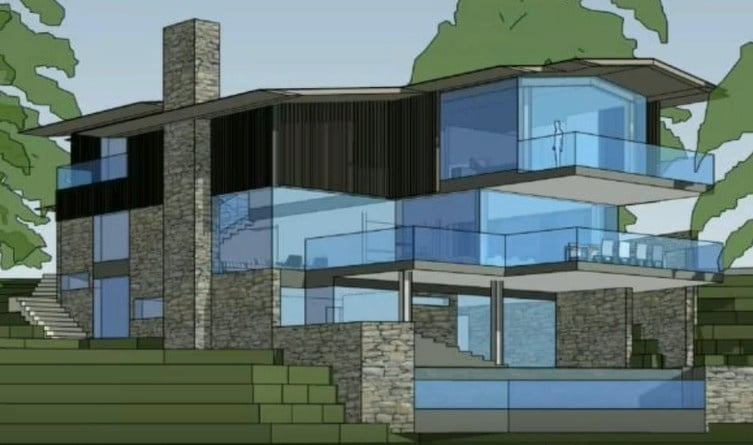
Course Overview Follow our journey of introducing CLT into high end‐custom homes and mixed‐use residential projects in the Greater Vancouver Area. We’ll explore the differences between light wood‐frame and CLT construction from the design and detailing phase right through to the end of construction. You’ll learn how the coordination, supply, and installation processes differ from conventional light wood‐frame projects and how our two examples were received by the design and construction teams. Learning Objectives Design and detailing considerations. Coordination process with design team. Supply consideration. Response of the industry. Course Video Speaker Bio Mehrdad Jahangiri, P.Eng., Dipl. Ing. (Germany) Founding Principal ASPECT Structural Engineers Mehrdad has over 25 years of international experience on notable, architecturally‐oriented projects. His experience enables him to integrate European codes and practices with the North American market, creating new ways for architects and owners to reach their project aspirations. Mehrdad understands the challenge to create carefully detailed, yet efficient structural designs and provides exceptional service to achieve them. Allison DenToom, P.Eng., P.E, LEED Green Associate ASPECT Structural Engineers Allison’s expertise is with the design of high‐end single‐family residences and multifamily residential buildings. From cozy cabins to 30,000+ sf estates, she is well‐versed in projects of all shapes, sizes, and materials. She is passionate about architecturally expressive structures and prides herself on providing the high level of attention that is required to create the finished project.
Advancing North American Mass Timber Projects: Harnessing the Strength of Local Expertise
Course Overview As global adoption of mass timber construction accelerates, a growing number of solutions are available in the marketplace that can contribute to the success of your project. This session, presented by Simpson Strong-Tie, will explore some of the unique challenges faced by North American projects and some of the domestically developed solutions available to meet those challenges. Learning Objectives Understand the need for greater tolerance on concealed beam hangers, the importance of ensuring connectors are easy to install, and the specific requirements for large elements in North American buildings. Understand the advantages domestic suppliers can bring to your project, including the rapid delivery of hardware to job sites. Learn about the necessity for effective installation tools and processes tailored to the scale of large North American projects. Learn about the need for effective moisture mitigation and the systems and strategies that can prevent unnecessary exposure of mass timber to the elements during construction. Course Video Speaker Bio Adrian Mitchell Chair of Simpson’s internal Mass Timber Focus Market Committee Simpson Strong-Tie Adrian is a mass timber and off-site business specialist with a principal focus on the rapidly expanding mass timber segment, for which he serves as Chair of Simpson’s internal Mass Timber Focus Market Committee. Adrian has spent the bulk of his 20-year career in the off-site, mass timber, and modular spaces, primarily as a business development leader and private consultant. With professional experiences ranging from heavy civil, oil and gas, high-end custom homes to large-scale mass timber missed-use projects and artificial intelligence in BIM, he has a unique and well-rounded background in wood and steel applications in off-site construction. Adrian is a native of Vancouver, Canada, and a graduate of the British Columbia Institute of Technology’s School of Business, he enjoys all the typical Canadian pastimes like playing hockey, building things from wood, and mountain biking.
A Zero Carbon Hybrid Wood Supertall Future

Course Overview With buildings generating 40% of global carbon emissions, we need to achieve net-zero by 2050 to meet the Paris Agreement target and limit global warming to 2°C. Timber sequesters an average of 1.9 metric tons of carbon-dioxide equivalent emissions per cubic meter (Sathre & O’Connor, 2010). While a purely mass timber tall building may not be the most cost-efficient solution, a hybrid structure can maximize the overall use of wood by volume in the most cost-efficient manner. Floor systems in buildings contribute as much as 73% of the environmental impact of a high-rise building’s structure (Lankhorst et al., 2019), making them an excellent target for reducing embodied carbon. DIALOG’s patent- pending Hybrid Timber Floor System (HTFS) takes advantage of the benefits of cross-laminated timber (CLT) combined with pre-stressed concrete to achieve a 12-metre column-free span. The HTFS is proposed as part of our Hybrid Timber Tower, a 105-storey mixed-use prototype that is being evaluated and tested by DIALOG and EllisDon. The prototype structure consists of the hybrid timber floor, combined with a concrete core and an external steel frame. Fire safety is achieved in the floor panels as the exposed wood chars to form a protective layer, while the non-combustible concrete and steel band continues to support the panel. The exposed CLT panels also provide a biophilic appeal, which has shown to support cognitive function as well as physical and psychological well-being (Vidovich, 2020). DIALOG, EllisDon, FPInnovations and other partners have completed the first phase of small-scale testing on over 40 panels. We are scheduled for fire testing of the panels in Ottawa with NRCan this fall with full scale testing of the 12-meter panels starting in late 2022. Learning Objectives Describe how hybrid mass timber systems—such as the Hybrid Timber Floor System (HTFS)—reduce embodied carbon and support zero‑carbon goals in high-rise, mixed-use developments. Explain the structural, fire safety, and performance characteristics of hybrid CLT–concrete floor assemblies, including how charring, concrete bands, and steel elements contribute to long-span capability and code compliance. Evaluate the role of multidisciplinary research, prototyping, and large-scale testing in validating hybrid timber technologies for supertall applications, including their impacts on sustainability, biophilia, and cost efficiency. Course Video Speaker Bio Craig Applegath, BSc, BArch, MArchUD, PPOAA, AIBC, NSAA, AIA, FRAIC, LEED® APBD+C Founding Partner & Architect DIALOG Craig Applegath is the founding principal of DIALOG’s Toronto Studio, and a passionate designer who believes in the power of built form to meaningfully improve the wellbeing of communities and the environment they are part of. Since graduating from the Graduate School of Design at Harvard University with a Master of Architecture in Urban Design Craig has focused his energies on leading innovative planning and design projects that address the complex challenges facing our communities, as well as on his advocacy of sustainable building design and urban regeneration and symbiosis. Craig’s area of practice includes the master planning and design of institutional projects, including post secondary education, healthcare facilities, as well as the design of innovative mixed-use- facilities. Craig was a founding Board Member of Sustainable Buildings Canada, a Past President of the Ontario Association of Architects, and the current moderator of SymbioticCities.net. Craig has lectured or taught at Harvard, the University of Toronto, the University of Waterloo, as well as at many professional and sector related conferences around the world. In 2001 Craig was made a Fellow of the Royal Architectural Institute of Canada for his contributions to the profession of architecture. In 2017 he was presented with the OALA Honourary Membership Award for his contributions to the cause of landscape architecture in Ontario. Neel Bavishi, PEng, CEM Building Performance Analysis, Associate DIALOG Neel is passionate about applying the art and science of building performance simulation and data-driven design to produce positive outcomes for the built environment. He embraces holistic solutions that minimize the environmental impact of building assets while providing enhanced value to building owners, developers, policymakers, and designers through improved well-being and reduced total cost of ownership. Neel believes that an integrated and collaborative approach that incorporates diverse perspectives is essential for delivering high-performance buildings. A mechanical engineer by training, Neel is well-versed in whole-building energy modelling for both new and existing buildings and lifecycle cost analysis, design optimization, and data visualization. His experience includes developing energy models for green building certification programs, carbon-neutral retrofit studies and district energy strategies, and the development of net-zero energy and emissions policies and standards for municipal, provincial, and federal government bodies. His projects span various asset classes, including recreational facilities, commercial high-rise towers, multi-unit residential buildings, hospitals, data centres, and transit facilities. He is a licensed Professional Engineer in the province of Ontario and is a Certified Energy Manager. Cameron Ritchie, PEng, PE, PhD, BSE Structural Engineer, Associate DIALOG Cameron is an Associate on the Structural Engineering team in DIALOG’s Toronto studio. Since graduating with a PhD from the University of Toronto, Cameron has acted as a structural design engineer and project manager across a variety of sectors and project types, including healthcare, institutional, government, and retail. He has experience in all stages of a project delivery, from feasibility studies through construction administration and management. Cameron is DIALOG’s project manager for the hybrid timber floor system (HTFS) research program, working closely with industry partners EllisDon. He is passionate about exploring mass timber wherever possible as a sustainable solution to our building needs.