
Design Best Practices for Mid-Rise Light Wood Frame Structures

Course Overview Light wood frame (LWF) construction is an accessible, cost-effective, low-carbon solution for mid-rise multi-family buildings. This session will clarify fundamental differences in approach between traditional low-rise LWF construction and modern mid-rise construction methods. LWF is an attractive option for mid-rise development and participants will gain practical insights into design efficiencies, from meeting seismic demands and other key structural considerations to how engineered wood products and specialty hardware can be used to optimize design. The session will also explore prefabrication strategies, highlighting the challenges and opportunities offsite construction presents for streamlined, higher-quality construction. Whether attendees are new to mid-rise wood design or looking to optimize their next project, this session will share valuable information they can apply to their next mid-rise building. Learning Objectives Distinguish key differences between traditional low-rise and modern mid-rise light wood frame construction, including changes in design loads, seismic requirements, and code updates. Apply practical design strategies to optimize mid-rise wood structures—such as efficient stacked framing, engineered wood products, specialty hardware, and solutions for wood shrinkage and differential movement. Evaluate prefabrication and offsite construction methods for mid-rise projects, identifying both challenges and opportunities to improve construction quality, speed, and coordination. Course Video Speakers Bio Sean Henry Director – Mid-Rise, Principal Tacoma Engineers Sean is the Director of Mid-Rise and a Principal at Tacoma Engineers, bringing 20 years of structural engineering experience to the role. Since joining the firm in 2005, Sean has led the design of a wide range of building types, with a particular focus on mid-rise developments including multi-family, seniors and affordable housing projects. He is especially recognized for his expertise in light wood frame construction with multiple projects designed and built since the adoption of 6 storey wood framed buildings in Ontario. He also has extensive experience with cold-formed steel, structural steel, reinforced concrete, precast, and concrete block building systems. Sean focuses on delivering practical, efficient structural solutions that support design intent while meeting the demands of constructability and cost-effectiveness.
From Trees to Keys: Scaling Industrialized Wood Construction

Course Overview This session brings together a panel of experts to discuss lessons learned and visions for wood-based manufactured housing solutions. The panel will address key challenges in scaling modular and panelized wood construction, including design for manufacture and assembly, systems integration, workforce transformation, and product standardization. Innovators throughout the supply chain will explore requirements for bringing scalable mass timber housing into the mainstream, from procurement to policy and from urban infill to supply chain readiness. The discussion will focus on how factory-built housing and wood innovation can contribute to addressing Canada’s housing crisis. Learning Objectives Assess practical lessons learned from implementing modular, panelized, and mass-timber housing projects, including challenges related to design coordination, manufacturing constraints, and on-site assembly. Explain how integrated approaches across structure, envelope, and mechanical systems enable scalable, high-performance wood-based housing solutions, drawing on examples from factory-built and turnkey delivery models. Evaluate the roles of standardization, procurement models, workforce capabilities, and policy alignment in advancing wood-based manufactured housing as a viable response to Canada’s housing crisis. Course Video Speakers Bio Hailey Quiquero Technical Manager WoodWorks Ontario Hailey is a structural engineer and has focused her career specializing in sustainable architecture and the advancement of timber building systems. Hailey spent several years of her career in research on the behaviour and fire safety of mass timber, as a structural designer with Entuitive in Toronto, and working to develop affordable housing products built of high-performance timber panels, contributing to the successful completion of several turnkey housing projects with Assembly Corp. (previously R-Hauz). In her current role as a Technical Manager for the Canadian Wood Council’s WoodWorks program, Hailey works with the team to aid project teams with technical support and to bring resources and education to industry stakeholders, advocating for the successful implementation of a beautiful and sustainable building material in our built environment. Ben Chicoine President Fab Structures Ben Chicoine is an accomplished entrepreneur with over 20 years of hands-on experience in the construction industry. As the co-founder of Fab Structures, he has built a multi-million dollar company specializing in mass timber and panelized construction, with energy efficiency at its core. Certified in Passive House design, Ben now consults on high-performance building strategies, championing innovative solutions that push the boundaries of sustainable construction in Canada. Kyle Power Director of Construction Assembly Corp. Kyle is Director of Construction at Assembly. He brings 15+ years of end-to-end construction management experience with Canada’s largest general contractor. Kyle held key leadership roles in the delivery of several high-profile projects in the GTA, including commercial high rise, complex retail renovations, and high rise residential. He is responsible for successful project construction delivery from the pre-construction planning stages to close-out. Kyle successfully executes the construction of Assembly’s unique end-to-end housing product and the delivery strategy underpinning its mission of creating faster, more sustainable housing. Cara Sloat Mechanical Principal Hammerschlag and Joffe Inc. Cara Sloat brings over 20 years of increasingly complex experience in high-performance mechanical design and energy efficiency expertise to Hammerschlag and Joffe. She has worked extensively with decarbonizing building portfolios, including for Fortune 50 companies, and has worked in high-performance mechanical system design, with a career focus on energy efficiency, energy exchange, and indoor environmental quality. In our current housing crisis, she is also passionate about finding better mechanical solutions for the Canadian housing market. She delivers projects at every scale, and believes every building deserves a quality and well thought out mechanical system. She has LEED certified over half a million square feet of new construction real estate projects, and provided energy audits for over 5 million square feet of commercial properties, identifying millions in potential energy savings.
Mass Timber Industrial Buildings and Warehouses
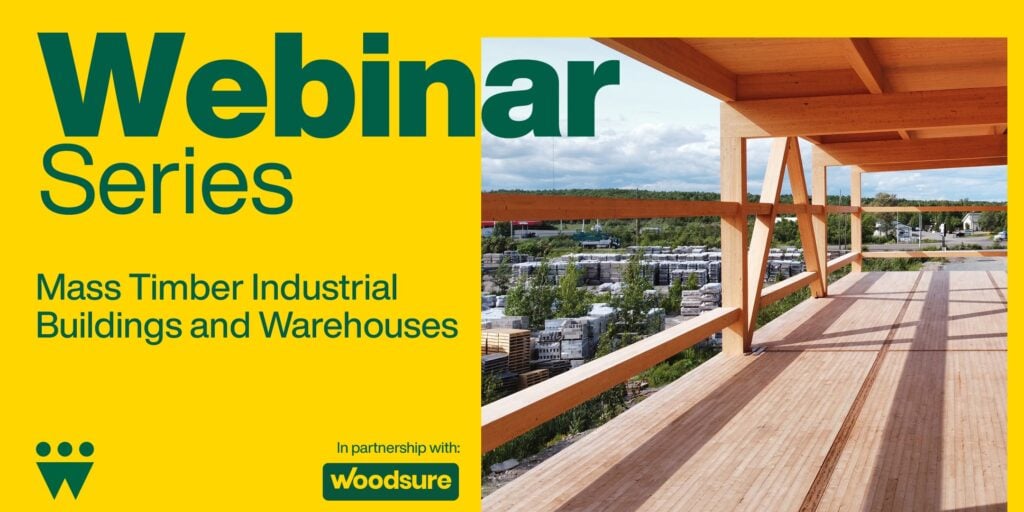
Course Overview The emerging use of mass timber in industrial buildings presents promising opportunities that are shaping the future of construction in this sector. As a sustainable and economically competitive alternative, mass timber is redefining what is possible in industrial construction, a field traditionally dominated by prefabricated steel. An analysis of two cutting-edge projects in Sudbury, Ontario, highlights key advantages, including cost competitiveness, reduced embodied carbon, and superior aesthetic appeal. The insights from these two projects present stakeholders with helpful considerations and valuable strategies for integrating mass timber into future developments. Learning Objectives Participants will learn how to create flexible, multi-tenant industrial layouts using mass timber systems that are able to accommodate evolving tenant needs. Participants will gain insight into how early-stage collaboration with mass timber suppliers streamlines design, engineering, and construction processes. Participants will gain insight into the role of mass timber in biophilic design, and how its visual warmth and natural materials contribute to wellness-centred spaces that appeal to tenants. Participants will understand how mass timber can be a cost-competitive alternative to steel, especially in volatile markets, and assess its impact on embodied carbon and sustainability goals. Course Video Speakers Bio Darian Sweeney, B.Sc., B.B.A Chief Operating Officer Bloomington Developments Born and raised in Greater Sudbury, Darian holds dual bachelor’s degrees from Laurentian University – in Biochemistry and Business Administration with a specialization in finance. In December of 2021, he joined Bloomington Developments, a real estate investor and developer in Greater Sudbury with a focus on commercial and industrial assets. While he has had the chance to apply his skills in capital budgeting, asset valuation, financial forecasting, and cost tracking in his time with Bloomington, his first major role with the company was unrelated to his educational background: overseeing the two concurrent mass timber building projects that are the subject of this seminar. Darian now manages all construction projects – whether new builds or renovations – and negotiates all leases across the company’s portfolio, in addition to his roles as primary liaison on legal, administrative, tenant relations, marketing, and business development matters. Patrick Danielson, OAA + AIBC, MRAIC Founder and Principal Danielson Architecture Office Inc. Patrick holds a degree in Biomedical Science and a graduate degree from the School of Architecture + Landscape Architecture at the University of British Columbia. Combining these disciplines, he developed a unique “genetic design” approach — an evolving architectural strategy informed by biological principles. Patrick has expanded this framework through academic research, patented innovations, private sector projects, biological studies, and his experience as a pilot.