
FRAMEWORK for Success: Prefabricated Wood Systems and Design Innovation
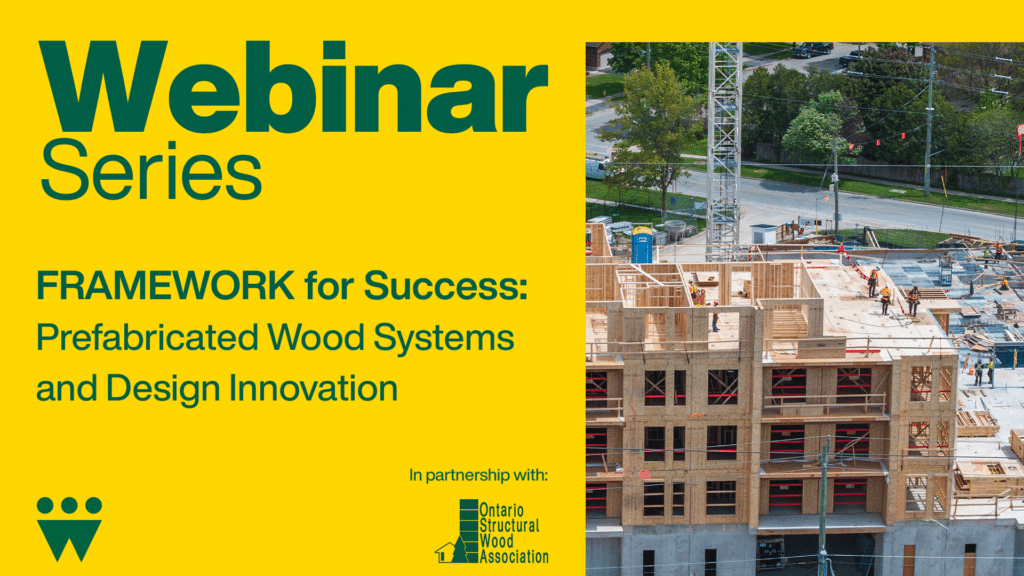
Course Overview This presentation explores the transformative impact of prefabricated light wood frame construction systems in multi-residential development, focusing on VanMar’s FRAMEWORK methodology and its application in the new 150 Wissler Road project in Waterloo. FRAMEWORK is a highly efficient, panelized light wood frame system designed for buildings up to six storeys, delivering rapid, sustainable, and cost-effective construction that meets and exceeds energy and greenhouse gas reduction targets. The session will highlight VanMar’s extensive experience in affordable housing, the advantages of offsite prefabrication, and the collaborative process that accelerates project delivery. Learning Objectives Participants will understand the benefits of prefabricated wood frame construction for multi-residential buildings. Participants will understand the FRAMEWORK system’s approach to speed, cost-effectiveness, and sustainability. Participants will be shown how collaborative offsite construction methods accelerated the 150 Wissler Road project. Participants will learn strategies for overcoming design challenges and achieving efficiencies in fire walls, shafts, and acoustics. Course Video Speakers Bio Jordan Zekveld Director of Preconstruction VanMar Constrcutors ON Jordan is a construction and development professional with deep experience in estimating, preconstruction, and cost strategy for multi-unit residential projects. At VanMar Constructors, he helps developers, REITs, and non-profits bring condominium, rental, and affordable housing projects from concept to construction. Drawing on VanMar’s integrated design-build expertise, Jordan leads collaborative preconstruction processes that align design intent, feasibility, and cost efficiency. His experience spans concrete high-rise and innovative mid-rise wood-frame developments, including the Framework system — VanMar’s sustainable, fast, and cost-effective building solution. With a focus on clarity, constructability, and long-term value, Jordan works at the intersection of planning, design, and execution to help deliver housing that’s efficient, affordable, and built to last. Mike Philips Executive Director Ontario Structural Wood Association (OSWA) Mike Phillips has served as Executive Director of OSWA since 2008. Under his leadership, the association has evolved from a truss-fabricator-focused group into Ontario’s leading voice for structural wood component manufacturing. Today, the province is home to 70 certified truss plants and 40 wood-panel manufacturers, with engineered wood products now the preferred choice for floor systems. At the same time, Ontario’s building code has never been more prepared to accommodate advanced wood-construction methods. Mike is a strong advocate for the industrialization of construction and the expanding role of off-site building systems—critical drivers of wood construction’s future growth. Paul Marchesani Operations Manager Panelized Building Solutions Inc. Paul Marchesani is the Vice President of Panelized Building Solutions Inc., a family run business where he plays a key leadership role in driving operational excellence, strategic growth, and project execution across the company. Known for his strong work ethic, hands-on approach, and deep industry knowledge, Paul oversees day-to-day operations while supporting long-term planning that aligns with the company’s vision. Before joining Panelized Building Solutions, Paul held key roles in project management and operations within manufacturing and construction environments, where he oversaw production teams, implemented process improvements, and helped streamline workflow efficiencies. His ability to manage both people and complex technical projects made him a natural fit for leadership. Respected by colleagues, clients, and trade partners alike, Paul combines technical expertise with strong leadership, making him an essential pillar of the company’s continued success.
Design and Construction of Permanent Wood Foundations – The Buildings Show 2025
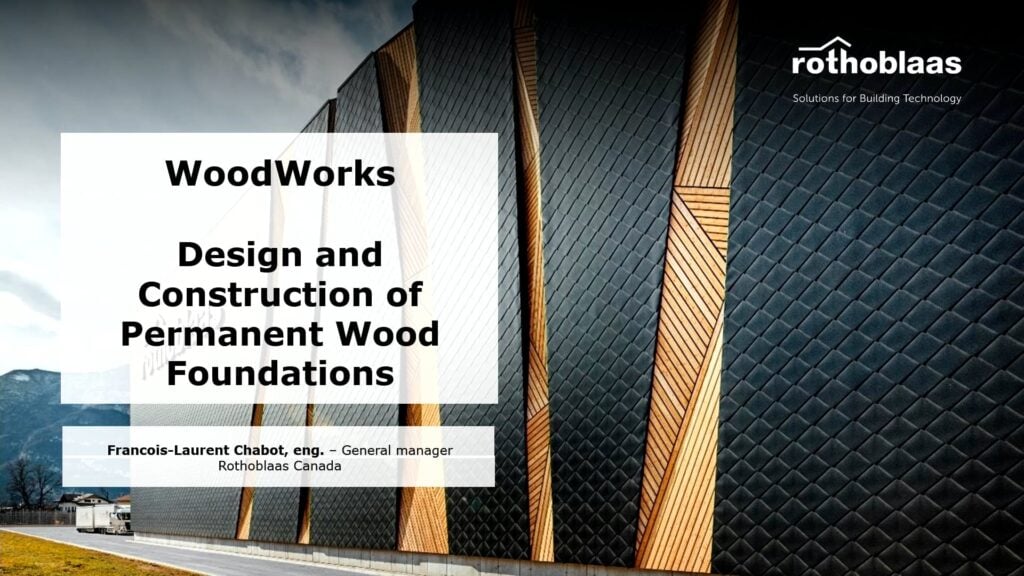
Course Overview This session will provide requirements and guidance on the design and construction of permanent wood foundations (PWF) based on the Canadian standard; CSA S406-16 – ‘Specification of permanent wood foundations for housing and small buildings’. Further information on site selection, backfilling, PWF floor systems, air and vapour barriers, insulation techniques, crawl spaces and design requirements for high wind and seismic zones will be discussed. This session will provide attendees with an overview of the design requirements and construction methods for PWF, with a focus on the structural system and building science considerations. Learning Objectives Apply the design requirements of CSA S406-16 for permanent wood foundations in housing and small buildings. Identify key building-science considerations for PWF systems, including drainage, air and vapour control, insulation, and crawl space design. Evaluate site and structural requirements for permanent wood foundations in high wind and seismic regions. Course Video Speakers Bio Adam Robertson Co-founder and Principal Sustainatree Adam completed his Bachelor of Applied Science in Civil Engineering at the University of Toronto and also holds a Master of Applied Science degree from the Department of Wood Science at the University of British Columbia. He is the past Chair of the CSA Subcommittee on Permanent Wood Foundations and acted as a primary author and editor during the update and revisions to the Canadian Wood Council’s Permanent Wood Foundations publication. He is the co-founder and principal of Sustainatree Consulting, a small firm specializing in sustainability and engineering design of wood building systems. Prior to opening his own practice, Adam was previously employed by the Canadian Wood Council and has also worked as a consulting structural engineer and within the building development and construction management fields.
Design Best Practices for Mid-Rise Light Wood Frame Structures
Course Overview Light wood frame (LWF) construction is an accessible, cost-effective, low-carbon solution for mid-rise multi-family buildings. This session will clarify fundamental differences in approach between traditional low-rise LWF construction and modern mid-rise construction methods. LWF is an attractive option for mid-rise development and participants will gain practical insights into design efficiencies, from meeting seismic demands and other key structural considerations to how engineered wood products and specialty hardware can be used to optimize design. The session will also explore prefabrication strategies, highlighting the challenges and opportunities offsite construction presents for streamlined, higher-quality construction. Whether attendees are new to mid-rise wood design or looking to optimize their next project, this session will share valuable information they can apply to their next mid-rise building. Learning Objectives Distinguish key differences between traditional low-rise and modern mid-rise light wood frame construction, including changes in design loads, seismic requirements, and code updates. Apply practical design strategies to optimize mid-rise wood structures—such as efficient stacked framing, engineered wood products, specialty hardware, and solutions for wood shrinkage and differential movement. Evaluate prefabrication and offsite construction methods for mid-rise projects, identifying both challenges and opportunities to improve construction quality, speed, and coordination. Course Video Speakers Bio Sean Henry Director – Mid-Rise, Principal Tacoma Engineers Sean is the Director of Mid-Rise and a Principal at Tacoma Engineers, bringing 20 years of structural engineering experience to the role. Since joining the firm in 2005, Sean has led the design of a wide range of building types, with a particular focus on mid-rise developments including multi-family, seniors and affordable housing projects. He is especially recognized for his expertise in light wood frame construction with multiple projects designed and built since the adoption of 6 storey wood framed buildings in Ontario. He also has extensive experience with cold-formed steel, structural steel, reinforced concrete, precast, and concrete block building systems. Sean focuses on delivering practical, efficient structural solutions that support design intent while meeting the demands of constructability and cost-effectiveness.
Aspen Art Museum: Creating an Innovative Wood Structure
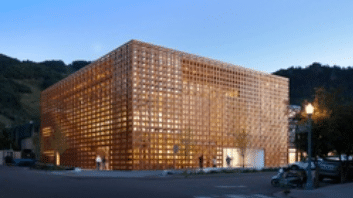
Course Overview The Aspen Art Museum, designed by architect Shigeru Ban, includes a long-span three-dimensional wood space-frame roof. Ban’s charge was to create a wood space frame with spans of more than 50 feet and cantilevers of 14 feet, in a structural depth of 3 feet. The space frame was to have two planes of intersecting diagonal webs of curved members that undulated up and down to touch the planes of the top and bottom chords with no visible connectors. This case study presentation will describe the design and construction of the wood structure, including paths explored but not chosen for the final design. Learning Objectives Articulate the particular demands associated with creating a 3-dimensional space frame entirely in wood. Recognize the advantages and disadvantages of several wood connection strategies in space-frame structures. Be aware of manufacturing capabilities and limitations that influenced the design of the Aspen Art Museum roof structure. Understand the importance of early engagement of manufacturing and engineering partners in the design process for innovative wood structures. Course Video Speaker Bio Gregory R. Kingsley, PhD, PE President and CEO KL&A Inc. Gregory is the president and CEO of KL&A Inc., Structural Engineers and Builders in Golden, Colorado, a firm of 65 that includes structural engineers, steel detailers, and construction managers. He enjoys working with design architects on innovative structures, especially wood and steel.