
Design Best Practices for Mid-Rise Light Wood Frame Structures
Course Overview Light wood frame (LWF) construction is an accessible, cost-effective, low-carbon solution for mid-rise multi-family buildings. This session will clarify fundamental differences in approach between traditional low-rise LWF construction and modern mid-rise construction methods. LWF is an attractive option for mid-rise development and participants will gain practical insights into design efficiencies, from meeting seismic demands and other key structural considerations to how engineered wood products and specialty hardware can be used to optimize design. The session will also explore prefabrication strategies, highlighting the challenges and opportunities offsite construction presents for streamlined, higher-quality construction. Whether attendees are new to mid-rise wood design or looking to optimize their next project, this session will share valuable information they can apply to their next mid-rise building. Learning Objectives Distinguish key differences between traditional low-rise and modern mid-rise light wood frame construction, including changes in design loads, seismic requirements, and code updates. Apply practical design strategies to optimize mid-rise wood structures—such as efficient stacked framing, engineered wood products, specialty hardware, and solutions for wood shrinkage and differential movement. Evaluate prefabrication and offsite construction methods for mid-rise projects, identifying both challenges and opportunities to improve construction quality, speed, and coordination. Course Video Speakers Bio Sean Henry Director – Mid-Rise, Principal Tacoma Engineers Sean is the Director of Mid-Rise and a Principal at Tacoma Engineers, bringing 20 years of structural engineering experience to the role. Since joining the firm in 2005, Sean has led the design of a wide range of building types, with a particular focus on mid-rise developments including multi-family, seniors and affordable housing projects. He is especially recognized for his expertise in light wood frame construction with multiple projects designed and built since the adoption of 6 storey wood framed buildings in Ontario. He also has extensive experience with cold-formed steel, structural steel, reinforced concrete, precast, and concrete block building systems. Sean focuses on delivering practical, efficient structural solutions that support design intent while meeting the demands of constructability and cost-effectiveness.
Mid rise Engineering Considerations for Engineered Wood Products
Course Overview While many designers are familiar with engineered wood products such as I‐joists and structural composite lumber, it is important to understand the structural requirements associated with each in order to achieve proper performance—especially in mid‐rise Construction. With an emphasis on products used in commercial and multi‐family buildings, this presentation will cover engineered wood product acceptance, testing requirements, lateral design, and proper detailing. Learning Objectives Testing requirements and acceptance of wood I‐joists and structural composite. Lumber (SCL) products; Dimension stability in regards to moisture content changes and the differences between solid wood products. Lateral design, including information on I‐joist diaphragm capacities and the detailing of rim board connections. Fire resistance design, including wood I‐joist assembly requirements and SCL char rate equivalency to solid wood. Course Video Speaker Bio Jeff Olson, P.E., P.Eng. Technical Services Manager – Boise Cascade, Engineered Wood Products Division Boise Cascade White City, OR Jeff is currently the Technical Services Manager for Boise Cascade, Engineered Wood Products division. He has over 30 years of experience in the design and testing of engineered wood products and is licensed as a Professional Engineer in several western Canadian provinces and U.S. states.
Efficient Tall Wall Framing using Engineered Wood Products
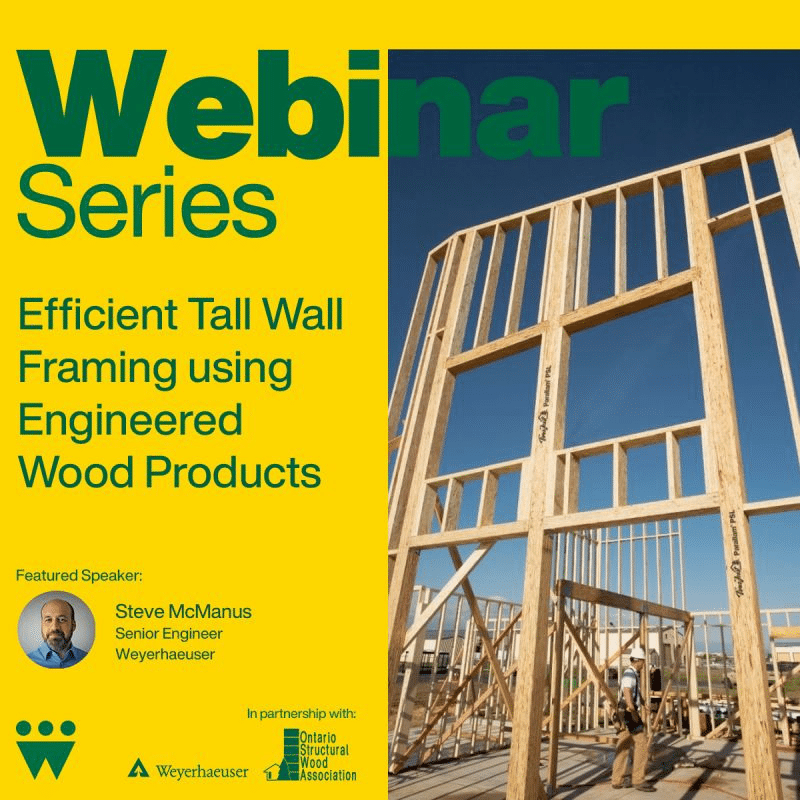
Course Overview This webinar will explore the basic design principles and best practices for efficient tall wall design using engineered wood products. Discussion will include material selection, design for climate conditions, and a complete design example using freely available software tools. Learning Objectives Understand the design principles and inputs required to size tall wall framing members. Recognize some of the pitfalls of inadequate tall wall design. Learn about easy-to-use tools and software available to simplify this process. Course Video Speaker Bio Steve McManus Senior Engineer Weyerhaeuser Steve McManus, a professional engineer based in Langley, BC, supports Weyerhaeuser’s Trus Joist® Engineered Lumber Products in residential and light commercial construction. He provides technical support, training, and field issue resolution for suppliers, architects, engineers, and building officials across Canada. Steve’s 27 years of experience in the forest industry includes structural design and engineering, forest management, and wood products manufacturing.