
Scaling Affordable Rental Housing with Tall Mass Timber
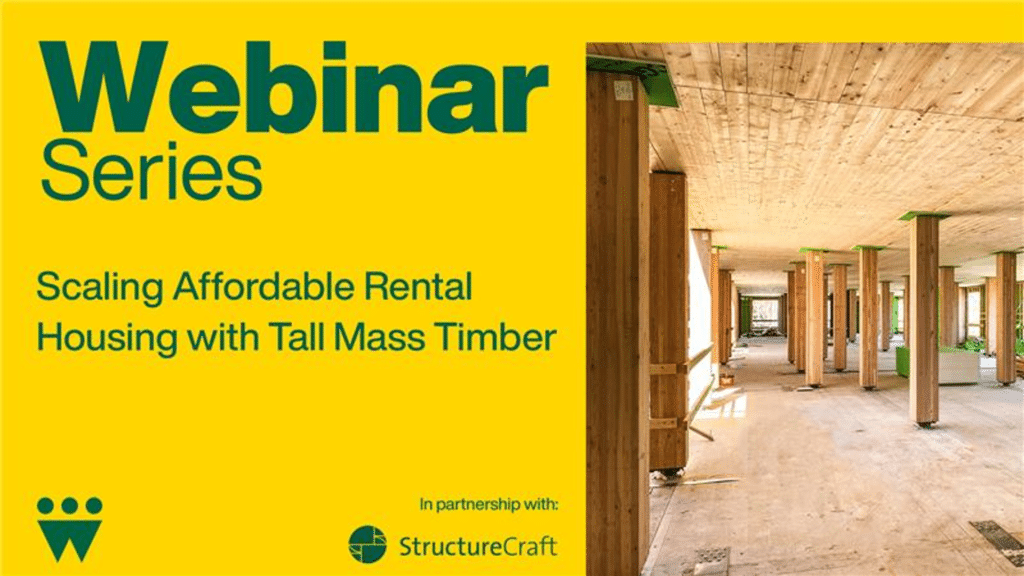
Course Overview As cities face growing pressures around affordability, climate resilience and livability, innovative projects like Catalyst’s 18-storey CLT rental development in North Vancouver offer necessary solutions. Targeted toward architects, engineers, developers and municipal leaders this session explores mass timber construction as an affordable housing solution. Attendees will gain insight into the use of CLT in construction and the associated challenges, including structural grid constraints, moisture protection, and prefabricated balcony systems. The session will also highlight how the project achieved near cost parity with comparable concrete buildings, integrated mixed-use programming, and leveraged BIM to support coordination and the permitting process. Participants will leave with practical takeaways for applying these approaches to similar projects in other cities. Learning Objectives Understand how tall mass timber hybrid systems can support affordable and mixed-use housing Identify key architectural, structural, and construction challenges unique to CLT buildings Learn practical strategies for permitting, procurement, coordination, and construction Course Video Speakers Bio Annabelle Hamilton Executive Director WoodWorks BC Harrison Glotman Principal Glotman Simpson Consulting Engineers Rhys Leitch Principal Integra Architecture Inc. Sean Binns Project Director Kindred Construction
FRAMEWORK for Success: Prefabricated Wood Systems and Design Innovation
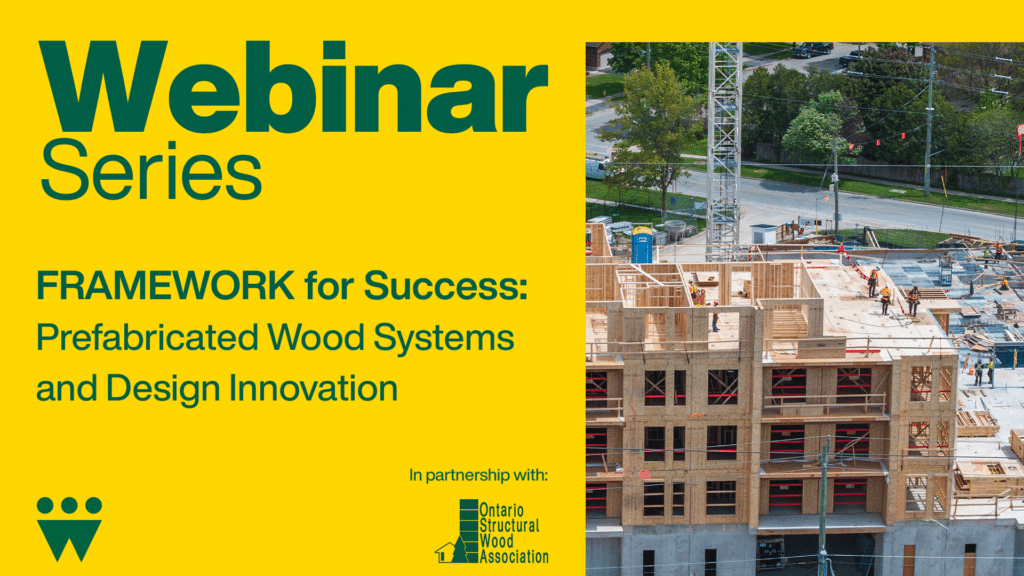
Course Overview This presentation explores the transformative impact of prefabricated light wood frame construction systems in multi-residential development, focusing on VanMar’s FRAMEWORK methodology and its application in the new 150 Wissler Road project in Waterloo. FRAMEWORK is a highly efficient, panelized light wood frame system designed for buildings up to six storeys, delivering rapid, sustainable, and cost-effective construction that meets and exceeds energy and greenhouse gas reduction targets. The session will highlight VanMar’s extensive experience in affordable housing, the advantages of offsite prefabrication, and the collaborative process that accelerates project delivery. Learning Objectives Participants will understand the benefits of prefabricated wood frame construction for multi-residential buildings. Participants will understand the FRAMEWORK system’s approach to speed, cost-effectiveness, and sustainability. Participants will be shown how collaborative offsite construction methods accelerated the 150 Wissler Road project. Participants will learn strategies for overcoming design challenges and achieving efficiencies in fire walls, shafts, and acoustics. Course Video Speakers Bio Jordan Zekveld Director of Preconstruction VanMar Constrcutors ON Jordan is a construction and development professional with deep experience in estimating, preconstruction, and cost strategy for multi-unit residential projects. At VanMar Constructors, he helps developers, REITs, and non-profits bring condominium, rental, and affordable housing projects from concept to construction. Drawing on VanMar’s integrated design-build expertise, Jordan leads collaborative preconstruction processes that align design intent, feasibility, and cost efficiency. His experience spans concrete high-rise and innovative mid-rise wood-frame developments, including the Framework system — VanMar’s sustainable, fast, and cost-effective building solution. With a focus on clarity, constructability, and long-term value, Jordan works at the intersection of planning, design, and execution to help deliver housing that’s efficient, affordable, and built to last. Mike Philips Executive Director Ontario Structural Wood Association (OSWA) Mike Phillips has served as Executive Director of OSWA since 2008. Under his leadership, the association has evolved from a truss-fabricator-focused group into Ontario’s leading voice for structural wood component manufacturing. Today, the province is home to 70 certified truss plants and 40 wood-panel manufacturers, with engineered wood products now the preferred choice for floor systems. At the same time, Ontario’s building code has never been more prepared to accommodate advanced wood-construction methods. Mike is a strong advocate for the industrialization of construction and the expanding role of off-site building systems—critical drivers of wood construction’s future growth. Paul Marchesani Operations Manager Panelized Building Solutions Inc. Paul Marchesani is the Vice President of Panelized Building Solutions Inc., a family run business where he plays a key leadership role in driving operational excellence, strategic growth, and project execution across the company. Known for his strong work ethic, hands-on approach, and deep industry knowledge, Paul oversees day-to-day operations while supporting long-term planning that aligns with the company’s vision. Before joining Panelized Building Solutions, Paul held key roles in project management and operations within manufacturing and construction environments, where he oversaw production teams, implemented process improvements, and helped streamline workflow efficiencies. His ability to manage both people and complex technical projects made him a natural fit for leadership. Respected by colleagues, clients, and trade partners alike, Paul combines technical expertise with strong leadership, making him an essential pillar of the company’s continued success.
Halsa 230 Royal York: Ontario’s Tallest Mass Timber Residential Building
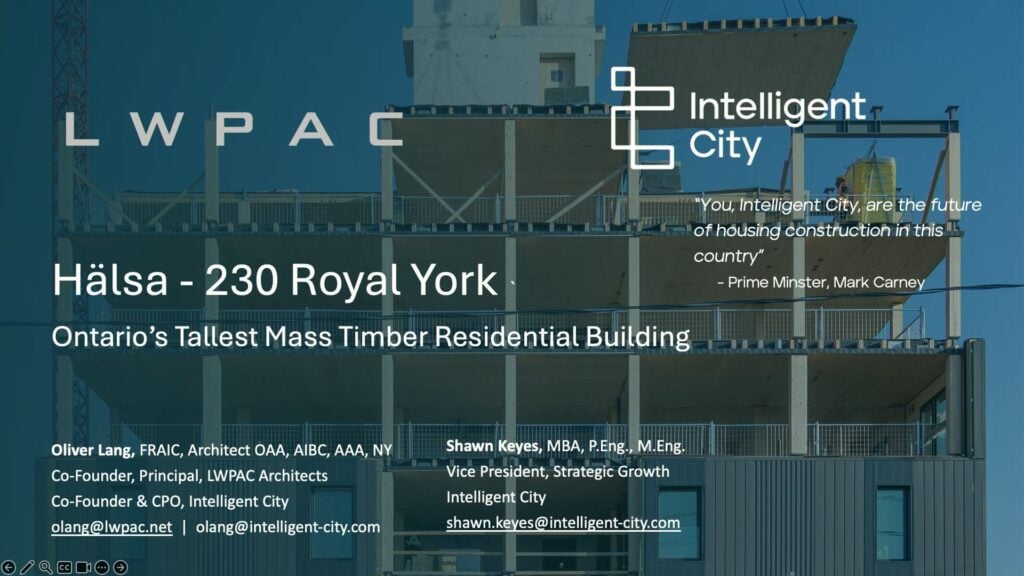
Course Overview Halsa 230 Royal York is setting new standards as Toronto’s pioneering 9-storey prefabricated mass timber rental building, demonstrating the viability of carbon-neutral communities within Toronto’s Right of Way zoning. Through a case study of the building, this session will present the advantages of integrated design and prefabricated mass timber building systems components. Learning Objectives Explain the integrated design and prefabrication strategies used in mass timber residential construction: Learners will be able to describe how collaborative design, advanced manufacturing, and prefabricated building systems contribute to project efficiency, quality, and scalability. Analyze the technical features and performance benefits of mass timber floor cassettes and curtain wall systems: Learners will understand the structural, acoustic, fire resistance, and thermal properties of the building’s mass timber components, and how these features address common challenges in high-rise construction. Evaluate the sustainability, regulatory, and operational considerations in developing carbon-neutral mass timber buildings: Learners will assess how material sourcing, certification, lifecycle carbon analysis, and code compliance shape the viability and impact of mass timber projects in urban environments. Course Video Speakers Bio Oliver Lang Co-Founder, Chief Product Officer, Intelligent City Co-Founder, Principal, LWPAC Oliver Lang is a German-Canadian architect and urban entrepreneur with 25+ years of experience and a recognized leader in design innovation and integration of complex urban projects, mixed-use housing, advanced prefabrication, and green building strategies. He is a graduate of Columbia University’s Graduate School of Architecture Planning and Preservation, with a Master of Science in Advanced Architectural Design, and he holds a professional degree (Diplom-Ingenieur Architektur) from the University of Technology Berlin with two-year studies at the ETSA Barcelona UPC. Prior to founding LWPAC in 1998, Oliver researched and practiced in digitally assisted design and fabrication with Smith-Miller & Hawkinson in New York, while teaching digital design at Princeton University, Columbia University, and University of Pennsylvania. He subsequently has taught advanced design and digital technology at SCI_ARC, the Berlage Institute, TU Berlin, UTF Santa Maria, and University of British Columbia (UBC). Shawn Keyes VP – Strategic Growth and Business Development Intelligent City Shawn is a structural engineer and commercial executive with more than a decade of experience leading innovation in mass timber and industrialized construction. As Vice President of Strategic Growth at Intelligent City, he leads commercialization, market strategy, and partnerships to scale the company’s prefabricated housing systems. Previously, Shawn served as Executive Director of WoodWorks BC, where he led a strategic transformation that strengthened partnerships, technical leadership, and influence across the development, AEC, and policy sectors. Before that, he spent over six years at Fast + Epp as a Senior Structural Engineer, developing deep technical expertise. Over his career, Shawn has supported more than 150 mass timber and hybrid projects across Canada, and has served on advisory councils for BC Housing, BCIT, the BC Office of Mass Timber Implementation, Forestry Innovation Investment, and Natural Resources Canada. He holds an MBA from UBC Sauder, a Master of Engineering from Carleton University, and is a licensed Professional Engineer in BC and Ontario.
Mass Timber Economics: Why One Line Item Doesn’t Tell the Whole Story
Course Overview Mass timber buildings are often perceived as premium projects, but assumptions based on a single cost line can be misleading. This session explores the complexities of costing mass timber construction and highlights why a holistic, team-based approach is essential from the earliest stages of design. Attendees will gain insights into common pitfalls for cost consultants and learn how early architectural decisions such as grid spacing and aesthetic goals can significantly influence both cost and structural efficiency. The speakers will emphasize the importance of clear project objectives when setting the initial budget and outline best practices for cost predictability, including robust scope management, design reviews, and obtaining competitive bids from multiple timber suppliers. The session will also examine the role of architects in informing cost decisions, strategies for improved procurement and scheduling, and how to leverage mass timber’s expedited on-site phase. Learning Objectives Understand the complexities of mass timber costing: Participants will be able to explain why relying on a single cost line item is misleading and identify key factors—such as grid spacing and aesthetic goals—that influence overall project cost and structural efficiency. Apply best practices for cost predictability in mass timber projects: Learners will be able to outline strategies for achieving accurate budgets, including robust scope management, design reviews, and obtaining competitive bids from multiple timber suppliers. Recognize the role of collaboration in successful mass timber delivery: Attendees will be able to describe how architects, developers, and contractors can work together from early design stages to improve procurement, scheduling, and leverage mass timber’s expedited on-site phase. Course Video Speakers Bio Marlon Bray Executive Vice President Clark Construction Management Inc. Mass timber buildings are often perceived as premium projects, but assumptions based on a single cost line can be misleading. This session explores the complexities of costing mass timber construction and highlights why a holistic, team-based approach is essential from the earliest stages of design. Attendees will gain insights into common pitfalls for cost consultants and learn how early architectural decisions such as grid spacing and aesthetic goals can significantly influence both cost and structural efficiency. The speakers will emphasize the importance of clear project objectives when setting the initial budget and outline best practices for cost predictability, including robust scope management, design reviews, and obtaining competitive bids from multiple timber suppliers. The session will also examine the role of architects in informing cost decisions, strategies for improved procurement and scheduling, and how to leverage mass timber’s expedited on-site phase. Mathieu Fleury Partner Leader Lane Developments Mathieu combines a merchant developer mentality with institutional discipline to drive Leader Lane Developments’ ambitious urban projects. He holds a Masters in Real Estate Finance from The University of Cambridge and has over 15 years of experience with industry leaders, including Loblaw Properties Limited, Great Gulf, and Dream Unlimited. Over the course of his career, Mathieu has shaped over 15,000 residential units and 7 million square feet of development across Canada. With his entrepreneurial spirit and analytical mindset, he steers Leader Lane’s growth in Toronto’s dynamic mid-rise sector. Mathieu’s strategic leadership ensures each project balances innovation with strong financial performance, delivering communities that enhance the urban experience while maximizing investor value. Jonathan King Principal BNKC Architects Inc. An architect and design leader with nearly 30 years of experience, Jonathan has worked across the full spectrum of residential, institutional, and cultural projects across Canada—from university buildings and theatres to large-scale multi-residential developments. He’s led teams at firms such as Diamond and Schmitt, HOK, and Core Architects, and is now a Principal at BNKC, where he helps steer complex projects from early concept through to completion. Jonathan’s recent work has included multiple mid- and high-rise residential and commercial buildings that integrate new construction technologies—including hybrid and mass timber structures—within tight urban contexts. His background brings a deep understanding of how codes, construction logistics, and market realities shape design decisions. He’s particularly interested in how architects can help unlock the potential of mass timber by working more collaboratively with clients, engineers, and municipalities to address the barriers standing.
Design Best Practices for Mid-Rise Light Wood Frame Structures
Course Overview Light wood frame (LWF) construction is an accessible, cost-effective, low-carbon solution for mid-rise multi-family buildings. This session will clarify fundamental differences in approach between traditional low-rise LWF construction and modern mid-rise construction methods. LWF is an attractive option for mid-rise development and participants will gain practical insights into design efficiencies, from meeting seismic demands and other key structural considerations to how engineered wood products and specialty hardware can be used to optimize design. The session will also explore prefabrication strategies, highlighting the challenges and opportunities offsite construction presents for streamlined, higher-quality construction. Whether attendees are new to mid-rise wood design or looking to optimize their next project, this session will share valuable information they can apply to their next mid-rise building. Learning Objectives Distinguish key differences between traditional low-rise and modern mid-rise light wood frame construction, including changes in design loads, seismic requirements, and code updates. Apply practical design strategies to optimize mid-rise wood structures—such as efficient stacked framing, engineered wood products, specialty hardware, and solutions for wood shrinkage and differential movement. Evaluate prefabrication and offsite construction methods for mid-rise projects, identifying both challenges and opportunities to improve construction quality, speed, and coordination. Course Video Speakers Bio Sean Henry Director – Mid-Rise, Principal Tacoma Engineers Sean is the Director of Mid-Rise and a Principal at Tacoma Engineers, bringing 20 years of structural engineering experience to the role. Since joining the firm in 2005, Sean has led the design of a wide range of building types, with a particular focus on mid-rise developments including multi-family, seniors and affordable housing projects. He is especially recognized for his expertise in light wood frame construction with multiple projects designed and built since the adoption of 6 storey wood framed buildings in Ontario. He also has extensive experience with cold-formed steel, structural steel, reinforced concrete, precast, and concrete block building systems. Sean focuses on delivering practical, efficient structural solutions that support design intent while meeting the demands of constructability and cost-effectiveness.
Exploring the Feasibility of Point-Supported Mass Timber for Tallwood Construction
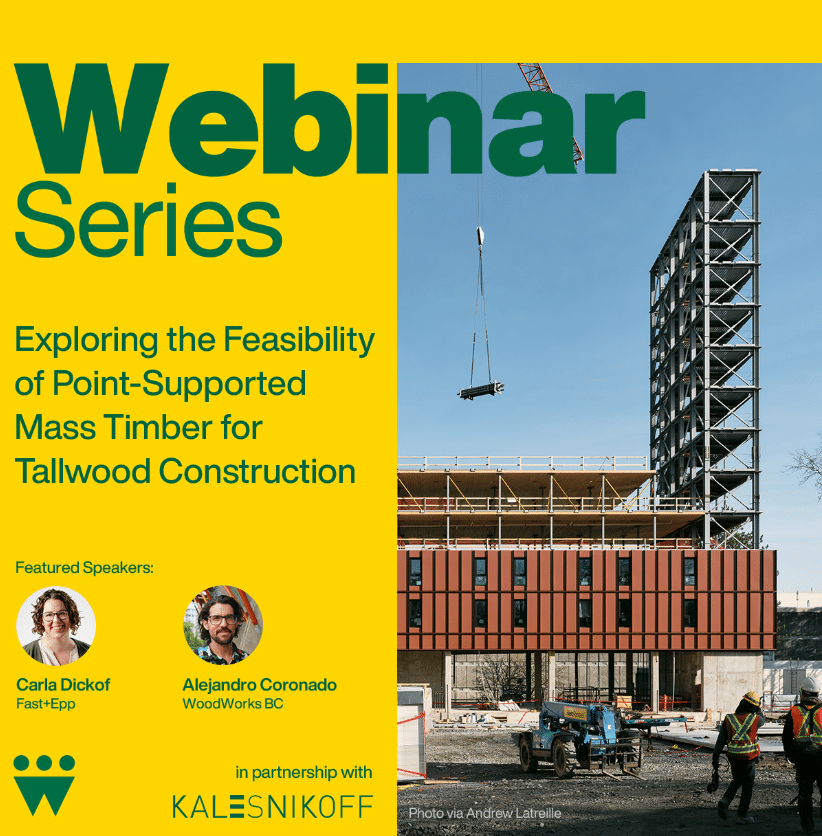
Course Overview This session examines the growing potential of point-supported mass timber systems in tall building construction, contrasting them with traditional timber framing and conventional steel and concrete approaches. It highlights regulator advancements, the role of mass timber in addressing mid-density housing needs, and the structural fundamentals of gravity and lateral systems. Through cost and schedule comparisons, design principles like bi-axial bending and punching shear, and insights from ongoing Canadian codification efforts, the presentation offers a comprehensive overview supported by real-world projects such as VAHA Burrard and BCIT Tall Timber. Learning Objectives Evaluate the opportunities and constraints for point-supported mass timber when compared to traditional timber framing schemes. Analyze the schedule and cost benefits of point-supported mass timber systems versus steel and concrete in tall construction projects. Explore state-of-the-art design methodologies and ongoing efforts towards codification in Canada. Course Video Speakers Bio Carla Dickof, P.Eng., M.A.Sc. Associate Principal | Director of Research & Development Fast+Epp Carla Dickof is the Associate Principal & Director of Research and Development at Fast + Epp, where she leads the Testing Team at Fast + Epp’s R&D hub, Concept Lab, and uses the data gleaned from research programs to regularly contribute to academic journals and conferences. Carla completed her Master’s degree studies at the University of British Columbia, where her thesis research focused on hybrid systems, specifically those combining steel and mass timber (CLT). Her experience as an engineer spans commercial, recreational, educational, and residential projects – and, since joining Fast + Epp in 2012, Carla has gained a robust fluency in all major building materials, including concrete, steel, light-framed wood, heavy timber, and mass timber. Her understanding of building physics and materials brings invaluable insights to her projects. Alejandro Coronado, P.Eng. Technical Advisor WoodWorks BC Alejandro Coronado is a Technical Advisor with a multidisciplinary background spanning contracting, supply, and consulting engineering. With both a Diploma and a Bachelor’s Degree in Structural Engineering from BCIT, Alejandro began his career in single-family residential design and steadily advanced to contribute to landmark projects such as the Centre Block Base Isolation at Parliament Hill, the UBC Museum of Anthropology Great Hall Renewal, the Royal BC Museum PARC Campus, and a mass timber campus in Silicon Valley. Initially drawn to mass timber for its expressive architectural potential, Alejandro quickly recognized its broader value in addressing today’s social and environmental challenges. Through many years of hands-on experience, Alejandro has become a champion for sustainable construction and simple yet effective structural solutions.
Design and Construction of Permanent Wood Foundations
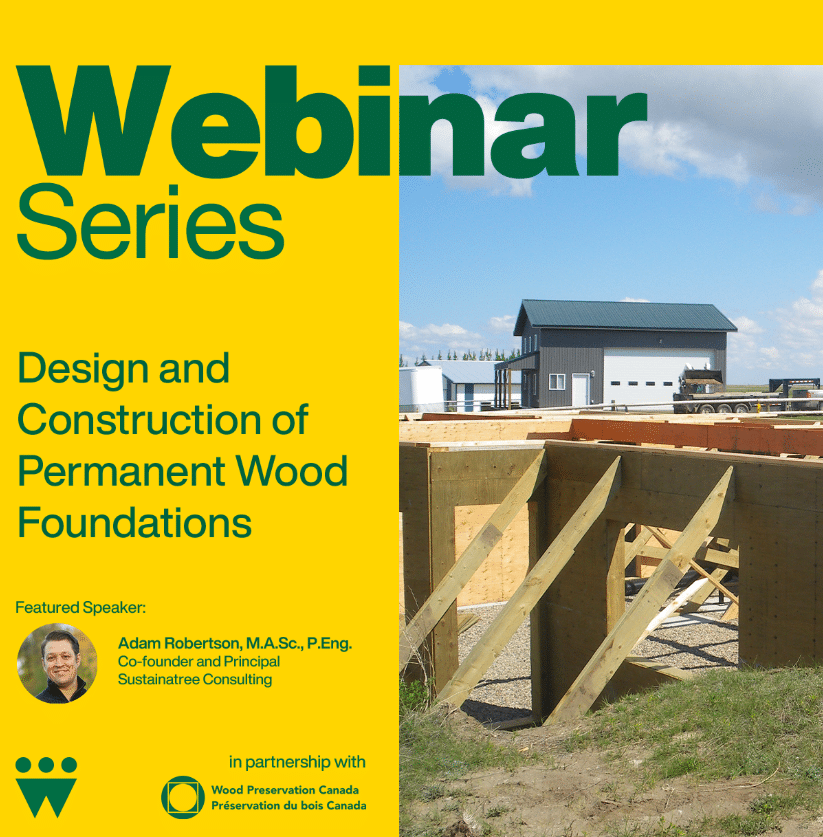
Course Overview This course will provide guidance on the design and construction of permanent wood foundations (PWF) based on the Canadian standard CSA S406-16 – Specification of Permanent Wood Foundations for Housing and Small Buildings. Topics will include site selection, backfilling, PWF floor systems, air and vapour barriers, insulation techniques, crawl spaces, and design considerations for high wind and seismic zones. The course will give attendees a comprehensive overview of the structural and building science requirements for designing and constructing PWF systems. Learning Objectives History of PWF construction. Wood preservatives and material requirements for PWF. Overview of pertinent design and construction aspects of PWF. Standardization of PWF as per CSA S406.
Understanding Glulam: The structural and architectural capabilities of mass timber
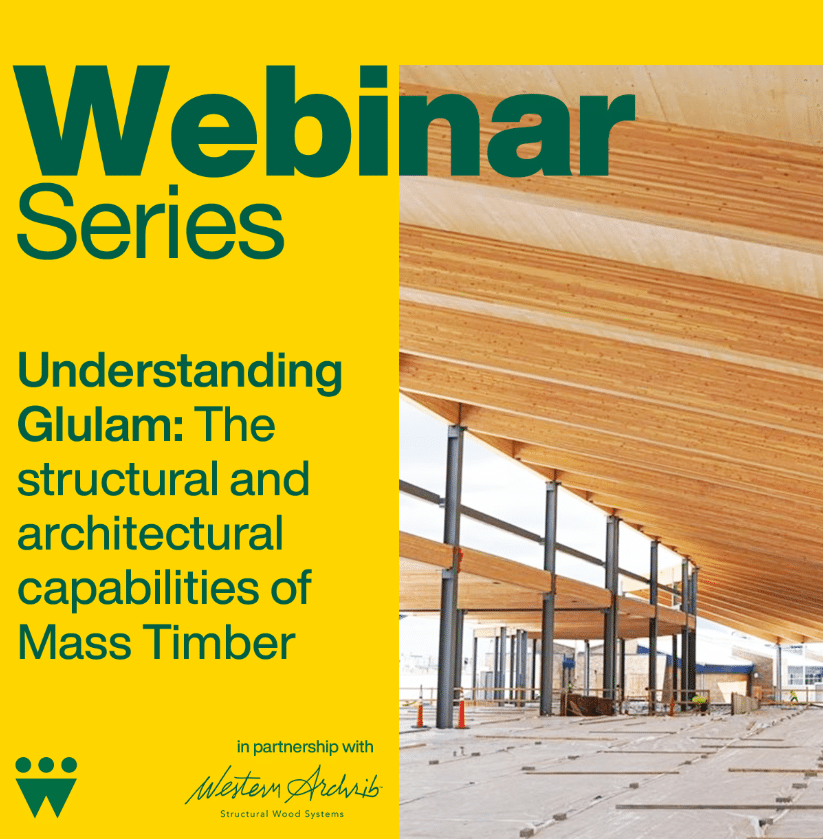
Course Overview In this course, you’ll gain insight into the design and manufacturing considerations involved in using glulam in buildings. As one of the oldest mass timber products used in Canada, glulam offers exceptional flexibility and can be incorporated into a wide range of building types—particularly where curvature and expressive geometry are key. Presenters will outline design and manufacturing strategies for creating efficient structures, showing how glulam can be used not just as columns and beams, but as the primary structure in today’s innovative buildings—whether architecturally driven or focused on value and efficiency. They will also cover the availability of glulam products across Canada and explain how to maximize the value of the timber used. Practical tips will be shared to help designers and specifiers take full advantage of glulam’s attributes in a cost-efficient way. Learning Objectives Participants will learn the design strategies employed when using curvature and geometry in buildings and gain an understanding of what is possible with expressive architecture. Participants will understand the practical constraints of glulam manufacturing, including how to approach the design and specification of glulam members. Participants will learn how different wood species and strength grades are applied in glulam design, and how to use them efficiently for optimal performance. Participants will understand how geometry, fire ratings, and member layups influence the cost-efficiency and design potential of glulam systems. Course Video Speakers Bio Andre Lema Manager of Business Development Western Archrib Andre Lema, a seasoned professional in the wood industry, brings decades of experience and expertise. Starting as a carpenter and advancing through a degree in Construction Engineering at NAIT, Andre has been instrumental in driving the success of Western Archrib. His passion for wood and dedication to fostering client relationships have made him a key figure in the industry. Alejandro Coronado, P.Eng. Technical Advisor WoodWorks BC Alejandro Coronado is a Technical Advisor with a multidisciplinary background spanning contracting, supply, and consulting engineering. With both a Diploma and a Bachelor’s Degree in Structural Engineering from BCIT, Alejandro began his career in single-family residential design and steadily advanced to contribute to landmark projects such as the Centre Block Base Isolation at Parliament Hill, the UBC Museum of Anthropology Great Hall Renewal, the Royal BC Museum PARC Campus, and a mass timber campus in Silicon Valley. Initially drawn to mass timber for its expressive architectural potential, Alejandro quickly recognized its broader value in addressing today’s social and environmental challenges. Through many years of hands-on experience, Alejandro has become a champion for sustainable construction and simple yet effective structural solutions.
Mass Timber Industrial Buildings and Warehouses
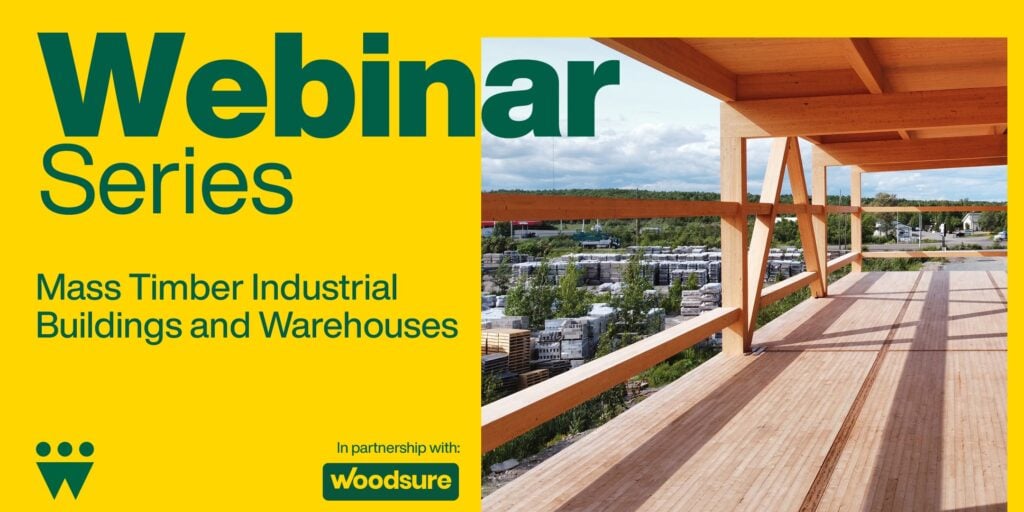
Course Overview The emerging use of mass timber in industrial buildings presents promising opportunities that are shaping the future of construction in this sector. As a sustainable and economically competitive alternative, mass timber is redefining what is possible in industrial construction, a field traditionally dominated by prefabricated steel. An analysis of two cutting-edge projects in Sudbury, Ontario, highlights key advantages, including cost competitiveness, reduced embodied carbon, and superior aesthetic appeal. The insights from these two projects present stakeholders with helpful considerations and valuable strategies for integrating mass timber into future developments. Learning Objectives Participants will learn how to create flexible, multi-tenant industrial layouts using mass timber systems that are able to accommodate evolving tenant needs. Participants will gain insight into how early-stage collaboration with mass timber suppliers streamlines design, engineering, and construction processes. Participants will gain insight into the role of mass timber in biophilic design, and how its visual warmth and natural materials contribute to wellness-centred spaces that appeal to tenants. Participants will understand how mass timber can be a cost-competitive alternative to steel, especially in volatile markets, and assess its impact on embodied carbon and sustainability goals. Course Video Speakers Bio Darian Sweeney, B.Sc., B.B.A Chief Operating Officer Bloomington Developments Born and raised in Greater Sudbury, Darian holds dual bachelor’s degrees from Laurentian University – in Biochemistry and Business Administration with a specialization in finance. In December of 2021, he joined Bloomington Developments, a real estate investor and developer in Greater Sudbury with a focus on commercial and industrial assets. While he has had the chance to apply his skills in capital budgeting, asset valuation, financial forecasting, and cost tracking in his time with Bloomington, his first major role with the company was unrelated to his educational background: overseeing the two concurrent mass timber building projects that are the subject of this seminar. Darian now manages all construction projects – whether new builds or renovations – and negotiates all leases across the company’s portfolio, in addition to his roles as primary liaison on legal, administrative, tenant relations, marketing, and business development matters. Patrick Danielson, OAA + AIBC, MRAIC Founder and Principal Danielson Architecture Office Inc. Patrick holds a degree in Biomedical Science and a graduate degree from the School of Architecture + Landscape Architecture at the University of British Columbia. Combining these disciplines, he developed a unique “genetic design” approach — an evolving architectural strategy informed by biological principles. Patrick has expanded this framework through academic research, patented innovations, private sector projects, biological studies, and his experience as a pilot.
Emerging Solutions for Mass Timber in Healthcare
Resource Description Healthcare buildings are among the most complex and resource-intensive structures we design and, increasingly, they are being asked to do more. Modern hospitals not only need to support healing for patients and staff, but also to contribute to planetary health by reducing carbon emissions and addressing social and environmental determinants of wellbeing. To meet these goals, hospital design must evolve beyond the “squeezed and standardized” approach that has long defined it. Mass timber is emerging as a credible alternative to conventional systems for larger-scale, high-rise institutional buildings. Recent advancements in material science, manufacturing, engineering, and fire safety have made it possible to consider timber as a structural solution for complex facilities — including hospitals. Recognizing that innovation in healthcare design must be evidence-based, this collaborative study explores the feasibility of using mass timber for a 200+ bed acute care hospital. The multidisciplinary team — including KPMB Architects, PHSA (Provincial Health Services Authority of BC), Fast + Epp, Smith + Andersen, Resource Planning Group, CHM Fire, Hanscomb, AMB Planning, and EllisDon — developed and evaluated a detailed test design for a mass timber inpatient tower suited to the Canadian context. The study examined structure, cost, schedule, lifecycle carbon, code compliance, infection control, and biophilic design as part of a holistic approach to sustainable healthcare infrastructure. Learning Objectives Identify the key drivers that influence structural system selection in healthcare building design. Describe the opportunities, limitations, and specific considerations associated with using mass timber in hospital environments. Summarize findings from an in-progress feasibility study for a mass timber inpatient tower in a Canadian acute care setting. Evaluate the comparative schedule, cost, and lifecycle carbon outcomes identified in the study, and discuss implications for future healthcare projects. Course Video Speakers Bio Chris McQuillan, OAA, AIBC, FRAIC LEED AP Principal KPMB Architects Chris McQuillan, a registered architect and a distinguished Fellow of the RAIC, brings three decades of experience in planning, design and construction for healthcare and biomedical research. He has completed work across Canada, southeast Asia and in the Caribbean. In the healthcare sphere, his experience includes acute, rehabilitation and mental health treatment. Recently, Chris has designed major additions to Burnaby Hospital and Michael Garron Hospital in Toronto, a major expansion of the Halifax Infirmary, a new regional hospital in Corner Brook Newfoundland, a provincial specialty hospital for addictions and mental health in St John’s and strategic planning for the phased renovation of Royal Columbian Hospital here in Vancouver. A resident of Toronto, but active across Canada and beyond, Chris joined KPMB Architects in 2024 to propel the growth of the firm’s work in the healthcare sector. Chris’ focus in the design of healthcare facilities is to create healing architecture – for people, for our cities and for the planet. Mass timber must come to be viewed as an indispensable tool to help us achieve that goal. Juan J. Cruz Martinez, M.Arch, M.Des, EDAC, LEED GA Senior Director, Major Capital Projects Provincial Health Services Authority Lisa Miller-Way, C.E.T., LET Director CHM Fire
Architectural Assemblies Simplified: Understanding Structural Grids: Acoustics and Envelopes in Wood Buildings
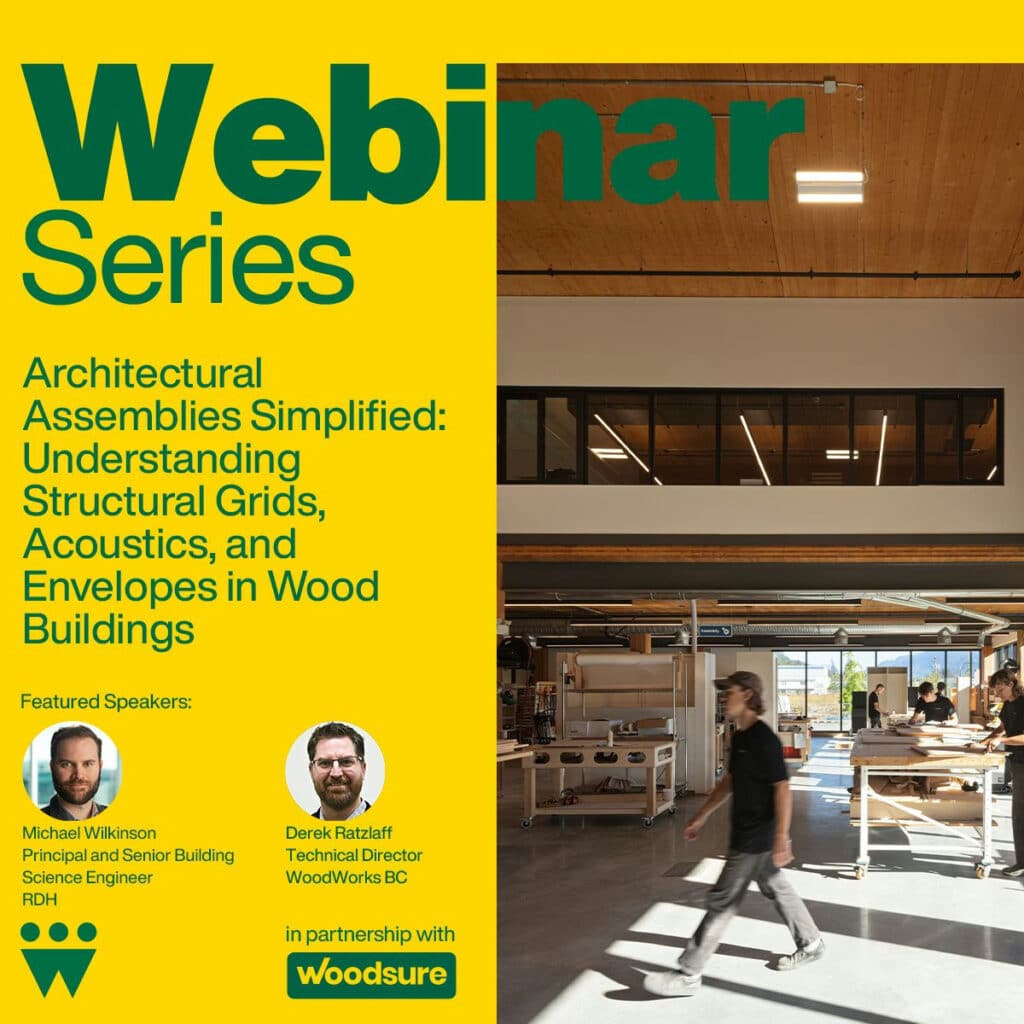
Course Overview This session will help you to formulate effective floor and wall assemblies when designing wood structures, both light wood frame and mass timber. Discussion will cover typical fire ratings and strategies, acoustic performance of different assemblies and effective strategies for weather-tight exterior envelopes. Background on typical structural assemblies for different grid sizes will help you understand how to effectively develop complete assemblies when designing timber buildings. Learning Objectives Participants will understand how to formulate effective floor and wall assemblies for wood structures, including both light wood frame and mass timber, to optimize performance and design efficiency. Participants will understand typical fire ratings and the acoustic performance of various assemblies and gain strategies to enhance the safety and comfort of wood buildings. Participants will learn how to design weather-tight, high-performance exterior envelopes for wood buildings. Participants will discover typical structural assemblies for different grid sizes and learn how to effectively develop complete assemblies when designing timber buildings. Course Video Speaker Bio Michael Wilkinson Principal and Senior Building Science Engineer RDH Michael Wilkinson is a Principal and Senior Building Science Engineer at RDH. He has provided consulting services across a range of building typologies with a focus on high performance and innovative building projects including those that are Passive House, mass timber, and volumetric modular. Michael has also been involved in numerous research projects including product development and performance monitoring and is the lead author of several guideline documents for government agencies and building enclosure product manufacturers. Additionally, Michael is a part-time instructor at the BC Institute of Technology where he teaches building science and construction technology classes. Derek Ratzlaff, P.Eng., Struct.Eng., PE Technical Director, WoodWorks BC Canadian Wood Council Derek began his career in the wood industry in high school working on single and multi-family light wood construction, after university and almost 20 years of structural consulting experience, Derek has worked in all types of wood construction and played key roles in the delivery of iconic BC wood structures, the Richmond Olympic Oval and Grandview Heights Aquatic Centre. He brings his experience in design and construction to support the industry as the Woodworks BC Technical Director.
Application of CLT in high‐end custom homes and mixed‐use residential buildings
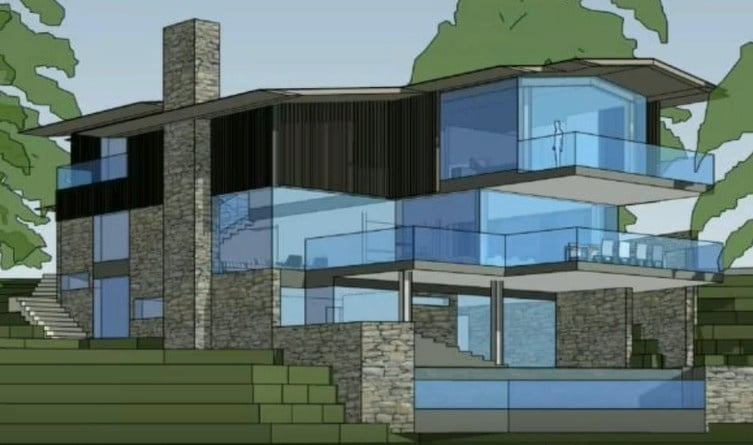
Course Overview Follow our journey of introducing CLT into high end‐custom homes and mixed‐use residential projects in the Greater Vancouver Area. We’ll explore the differences between light wood‐frame and CLT construction from the design and detailing phase right through to the end of construction. You’ll learn how the coordination, supply, and installation processes differ from conventional light wood‐frame projects and how our two examples were received by the design and construction teams. Learning Objectives Design and detailing considerations. Coordination process with design team. Supply consideration. Response of the industry. Course Video Speaker Bio Mehrdad Jahangiri, P.Eng., Dipl. Ing. (Germany) Founding Principal ASPECT Structural Engineers Mehrdad has over 25 years of international experience on notable, architecturally‐oriented projects. His experience enables him to integrate European codes and practices with the North American market, creating new ways for architects and owners to reach their project aspirations. Mehrdad understands the challenge to create carefully detailed, yet efficient structural designs and provides exceptional service to achieve them. Allison DenToom, P.Eng., P.E, LEED Green Associate ASPECT Structural Engineers Allison’s expertise is with the design of high‐end single‐family residences and multifamily residential buildings. From cozy cabins to 30,000+ sf estates, she is well‐versed in projects of all shapes, sizes, and materials. She is passionate about architecturally expressive structures and prides herself on providing the high level of attention that is required to create the finished project.