Case Study: 1361 Goldstream
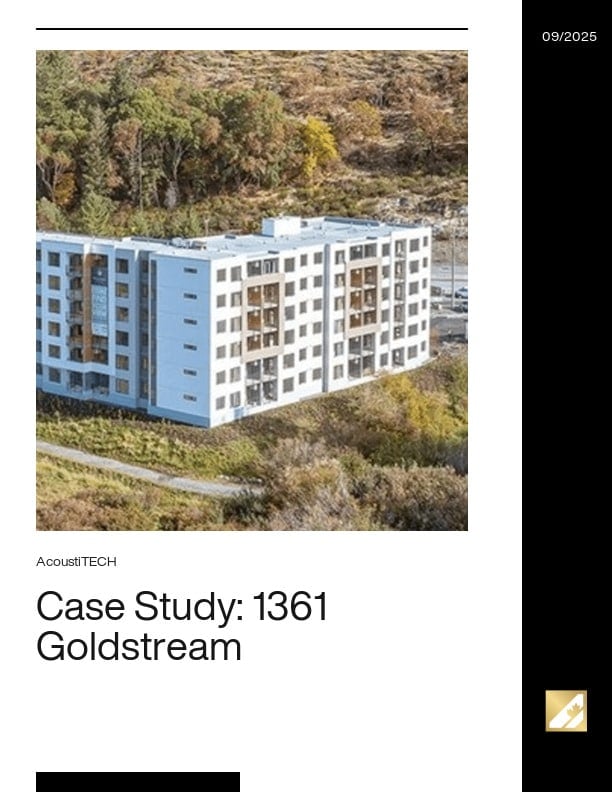
Offering beautiful views and exceptional acoustic comfort, the Lakeside project benefited from AcoustiTECH’s innovative approach to residential sound insulation.
Case Study: Travino
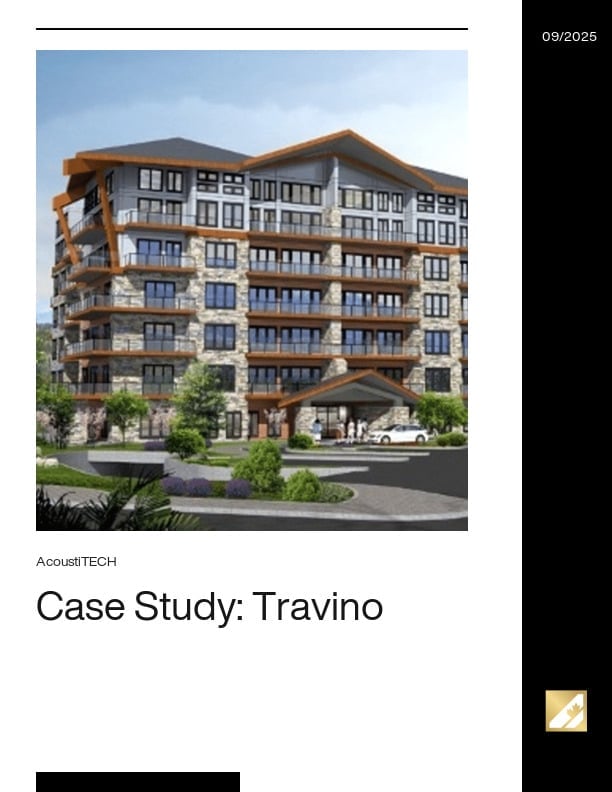
Discover how the Travino project benefited from AcoustiTECH’s Acoustiboard and Acoustivibe solutions, achieving unmatched acoustic comfort for residents while complying with seismic requirements.
Case Study: 330 Goldstream
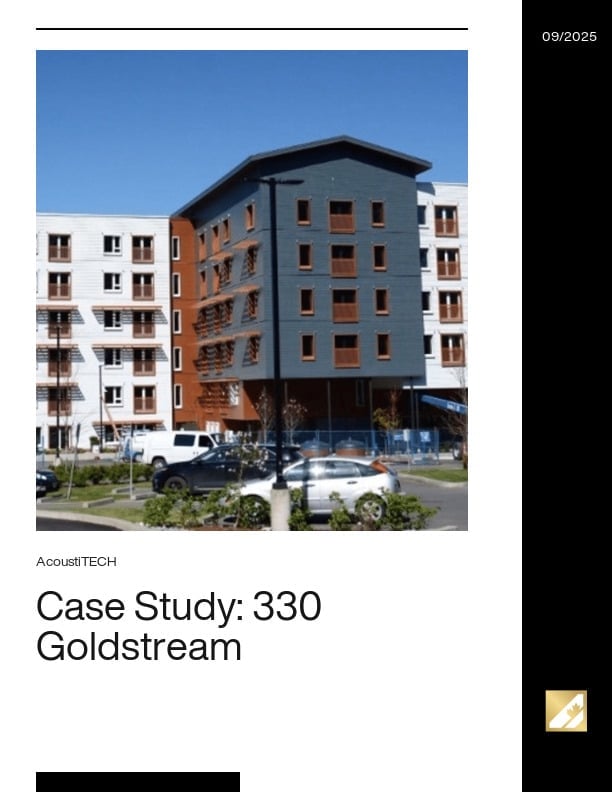
With the lightweight and resilient Fermacell 2E32 and Soprema Acoustivibe systems, this project is a model of acoustic excellence and seismic compatibility. Discover how our solutions elevated resident comfort.
Canadian Wood Council Supports Ontario’s Advanced Wood Construction Action Plan
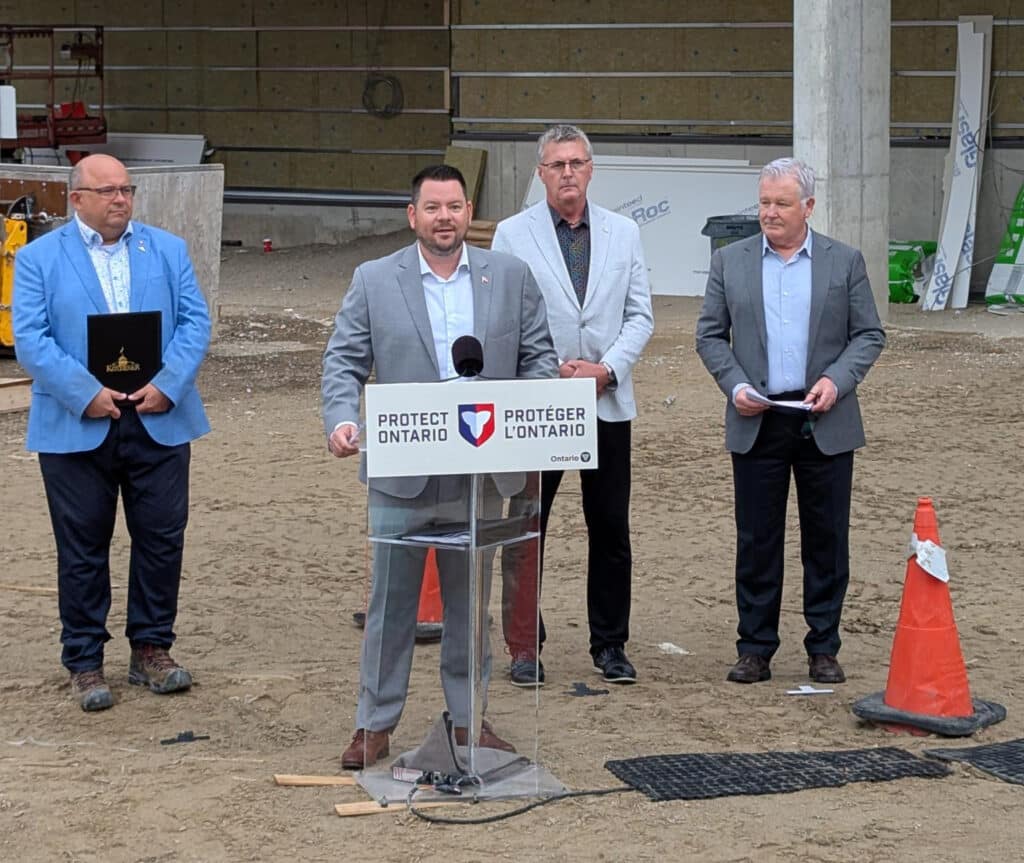
KITCHENER, ON — The Canadian Wood Council (CWC) was proud to participate in a significant announcement by the Government of Ontario yesterday, where the Honourable Mike Harris, Minister of Natural Resources, and the Honourable Kevin Holland, Associate Minister of Forestry and Forest Products, launched Ontario’s Advanced Wood Construction Action Plan. The Action Plan outlines a strong, strategic commitment to advancing the use of mass timber and prefabricated wood systems—technologies that can deliver high-performance buildings while supporting job creation and investment across Ontario’s forestry, manufacturing, and construction sectors. As the national association representing manufacturers of Canadian wood products, CWC welcomes this important step forward. Through its technical resource program, WoodWorks, the Council is committed to supporting the growth of advanced wood construction by providing guidance, education, and project support to professionals across the building sector. “This is about solving today’s challenges while laying the groundwork for long-term economic growth—with industrialized wood construction driving that transformation forward,” said Steven Street, Executive Director of WoodWorks Ontario. The Action Plan includes investments in research, education, training, and manufacturing, positioning Ontario as a leader in low-carbon, efficient, and sustainable construction. CWC applauds the province’s leadership and looks forward to continuing its collaboration with public and private partners to advance the adoption of made-in-Ontario wood solutions. To read the full plan, visit: https://www.ontario.ca/page/advanced-wood-construction-action-plan
Canadian Wood Council’s 2024 Annual Report Now Available
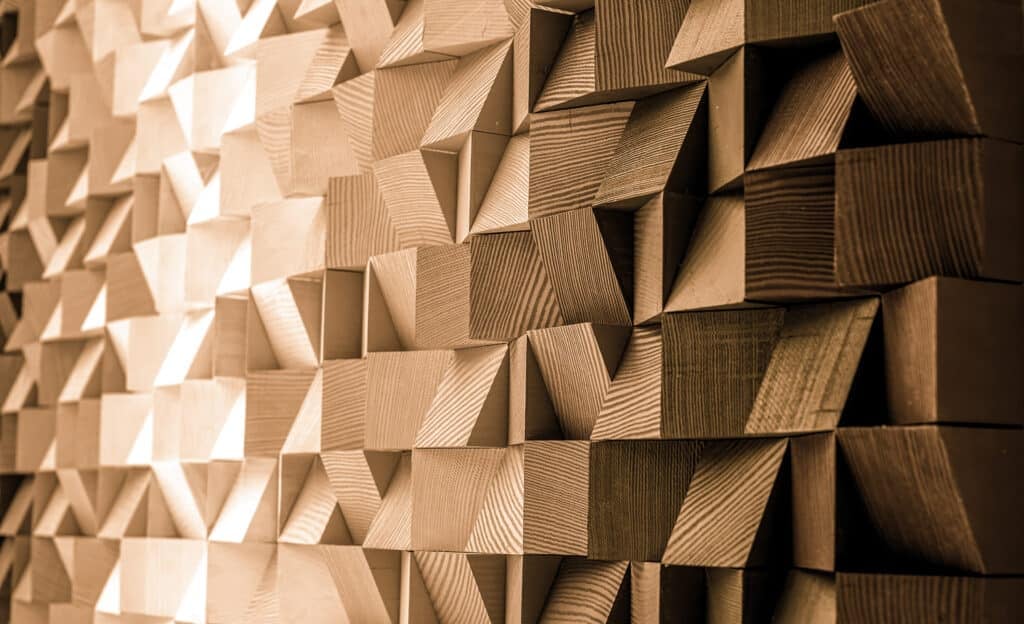
The Canadian Wood Council is pleased to share it’s 2024 Annual Report, offering a clear view of the progress, resilience, and impact achieved over the past year. In his message, Chairman Kevin Pankratz reflects on the Council’s strategic leadership during a year marked by economic pressures and shifting market conditions. Emphasis is placed on the value of collaboration, strong governance, and industry alignment as essential to maintaining momentum and ensuring long-term competitiveness. The report reinforces the importance of maintaining a united voice across our membership and fostering clarity in our purpose as a national federation. From the President & CEO’s perspective, Rick Jeffery outlines how the organization navigated 2024 with focus and adaptability—delivering trusted technical guidance, growing influence in codes and standards, and expanding national education and outreach efforts. With renewed government investment and increased awareness of low-carbon construction, the Council is well-positioned to lead the next chapter of growth for Canada’s wood sector. View the full report: English | Francais
Mass Timber Course of Construction Insurance Project Questionnaire + Checklist
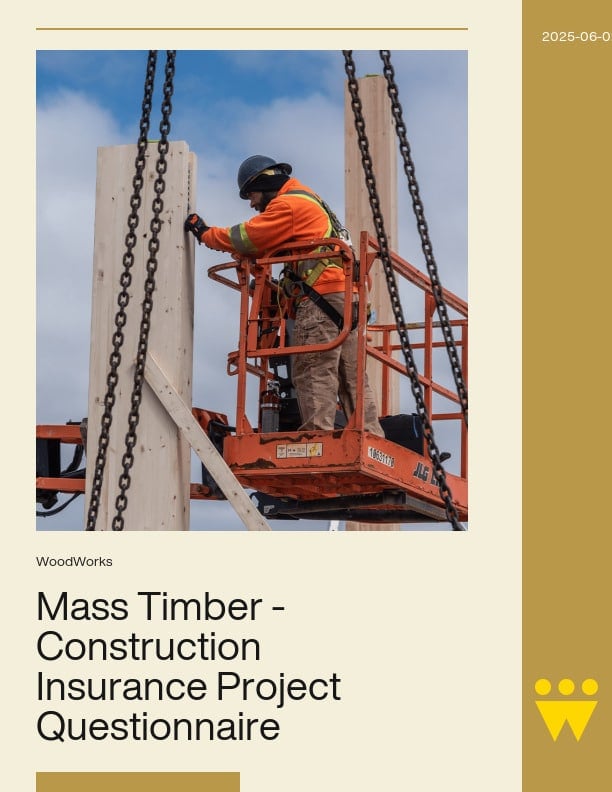
Who can use this document:Contractors, Developers, Owners and Design Teams. How to use this document:This document is an editable form that teams can fill out to aid in collecting mass timber project-specific information to share with their insurance team. When to use this document:A project team should engage a broker or underwriter as early as possible in the planning stages of a construction project, ideally during the initial design phase or when the project scope is being defined. How will this help me:The goal is to provide project-specific information about mass timber, pre-emptively addressing some of the common questions and concerns insurers may have to pave the way for a more efficient and informed process when working with your broker or underwriter. Keep in mind that this document is not intended to address all topics nor be a universally accepted form that provides all necessary information to insurers.
From the Ground Up: Sustainable Placemaking in Toronto
Wood Solutions Conference: Halifax 2025
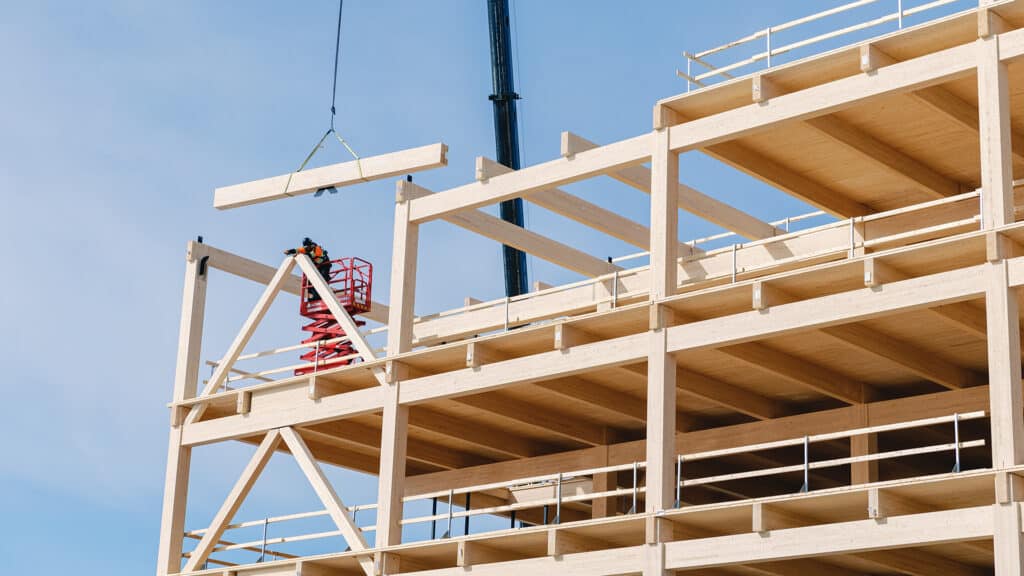
Mark your calendars! WoodWorks Atlantic and the Canadian Wood Council are pleased to present the Wood Solutions Conference in Halifax this fall — and we want you there.
Wood Design & Building Magazine, vol 24, issue 97
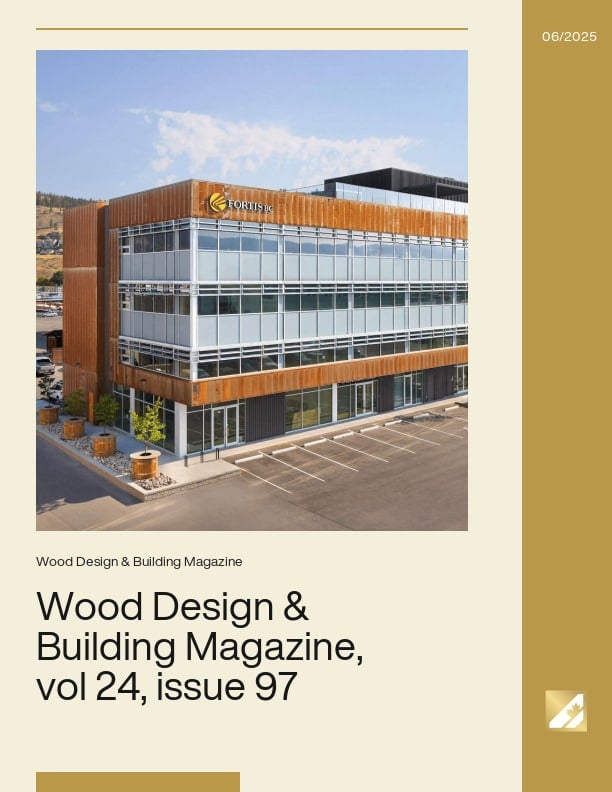
In wood construction, success is rarely improvised. It’s the earned result of early design coordination, clearly communicated expectations, and a shared commitment to getting the details right—from design concept through to completion. Whether a project’s priority is accelerated construction timelines, lasting architectural impact, future disassembly and reuse, or all these things and more, the through line is thoughtful, deliberate planning. As a structural system, timber calls for a high degree of coordination—especially as its applications continue to evolve and expand. It rewards teams who design with intent: those who understand that every exposed surface carries architectural weight, that detecting clashes early in the design phase avoids costly rework during construction, and that planning for a building’s end-of-life is just as essential as designing its first impression. Society’s growing demand for low-carbon construction brings new urgency—and opportunity—to these conversations. As we continue to advance prefabricated, high-performance, and demountable wood building systems, the need for early alignment—between architect and engineer, builder and client—is not just integral to the success of individual projects, but to the advancement of the industry as a whole. This issue of Wood Design & Building leans into that reality. As construction methods evolve, we examine how clear communication and coordination don’t just mitigate risk—they drive better outcomes for the built environment. In a construction landscape that values speed, efficiency, and low-carbon outcomes, it’s advanced planning and clear communication that turn ambition into meaningful results. We’re not just building with wood. We’re building with purpose, intention, and care. And that process starts long before the first beam or panel is lifted into place.
UNB Head Hall – Engineering Commons
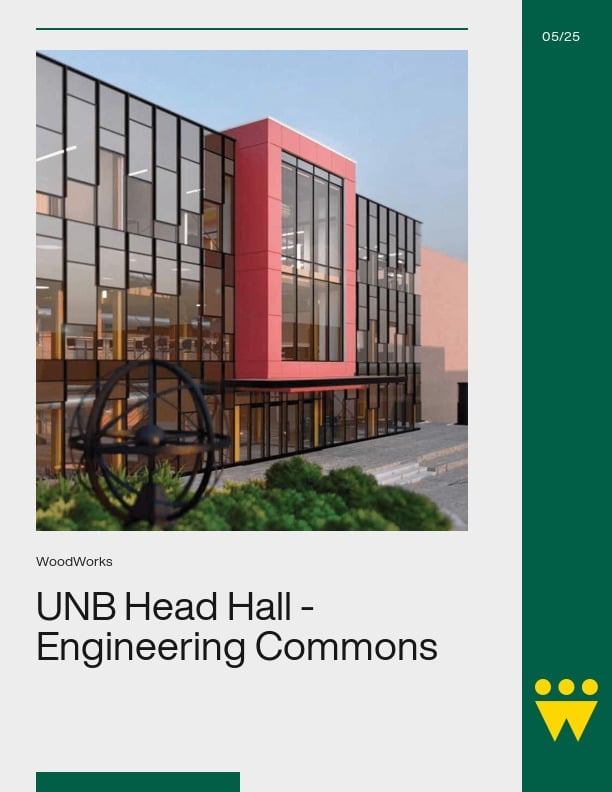
The Engineering Complex at UNB is comprised of five buildings, all constructed at different times, and physically connected as one. The first building constructed in 1901, was the original Engineering Building, designed in the Romanesque Revival style, followed closely thereafter by the former Gymnasium, converted in 1944 to the Electrical Engineering Build-ing. In 1957, an expansion to the western side of the two original engineering buildings was made. Sir Edmund Head Hall, a five-storey, 13,600 sq.m (140,000 sf) addition was con-structed to the north of the previous mentioned buildings. Gillin Hall was added to the west side of Head Hall in 1989 and the Information Technology Centre was added to the south of Gillin Hall along Windsor Street in 2000. In April of 2017, UNB requested Murdock & Boyd Architects to come up with a design solution for a new prominent Main Entrance to the Head Hall Engineering Complex, one that celebrates the engineering programs that are delivered at this institution. The space is designed to allow for and promote the collaboration and interaction of students and faculty, provide for additional graduate study areas, larger crush space from the Dineen Auditorium and a space to exhibit and visually celebrate all the disciplines of the world renowned UNB Engineering programs and its graduates.
Webinar: Understanding Glulam: The structural and architectural capabilities of mass timber
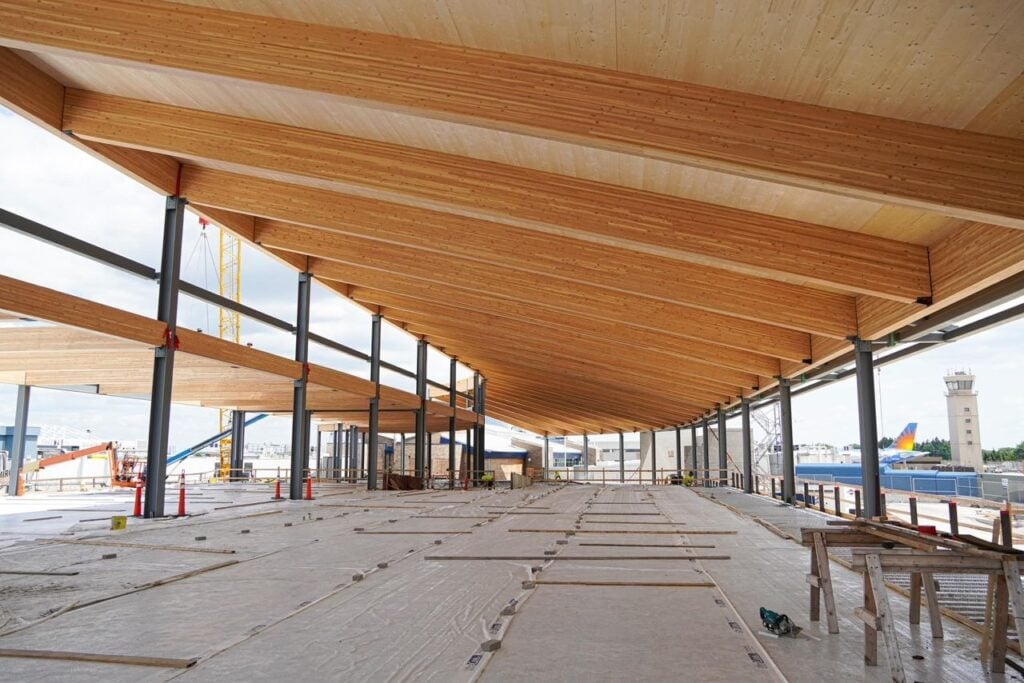
Webinar: Building Code Updates for Tall Wood Construction in Canada