When the provincial government changed the British Columbia Building Code (BCBC) in 2009 by increasing the permissible height for wood-frame construction from four storeys to six for residential buildings, it joined many other jurisdictions around the world in recognizing the role that wood construction should play in the creation of a sustainable, built environment.
Scientific evidence and independent research had shown that such buildings could meet the performance requirements of the BCBC in regard to structural integrity, fire safety, and life safety. That evidence has now also contributed to the addition of new prescriptive provisions for wood construction, as well as paved the way for future changes that will include more permissible uses and ultimately greater permissible heights.
As a result of this research, and the successful implementation of many mid-rise wood-frame residential buildings in BC, the Canadian Commission on Building and Fire Codes approved similar changes to the National Model Construction Codes. The 2015 edition of the National Building Code of Canada (NBC) now permits the construction of six-storey residential, business, and personal services buildings using traditional combustible construction materials. The changes to Part 3 of the NBC, which are being considered for adoption by British Columbia in late 2018, address the objectives of safety, fire, and structural protection of buildings.
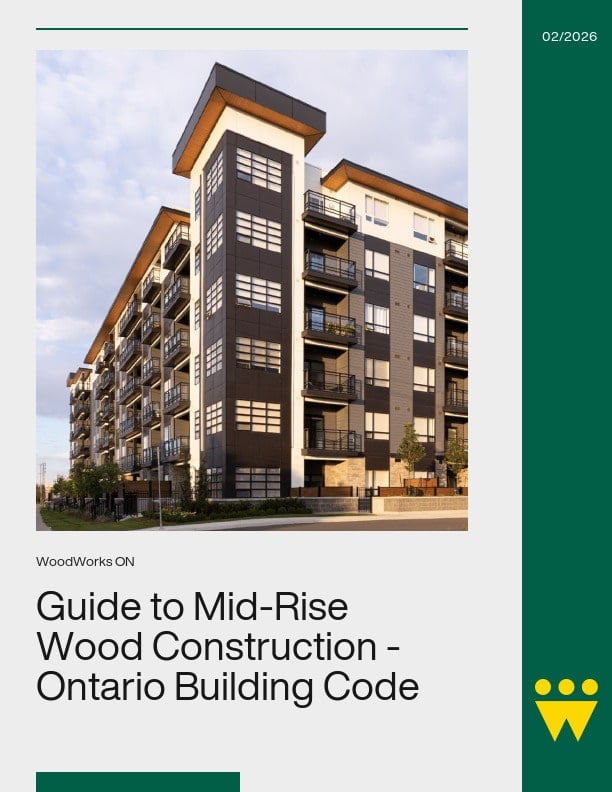
With more than 100 five- and six-storey woodframe buildings completed in BC since 2009, and many others either designed or under construction, there is clear market confidence in this new type of building. This construction supports the goals of many municipalities: to find affordable and sustainable ways to accommodate their growing populations, as well as create more complete and resilient communities.
With each completed building, architects, engineers, builders, and developers have added to their knowledge base and refined their best practices for mid-rise wood-frame construction. The five projects featured in this publication are representative of the diverse and varied application of these techniques to different geographic and market conditions, from small towns to dense urban centres and from affordable rental accommodation to high-end condominiums.