en-ca

Searching for: Mass%20Timber

Searching results for “Mass%20Timber” | Search instead for “Mass Timber”
61 results found...
Sort By Dropdown Icon

Red Deer College Student Residence – Red Deer, Alberta

Red Deer College (RDC) Student Residence is a 5,800-sq.m. (60,000-sq.ft.), five-storey wooden structure with 145 units, designed and completed to meet the 300-bed demand for the Canada Winter Games in early 2019. RDC envisioned a building that would be a welcoming, fun home base for students; the college was well aware that isolation and lack of community support for students have a negative influence on their ability to perform in the classroom and can negatively impact their mental health and well-being. The goal was to create a “residence” that felt more like a home.

Manasc Isaac Architects, led by Vedran Škopac, proposed a hybrid between a student residence and a set of seven distinct “public gathering spaces,” scattered around the perimeter of all five storeys of the building. As part of the plan, Škopac’s team increased the conventional amount of social space by a factor of 10. The residence also functions as a hotel, providing accommodation for short- and longterm visits.

Another design mandate was to incorporate sustainable features, which influenced the decision to utilize a wood structure with a high performance building envelope that maximizes thermal performance and comfort. With a construction budget of $18.5 million, funding allowed for photovoltaic panels cladding the east, south and west faces, which provides approximately 45 percent of all energy the student residence requires. Although the building was not aiming for certification, it was designed to a LEED Gold standard.

As an example of an innovative approach to dormitory housing, Red Deer College Student Residence prioritizes quality of life and sustainability, while using mass timber construction to achieve both goals. These are some of the reasons it won a 2019 Wood Design & Building Canadian Wood Council Award.

Wood in Civic Buildings

This case study examines two wood buildings, both with primary retail commercial occupancies, but which employ different mass timber products to achieve very different effects. Askew’s Uptown Supermarket in Salmon Arm, BC, features an expansive nail-laminated timber (NLT) roof that appears to float above the retail floor (Figure 1.1), while the Whistler Community Services Society Building in Whistler, BC, uses a robust, utilitarian exposed glued-laminated timber (glulam) and cross-laminated timber (CLT) structure as befits the building’s industrial setting (Figure 1.2).

In April 2019 John Horgan, Premier of British Columbia, announced a new directive to require municipalities and the BC government to strongly consider the use of wood in public buildings, both as a structural material and for interior finishes. The goal of this initiative is to increase demand for BC’s wood products and to assist the forest industry in dealing with the significant impacts of climate change. To date, these have included the mountain pine beetle infestation and an increase in the frequency and severity of forest fires, both of which have had widespread negative consequences for the industry across the province.

When announcing the initiative, Premier Horgan stated: “We will expect the result to maximize the potential of the existing timber supply, maintain jobs, incorporate First Nations’ interests, and address the economic, cultural, recreational and other uses of BC’s land base.” New engineered mass timber products, supported by new legislation, now make it possible for wood to be used in a wide range of projects, both urban and rural.

This case study showcases two recent projects that illustrate the value and versatility of wood, both in its response to technical challenges and in its contribution to economic and social sustainability in communities around the province.

In Vancouver, Fire Hall No. 5 (Figure 1.1) is an example of an innovative response to rising land costs and the shortage of affordable social housing; while in the Kootenay village of Radium Hot Springs, a wealth of local wood products, manufacturing capabilities and craft skills combine in a community hall and library that can truly be called a ‘100-mile building’ (Figure 1.2).

80 Atlantic Avenue – Toronto, Ontario

Ontario’s first mass timber commercial building in over 100 years, 80 Atlantic pioneers a new urban office typology for potentially many more timber-frame projects across the province, and the country. Comprising four storeys of mass timber above a one-storey concrete podium, the 8,825-sq.m. (95,000-sq.ft.) building completes a courtyard with 60 Atlantic to create a paired commercial development. Revisions to the Ontario Building Code in 2015 made it possible to build commercial wood buildings up to six storeys high. The developer and architect saw this as an opportunity to demonstrate leadership in the rapidly developing field of mass timber, and to attract tenants seeking a premium workplace environment associated with innovation and sustainability. The client requested that the building harmonize with the Liberty Village neighbourhood, noted for its wealth of converted factories and warehouses, which attract high-calibre, creative tenants in this section of downtown Toronto.

Wood in Commercial Buildings

In 2009, the British Columbia Building Code (BCBC) was amended to permit residential buildings of up to six storeys to be constructed in wood. Since then, through a five-year code process of consultation and research, the potential for expanding these provisions to other building occupancies has been under consideration at the national code level. Changes introduced in the 2015 edition of the National Building Code of Canada (NBC) and adopted in British Columbia in 2018, have expanded these provisions to office-type buildings, but also permit mixed-type occupancies on the first two storeys. As a result, wood building types now include office, residential, mercantile, assembly, low hazard or storage/ garage uses.

This case study examines two wood buildings, both with primary retail commercial occupancies, but which employ different mass timber products to achieve very different effects. Askew’s Uptown Supermarket in Salmon Arm, BC, features an expansive nail-laminated timber (NLT) roof that appears to float above the retail floor (Figure 1.1), while the Whistler Community Services Society Building in Whistler, BC, uses a robust, utilitarian exposed glued-laminated timber (glulam) and cross-laminated timber (CLT) structure as befits the building’s industrial setting (Figure 1.2).

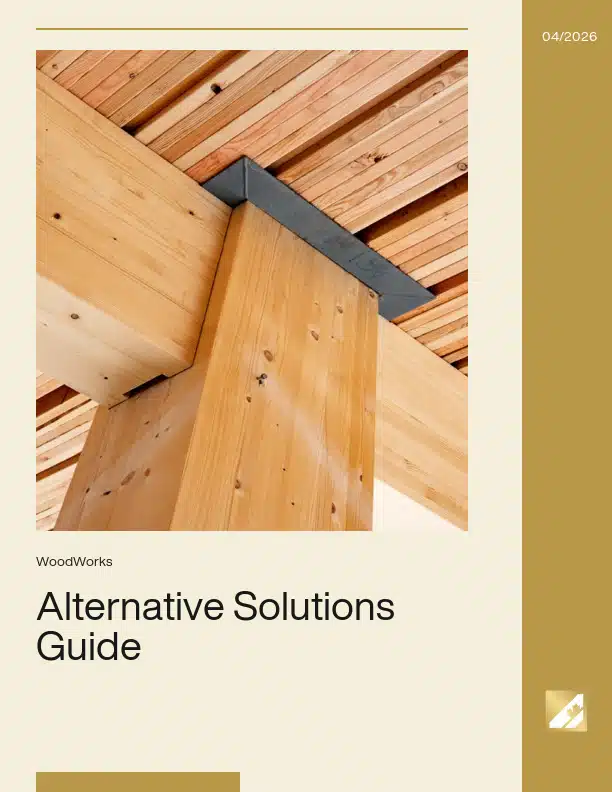
Alternative Solutions Guide

While alternative solutions have been an important feature of the National Building Code of Canada since 2005, there remains a lack of understanding among building professionals on how to approach their use. As the construction industry evolves, with increasing innovation in design and construction capabilities, new ways of building that may not be well addressed by building codes will emerge. At the same time, tools for performance testing and simulation are becoming more widespread. In light of the diverse and evolving building industry, alternative solutions that enable new ways of building are likely to become more commonplace. A critical area where alternative solutions may be employed is in the use of mass timber construction. The introduction of mass timber construction techniques, enabled by a range of engineered wood products, associated connection technologies, and fabrication methods, has resulted in a wide range of possible building solutions that may not have been considered by building codes.

Large-Scale Fire Tests of A Mass Timber Building Structure

The Mass Timber Demonstration Fire Test Program (MTDFTP) included two series of experiments: the pilot scale demonstration tests in summer 2021 in Richmond, BC [1] and the large scale fire tests in summer 2022 in Ottawa, ON. The series of large scale fire tests on a mass timber structure were conducted to study fire safety during construction, fire dynamics and performance in an open plan office space and residential suites, and influence of exposed mass timber on fire severity and duration.

As part of its research to inform the advancement of safe and innovative solutions across Canada’s construction industry, the National Research Council of Canada (NRC) conducted the technical work and science-based large scale fire tests to support the MTDFTP. NRC was responsible for instrumenting the test structure, setting up fire scenarios and fuel loads, conducting the large scale fire tests, analyzing test data and documenting the results.

This report documents the fire scenarios, fuel loads, experimental setups, instrumentation, measurements and procedure used in the large scale fire tests. The experimental data, results of data analysis, key findings and conclusions are provided in the report.


Canadian Nuclear Laboratories

Canadian Nuclear Laboratories: Case Study and Environmental Impact Analysis

This report showcases how Canadian Nuclear Laboratories (CNL) delivered three landmark mass timber buildings at its Chalk River campus while meeting the federal government’s net-zero commitments. It highlights how an Integrated Project Delivery (IPD) approach enabled collaboration across architects, engineers, and builders to achieve cost-neutral, low-carbon construction.

Readers will learn how the project team reduced embodied and operational carbon well beyond federal targets, demonstrated the fire safety and durability of mass timber, and created high-performance workplaces that enhance occupant well-being. With lessons on procurement, codes, and whole-building life cycle assessment, the case study offers a practical roadmap for governments, designers, and developers aiming to accelerate Canada’s transition to sustainable, net-zero infrastructure.

Promoting Health and Wellness with Wood Architecture

The year 2020 will forever be synonymous with COVID-19. After experiencing the pandemic and its ripple effects, few would question the importance of health and wellness. What people may not consider is the impact that our surrounding environments have on our health. Research shows that incorporating wood and other natural elements into buildings can have a positive effect on occupants’ overall health and well-being. The term for this effect is called biophilia, which refers to humanity’s innate need to connect with nature.

Many industries are embracing biophilic design and its benefits. Employers are eager to create inviting spaces for their teams, hospital designs have shifted from cold and industrial-like to bright environments with wayfinding elements, and homeowners are expanding their living spaces with decks, fences, and pergolas so they can gather with friends and family outdoors. The wellness impacts of wood extend beyond the biophilic advantages of finished spaces. Mass timber buildings also benefit workers throughout the construction process by reducing construction time, and prefabricated elements contribute to cleaner, safer building sites.

The team at the Canadian Wood Council/Wood WORKS! is committed to providing design and construction professionals with the tools and information needed to build with wood. We’re going taller, we’re getting bigger, and, from coast to coast, we’re not stopping. Building with wood is the right choice, for the environment and for everyone’s well-being.

Advancing Mass Timber Systems in Vancouver Schools

This case study examines the design and construction of two elementary schools in Vancouver, British Columbia in which mass timber was chosen as the primary construction system for the first time. W k ’wan’ s t syaqw m Elementary School (formerly Sir Matthew Begbie Elementary School) and Bayview Elementary School, located on the east and west sides of the city respectfully, were part of a pilot project by the Vancouver School Board (VSB) aimed to assess the potential for expanding the use of mass timber in future school projects (Figures 1.1 and 1.2). To this end, the documentation of: the opportunities presented, the challenges faced and the lessons learned, is a vital step in the evaluation process.

Low-Rise Commercial Construction in Wood

Across Canada, the low-rise non-residential sector—think offices, retail stores, warehouses, and restaurants—presents a major growth opportunity for structural wood systems, including light wood-frame, heavy timber, mass timber, and hybrid construction.

Together, retail, office, and light industrial warehouse buildings account for nearly 75% of new floor space in this market each year. Yet despite their scale, these segments continue to show low uptake of structural wood.

As retailers adapt to the shift toward online shopping and businesses compete to attract talent, the design and performance of their buildings matter more than ever. Wood offers a sustainable, visually appealing solution that enhances employee well-being and elevates commercial spaces.

This new technical publication explores the market potential, challenges, and the role wood can play in redefining this sector.

Ontario Tall Wood Reference Guide

The target audience for this technical resource includes building officials, fire service, architects, engineers, builders, code consultants and developers and other parties involved in the design and approvals of tall wood noted in Table 1 below. This technical resource is expected to help illustrate to applicants how tall wood buildings could be designed as alternative solutions in a way that achieves the level of performance required by Ontario’s Building Code.

A tall wood building is defined as a building over six-storeys that uses wood for its structural system and is built using mass timber construction. Mass timber refers to large dimension solid lumber, gluedlaminated lumber, cross-laminated lumber or other large dimension wood products referenced in this technical resource as opposed to conventional stick-frame construction typically used in low-rise and midrise buildings in Ontario. Mass timber offers the advantages of improved dimensional stability and better fire performance during construction and occupancy. Tall wood buildings are not new to Ontario – many such buildings are still in use in Ontario after nearly 100 years in service, however over time, changes to building codes and the introduction of steel and concrete for high-rise construction resulted in a decline in construction of tall wood buildings over the decades. But with new wood products and modern means of fire engineering, modern tall wood buildings are now being built in Canada. The new products and the way in which they are pre-fabricated and constructed offer tremendous opportunities to improve quality and speed of construction for buildings in Ontario.

Mass timber products have environmental advantages as well. Trees get their energy from the sun and absorb carbon from the atmosphere. As they grow, trees store carbon and by sustainably harvesting trees, the carbon is sequestered, which helps to reduce greenhouse gas. The carbon stored in wood is not released into the atmosphere when it is harvested. As new trees are planted to replace the harvested trees, the new trees will continue the cycle of carbon storage. Ontario and Canada have significant forest resources which, combined with sustainable forestry management practices, make tall wood buildings an attractive alternate to other materials which do not have these attributes. This technical resource has two main sections: Fire Safety and Structural Design.

These two major topics are normally of most concern during design and review of tall wood buildings and are at times interrelated. Thus, it is expected that design teams and building departments will work together at the early stages of design since structural decisions can affect fire performance and vice versa. The sections go into detail on aspects of compliance, methods of analysis, methods of design and the expected performance requirements for fire and structure. Other topics such as thermal performance, acoustic performance and constructability are covered in other references as noted throughout this technical resource.

Measurement of Airborne Sound Insulation of Wall & Floor Assemblies

The following report contains the Transmission Loss (TL) results measured in accordance with ASTM E90-09 of 8 cross-laminated timber (CLT) wall assemblies and the TL results and normalized impact sound pressure level results measured in accordance with ASTM E492-09 of 26 CLT floor assemblies and 3 glulam floor assemblies.

Reference tables containing the specimen number, sketch, short description, rating(s) as well as the page number of all the assemblies tested are found starting on page 16.

The wall assemblies were built and tested between November and December 2014. The specimen descriptions and the reported mass per area of the 8 wall assemblies that were previously published under report numbers A1-006070.1 to A1-006070.8 have been revised in this report.

The floor assemblies were built and tested between December 2014 and June 2015. The specimen description and the reported mass per area of floor specimen A1-006070-11F that were previously published under report number A1-006070.9 have been revised in this report.

The following discussion section contains analyses and graphical comparisons of the tested wall and floor assemblies used to highlight key findings:

In-situ TL vs. Laboratory TL Results

2. TL Results of Current Bare Assemblies vs. Previous Assemblies

3. TL Results of Walls vs. Floors

4. TL Results of CLT Walls

5. TL Results of CLT Floors

6. TL Improvement of Toppings and Resilient Membranes

7. TL Difference of Poured vs. Precast Concrete Topping

8. TL Interpolation for Floor Toppings

9. TL Improvement of Floor Coverings

10. TL Improvement of Hung Ceilings

11. TL Results of Glulam Floors

The last three pages of this report contain additional test setup information for each facility. APPENDIX: ASTM E90-09 – Airborne Sound Transmission – Wall Facility APPENDIX: ASTM E90-09 – Airborne Sound Transmission – Floor Facility APPENDIX: ASTM E492-09 – Light Impact Sound Transmission – Floor Facility

Historical Tall-Wood Toronto
Courtesy of the Mass Timber Institute There is much to learn from the resilient and adaptable warehouse buildings that line the streets of Canada’s historic manufacturing districts. ‘Historical Tall-Wood Toronto’...
Durability
...section includes guidance on specific applications of structures that have constant exposure to the elements. Mass timber exteriors Modern Mass Timber Construction includes building systems otherwise known as post-and-beam, or...
Glenora West Block 300
As interest in mass timber construction continues to grow in a more carbon-friendly world, examples of innovative projects using these sustainable materials are popping up all over Canada. One prime...
Wood’s Durable Heritage
...wood homes in the US date to the early 1600s. Nearly 80 homes remain from this era in the New England states. The Fairbanks House (c. 1636) in Dedham, Massachusetts,...
Supplemental Treatment
...and very low toxicity. Copper moves more slowly in the wood than borate, providing protection to the zone around the rod if the borate is removed over time through mass...
Framing Connectors
...and carry higher loads, are also suitable for mass timber and post and beam construction. Manufacturers of the framing connectors will specify the type and number of fasteners, along with...
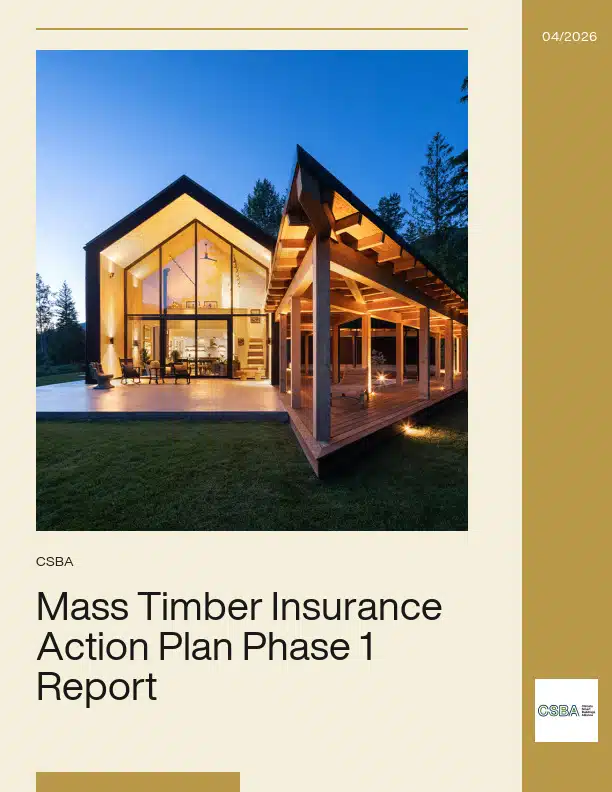
Mass Timber
Mass Timber
...lumber (LSL), laminated veneer lumber (LVL) and other large-dimensioned structural composite lumber (SCL) products are part of a bigger classification known as ‘mass timber’. Although mass timber is an emerging...
Glulam
Glulam
...warehousing. Common glulam shapes For more information on individual glulam manufacturers in Canada, refer to the following links: Western Archrib Mercer Mass Timber Nordic Structures Goodfellow Kalesnikoff Mass timber Element5...
Plank Decking
...Code of Canada. Plank decking is usually used in mass timber or post and beam structures and is laid with the flat or wide face over supports to provide a...
Tall Wood Buildings
With advanced construction technologies and modern mass timber products such as glued-laminated timber, cross-laminated timber and structural composite lumber, building tall with wood is not only achievable but already underway...
Mid-Rise Buildings – Research
...(2014) Testing Other Reports Final Report – Full-scale Mass Timber Shaft Demonstration Fire (including the National Research Council test report as an Appendix), by FPInnovations (April 2015) Full Scale Exterior...
Climate Change
...products], product substitution, and producing biomass for bioenergy.” The Canadian forest industry is pledging to remove 30 megatons of carbon dioxide (CO2) a year by 2030, equivalent to 13 percent...

Get Access to Our Resources

Stay in the loop and don’t miss a thing!

1
2
3

Get Access to Our Resources

Stay in the loop and don’t miss a thing!

What’s Your Occupation?

Help us personalize the content for you.

What Interests You the Most?

Help us personalize the content for you.

Filters

Expertise Icon
Field of Expertise
Province Icon
Province
Member Type Icon
WoodWork National Partners

Filters

Post Type Icon
Post Type
Persona Icon
Persona
Language Icon
Language
Tags Icon
Tags
Mass Timber Plus Icon Environment Plus Icon Safety Plus Icon Durability Plus Icon Design Systems Plus Icon Budget Plus Icon Construction Management Plus Icon Fire Resistance Plus Icon Tall Buildings Plus Icon Short Buildings Plus Icon
Date Icon
Date
Line Separator