en-ca

Searching for: Wood

Searching results for “Wood”
256 results found...
Sort By Dropdown Icon

Algonquin College Perth Campus

Algonquin College is a major provider of post-secondary education in Eastern Ontario, with campuses in Ottawa, Perth and Pembroke. The Perth Campus is located in the Town of Perth, approximately 65 km west of Ottawa. In keeping with Perth’s historic involvement with the Rideau Canal World Heritage Site, the Perth Campus’ area of excellence is heritage preservation training, which draws students from the local community and from around the world.

In 2009, planning began for a new building capable of accommodating more students. During construction of the new building, comprised of the Academic Hall and the Construction Wing (Figure 1), classes continued in an old building that was subsequently demolished. A new outdoor construction pad is located over the footprint of the old building. The new building was ready for classes in September 2011, one year after the start of construction.

The town of Perth has a rich history, reflected in the nineteenth-century mills and factory buildings along the Tay River, Victorian storefronts and grand, century-old, timber-frame buildings. The Algonquin College Perth Campus building sought to blend with this fabric through the use of traditional forms, locally sourced materials, and woodframe construction.

Community Resource Centre

The Greenfield Community Resource Centre and Elementary School is located in a small, isolated forestry community in Nova Scotia where 16.1 % of employment is provided by the forestry sector. This forestry based community is proud of its local heritage. Indeed, in 1987 it was dubbed the “Forestry Capital of Canada” and to this day has a “Build First with Wood” policy in place for new construction. The Resource Centre, valued at $1.3 million Canadian dollars, was built by a non-profit community group to replace an insufficient and outdated building that was over 60 years old.

Richmond Olympic Oval

The Richmond Olympic Oval is the largest structure to be built for the Vancouver 2010 Olympic Winter Games. Designed to accommodate the long track speed-skating events before an audience of more than 8000 spectators, the building features a 6 acre (2.5 hectare) free spanning roof that is a precedent setting example of British Columbia’s and Canada’s advanced wood engineering and prefabrication capabilities. The building is located a short distance from Vancouver’s International Airport in the City of Richmond, where after the Games, it will be transformed into a multi-sports training and recreation facility at the centre of a new residential and commercial neighbourhood. Construction of the project began in 2005, and the building was opened on time and under budget in December 2008.

Wood Design Awards 2014

Engineering Guide for Wood Frame Construction 2014

The Engineering Guide for Wood Frame Construction has been produced by CWC to provide guidance to engineers, building designers, building officials, builders, and students of these disciplines on the structural design of wood elements and connections for wood frame buildings that fall within the scope of Part 9 of the NBC. The Guide was revised, in this 2014 Edition, in order to conform to changes in the 2015 edition of the NBC.

Fire Safety Challenges of Tall Wood Buildings

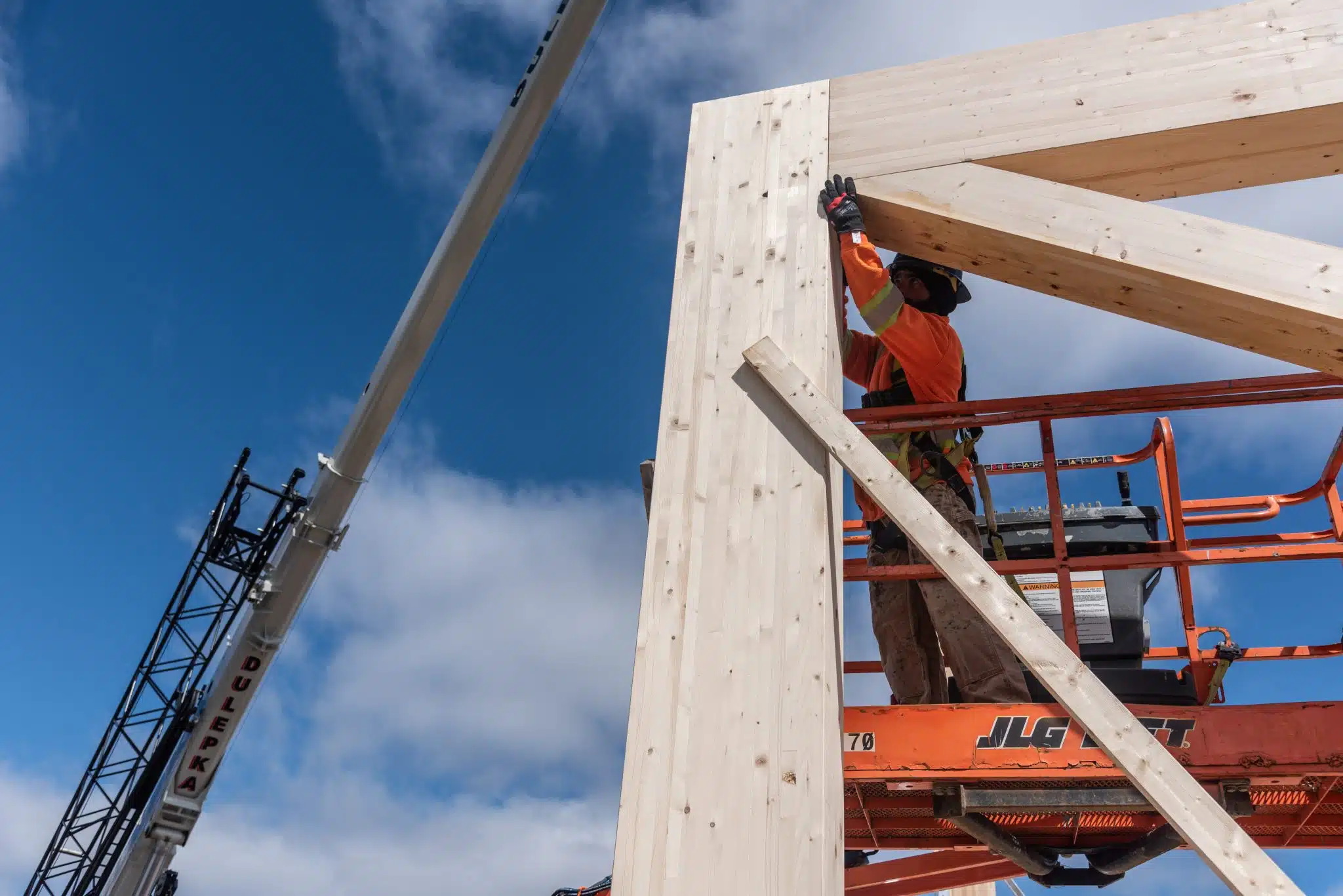
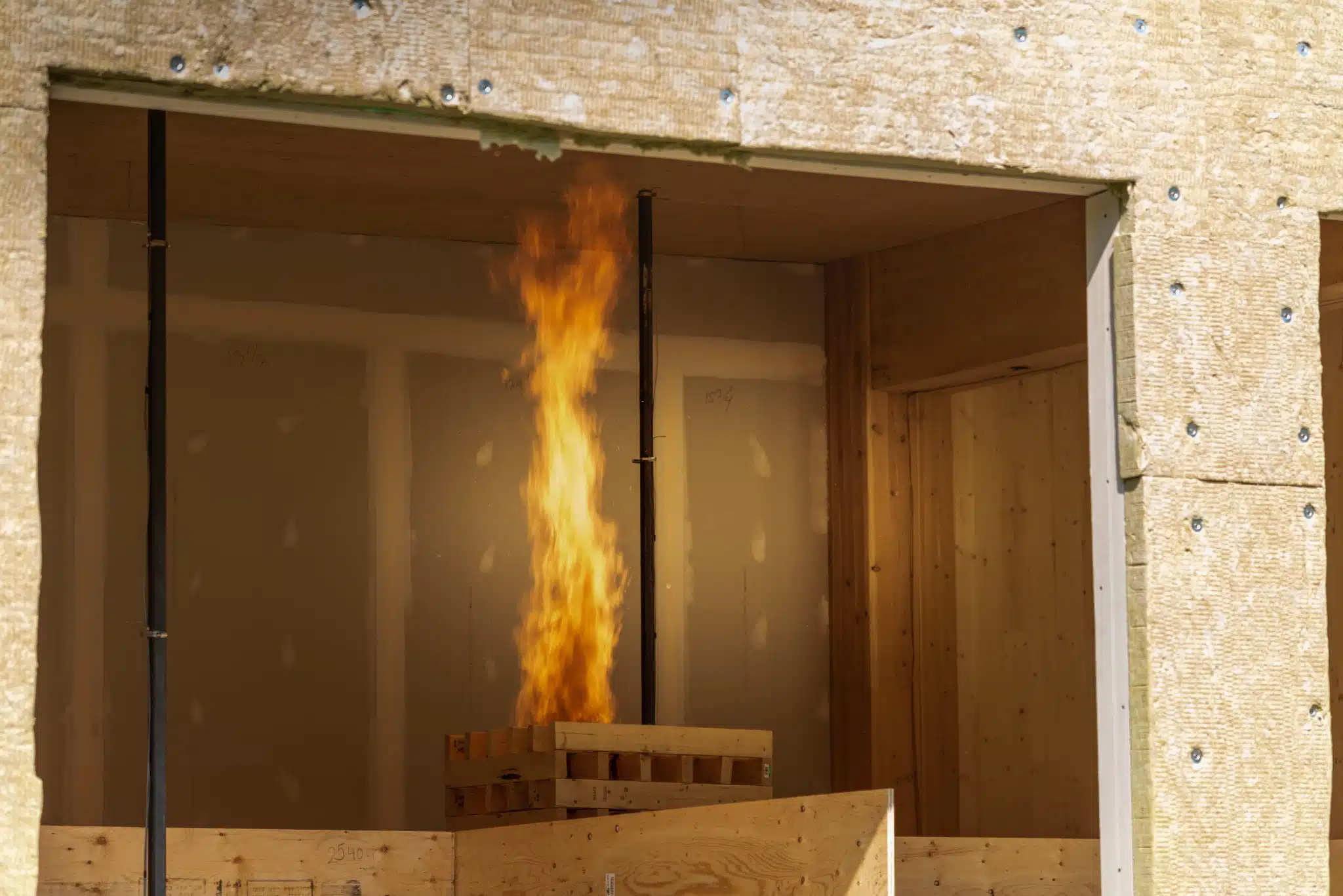
Acknowledging the growing importance of designing sustainable buildings and addressing overpopulation concerns, the development of engineered wood products has introduced the possibility of constructing high-rise timber structures that can improve both these conditions. However, as a combustible material, one of the biggest barriers to construction of tall timber buildings is the potential fire risk resulting from the combustible structure. In November 2012, the Fire Protection Research Foundation commissioned the Fire Safety Challenges of Tall Wood Buildings study to address this concern. Phase I of this two-phase study seeks to collect the available knowledge of fire safety in timber structures and identify gaps in knowledge that would further the understanding of fire performance of tall timber buildings. Results of the study, including a summary of timber construction and fire dynamics, is presented herein.

Wood Design Awards 2013

Wood Design Awards 2012

The Case for Tall Wood Buildings

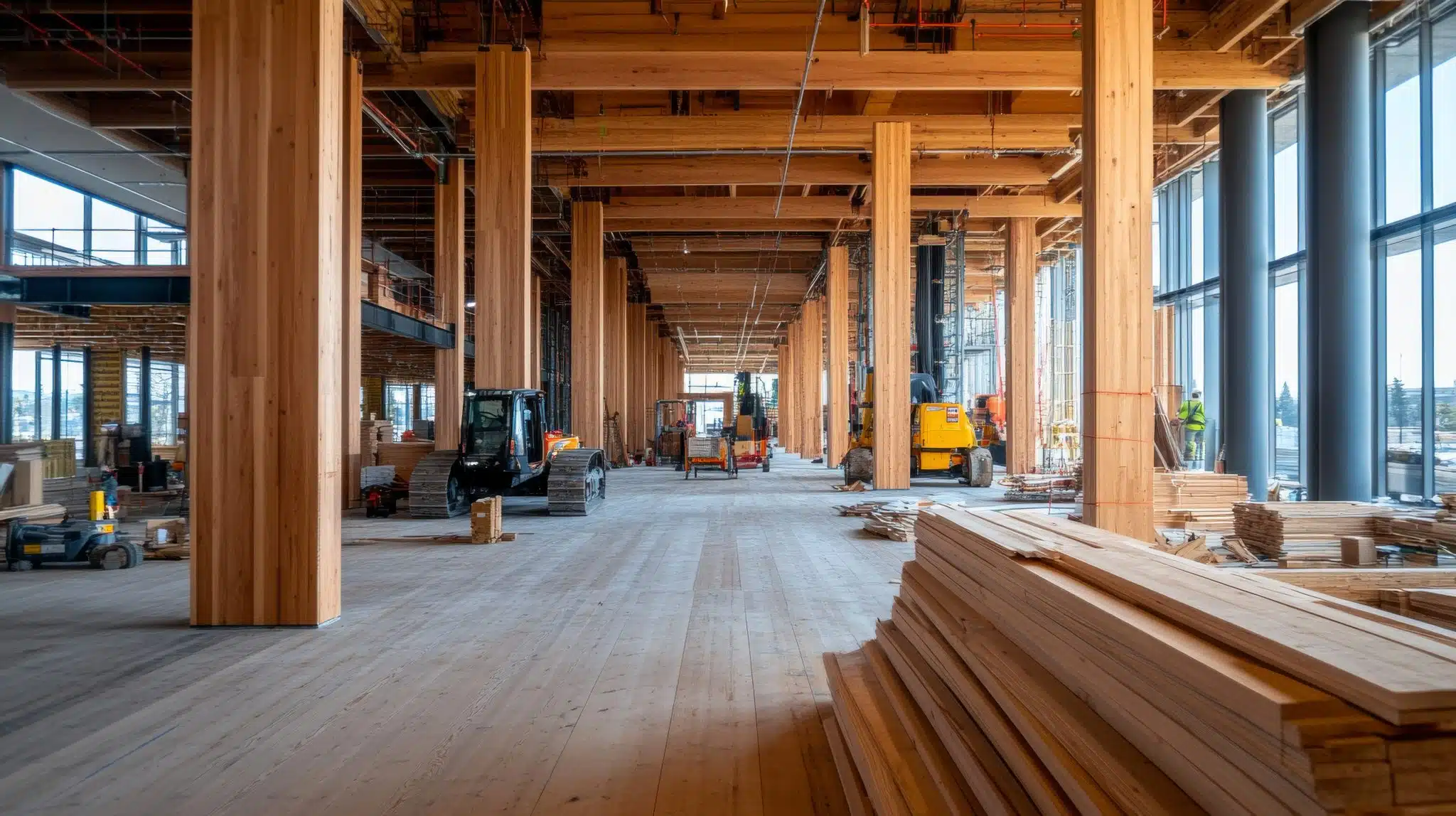
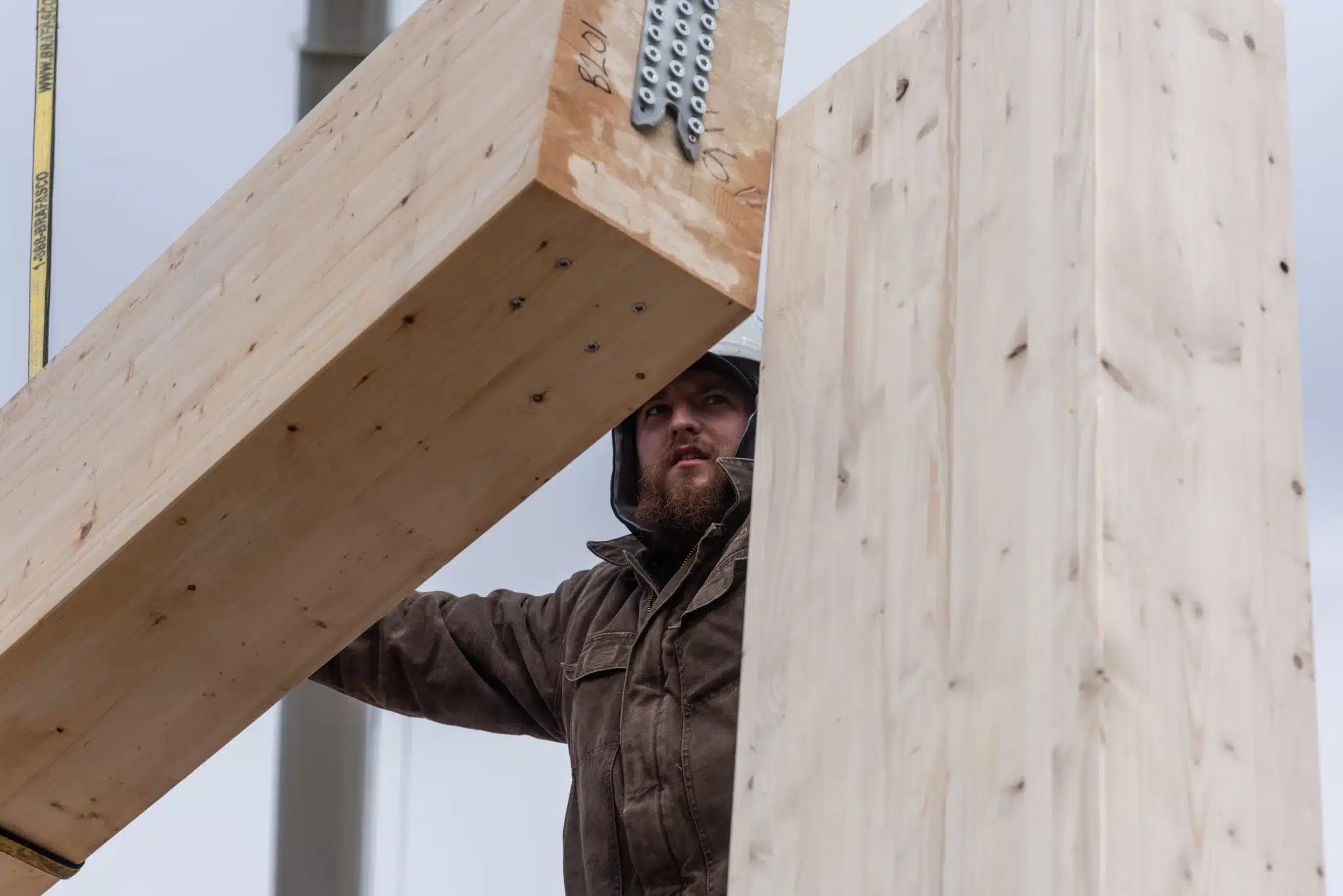
Wood is the most significant building material we use today that is grown by the sun. When harvested responsibly, wood is arguably one of the best tools architects and engineers have for reducing greenhouse gas emissions and storing carbon in our buildings. The Case for Tall Wood Buildings expands the discussion of where we will see wood and specifically Mass Timber in the future of the world’s skylines. As we pursue the solar and green energy solutions that Thomas Edison spoke of over 80 years ago, we must consider that we are surrounded by a building material that is manufactured by nature, a material that is renewable, durable and strong.

This report introduces a major opportunity for systemic change in the building industry. For the last century there has been no reason to challenge steel and concrete as the essential structural materials of large buildings. Climate change now demands that we do. The work of thousands of scientists with the United Nations Intergovernmental Panel on Climate Change (IPCC) has defined one of the most significant challenges of our time. How we address climate change in buildings is a cornerstone in how the world will tackle the need to reduce emissions of green house gases and indeed find ways to store those same gases that are significantly impacting the health of our planet. Just as the automobile industry, energy sector and most other industries will see innovations that challenge the conventions of the way we will live in this century, the building industry must seek innovation in the fundamental materials that we choose to build with. In a rapidly urbanizing world with an enormous demand to house and shelter billions of people in the upcoming decades we must find solutions for our urban environments that have a lighter climate impact than today’s incumbent major structural materials. This report is a major step in that direction. Indeed it introduces the first significant challenge to steel and concrete in tall buildings since their adoption more than a century ago.

Wood Design Awards 2011

Wood Design Awards 2010

Wood Reference Handbook

The Wood Reference Handbook is much more than a guide to the architectural use of wood in building construction – it is a beautifully assembled homage to fine wood craftsmanship throughout the world.

Combustible construction
...Code of Canada (NBC) categorizes wood buildings as ‘combustible construction’. Despite being termed combustible, common construction techniques can give wood frame construction fire-resistance ratings up to two hours. When designed...
Encapsulated mass timber construction
...for EMTC is determined through the ULC S146 test method. In order for structural wood elements to be considered ‘mass timber’, they must meet minimum size requirements, which are different...
Flame Spread
...further information, refer to the following resources: Wood Design Manual (Canadian Wood Council) Fire Safety Design in Buildings (Canadian Wood Council) National Building Code of Canada National Fire Code of...
Construction Sites
...Security: A Technical Note on Fire Safety and Security on Construction Sites in British Columbia” – by Wood Works! British Columbia, 2013 City of Surrey, BC – Construction Fire Safety...
Structural Design
...refer to the following resources: Introduction to Wood Design (Canadian Wood Council) Wood Design Manual (Canadian Wood Council) CSA O86 Engineering design in wood National Building Code of Canada www.woodworks-software.com...
Lumber properties
...known as in-grade testing. In the early 1980s, the Canadian lumber industry conducted a major research program through the Canadian Wood Council Lumber Properties Program for bending, tension and compression...
Permanent Wood Foundations
...Durable, Comfortable, Adaptable, Energy efficient, Economical (Wood Preservation Canada and Canadian Wood Council) Wood Design Manual (Canadian Wood Council) Wood Preservation Canada CSA S406 Specification of permanent wood foundations for...
Durability by design
...to protect the wood or, if the wood will be exposed, designing to not accumulate moisture.  It includes ensuring the building envelope is appropriately designed to shed bulk water, mitigating...
Durability by nature
...are chemicals that are deposited in the heartwood of certain tree species as they convert sapwood to heartwood. In addition to providing the wood with decay resistance, extractives also often...
Durability by treatment
...of Wood Preservative Products Lonza Wood Protection Timber Specialties  Viance LLC  Genics Inc.  Kop-Coat   Rio Tinto Minerals Nisus   Creosote council   KMG Chemicals   Wood Preservation Canada  ...
Finishing Exterior Wood
...with decay (rot) caused by decay fungi, which can penetrate deeply into wood and significantly reduce wood strength in a relatively short period.  In contrast, weathering of wood is caused...
Non-Pressure Treated Wood
...very rapidly in wet wood. Copper moves more slowly because it reacts with the wood. For dryer wood, glycols can be added to borate formulations to improve penetration. Over-the-counter wood...
The provision of fire safety in a building is a complex matter; far more complex than the relative combustibility of the main structural materials used in a building. To...
In addition to combustible, heavy timber and noncombustible construction, a new construction type is presently being considered for inclusion into the National Building Code...
Flame spread is primarily a surface burning characteristic of materials, and a flame-spread rating is a way to compare how rapid flame spreads on the surface of one material...
The vulnerability of any building in a fire situation is higher during the construction phase when compared to the susceptibility of the building after it has been completed...
A structure must be designed to resist all the loads expected to act on the structure during its service life. Under the effects of the expected applied loads, the structure...
For many years, the design values of Canadian dimension lumber were determined by testing small clear samples. Although this approach had worked well in the past, there were...
A permanent wood foundation (PWF) is an engineered construction system that uses load-bearing exterior light-frame wood walls in a below-grade application. A PWF consists of...
“Durability by design” is the most important aspect of durable solutions.  It starts with using dry wood, storing it appropriately to ensure it stays dry, and then...
For outdoor applications of wood, we have a strong tradition here in North America of using our naturally durable species: Western red cedar, Eastern white cedar, yellow...
Treating Methods There are two basic methods of treating: with and without pressure. Non-pressure methods are the application of preservative by brushing, spraying or dipping...
The appearance of wood can be modified with the application of an architectural coating. Architectural coatings are surface coverings such as paints and stains applied...
Non-Pressure Treated Wood For most treated wood, preservatives are applied in special facilities using pressure. However, sometimes this isn’t possible, or the need for...
1
2
3

Get Access to Our Resources

Stay in the loop and don’t miss a thing!

What’s Your Occupation?

Help us personalize the content for you.

What Interests You the Most?

Help us personalize the content for you.

Filters

Expertise Icon
Field of Expertise
Province Icon
Province
Member Type Icon
WoodWork National Partners

Filters

Post Type Icon
Post Type
Persona Icon
Persona
Language Icon
Language
Tags Icon
Tags
Mass Timber Plus Icon Environment Plus Icon Safety Plus Icon Durability Plus Icon Design Systems Plus Icon Budget Plus Icon Construction Management Plus Icon Fire Resistance Plus Icon Tall Buildings Plus Icon Short Buildings Plus Icon
Date Icon
Date
Line Separator