en-ca

Searching for: Wood

Searching results for “Wood”
363 results found...
Sort By Dropdown Icon

Wood Design Awards, 2021

Low-Rise Commercial Construction in Wood

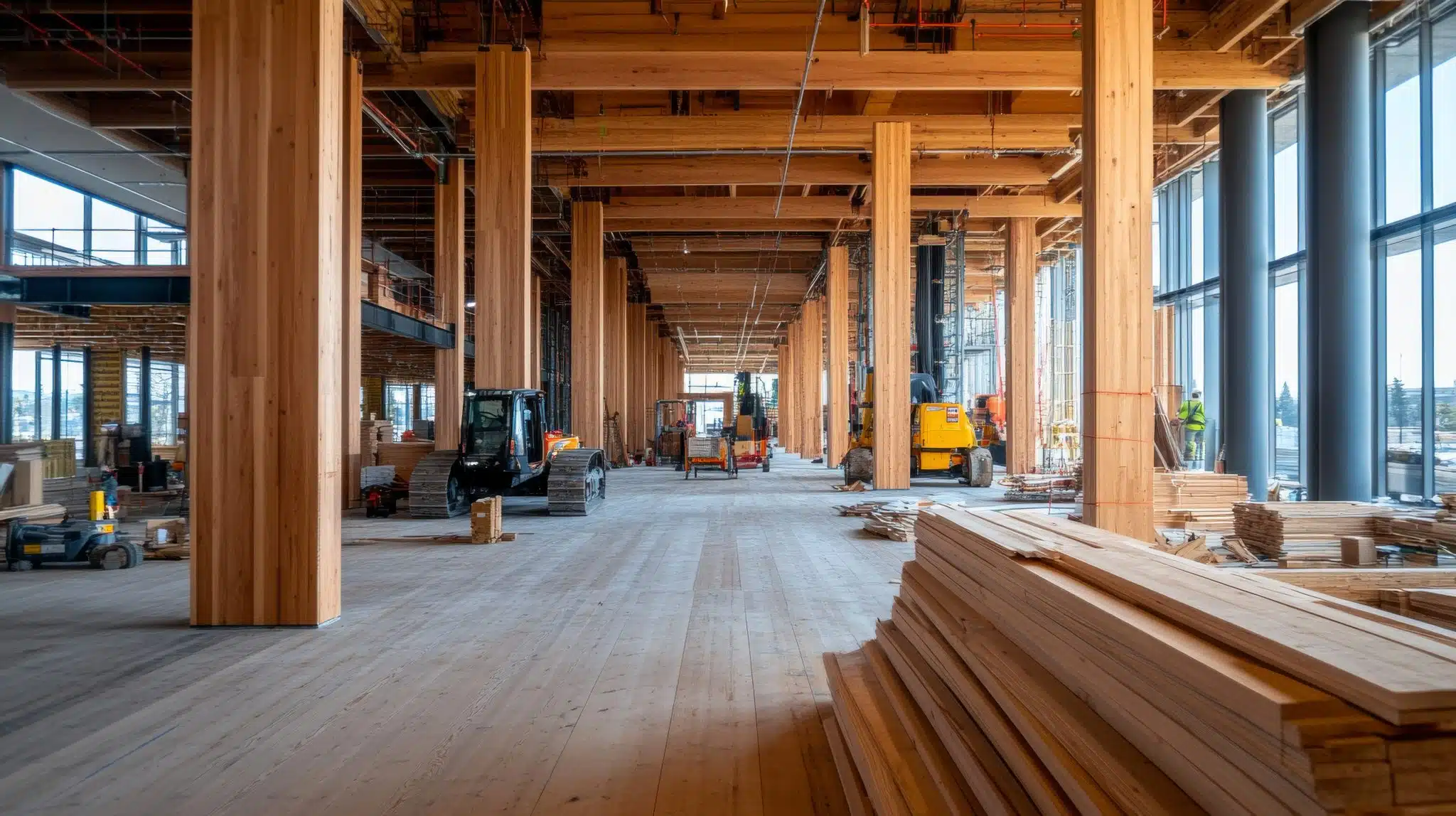
Across Canada, the low-rise non-residential sector—think offices, retail stores, warehouses, and restaurants—presents a major growth opportunity for structural wood systems, including light wood-frame, heavy timber, mass timber, and hybrid construction.

Together, retail, office, and light industrial warehouse buildings account for nearly 75% of new floor space in this market each year. Yet despite their scale, these segments continue to show low uptake of structural wood.

As retailers adapt to the shift toward online shopping and businesses compete to attract talent, the design and performance of their buildings matter more than ever. Wood offers a sustainable, visually appealing solution that enhances employee well-being and elevates commercial spaces.

This new technical publication explores the market potential, challenges, and the role wood can play in redefining this sector.

The Canadian Guide to Mid-Rise Wood Construction 2021

Wood Design Awards, 2020

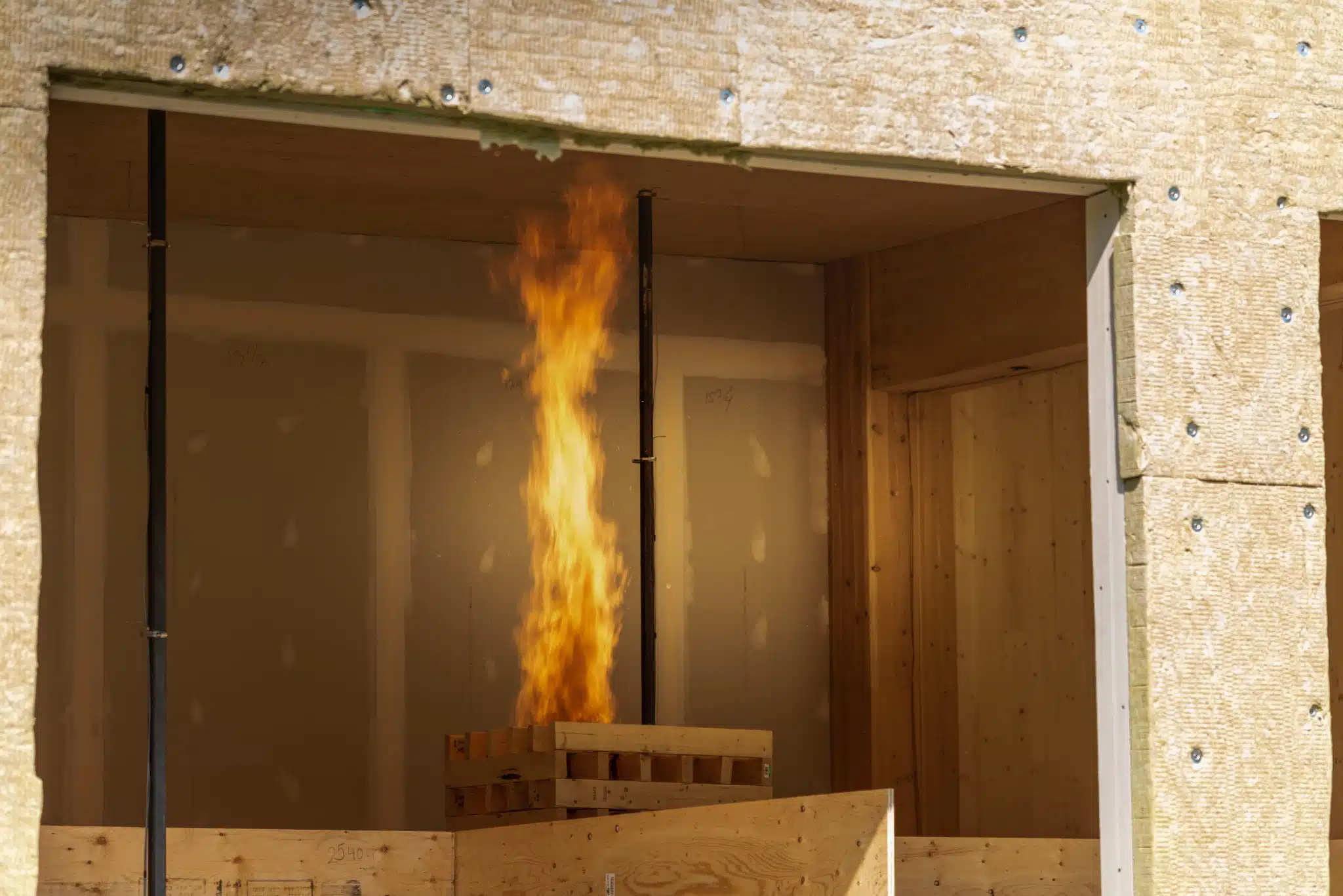
Tall Wood Course of Construction Site Fire Safety

Four-Storey Wood School Design in British Columbia: Life Cycle Analysis Comparisons

Climate change is one of the largest threats facing the planet today. The construction industry accounts for 11% of global carbon emissions, playing a significant part in the climate crisis. To determine the best solution for future school buildings, not only does practicability, economy and constructability play a part, so does sustainability.

In order to better understand the embodied carbon emissions associated with the construction of new school buildings in British Columbia, the embodied carbon content associated with the four framing systems examples in the companion report, An Analysis of Structural System Cost Comparisons (costing study), was assessed. The purpose of this study is to allow the embodied carbon associated with these systems to become an important factor when choosing a viable scheme.

Embodied carbon is the carbon footprint of a material or product. To determine the embodied carbon of a building you must consider the quantity of greenhouse gases associated with the building. The most effective way to measure this is through Life Cycle Analysis (LCA), a study which determines the embodied carbon from cradle to grave (material extraction to building demolition). Consequently, an LCA was conducted for each of the four schemes presented in the costing study. Additionally, for wood frame Options A and B, WoodWorks online carbon calculator was used to determine the potential carbon savings associated with carbon sequestering.

Four-Storey Wood School Design in British Columbia: An Analysis of Structural System Cost Comparisons

As land values continue to rise, particularly in higher-density urban environments, schools with smaller footprints will become increasingly necessary to satisfy enrollment demands. There are currently several planned new school projects throughout British Columbia that anticipate requiring either three-or four storey buildings, and it is forecast that demand for school buildings of this size will continue to rise.

Though timber construction would offer a viable structural material option for these buildings, the British Columbia Building Code (BCBC 2018) currently limits schools comprised of timber construction to a maximum of two storeys, while also imposing limits on the overall floor area. Given these constraints, the development of viable structural options that would accommodate larger and taller schools constructed primarily with timber materials has not been a key focus.

With the above factors in mind, the purpose of this report is to build upon the findings of the previously published Design Options for Three- and Four-Storey Wood School Buildings in British Columbia prepared by Fast + Epp and Thinkspace dated November 2019. Specifically, this report supplements the previous one by providing guidance in assessing and comparing the various framing options considered in the previous report primarily on a cost basis.

Wood Design Manual 2020

The Wood Design Manual is the Canadian reference on the design of timber structures, under gravity and lateral loadings, according to Part 4 of the National Building Code of Canada (NBC) and the “Engineering design in wood” standard (CSA O86). It provides guidance and design examples on sawn and engineered wood members, their connections and fire design. The most common design situations encountered by practicing engineers are covered through intuitive Selection Tables. In addition, the Wood Design Manual contains the latest CSA O86 Standard, as well as a technical commentary written by timber design experts including members of the Standard’s technical committee.

The 2020 Wood Design Manual includes a copy of the CSA O86:19 Standard, incorporating Update No.3 – July 2021. The main changes in this edition are:

  1. Updates to NBC 2020, including guidance on the new “transient live load” in serviceability load combinations.
  2. New sawn lumber joist vibration tables, based on the new vibration design method in O86:19 Annex A.
  3. Updated bending and tension tables for Hem-Fir beam and stringer grade, based on the changes in Hem-Fir design values in O86:19.
  4. Updated CLT deflection tables, based on the removal of the 1.2 form factor in O86:19.
  5. Updated CLT combined loading tables, again, based on the removal of the 1.2 form factor in O86:19.
  6. Improved bolt tables that can be directly used to obtain bolt resistances and failure modes.
  7. Updated shearwall and diaphragm selection tables based on the new alternative f1 equation.
  8. Updated design example of CLT shearwall to account for O86:19 additional provisions and provides design and deflection expressions for multi-panel CLT shearwalls.

Wood Design Awards, 2019

Design Options for Three- and Four Storey Wood School Buildings in British Columbia

As land values continue to rise, particularly in higher-density urban environments, schools with smaller footprints will become increasingly more necessary to satisfy enrollment demands. There are currently a number of planned new school projects throughout British Columbia that anticipate requiring either three-or four-storey buildings, and it is forecasted that the demand for school buildings of this size will continue to rise.

Though timber construction would offer a viable structural material option for these buildings, the British Columbia Building Code (BCBC 2018) currently limits schools comprised of timber construction to a maximum of two storeys, while also imposing limits on the overall floor area. Given these constraints, to date there has not been much effort put into the development of viable structural options that would accommodate larger and taller schools constructed primarily with timber materials.

With the above factors in mind, the purpose of this study is to illustrate the range of possible timber construction approaches for school buildings that are up to four storeys in height. Given this emphasis on four-storey construction, this study focuses on the main classroom blocks within a school building, as these portions of the building are the ones that are the most likely to take advantage of an increased number of storeys. While other portions of school buildings, such as gymnasiums, shops, and multi-purpose areas are also strong candidates for wood construction systems, since there are already numerous examples of this type of construction these areas are not emphasized in this report.

Wood Design Awards, 2018

Mid-Rise Best Practice Guide Proven Construction Techniques for Five-and Six-Storey Wood-Frame Buildings

Shearwalls Course
Updates to Hem-Fir (N) design values for dimension lumber
Canadian Wood Council Applauds Strategic Federal Investments in B.C.’s Forest Industry
Canadian Wood Council Applauds Federal-Provincial Investment in Advanced Wood Construction in Quebec
Canadian Wood Council Applauds Federal Investment in Nova Scotia’s Mass Timber Industry
Treatment during engineered wood product manufacture
Sizer Course
Webinar: Efficient Tall Wall Framing using Engineered Wood Products
Webinar: Diversify Your Structural Portfolio: Wood in Low-Rise Commercial Construction
Aspen Art Museum: Creating an Innovative Wood Structure
Online Tools for Wood Construction
Course Overview Recent code changes and advancements in timber products are allowing for larger and more complex buildings to be built in timber. These multi storey, complex...
Course Overview In Canada, we are fortunate to have both structural engineers and architects who, because of the numerous benefits, would like to work with wood whenever they...
Course Overview Mass Timber has arrived in the world capital infrastructure marketplace while architects and structural engineers are trying to get educated about how to...
Course Overview This presentation will highlight recent award winning timber projects recognized in the UK including several beautiful wood buildings that were featured in...
Course Overview Born out of years of research and real world experience Les Jezsa applies his unique perspective in exploring the wood quality attributes of: strength...
Course Overview While many designers are familiar with engineered wood products such as I‐joists and structural composite lumber, it is important to understand the...
Course Overview This presentation aims to help designers and construction companies/builders assess the potential for moisture related issues arising during the construction...
Course Overview This webinar will discuss the fire-related national building and fire code changes related to a new construction type called Encapsulated Mass Timber...
Course Overview Coming soon... Learning Objectives Coming Soon... Course Video https://vimeo.com/1046519477 Speaker Bio John Paone Director / Sr. Vice President Alfred Horie...
Course Overview Examining recent 6-storey projects, this presentation will highlight specific challenges, important details and procedures, and to illustrate how various...
Course Overview The presentation will address common modes of fire spread in mid‐rise buildings of combustible construction and the measures implemented into building codes...
Course Overview Durability by design is all in the detail. It is the detail, an aspect of wood design which is sometimes overlooked, that determines the durability of a...

Get Access to Our Resources

Stay in the loop and don’t miss a thing!

1
2
3

Get Access to Our Resources

Stay in the loop and don’t miss a thing!

What’s Your Occupation?

Help us personalize the content for you.

What Interests You the Most?

Help us personalize the content for you.

Filters

Expertise Icon
Field of Expertise
Province Icon
Province
Member Type Icon
WoodWork National Partners

Filters

Post Type Icon
Post Type
Persona Icon
Persona
Language Icon
Language
Tags Icon
Tags
Mass Timber Plus Icon Environment Plus Icon Safety Plus Icon Durability Plus Icon Design Systems Plus Icon Budget Plus Icon Construction Management Plus Icon Fire Resistance Plus Icon Tall Buildings Plus Icon Short Buildings Plus Icon
Date Icon
Date
Line Separator