Laurentian University McEwen School of Architecture – Sudbury, ON
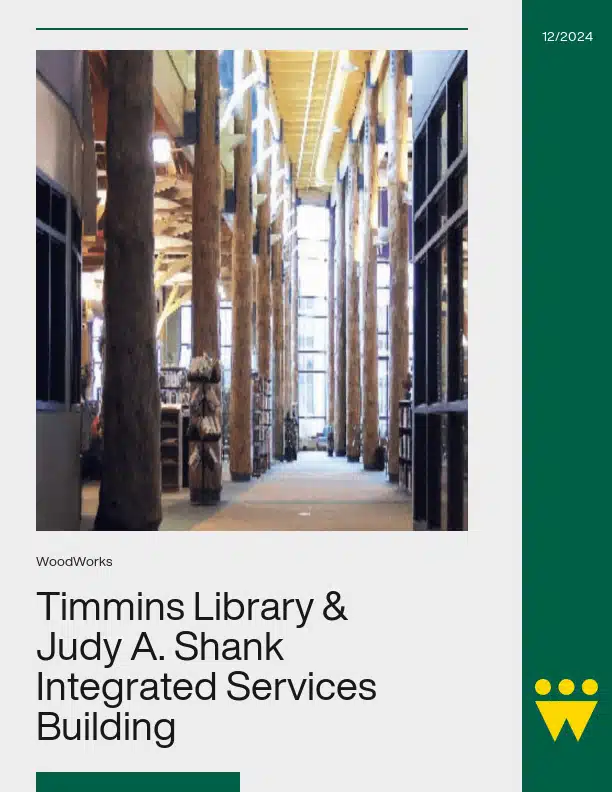
Located in Sudbury, Ontario, Laurentian University’s McEwen School of Architecture is the first new school of architecture to be built in Canada in 40 years. Its mandate is to provide a uniquely integrated, uniquely focused education to Indigenous, Anglophone, and Francophone students. It is the only school of architecture outside of Québec to offer French-language studio courses, and the first to include offices for Indigenous Elders, who play a central role in the school. The curriculum addresses resilient architecture and fabrication techniques for northern latitudes, with an emphasis on Indigenous culture, wood construction, local ecologies and resources, and design for the impact of climate change. The school is a didactic instrument with structural and HVAC design elements purposefully exposed in each of the various buildings. The multi-phase development of the McEwen school began with the adaptive reuse of the site’s two existing heritage structures. The two storey CPR ticket and telegraph building (circa 1914) became faculty offices and a boardroom, and the single-storey market building became a temporary studio before ultimately transforming into the fabrication laboratory once the new studio spaces were constructed. Phase two of the project included the construction of a 36,480 ft2 steel-and-concrete Studio Wing, and the new 15,670 ft2 CLT Library Wing which is the focus of this case study. By combining the two repurposed heritage buildings with 52,150 ft2 of new construction, the McEwen School of Architecture demonstrates the properties of wood, steel, concrete, and masonry construction, and illustrates to students the structural potential and aesthetic qualities of each.
IBS4 – Sustainability and Life Cycle Analysis for Residential Buildings
Environmental awareness in building design, construction and operation is stronger than ever. But how can we meet the world’s rapidly growing need for buildings and still be environmentally responsible? Although construction is never fully benign for the environment, designers and builders can make choices to minimize the impact. Wood plays an important part in sustainable design, as shown by scientific analysis.
Canada’s Blueprint for Mass Timber Success Unveiled at Parliament Hill
June 13, 2024 (Ottawa)– Earlier today, The Transition Accelerator unveiled The Mass Timber Roadmap at the Press Conference Room in the West Block on Parliament Hill. The comprehensive report outlines an ambitious and strategic vision for the future of mass timber in Canada and its potential to transform green construction and drive economic growth across the country.
Developed in partnership with Canadian Wood Council (CWC), Forest Products Association of Canada (FPAC), and Energy Futures Lab (EFL), The Mass Timber Roadmap comes after more than a decade of collaborative efforts to unlock and demonstrate potential of mass timber and lays out a visionary plan to increase the mass timber market – both domestic and exports – to $1.2 billion by 2030 and to $2.4 billion by 2035.
This ambitious growth aligns with increasing market demand in North America and around the world. By leveraging the power of mass timber solutions, Canada has a unique opportunity to enable the construction of residential and commercial structures at greater speeds, with lower costs, and with a lighter carbon footprint; all while capturing a share of the rapidly growing global market.
Achieving targets laid out in The Mass Timber Roadmap requires coordinated efforts across three critical action areas and the report provides actionable next steps, including:
Public-Private Collaboration: The Mass Timber Roadmap calls for a partnership between public and private sectors to develop and advance a comprehensive policy package that will enhance the value of Canada’s forest resources while building domestic capacity along the supply chain.
Standardization: There is a need to standardize building archetypes, wood specifications, and connectors throughout the supply chain to streamline processes and reduce costs.
Skills Development: Implementing a robust skills development plan that encompasses all aspects of the supply chain is essential to support the sector’s growth.
Today’s event on Parliament Hill featured the following speakers who highlighted the roadmap’s goals and the promising future for mass timber in Canada, followed by an engaging Q&A session with journalists:
Derek Eaton, Director of Future Economy, The Transition Accelerator
Derek Nighbor, President and CEO, Forest Products Association of Canada (FPAC)
Kate Lindsay, Senior Vice President and Chief Sustainability Officer, Forest Products Association of Canada (FPAC)
Rick Jeffery, President and CEO, Canadian Wood Council (CWC)
“The mass timber sector provides a perfect example of how Canada can add value to its primary resources through innovative technologies and advanced skills. If we act strategically and quickly, we have the opportunity to build an industry that reduces emissions, addresses urgent needs, and positions Canada to win in emerging global value chains.” – Derek Eaton, The Transition Accelerator
“To build a world-class mass timber sector, Canada must adopt a strategic approach to ensure we can compete and win globally. This is about smart policy here at home and bringing more Canadian wood to our cities and to the world. By enabling faster, cost-effective, and environmentally-friendly construction with mass timber we can grow jobs, help address the affordable housing crunch, and reduce emissions.” – Kate Lindsay, Forest Products Association of Canada (FPAC)
“The potential for Canadian wood products to reduce the carbon footprint of the built environment and drive the growth of a sustainable and prosperous wood industry is immense; however, global competition to capitalize on the significant economic opportunities mass timber presents in the transition to a lower-carbon world will require us to act swiftly to stay competitive and meet rapidly emerging domestic demand.” – Rick Jeffery, Canadian Wood Council (CWC)
Wood Design & Building Awards Winning Projects Announced
Toronto, ON – The Canadian Wood Council is pleased to announce the winning projects of the 40th annual Wood Design & Building Awards program. This prestigious awards program recognizes and celebrates the outstanding work of architectural professionals from around the world who achieve excellence in wood design and construction.
“We’re proud to recognize leading innovators in wood design through our awards program,” says Martin Richard, Vice President of Communications and Market Development at the Canadian Wood Council. “This year’s submissions were remarkable in their scope, quality, and variety. They reflect a rising interest in biomaterials and highlight the importance of wood as a versatile, low-carbon, high-performance material, driving the next generation of sustainable buildings.”
The jurors for the Wood Design & Building Awards were:
Marlon Blackwell, Principal at Marlon Blackwell Architects
Veronica Madonna, Director and Principal at Studio VMA
Alfred Waugh, Principal at Formline Architecture + Urbanism
A total of 19 winning projects from a diverse group of creators were selected from the impressive field of entries.
New this year, the regional WoodWorks program awards from Ontario, British Columbia, and Alberta were integrated with the Wood Design & Building Awards.
The jurors for the WoodWorks awards were:
Duncan Bourke, Vice President of Development at Cityflats
Melissa Higgs, Principal at hcma
Steve Oosterhof, Partner and Structural Engineer at Dialog
Fifteen winning projects were selected, with five from each regional program. The creativity and talent of these winning teams, as well as the beauty and diversity of their wood projects, are transforming the built environment.
In total, 33 award winners from around the globe were celebrated for excellence in wood design at the Wood Design and Building Awards celebration hosted at the WoodWorks Summit on October 22, 2024.
The Goldring Centre – University of Toronto Academic Tower
Province: Ontario City: Toronto Project Category: Institutional Major Classification: D – Offices Height: 14 Storeys Building Area: 176,549 ft2
Description:
The University of Toronto’s new academic tower is a14 storey mass timber building, currently under construction, built with GLT components. Realizing an innovative building of this size and complexity that goes beyond prescriptive height limit of the Ontario Building Code required extensive support and a capable, timber experienced project team. Technical project interactions with WoodWorks staff date back to 2016 and we have tracked 21 direct interactions related to this project. A deeper look at our project data reveals that the project team had an additional 23 indirect interactions with the WoodWorks team (attending events, requesting technical documents, etc.). The project team has 28 projects in their combined experience portfolio, indicating an experienced, supported design team was able to push forward an alternative solutions success storey and one of North America’s tallest wood buildings.
BUILDEX and Canadian Wood Council Bring Cutting Edge Wood-Based Design and Construction to All Professionals of the Built Environment
Vancouver, BC, September 19, 2024 – Informa Connect and the Canadian Wood Council announce their collaboration, WoodWorks at BUILDEX, integrating WoodWorks’ technical expertise and wood products industry representation into BUILDEX Vancouver, February 26 – 27, 2025. This initiative builds on a shared commitment to advancing Canada’s built environment and expands BUILDEX’s focus on innovative materials, design, and construction practices.
WoodWorks at BUILDEX offers an exceptional opportunity for all professionals of the built environment to immerse themselves in the latest innovations in wood-based design and construction through:
14 hours of accredited educational seminars solely dedicated to wood product construction
Direct access to technical expertise from suppliers, manufacturers, and wood engineering consultants
A new expo pavilion experience dedicated to structural and finishing wood products at the heart of Western Canada’s largest building and construction event
Rick Jeffery, President and CEO, Canadian Wood Council, emphasized the importance of this collaboration: “Working with Informa Connect to bring WoodWorks to BUILDEX Vancouver in 2025 allows us to concentrate on one of our core strengths—delivering industry-leading educational content, technical support, and access to leading wood product providers—at Canada’s most progressive design, construction and real estate event.”
Sherida Sessa, SVP for North America at Informa Connect, added “British Columbia is recognized as a global leader in wood-based design and construction, and this partnership solidifies BUILDEX as a key destination for technical expertise, innovation and leadership in the wood products industry.”
WoodWorks at BUILDEX amplifies BUILDEX Vancouver’s core offering to Canadian and North America’s design and construction leaders: timely market insights, respected technical knowledge, transformative networking, and exposure to the materials and technologies at the forefront of Canada’s built environment.
BUILDEX Vancouver will take place February 26 – 27, 2025, at the Vancouver Convention Centre West, attracting over 8,500 developers, architects, engineers, builders, designers, suppliers, and real estate professionals. Register now at www.BUILDEXVancouver.com to secure your place and witness the latest in progressive design and construction trends.
Durability by Design
CLT Firewalls
Mass Timber: Unlocking the Mysteries of Connection Design and Fabrication
Shifting Gears: World’s First Passivehouse Auto Dealership
Demystifying Acoustics for All Wood Buildings
Guide to Encapsulated Mass Timber Construction in the Ontario Building Code
Tallwood 1
Innovative Envelope Solutions for Mass Timber
The Importance of Proper Specification: Agricultural, Commercial, and Industrial Applications for Pressure Treated Wood
Practical and Advanced Modeling for Design and Performance of Mass Timber Structures
Overview of the Ottawa Mass Timber Fire Test
Light Wood Frame and Mass Timber Hybrid Mid-Rise Construction
Sometimes it happens – wood in service suffers from decay. How can you identify decayed wood and what are the recommended actions to take? First, be sure you actually have...
Choosing a coating depends on what appearance is desired and what level of maintenance would be tolerable. For many people, the basic choice is paint versus stain. The...
Select heartwood where possible to minimize nutrient content of wood surfaces and prevent nutrients migrating through the coating to support fungal growth on the surface....
How long will an exterior wood coating last? Anywhere from a few months to 20 years or more, depending on the choice of product, how it was applied, and how severe the...
For new wood, remember: The wood must be dry. Drying time depends on a few factors. Ideally the wood should be kiln-dried (stamped “S-DRY”, “KD” or “KDAT”, see...
Acrylic A type of water-borne coating product containing acrylic polymers. Alkyd A type of polyester resin. Term often used to signify solvent-borne coatings, e.g., oil...
Canada has had a wood preservation industry for about 100 years. Canada is tied with the UK as the world’s second largest producer of treated wood (the USA is first...
FPInnovations has been field testing the performance of treated wood products for years. Click one of these categories for performance data from our field tests....
There’s no reason a wood structure can’t last virtually forever – or, at least hundreds of years, far longer than we may actually need the building. With a good...
Wood is resistant to some of the chemicals destructive to steel and concrete. For example, wood is often the material of choice when exposed to: organic compounds, hot or...
In the early 1900s, light-frame wood construction and heavy timber, up to ten-storeys in height, was commonplace in major cities throughout Canada. The longevity and...
What do the experts have to say about wood-frame mid-rise construction? Graham Finch, Building Science Research Engineer Michael Green, Principal, Michael Green Architecture...