...Code of Canada (NBC) categorizes wood buildings as ‘combustible construction’. Despite being termed combustible, common construction techniques can give wood frame construction fire-resistance ratings up to two hours. When designed...
Prefabricated wood I-joists are proprietary structural wood members that consist of fingerjoined solid sawn lumber or laminated veneer lumber (LVL) flanges attached to a plywood or oriented strand board (OSB)...
Wood design in the National Building Code of Canada
...expected to foster a spirit of innovation and create new opportunities for Canadian manufacturers. Requirements related to the specification of structural wood products and wood building systems that relates to...
...use LVL in applications where appearance is important, common wood finishing techniques can be used to accent grain and to protect the wood surface. In finished appearance, LVL resembles plywood...
...knots ability to hold nails and screws There are more than a hundred softwood species in North America. To simplify the supply and use of structural softwood lumber, species having...
...wood for exposed applications like cabinetry, flooring, furniture and moldings. Not only is wood builder-friendly, it is also environmentally friendly. Wood products take less energy to manufacture, affect the environment...
FRAMEWORK for Success: Prefabricated Wood Systems and Design Innovation
...evolved from a truss-fabricator-focused group into Ontario’s leading voice for structural wood component manufacturing. Today, the province is home to 70 certified truss plants and 40 wood-panel manufacturers, with engineered...
...wood piles, wood cribs and wood trestles. The standard does not apply to falsework or formwork. CSA S-6 considers design of wood members under flexure, shear, compression and bearing. In...
The Role of the Wood Industry in Climate Change Mitigation
...of Wood in Sustainable Construction: Objective: To understand the environmental benefits of using wood in construction, including its properties as a low-carbon material. Relevance: Grasping why wood is considered a...
Design and Construction of Permanent Wood Foundations – The Buildings Show 2025
...from the Department of Wood Science at the University of British Columbia. He is the past Chair of the CSA Subcommittee on Permanent Wood Foundations and acted as a primary...
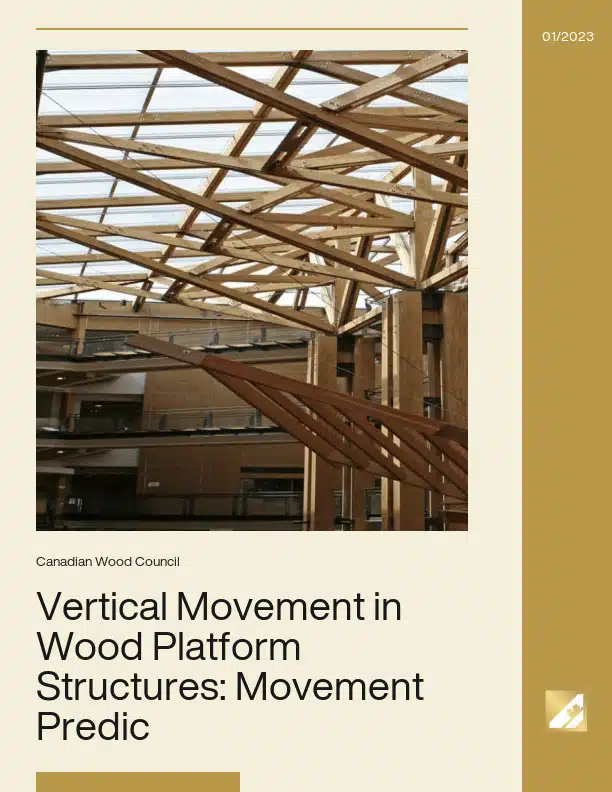
Vertical Movement in Wood Platform Structures: Movement Prediction
...this series of fact sheets. Different from solid sawn wood products, Engineered Wood Products (EWP) are usually manufactured with MC levels close to or even lower than the equilibrium moisture...
...Canadian Oriented Strand Board View Resource An Industry Average EPD for Canadian Softwood Plywood View Resource A Regionalized Industry Average EPD for Canadian Wood Trusses View Resource Stakeholders within the...
Since remedial treatment is intended to solve a known insect or decay problem, the first thing to do is investigate the extent of the problem and, if necessary, provide...
Select heartwood where possible to minimize nutrient content of wood surfaces and prevent nutrients migrating through the coating to support fungal growth on the surface....
Acrylic A type of water-borne coating product containing acrylic polymers. Alkyd A type of polyester resin. Term often used to signify solvent-borne coatings, e.g., oil...
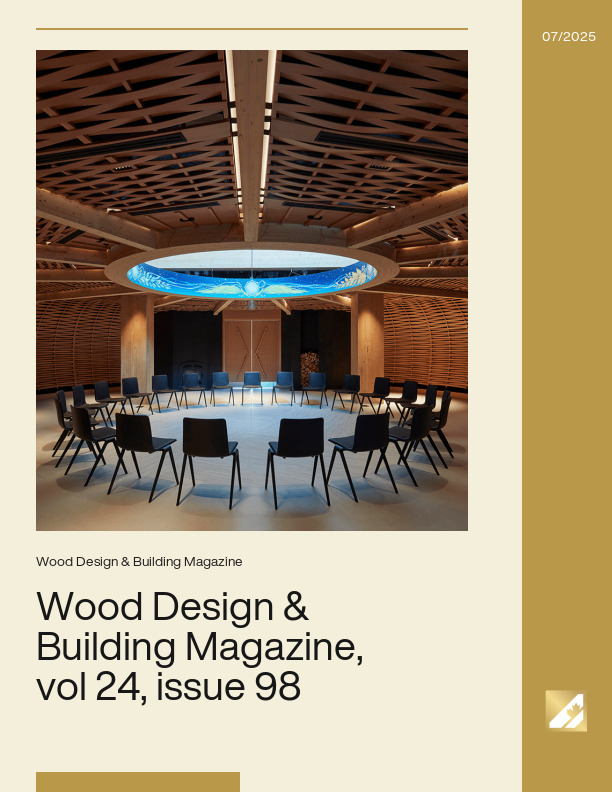
What does it take to deliver better buildings? In this issue, we explore that question from a couple of different angles—primarily through a look at standout wood projects...
Resource Description This comprehensive pedagogical resource presents two detailed mass timber projects, developed to support educators in teaching advanced wood construction...
Course Overview While many designers are familiar with engineered wood products such as I‐joists and structural composite lumber, it is important to understand the...
Individuals in the design and construction community are increasingly choosing materials, design techniques and construction procedures that improve a structure’s ability...
Course Overview In Canada, we are fortunate to have both structural engineers and architects who, because of the numerous benefits, would like to work with wood whenever they...
Since the 2009 change to the British Columbia Building Code (BCBC) that increased the permissible height for wood frame residential buildings from four storeys to six, more...
When you want to use wood that is not naturally decay resistant in a wet application (outdoors, for example) or where it may be at risk for insect attack, you need to specify...
Of all the energy used in North America, it is estimated that 30 to 40 percent is consumed by buildings. In Canada, the majority of operational energy in residential...
Nailing is the most basic and most commonly used means of attaching members in wood frame construction. Common nails and spiral nails are used extensively in all types of...








 Environment


