Promoting Health and Wellness with Wood Architecture
...timber buildings also benefit workers throughout the construction process by reducing construction time, and prefabricated elements contribute to cleaner, safer building sites. The team at the Canadian Wood Council/Wood WORKS!...
Specification Guide for Non-Residential Pressure Treated Wood Products
...properly protected, its service life can be extended for many years. The most effective way of protecting exposed wood is the use of wood preservatives. Preserved wood products can have...
Across Canada, the low-rise non-residential sector—think offices, retail stores, warehouses, and restaurants—presents a major growth opportunity for structural wood systems, including light wood-frame, heavy timber, mass timber, and hybrid construction....
The Canadian Guide to Mid-Rise Wood Construction 2021
...degrees of adoption, understanding and application for wood buildings up to 6 storeys. The opportunities that are available for wood use in mid-rise development are varied and many and it...
...from a material or product is measured and quantified through another rating system, based on a standard fire-test method — the smoke developed classification (SDC). For most wood products used...
The vulnerability of any building, regardless of the material used, in a fire situation is higher during the construction phase when compared to the susceptibility of the building after it...
Four-Storey Wood School Design in British Columbia: Life Cycle Analysis Comparisons
...to building demolition). Consequently, an LCA was conducted for each of the four schemes presented in the costing study. Additionally, for wood frame Options A and B, WoodWorks online carbon...
Four-Storey Wood School Design in British Columbia: An Analysis of Structural System Cost Comparisons
...for Three- and Four-Storey Wood School Buildings in British Columbia prepared by Fast + Epp and Thinkspace dated November 2019. Specifically, this report supplements the previous one by providing guidance...
...(NBC) and the “Engineering design in wood” standard (CSA O86). It provides guidance and design examples on sawn and engineered wood members, their connections and fire design. The most common...
The intent of this document is to provide guidance on joist spans, built-up beam sizes, and supporting column sizes for exterior wood decks. The following items which are...
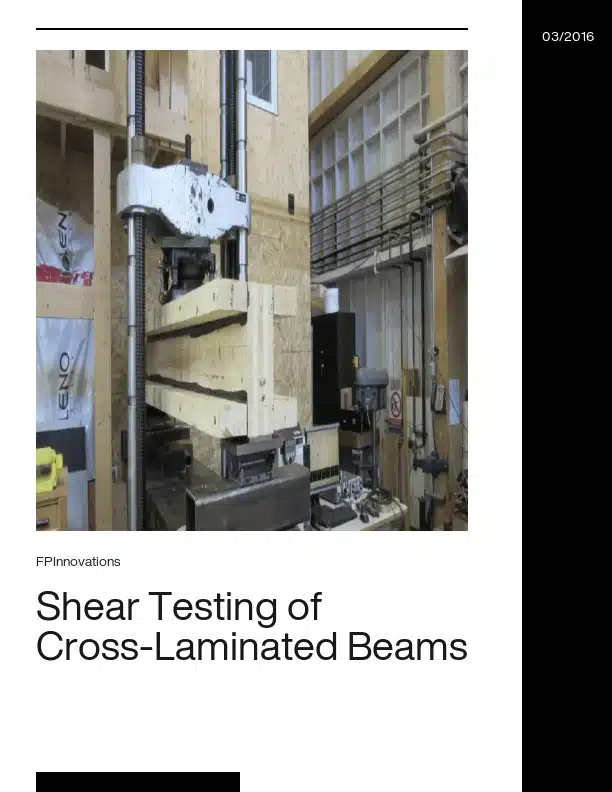
This testing program was carried out by the Advanced Building Systems (ABS) Department of FPInnovations in response to a request made by Mrs. Julie Frappier of Nordic...
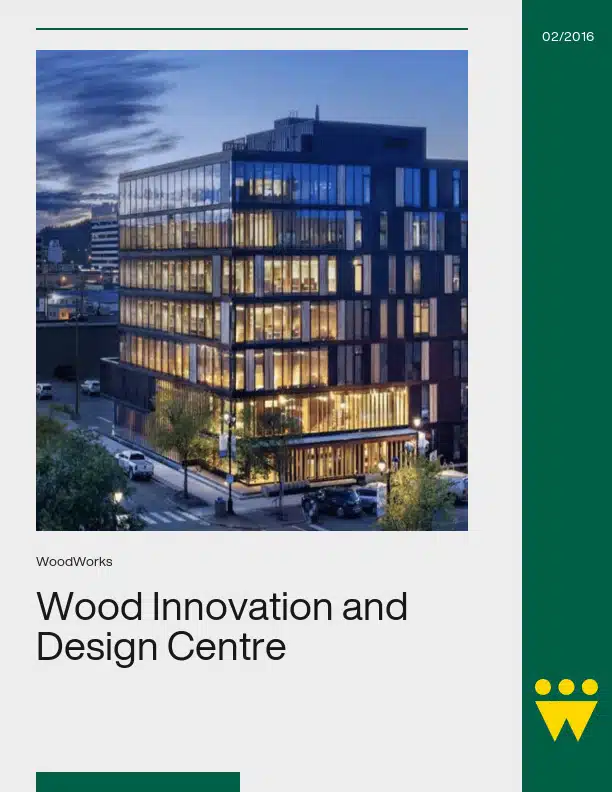
With a height of 29.5 metres, the Wood Innovation and Design Centre (WIDC) is the tallest contemporary wood building in North America. Located in the city of Prince George in...
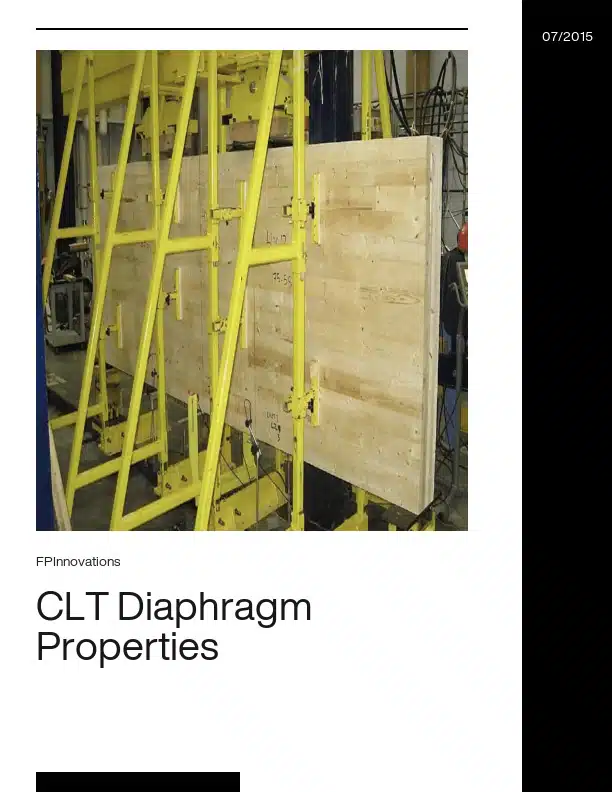
A testing program related to the evaluation of the mechanical properties of CLT diaphragms used in construction was carried out by the Advanced Building Systems (ABS)...
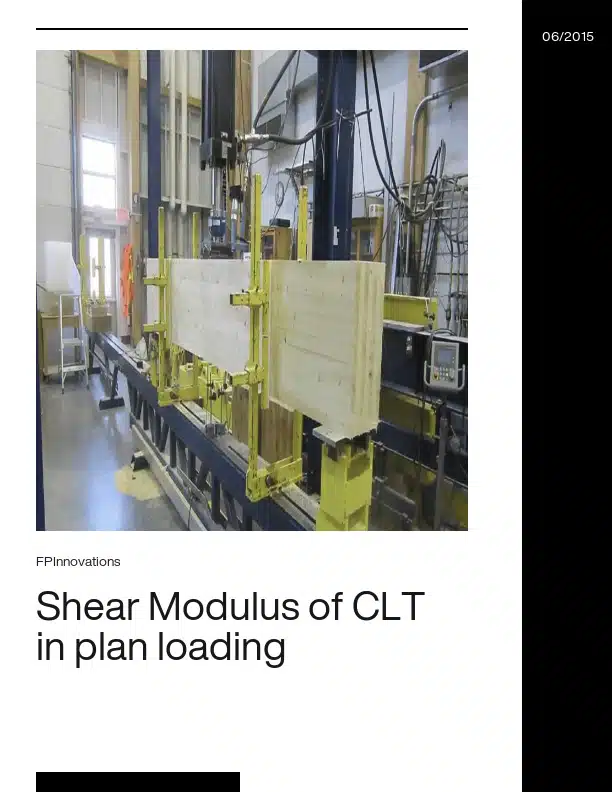
A testing program was carried out by the Advanced Building Systems (ABS) Department of FPInnovations in response to a request made by Mrs. Julie Frappier of Nordic Engineered...
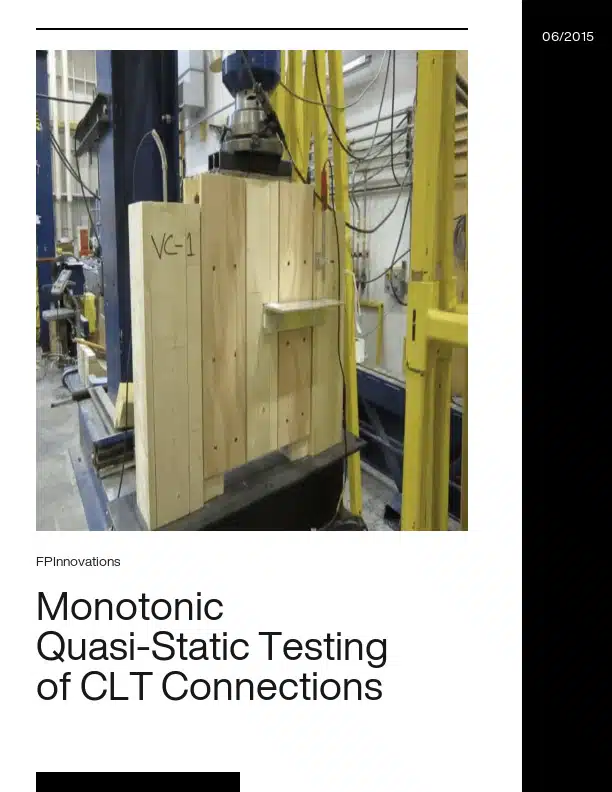
This testing program was carried out by the Advanced Building Systems (ABS) Department of FPInnovations in response to a request from Mrs. Julie Frappier from Nordic...
In a recent survey of building specifiers, the majority perceived wood to be the most environmentally friendly building material. Compared to other major building materials...
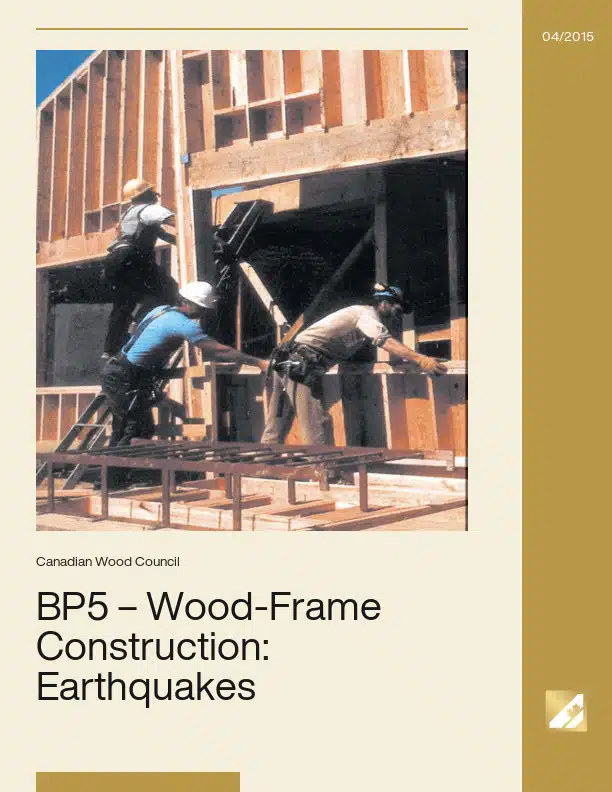
North American single-family homes are considered by many to be the safest place to be in an earthquake. This is not surprising considering that North American housing is...
North Americans enjoy the highest standard of safe and comfortable housing in the world. This is not by chance – wood-frame construction is the residential building system...





 Environment


