

Addressing Climate Change In The Building Sector – Carbon Emission Reductions

Worldwide, the building sector contributes up to 30% of global annual greenhouse gas (GHG) emissions, which are a significant cause of climate change. The UN Environment Programme says these emissions could double in the next 20 years if nothing is done.1 In Canada, the building sector accounts for about 12% of total GHG emissions – only the oil and gas and the transportation sectors have higher emissions.2 Concerns about climate change are encouraging decarbonization of the building sector, including the use of construction materials responsible for fewer carbon dioxide (CO2) emissions and improvements in operational performance over the life cycle of buildings.
WPC Specification Guide for Non Residential Pressure Treated Wood Products Web
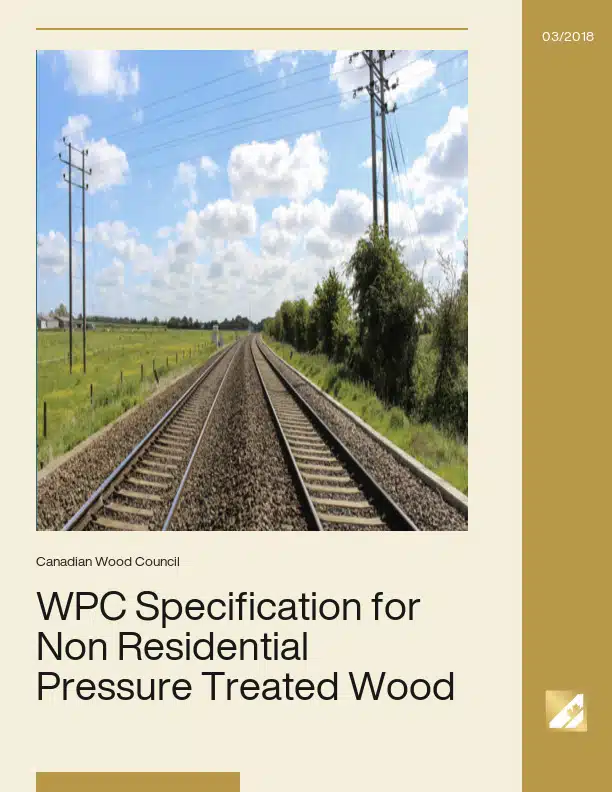
Wood is the only renewable building material within the three major building material types. In exterior applications, wood is subject to deterioration from natural elements and biological attack, but when properly protected, its service life can be extended for many years. The most effective way of protecting exposed wood is the use of wood preservatives. Preserved wood products can have 5 to 10 times the service life of untreated wood. This extension of life saves the equivalent of 12.5% of Canada’s annual log harvests (source durable-wood.com). The preservation of the wood is important, especially when it is specified for use in critical infrastructure applications such as railway ties, bridge timbers, utility poles and guardrail posts for highways. Pressure treated wood ensures that these critical structures remain strong and safe for the duration of their service lives. Pressure treated wood products are also commonly used in agricultural applications such fence rails, posts and building poles, as well as in commercial decks, fences, and other heavy duty outdoor applications. Depending on the required application and the level of protection needed for the wood products, there are a variety pressure treatment methods and approved preservatives that are available in Canada. Pressure treatment is a process that forces preservatives into the wood to protect against fungal decay and destructive insects such as termites and marine borers. In Canada, wood preservatives are registered with Health Canada’s Pest Management Regulatory Agency (PMRA). Individual treating facilities undergo regular environmental assessments and follow the recommendations for the design and operation of wood preservative facilities as outlined in Environment Canada’s Technical Recommendation Document (TRD).
Timber Bridge Inspection, Maintenance, Restoration and Design Detailing Guide
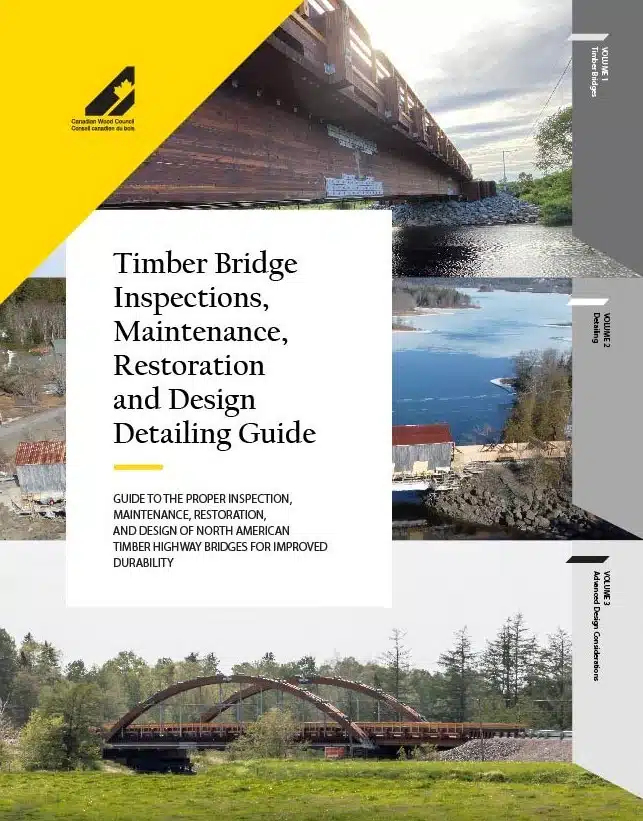
This 3-volume guide on timber bridge inspection, maintenance, restoration, and detailing covers everything you need to know about detailing durable wood bridges, starting with a thorough description of wood’s unique and often advantageous properties, and concluding with advanced topics that will be of interest to engineers world-wide.
Wood Design Awards 2023
Canadian Nuclear Laboratories

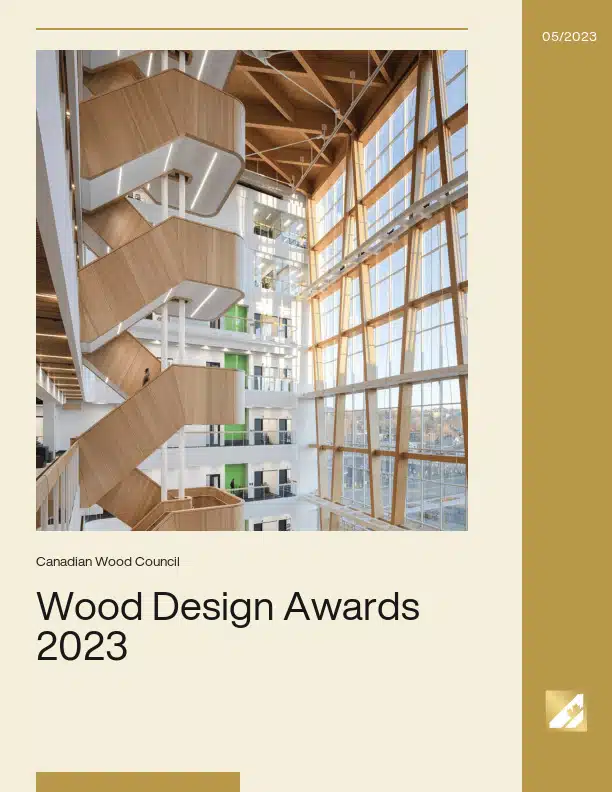
Canadian Nuclear Laboratories: Case Study and Environmental Impact Analysis This report showcases how Canadian Nuclear Laboratories (CNL) delivered three landmark mass timber buildings at its Chalk River campus while meeting the federal government’s net-zero commitments. It highlights how an Integrated Project Delivery (IPD) approach enabled collaboration across architects, engineers, and builders to achieve cost-neutral, low-carbon construction. Readers will learn how the project team reduced embodied and operational carbon well beyond federal targets, demonstrated the fire safety and durability of mass timber, and created high-performance workplaces that enhance occupant well-being. With lessons on procurement, codes, and whole-building life cycle assessment, the case study offers a practical roadmap for governments, designers, and developers aiming to accelerate Canada’s transition to sustainable, net-zero infrastructure.
Promoting Health and Wellness with Wood Architecture
The year 2020 will forever be synonymous with COVID-19. After experiencing the pandemic and its ripple effects, few would question the importance of health and wellness. What people may not consider is the impact that our surrounding environments have on our health. Research shows that incorporating wood and other natural elements into buildings can have a positive effect on occupants’ overall health and well-being. The term for this effect is called biophilia, which refers to humanity’s innate need to connect with nature. Many industries are embracing biophilic design and its benefits. Employers are eager to create inviting spaces for their teams, hospital designs have shifted from cold and industrial-like to bright environments with wayfinding elements, and homeowners are expanding their living spaces with decks, fences, and pergolas so they can gather with friends and family outdoors. The wellness impacts of wood extend beyond the biophilic advantages of finished spaces. Mass timber buildings also benefit workers throughout the construction process by reducing construction time, and prefabricated elements contribute to cleaner, safer building sites. The team at the Canadian Wood Council/Wood WORKS! is committed to providing design and construction professionals with the tools and information needed to build with wood. We’re going taller, we’re getting bigger, and, from coast to coast, we’re not stopping. Building with wood is the right choice, for the environment and for everyone’s well-being.
Wood Design Awards 2022
Advancing Mass Timber Systems in Vancouver Schools
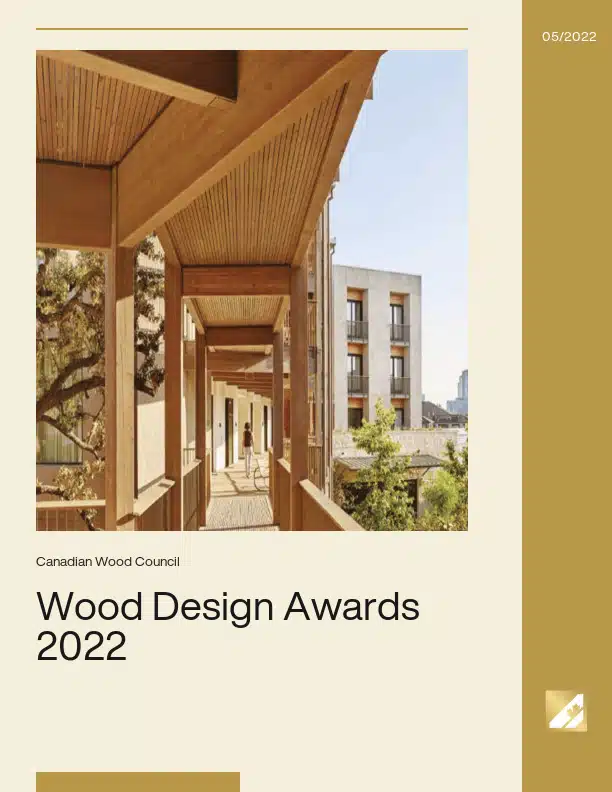
This case study examines the design and construction of two elementary schools in Vancouver, British Columbia in which mass timber was chosen as the primary construction system for the first time. W k ’wan’ s t syaqw m Elementary School (formerly Sir Matthew Begbie Elementary School) and Bayview Elementary School, located on the east and west sides of the city respectfully, were part of a pilot project by the Vancouver School Board (VSB) aimed to assess the potential for expanding the use of mass timber in future school projects (Figures 1.1 and 1.2). To this end, the documentation of: the opportunities presented, the challenges faced and the lessons learned, is a vital step in the evaluation process.
Guide des spécifications pour les utilisations non résidentielles
Specification Guide for Non-Residential Pressure Treated Wood Products

Wood is the only renewable building material within the three major building material types. In exterior applications, wood is subject to deterioration from natural elements and biological attack, but when properly protected, its service life can be extended for many years. The most effective way of protecting exposed wood is the use of wood preservatives. Preserved wood products can have 5 to 10 times the service life of untreated wood. This extension of life saves the equivalent of 12.5% of Canada’s annual log harvests (source durable-wood.com). The preservation of the wood is important, especially when it is specified for use in critical infrastructure applications such as railway ties, bridge timbers, utility poles and guardrail posts for highways. Pressure treated wood ensures that these critical structures remain strong and safe for the duration of their service lives. Pressure treated wood products are also commonly used in agricultural applications such fence rails, posts and building poles, as well as in commercial decks, fences, and other heavy duty outdoor applications. Depending on the required application and the level of protection needed for the wood products, there are a variety pressure treatment methods and approved preservatives that are available in Canada. Pressure treatment is a process that forces preservatives into the wood to protect against fungal decay and destructive insects such as termites and marine borers. In Canada, wood preservatives are registered with Health Canada’s Pest Management Regulatory Agency (PMRA). Individual treating facilities undergo regular environmental assessments and follow the recommendations for the design and operation of wood preservative facilities as outlined in Environment Canada’s Technical Recommendation Document (TRD).
Foundations permanentes en bois
Wood Design Awards 2021


