
Bolts
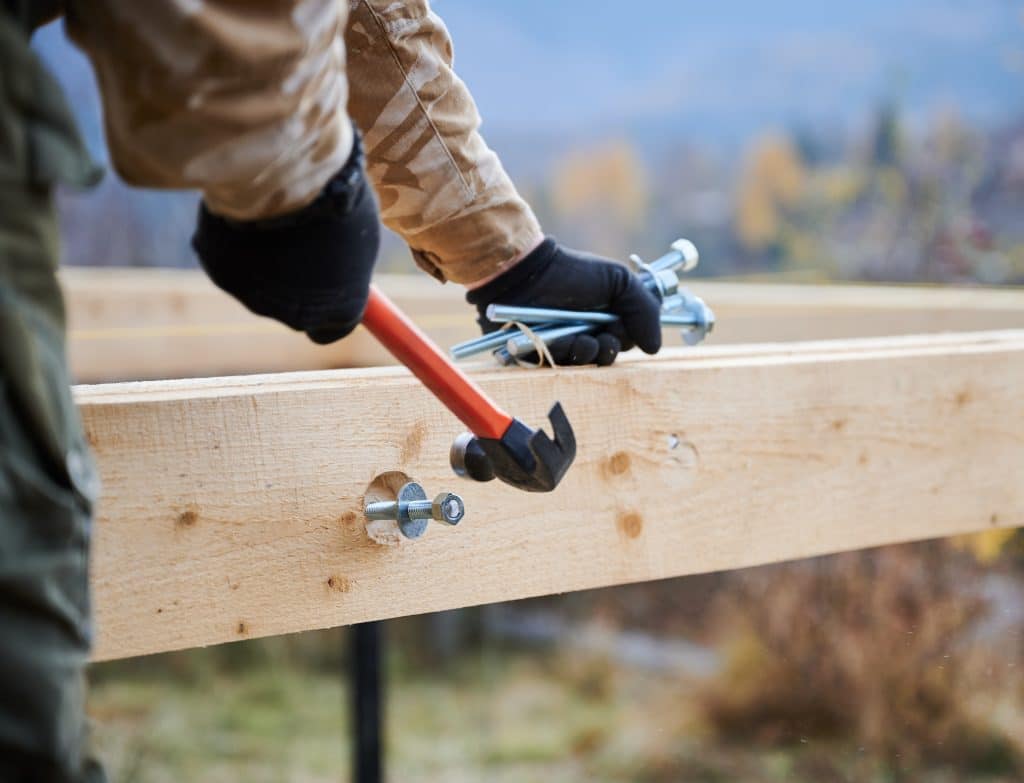
Bolts are widely used in wood construction. They are able to resist moderately heavy loads with relatively few connectors. Bolts may be used in wood-to-wood, wood-to-steel and wood-to-concrete connection types. Some typical structural applications for bolts include: purlin to beam connections beam to column connections column to base connections truss connections timber arches post and beam construction pole-frame construction timber bridges marine structures Several types of bolts as shown in Figure 5.10 below, are used for wood construction with the hexagon head type being the most common. Countersunk heads are used where a flush surface is desired. Carriage bolts can be tightened by turning the nut without holding the bolt since the shoulders under the head grip the wood. Bolts are commonly available in imperial diameters of 1/4, 1/2, 5/8, 3/4, 7/8 and 1 inch. Bolts are installed in holes drilled slightly (1 to 2 mm) larger than the bolt diameter to prevent any splitting and stress development that could be caused by installation or subsequent wood shrinkage. Depending on the diameter, bolts are available in lengths from 75 mm (3″) up to 400 mm (16″) with other lengths available on special order. Bolts can be dipped or plated, at an additional cost, to provide resistance to corrosion. In exposed conditions and high moisture environments, corrosion should be resisted by using hot dip galvanized or stainless steel bolts, washers and nuts. Washers are commonly used with bolts to keep the bolt head or nut from crushing the wood member when tightening is taking place. Washers are not required with a steel side plate, as the bolt head or nut bears directly on the steel. Common types of washers are shown in Figure 5.11 below. Design information provided in CWC’s Wood Design Manual is based on bolts conforming to the requirements of ASTM A307 Standard Specification for Carbon Steel Bolts, Studs, and Threaded Rod 60 000 PSI Tensile Strength or Grade 2 bolts and dowels as specified under SAE J429 Mechanical and Material Requirements for Externally Threaded Fasteners. Download Figure 5.10 (and 5.11) as a PDF.
Framing Connectors
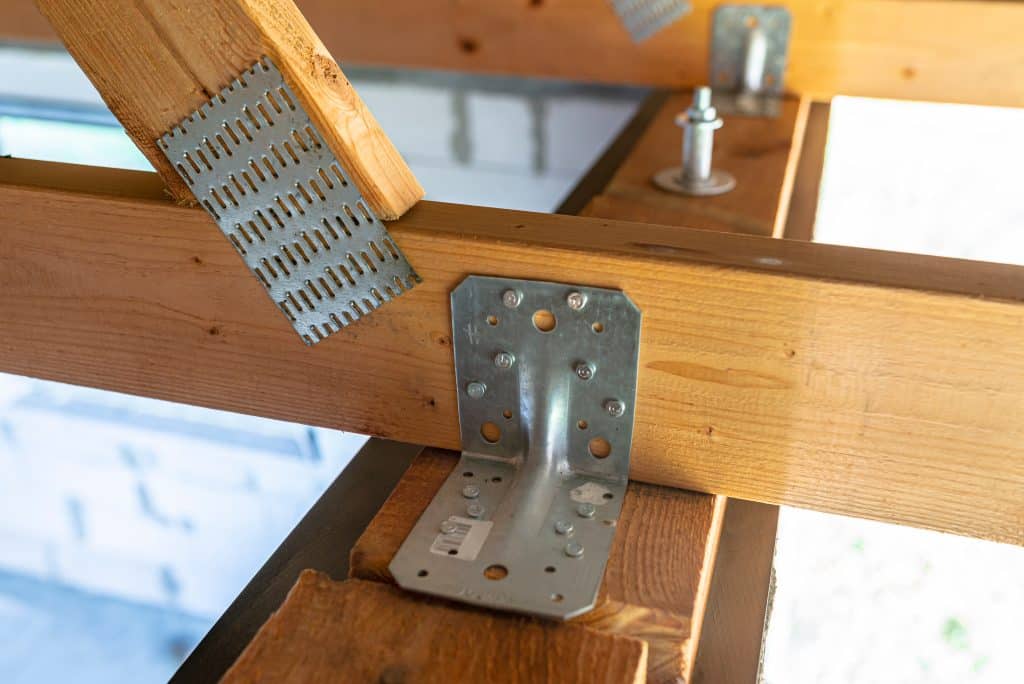
Framing connectors are proprietary products and include fastener types such as; framing anchors, framing angles, joist, purling and beam hangers, truss plates, post caps, post anchors, sill plate anchors, steel straps and nail-on steel plates. Framing connectors are often used for different reasons, such as; their ability to provide connections within prefabricated light-frame wood trusses, their ability to resist wind uplift and seismic loads, their ability to reduce the overall depth of a floor or roof assembly, or their ability to resist higher loads than traditional nailed connections. Examples of some common framing connectors are shown in Figure 5.6, below. Framing connectors are made of sheet metal and are manufactured with pre-punched holes to accept nails. Standard framing connectors are commonly manufactured using 20- or 18-gauge zinc coated sheet steel. Medium and heavy-duty framing connectors can be made from heavier zinc-coated steel, usually 12-gauge and 7-gauge, respectively. The load transfer capacity of framing connectors is related to the thickness of the sheet metal as well as the number of nails used to fasten the framing connector to the wood member. Framing connectors are suitable for most connection geometries that use dimensional lumber that is 38 mm (2″ nom.) and thicker lumber. In light-frame wood construction, framing connectors are commonly used in connections between joists and headers; rafters and plates or ridges; purlins and trusses; and studs and sill plates. Certain types of framing connectors, manufactured to fit larger wood members and carry higher loads, are also suitable for mass timber and post and beam construction. Manufacturers of the framing connectors will specify the type and number of fasteners, along with the installation procedures that are required in order to achieve the tabulated resistance(s) of the connection. The Canadian Construction Materials Centre (CCMC), Institute for Research in Construction (IRC), produce evaluation reports that document resistance values of framing connectors, which are derived from testing results. Figure 5.6 Framing Connectors For more information, refer to the following resources: Canadian Construction Material Centre, National Research Council of Canada Truss Plate Institute of Canada CSA S347 Method of Test for Evaluation of Truss Plates used in Lumber Joints ASTM D1761 Standard Test Methods for Mechanical Fasteners in Wood Canadian Wood Truss Association
Oriented Strand Board (OSB)
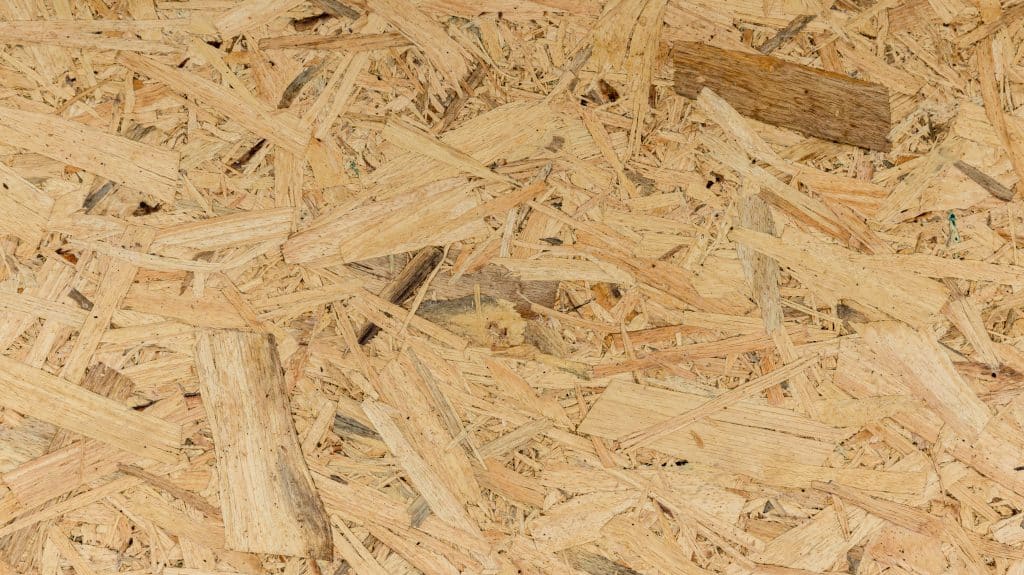
Oriented Strand Board (OSB) is a widely used, versatile structural wood panel. OSB makes efficient use of forest resources, by employing less valuable, fast-growing species. OSB is made from abundant, small diameter poplar and aspen trees to produce an economical structural panel. The manufacturing process can make use of crooked, knotty and deformed trees which would not otherwise have commercial value, thereby maximizing forest utilization. OSB has the ability to provide structural performance advantages, an important component of the building envelope and cost savings. OSB is a dimensionally stable wood-based panel that has the ability to resist delamination and warping. OSB can also resist racking and shape distortion when subjected to wind and seismic loadings. OSB panels are light in weight and easy to handle and install. OSB panels are primarily used in dry service conditions as roof, wall and floor sheathing, and act as key structural components for resisting lateral loads in diaphragms and shearwalls. OSB is also used as the web material for some types of prefabricated wood I-joists and the skin material for structural insulated panels. OSB can also be used in siding, soffit, floor underlayment and subfloor applications. Some specialty OSB products are made for siding and for concrete formwork, although OSB is not commonly treated using preservatives. OSB has many interleaved layers which provide the panel with good nail and screw holding properties. Fasteners can be driven as close as 6 mm (1/4 in) from the panel edge without risk of splitting or breaking out. OSB is a structural mat-formed panel product that is made from thin strands of aspen or poplar, sliced from small diameter roundwood logs or blocks, and bonded together with a waterproof phenolic adhesive that is cured under heat and pressure. OSB is also manufactured using the southern yellow pine species in the United States. Other species, such as birch, maple or sweetgum can also be used in limited quantities during manufacture. OSB is manufactured with the surface layer strands aligned in the long panel direction, while the inner layers have random or cross alignment. Similar to plywood, OSB is stronger along the long axis compared to the narrow axis. This random or cross orientation of the strands and wafers results in a structural engineered wood panel with consistent stiffness and strength properties, as well as dimensional stability. It is also possible to produce directionally-specific strength properties by adjusting the orientation of strand or wafer layers. The wafers or strands used in the manufacture of OSB are generally up to 150 mm (6 in) long in the grain direction, 25 mm (1 in) wide and less than 1 mm (1/32″) in thickness. In Canada, OSB panels are manufactured to meet the requirements of the CSA O325 standard. This standard sets performance ratings for specific end uses such as floor, roof and wall sheathing in light-frame wood construction. Sheathing conforming to CSA O325 is referenced in Part 9 of the National Building Code of Canada (NBC). In addition, design values for OSB construction sheathing are listed in CSA O86, allowing for engineering design of roof sheathing, wall sheathing and floor sheathing using OSB conforming to CSA O325. OSB panels are manufactured in both imperial and metric sizes, and are either square-edged or tongue-and-grooved on the long edges for panels 15 mm (19/32 in) and thicker. For more information on available sizes of OSB panel, refer to the document below. For more information on OSB, please refer to the following resources: APA – The Engineered Wood Association National Building Code of Canada CSA O86 Engineering design in wood CSA O325 Construction sheathing CSA O437 Standards on OSB and Waferboard PFS TECO Example specifications for oriented strand board (OSB) Oriented Strand Board (OSB) Grades Oriented Strand Board (OSB) Manufacture Oriented Strand Board (OSB) Quality Control Oriented Strand Board (OSB) Sizes Oriented Strand Board (OSB) Storage and Handling
Preservative Treated Wood
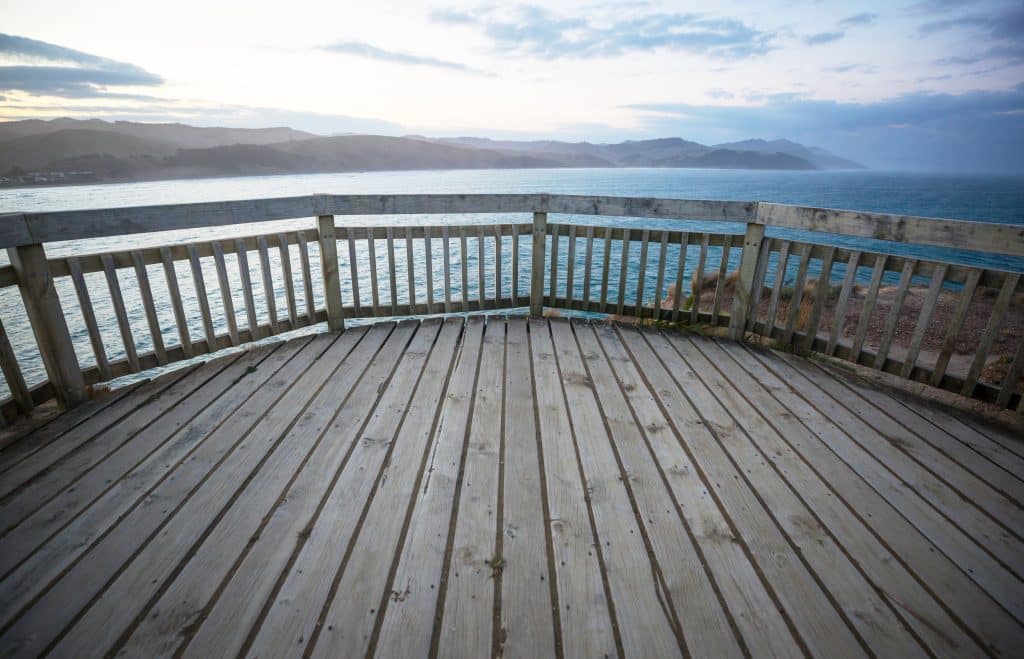
Preservative-treated wood is surface coated or pressure impregnated with chemicals that improve the resistance to damage that can result from biological deterioration (decay) due to the action of fungi, insects, and microorganisms. Preservative treatment offers a means for improving the resistance and extending the service life of those wood species which do not have sufficient natural resistance under certain in-use conditions. It is possible to extend the service life of untreated wood products by up to ten times through the use of preservative treatment. Preservative-treated wood can be used for exterior structures that require resistance to fungal decay and termites, such as: bridges, utility poles, railway ties, docks, marinas, fences, gazebos, pergolas, playground equipment, and landscaping. Four factors are necessary to sustain life for wood destroying fungi; a suitable food supply (wood fibre), a sustained minimum wood moisture content of about 20 percent (common for exterior use conditions), exposure to air, and a favourable temperature for growth (cold temperatures inhibit, but do not eliminate fungi growth). Preservative treatment is effective because it removes the food supply by making it poisonous to the fungi and wood destroying insects such as termites. An effective wood preservative must have the ability to penetrate the wood, neutralize the food supply of fungi and insects, and be present in sufficient quantities in a non-leachable form. Effective preservatives will also kill existing fungi and insects that might already exist in the wood. There are two basic methods of treating wood; with and without pressure. Non-pressure methods include the application of preservative by brushing, spraying or dipping the piece of wood. These superficial treatments do not result in deep penetration or large absorption of preservative and are typically restricted to field treatment during construction. Deeper and more thorough penetration is achieved by driving the preservative into the wood cells with pressure. Various combinations of pressure and vacuum are used to force adequate levels of chemical into the wood. For a wood preservative to function effectively it must be applied under controlled conditions, to specifications known to ensure that the preservative-treated wood will perform under specific in-use conditions. The manufacture and application of wood preservatives are governed by the CSA O80 series of standards. CSA O80 provides information on the wood species that may be treated, the types of preservatives and the retention and penetration of preservative in the wood that must be achieved for the use category or application. To ensure that the specified degree of protection will be provided, a preservative-treated wood product may bear a stamp indicating the suitability for a specific use category. Wood preservatives in Canada are governed by the Pest Control Products Act and must be registered with the Pest Management Regulatory Agency (PMRA) of Health Canada. Common types of wood preservatives that are used in Canada include chromated copper arsenate (CCA), alkaline copper quaternary (ACQ), copper azole (CA), micronized copper azole (MCA), borates, creosote, pentachlorophenol, copper naphthenate and zinc naphthenate. Acid salts can lessen the strength of wood if they are present in large concentrations. The concentrations used in preservative-treated wood are sufficiently small so that they do not affect the strength properties under normal use conditions. In some cases, the specified strength and stiffness of wood is reduced due to incising of the wood during the pressure impregnation process (refer to CSA O86 for further information on structural design reduction factors). Hot dipped galvanized or stainless steel fasteners and connection hardware are usually required to be used in conjunction with preservative-treated wood. There may be additional materials, such as polymer or ceramic coatings, or vinyl or plastic flashings that are suitable for use with preservative-treated wood products. The manufacturer should be consulted prior to specification of fasteners and connection hardware. For further information, refer to the following resources: www.durable-wood.com Wood Preservation Canada Canadian Wood Preservation Association CSA O80 Series Wood preservation CSA O86 Engineering design in wood Pest Management Regulatory Agency of Health Canada American Wood Protection Association
Nails
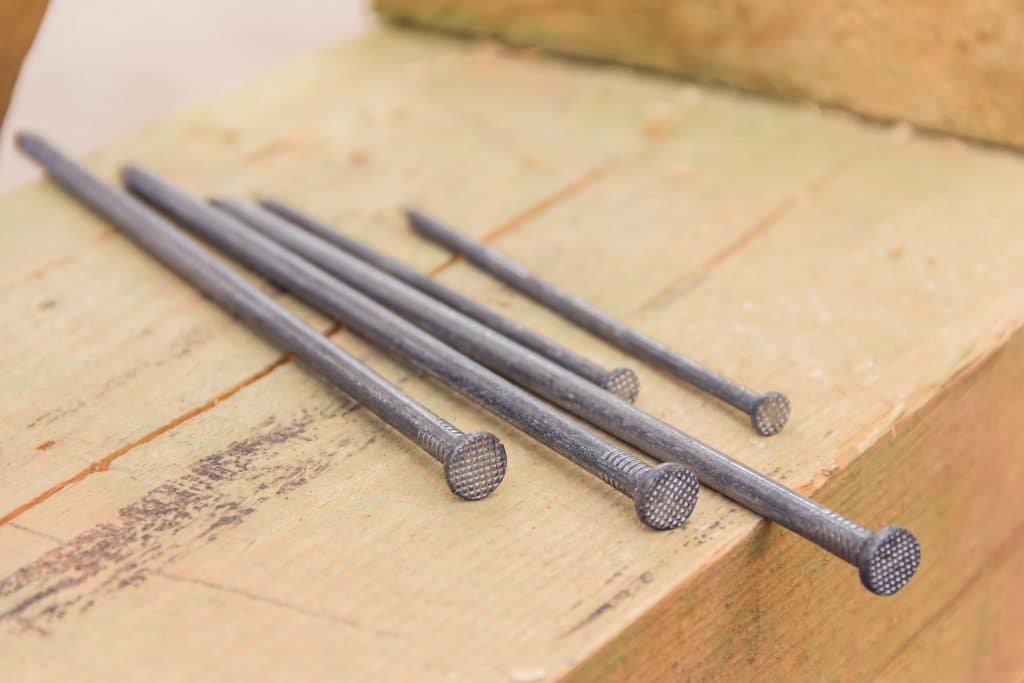
Nailing is the most basic and most commonly used means of attaching members in wood frame construction. Common nails and spiral nails are used extensively in all types of wood construction. Historical performance, along with research results have shown that nails are a viable connection for wood structures with light to moderate loads. They are particularly useful in locations where redundancy and ductile connections are required, such as loading under seismic events. Typical structural applications for nailed connections include: wood frame construction post and beam construction heavy timber construction shearwalls and diaphragms nailed gussets for wood truss construction wood panel assemblies Nails and spikes are manufactured in many lengths, diameters, styles, materials, finishes and coatings, each designed for a specific purpose and application. In Canada, nails are specified by the type and length and are still manufactured to Imperial dimensions. Nails are made in lengths from 13 to 150 mm (1/2 to 6 in). Spikes are made in lengths from 100 to 350 mm (4 to 14 in) and are generally stockier than nails, that is, a spike has a larger cross-sectional area than an equivalent length common nail. Spikes are generally longer and thicker than nails and are generally used to fasten heavy pieces of timber. Nail diameter is specified by gauge number (British Imperial Standard). The gauge is the same as the wire diameter used in the manufacture of the nail. Gauges vary according to nail type and length. In the U.S., the length of nails is designated by “penny” abbreviated “d”. For example, a twenty-penny nail (20d) has a length of four inches. The most common nails are made of low or medium carbon steels or aluminum. Medium-carbon steels are sometimes hardened by heat treating and quenching to increase toughness. Nails of copper, brass, bronze, stainless steel, monel and other special metals are available if specially ordered. Table 1, below, provides examples of some common applications for nails made of different materials. TABLE 1: Nail applications for alternative materials Material Abbreviation Application Aluminum A For improved appearance and long life: increased strain and corrosion resistance. Steel – Mild S For general construction. Steel – Medium Carbon Sc For special driving conditions: improved impact resistance. Stainless steel, copper and silicon bronze E For superior corrosion resistance: more expensive than hot-dip galvanizing. Uncoated steel nails used in areas subject to wetting will corrode, react with extractives in the wood, and result in staining of the wood surface. In addition, the naturally occurring extractives in cedars react with unprotected steel, copper and blued or electro-galvanized fasteners. In such cases, it is best to use nails made of non-corrosive material, such as stainless steel, or finished with non-corrosive material such as hot-dipped galvanized zinc. Table 2, below, provides examples of some common applications for alternative finishes and coatings of nails. TABLE 2: Nail applications for alternative finishes and coatings Nail Finish or Coating Abbreviation Application Bright B For general construction, normal finish, not recommended for exposure to weather. Blued Bl For increased holding power in hardwood, thin oxide finish produced by heat treatment. Heat treated Ht For increased stiffness and holding power: black oxide finish. Phoscoated Pt For increased holding power; not corrosion resistant. Electro galvanized Ge For limited corrosion resistance; thin zinc plating; smooth surface; for interior use. Hot-dip galvanized Ghd For improved corrosion resistance; thick zinc coating; rough surface; for exterior use. Pneumatic or mechanical nailing guns have found wide-spread acceptance in North America due to the speed with which nails can be driven. They are especially cost effective in repetitive applications such as in shearwall construction where nail spacing can be considerably closer together. The nails for pneumatic guns are lightly attached to each other or joined with plastic, allowing quick loading nail clips, similar to joined paper staples. Fasteners for these tools are available in many different sizes and types. Design information provided in CSA O86 is applicable only for common round steel wire nails, spikes and common spiral nails, as defined in CSA B111. The ASTM F1667 Standard is also widely accepted and includes nail diameters that are not included in the CSA B111. Other nail-type fastenings not described in CSA B111 or ASTM F1667 may also be used, if supporting data is available. Types of Nails For more information, refer to the following resources: International, Staple, Nail, and Tool Association (ISANTA) CSA O86 Engineering design in wood CSA B111 Wire Nails, Spikes and Staples ASTM F1667 Standard Specification for Driven Fasteners: Nails, Spikes and Staples
Screws
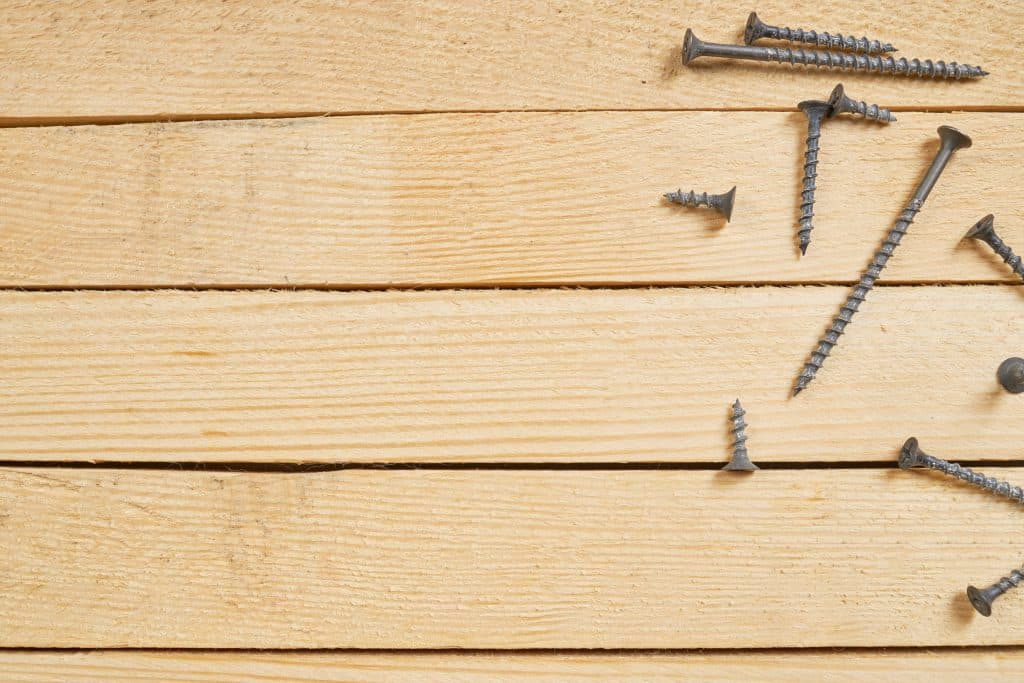
Wood screws are manufactured in many different lengths, diameters and styles. Wood screws in structural framing applications such as fastening floor sheathing to the floors joists or the attachment of gypsum wallboard to wall framing members. Wood screws are often higher in cost than nails due to the machining required to make the thread and the head. Screws are usually specified by gauge number, length, head style, material and finish. Screw lengths between 1 inch and 2 ¾ inch lengths are manufactured in ¼ inch intervals, whereas screws 3 inches and longer, are manufactured in ½ inch intervals. Designers should check with suppliers to determine availability. Design provisions in Canada are limited to 6, 8, 10 and 12 gauge screws and are applicable only for wood screws that meet the requirements of ASME B18.6.1. For wood screw diameters greater than 12 gauge, design should be in accordance with the lag screw requirements of CSA O86. Screws are designed to be much better at resisting withdrawal than nails. The length of the threaded portion of the screw is approximately two-thirds of the screw length. Where the wood relative density is equal to or greater than 0.5, lead holes, at least the length of the threaded portion of the shank, are required. In order to reduce the occurrence of splitting, pre-drilled holes are recommended for all screw connections. The types of wood screws commonly used are shown in Figure 5.4, below. For more information on wood screws, refer to the following resources: ASME B18.6.1 Wood Screws CSA O86 Engineering design in wood
Timber Joinery
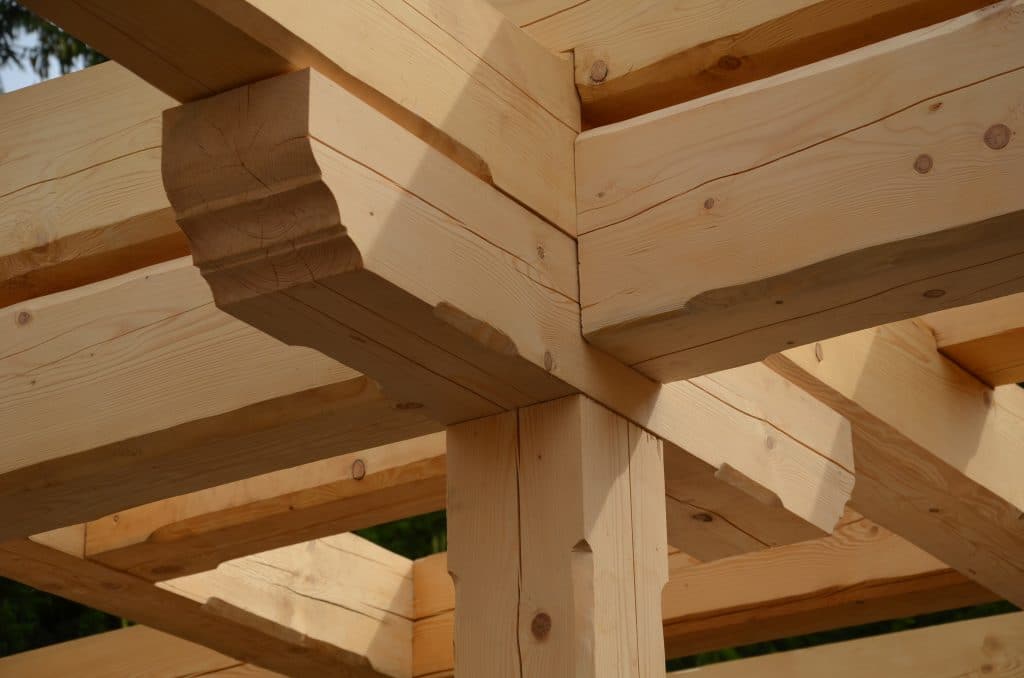
Many historic structures in North America were built at a time when metal fasteners were not readily available. Instead, wood members were joined by shaping the adjoining wood members to interlock with one another. Timber joinery is a traditional post and beam wood construction technique used to connect wood members without the use of metal fasteners. Timber joinery requires that the ends of timbers are carved out so that they fit together like puzzle pieces. The variations and configurations of wood-to-wood joints is quite large and complex. Some common wood-to-wood timber joints include mortise and tenon, dovetail, tying joint, scarf joint, bevelled shoulder joint, and lap joint. There are many variations and combinations of these and other types of timber joinery. Refer to Figure 5.18, below, for some examples of timber joinery. For load transfer, timber joinery relies upon the interlocking of adjoining wood members. The mated joints are restrained by inserting wooden pegs into holes bored through the interlocked members. A hole about an inch in diameter is drilled right through the joint, and a wooden peg is pounded in to hold the joint together. Metal fasteners require only minimal removal of wood fibre in the area of the fasteners and therefore, the capacity of the system is often governed by the moderate sized wood members to carry horizontal and vertical loads. Timber joinery, on the contrary, requires the removal of a significant volume of wood fibre where joints occur. For this reason, the capacity of traditional timber joinery construction is usually governed by the connections and not by the capacity of the members themselves. To accommodate for the removal of wood fibre at the connection locations, member sizes of wood construction systems that employ timber joinery, such as post and beam construction, are often larger than wood construction systems that make use of metal fasteners. Wood engineering design standards in Canada do not provide specific load transfer information for timber joinery due to their sensitivity to workmanship and material quality. As a result, engineering design must be conservative, often resulting in larger member sizes. The amount of skill and time required for measuring, fitting, cutting, and trial assembly is far greater for timber joinery than for other types of wood construction. Therefore, it is not the most economical means of connecting the members of wood buildings. Timber joinery is not used where economy is the overriding design criteria. Instead, it is used to provide a unique structural appearance which portrays the natural beauty of wood without distraction. Timber joinery offers a unique visual appearance exhibiting a high degree of craftmanship. For further information, refer to the following resources: Timber Framers Guild
Plywood
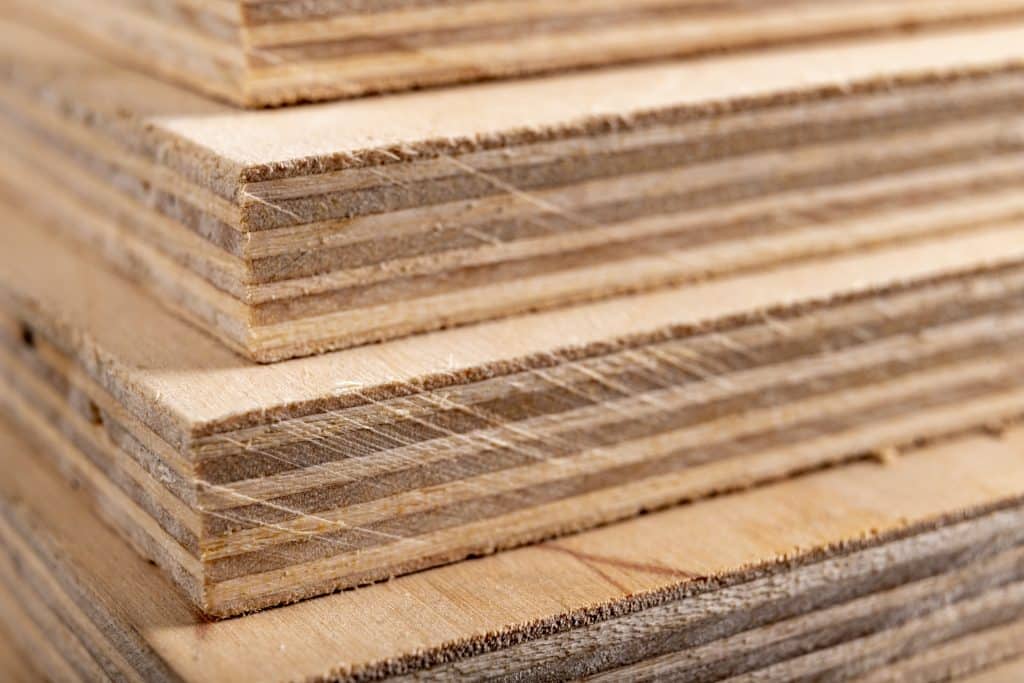
Plywood is a widely recognized engineered wood-based panel product that has been used in Canadian construction projects for decades. Plywood panels manufactured for structural applications are built up from multiple layers or plys of softwood veneer that are glued together so that the grain direction of each layer of veneer is perpendicular to that of the adjacent layers. These cross-laminated sheets of wood veneer are bonded together with a waterproof phenol-formaldehyde resin adhesive and cured under heat and pressure. Plywood panels have superior dimensional stability, two-way strength and stiffness properties and an excellent strength-to-weight ratio. They are also highly resistant to impact damage, chemicals, and changes in temperature and relative humidity. Plywood remains flat to give a smooth, uniform surface that does not crack, cup or twist. Plywood can be painted, stained, or ordered with factory applied stains or finishes. Plywood is available with squared or tongue and groove edges, the latter of which can help to reduce labour and material costs by eliminating the need for panel edge blocking in certain design scenarios. Plywood is suitable for a variety of end uses in both wet and dry service conditions, including: subflooring, single-layer flooring, wall, roof and floor sheathing, structural insulated panels, marine applications, webs of wood I-joists, concrete formwork, pallets, industrial containers, and furniture. Plywood panels used as exterior wall and roof sheathing perform multiple functions; they can provide resistance to lateral forces such as wind and earthquake loads and also form an integral component of the building envelope. Plywood may be used as both a structural sheathing and a finish cladding. For exterior cladding applications, specialty plywoods are available in a broad range of patterns and textures, combining the natural characteristics of wood with superior strength and stiffness properties. When treated with wood preservatives, plywood is also suitable for use under extreme and prolonged moisture exposure such as permanent wood foundations. Plywood is available in a wide variety of appearance grades, ranging from smooth, natural surfaces suitable for finish work to more economical unsanded grades used for sheathing. Plywood is available in more than a dozen common thicknesses and over twenty different grades. Unsanded sheathing grade Douglas Fir Plywood (DFP), conforming to CSA O121, and Canadian Softwood Plywood (CSP), conforming to CSA O151, are the two most common types of softwood plywoods produced in Canada. All structural plywood products are marked with a legible and durable grade stamp that indicates: conformance to either CSA O121, CSA O151 or CSA O153, the manufacturer, the bond type (EXTERIOR), the species (DFP) or (CSP), and the grade. Plywood can be chemically treated to improve resistance to decay or to fire. Preservative treatment must be done by a pressure process, in accordance with CSA O80 standards. It is required that plywood manufacturers carry out testing in conformance with ASTM D5516 and ASTM D6305 to determine the effects of fire retardants, or any other potentially strength-reducing chemicals. For further information, refer to the following resources: APA – The Engineered Wood Association CSA O121 Douglas fir plywood, CSA O151 Canadian softwood plywood CSA O153 Poplar plywood CSA O86 Engineering design in wood CSA O80 Wood preservation ASTM D5516 Standard Test Method for Evaluating the Flexural Properties of Fire-Retardant Treated Softwood Plywood Exposed to Elevated Temperatures ASTM D6305 Standard Practice for Calculating Bending Strength Design Adjustment Factors for Fire-Retardant-Treated Plywood Roof Sheathing National Building Code of Canada Example Specifications for Plywood Plywood Grades Plywood Handling and Storage Plywood Manufacture Plywood Sizes Quality Control of Plywood
Plank Decking
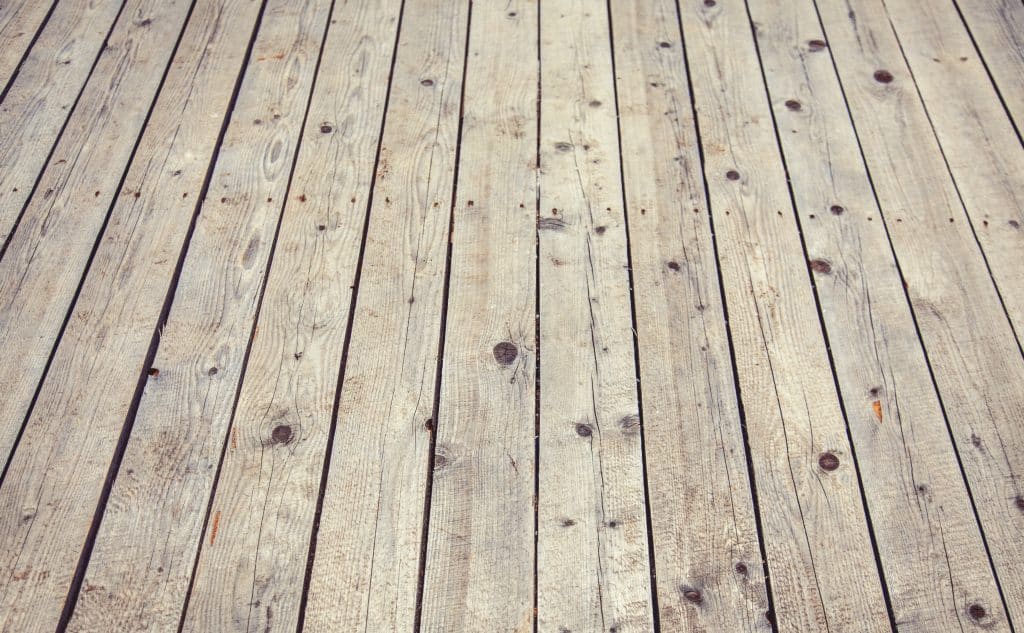
Plank decking may be used to span farther and carry greater loads than panel products such as plywood and oriented strand board (OSB). Plank decking is often used where the appearance of the decking is desired as an architectural feature or where the fire performance must meet the heavy timber construction requirements outlined in Part 3 of the National Building Code of Canada. Plank decking is usually used in mass timber or post and beam structures and is laid with the flat or wide face over supports to provide a structural deck for floors and roofs. Plank decking can be used in either wet or dry service conditions and can be treated with preservatives, dependent on the wood species. Nails and deck spikes are used to fasten adjacent pieces of plank decking to one another and are also used to fasten the deck to its supports. Decking is generally available in the following species: Douglas fir (D.Fir-L species combination) Pacific coast hemlock (Hem-Fir species combination) Various species of spruce, pine and fir (S-P-F species combination) Western red cedar (Northern species combination) In order to product plank decking, sawn lumber is milled into a tongue and groove profile with special surface machining, such as a V-joint. Plank decking is normally produced in three thicknesses: 38 mm (1-1/2 in), 64 mm (2-1/2 in) and 89 mm (3-1/2 in). The 38 mm (1-1/2 in) decking has a single tongue and groove while the thicker sizes have a double tongue and groove. Thicknesses greater than 38 mm (1-1/2 in) also have 6 mm (1/4 in) diameter holes at 760 mm (2.5 ft) spacing so that each piece may be nailed to the adjacent one with deck spikes. The standard sizes and profiles are shown below. Plank decking is most readily available in random lengths of 1.8 to 6.1 m (6 to 20 ft). Decking can be ordered in specific lengths, but limited availability and extra costs should be expected. A typical specification for random lengths could require that at least 90 percent of the plank decking be 3.0 m (10 ft) and longer, and at least 40 percent be 4.9 m (16 ft) and longer. Plank decking is available in two grades: Select grade (Sel) Commercial grade (Com) Select grade has a higher quality appearance and is also stronger and stiffer than commercial grade. Plank decking is required to be manufactured in accordance with CSA O141 and graded under the NLGA Standard Grading Rules for Canadian Lumber. Since plank decking is not grade stamped like dimensional lumber, verification of the grade should be obtained in writing from the supplier or a qualified grading agency should be retained to check the supplied material. To minimize shrinkage and warping, plank decking consists of sawn lumber members that are dried to a moisture content of 19 percent or less at the time of surfacing (S-Dry). The use of green decking can result in the loosening of the tongue and groove joint over time and a reduction in structural and serviceability performance. Individual planks can span simply between supports, but are generally random lengths spanning several supports for economy and to take advantage of increased stiffness. There are three methods of installing plank decking: controlled random, simple span and two span continuous. A general design rule for controlled random plank decking is that spans should not be more than 600 mm (2 ft) longer than the length which 40 percent of the decking shipment exceeds. Both the latter methods of installation require planks of predetermined length and a consequently there could be an associated cost premium. Profiles and Sizes of Plank Decking
Wood in non-combustible buildings
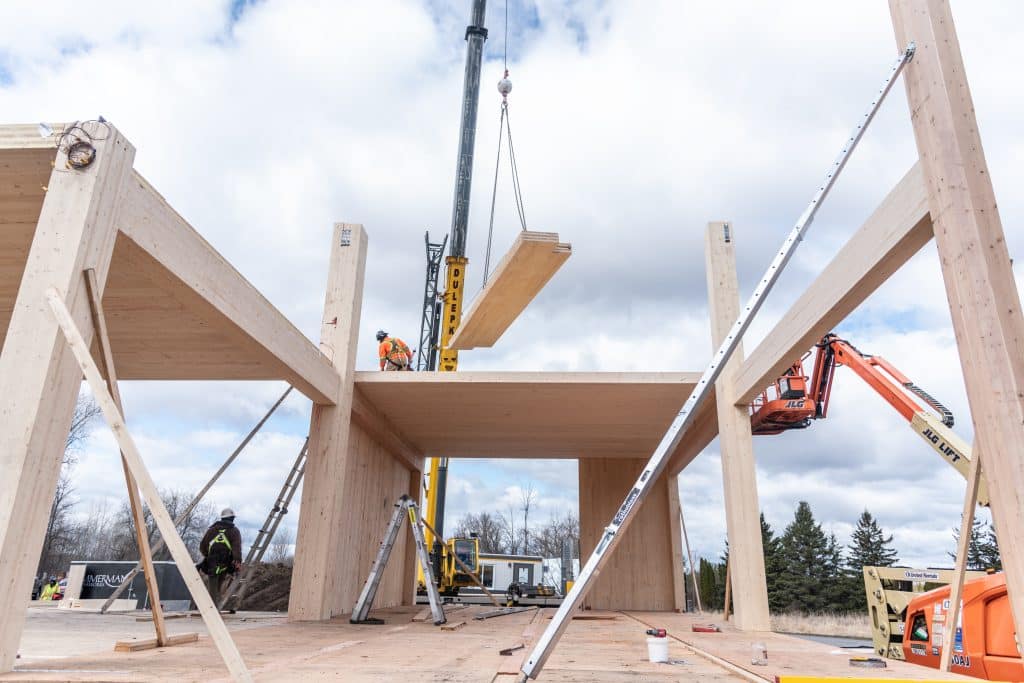
The National Building Code of Canada (NBC) requires that some buildings be of ‘noncombustible construction’ under its prescriptive requirements. Noncombustible construction is, however, something of a misnomer, in that it does not exclude the use of ‘combustible’ materials but rather, it limits their use. Some combustible materials can be used since it is neither economical nor practical to construct a building entirely out of ‘noncombustible’ materials. Wood is probably the most prevalent combustible material used in noncombustible buildings and has numerous applications in buildings classified as noncombustible construction under the NBC. This is due to the fact that building regulations do not rely solely on the use of noncombustible materials to achieve an acceptable degree of fire safety. Many combustible materials are allowed in concealed spaces and in areas where, in a fire, they are not likely to seriously affect other fire safety features of the building. For example, there are permissions for use of heavy timber construction for roofs and roof structural supports. It may also be used in partition walls and as wall finishes, as well as furring strips, fascia and canopies, cant strips, roof curbs, fire blocking, roof sheathing and coverings, millwork, cabinets, counters, window sashes, doors, and flooring. Its use in certain types of buildings such as tall buildings is slightly more limited in areas such as exits, corridors and lobbies, but even there, fire-retardant treatments can be used to meet NBC requirements. The NBC also allows the use of wood cladding for buildings designated to be of noncombustible construction. In sprinklered noncombustible buildings not more than two-storeys in height, entire roof assemblies and the roof supports can be heavy timber construction. To be acceptable, the heavy timber components must comply with minimum dimension and installation requirements. Heavy timber construction is afforded this recognition because of its performance record under actual fire exposure and its acceptance as a fire-safe method of construction. Fire loss experience has shown, even in unsprinklered buildings, that heavy timber construction is superior to noncombustible roof assemblies not having any fire-resistance rating. In other noncombustible buildings, heavy timber construction, including the floor assemblies, is permitted without the building being sprinklered. In sprinklered buildings permitted to be of combustible construction, no fire-resistance rating is required for the roof assembly or its supports when constructed from heavy timber. In these cases, a heavy timber roof assembly and its supports would not have to conform to the minimum member dimensions stipulated in the NBC. NBC definitions: Combustible means that a material fails to meet the acceptance criteria of CAN/ULC-S114, “Test for Determination of Non-Combustibility in Building Materials.” Combustible construction means that type of construction that does not meet the requirements for noncombustible construction. Heavy timber construction means that type of combustible construction in which a degree of fire safety is attained by placing limitations on the sizes of wood structural members and on thickness and composition of wood floors and roofs and by the avoidance of concealed spaces under floors and roofs. Noncombustible construction means that type of construction in which a degree of fire safety is attained by the use of noncombustible materials for structural members and other building assemblies. Noncombustible means that a material meets the acceptance criteria of CAN/ULC-S114, “Test for Determination of Non-Combustibility in Building Materials.” For further information, refer to the following resources: Wood Design Manual, Canadian Wood Council National Building Code of Canada CAN/ULC-S114 Test for Determination of Non-Combustibility in Building Materials Stairs and storage lockers in noncombustible buildings Stairs within a dwelling unit can be made of wood, as can storage lockers in residential buildings. These are permitted, as their use is not expected to present a significant fire hazard. Wood roofing materials in noncombustible buildings In the installation of roofing, wood cant strips, roof curbs, nailing strips, and similar components may be used. Wood roofs defined as ‘heavy timber construction’ in the NBC are permitted in any noncombustible building two-storeys or less in height when the building is protected by a sprinkler system. Roof sheathing and sheathing supports of wood are permitted in noncombustible buildings provided: The noncombustible parapets and shafts are required to prevent roof materials igniting from flames projecting from openings in the building face or roof deck.Roof coverings have often been contributing factors in conflagrations. Most roof coverings, even today, are combustible by the very nature of the materials used to make them waterproof. The objective of the NBC is to require that the risks associated with a roof covering be minimized for the type of building, its location and use. The NBC permits roof coverings that meet a Class C rating to be used for any building regulated by Part 3, including any noncombustible building, regardless of height or area. This C rating can be met easily using fire-retardant-treated wood (FRTW) shakes or shingles, asphalt shingles, or roll roofing. In buildings that are required to be of noncombustible construction, the roof coverings must have a fire classification of Class A, B or C. In such cases, the use of FRTW shakes and shingles on sloped roofs is allowed. Small assembly occupancy buildings not more than two-storeys in building height and less than 1000 m2 (10,000 ft2) in building area do not require a classification for the roof covering. In these traditional cases, untreated wood shingles are acceptable if they are underlaid with a noncombustible material to reduce the potential for burn through. Wood partitions in noncombustible buildings Wood framing has many applications in partitions in both low-rise and high-rise buildings required to be of noncombustible construction. The framing can be located in most types of partitions, with or without a fire- resistance rating. Wood framing and sheathing is permitted in partitions, or alternatively, solid lumber partitions at least 38 mm (2 in nominal) thick are permitted, provided: Alternatively, wood framing is permitted in partitions throughout floor areas, and can be used in most fire separations with no limits on compartment size or a need for sprinkler protection provided: Similarly, as a final
Lumber
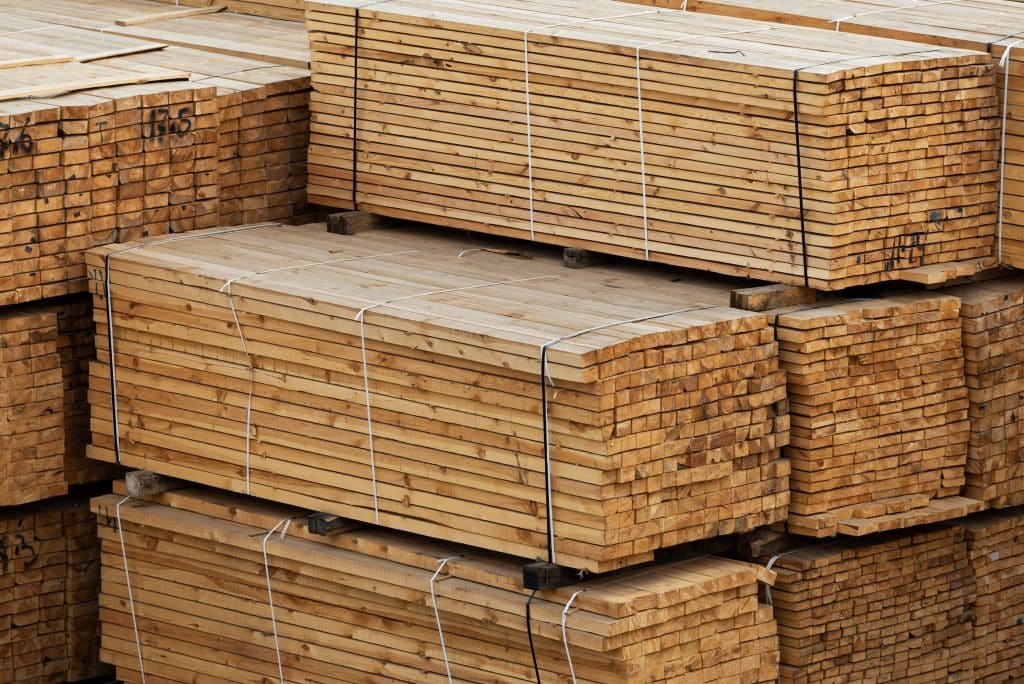
Dimension lumber is solid sawn wood that is less than 89 mm (3.5 in) in thickness. Lumber can be referred to by its nominal size in inches, which means the actual size rounded up to the nearest inch or by its actual size in millimeters. For instance, 38 × 89 mm (1-1/2 × 3-1/2 in) material is referred to nominally as 2 × 4 lumber. Air-dried or kiln dried lumber (S-Dry), having a moisture content of 19 percent or less, is readily available in the 38 mm (1.5 in) thickness. Dimension lumber thicknesses of 64 and 89 mm (2-1/2 and 3-1/2 in) are generally available as surfaced green (S-Grn) only, i.e., moisture content is greater than 19 percent. The maximum length of dimension lumber that can be obtained is about 7 m (23 ft), but varies throughout Canada. The predominant use of dimension lumber in building construction is in framing of roofs, floors, shearwalls, diaphragms, and load bearing walls. Lumber can be used directly as framing materials or may be used to manufacture engineered structural products, such as light frame trusses or prefabricated wood I-joists. Special grade dimension lumber called lamstock (laminating stock) is manufactured exclusively for glulam. Quality assurance of Canadian lumber is achieved via a complex system of product standards, engineering design standards and building codes, involving grading oversight, technical support and a regulatory framework. Checking and splitting Checking and splitting Checking occurs when lumber is rapidly dried. The surface dries quickly, while the core remains at a higher moisture content for some time. As a result, the surface attempts to shrink but is restrained by the core. This restraint causes tensile stresses at the surface, which if large enough, can pull the fibres apart, thereby creating a check. Splits are through checks that generally occur at the end of wood members. When a wood member dries, moisture is lost very rapidly from the end of the member. At midlength, however, the wood is still at a higher moisture content. This difference in moisture content creates tensile stresses at the end of the member. When the stresses exceed the strength of the wood, a split is formed. Large dimension solid sawn timbers are susceptible to checking and splitting since they are always dressed green (S-Grn). Furthermore, due to their large size, the core dries slowly and the tensile stresses at the surface and at the ends can be large. Minor checks confined to the surface areas of a wood member very rarely have any effect on the strength of the member. Deep checks could be significant if they occur at a point of high shear stress. Checks in columns are not of structural importance, unless the check develops into a through split that will increase the slenderness ratio of the column. The specified shear strengths of dimension lumber and timbers have been developed to consider the maximum amount of checking or splitting permitted by the applicable grading rule. The possibility and severity of splitting and checking can be reduced by controlling the rate at which drying occurs. This may be done by keeping wood out of direct sunlight and away from any artificial heat sources. Furthermore, the ends may be coated with an end sealer to retard moisture loss. Other actions which will minimize dimension change and the possibility of checking or splitting are: specifying wood products that are as close as possible in moisture content to the expected equilibrium moisture content of the end use ensuring dry wood products are protected by proper storage and handling Fingerjoined lumber Fingerjoined products are manufactured by taking shorter pieces of kiln-dried lumber, machining a ‘finger’ profile in each end of the short-length pieces, adding an appropriate structural adhesive, and end-gluing the pieces together to make a longer length piece of lumber. The length of a fingerjoined lumber is not limited by the length of the log. In fact, the manufacturing process can result in the production of joists and rafters in lengths of 12 m (40 ft) or more. The process of fingerjoining is also used within the manufacturing process for several other engineered wood products, including glued-laminated timber and wood I-joists. The specific term “fingerjoined lumber” applies to dimension lumber that contains finger joints. Fingerjoining derives greater value from the forest resource by using short length pieces of lower grade lumber as input for the manufacture of a value-added engineered wood product. The fingerjoining process utilizes short off cut pieces of lumber and results in more efficient use of the harvested wood fibre. Fingerjoined lumber can be manufactured from any commercial species or species group. The most commonly used species group from which fingerjoined lumber is produced is Spruce-Pine-Fir (S-P-F). Design advantages of fingerjoined lumber Fingerjoined lumber is an engineered wood product that is desirable for several reasons: straightness dimensional stability interchangeability with non-fingerjointed lumber highly efficient use of wood fibre The design and performance advantages of this engineered wood product are its straightness and dimensional stability. The straightness and dimensional stability of fingerjoined lumber is a result of short length pieces of lumber, consisting of relatively straight grain and fewer natural defects, being combined with one another to form a longer length piece of lumber. The grain pattern along fingerjoined lumber becomes non-uniform and random by attaching many short pieces together. This results in fingerjoined lumber being less prone to warping than solid sawn lumber. The fingerjoining process also results in the reduction or removal of strength reducing defects, producing a structural wood product with less variable engineering properties than solid sawn dimensional lumber. The most common use of finger-joined lumber is as studs in shearwalls and vertical load bearing walls. The most important factor for studs is straightness. Fingerjoined studs will stay straighter than solid sawn dimensional lumber studs when subjected to changes in temperature and humidity. This feature results in significant benefits to the builder and homeowner including a superior building, the elimination of nail pops in drywall and other problems related to dimensional changes.
Mass Timber
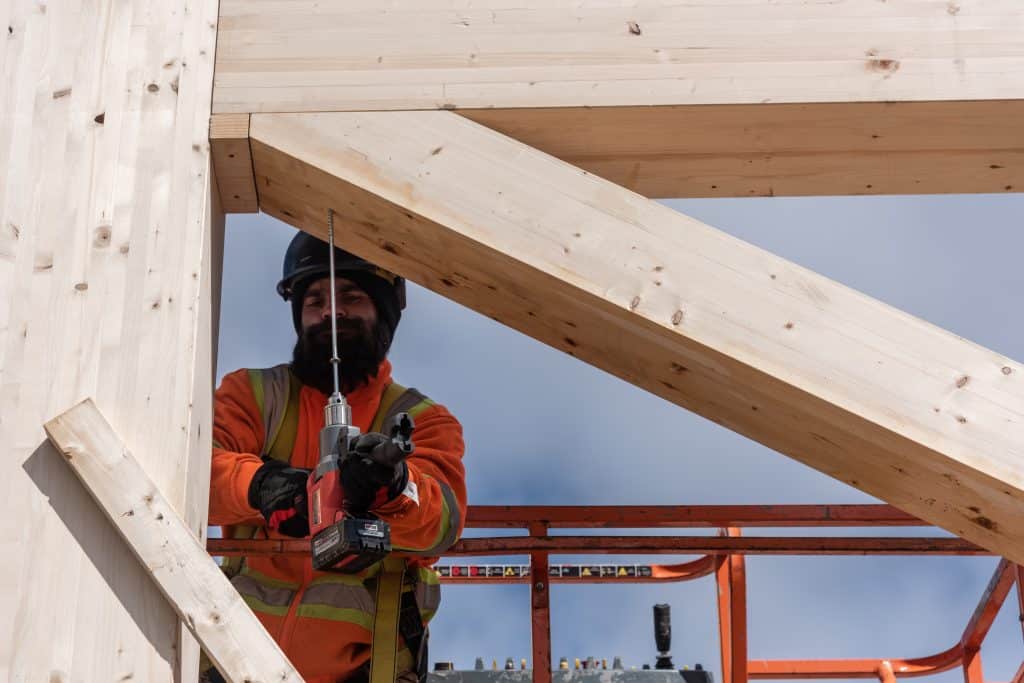
Advancements in wood product technology and systems are driving the momentum for innovative buildings in Canada. Products such as cross-laminated timber (CLT), nailed-laminated timber (NLT), glued-laminated timber (GLT), laminated strand lumber (LSL), laminated veneer lumber (LVL) and other large-dimensioned structural composite lumber (SCL) products are part of a bigger classification known as ‘mass timber’. Although mass timber is an emerging term, traditional post-and-beam (timber frame) construction has been around for centuries. Today, mass timber products can be formed by mechanically fastening and/or bonding with adhesive smaller wood components such as dimension lumber or wood veneers, strands or fibres to form large pre-fabricated wood elements used as beams, columns, arches, walls, floors and roofs. Mass timber products have sufficient volume and cross-sectional dimensions to offer significant benefits in terms of fire, acoustics and structural performance, in addition to providing construction efficiency.