
Webinar: Timber and Off-Site Construction
Mass Timber Business Case Studies
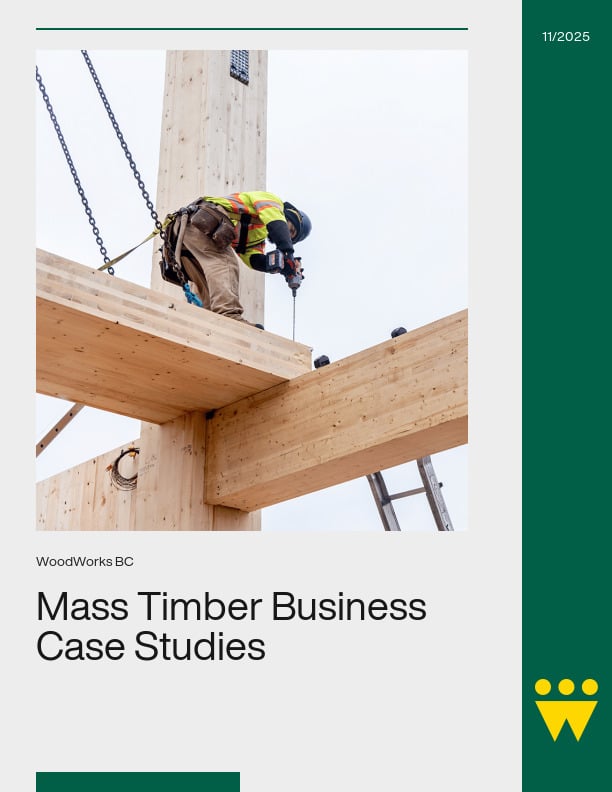
This document presents a series of business case studies that explore the financial performance of mass timber projects, providing quantitative data and qualitative insights to help developers and investors assess its economic viability. Each case study measures investment success, challenges, and lessons learned from the developer’s and project team’s perspectives. Moreover, by analyzing strategy, risk, revenue, cost and schedule, these case studies enable direct comparisons between mass timber and traditional construction methods. WoodWorks is seeking developers and owners with completed mass timber projects to share data for analysis, supporting education and training in the mass timber sector. The goal is to continuously expand case studies across various sectors and markets. To participate or learn more, please contact a WoodWorks staff member.
Webinar: Emerging Solutions for Mass Timber in Healthcare
Canadian Wood Council’s WoodWorks Program Welcomes Rothoblaas Canada as National Partner
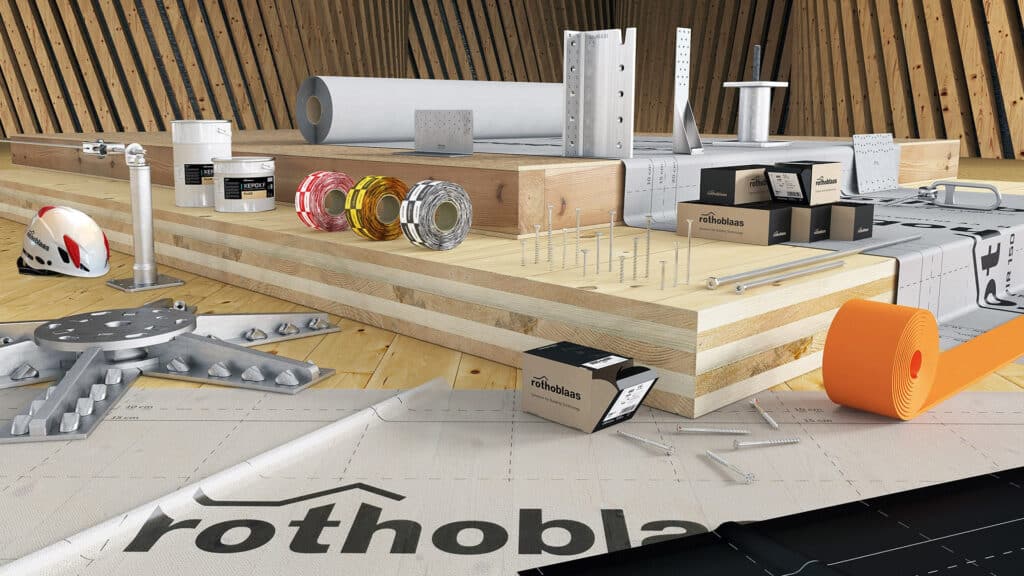
Ottawa, Ontario – October 16, 2025 — The Canadian Wood Council (CWC) is pleased to welcome Rothoblaas Canada as a new national partner of its WoodWorks program. This collaboration aligns two organizations committed to advancing wood construction across Canada through education, technical support, and strategic market development. As demand for high-performance, low-carbon buildings drives greater adoption of mass timber and other engineered wood systems, this partnership will strengthen the technical ecosystem supporting Canada’s construction industry. Leveraging Rothoblaas’s international leadership in structural connection technologies, envelope systems, and on-site safety solutions alongside WoodWorks’ national expertise in education, technical support, and market development, the collaboration will help advance best practices in timber design and construction. Together, the organizations will facilitate knowledge transfer and design innovation to support the integration of wood as a mainstream material in Canadian building projects. “For more than 20 years, WoodWorks has been delivering technical expertise and support to the professionals advancing wood construction across Canada. Partnering with this respected network allows Rothoblaas Canada to share our global engineering experience and help drive innovation in connection systems, building envelope performance, and safe, efficient timber assembly,” says François-Laurent Chabot, General Manager & Region Sales Manager for Rothoblaas Canada. “WoodWorks is proud to collaborate with Rothoblaas Canada to help build industry knowledge and acceptance of modern timber connection systems and other assembly solutions,” says Rick Jeffery, President and CEO of the Canadian Wood Council. “This partnership integrates Rothoblaas Canada’s expertise in engineered connectors and building envelope technologies with WoodWorks’ national platform for education and sector advancement—supporting a more seamless, performance-based approach to wood construction.” Through shared outreach, resource development, and technical education across the country, this national partnership aims to equip architects, builders, and developers with the knowledge they need to confidently design and build with wood. Broader adoption of wood solutions can play a pivotal role in meeting national housing and infrastructure goals, while contributing to Canada’s climate objectives and the transition to a low-carbon economy. About the Canadian Wood Council The Canadian Wood Council (CWC) is Canada’s unifying voice for the wood products industry. As a national federation of associations, our members represent hundreds of manufacturers across the country. Our mission is to support our members by accelerating market demand for wood products and championing responsible leadership through excellence in codes, standards, and regulations. We also deliver technical support and knowledge transfer for the construction sector through our market leading WoodWorks program. About the National WoodWorks Program The Canadian Wood Council’s WoodWorks Program a national outreach initiative dedicated to advancing the use of wood in construction by providing educational opportunities and direct technical support. The program helps architects, engineers, developers and other industry professionals expand their capacity for wood design and construction, contributing to a more sustainable built environment. About Rothoblaas Canada Rothoblaas Canada is a leading provider of innovative solutions for mass timber and wood construction, offering a comprehensive range of structural fasteners, connection systems, membranes, and safety products. As part of the global Rothoblaas group, the Canadian division supports architects, engineers, and builders with technical expertise and code-compliant solutions tailored to local needs. Through research, education, and collaboration, Rothoblaas Canada advances high-performance, sustainable construction and helps drive the growth of Canada’s wood building industry.
Canadian Wood Council’s WoodWorks Program Welcomes Nordic Structures as National Partner
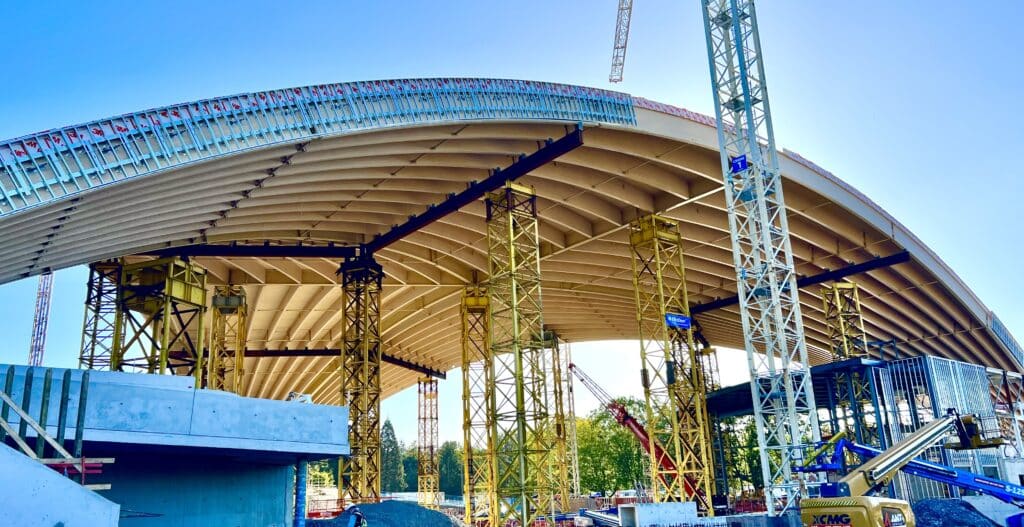
Ottawa, Ontario – October 14, 2025 — The Canadian Wood Council (CWC) is pleased to welcome Nordic Structures as a new national partner of its WoodWorks program. A longstanding Gold Level Sponsor of Cecobois (Centre d’expertise sur la construction commerciale en bois), WoodWorks’ sister organization in Quebec, Nordic Structures now joins WoodWorks as a partner at the national level. “Nordic Structures brings exceptional technical expertise and a deep commitment to responsible forest stewardship. Their collaboration with WoodWorks builds on years of leadership in Quebec and extends that impact nationally. By working together, we’re helping ensure that more communities across Canada can benefit from the innovation and environmental performance that wood construction delivers. “ says Rick Jeffery, President & CEO of the Canadian Wood Council. “Building on our valued relationship with Cecobois, we are excited to partner with WoodWorks to advance the knowledge, innovation, and adoption of engineered wood products as a structural solution across Canada,” said David Croteau, Nordic Structures, Vice-President, Operations and Engineering. As we look to the future, partnerships like this are vital to expanding the adoption of structural wood solutions that can meet Canada’s growing demand for affordable housing and resilient infrastructure. Nordic’s leadership in design, engineering, and manufacturing—combined with the technical expertise of WoodWorks—will help unlock new opportunities for high-performance, low-carbon buildings across every region of the country. About the Canadian Wood Council The Canadian Wood Council (CWC) is Canada’s unifying voice for the wood products industry. As a national federation of associations, our members represent hundreds of manufacturers across the country. Our mission is to support our members by accelerating market demand for wood products and championing responsible leadership through excellence in codes, standards, and regulations. We also deliver technical support and knowledge transfer for the construction sector through our market leading WoodWorks program. About the National WoodWorks Program The Canadian Wood Council’s WoodWorks Program a national outreach initiative dedicated to advancing the use of wood in construction by providing educational opportunities and direct technical support. The program helps architects, engineers, developers and other industry professionals expand their capacity for wood design and construction, contributing to a more sustainable built environment. Nordic Structures Nordic Structures offers engineered wood products and comprehensive technical services to enable state-of-the-art mass timber projects. Nordic’s founding company, Chantiers Chibougamau, responsibly harvests black spruce from Northern Quebec’s boreal forest and transforms the raw material into a full catalog of wood-based products, from I-joists to both industrial and architectural grades of glulam and CLT. Collaborating with architects, engineers, and construction firms, the team has delivered successful results on thousands of mass timber projects spanning all major sectors of public life.
Catherine Lalonde Memorial Scholarships

Call for Submissions: 2025 Catherine Lalonde Memorial Scholarships for Wood Related Research Catherine Lalonde Memorial Scholarships are presented to graduate students, enrolled at Canadian Universities, who demonstrate excellence in their studies of structural wood products or wood design. The Canadian Wood Council (CWC) invites submissions from graduate students in engineering, architecture, and wood science. Submitted projects must demonstrate their value and impact on Canadian-made structural wood products and/or their role in advancing domestic wood construction. The CWC will award two scholarships to graduate students whose outstanding wood research not only demonstrates academic excellence but also mirrors the unwavering passion for the wood industry exemplified by Catherine Lalonde, in whose honor the scholarships are named. Catherine, a professional engineer, was a passionate representative of our industry who relentlessly championed the use of wood in residential and commercial construction during her 10 years with the CWC. She served as president of the CWC from 2000 until 2003 when she tragically lost her battle with cancer. This award was established to commemorate Catherine’s memory and perpetuate the legacy of excellence and advocacy she bestowed upon the Canadian wood products industry throughout her influential tenure at the CWC. Scholarship Details and Application Process 1. Scholarship Value Two scholarships, valued at $3,000 each, will be awarded to outstanding graduate students. 2. Who can apply? Students enrolled in graduate programs in engineering, architecture, or wood science whose work contributes to the advancement of domestic wood products and construction. 3. Application Process Step Requirement Deadline Step 1 – Notification of Interest The Notification of Interest submission period has now closed. Eligible applicants have been notified of their preselection via email. If you were unable to submit your Notification of Interest before the deadline for reasons beyond your control and expect to complete the full application on time, please contact Ioana Lazea at ilazea@cwc.ca to discuss your situation. Closed – October 17, 2025 Step 2 – Full Application Submission Preselected applicants have been invited to complete the Full Application through a dedicated portal and upload all required documents (see checklist below). November 14, 2025 4. Full Application Submission Checklist For Step 2, applicants must upload the following documents to the submission portal: One cover letter. Official transcripts: Master’s applicants: undergraduate and graduate transcripts. Doctoral applicants: master’s transcript. Two-page description of the project, plus up to two pages of drawings or photos (if applicable). Two letters of reference, preferably from faculty members or supervisors familiar with the applicant’s work. For additional information, please contact Ioana Lazea at ilazea@cwc.ca
Acoustic Comparative Study
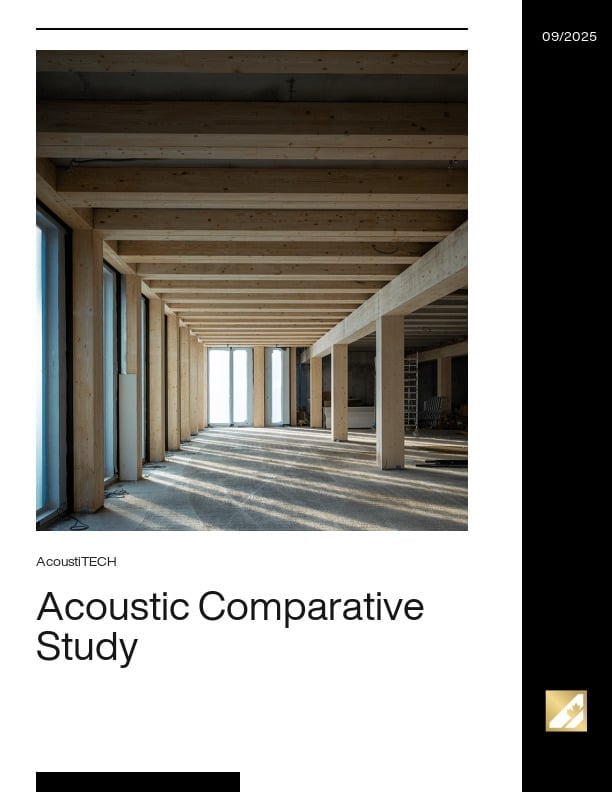
In a context where wood construction is gaining momentum, acoustics remains a key challenge in ensuring occupant comfort and compliance with standards. With this in mind, AcoustiTECH, an expert in acoustic solutions, has partnered with FPInnovations, a leader in research and development in the wood sector, to conduct an in-depth comparative study in its laboratory facility. Who We Are AcoustiTECH is a broker specializing in acoustic solutions, supporting building professionals in selecting highperformance materials that meet and exceed industry standards. With 25 years of experience and unique expertise, we offer customized assemblies through a specialized brand ecosystem and reliable data. Our personalized service, backed by dedicated technical and engineering teams, ensures tailored and effective solutions that enhance the acoustic comfort of occupants. FPInnovations is a globally recognized, private, non-profit organization specializing in research and development for the forestry sector. Its mission is to support businesses and building professionals in innovating and optimizing wood-based materials. With ISO 17025-accredited laboratories and state-of-the-art facilities, FPInnovations assesses the performance of wood structures in terms of acoustics, vibrations, fire resistance, and more. Study Objective At AcoustiTECH, our goal is to continuously innovate by delivering new data and acoustic solutions tailored to the specific requirements of each project. This collaboration with FPInnovations marks a significant milestone in our acoustic analysis of wood structures, as it represents our first large-scale data collection on a GLT masstimber slab and our second mass-timber campaign overall, building on a prior study. Through this study, we obtain precise acoustic measurements for this structural system and conduct rigorous comparisons across numerous innovative market solutions. We take into account key project criteria such as acoustic performance, budget, thickness, weight, and even design, as different acoustic solutions can also influence the choice of floor coverings. Grounded in a scientific approach and conducted in controlled environments with FPInnovations, this research aims to evaluate various acoustic configurations optimized for mass timber construction. By combining technical expertise, innovation, and in-depth analysis, we provide architects, engineers, and developers with high-performance solutions that meet and exceed the industry standards.
Wood Design & Building Award Winning Projects Announced
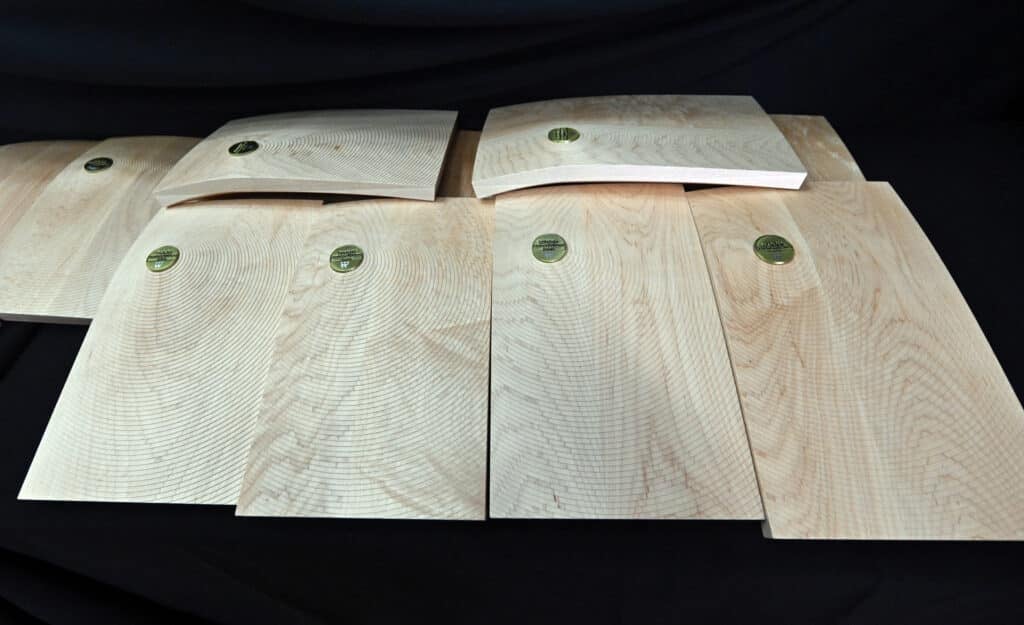
Vancouver, BC – September 23, 2025 – The Canadian Wood Council is pleased to announce the winning projects of the 41st annual Wood Design & Building Awards program. This prestigious awards program recognizes and celebrates the outstanding work of architectural professionals from Canada and around the world for excellence in wood design and construction. “The diversity and creativity in this year’s winning projects demonstrate how wood can connect people with nature,” says Martin Richard, Vice President of Communications and Market Development at the Canadian Wood Council (CWC). “These designs not only showcase wood’s versatility, but also create spaces that enrich daily life and support community well-being. They are high-performance solutions that respond to today’s urgent need for housing, schools, and community spaces.” “It’s a delight each year to see the latest and greatest wood buildings nominated to our awards program and it’s a privilege to recognize the best projects from the impressive submissions we receive,” added Ioana Lazea, Senior Project Manager at CWC responsible for delivering the awards program. “This year’s competition drew a remarkable 140 entries. We are deeply grateful to our esteemed jurors for the significant effort they invested in reviewing each one and for their careful deliberations in selecting the winners.” 18 projects earned recognition from the Wood Design & Building Awards jury. The jurors for the Wood Design & Building Awards were: Omar Ghandi, Principal at Omar Ghandi Architects Jane Abbott, Partner at Abbott Brown Architects Alec Holser, Founding Principal at Opsis Architecture 14 additional projects were selected for recognition under the WoodWorks category of the Wood Design Awards programs which have regional competitions in BC, Ontario, and the Prairie provinces for projects located in those jurisdictions. The jurors for the WoodWorks Awards category were: Eric Karsh, Founding Partner of Equilibrium Brenda Izen, Founding Principal at Izen Architecture Carol Belanger, City Architect, Edmonton In total, 38 projects from Canada and around the world were honoured at the Wood Design and Building Awards celebration hosted Tuesday, September 23, 2025, at the Woodrise Conference in Vancouver, BC. COMPLETE LIST OF AWARD-WINNING PROJECTS FOLLOWS: Honor The Spirit Garden (Toronto, ON) | Gow Hastings Architects in collaboration with Two Row Architects Fraser Mills Presentation Centre (Coquitlam, BC) | Patkau Architects Pacific Northwest Residence (Washington State) | Cutler Anderson Architects Google Borregas (Sunnyvale, CA, USA) | Project Designer: MGA | Michael Green Architecture, Architect of Record: SERA Architects TRUMPF Education Center (Ditzingen, Germany) | Barkow Leibinger Dwelling on the Mountainside: Jiuceng Art Gallery (Lishui, Zhejiang Province, China) | Atelier Lu+Architects Merit Vesterheim Commons (Decorah, IA, USA) | Snøhetta DogTrot Magnetawan (Magnetawan, ON) | Williamson Williamson Aiken Audubon Research Outpost (Chico Basin Ranch, CO, USA) | ColoradoBuildingWorkshop at CU Denver Citation Walking Dunes (Amagansett, NY, USA) | Bates Masi + Architects Timbrelyn (Bethel, NY 12720, USA) | Adel Research Group (ARG) sʔitwənx Child Care (Kelowna, BC) | Public Architecture + Design Canadian Canoe Museum (Peterborough, ON) | Unity Design Studio Greenhill School, Rosa O. Valdes STEM + Innovation Center (Addison, TX, USA) | Bohlin Cywinski Jackson Upper Canada College – Lindsay Boathouse (Toronto, ON) | VJAA Inc. (Lead Design Architect) | RDHA (Architect of Record) Winthrop Library (Winthrop, WA, USA) | Johnston Architects (Architect of Record) and Prentiss Balance Wickline Architects (Associate Architect) Toronto and Region Conservation Authority Headquarters (Toronto, ON) | Bucholz McEvoy Architects + ZAS Architects and Interiors MUMO (Museum of Motorcycle) (Puerto Octay, North Patagonia, Chile) | DRAA Sansin Sponsored Award Google Borregas (Sunnyvale, CA, USA) | Project Designer: MGA | Michael Green Architecture, Architect of Record: SERA Architects Sustainable Forestry Initiative Sponsored Awards Wahta’ elementary school (Wendake, QC) | DG3A Architecture Kreher Preserve & Nature Center Environmental Education Building (Auburn, AL, USA) | Leers Weinzapfel Associates Architects, Inc. Western Red Cedar Sponsored Awards San Juan Islands Residence (Eastsound, WA) | Vandervort Architects The Granary at Southlands (Delta (Tsawwassen) – BC) | MOTIV Architects Wood Preservation Sponsored Award Catchacoma Cottage (The Kawarthas, Municipality of Trent Lakes, ON) | Dubbeldam Architecture + Design WoodWorks Ontario Wood Design Awards DogTrot Magnetawan (Magnetawan, ON) | Williamson Williamson Ontario Secondary School Teachers’ Federation (OSSTF) Headquarters and Multi-Tenant Complex (Toronto, ON) | Moriyama Teshima Architects Toronto and Region Conservation Authority Headquarters (Toronto, ON) | Bucholz McEvoy Architects + ZAS Architects and Interiors Upper Canada College – Lindsay Boathouse (Toronto, ON) | VJAA Inc. (Lead Design Architect) | RDHA (Architect of Record) 1120 Ossington (Toronto, ON) | mcCallumSather WoodWorks BC Wood Design Awards Fraser Mills Presentation Centre (Coquitlam, BC) | Patkau Architects Adams Lake Health + Wellness Centre (Chase, BC) | Unison Architecture Ltd. Kin Park Pavilion and Ice Rink (Fort St. John, BC) | Public Architecture + Design sʔitwənx Child Care (Kelowna, BC) | Public Architecture + Design Point Grey House (Vancouver, BC) | Patkau Architects WoodWorks Prairie Wood Design Awards F Residence (RM of Stanley, MB) | 1×1 architecture inc. Riel Construction Office, (Dugald, MB) | Republic Architecture Inc. Sam Centre (Calgary, AB) | Diamond Schmitt Architects G7 Summit – Interior Renovations (Kananaskis, AB) | 1×1 architecture VIEW A VIDEO COMPILATION OF THIS YEAR’S WINNERS HERE: https://cwc.ca/WoodDesignandBuildingAwards2025/ FOR MORE INFORMATION, PLEASE CONTACT: Sarah Hicks Communications Manager, Canadian Wood Council 1-705-796-3381 | shicks@cwc.ca
Canadian Wood and Forestry Resources

National Provincial Canadian Wood Council WoodWorks Forest Products Association of Canada Certification Canada Mass timber road map Natural Sciences and Engineering Research Council of Canada Forest sector funding programs The Canadian Forest Service Canada Action – Forestry Industry in Canada FPInnovations Forest Enhancement Society of BC Province of British Columbia – Ministry of Forests British Columbia, Forestry Innovation Investment Mass Timber Demonstration Program in British Columbia Alberta Forest Products Association Ontario Forest Industries Association Ontario Wood Cecobois Conseil de l’industrie forestière du Québec Maritime Lumber Bureau Government Resources Invest in Canada – Services The State of Canada’s Forests Annual Report Canadian Forests – Federal Government Mass Timber Action Plan Trade Commissioner Service Forestry and wood products Funding and financing for international business Opportunities for Wood (PDF) Two Sides – Canadian forests are a renewable natural resource Canadian Council of Forest Ministers – Healthy forests. Healthy communities. naturally:wood – Mass Timber Demonstration Program The State of Canada’s Forests Annual Report 2023 (.pdf) The Conference Board of Canada – Use of Forest Resources COFI – Forest Facts
Innovative Strategies for Light-Frame Mid-Rise Buildings in High-Seismic Regions

Innovative Strategies for Light-Frame Mid-Rise Buildings in High-Seismic Regions presents a detailed design example and practical guidance for engineers and builders responding to rising seismic demands on Canada’s West Coast. With the 2020 National Building Code of Canada significantly increasing seismic forces—particularly in Vancouver and Vancouver Island—conventional light-wood-frame (dimensional lumber) shearwall systems often no longer meet code requirements without costly additions. This guide, prepared by WHM Structural Engineers for WoodWorks BC and the Canadian Wood Council, explores two high-capacity shearwall solutions: Mid+Std walls, a code-compliant adaptation of Midply construction that achieves roughly 50% greater capacity than standard walls without increasing wall length, and Double Nail walls, a research-based approach using double rows of edge nails to match Mid+Std strength. Combined with lightweight floor topping strategies, these systems enable six-storey light-frame buildings to remain viable and cost-competitive even on poor soils and in the highest seismic regions. Cost analysis shows Mid+Std walls incur about a 30% framing cost increase over baseline, while Double Nail walls add about 20%, both more economical than doubling corridor wall lines. The publication includes complete design calculations, construction considerations, and conceptual connection details to help practitioners implement these strategies confidently. This resource equips designers, contractors, and owners with practical, innovative approaches to maintain the competitiveness of light-frame wood construction while meeting the stringent seismic requirements of the latest building codes.
Offsite Wood Construction Handbook
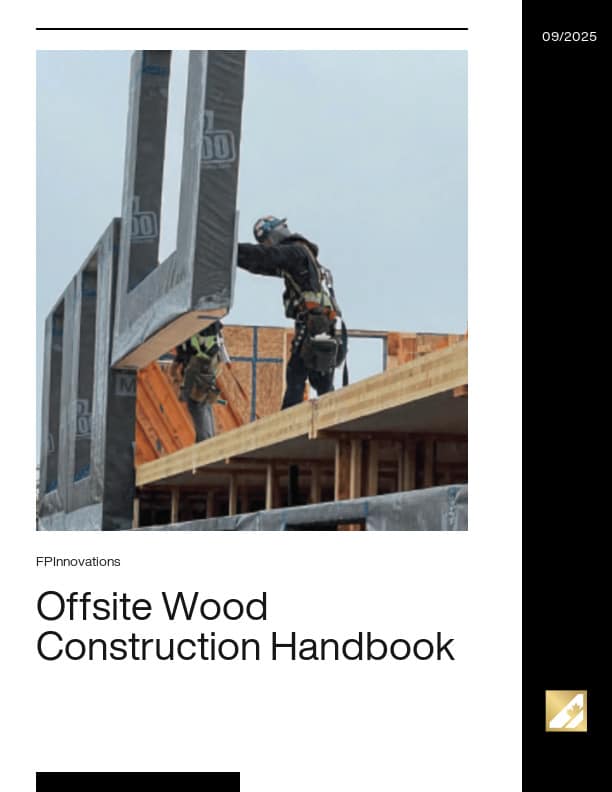
Industrialized offsite construction, also known as prefabricated or modular construction, is a construction method where building materials and components are manufactured and assembled offsite in factories before being transported to the project site for the final assembly. This approach can improve efficiency, reduce cost, and enhance quality compared to the traditional onsite construction. Industrialized offsite construction results from the reality of labour shortages, as well as the desire to automate manufacturing processes and shorten delivery schedules. As the construction industry evolves and processes are becoming automated, FPInnovations has been working on industrialized offsite construction for the last decade to ensure that the Canadian wood industry maintains its competitiveness. Guided by a comprehensive roadmap developed by FPInnovations and its partners in 2019 to identify the knowledge gaps, FPInnovations accelerated in the past five years to address the impacts of manufacturing and construction changes across the value chain. Inside the guide This in-depth guide on offsite wood construction includes chapters on the following topics: Design process associated with offsite construction Offsite manufacturing process Lumber and engineered wood product portfolio available in Canada for offsite construction Performance of buildings manufactured offsite Essential activities outside of manufacturing plants for offsite construction Environmental impacts of offsite construction
Canada’s Wood Industry Welcomes New Build Canada Homes Agency to Drive Rapidly Deployable Housing

September 15, 2025, Ottawa, ON: The Canadian Wood Council (CWC) welcomes the federal government’s launch of the Build Canada Homes (BCH) agency, announced yesterday by Prime Minister Mark Carney. Backed by a robust $13 billion investment and a plan to allocate federally owned lands for development, BCH will fast-track the delivery of affordable, sustainable housing nationwide. “This commitment to factory-built housing and prefabricated building components, including both mass timber and light wood frame systems, directly supports the architects, engineers, and builders we work with every day. It enables them to rapidly deploy quality homes at scale, while meeting Canada’s sustainability and affordability goals,” said Rick Jeffery, President and CEO of CWC. “We’re especially encouraged by BCH’s plan to adopt a ‘Buy Canadian’ policy and streamline permitting for bulk projects.” BCH’s first projects will be launched in Dartmouth, Longueuil, Ottawa, Toronto, Winnipeg, and Edmonton, with construction expected to begin next year. The agency will also work with the Nunavut Housing Corporation to deliver 700 homes, 30% of which will be built off-site and transported to Nunavut. In advance of this announcement, the Canadian Wood Council (CWC) with Forest Products Association of Canada (FPAC) submitted recommendations to the BCH Market Sounding Guide highlighting how wood-based modern methods of construction (MMC)—including mass timber, light wood frame, and modular systems—can reduce build times by up to 50%, cut carbon emissions by 30–60%, and lower long-term operating costs. The CWC and FPAC urges BCH to implement key recommendations from its submission, including: Loan guarantees and concessional financing for factory expansion. A national “one-window” approval system for factory-built housing. A Design for Manufacturing & Assembly (DfMA) pattern library. Indigenous equity and workforce development tied to housing pipelines. The CWC stands ready to champion this effort and ensure design and construction professionals have the information and support they need to rapidly deploy the sustainable, affordable homes Canadians need. –30– The Canadian Wood Council (CWC) is a leading force in advancing building codes and standards for wood construction, ensuring market access for Canadian wood products, and accelerating the adoption of sustainable, wood-based construction solutions in the marketplace. As a national federation of associations, the CWC serves as the unifying voice for our members, who represent hundreds of manufacturers across the country.