en-ca

Searching for: Mass Timber

Searching results for “Mass Timber”
118 results found...
Sort By Dropdown Icon

Limberlost Place: Video Case Study

Discover the world’s first 10-storey exposed mass timber academic tower at George Brown College. This landmark project proves that sustainable, innovative, and human-centred design can stand tall together.


Building What’s Possible

George Brown College’s Limberlost Place redefines what’s possible with mass timber construction. Rising 10 storeys above the college’s Toronto waterfront campus, this project is currently the largest exposed mass timber building of its occupancy type in the world.

Designed by Moriyama & Teshima Architects in joint venture with Acton Ostry Architects, built by PCL Construction, and realized in partnership with George Brown College, Limberlost Place demonstrates how innovation and collaboration can create a new model for sustainable development.


Sustainability at Scale

Mass timber is more than a building material — it’s a climate solution. This project shows that Canada’s design and construction industry is leading the way to a net-zero future.

By prioritizing wood construction, Limberlost:

  • Reduces carbon emissions significantly.
  • Creates healthy, biophilic spaces that support learning and well-being.
  • Proves that large-scale, low-carbon construction is achievable today.


Powered by Partnerships

Limberlost Place was made possible through strong collaboration. George Brown College worked alongside architects, engineers, and construction partners to deliver a bold vision: a living classroom where future designers, builders, and innovators can study inside the very spaces shaping tomorrow’s built environment.


A Blueprint for the Future

Limberlost Place is more than a single project. It’s a blueprint for how to build smarter and faster. By combining mass timber with hybrid engineering solutions, this project has set a new benchmark for low carbon construction in Canada and beyond.


Limberlost Place: Video Case Study

Limberlost Place: Video Case Study

Limberlost Place: Video Case Study

Limberlost Place: Video Case Study

Limberlost Place: Video Case Study

Limberlost Place: Video Case Study


This video case study was made possible through funding support from Natural Resources Canada and the Canadian Wood Council.

Mass Timber Demonstration Fire Tests Program

The Canadian Wood Council partnered with federal and provincial governments and organizations, as well as key experts, to conduct a series of five fire research burns on a full-scale mass timber structure in Ottawa. The five tests occurred in June 2022. The project supports market acceptance of tall and large mass timber buildings in Canada and encourages the construction of buildings that include mass timber.

With the most certified sustainable forests in the world, Canada is a champion of sustainable forest management and in a position to solidify our global leadership in the bioeconomy and forest sector by advancing mass timber adoption. Mass timber is revolutionizing the building industry as a renewable, nature-based construction material. Recognizing mass timber’s vital role in achieving a low carbon, built environment, the Canadian Wood Council and its partners are dedicated to advancing its adoption.


Click here for the final report


Purpose
The project was designed to support market acceptance of tall and large mass timber buildings in Canada and encourage the construction of buildings that include mass timber. By designing and executing a series of demonstration fire research tests on a full-scale mass timber structure, and collecting data from tests, the project:

  • Demonstrated mass timber fire performance to key stakeholders including building officials, fire service and insurance industry
  • Encouraged building code advancements that will allow for taller and larger wood buildings Support the adoption of the 2020 National Building Code introducing new provisions to allow 12 storey mass timber buildings
  • Supported future code change proposals and the development of alternative solutions
  • Encouraged the development of / provide data and information to support the transition toward performance-based codes, long-term strategy
  • Promoted the adoption of mass timber by developing educational materials for targeted audiences
  • Supported the maximum use of exposed mass timber elements (visual aesthetic), leading to cost competitive projects and health and wellness benefits
  • Demonstrated the ability of different mass timber assemblies to maintain structural integrity under, during and post-construction fire scenarios in a way that is comparable to (or superior to) conventional materials.
  • Supported the transition to Performance-based codes

Mass Timber Demonstration Fire Tests Program


Summary of the Mass Timber Demonstration Fire Test #5


Objectives
While there is evidence, research, and case studies that demonstrate the comparable, safety and performance of mass timber construction compared to construction using conventional materials like steel and concrete, misconceptions still circulate. By designing and executing a series of demonstration fire research burns on a full-scale mass timber structure, and collecting data from these burns, our objective was to:

  • Showcase, through fire demonstration tests, that mass timber construction is a safe and viable alternative to other more conventional construction systems (steel & concrete) for constructing large or tall buildings;
  • Support the implementation and adoption of the 2020 edition of the National Building Code of Canada;
  • Support future code change proposals to extend the use of mass timber to other building types, heights, and sizes;
  • Support the transition to Performance-based codes;
  • Use the results and finds from the demonstration tests to develop viable solutions to mitigate construction fire risk.


Targeted Audiences
Various key stakeholders within the construction sector need to be educated through science-based tests that mass timber building systems can be designed to provide a safe building environment when subjected to fire. The key groups targeted by the project include, but are not limited to:

  • Building Code Officials & Regulators
  • Fire Services Professionals
  • Insurance Professionals
  • Building & Construction Industry
  • Sustainability Specialists
  • Building Occupants & Owners


Funders & Stakeholders

  • Natural Resources Canada
  • BC Forestry Innovation Investment
  • Government of British Columbia – Office of Mass Timber Implementation (OMTI)
  • Ontario – Ministry of Northern Development, Mines, Natural Resources and Forestry
  • Alberta – Agriculture, Forestry & Rural Economic Development
  • Québec – Ministère des Forêts, de la Faune et des Parcs
  • Canadian Wood Council
  • FPInnovations


Full Scale Fire Testing and Research
The National Research Council of Canada (NRC) provided support for the technical work and science-based fire tests, as part of its research to inform the advancement of safe and innovative solutions across Canada’s construction industry.


Key Consultants & Contractors

  • GHL Consultants Ltd.
  • CHM Fire Consultants Ltd.
  • ISL Engineering
  • Timmerman Timberworks Inc.


Key Suppliers & Manufacturers
Five mass timber product manufacturers supplied the mass timber materials:

  1. Western Archrib:
    ◦ Glulam beams and columns
    ◦ Westdek panels for the roof
  2. Element5 Modern Timber Buildings
    ◦ Glulam beams and columns
    ◦ CLT floor
  3. Structurlam Mass Timber Corporation
    ◦ Glulam beams and columns
    ◦ CLT floor and walls
  4. StructureCraft: Timber engineering & Construction:
    ◦ DLT floor and roof
  5. Nordic Structures
    ◦ Glulam beams and columns
    ◦ CLT roof and walls


Several key material suppliers also supported the program:

  1. MTC
    ◦ Connectors and fasteners
  2. Rockwool
    ◦ Fire Proof Insulation
  3. Hilti
    ◦ Fireproof material


The structure for the Ottawa Fire Test was built by Timmerman Timberworks Inc.

Wood Bridge Design

Resource Description

This comprehensive pedagogical resource presents two detailed mass timber projects, developed to support educators in teaching advanced wood construction concepts.

The first project is a 3-storey mass timber office building featuring a Glulam post-and-beam main structural system supporting CLT floor and roof panels. The case study includes extensive engineering calculations for the primary structure, detailed analyses and design of CLT shear walls, and full calculations for all major connections. Sample construction documents are provided at the end of the case study, offering practical examples of how the design can be implemented. The resource is complemented by a fully detailed architectural and structural Revit model, providing a complete digital representation of the project. An accompanying Design Example illustrates practical applications of the design principles, helping students connect theoretical concepts with real-world practice.

The second component focuses on timber highway bridge design. Key reference materials include Wood Highway Bridges (CWC), the Canadian Highway Bridge Design Code 2014 (CHBDC), CAN/CSA O86-14, and the Ontario Wood Bridge Reference Guide. The material covers wood bridge systems—including decks, superstructures, and substructures—with examples from Canada, the United States, and Europe demonstrating a variety of timber bridge types and designs. Durability considerations are emphasized, including protective roofing, preservative treatments, moisture control, proper detailing for drainage and airflow, and the use of corrosion-resistant connectors. A detailed design example of an 18 m single-span vehicular bridge is included, featuring transverse glulam deck panels on glulam girders. Structural analyses for deck panels and girders, stiffener beams, diaphragms, and major connections are provided, with calculations and code-based design methods aligned with CHBDC standards.

Together, these projects provide educators with a robust, ready-to-use teaching package that integrates theoretical knowledge, engineering calculations, construction documentation, and digital modeling. The resource supports instruction in both building and bridge mass timber systems, allowing students to explore structural design, durability, load transfer, and practical implementation in real-world contexts. It is intended to facilitate comprehensive learning in wood construction, bridging the gap between classroom theory and professional practice.

Acknowledgments

Lead Authors
Canadian Wood Council

Usage and Citation Guidelines

These teaching materials were developed by the Canadian Wood Council. The content is provided free of charge for teaching and educational purposes only. Any commercial use, redistribution, or modification outside of academic teaching is strictly prohibited.

When using these resources in any context that requires citation, please use the format below.

Author(s). (Year). Title of module [Teaching Module]. Funded and published by the Canadian Wood Council.

Considerations in the Design & Prefabrication of Mass Timber Buildings for Architects

Resource Description

This resource is intended to provide educators with a clear framework for teaching the principles of mass timber design and prefabrication. The content is organized into four modules that highlight foundational knowledge, technical design considerations, early construction strategies, and sustainability. Together, these modules support students in developing a holistic understanding of how mass timber projects are conceived, designed, and delivered.

  • Module 1 – Introduction & Project Planning Provides an overview of mass timber, highlights the advantages of prefabrication, and outlines key early-stage considerations for optimizing design.
  • Module 2 – Design Optimization Considerations Explores critical aspects of design including structural performance, fire protection, acoustics, and vibration.
  • Module 3 – Early Construction Strategies Focuses on Building Information Modeling (BIM), Design for Manufacture and Assembly (DfMA), systems integration, and best practices for building envelope and moisture management.
  • Module 4 – Life Cycle Assessment (LCA) Examines the importance of carbon accounting, introduces available LCA tools, and discusses broader sustainability and biophilia considerations.

Acknowledgments

Canadian Wood Council

Usage and Citation Guidelines

These teaching materials were developed by university professors with funding support from the Canadian Wood Council. The content is provided free of charge for teaching and educational purposes only. Any commercial use, redistribution, or modification outside of academic teaching is strictly prohibited.

When using these resources in any context that requires citation, please use the format below.

Author(s). (Year). Title of module [Teaching Module]. Funded and published by the Canadian Wood Council.

An Overview of Sustainable Forestry in Canada for Architecture and Engineering Students 2022

Resource Description

Canada: A Forest Country

With 362 million hectares of forest, Canada is the third-most forested country in the world.

Acknowledgments

Prepared by:
The Mass Timber Institute at the University of Toronto’s John H. Daniels Faculty of Architecture, Landscape, and Design for the Canadian Wood Council.

Lead Authors
Monique Dosanjh
Shan Shukla
Sanjana Patel
Dr. Anne Koven

Usage and Citation Guidelines

Coming soon

Low‐Rise Commercial Mass Timber Design Case Study

Resource Description

This case study presents a 3-storey mass timber office building designed with a Glulam post-and-beam main structural system supporting CLT floor and roof panels. It has been developed as a teaching resource for educators, providing comprehensive engineering calculations for the primary structure, detailed analyses and design of CLT shear walls, and full calculations for all major connections.

To support practical learning, sample construction documents are included at the end of the case study, offering concrete examples of how the design can be implemented. The resource is complemented by a fully detailed architectural and structural Revit model, giving educators a complete digital representation of the project that can be used in teaching or demonstration settings. An accompanying Design Example further illustrates the application of design principles, helping students connect theory with real-world practice.

This material is intended to facilitate the instruction of advanced mass timber construction concepts, supporting both the theoretical understanding and practical skills of students. By integrating structural calculations, construction documentation, and digital modeling, it provides educators with a comprehensive, ready-to-use resource for teaching wood-based building design and construction.

Acknowledgments

Lead Authors
Structural Design: Carla Dickof, P.Eeng. M.Sc. Fast+Epp
Architectural Design: George Brown College Architectural Technology Program,CADE3002, Class of 2021 – Co-op Students

Reviewers
Structural Design: Nick Bevilacqua, P.Eng, Struct Eng, Fast+Epp
Reed Kelterborn Canadian Wood Council
Yang Du Canadian Wood Council
Ali Mikael Canadian Wood Council
Architectural Design: Dr. Hoda Ganji George Brown College

Usage and Citation Guidelines

These resources were developed collaboratively by Fast+Epp, the Canadian Wood Council, and contributors from George Brown College. They reflect current design and construction practice and were created to support teaching and learning in wood design and architecture.

The resources remain the intellectual property of the respective authors and are provided free of charge for educational purposes. Any commercial use, redistribution, or modification outside of an academic setting is strictly prohibited.

When these resources are used in a context that requires citation, please use the following format:

Author(s). (Year). Title of module [Teaching Module]. Funded and published by the Canadian Wood Council.

Mass Timber House Tour

Mass Timber Buildings and Fire Safety

Course Overview

Welcome, this course is a case study of a number of educational buildings in both the United States and Canada and how wood used in the construction of these buildings supports sustainability, promotes health and motivates learning.

Learning Objectives

  1. How wood was used to create a healthy learning environment.
  2. How wood was used to create a sense of wellbeing by creating warm inviting interiors with large open spaces.
  3. Examines the use of wood in the construction of 20 different educational buildings from elementary and high schools to university research facilities and showcase buildings.

Course Video

Speakers Bio

Steve Craft, Ph.D., P.Eng.
Co-founder
CHM Fire Consultants – Ottawa, ON

Dr. Steven Craft is a Principal Engineer with CHM Fire Consultants Ltd, which he co-founded in 2011, and an Adjunct Professor in the Fire Safety Engineering Program at Carleton University. He has an undergraduate degree in Forest Engineering from the University of New Brunswick and a Ph.D. in Fire Safety Engineering from Carleton University. Dr. Craft teaches courses in Wood Engineering, Fire Dynamics, and Wood Structures and Fire Safety at Carleton University. As well, he is active in Canadian and international codes and standards work, including chairing a task group under CSA O86, Canada’s Wood Design Standard, on fire resistance and a task group under ULC’s Fire Test Committee on exterior fire tests.

Vertical Additions: An innovative pathway to delivering more homes

Course Overview

Discover the innovative approach to housing supply undertaken by Pathway Non-Profit Community Developments Inc. of Peel. The Arbor Mill expansion sets a remarkable precedent for other non-profit affordable housing providers who want to build more housing and can do it by adding additional units on top of their existing buildings. Globally, it is estimated that approximately 20-25% of existing buildings can support a vertical addition in wood, which is a comparatively light weight building material. 

This novel approach removes the need to find new land to develop and has the added benefit of immediately integrating new residents into an existing supportive community. This project added 6 barrier-free, affordable apartments on top of a 35-year old, occupied residential building using prefabricated mass timber, delivering more affordable housing through the “gentle densification” of existing infrastructure. 

In this webinar, the project team will discuss the architectural, structural, and design challenges of the project, including blending prefabricated mass timber construction methods with an older structure built with conventional materials. Key sustainability and construction considerations will also be highlighted. Don’t miss this opportunity to gain valuable insights from one of the first project teams in North America to pursue this innovative approach to housing delivery. 

Learning Objectives

  1. Participants will learn how Pathway, a non-profit community developer in Peel Region, created a plan to expand its housing portfolio while addressing tenant needs and priorities.
  2. Participants will gain insights into the design and approval challenges of the project, including navigating site plan approvals, integrating mass timber, and meeting acoustic and fire safety requirements.
  3. Participants will understand the structural considerations for vertical expansions, which include performing load assessments and evaluating structural options.
  4. Participants will understand the mass timber fabricator’s process and the key considerations for successfully integrating prefabricated mass timber components into a project, including early involvement, securing production spots, and managing construction timelines.

Course Video

Speaker Bio

Roman Spektor
General Manager
Pathway Non-Profit Community Developments Inc. of Peel

Mechanical engineer by profession, Roman has been the General Manager of Pathway for over 25 years and has managed social housing projects for 35 years. Pathway Non-Profit Community Developments Inc. of Peel (Pathway) is an interfaith non-profit corporation that was incorporated in 1988. The Pathway organization is run by a volunteer board made up of members of the three founding congregations. Pathway owns and operates two apartment building in Mississauga constructed in the early 90s. Pathway’s two buildings, Forest Ridge and Arbour Mill, house 230 families and are funded by rental income and a government subsidy. 

Pathway has also created a separate management company and manages other non-profit housing communities. Roman has coordinated with the volunteer board on all aspects of management of the buildings including budgeting, capital work and project management. Through the creation of programs for the residents, Pathway has created inclusive communities where all residents feel welcome. 

Cathy Tafler, OAA
Partner
Tafler Rylett Architects 

Cathy has been a partner in the firm Tafler Rylett Architects since 1996 and is involved in all aspects of the firm’s work including client consultation, design, permit application, specifications and contract administration. Cathy is committed to producing thoughtful and environmentally responsible projects that are integrated with the surrounding landscape. The firm designs with a collaborative process, listening to their client’s requirements and budget and input from the surrounding community.

Cathy was chair of the OAA’s Committee on the Environment and is a member of the Toronto Alliance to End Homelessness (TAEH). The firm’s work includes supportive and affordable housing, offices, institutional and private residential projects. Major projects include supportive housing for Houselink Community Homes, offices for Doctors Without Borders, offices for the U of T Faculty Association, Tiny Treasure Montessori School and affordable housing for Pathway.

Craig Nicoletti, P.Eng.
Partner, Structural Engineer
Engineering Link Inc.

Craig is a Professional Engineer and Partner for the Structural Division at Engineering Link. He has been with Engineering Link since 2011 and brings more than 20 years of structural engineering expertise to his projects. During his tenure, Craig acquired a diverse portfolio of experience with wood projects that spans all sectors including commercial, recreational, industrial, hospitality, civic, and sporting facilities, in addition to heritage designated sites.

Stephen Balamut, B.Eng.
Project Manager
Element5

Stephen is a Civil Engineering Graduate of McMaster University. He began with Element5 as a designer and estimator, then moved into his current project manager position where he has overseen over 50 completed mass timber projects, from low- and mid-rise residential, to mixed-use and commercial. As a project manager, Stephen oversees the planning, coordination, and execution of Element5’s mass timber projects. He collaborates closely with architects, engineers, and contractors to ensure the structural integrity and sustainability of the mass timber components. Stephen is driven by a passion for contributing to sustainable projects that have a meaningful and lasting impact on people’s lives.

Seismic Solutions for Resilient Wooden Structures

Course Overview

Timber structures are getting bigger and higher with the availability of economical mass timber products on the market. Timber is also very attractive to designers in seismic-prone regions because of its advantageous strength-to-weight ratio. However, resilience becomes an issue as traditional ductility strategies are not low-damage and result in loss of stiffness following a seismic event.

In this presentation, basic concepts of seismic engineering and structural ductility are reviewed. The drawbacks of typical timber connections designed to provide ductility to timber structures are identified along with the long-term consequences. Resilient seismic dampers provide a solution to this issue. They are self-centering friction devices that do not get damaged within their ultimate capacity. The technology behind the resilient friction dampers is explained along with their application in different structural case studies.

Learning Objectives

  1. Understand fundamental seismic engineering concepts.
  2. Identify limitations of conventional timber ductility strategies.
  3. Evaluate the role and performance of resilient seismic dampers.

Course Video

Speaker Bio

Pierre Quenneville
Professor of timber design, The University of Auckland
CTO, Tectonus Ltd.

David Bowick has received many industry honours since he began his career in 1990. His inventive approach to design has made him sought-after, particularly when a project calls for innovative solutions. He is a three-time recipient of the WoodWorks Building the Future engineer award, and has received awards for his work in wood, concrete and architectural steel. Dozens of projects he has worked on have been granted awards in the field of architecture, such as the Perimeter Institute for Theoretical Physics and the French River Visitors Centre (both recipients of the Governor General’s Award).

An avid teacher, David is an adjunct professor in the Masters in Architecture program at the University of Toronto. He is a frequent guest speaker on the topics of architecture and engineering, and contributes to the industry through committees and events. His writing has appeared in several publications, including Concrete Toronto.

David is a licensed professional engineer in the provinces of Ontario, British Columbia, Alberta and New Brunswick. He is a member of the Canadian Standards Association Technical Committee on CAN/CSA-O86, Engineering Design in Wood and a member of the Technical Committee responsible for the Engineering Guide for Wood Frame Construction.

Plant a Seed Designing with Wood and Bio based Materials

Course Overview

Concrete, steel, and aluminum are responsible for 23% of the world’s total CO2 emissions. While a portion of those emissions come from other industries, the biggest sinner is without comparison construction. In this presentation, based on Henning Larsen’s recent publication, ‘Plant a Seed’, Fabia will present an alternative, sharing Henning Larsen cases studies and insights on designing with wood and biobased materials for significantly reduced carbon.

Learning Objectives

Coming soon

Course Video

Speaker Bio

Fabia Baumann
Structural Design Engineer / Timber Expert
Henning Larsen – Denmark

Fabia is a Structural Design Engineer and Timber Expert at Henning Larsen with both theoretical knowledge about timber from her engineering degree and practical experience from her work as a carpenter. She has a passion for timber construction and understands the potential of wood in developing unique, sustainable projects. Given her experiences, Fabia has extensive knowledge about incorporating wood in construction processes. She supports design teams by integrating wood into many projects like Henning Larsen’s World of Volvo experience center in Gothenburg, Sweden; Marmormolen, one of Denmark’s largest wooden structures; and Fælledby, Copenhagen’s first wooden district, and winner of Fast Company’s 2021 World Changing Ideas Awards. Having co-authored Henning Larsen’s Plant a Seed publication, innovative solutions are always in focus for Fabia, by which she strives to promote wood and biomass as essential materials for building a climate-neutral future.

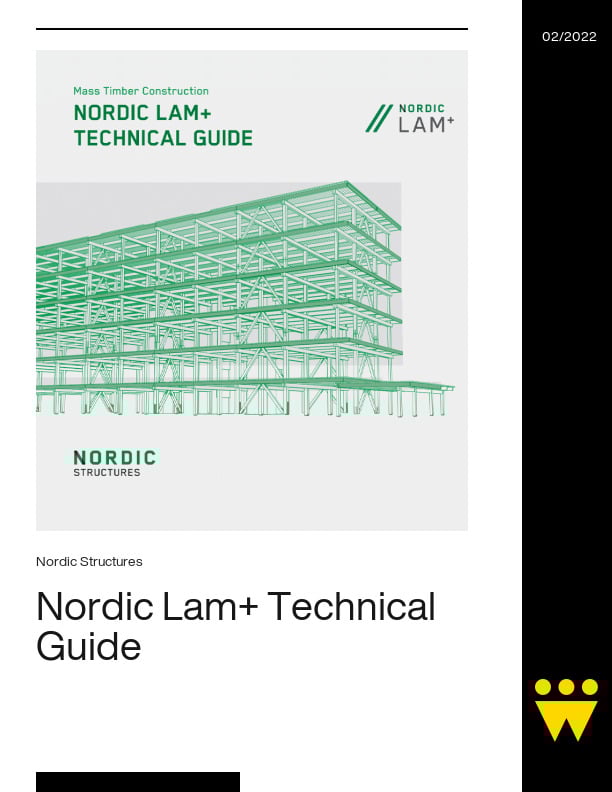
Overview of the Canadian Mass Timber Technical Guide

Course Overview

Join us for an introduction to a new, comprehensive Canadian technical reference guide to mass timber. Canada’s inherent building-with-wood culture lays a solid foundation for the continued growth of mass timber construction. Learn more about why mass timber is right for your next project, the design process and building systems, code acceptance, our expertise and more.

Learning Objectives

  1. How mass timber can be incorporated into a variety of structural projects that typically utilize other materials.
  2. Design considerations for utilizing mass timber and how the Mass timber guide can provide them with the information to navigate mass timber design.
  3. How to use the mass timber reference guide for cross laminated timber and glue laminated timber design and construction.
  4. Overview of the economic and sustainable benefits of mass timber construction.

Course Video

Speaker Bio

Orlagh McHugh – BSc, M.Eng, EIT
Mass Timber Specialist
Structurlam Mass Timber Corporation
Vancouver/Vancouver Island, British Columbia, Canada

Orlagh McHugh is a Mass Timber Specialist at Structurlam Mass Timber Corporation, overseeing the Lower Mainland and Vancouver Island. Before relocating to BC almost a decade ago, Orlagh earned her Degree in Structural Engineering and Architecture at University College Dublin, Ireland, and went on to complete a Masters of Structural Engineering at the same institution.

With over 7 years of experience working with top Vancouver firms as a design engineer, she has contributed to a diverse catalogue of projects across a number of sectors, with a particular focus on wood and mass timber construction. Orlagh is inspired by the innovative nature of mass timber construction and keen to promote creativity, technology and sustainability in our built environment.

Ron McDougall
Mass Timber Specialist
Structurlam Mass Timber Corporation
Western/Eastern Canada

Ron brings 30 years of heavy timber experience to the mass timber industry that combines a unique perspective on the evolution of hand built timber construction to the technologically advanced practices utilized in Structurlam’s state of the art production process.

Ron’s expertise is the facilitation of incorporating BIM practices in pragmatic and meaningful ways to ensure efficient construction of complex mass timber structures.

Limberlost Place: Video Case Study
Mass Timber Demonstration Fire Tests Program
Wood Bridge Design
Wood Bridge Design
Considerations in the Design & Prefabrication of Mass Timber Buildings for Architects
Overview_sustainable_forestry
An Overview of Sustainable Forestry in Canada for Architecture and Engineering Students 2022
Low‐Rise Commercial Mass Timber Design
Low‐Rise Commercial Mass Timber Design Case Study
Mass Timber House Tour
Mass Timber Buildings and Fire Safety
Vertical Additions: An innovative pathway to delivering more homes
Seismic Solutions for Resilient Wooden Structures
Plant a Seed Designing with Wood and Bio based Materials
Overview of the Canadian Mass Timber Technical Guide
Discover the world’s first 10-storey exposed mass timber academic tower at George Brown College. This landmark project proves that sustainable, innovative, and...
The Canadian Wood Council partnered with federal and provincial governments and organizations, as well as key experts, to conduct a series of five fire research burns on a...
Resource Description This comprehensive pedagogical resource presents two detailed mass timber projects, developed to support educators in teaching advanced wood construction...
Resource Description This resource is intended to provide educators with a clear framework for teaching the principles of mass timber design and prefabrication. The content...
Resource Description Canada: A Forest Country With 362 million hectares of forest, Canada is the third-most forested country in the world. Acknowledgments Prepared by: The...
Resource Description This case study presents a 3-storey mass timber office building designed with a Glulam post-and-beam main structural system supporting CLT floor and roof...
Course Overview Welcome, this course is a case study of a number of educational buildings in both the United States and Canada and how wood used in the construction of these...
Course Overview Discover the innovative approach to housing supply undertaken by Pathway Non-Profit Community Developments Inc. of Peel. The Arbor Mill expansion sets a...
Course Overview Timber structures are getting bigger and higher with the availability of economical mass timber products on the market. Timber is also very attractive to...
Course Overview Concrete, steel, and aluminum are responsible for 23% of the world’s total CO2 emissions. While a portion of those emissions come from other industries, the...
Course Overview Join us for an introduction to a new, comprehensive Canadian technical reference guide to mass timber. Canada’s inherent building-with-wood culture lays a...

Get Access to Our Resources

Stay in the loop and don’t miss a thing!

1
2
3

Get Access to Our Resources

Stay in the loop and don’t miss a thing!

What’s Your Occupation?

Help us personalize the content for you.

What Interests You the Most?

Help us personalize the content for you.

Filters

Expertise Icon
Field of Expertise
Province Icon
Province
Member Type Icon
WoodWork National Partners

Filters

Post Type Icon
Post Type
Persona Icon
Persona
Language Icon
Language
Tags Icon
Tags
Mass Timber Plus Icon Environment Plus Icon Safety Plus Icon Durability Plus Icon Design Systems Plus Icon Budget Plus Icon Construction Management Plus Icon Fire Resistance Plus Icon Tall Buildings Plus Icon Short Buildings Plus Icon
Date Icon
Date
Line Separator