Exploring the Feasibility of Point-Supported Mass Timber for Tallwood Construction
Course Overview
This session examines the growing potential of point-supported mass timber systems in tall building construction, contrasting them with traditional timber framing and conventional steel and concrete approaches. It highlights regulator advancements, the role of mass timber in addressing mid-density housing needs, and the structural fundamentals of gravity and lateral systems. Through cost and schedule comparisons, design principles like bi-axial bending and punching shear, and insights from ongoing Canadian codification efforts, the presentation offers a comprehensive overview supported by real-world projects such as VAHA Burrard and BCIT Tall Timber.
Learning Objectives
Evaluate the opportunities and constraints for point-supported mass timber when compared to traditional timber framing schemes.
Analyze the schedule and cost benefits of point-supported mass timber systems versus steel and concrete in tall construction projects.
Explore state-of-the-art design methodologies and ongoing efforts towards codification in Canada.
Course Video
https://vimeo.com/1132245390
Speakers Bio
Carla Dickof, P.Eng., M.A.Sc. Associate Principal | Director of Research & Development Fast+Epp
Carla Dickof is the Associate Principal & Director of Research and Development at Fast + Epp, where she leads the Testing Team at Fast + Epp’s R&D hub, Concept Lab, and uses the data gleaned from research programs to regularly contribute to academic journals and conferences.
Carla completed her Master’s degree studies at the University of British Columbia, where her thesis research focused on hybrid systems, specifically those combining steel and mass timber (CLT).
Her experience as an engineer spans commercial, recreational, educational, and residential projects – and, since joining Fast + Epp in 2012, Carla has gained a robust fluency in all major building materials, including concrete, steel, light-framed wood, heavy timber, and mass timber. Her understanding of building physics and materials brings invaluable insights to her projects.
Alejandro Coronado, P.Eng. Technical Advisor WoodWorks BC
Alejandro Coronado is a Technical Advisor with a multidisciplinary background spanning contracting, supply, and consulting engineering. With both a Diploma and a Bachelor’s Degree in Structural Engineering from BCIT, Alejandro began his career in single-family residential design and steadily advanced to contribute to landmark projects such as the Centre Block Base Isolation at Parliament Hill, the UBC Museum of Anthropology Great Hall Renewal, the Royal BC Museum PARC Campus, and a mass timber campus in Silicon Valley. Initially drawn to mass timber for its expressive architectural potential, Alejandro quickly recognized its broader value in addressing today’s social and environmental challenges. Through many years of hands-on experience, Alejandro has become a champion for sustainable construction and simple yet effective structural solutions.
Halsa 230 Royal York: Ontario’s Tallest Mass Timber Residential Building
Course Overview
Halsa 230 Royal York is setting new standards as Toronto’s pioneering 9-storey prefabricated mass timber rental building, demonstrating the viability of carbon-neutral communities within Toronto’s Right of Way zoning. Through a case study of the building, this session will present the advantages of integrated design and prefabricated mass timber building systems components.
Learning Objectives
Explain the integrated design and prefabrication strategies used in mass timber residential construction: Learners will be able to describe how collaborative design, advanced manufacturing, and prefabricated building systems contribute to project efficiency, quality, and scalability.
Analyze the technical features and performance benefits of mass timber floor cassettes and curtain wall systems: Learners will understand the structural, acoustic, fire resistance, and thermal properties of the building’s mass timber components, and how these features address common challenges in high-rise construction.
Evaluate the sustainability, regulatory, and operational considerations in developing carbon-neutral mass timber buildings: Learners will assess how material sourcing, certification, lifecycle carbon analysis, and code compliance shape the viability and impact of mass timber projects in urban environments.
Course Video
https://vimeo.com/1147339074
Speakers Bio
Oliver Lang Co-Founder, Chief Product Officer, Intelligent City Co-Founder, Principal, LWPAC
Oliver Lang is a German-Canadian architect and urban entrepreneur with 25+ years of experience and a recognized leader in design innovation and integration of complex urban projects, mixed-use housing, advanced prefabrication, and green building strategies. He is a graduate of Columbia University’s Graduate School of Architecture Planning and Preservation, with a Master of Science in Advanced Architectural Design, and he holds a professional degree (Diplom-Ingenieur Architektur) from the University of Technology Berlin with two-year studies at the ETSA Barcelona UPC. Prior to founding LWPAC in 1998, Oliver researched and practiced in digitally assisted design and fabrication with Smith-Miller & Hawkinson in New York, while teaching digital design at Princeton University, Columbia University, and University of Pennsylvania. He subsequently has taught advanced design and digital technology at SCI_ARC, the Berlage Institute, TU Berlin, UTF Santa Maria, and University of British Columbia (UBC).
Shawn Keyes VP – Strategic Growth and Business Development Intelligent City
Shawn is a structural engineer and commercial executive with more than a decade of experience leading innovation in mass timber and industrialized construction. As Vice President of Strategic Growth at Intelligent City, he leads commercialization, market strategy, and partnerships to scale the company’s prefabricated housing systems. Previously, Shawn served as Executive Director of WoodWorks BC, where he led a strategic transformation that strengthened partnerships, technical leadership, and influence across the development, AEC, and policy sectors. Before that, he spent over six years at Fast + Epp as a Senior Structural Engineer, developing deep technical expertise. Over his career, Shawn has supported more than 150 mass timber and hybrid projects across Canada, and has served on advisory councils for BC Housing, BCIT, the BC Office of Mass Timber Implementation, Forestry Innovation Investment, and Natural Resources Canada. He holds an MBA from UBC Sauder, a Master of Engineering from Carleton University, and is a licensed Professional Engineer in BC and Ontario.
Overview of the Ottawa Mass Timber Fire Test
Course Overview
The presentation will provide an overview of the Mass Timber Demonstration Fire Tests which were conducted during the summer and fall of 2022. Past research on the fire performance of mass timber construction will be reviewed briefly to provide the background necessary to understand how the latest tests support the design of taller and larger mass timber buildings. A review of how each of the five tests performed will be reviewed along with what it means for future mass timber building design.
Learning Objectives
Understand the rationale and execution of the demonstration fire tests – why and how the tests were conducted, their significance in obtaining approvals for mass timber projects.
Analyze the fire performance of mass timber structures compared to traditional building materials under controlled test conditions – understand fire dynamics in mass timber projects versus traditional materials like concrete or steel.
Understand the role and results of compartment fire tests in analyzing fire dynamics in mass timber projects.
Explore the implications of mass timber fire test findings on future building code developments and construction practices – how could the results from these fire tests influence changes in building codes and impact mass timber design and construction practices.
Course Video
https://vimeo.com/1046545415
Speaker Bio
Steve Craft, PhD, P.Eng. Principal CHM Fire Consultants Ltd.
Dr. Steven Craft is a founding partner of CHM Fire Consultants Ltd located in Ottawa. He served as an Adjunct Professor in the Fire Safety Engineering Program at Carleton University from 2010- 2019 and was a Research Scientist with Canada’s National Forest Products Research Institute, FPInnovations, from 2006-2011. He has an undergraduate degree in Forest Engineering from the University of New Brunswick and a PhD in Fire Safety Engineering from Carleton University. He is active in codes and standards development. He is the Chair of the ULC S100a Fire Test Committee and is on the Technical Committee for the Canadian Wood Design Standard, CSA O86, where he Chairs the Task Group on Fire Resistance.
Timber for the Masses
Course Overview
With so many compelling reason to build with mass timber the question is no longer ‘why?’ but ‘how?’. As a construction method in its own right, mass timber construction has its own rules and regulations which need to be understood by all if mass timber is to achieve its potential of becoming the construction method of choice for most building types. This presentation will focus on best practices in terms of design, procurement and construction through a number of case studies of recent projects that Eurban has been involved in, particularly mass housing projects.
Learning Objectives
Understand what is being done in the UK in order to optimise the delivery of mass timber projects in terms of design and construction.
Understand the role of a CLT designer/specialist contractor on mass timber building projects and how knowledge and experience can inform design decisions and help deliver such projects effectively and safely.
Understand the risks associated with the design and delivery of large-scale mass timber buildings and how one might overcome such risks.
Understand how mass timber construction differs from concrete construction and stick build construction, particularly in terms of the perceived risks of fire and moisture, and how to design for them.
Course Video
https://vimeo.com/1046519520
Speaker Bio
Liam Dewer Director Eurban Limited, London, England
Liam Dewar is a trained Architect and Director of Eurban Limited, a UK consultancy and construction company that specialises in the design, supply and installation of mass timber building structures. Having introduced solid timber construction to the UK market 12 years ago Eurban have considerable experience in the delivery of buildings using mass timber.
Cornerstone Timberframes and BuildingIN: Innovation in Wood Construction and Housing Development
Course Overview
This session explores two distinct but complementary perspectives on advancing the built environment in Canada. Tanya Bachmeier, CEO of Cornerstone Timberframes, shares the evolution of her company from a traditional residential timber framing business to a multifaceted manufacturer delivering both custom timber frame structures and commercial mass timber projects. Drawing on decades of industry experience, she discusses the challenges, opportunities, and lessons learned while adapting to changing markets and emerging wood construction technologies.
The session also features Rosaline Hill, Principal Architect and Senior Planner at RHJ Architecture + Planning, who introduces BuildingIN, an initiative developed to address Canada’s housing supply challenges. Drawing on extensive experience in infill housing design and planning, Rosaline examines the barriers that limit housing development in existing communities and presents strategies to support sustainable, community-supported growth. Together, these presentations highlight the importance of innovation, collaboration, and practical solutions in shaping the future of wood construction and housing development across Canada.
Learning Objectives
Identify key business, workforce, and industry factors that support growth and innovation in the wood construction sector.
Explain the benefits of heavy timber and mass timber construction and the importance of industry collaboration and knowledge sharing.
Recognize common barriers to housing supply in Canadian communities and the role of infill development in addressing housing needs.
Evaluate how planning, design, and housing policy tools can support sustainable, community-supported urban growth.
Course Video
https://vimeo.com/1022577710
Speakers Bio
Tanya Bachmeier
CEO
Cornerstone Timberframes
Tanya Bachmeier, CEO of Cornerstone Timberframes, will share her insights on the evolution of the timber industry, drawing from over three decades of experience with one of Canada’s leading heavy timber structure manufacturers. Growing up in a family deeply rooted in construction, Tanya has been immersed in the craft from a young age. Her journey from working alongside her father and uncle in the business to leading Cornerstone Timberframes as its CEO is a testament to her dedication, vision, and passion for the industry.
In her speech, Tanya will explore how she and her partner have transformed Cornerstone into a multifaceted manufacturer, with a dual focus on traditional residential timber frames and cutting-edge commercial mass timber projects. She will discuss the challenges and opportunities of being a woman in a male dominated industry, finding a place in the emerging world of mass timber and emphasizing the importance of innovation while staying true to the craft’s roots. Through her unique perspective, Tanya will offer valuable lessons on leadership, adaptability, and the future of timber construction in Canada and beyond.
Rosaline Hill
Principal Architect, Senior Planner, Development Consultant RJH Architecture & BuildingIN
Most people prefer to live in low-rise areas, on tree-lined streets, close to transit, in communities that are well serviced and walkable. Few municipal housing strategies target this vision or focus on existing low-rise neighbourhoods. But this housing niche holds the potential to transform our cities and pull us out of housing crisis. Low-rise multi-unit repeatable infill housing in existing urban neighbourhoods is the key to housing supply and municipal fiscal sustainability. At the same time, it is the most affordable way to dramatically reduce household emissions. Housing, fiscal and environmental sustainability, with new homes in the kinds of neighbourhoods people love – it is a win for all. So why aren’t developers building this? They are not allowed, or can’t make a profit doing it. But municipalities can change that!
The BuildingIN team has leveraged housing industry knowledge to understand the financial and regulatory barriers to this housing solution. Using GIS, we map our advanced housing market response forecasting to show cumulative outcomes for housing, fiscal and emissions reductions across low-rise urban areas. With this powerful simulation tool, we have reverse engineered a solution for municipalities.
As a winner of the CMHC Housing Supply Challenge, BuildingIN is able to provide municipalities with a full suite of services; to quickly implement regulatory changes and establish necessary investment strategies, so that developers will build the housing we need and want, over and over and over again. We enable municipalities to plan with certainty and make evidence based decisions, instead of the age-old ‘make some adjustments’ then ‘wait and see’ approach. Our team has been researching, testing, and simulating solutions for neighborhoods for the past 6 years. This has led us to the creation of BuildingIN – a transformational solution to our country’s housing supply challenge.
Early Mass Timber Collaboration: A Journey from Design Assists Pre-Construction through Construction
Course Overview
In this session attendees will be taken through the evolution of the mass timber structure design for the Sam Centre at the Calgary Stampede. We will explore the varied forms of collaboration from design and pre-construction through construction to completion. During the talk the value of collaboration will be examined from a design assist trade to the early onboarding of a mass timber erector, to the engagement of a mass timber specialists examining topics from erection tolerances to moisture and construction protection, to storage procedures, to fire retardant impregnation, and the aesthetic and performance outcome of each. Particular attention will be paid to how the process of collaboration at the various stages aided the design and successful execution of the mass timber connection details. A tour of the project could also be offered given its proximity to the conference. The Sam Centre is a year-round immersive experience that brings the ‘world of the Calgary Stampede’ – past, present and future – to life through technology, story-making, and Western hospitality. The use of Mass timber was a key strategy in connecting to the history of the Stampede and its historic structures. Sam Centre is a linear volume characterized by a large horizontal pitched roof. The structure uses a repetitive hybrid steel frame with exposed mass timber beams and a Nail Laminated Timber Roof Deck, adding warmth to the interior and creating a distinct profile offering a modern yet durable nod to traditional barn construction. Creating deep overhanging soffits which mitigate heating and cooling loads, the roof also evokes the welcoming verandahs of traditional Alberta architecture.
Learning Objectives
Learn how design assist supported the design of the mass timber connections and how those details would be built to ensure the structure was built efficiently and effectively.
Learn about the importance of bringing on a mass timber erector early in the design process to ensure that the construction system and any tolerances required are correctly captured in drawings.
Understand the value of a collaborative approach between design team, consultants, trades, and building science team to ensure all facets of mass timber construction are noted across project phases.
Course Video
https://vimeo.com/1154037502
Speakers Bio
Jeff Geldart, AAA, OAA Associate Diamond Schmitt
Jeff Geldart believes having a thorough understanding of the client’s goals and objectives is critical to developing a design that best meets their needs and expectations. That understanding becomes the root of any great piece of architecture. If the building does not meet the needs of its occupants, then the rest is superfluous.
Throughout his professional career Jeff has worked with both institutional and private sector clients. Some of his more notable institutional projects have included work with Wentworth County and Canada’s Department of Foreign Affairs and International Trade. One Developments, Lifetime Developments and Kylemore Communities are among his residential accomplishments. This broad and range of experience has allowed him to enhance his drive for achieving design excellence while at the same time rigorously working to consistently meet schedules, budgets, and ultimately project execution.
Jeff demonstrates a phenomenal capability technically, aesthetically, and managerially on his projects. Since joining Diamond Schmitt in 2019, Jeff has worked as the Senior Architect on the Ottawa Public Library and Library Archives Canada Joint Facility and the Okotoks Arts and Learning Campus in Alberta. Jeff is currently based in Calgary.
Mark Grimes, P.Eng, PMP Senior Project Manager EllisDon
Mark Grimes is a Senior Project Manager at EllisDon, originally graduating from Trinity College Dublin with a degree in Civil and Structural Engineering – Mark moved to Canada in 2010 and has spent the last 15 years working primarily in Alberta on a wide range of projects ranging from highrise tower construction to luxury hydrotherapy spas.
Throughout history, wherever wood has been available as a resource, it has found favour as a building material for its durability, strength, cost-competitiveness, ease-of-use, sustainability, and beauty. Wood-frame and timber buildings have an established record of long-term durability. From the ancient temples of China and Japan built in the 1000s, and the great stave churches of Norway to the numerous North American buildings built in the 1800s, wood construction has proven it can stand the test of time.
Although wood building technology has been changing over time, wood’s natural durability properties will continue to make it the material of choice.
This website helps designers, construction professionals, and building owners understand what durability hazards exist for wood, and describes durability solutions that ensure wood, as a building material, will perform well for decades, and even centuries, to come.
Durability Guidelines
Wood structures, properly designed and properly treated, will last indefinitely. This section includes guidance on specific applications of structures that have constant exposure to the elements.
Mass timber exteriors
Modern Mass Timber Construction includes building systems otherwise known as post-and-beam, or heavy-timber, and cross laminated timber (CLT). Typical components include solid sawn timbers, glue-laminated timbers (glulam), parallel strand lumber (PSL) laminated veneer lumber (LVL) laminated strand (LSL), and CLT. Heavy-timber post and beam with infill walls of various materials is one of the oldest construction systems known to man. Historic examples still standing range from Europe through Asia to the long-houses of the Pacific Coastal first nations. Ancient temples in Japan and China dating back thousands of years are basically heavy timber construction with some components semi-exposed to the weather. Heavy-timber-frame warehouses with masonry walls dating back 100 years or more are still serviceable and sought-after as residences or office buildings in cities like Toronto, Montreal and Vancouver (Koo 2013). Besides their historic value, these old warehouses offer visually impressive wood structures, open plan floors and resultant flexibility of use and repurposing. Building on this legacy, modern mass timber construction is becoming increasingly popular in parts of Canada and the USA for non-residential construction, recreational properties and even multi-unit residential buildings. Owners and architects typically see a need to express these structural materials, particularly glulam, on the exterior of the building where they are at semi-exposed to the elements. In addition wood components are being increasingly used to soften the exterior look of non-wood buildings and make them more appealing. They are anticipated to remain structurally sound and visually appealing for the service life. However, putting wood outside creates a risk of deterioration that needs to be managed. Similar to wood used for landscaping, the major challenges to wood in these situations are decay, weathering and black-stain fungi. This document provides assistance to architects and specifiers in making the right decisions to maximize the durability and minimize maintenance requirements for glulam and other mass timber on the outside of residential and non-residential buildings. It focusses on general principles, rather than providing detailed recommendations. This is primarily focussed on a Canadian and secondarily on a North American audience.
Shelter needs after natural disasters come in three phases:
Immediate shelter: normally supplied by tarpaulins or light tents Transition shelter: may be heavy-duty tents or more robust medium-term shelters. Permanent buildings: Ultimately permanent shelters need to be constructed when the local economy recovers.
Immediate and transition shelters are typically supplied by aid agencies. Light wood frame is ideal for rapid provision of medium- to long-term shelter after natural disasters. However, there are challenges in certain climates for wood frame construction that must be addressed in order to sustainably and responsibly build them. For example, many of the regions which experience hurricanes, earthquakes and tsunamis also have severe decay and termite hazards including aggressive Coptotermes species and drywood termites. In extreme northern climates, high occupancy loads are common and when combined with the need for substantial thermal insulation to ensure comfortable indoor temperatures, can result in condensation and mould growth if wall and roof systems are not carefully designed.
The desire of aid organizations to maximize the number of shelters delivered tends to drive down the allowable cost dictating simplified designs with fewer moisture management features. It may also be difficult to control the quality of construction in some regions. Once built, “temporary” structures are commonly used for much longer than their design life. Occupier improvements over the longer term can potentially increase moisture and termite problems. All of these factors mean that the wood used needs to be durable.
One method of achieving more durable wood products is by treating the wood to prevent decay and insect/termite attack. However, commonly available preservative treated wood in Canada may not be suitable for use in other countries. Selection of the preservative and treatment process must take into account the regulations in both the exporting and receiving countries, including consideration of the potential for human contact with the preserved wood, where the product will be within the building design, the treatability of wood species, and the local decay and termite hazard. Simple design features, such as ensuring wood does not come into contact with the ground and is protected from rain, can reduce moisture and termite problems.
Building with concrete and steel does not eliminate termite problems. Termites will happily forage in a concrete or masonry block buildings looking for wood components, furniture, cupboards, and other cellulosic materials, such as the paper on drywall, cardboard boxes, books etc. Mud tubes running 10ft over concrete foundations to reach cellulosic building materials have been documented. Indeed, termites have caused major economic damage to cellulosic building materials even in concrete and steel high-rises in Florida and in southern China.
Timber bridges are an excellent way to showcase the strength and durability of wood structures, even under harsh conditions, when material selection, design, construction and maintenance are done well. They could also be critical infrastructure elements that span fast rivers or deep gorges. Consequences of failure of these structures can be severe in loss of life and loss of access to communities. Durability is as critical as engineering to ensure safe use of timber bridges for the design life, typically 75 years in North America.
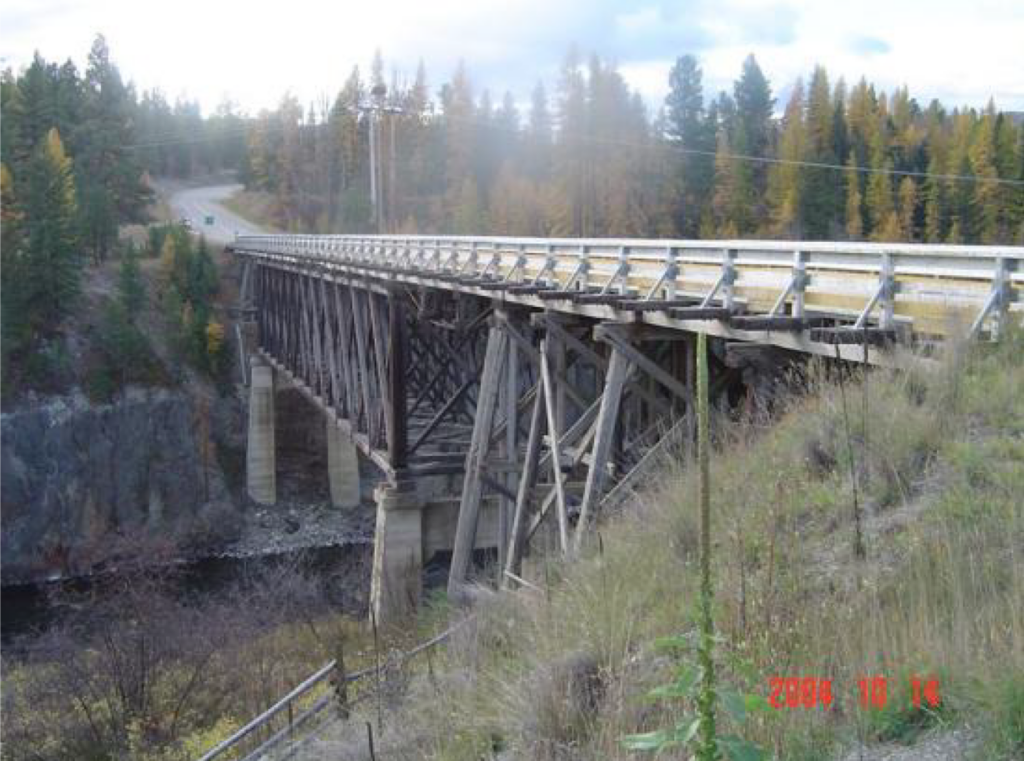
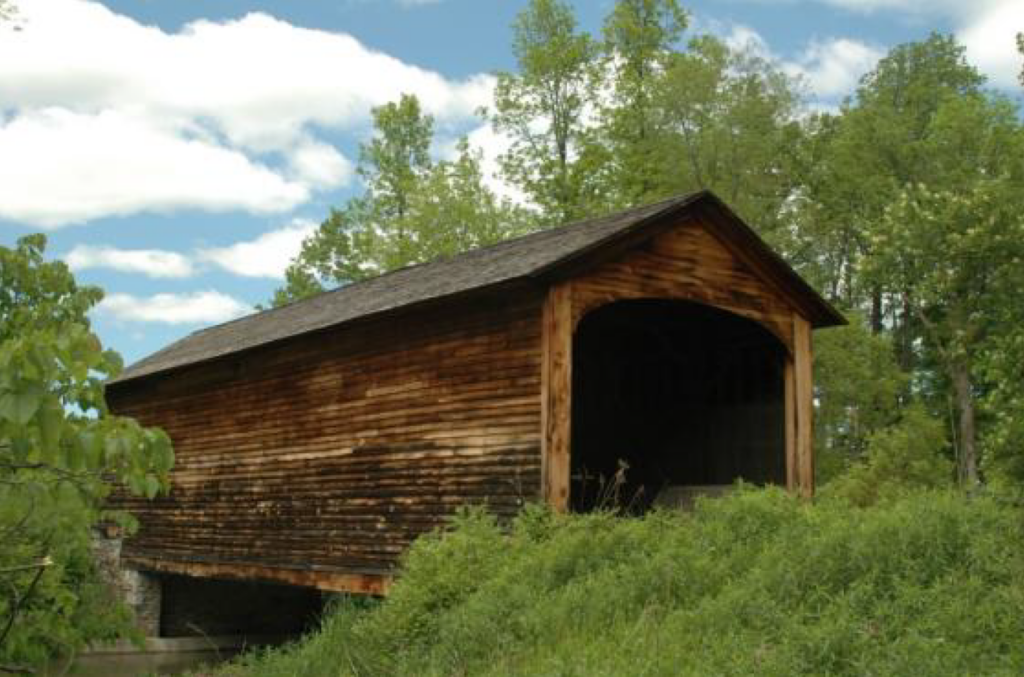
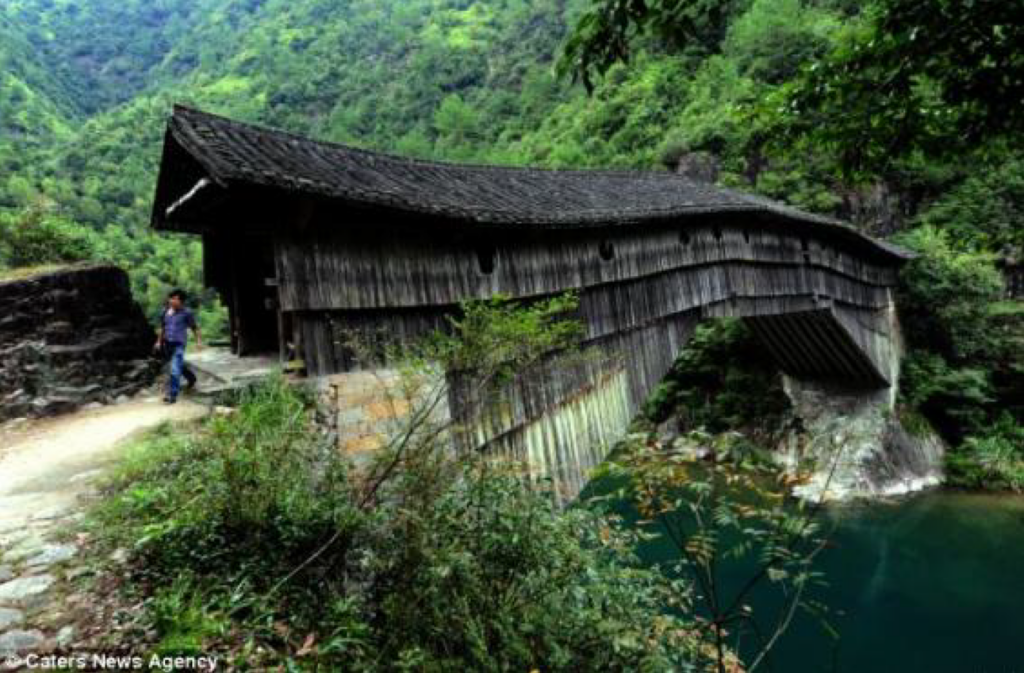
There are numerous examples of old wood bridges still in service in North America (Figure 1). The oldest are traditional covered bridges (Figure 2), three of which are around 190 years old. In Southeast China, Fujian and Zhejiang provinces have numerous covered bridges that are almost 1000 years old (Figure 3). The fact that these bridges are still standing is a testament to the craftsmen that selected the materials, designed the structures, built them, monitored their condition and kept them maintained and repaired. They would have selected the most durable wood species available, likely Chestnut or cedars in North America, china fir (china cedar) in southeast China. They would have adzed off the thin perishable sapwood exposing only the naturally durable heartwood. The fact the covered bridges around today all look similar is because those were the tried and tested designs that worked. They clearly designed those bridges to shed water with a wood shingle roof, vertical siding projecting below the deck and structural elements sheltered from all but the worst wind-driven rain. Any rain that did not drip off the bottom of the vertical siding and wicked up the end grain would also dry out reasonably rapidly. Slow decay that did occur at the bottom of these boards was inconsequential because it was remote from connections to structural elements. Construction must have been meticulously performed by experienced craftsmen. Those craftsmen may well have been locals that would continue to monitor the bridge over its life and make any repairs necessary. Of course, not every component in those ancient bridges is original, particularly shingle roofs that typically last 20-30 years depending on climate. These bridges have all been repaired due to decay and in some cases dismantled and re-built over the years for various reasons (e.g., due to changes in traffic loads, arson, flooding, fire, hurricanes, etc.). The Wan’an Bridge in Fujian is known to have been built in 1090, refaced in 1708 and rebuilt in 1845, 1932 and 1953. The apparently increasing frequency of rebuilding may suggest a loss of knowledge and skills, but all repairs and reconstruction prior to 1845 may not have been recorded.
Figure 1. St Mary’s Wycliffe Bridge, near Cranbrook BC, built 1931. Photograph, prior to reconstruction, courtesy of the BC Ministry of Transportation and Infrastructure.
Figure 2. Hyde Hall bridge, Springfield, New York, built in 1823. One of the oldest covered bridges in North America. Courtesy: Trish Kane/Theodore Burr Covered Bridge Resource Center, Oxford, NY.
Figure 3. Yangmeizhou bridge, in the Kengdi village of Shouning County, built during the Ming Dynasty
Permanent Wood Foundations
A permanent wood foundation (PWF) is a strong, durable and proven construction method that has a number of unique advantages over other foundation systems for both the builder and the homeowner. The first Canadian examples were built as early as 1950 and are still being used today. PWFs can also be designed for projects such as crawl spaces, room additions and knee-wall foundations for garages and mobile homes. Concrete slab-on-grade, wood sleeper floors and suspended wood floors can all be used with PWFs.
A permanent wood foundation is an in-ground engineered construction system designed to turn a home’s foundation into useable living space. A below-grade stud wall constructed of preservative treated plywood and lumber supports the structure and encloses the living space. PWFs are suitable for all types of light-frame construction covered under Part 9 (Housing and Small Buildings) of the National Building Code of Canada, under clauses 9.15.2.4.(1) and 9.16.5.1.(1). This includes single-family detached houses, townhouses, low-rise apartments, and institutional and commercial buildings. In addition, the recently revised CSA S406 standard, Specification of permanent wood foundations for housing and small buildings, allows for three-storey construction supported by PWF.
Wood has been a valuable and effective structural material since the earliest days of human civilisation. With normal good practice, wood can deliver many years of reliable service. But, like other building materials, wood can suffer as a result of mistakes made in storage, design, construction, and maintenance practices.
How can you ensure long life of a wood building? The best approach is always to remember that wood meant for dry application must stay dry. Start out by buying dry wood, store it carefully to keep it dry, design the building to protect the wood elements, keep wood dry during construction, and practice good maintenance of the building. This approach is called durability by design.
If wood won’t stay dry, you have two choices in approach. Because wet wood is at risk of decay, you must select a product with decay resistance. One choice is to choose a naturally durable species like Western red cedar. This approach is called durability by nature.
Most of our construction lumber is not naturally durable, but we can make it decay resistant by treating it with a preservative. Preservative-treated lumber is more reliably resistant to decay than naturally durable lumber. This approach is called durability by treated wood.
The level of attention you give to durability issues during the course of design depends on your decay hazard. In other words, the more that your circumstances put wood at risk, the more care you must take in protecting against decay. In outdoor applications, for example, any wood in contact with the ground is at high risk of decay and should be pressure-treated with a preservative. For wood that is exposed to the weather but not in direct ground contact, the degree of hazard correlates with climate. The fungi that harm wood generally grow best in moist environments with warm temperatures. Researchers have developed hazard zones in North America using mean monthly temperature and number of rainy days. This map in particular shows the rainfall hazard and applies to exposed uses of wood such as decks, shingles and fence boards. A high degree of hazard would indicate a need to carefully choose a wood species or preservative treatment for maximum service life. In the future, building codes may provide more specific directives as a function of decay hazard. For wood not exposed to weather, such as framing lumber, this map is only moderately useful. This is because the environmental conditions in the wall may be substantially different than those outdoors.
Durability Hazards
Moisture, Decay, and Termites
Wood is a natural, biodegradable material. That means certain insects and fungi can break wood down to be recycled via earth into new plant material.
Decay, also called rot, is the decomposition of organic material by fungal activity. A few specialized species of fungi can do this to wood. This is an important process in the forest. But it is obviously a process to be avoided for wood products in service.
The key to controlling decay is controlling excessive moisture. Water by itself doesn’t cause harm to wood, but water enables these fungal organisms to grow. Wood is actually quite tolerant of water and forgiving of many moisture errors. But too much unintended moisture (for example, a major wall leak) can lead to a significant decay hazard. If a wood product is to be used in an application that will frequently be wet for extended periods, then measures need to be taken to protect the wood against decay.
Various types of insects can damage wood, but the predominant ones causing problems are termites. Termites live everywhere in the world where the climate is warm or temperate.
Durability – FAQ
Please refer to the pdf documents below for Frequently Asked Questions pertaining to durability:
The Durability site is a joint CWC/ FPInnovations – website whose intent is to provide current information on the durability of wood products in order to ensure long service life of wood structures. The site is maintained and updated regularly by both groups, which ensures that architects, engineers, builders, and homeowners get answers to their inquiries regarding wood durability.
Sound and Vibration in Mass Timber Buildings: A Practical Guide
Course Overview
Following an introductory overview of building acoustics, the presenter will explore both airborne and impact sound transmission in mass timber buildings. While direct sound transmission (i.e., through floor/ceiling assemblies) has been thoroughly tested, indirect sound transmission (i.e., around wall or floor/ceiling assemblies) remains more of a challenge. To address this, the presenter will share findings from recent R&D initiatives aimed at helping maximize exposed mass timber while still adhering to code requirements.
This webinar will also examine the sound absorptive properties of mass timber, which play a critical role in environments such as schools, offices, and event spaces. Finally, we’ll conclude with specific design strategies to help prevent late-stage acoustical issues, especially when projects have progressed to a point where certain solutions are no longer feasible.
Learning Objectives
Gain familiarity with basic acoustic terminology and principles.
Understand how sound and vibration can transmit directly and indirectly through the mass timber structure.
Discover approaches to addressing sound and vibration transmission through continuous mass timber (CLT) panels.
Gain an appreciation of various design considerations affecting the control of noise in mass timber buildings.
Course Video
https://vimeo.com/1038706021
Speaker Bio
Simon Edwards, M.Eng., P.Eng., ing. Senior Acoustical Engineer, Associate HGC NOISE VIBRATION ACOUSTICS
Simon is a member of HGC’s built environment division, with extensive experience in acoustical work across the permitting, design, construction, and post-occupancy phases of residential and commercial buildings. He has worked with poured concrete, hollow-core, wood-frame, and steel-deck structures and has particular expertise in mass timber projects, including Ontario’s first mass timber building, R-Town Vertical 6, and the acclaimed YW Supportive Housing project in Kitchener. Simon’s growing experience in designing and testing various CLT configurations has positioned him as a leader in mass timber acoustics.
Simon is also an expert on sound transmission, with a background in both theoretical calculations and experimental sound transmission testing (“Kij Testing”) to evaluate flanking transmission in line with ISO 12354 and ISO 10848. He is a member of both the ISO and ASTM Technical Committees on Building Acoustics and contributes to the development of standards for measurement and calculation methodologies across the industry.
With advanced construction technologies and modern mass timber products such as glued-laminated timber, cross-laminated timber and structural composite lumber, building tall with wood is not only achievable but already underway – with completed contemporary buildings in Australia, Austria, Switzerland, Germany, Norway and the United Kingdom at 9 storeys and taller. Increasingly recognized by the construction sector as an important, new, and safe construction choice, the reduced carbon footprint and embodied / operational energy performance of these buildings is appealing to communities that are committed to sustainable development and climate change mitigation.
Tall wood buildings, built with renewable wood products from sustainably managed forests, have the potential to revolutionize a construction industry increasingly focused on being part of the solution when it comes to urban intensification and environmental impact reduction. The Canadian wood product industry is committed to building on its natural advantage, through the development and demonstration of continuously improving wood-based building products and building systems.
A tall wood building is a building over six-storeys in height (top floor is higher than 18 m above grade) that utilizes mass timber elements as a functional component of its structural support system. With advanced construction technologies and modern mass timber products such as glued-laminated timber (glulam), cross-laminated timber (CLT) and structural composite lumber (SCL), building tall with wood is not only achievable but already underway – with completed contemporary buildings in Canada, US, Australia, Austria, Switzerland, Germany, Norway, Sweden, Italy and the United Kingdom at seven-storeys and taller.
Tall wood buildings incorporate modern fire suppression and protection systems, along with new technologies for acoustic and thermal performance. Tall wood buildings are commonly employed for residential, commercial and institutional occupancies.
Mass timber offers advantages such as improved dimensional stability and better fire performance during construction and occupancy. These new products are also prefabricated and offer tremendous opportunities to improve the speed of erection and quality of construction.
Some significant advantages of tall wood buildings include:
the ability to build higher in areas of poor soils, as the super structure and foundations are lighter compared to other building materials;
quieter to build on site, which means neighbours are less likely to complain and workers are not exposed to high levels of noise;
worker safety during construction can be improved with the ability to work off large mass timber floor plates;
prefabricated components manufactured to tight tolerances can reduce the duration of construction;
tight tolerances in the building structure and building envelope coupled with energy modelling can produce buildings with high operational energy performance, increased air tightness, better indoor air quality and improved human comfort
Design criteria for tall wood buildings that should be considered include: an integrated design, approvals and construction strategy, differential shrinkage between dissimilar materials, acoustic performance, behaviour under wind and seismic loads, fire performance (e.g., encapsulating the mass timber elements using gypsum), durability, and construction sequencing to reduce the exposure of wood to the elements.
It is important to ensure early involvement by a mass timber supplier that can provide design assistance services that can further reduce manufacturing costs through the optimization of the entire building system and not just individual elements. Even small contributions, in connection designs for example, can make a difference to the speed of erection and overall cost. In addition, mechanical and electrical trades should be invited in a design-assist role at the outset of the project. This allows for a more complete virtual model, additional prefabrication opportunities and quicker installation.
Recent case studies of modern tall wood buildings in Canada and around the world showcase the fact that wood is a viable solution for attaining a safe, cost-effective and high-performance tall building.
For more information, refer to the following case studies and references:
Scaling Housing With Prefabricated Timber: Regulations-Ready Mid-Rise Prototypes
Course Overview
British Columbia faces an urgent housing shortage and mounting pressure to accelerate delivery of multi-unit housing. Recent code changes enabling mass timber up to 18 storeys create a unique opportunity to rethink how housing is designed, permitted, and built.
This session will present findings from the Housing Growth Innovation Program’s Prefabricated Timber Housing Systems project. Attendees will learn how pre-engineered, regulations-ready modular timber prototypes can streamline design and approvals, reduce embodied carbon, and speed construction through off-site manufacturing. The session will share strategies for integrating computational design, compliance analytics, and supply-chain insights to create adaptable, scalable mid-rise housing solutions. Geared to architects, developers, policymakers, and builders, participants will gain insight into how prefabrication and digital tools can de-risk projects, reduce permitting delays, and accelerate the delivery of sustainable, affordable homes in B.C. and beyond.
Learning Objectives
Explain how pre-engineered, regulations-ready prefabricated timber systems can support faster delivery of mid-rise, multi-unit housing under recent B.C. code changes.
Identify key structural, building-services, and envelope strategies used in modular mass timber housing prototypes to improve constructability, adaptability, and permitting certainty.
Recognize how digital tools, computational design, compliance analytics, and supply-chain benchmarking, can de-risk housing projects and support scalable, low-carbon construction.
Course Video
https://vimeo.com/1165676770
Speakers Bio
Adrian Watson Principal, Design Director Perkins&Will
Adrian Watson is Principal and Design Director at Perkins&Will, where he leads complex, high-profile projects that integrate sustainability, innovation, and design excellence. With over 30 years of experience, Adrian has shaped award-winning buildings and master plans across sectors, including higher education, infrastructure, civic, and housing. In his role as Design Director for the Vancouver and Calgary studios, Adrian leads a team of over 160 architects and designers. He is committed to the development design processes that look to the future, whilst believing that design excellence is attained by doing simple things very well.
Yann Tregoat Architect Perkins&Will
Originally from France, Yann’s early career was spent in Amsterdam and Paris, working on the Paris 2024 Olympic Games Aquatic Centre. Through urban environment and professional exposure, he has developed a strong interest in mass timber and parametric design, as well as innovative sustainable building solutions. Since moving to Vancouver in 2021, he has worked on various mid-to-large-scale projects, from private development to civic buildings. He brings his own life and professional experience from Europe to his work while learning and further expanding his design expertise at Perkins&Will. Yann has two master’s degrees in both Architecture and Structural and Civil Engineering from the Institute of Applied Science of Strasbourg, France.
Solomon Fung Associate Principal Introba
Solomon Fung is an Associate Principal at the multidisciplinary engineering firm Introba. Based out of their Vancouver office, he brings 15 years of experience to the mechanical team with a diverse project portfolio including mid- and high-rise mixed-use residential buildings, affordable housing, commercial & office buildings, passive house design, and healthcare. With a keen interest in innovation, Solomon leads his team in pursuit of simple solutions that are replicable for the industry.
Brent Olund Partner, Principal Credos
Brent Olund is a Professional Engineer, a Gold Seal Project Manager, and holds an MBA from the Richard Ivey School of Business. Brent’s 28 years in the construction industry to date started with industrial, commercial, and marine construction and included many years of focus on residential concrete high-rises, educational buildings, and mass timber construction. Brent is a nationally recognized expert and thought leader in the field of planning and control of mass timber structures, has worked with design teams through validation of several upcoming mass timber building assembly systems, and has designed and patented a new lateral structural system for use in these buildings. Brent believes that the highest purpose of his efforts is helping solve the housing crisis by implementing building systems toward improved productivity of construction.
Andrew Blackie Structural Designer ASPECT Structural Engineers
Andrew enjoys a diverse engineering background, ranging from adaptive reuse of heritage buildings through to the development of modular construction systems. As a common thread across his body of work, he brings expertise in digital workflows and parametric design to deliver an efficient, modern form of building design. Andrew graduated with a Master’s in Structural & Architectural Engineering from the University of Strathclyde in 2016 and has since gained almost a decade of experience between the UK and Canada. He joined ASPECT in 2025, where he has been developing strategies to deploy mass timber at scale and at pace. Andrew’s focus is bridging the gap between conventional and off-site construction, easing the transition away from carbon-intensive materials through a kit-of-parts approach to building structures.
Halil Erhan Professor of Interactive Systems and Design Director of Computational Design Lab SFU School of Interactive Arts and Technology
Dr. Halil Erhan completed his undergraduate studies at Middle East Technical University (METU) before earning a master’s degree at Clemson University, where he specialized in integrating 3D models into building design. He received his Ph.D. in Design Computation from Carnegie Mellon University, with a focus on generating design requirements. Currently, Dr. Erhan serves as a professor at Simon Fraser University and leads the Computational Design Laboratory. His interdisciplinary research approaches design as a cognitive and collaborative problem-solving process, aiming to develop effective tools that enhance the capacities of creative practitioners. He and his team create and test innovative, human-centered computational design tools. Dr. Erhan founded a research initiative called “Design Analytics,” which uses data from Performance Predictions to facilitate design space exploration through interactive visualizations. He collaborates with industry partners to encourage the adoption of new tools in the AEC sector.
KF Aerospace Centre for Excellence: Pioneering Long-Span Timber Design
Course Overview
Shaped as an aircraft, the KF Aerospace Centre for Excellence is a legacy museum and event space for Kelowna’s largest private employer, KF Aerospace. A central 2-storey hub “fuselage” is flanked by two wing-shaped hangars which house historical planes. The building showcases the latest in structural innovation and mass timber construction throughout the superstructure. From wing-shaped hangar roofs to a highly unique doubly curved CLT spiral staircase, a creative approach to structural engineering was pivotal to the design of this project.
From the start, KFCE was conceptualized with mass timber as a focus. The founder wanted to create a building with the look and feel of an airplane, while using British Columbia’s natural resources. As a result, most of the building’s superstructure uses timber: long-span hybrid timber-steel trusses in the hangars and conference space, cross-laminated timber (“CLT”) shear walls, mass timber-framed exhibition hall and a curved timber spiral stair.
StructureCraft, as Structural Engineer of Record and Timber Design-Builder, was brought on to make the design vision a structural reality. The building was designed to invite visitors in – it faces the Kelowna International Airport and is entirely glazed on the front portion. Special attention was paid to the glass hangar doors, which span 115 ft and can fully open to allow the entry of aircraft into the space.
Learning Objectives
The possibilities with timber in long-span applications.
How to use local, sustainable materials efficiently.
Recent research & development into the use of timber-concrete composite and queen-posted dowel laminated timber.
Designing for manufacture & assembly.
Course Video
https://vimeo.com/1046525901
Speaker Bio
Drew Willms Regional Engineer StructureCraft
Drew is an experienced Business Development Engineer with 10 years of experience working in pre-construction project management and estimating, as well as developing and coordinating new project opportunities. He has led StructureCraft’s estimating effort on institutional and commercial mass timber projects across North America and Asia and heads up the company’s Footbridge division. Drew is also responsible for early project engineering and 3D design, working in collaboration with the firm’s engineering department.
He joined StructureCraft after 4 years as a Regional Engineer at one of Canada’s largest civil infrastructure companies, where he coordinated the design and site supervision efforts for bridge structure installations across the Pacific Northwest. Drew is a graduate of the University of British Columbia’s Civil Engineering program.
Mass Timber Industrial Buildings and Warehouses
Course Overview
The emerging use of mass timber in industrial buildings presents promising opportunities that are shaping the future of construction in this sector. As a sustainable and economically competitive alternative, mass timber is redefining what is possible in industrial construction, a field traditionally dominated by prefabricated steel. An analysis of two cutting-edge projects in Sudbury, Ontario, highlights key advantages, including cost competitiveness, reduced embodied carbon, and superior aesthetic appeal. The insights from these two projects present stakeholders with helpful considerations and valuable strategies for integrating mass timber into future developments.
Learning Objectives
Participants will learn how to create flexible, multi-tenant industrial layouts using mass timber systems that are able to accommodate evolving tenant needs.
Participants will gain insight into how early-stage collaboration with mass timber suppliers streamlines design, engineering, and construction processes.
Participants will gain insight into the role of mass timber in biophilic design, and how its visual warmth and natural materials contribute to wellness-centred spaces that appeal to tenants.
Participants will understand how mass timber can be a cost-competitive alternative to steel, especially in volatile markets, and assess its impact on embodied carbon and sustainability goals.
Born and raised in Greater Sudbury, Darian holds dual bachelor’s degrees from Laurentian University – in Biochemistry and Business Administration with a specialization in finance. In December of 2021, he joined Bloomington Developments, a real estate investor and developer in Greater Sudbury with a focus on commercial and industrial assets. While he has had the chance to apply his skills in capital budgeting, asset valuation, financial forecasting, and cost tracking in his time with Bloomington, his first major role with the company was unrelated to his educational background: overseeing the two concurrent mass timber building projects that are the subject of this seminar. Darian now manages all construction projects – whether new builds or renovations – and negotiates all leases across the company’s portfolio, in addition to his roles as primary liaison on legal, administrative, tenant relations, marketing, and business development matters.
Patrick Danielson, OAA + AIBC, MRAIC Founder and Principal Danielson Architecture Office Inc.
Patrick holds a degree in Biomedical Science and a graduate degree from the School of Architecture + Landscape Architecture at the University of British Columbia. Combining these disciplines, he developed a unique “genetic design” approach — an evolving architectural strategy informed by biological principles. Patrick has expanded this framework through academic research, patented innovations, private sector projects, biological studies, and his experience as a pilot.
Exploring the Feasibility of Point-Supported Mass Timber for Tallwood Construction
...Learning Objectives Evaluate the opportunities and constraints for point-supported mass timber when compared to traditional timber framing schemes. Analyze the schedule and cost benefits of point-supported mass timber systems versus...
Halsa 230 Royal York: Ontario’s Tallest Mass Timber Residential Building
...building’s mass timber components, and how these features address common challenges in high-rise construction. Evaluate the sustainability, regulatory, and operational considerations in developing carbon-neutral mass timber buildings: Learners will assess...
Overview of the Ottawa Mass Timber Fire Test
...performance of mass timber construction will be reviewed briefly to provide the background necessary to understand how the latest tests support the design of taller and larger mass timber buildings....
Timber for the Masses
...installation of mass timber building structures. Having introduced solid timber construction to the UK market 12 years ago Eurban have considerable experience in the delivery of buildings using mass timber....
Cornerstone Timberframes and BuildingIN: Innovation in Wood Construction and Housing Development
...a traditional residential timber framing business to a multifaceted manufacturer delivering both custom timber frame structures and commercial mass timber projects. Drawing on decades of industry experience, she discusses the...
Early Mass Timber Collaboration: A Journey from Design Assists Pre-Construction through Construction
...onboarding of a mass timber erector, to the engagement of a mass timber specialists examining topics from erection tolerances to moisture and construction protection, to storage procedures, to fire retardant...
...heavy-timber, and cross laminated timber (CLT). Typical components include solid sawn timbers, glue-laminated timbers (glulam), parallel strand lumber (PSL) laminated veneer lumber (LVL) laminated strand (LSL), and CLT. Heavy-timber post...
Sound and Vibration in Mass Timber Buildings: A Practical Guide
...initiatives aimed at helping maximize exposed mass timber while still adhering to code requirements. This webinar will also examine the sound absorptive properties of mass timber, which play a...
With advanced construction technologies and modern mass timber products such as glued-laminated timber, cross-laminated timber and structural composite lumber, building tall with wood is not only achievable but already underway...
Scaling Housing With Prefabricated Timber: Regulations-Ready Mid-Rise Prototypes
...mass timber structures, has worked with design teams through validation of several upcoming mass timber building assembly systems, and has designed and patented a new lateral structural system for use...
KF Aerospace Centre for Excellence: Pioneering Long-Span Timber Design
...of the building’s superstructure uses timber: long-span hybrid timber-steel trusses in the hangars and conference space, cross-laminated timber (“CLT”) shear walls, mass timber-framed exhibition hall and a curved timber spiral...
Mass Timber Industrial Buildings and Warehouses
...how early-stage collaboration with mass timber suppliers streamlines design, engineering, and construction processes. Participants will gain insight into the role of mass timber in biophilic design, and how its visual...
Resource Description Healthcare buildings are among the most complex and resource-intensive structures we design and, increasingly, they are being asked to do more. Modern...
Course Overview With buildings generating 40% of global carbon emissions, we need to achieve net-zero by 2050 to meet the Paris Agreement target and limit global warming to...
Course Overview Dowel‐laminated timber is a next generation mass timber product commonly used in Europe, where it is also known as brettstapel. Panels are made from...
Advancements in wood product technology and systems are driving the momentum for innovative buildings in Canada. Products such as cross-laminated timber (CLT)...
Course Overview Bond Tower is a 7-storey mixed-use prototype that asks a critical question: how can mass timber be made cost-effective in the Prairies, where supply chains...
Course Overview Mass timber is redefining how we design and deliver buildings. This session spotlights two projects at the forefront: The Exchange office building in Kelowna...
Course Overview Mass Timber has arrived in the world capital infrastructure marketplace while architects and structural engineers are trying to get educated about how to...
Glulam (glued-laminated timber) is an engineered structural wood product that consists of multiple individual layers of dimension lumber that are glued together under...
Course Overview FPInnovations’s Modeling Guide for Timber Structures is the result of global collaboration from over 100 experts. This definitive guide for timber structure...
Course Overview Do you want to build with Mass Timber but don't know where to start? Join Mark Wigston and Andre Lema of Western Archrib on the "How-To's" of project managing...
Every issue of Wood Design & Building tells a different story about how wood is shaping contemporary construction. Some editions revolve around a clear theme such as our...
Course Overview As cities face growing pressures around affordability, climate resilience, and livability, innovative projects like Catalyst’s 18-storey CLT rental...