This case study examines two wood buildings, both with primary retail commercial occupancies, but which employ different mass timber products to achieve very different effects. Askew’s Uptown Supermarket in Salmon Arm, BC, features an expansive nail-laminated timber (NLT) roof that appears to float above the retail floor (Figure 1.1), while the Whistler Community Services Society Building in Whistler, BC, uses a robust, utilitarian exposed glued-laminated timber (glulam) and cross-laminated timber (CLT) structure as befits the building’s industrial setting (Figure 1.2).
In April 2019 John Horgan, Premier of British Columbia, announced a new directive to require municipalities and the BC government to strongly consider the use of wood in public buildings, both as a structural material and for interior finishes. The goal of this initiative is to increase demand for BC’s wood products and to assist the forest industry in dealing with the significant impacts of climate change. To date, these have included the mountain pine beetle infestation and an increase in the frequency and severity of forest fires, both of which have had widespread negative consequences for the industry across the province.
When announcing the initiative, Premier Horgan stated: “We will expect the result to maximize the potential of the existing timber supply, maintain jobs, incorporate First Nations’ interests, and address the economic, cultural, recreational and other uses of BC’s land base.” New engineered mass timber products, supported by new legislation, now make it possible for wood to be used in a wide range of projects, both urban and rural.
This case study showcases two recent projects that illustrate the value and versatility of wood, both in its response to technical challenges and in its contribution to economic and social sustainability in communities around the province.
In Vancouver, Fire Hall No. 5 (Figure 1.1) is an example of an innovative response to rising land costs and the shortage of affordable social housing; while in the Kootenay village of Radium Hot Springs, a wealth of local wood products, manufacturing capabilities and craft skills combine in a community hall and library that can truly be called a ‘100-mile building’ (Figure 1.2).
Inspired Design
Course Overview
This presentation explores the art and science of inspired structural design, emphasizing how engineering can harmonize beauty, efficiency, and sustainability. By allowing the structure itself to help inform the concept, it is possible to craft designs that are not only innovative but also deeply connected to their environment. This session will delve into strategies for designing sustainably, focusing on the most structurally efficient use of materials to reduce waste and environmental impact. Through case studies and examples, the presentation highlights how thoughtful engineering creates beautiful structures that people love to own and use. Attendees will leave with actionable insights into achieving designs that inspire and perform.
Learning Objectives
Inspired design does not need to cost more, it is often more economical.
Design-Build is the perfect delivery method for true Inspired Design.
Inspired design requires a cohesive design team from the start.
Collaboration of project constraints is key to Inspired Design.
Course Video
https://vimeo.com/1050171133
Speaker Bio
Aaron Schroeder Business Development Engineer StructureCraft
Aaron graduated from the University of British Columbia with a bachelor’s degree in civil engineering and began his career as a structural engineer in the residential construction industry, earning his P.Eng. designation in 2018. His project portfolio spans heavy civil concrete structures, high-end single-family homes, and multi-family residential complexes. Since Joining the StructureCraft Team in 2021, Aaron served as the project engineer for the 7-story T3 office building in Nashville, Tennessee, before transitioning to the Business Development team.
With a strong foundation as a structural engineering consultant, construction contracting experience, and a personable/outgoing demeanor, Aaron is passionate about fostering meaningful connections within the AEC industry. As one of the primary points of contact for new project inquiries, he plays a key role in introducing clients to StructureCraft’s innovative approach.
Mass Timber Industrial Buildings and Warehouses
Course Overview
The emerging use of mass timber in industrial buildings presents promising opportunities that are shaping the future of construction in this sector. As a sustainable and economically competitive alternative, mass timber is redefining what is possible in industrial construction, a field traditionally dominated by prefabricated steel. An analysis of two cutting-edge projects in Sudbury, Ontario, highlights key advantages, including cost competitiveness, reduced embodied carbon, and superior aesthetic appeal. The insights from these two projects present stakeholders with helpful considerations and valuable strategies for integrating mass timber into future developments.
Learning Objectives
Participants will learn how to create flexible, multi-tenant industrial layouts using mass timber systems that are able to accommodate evolving tenant needs.
Participants will gain insight into how early-stage collaboration with mass timber suppliers streamlines design, engineering, and construction processes.
Participants will gain insight into the role of mass timber in biophilic design, and how its visual warmth and natural materials contribute to wellness-centred spaces that appeal to tenants.
Participants will understand how mass timber can be a cost-competitive alternative to steel, especially in volatile markets, and assess its impact on embodied carbon and sustainability goals.
Born and raised in Greater Sudbury, Darian holds dual bachelor’s degrees from Laurentian University – in Biochemistry and Business Administration with a specialization in finance. In December of 2021, he joined Bloomington Developments, a real estate investor and developer in Greater Sudbury with a focus on commercial and industrial assets. While he has had the chance to apply his skills in capital budgeting, asset valuation, financial forecasting, and cost tracking in his time with Bloomington, his first major role with the company was unrelated to his educational background: overseeing the two concurrent mass timber building projects that are the subject of this seminar. Darian now manages all construction projects – whether new builds or renovations – and negotiates all leases across the company’s portfolio, in addition to his roles as primary liaison on legal, administrative, tenant relations, marketing, and business development matters.
Patrick Danielson, OAA + AIBC, MRAIC Founder and Principal Danielson Architecture Office Inc.
Patrick holds a degree in Biomedical Science and a graduate degree from the School of Architecture + Landscape Architecture at the University of British Columbia. Combining these disciplines, he developed a unique “genetic design” approach — an evolving architectural strategy informed by biological principles. Patrick has expanded this framework through academic research, patented innovations, private sector projects, biological studies, and his experience as a pilot.
Ontario’s first mass timber commercial building in over 100 years, 80 Atlantic pioneers a new urban office typology for potentially many more timber-frame projects across the province, and the country. Comprising four storeys of mass timber above a one-storey concrete podium, the 8,825-sq.m. (95,000-sq.ft.) building completes a courtyard with 60 Atlantic to create a paired commercial development. Revisions to the Ontario Building Code in 2015 made it possible to build commercial wood buildings up to six storeys high. The developer and architect saw this as an opportunity to demonstrate leadership in the rapidly developing field of mass timber, and to attract tenants seeking a premium workplace environment associated with innovation and sustainability. The client requested that the building harmonize with the Liberty Village neighbourhood, noted for its wealth of converted factories and warehouses, which attract high-calibre, creative tenants in this section of downtown Toronto.
Delivering Mid-Rise Housing Solutions – Part 2 Mass Timber
Course Overview
WoodWorks Ontario proudly presents Delivering Mid-Rise Housing Solutions Part 2: Mass Timber.
YWKW is a supportive housing project that obtained funding from the Federal Rapid Housing Initiative in Kitchener. This project optimized mass timber design that resulted in time and cost savings during construction. We will hear from the perspective of Element 5, Edge Architects, RDH and Melloul Blamey. They will discuss how important preconstruction planning is and getting all parties involved early. Each role will discuss their roles that lead to a quick and successful project.
Learning Objectives
Understand the application and benefits of prefabricated mass timber construction in mid-rise housing developments – speed up construction processes and address housing crises.
Analyze the project management and logistical challenges involved in executing mid-rise housing projects with prefabricated materials.
Evaluate the environmental impact and sustainability benefits of using mass timber in residential construction.
Discuss the implications of using prefabricated mass timber on the regulatory and approval processes in construction projects.
Course Video
https://vimeo.com/1109125577
Speaker Bio
Patrick Chouinard Founder and VP of Market Strategy & Corporate Communications Element5
Patrick Chouinard is the Founder and VP of Market Strategy & Corporate Communications at Element5, the newest and most technologically advanced CLT and glulam manufacturer in North America, and the only CLT producer in Ontario. Patrick’s specialty lies in his ability to orchestrate mass timber solutions together with a consortium of the industry’s best service providers with experience in mass timber. He is the driving force behind a rapidly growing company that not only manufactures mass timber components, but also provides a complete range of services to successfully execute timber construction projects on a large scale.
Patrick believes mass timber is the essential building material of the 21st century and Element5 is proud to manufacture their products from sustainably managed local sources. Patrick is a passionate advocate for construction industry transformation and believes that prefabricated mass timber construction is the key to the significant gains in construction efficiency and building performance that we need to meet our significant housing and infrastructure needs in a sustainable way that contributes to a low carbon future.
Matt Bolen is one of the founding partners of Edge Architects in Waterloo, Ontario. Edge’s portfolio encompasses a wide range of project types for a diverse client base. In addition to providing professional consulting services, the firm has been involved in several innovative research and development initiatives.
Matt’s area of expertise is multi-residential building design with a specific focus on mid-rise (the missing middle) and attainable housing models. His professional interests include modular/ prefabrication, mass timber construction, and high-performance/ energy efficient design. In addition to being a Licenced Architect with the Ontario Association of Architects, Matt is a Certified Passive House Designer and has prior experience as both an energy auditor and small building contractor.
Further to his role as a principal at Edge, Matt is a lecturer at the University of Waterloo School of Architecture for the graduate level Architectural Professional Practice course. Matt is himself a graduate of Waterloo Architecture where his master’s thesis was focused on urban revitalization of mid-sized cities using Kitchener-Waterloo as a case study city.
Jeffrey B. Shantz Partner Melloul-Blamey Construction Inc.
Jeff Shantz is a partner of the general contracting firm, Melloul-Blamey Construction based out of Waterloo, Ontario. The firm was founded in 1982 and is active in Public Bid, Design Build, Construction Management and Property Development. Jeff manages Project Development at the firm and oversees projects from concept to completion. He leads the feasibility process along with project cost, constructability and material selection for all major projects undertaken. Jeff started with the company in 1993 and quickly took charge of the Design Build operations and became a partner in 2001. He achieved CCA Gold Seal Certification in Project Management in 2006, past Chair of the Board at the Grand Valley Construction Association in Southern Ontario and past member of the General Contractor National Advisory Council at the CCA. In addition to his role at Melloul-Blamey Jeff also serves as Vice President at HIP Developments, a company created to utilize the expertise of the Construction Company and develop exciting multi-residential projects throughout southern Ontario. Utilizing the same skill set that resulted in many award winning projects at Melloul-Blamey, he has been able to guide new developments at HIP to the same high standards and project success.
Jonathan Smegal Senior Project Manager RDH Building Science Inc.
Jonathan Smegal is Based in Waterloo, and is an important part of the Building Science Laboratories team. He regularly leads laboratory research, forensic analysis of building failures, hygrothermal modeling, and field monitoring of building enclosure performance.
A trusted resource, Jonathan has managed more than a dozen full-scale field tests of wall and roof performance in various locations throughout North America. He has also been involved with numerous new construction site audits for residential and commercial construction, from the design phase through to the final walk-through. Jonathan enjoys the challenges of working on the design and investigations of buildings with unique interior conditions such as swimming pools, ice rinks, secure greenhouses, and music stores all over North America.
Four-Storey Wood School Design in British Columbia: Life Cycle Analysis Comparisons
Climate change is one of the largest threats facing the planet today. The construction industry accounts for 11% of global carbon emissions, playing a significant part in the climate crisis. To determine the best solution for future school buildings, not only does practicability, economy and constructability play a part, so does sustainability.
In order to better understand the embodied carbon emissions associated with the construction of new school buildings in British Columbia, the embodied carbon content associated with the four framing systems examples in the companion report, An Analysis of Structural System Cost Comparisons (costing study), was assessed. The purpose of this study is to allow the embodied carbon associated with these systems to become an important factor when choosing a viable scheme.
Embodied carbon is the carbon footprint of a material or product. To determine the embodied carbon of a building you must consider the quantity of greenhouse gases associated with the building. The most effective way to measure this is through Life Cycle Analysis (LCA), a study which determines the embodied carbon from cradle to grave (material extraction to building demolition). Consequently, an LCA was conducted for each of the four schemes presented in the costing study. Additionally, for wood frame Options A and B, WoodWorks online carbon calculator was used to determine the potential carbon savings associated with carbon sequestering.
Unlocking Affordable Timber Innovations in Structure, Prefabrication, and Code
Course Overview
Bond Tower is a 7-storey mixed-use prototype that asks a critical question: how can mass timber be made cost-effective in the Prairies, where supply chains are limited, demand is low, and timber construction is often reserved for flagship projects. Funded by the Green Construction through Wood Program from Natural Resources Canada, the project develops both prototypes and a built demonstration to advance affordable timber solutions in a region underserved by the current market.
The design leverages nail-laminated timber (NLT) as its primary system, applied in diagrid trusses, floor assemblies, and shear walls. NLT presents a cost-effective alternative to other manufactured products and provides great versatility due to its custom nature. Lateral and gravity-induced forces are carried by a diagrid timber truss fabricated from readily available dimensional lumber and using simple mechanical fasteners. Floor assemblies comprised of NLT are constructed without a concrete topping or proprietary sound attenuation systems, reducing both cost and embodied carbon. Prefabricated wall panels, stairs, and modular service pods further minimize waste and construction time.
Another challenge lies in building code classification. Currently, all structures above six storeys are deemed high-rise, requiring costly and difficult to achieve [in timber] two-hour fire-resistance ratings and fire-safety systems. The Bond Tower design team, working with code consultants, is developing an alternative solution that leverages the inherent 1.25-hour FRR of NLT floor assemblies. This approach suggests a pathway toward a new mid-rise category, making timber projects of seven or eight storeys more financially viable. Alongside a single-stair configuration, which can increase efficiency by reducing non-rentable floor area, these strategies point to a replicable model for affordable timber construction across Canada.
Learning Objectives
Learn how NLT and prefabrication strategies can reduce cost, waste, and construction time, making timber more feasible in the Prairies.
Explore structural detailing approaches that simplify connections and reduce cost, while addressing fire, durability, and acoustic performance in timber design.
Examine how alternative solutions can improve the financial feasibility of 6–8 storey timber projects and support broader code updates across Canada.
Course Video
https://vimeo.com/1154034844
Speakers Bio
Sasa Radulovic, AIBC MAA OAA SAA AAA NSAA FRAIC LEED AP Partner, Architect 5468796 Architecture
Sasa Radulovic co-founded the Winnipeg-based practice 5468796 Architecture with Johanna Hurme in 2007. A talented designer, Sasa guides the office in seeking projects that explore density, affordability, and sustainability through non-traditional means and a dynamic design approach. Recent institutional appointments include Visiting Professor-Morgenstern Chair with the Faculty of Architecture at the Illinois Institute of Technology in Chicago.
Ken Borton, MAA RAIC Principal 5468796 Architecture
Environmental Education Centre – Ralph Klein Legacy Park – Calgary, Alberta
The Environmental Education Centre is the architectural showcase for the Shepard Wetlands, a constructed wetland that lies within the newly designated Ralph Klein Legacy Park on the outskirts of Calgary. The Shepard Wetlands act as a management, filtration and cleaning system for the city’s storm water. The centre sits on piles within the wetland itself, appearing alternately to hover or float with the rise and fall of the water level in the retention pond. The 20,800sf (1932m2 ), two storey building includes classrooms, exhibition space, administrative and support facilities, and provides a location for interactive public education on wetlands, water issues, sustainability, and environmental ethics and values. The smaller upper floor contains the offices of Ducks Unlimited, and provides access to viewing terraces and vegetated roof areas. The majority of the structure consists of exposed concrete, glulam beams and joists that integrate structure with architecture. Long span glulam beams support heavy patio and vegetative (green) roof loads.
Bringing Mass Timber Mainstream: Unpacking Market Challenges and Opportunities
Course Overview
The positive influences of design innovation, advanced materials, new building codes, and the evolving priorities of society are driving change in the construction sector that is expanding the use of advanced wood construction. Change, however, often presents new challenges, and the more widespread adoption of new technologies can be impeded by knowledge gaps and market forces. This expert panel will examine several important factors that can impact the decision to build with wood including insurance, financing and supply chain considerations, and identify both the challenges and opportunities they present.
Learning Objectives
Identify key market barriers to the adoption of mass timber construction, including insurance, financing, supply chain limitations, and knowledge gaps.
Understand how project feasibility for mass timber is influenced by revenue uncertainty, cost premiums, and risk tolerance in development decisions.
Learn strategies to de-risk mass timber projects through early collaboration, improved data sharing, supply chain planning, and policy incentives.
Course Video
https://vimeo.com/1022541928
Speakers Bio
David Messer
Director
Climate Smart Buildings Alliance (EllisDon)
David Messer is the Director of the Climate Smart Buildings Alliance, a joint initiative of EllisDon, RBC, Mattamy Homes and Atkins Réalis aimed at leading and accelerating the transition to a net zero buildings sector. Through CSBA David is leading projects aimed at increasing and removing barriers for the use of lower carbon building materials, as well as projects to increase building standards and the pace of building retrofits.
David was previously the Executive Director of the Guelph-Wellington Smart Cities Office where he led two initiatives aimed at accelerating the circular economy, Our Food Future, an Infrastructure Canada funded smart cities project, and COIL (Circular Opportunity Innovation Launchpad), a circular business accelerator that worked with over 160 organizations to scale circular solutions in the food, environment and construction/demolition sectors. David has a long history of working on technology, policy and systems change as part of the Governments of Ontario and Alberta, within industry associations and as a consultant in the private sector.
Scott Cameron
President Skov Mass Timber
Scott has over 30 years of experience in construction. Starting as a laborer and working his way through to General Superintendent, Project Director and an independent Consultant on Mass Timber Construction. As an accomplished public speaker, leader, and mentor, he has led many high performing teams and prides himself on being a collaborative problem solver.
With decades of experience in ICI and residential construction, Scott has shifted his focus to multifamily Mass Timber construction to confront the housing crisis. Having been involved in many institutional and commercial Mass Timber projects, multiple 6 storey Multi Family projects, and the only two completed Encapsulated Mass Timber buildings in Canada after the 2018 code changes, Scott is one of the leading experts in North America on Mass Timber.
As an outspoken advocate for Mass Timber, Scott promotes education and information sharing within the Mass Timber community. Having worked in B.C. and Ontario, Scott provides interactive presentations on Mass Timber construction to Developers and GC at project inception. The goal is not only to help navigate the unknowns when deciding between Mass Timber and conventional construction, but also to support the construction process to save time and cost. This led to SKOV Mass Timber Ltd, a consulting firm focused on Mass Timber to support Developers and GCs through the preconstruction process to project completion. With his experience, the aim is to bridge the skill gaps with education, information, and support for constructability reviews, schedule development, trade sequencing and support through the construction process.
He is currently working with a Construction Management firm in BC on a portfolio of Mass Timber projects and supports other developers and GCs nationwide through preconstruction.
Kevin Grosskopf
Professor, University of Nebraska–Lincoln, Durham School of Architecture, Engineering & Construction University of Nebraska
Dr. Kevin R. Grosskopf is a Professor at the Charles W. Durham School of Architectural Engineering and Construction at the University of Nebraska. Dr. Grosskopf received his Ph.D. from the M.E. Rinker, Sr. School of Building Construction at the University of Florida in 1998. He has served in various capacities in the commercial and utility industry and is a licensed Building Contractor in the State of Florida.
Dr. Grosskopf has developed research expertise in building safety and sustainability including IAQ, energy efficiency, and, post-disaster response and recovery. More recently, Dr. Grosskopf transitioned to related areas in building prefabrication and construction workforce development. Dr. Grosskopf has received $8.1M in grants and endowments, including highly competitive contract awards from the Department of Energy (DOE), the Department of Defense (DoD), the Environmental Protection Agency (EPA), the Occupational Safety and Health Administration (OSHA), and, the Department of Labor (DOL). In addition, Dr. Grosskopf has written (or contributed to) 4 books, 35 research reports and more than 100 peer-reviewed journal and conference papers, including top tier journals of the ASCE, ASTM and ASHRAE. Dr. Grosskopf has also given more than 100 invited presentations including guest lectures and presentations in more than 20 countries.
Dr. Grosskopf formerly served as the Associate School Director for ACCE-accredited construction management and ABET-accredited construction engineering programs on both Lincoln and Omaha campuses. Dr. Grosskopf has also served as P&T chair for construction programs. Dr. Grosskopf has served on the ASC National Board and has coordinated two ASC Annual International Conferences (2009 and 2011).
Annabelle Hamilton
Executive Director WoodWorks BC
Annabelle is the Executive Director of WoodWorks BC Team, overseeing active engagement, technical support and strategic development of initiatives that support the growth and awareness of Mass Timber in the BC market. Prior to joining WoodWorks, Annabelle built her career in the private sector, working for several Vancouver based multi-family Developers successfully leading projects from concept to completion.
Mass Timber Construction at Canadian Nuclear Laboratories
Course Overview
Canadian Nuclear Labs’ Chalk River Laboratories comprise the largest single complex in Canada’s science and technology community. The site contains more than 50 unique facilities and laboratories including a three new buildings constructed with mass timber.
These three buildings are the focus of a detailed environmental impact study. This webinar will offer a case study of the three buildings and share the results of the environmental impact study. Topics covered by the presentation include: -Why Wood? (drivers that led CNL to chose mass timber) -Carbon Impact (operational, embodied, sequestered, avoided, and a life cycle assessment) -Procurement (Integrated Project Delivery Method) -Building Performance (construction elements, energy performance, envelope performance, fire performance, durability, resiliency, and potential for adaptive reuse) -Code Requirements (regulatory approvals, permit process)
The projects are considered successful examples of sustainable procurement aligning with the ‘greening government’ strategy which supports the Government’s commitment to net-zero emissions by 2050, and includes a 40% reduction by 2025 for federal facilities.
Learning Objectives
Understand the strategic importance of using mass timber construction at CNL and its alignment with sustainability goals, including carbon reduction and the promotion of sustainable building practices.
Analyze the logistical and engineering challenges associated with implementing mass timber in a large-scale infrastructure project.
Evaluate the benefits of mass timber in the context of operational efficiency, cost-effectiveness, and environmental impact.
Discuss the implications of mass timber construction for future building projects in terms of regulatory compliance, market trends, and technological advancements.
Course Video
https://vimeo.com/911562291
Speaker Bio
Donald Chong, OAA, MRAIC, B.Arch Design Principal, Associate Vice President HDR
Don has firmly established himself in Toronto’s architecture culture through his inventiveness and investment in placemaking. His project skills volley between the strategic planning of urban and institutional work through to the detailing of finely crafted furniture, as well as research-based design. Don has held numerous design conference speaking engagements, from the Wood at Work Conference to the Architectural League of New York, and has been featured in print publications, such as Design Lines, related to mass timber design.
Susan Croswell, OAA, MRAIC Project Delivery Principal HDR
Susan is a project architect with over 27 years of diversified experience. Her expertise in both architectural design and technology allows her to excel in the profession from concept design through to contract administration. Susan’s ability to deliver complex projects and documentation on time is a hallmark of her work and is achieved through effective leadership and teamwork. She has developed a reputation as a highly competent, efficient, effective and approachable project architect who loves the challenges that each and every project brings to the team. Some of her recent, award-winning projects include the CNL Chalk River Laboratories “New Builds,” Queen’s University John Deutsch University Centre, and Kingston Frontenac Public Library.
Ryan Zizzo, PEng, MASc, LEED AP ND Founder & CEO Mantle Developments
Ryan Zizzo is a professional engineer and Founder & CEO at Mantle Developments, a consultancy focused on climate-smart infrastructure and buildings, based in Toronto. Mantle helps projects go beyond energy efficiency, incorporating resilience, embodied carbon emissions, and life cycle approaches to make projects future-proof and net-zero carbon ready. Ryan is a recognized leader in helping large organizations and governments transition to a low-carbon future. He has directly supported the Government of Canada, several provincial Ministries, the City of Toronto, the YMCA of Greater Toronto, and numerous developers, property managers, and real estate investors.
Located in a fast-growing area of south-east Edmonton, the new Meadows Community Recreation Centre, and associated Meadows Branch Edmonton Public Library, provides year round recreational and cultural opportunities for the surrounding neighbourhoods.
Design began in February 2010 and the facility was opened to the public in November 2014. Planning focused on creating relationships between indoor and outdoor programs. Transparency between indoors and outdoors maximizes natural light and materials to create a warm and inviting atmosphere.
Wood is used throughout as both a structural and finish material. Because wood is a renewable resource with low embodied energy, its use supports the project’s sustainability goals. Different kinds of wood are used for different purposes, from glulam roof beams to maple slat finishing for the walls. Using wood allows the structure of the building to be expressed and celebrated. The programs and activities are united by the undulating roof. The warmth of the wood and its rich colour and texture provide a welcoming ambiance. In keeping with Province of Alberta’s legislation for public buildings, the Centre is seeking LEED Silver certification. The use of locally-sourced glulam and other wood products contribute to meeting this sustainable design standard.
Throughout history, wherever wood has been available as a resource, it has found favour as a building material for its durability, strength, cost-competitiveness, ease-of-use, sustainability, and beauty. Wood-frame and timber buildings have an established record of long-term durability. From the ancient temples of China and Japan built in the 1000s, and the great stave churches of Norway to the numerous North American buildings built in the 1800s, wood construction has proven it can stand the test of time.
Although wood building technology has been changing over time, wood’s natural durability properties will continue to make it the material of choice.
This website helps designers, construction professionals, and building owners understand what durability hazards exist for wood, and describes durability solutions that ensure wood, as a building material, will perform well for decades, and even centuries, to come.
Durability Guidelines
Wood structures, properly designed and properly treated, will last indefinitely. This section includes guidance on specific applications of structures that have constant exposure to the elements.
Mass timber exteriors
Modern Mass Timber Construction includes building systems otherwise known as post-and-beam, or heavy-timber, and cross laminated timber (CLT). Typical components include solid sawn timbers, glue-laminated timbers (glulam), parallel strand lumber (PSL) laminated veneer lumber (LVL) laminated strand (LSL), and CLT. Heavy-timber post and beam with infill walls of various materials is one of the oldest construction systems known to man. Historic examples still standing range from Europe through Asia to the long-houses of the Pacific Coastal first nations. Ancient temples in Japan and China dating back thousands of years are basically heavy timber construction with some components semi-exposed to the weather. Heavy-timber-frame warehouses with masonry walls dating back 100 years or more are still serviceable and sought-after as residences or office buildings in cities like Toronto, Montreal and Vancouver (Koo 2013). Besides their historic value, these old warehouses offer visually impressive wood structures, open plan floors and resultant flexibility of use and repurposing. Building on this legacy, modern mass timber construction is becoming increasingly popular in parts of Canada and the USA for non-residential construction, recreational properties and even multi-unit residential buildings. Owners and architects typically see a need to express these structural materials, particularly glulam, on the exterior of the building where they are at semi-exposed to the elements. In addition wood components are being increasingly used to soften the exterior look of non-wood buildings and make them more appealing. They are anticipated to remain structurally sound and visually appealing for the service life. However, putting wood outside creates a risk of deterioration that needs to be managed. Similar to wood used for landscaping, the major challenges to wood in these situations are decay, weathering and black-stain fungi. This document provides assistance to architects and specifiers in making the right decisions to maximize the durability and minimize maintenance requirements for glulam and other mass timber on the outside of residential and non-residential buildings. It focusses on general principles, rather than providing detailed recommendations. This is primarily focussed on a Canadian and secondarily on a North American audience.
Shelter needs after natural disasters come in three phases:
Immediate shelter: normally supplied by tarpaulins or light tents Transition shelter: may be heavy-duty tents or more robust medium-term shelters. Permanent buildings: Ultimately permanent shelters need to be constructed when the local economy recovers.
Immediate and transition shelters are typically supplied by aid agencies. Light wood frame is ideal for rapid provision of medium- to long-term shelter after natural disasters. However, there are challenges in certain climates for wood frame construction that must be addressed in order to sustainably and responsibly build them. For example, many of the regions which experience hurricanes, earthquakes and tsunamis also have severe decay and termite hazards including aggressive Coptotermes species and drywood termites. In extreme northern climates, high occupancy loads are common and when combined with the need for substantial thermal insulation to ensure comfortable indoor temperatures, can result in condensation and mould growth if wall and roof systems are not carefully designed.
The desire of aid organizations to maximize the number of shelters delivered tends to drive down the allowable cost dictating simplified designs with fewer moisture management features. It may also be difficult to control the quality of construction in some regions. Once built, “temporary” structures are commonly used for much longer than their design life. Occupier improvements over the longer term can potentially increase moisture and termite problems. All of these factors mean that the wood used needs to be durable.
One method of achieving more durable wood products is by treating the wood to prevent decay and insect/termite attack. However, commonly available preservative treated wood in Canada may not be suitable for use in other countries. Selection of the preservative and treatment process must take into account the regulations in both the exporting and receiving countries, including consideration of the potential for human contact with the preserved wood, where the product will be within the building design, the treatability of wood species, and the local decay and termite hazard. Simple design features, such as ensuring wood does not come into contact with the ground and is protected from rain, can reduce moisture and termite problems.
Building with concrete and steel does not eliminate termite problems. Termites will happily forage in a concrete or masonry block buildings looking for wood components, furniture, cupboards, and other cellulosic materials, such as the paper on drywall, cardboard boxes, books etc. Mud tubes running 10ft over concrete foundations to reach cellulosic building materials have been documented. Indeed, termites have caused major economic damage to cellulosic building materials even in concrete and steel high-rises in Florida and in southern China.
Timber bridges are an excellent way to showcase the strength and durability of wood structures, even under harsh conditions, when material selection, design, construction and maintenance are done well. They could also be critical infrastructure elements that span fast rivers or deep gorges. Consequences of failure of these structures can be severe in loss of life and loss of access to communities. Durability is as critical as engineering to ensure safe use of timber bridges for the design life, typically 75 years in North America.
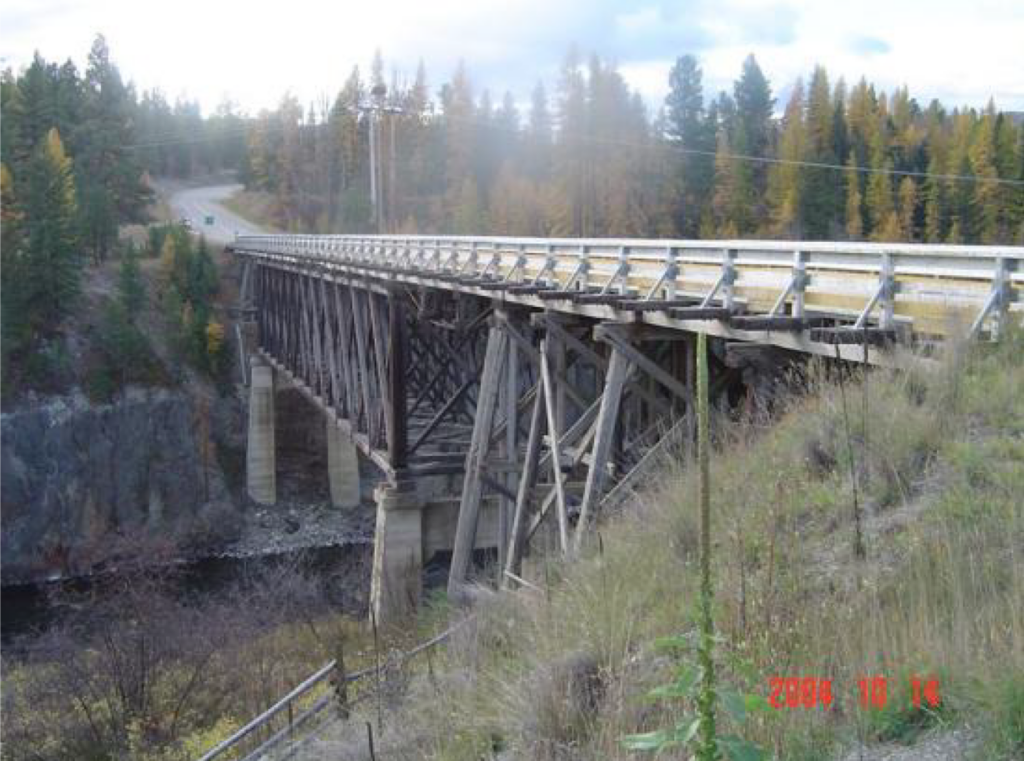
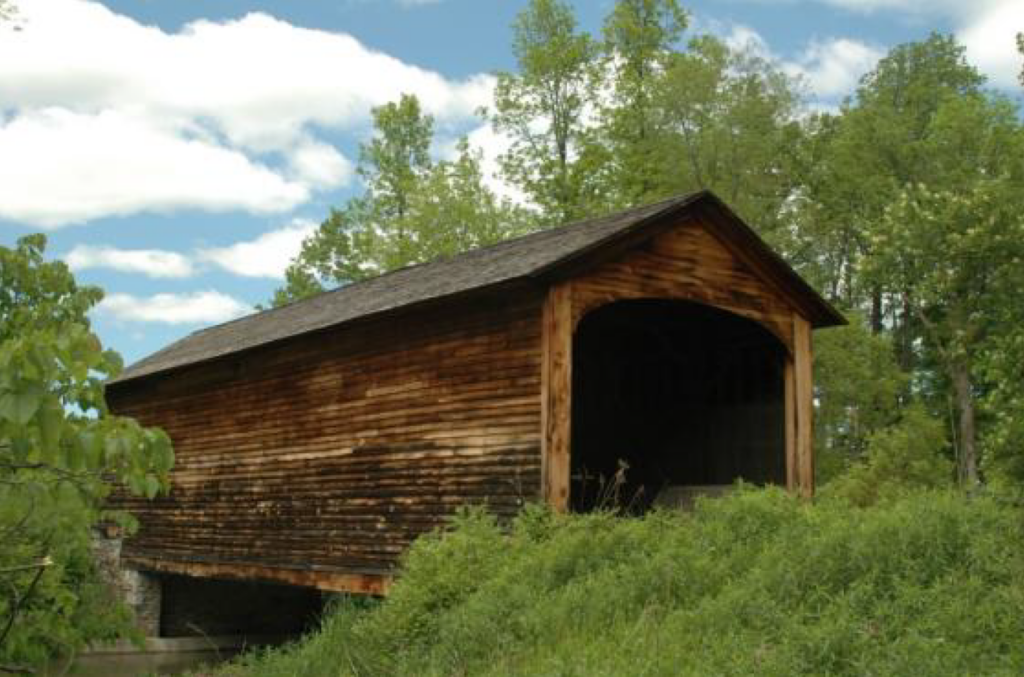
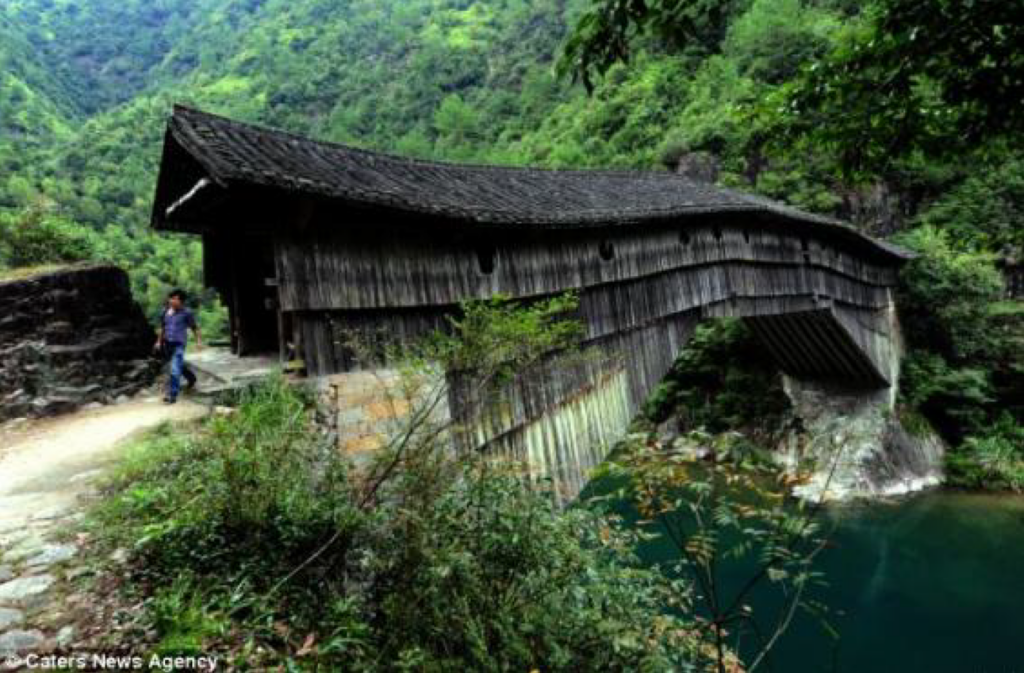
There are numerous examples of old wood bridges still in service in North America (Figure 1). The oldest are traditional covered bridges (Figure 2), three of which are around 190 years old. In Southeast China, Fujian and Zhejiang provinces have numerous covered bridges that are almost 1000 years old (Figure 3). The fact that these bridges are still standing is a testament to the craftsmen that selected the materials, designed the structures, built them, monitored their condition and kept them maintained and repaired. They would have selected the most durable wood species available, likely Chestnut or cedars in North America, china fir (china cedar) in southeast China. They would have adzed off the thin perishable sapwood exposing only the naturally durable heartwood. The fact the covered bridges around today all look similar is because those were the tried and tested designs that worked. They clearly designed those bridges to shed water with a wood shingle roof, vertical siding projecting below the deck and structural elements sheltered from all but the worst wind-driven rain. Any rain that did not drip off the bottom of the vertical siding and wicked up the end grain would also dry out reasonably rapidly. Slow decay that did occur at the bottom of these boards was inconsequential because it was remote from connections to structural elements. Construction must have been meticulously performed by experienced craftsmen. Those craftsmen may well have been locals that would continue to monitor the bridge over its life and make any repairs necessary. Of course, not every component in those ancient bridges is original, particularly shingle roofs that typically last 20-30 years depending on climate. These bridges have all been repaired due to decay and in some cases dismantled and re-built over the years for various reasons (e.g., due to changes in traffic loads, arson, flooding, fire, hurricanes, etc.). The Wan’an Bridge in Fujian is known to have been built in 1090, refaced in 1708 and rebuilt in 1845, 1932 and 1953. The apparently increasing frequency of rebuilding may suggest a loss of knowledge and skills, but all repairs and reconstruction prior to 1845 may not have been recorded.
Figure 1. St Mary’s Wycliffe Bridge, near Cranbrook BC, built 1931. Photograph, prior to reconstruction, courtesy of the BC Ministry of Transportation and Infrastructure.
Figure 2. Hyde Hall bridge, Springfield, New York, built in 1823. One of the oldest covered bridges in North America. Courtesy: Trish Kane/Theodore Burr Covered Bridge Resource Center, Oxford, NY.
Figure 3. Yangmeizhou bridge, in the Kengdi village of Shouning County, built during the Ming Dynasty
Permanent Wood Foundations
A permanent wood foundation (PWF) is a strong, durable and proven construction method that has a number of unique advantages over other foundation systems for both the builder and the homeowner. The first Canadian examples were built as early as 1950 and are still being used today. PWFs can also be designed for projects such as crawl spaces, room additions and knee-wall foundations for garages and mobile homes. Concrete slab-on-grade, wood sleeper floors and suspended wood floors can all be used with PWFs.
A permanent wood foundation is an in-ground engineered construction system designed to turn a home’s foundation into useable living space. A below-grade stud wall constructed of preservative treated plywood and lumber supports the structure and encloses the living space. PWFs are suitable for all types of light-frame construction covered under Part 9 (Housing and Small Buildings) of the National Building Code of Canada, under clauses 9.15.2.4.(1) and 9.16.5.1.(1). This includes single-family detached houses, townhouses, low-rise apartments, and institutional and commercial buildings. In addition, the recently revised CSA S406 standard, Specification of permanent wood foundations for housing and small buildings, allows for three-storey construction supported by PWF.
Wood has been a valuable and effective structural material since the earliest days of human civilisation. With normal good practice, wood can deliver many years of reliable service. But, like other building materials, wood can suffer as a result of mistakes made in storage, design, construction, and maintenance practices.
How can you ensure long life of a wood building? The best approach is always to remember that wood meant for dry application must stay dry. Start out by buying dry wood, store it carefully to keep it dry, design the building to protect the wood elements, keep wood dry during construction, and practice good maintenance of the building. This approach is called durability by design.
If wood won’t stay dry, you have two choices in approach. Because wet wood is at risk of decay, you must select a product with decay resistance. One choice is to choose a naturally durable species like Western red cedar. This approach is called durability by nature.
Most of our construction lumber is not naturally durable, but we can make it decay resistant by treating it with a preservative. Preservative-treated lumber is more reliably resistant to decay than naturally durable lumber. This approach is called durability by treated wood.
The level of attention you give to durability issues during the course of design depends on your decay hazard. In other words, the more that your circumstances put wood at risk, the more care you must take in protecting against decay. In outdoor applications, for example, any wood in contact with the ground is at high risk of decay and should be pressure-treated with a preservative. For wood that is exposed to the weather but not in direct ground contact, the degree of hazard correlates with climate. The fungi that harm wood generally grow best in moist environments with warm temperatures. Researchers have developed hazard zones in North America using mean monthly temperature and number of rainy days. This map in particular shows the rainfall hazard and applies to exposed uses of wood such as decks, shingles and fence boards. A high degree of hazard would indicate a need to carefully choose a wood species or preservative treatment for maximum service life. In the future, building codes may provide more specific directives as a function of decay hazard. For wood not exposed to weather, such as framing lumber, this map is only moderately useful. This is because the environmental conditions in the wall may be substantially different than those outdoors.
Durability Hazards
Moisture, Decay, and Termites
Wood is a natural, biodegradable material. That means certain insects and fungi can break wood down to be recycled via earth into new plant material.
Decay, also called rot, is the decomposition of organic material by fungal activity. A few specialized species of fungi can do this to wood. This is an important process in the forest. But it is obviously a process to be avoided for wood products in service.
The key to controlling decay is controlling excessive moisture. Water by itself doesn’t cause harm to wood, but water enables these fungal organisms to grow. Wood is actually quite tolerant of water and forgiving of many moisture errors. But too much unintended moisture (for example, a major wall leak) can lead to a significant decay hazard. If a wood product is to be used in an application that will frequently be wet for extended periods, then measures need to be taken to protect the wood against decay.
Various types of insects can damage wood, but the predominant ones causing problems are termites. Termites live everywhere in the world where the climate is warm or temperate.
Durability – FAQ
Please refer to the pdf documents below for Frequently Asked Questions pertaining to durability:
The Durability site is a joint CWC/ FPInnovations – website whose intent is to provide current information on the durability of wood products in order to ensure long service life of wood structures. The site is maintained and updated regularly by both groups, which ensures that architects, engineers, builders, and homeowners get answers to their inquiries regarding wood durability.
...technical challenges and in its contribution to economic and social sustainability in communities around the province. In Vancouver, Fire Hall No. 5 (Figure 1.1) is an example of an innovative...
Inspired Design
Course Overview This presentation explores the art and science of inspired structural design, emphasizing how engineering can harmonize beauty, efficiency, and sustainability. By allowing the structure itself to help inform...
Mass Timber Industrial Buildings and Warehouses
...assess its impact on embodied carbon and sustainability goals. Course Video https://vimeo.com/1123960775 Speakers Bio Darian Sweeney, B.Sc., B.B.A Chief Operating Officer Bloomington Developments Born and raised in Greater Sudbury, Darian...
...in the rapidly developing field of mass timber, and to attract tenants seeking a premium workplace environment associated with innovation and sustainability. The client requested that the building harmonize with...
Delivering Mid-Rise Housing Solutions – Part 2 Mass Timber
...challenges involved in executing mid-rise housing projects with prefabricated materials. Evaluate the environmental impact and sustainability benefits of using mass timber in residential construction. Discuss the implications of using prefabricated...
Four-Storey Wood School Design in British Columbia: Life Cycle Analysis Comparisons
...To determine the best solution for future school buildings, not only does practicability, economy and constructability play a part, so does sustainability. In order to better understand the embodied carbon...
Unlocking Affordable Timber Innovations in Structure, Prefabrication, and Code
...in 2007. A talented designer, Sasa guides the office in seeking projects that explore density, affordability, and sustainability through non-traditional means and a dynamic design approach. Recent institutional appointments include...
Environmental Education Centre – Ralph Klein Legacy Park – Calgary, Alberta
...provides a location for interactive public education on wetlands, water issues, sustainability, and environmental ethics and values. The smaller upper floor contains the offices of Ducks Unlimited, and provides access...
Bringing Mass Timber Mainstream: Unpacking Market Challenges and Opportunities
...of Florida. Dr. Grosskopf has developed research expertise in building safety and sustainability including IAQ, energy efficiency, and, post-disaster response and recovery. More recently, Dr. Grosskopf transitioned to related areas...
Mass Timber Construction at Canadian Nuclear Laboratories
...and includes a 40% reduction by 2025 for federal facilities. Learning Objectives Understand the strategic importance of using mass timber construction at CNL and its alignment with sustainability goals, including...
...renewable resource with low embodied energy, its use supports the project’s sustainability goals. Different kinds of wood are used for different purposes, from glulam roof beams to maple slat finishing...
Throughout history, wherever wood has been available as a resource, it has found favour as a building material for its durability, strength, cost-competitiveness, ease-of-use, sustainability, and beauty. Wood-frame and timber...
Course Overview This course is a case study of a number of educational buildings in both the United States and Canada and how wood used in the construction of these buildings...
Course Overview Welcome, this course is a case study of a number of educational buildings in both the United States and Canada and how wood used in the construction of these...
Timber bridges have a long history of construction and use throughout North America, including Ontario, for roadways, railways and logging roads. The Canadian Highway Bridge...
Mass Timber Insurance Action Plan – Phase 1 Report examines one of the most significant barriers to scaling mass timber construction in Canada: access to affordable and...
Course Overview In this session using specific project case studies, discover the latest ground-breaking advancements in sound technology that are transforming acoustic...
Course Overview Delivering superior acoustic comfort to building occupants doesn’t have to be complicated. In this panel discussion, presented by an industry-leading...
Course Overview This session will provide requirements and guidance on the design and construction of permanent wood foundations (PWF) based on the Canadian standard; CSA...
Course Overview 55 Franklin in Kitchener, Ontario, is a four-building complex of mid-rise residential buildings that the project team is using as an opportunity to explore...
Course Overview British Columbia faces an urgent housing shortage and mounting pressure to accelerate delivery of multi-unit housing. Recent code changes enabling mass timber...
Course Overview In 2021, YW of Kitchener-Waterloo (YWKW) obtained funding from the federal Rapid Housing Initiative (RHI) to construct supportive housing for homeless women...
Course Overview Around the world there is a significant and growing housing shortage that is exacerbated by rapid urbanization and population growth. This challenge demands...
Course Overview Wood and mass timber are increasingly being specified for all kinds of buildings and spaces in BC, including mid-rise and taller residential apartments...