en-ca

Searching for: Wood

Searching results for “Wood”
390 results found...
Sort By Dropdown Icon

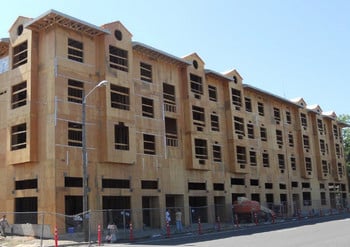
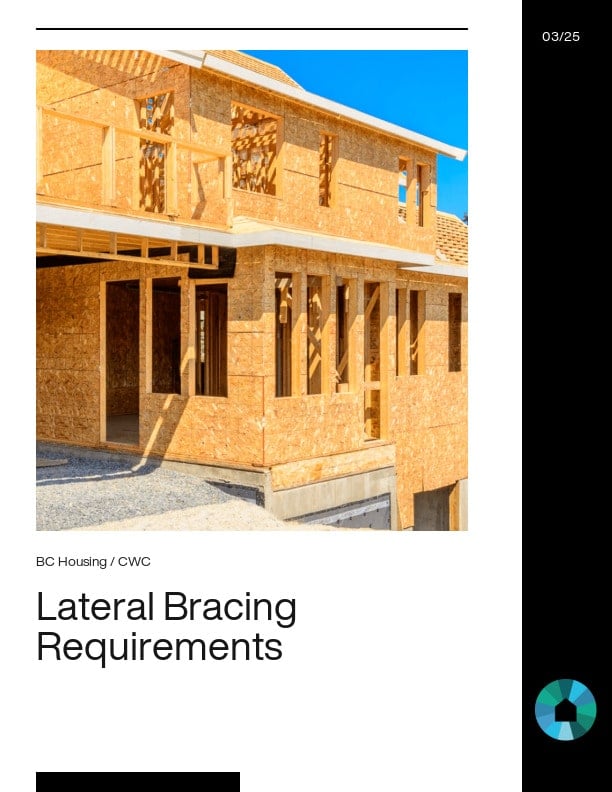
Lateral Bracing Requirements – Part 9 of the BC Building Code 2024

Purpose:
This publication provides detailed guidance on the BC Building Code 2024 requirements for lateral bracing in Part 9 wood-frame houses. It explains the building material requirements and construction methods necessary to ensure houses are safe and resilient against seismic and wind loads.

Impact:
This illustrated guide aims to help designers and builders in British Columbia understand and implement the updated Code requirements for lateral bracing. By doing so, it enhances the structural integrity of houses, ensuring they are better protected against environmental hazards, especially earthquakes.

Partners:
Canadian Wood Council, National Research Council, The Province of B.C., University of Ottawa

Sizer Course

Sizer Course

Course Overview

The Sizer Course provides an in-depth introduction to the WoodWorks Sizer Program, a powerful tool for designing and analyzing structural elements such as beams, columns, and shearwalls. The course covers key features, including bearing design, cross-laminated timber (CLT) analysis, load input, lateral support considerations, and Concept Mode for preliminary structural modeling.

You will explore how the program optimizes designs by automatically generating load patterns, checking compliance with building codes, and refining structural elements for improved performance.

Course Learning Outcomes

By the end of this course, you will be able to:

  • Design and analyze structural elements using the WoodWorks Sizer Program, including beams, columns, and CLT panels, while considering material selection, loading conditions, and code compliance.
  • Evaluate load distribution and structural stability by applying Sizer’s automated features for pattern loading, lateral support analysis, and fire resistance adjustments.
  • Optimize structural designs through Concept Mode and detailed element analysis, ensuring efficient material use, proper load transfer, and adherence to engineering best practices.

Course Structure

This course consists of six (6) lessons. Each lesson is comprised of a lesson overview, learning outcomes, instructional videos, assessment questions and an assignment. Through these elements, you will gain practical experience in using the Sizer Woodworks Program for real-world applications.

Once you have completed all assessment questions and assignment submissions, a certificate of completion will be digitally awarded.

Time for Completion

This course is comprised of ten videos for a total run time of 67 minutes.

To complete the assessments in this course you can expect to spend ~ 100 minutes.

Program Download

In order to complete this course you will need to download a trial version of the Sizer Program.

Complete these steps to download the program:

  1. Navigate to the program download page by clicking here.
  2. Click on the “Download Now” button for the Sizer Program.
  3. Locate and click on the download either in your browser or on your computer.
  4. Follow the prompts provided by your computer to complete installation.

*Note: the trial version of the program is only valid for 10 days upon installation.

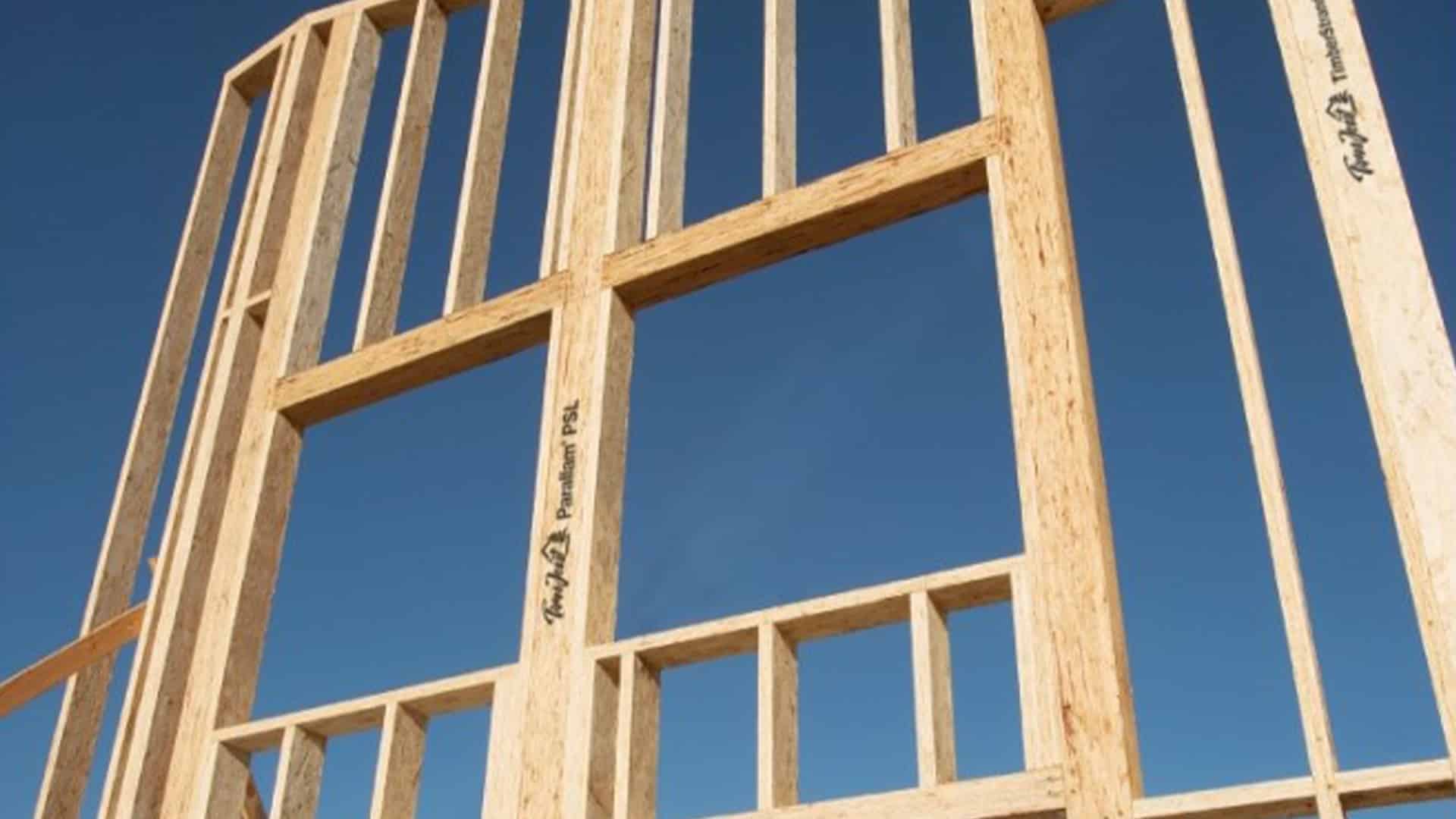
Webinar: Efficient Tall Wall Framing using Engineered Wood Products

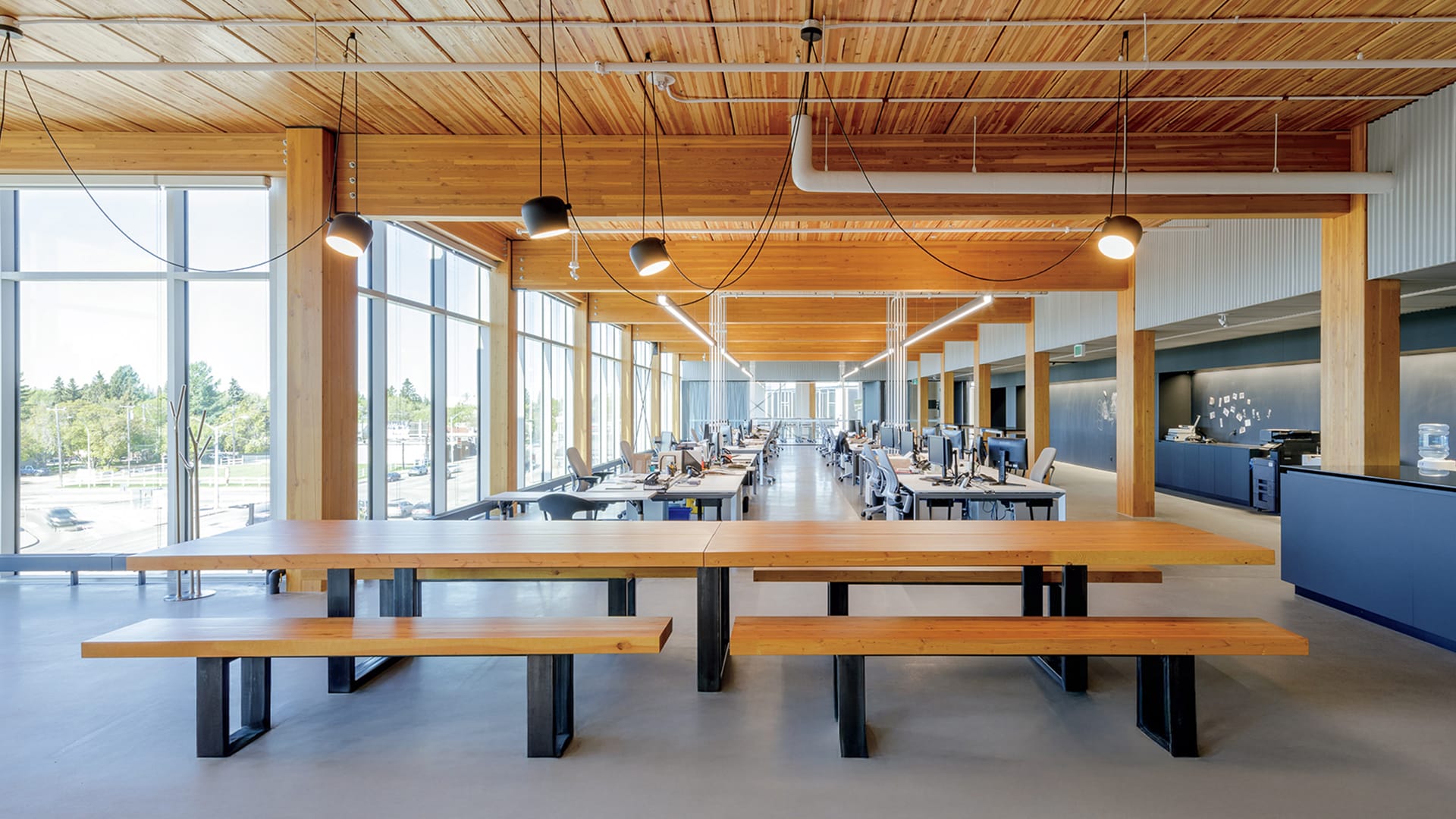
Webinar: Diversify Your Structural Portfolio: Wood in Low-Rise Commercial Construction

Aspen Art Museum: Creating an Innovative Wood Structure

Course Overview

The Aspen Art Museum, designed by architect Shigeru Ban, includes a long-span three-dimensional wood space-frame roof. Ban’s charge was to create a wood space frame with spans of more than 50 feet and cantilevers of 14 feet, in a structural depth of 3 feet. The space frame was to have two planes of intersecting diagonal webs of curved members that undulated up and down to touch the planes of the top and bottom chords with no visible connectors. This case study presentation will describe the design and construction of the wood structure, including paths explored but not chosen for the final design.

Learning Objectives

  1. Articulate the particular demands associated with creating a 3-dimensional space frame entirely in wood.
  2. Recognize the advantages and disadvantages of several wood connection strategies in space-frame structures.
  3. Be aware of manufacturing capabilities and limitations that influenced the design of the Aspen Art Museum roof structure.
  4. Understand the importance of early engagement of manufacturing and engineering partners in the design process for innovative wood structures.

Course Video

Speaker Bio

Gregory R. Kingsley, PhD, PE
President and CEO
KL&A Inc.

Gregory is the president and CEO of KL&A Inc., Structural Engineers and Builders in Golden, Colorado, a firm of 65 that includes structural engineers, steel detailers, and construction managers. He enjoys working with design architects on innovative structures, especially wood and steel.

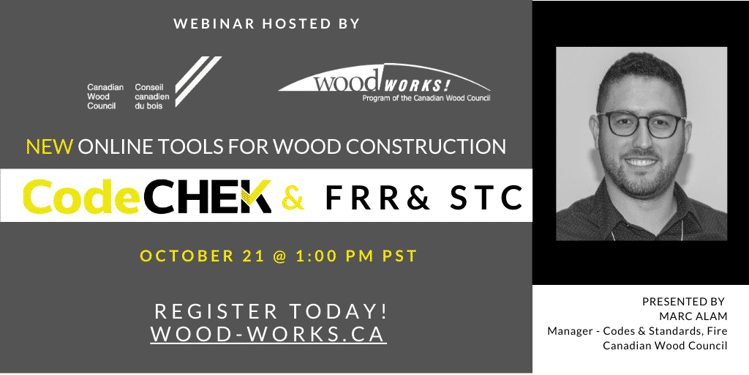
Online Tools for Wood Construction

Course Overview

This course will cover two new free online tools developed by CWC: CodeCHEK and FRR & STC Tool.

CodeCHEK helps designers to determine if and when lightweight wood-frame, heavy timber, mass timber and/or encapsulated mass timber construction can be used, and to determine what are the applicable construction requirements related to fire safety.

FRR & STC (fire-resistance rating & sound transmission class) Tool helps designers in the determination of generic fire-resistance rating designs of lightweight wood-frame wall, floor, and roof assemblies using the Component Additive Method described in Appendix D of the NBC , which is referenced as an acceptable solution in Section 3.1 of the NBC and can be used for buildings permitted to be of combustible construction. In addition, the tool provides the sound transmission class (STC) value that is associated with each wall or floor assembly for which STC information is available.

Learning Objectives

  1. Background on the height and area articles of the National Building Code.
  2. Overview of new CodeCHEK tool.
  3. Description of the component additive method from Appendix D of the National Building Code.
  4. Overview of new FRR & STC (fire-resistance rating & sound transmission class) tool.

Course Video

Speaker Bio

Marc Alam, Ph.D.
Manager – Codes and Standards, Fire
Canadian Wood Council

Marc Alam is a member of the Canadian Wood Council. As Manager, Codes and Standards in the fire division, Marc assists through participation in CWC’s building code and standards fire‐related initiatives and the development of CWC’s fire design tools, as well as code‐related fire research projects.

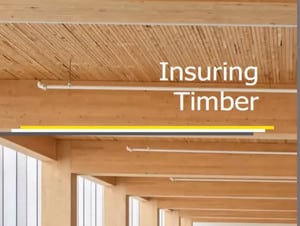
Insuring Timber Buildings: Best Practices for the Best Rates!

Course Overview

Recent code changes and advancements in timber products are allowing for larger and more complex buildings to be built in timber. These multi storey, complex buildings are comparable to steel and concrete in strength and durability and conform to all building codes. Although a relatively small portion of the overall project budget, the course of construction insurance for these projects tend to be much higher than the non-combustible alternative. This presentation will walk the attendee through the nuances of the insurance industry, and highlight the research that has taken place over the last 3 years to lower these rates. We will debunk many of the myths associated with timber construction that serve as roadblocks to desirable insurance rates. The best practices we will examine in this presentation could be instrumental in helping achieve a safe and insurable construction site.

Learning Objectives

  1. Understand the insurance industry’s methods of assessing construction risk.
  2. Identify the major risk factors associated with timber construction.
  3. Identify construction site best practices.
  4. Be prepared to submit a comprehensive package to apply for insurance.

Course Video

Speaker Bio

Timothy Buhler, BBA
Technical Manager
Canadian Wood Council

Born and raised in Northern Ontario, Tim is very aware of the importance of the forestry industry to Canadians.

Tim graduated from Nipissing University in 2006 and shortly after joined the Canadian Wood Council. Tim’s keen interest in sustainable construction and curbing climate change led him to pursue the role of technical manager within the Wood WORKS! Program. Over the last 14 years Tim’s experience and education has taken him across North America and Europe where he has engaged and learned from a variety of leading experts in the field. Tim has worked closely with industry and the design community to become a resource for all things related to timber construction.

As a technical manager with the Ontario team Tim continues to work diligently to promote timber construction has assisted with over 100 projects in Ontario ranging in size in scope from 1 to 35 (theoretical) stories.

Wood in Low-Rise Commercial Buildings

Course Overview

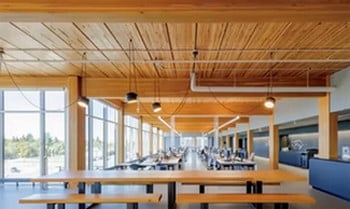
In Canada, we are fortunate to have both structural engineers and architects who, because of the numerous benefits, would like to work with wood whenever they can. While many are comfortable using wood in traditional applications and in buildings that are relatively small in scale, not all have the requisite experience working with wood (whether traditional light wood-frame, heavy timber, or new engineered mass timber systems) in larger, non-traditional applications. In this context, the main purpose of this presentation is to demonstrate how a variety of structural wood systems can be successfully applied to a range of large-scale, low-rise building types – ones more typically constructed of steel. We believe that providing sound examples of structural wood systems for non-traditional applications can be a powerful tool to encourage developers, builders, architects, and engineers to use wood as the primary structural material in these types of buildings.

Learning Objectives

  1. Importance of the Low-Rise Market.
  2. Scope and Content of the Low-Rise Guide.
  3. Review of Mass Timber and Hybrid Structural Systems Applicable to Low-rise Buildings.
  4. Review of Light Framing Structural Systems Applicable to Low-rise Buildings.

Course Video

Speaker Bio

Claude Lamothe
President
Intra-Bois Inc.

Claude Lamothe, President Intra-Bois Inc. Claude graduated from McGill University in 1985 with a Civil Engineering Bachelor Degree. He worked four years in the lumber truss and steel industries before joining Trus Joist. After five years as a Technical Sales Representative and three years as Eastern Canada Regional Sales Manager, Claude joined Domtar Lumber Division as Marketing Manager and then worked for Goodfellow as Manager Engineered Wood Products. From 2002 to 2012, Claude was Sales Manager Structural & Industrial Segments for the Lumber Division of Resolute Forest Products. In 2012, Claude founded its own consulting firm Intra-Bois Inc. Intra-Bois offers structural engineering services and has performed several market studies for major North American forest products companies.

CLT Design Considerations

Course Overview

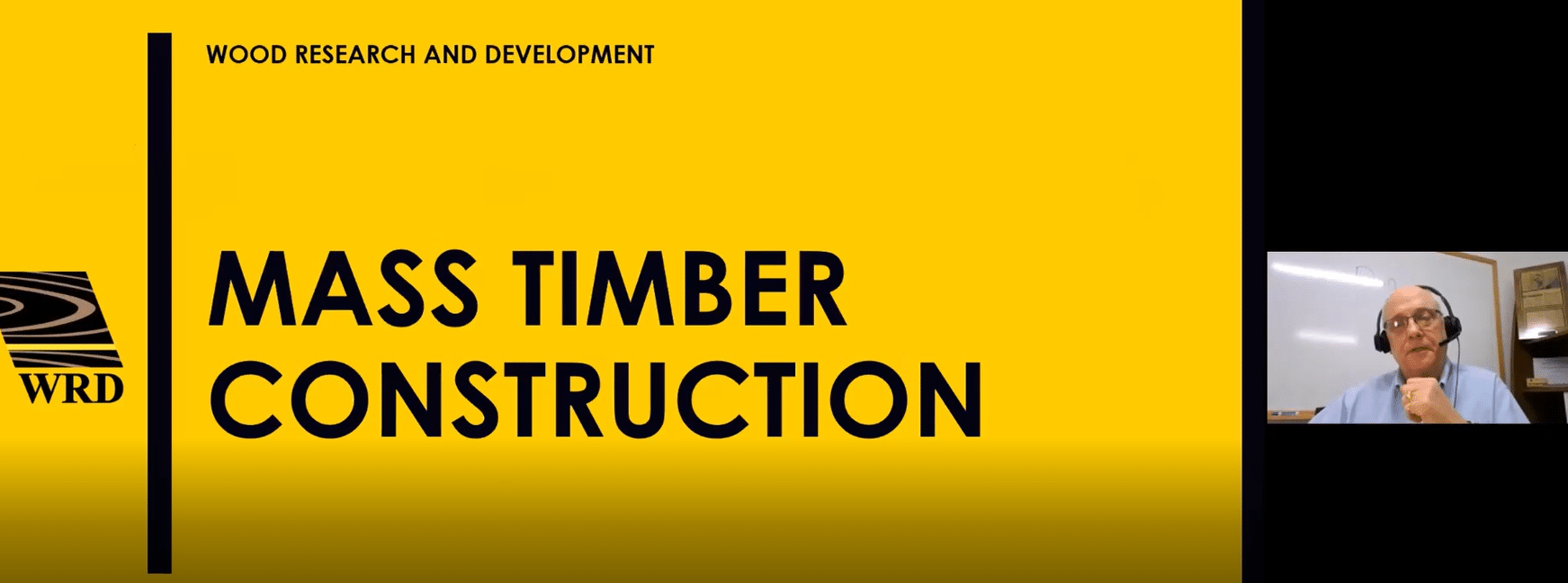
Mass Timber has arrived in the world capital infrastructure marketplace while architects and structural engineers are trying to get educated about how to design with this new advanced engineered wood material. This paper discusses three important aspects of mass timber design in outdoor and indoor (wet and dry service) conditions as well as important design questions such as major and minor axis horizontal shear as it relates to column and wheel point loads. Other design considerations will be discussed as well.

Learning Objectives

  1. Mass timber design details for outdoor and indoor environmental exposure. 
  2. Point loads due to column loading in mass timber systems both post and beam and CLT and simple platform and column.
  3. Fire resistance ratings and advanced materials in mass timber buildings
  4. Minor and major axis shear characteristics of CLT and impacts on design considerations for civil infrastructure.

Course Video

Speaker Bio

Dan Tingley, Ph.D., P.Eng., MIEust, CPEng., RPEQ,
Senior Wood Technologist / Structural Engineer
Wood Research and Development (WRD) Oregon, USA and Caboolture, QLD, Australia

Dr. Dan Tingley graduated from University of New Brunswick with a B. Sc. F.E. and later a M.Sc.C.E. Following this in the 90’s Tingley finished his Ph.D. in wood technology and structural engineering at Oregon State University. He has worked in the wood products field for 40 years. He currently serves as senior engineer for Wood Research and Development and Advanced Research and Development and makes his base in Portland Oregon. He has won the Civil Engineering Research Foundation’s Charles Pankow Award for Structural Innovation as well as the Nova Award for all construction products issued by Construction Innovation Forum for his pioneer work in high strength fiber reinforcement of wood and wood composites. Tingley holds over 40 patents worldwide and has over 125 referred and non referred publications. He specializes in timber structures design and restoration with a significant interest in timber bridges. He is currently acting as senior engineer providing oversight on 20 timber bridge restoration projects world-wide.

Excellence and Innovation: Inspirational Wood Buildings in the UK

Course Overview

This presentation will highlight recent award winning timber projects recognized in the UK including several beautiful wood buildings that were featured in technical case studies published by TRADA. The Timber Research and Development Association is an internationally recognised centre of excellence on the specification and use of timber and wood products. TRADA’s origins go back over 80 years and its name is synonymous with independence and authority. TRADA’s aim is to provide members with the highest quality information on timber and wood products to enable them to maximise the benefits that timber can provide.

Learning Objectives

Coming Soon

Course Video

Speaker Bio

Coming Soon

Practical Aspects of Wood Quality for Architects and Engineers

Course Overview

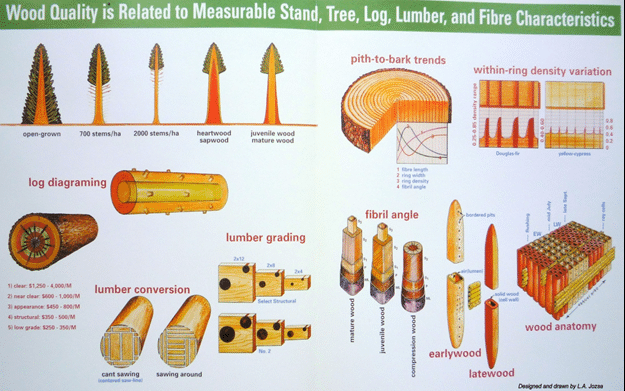
Born out of years of research and real world experience Les Jezsa applies his unique perspective in exploring the wood quality attributes of: strength, stiffness, density, dimensional stability and natural durability.

Many of the examples and teaching tools developed by Les Jozsa and used in this course are also used in university architect and engineering programs around the world. 

Learning Objectives

  1. Wood availability and wood use will span from the global scale to the local picture, from the temperate zone and tropical rainforest, in terms of industrial and non-industrial uses.
  2. Old-growth and second-growth wood attributes will be illuminated in terms of density, strength and stiffness, dimensional stability, and natural durability.
  3. Hardwoods- softwoods, lumber grades, wood-moisture relationships, and protecting wood through pressure treating and painting.

Course Video

Speaker Bio

Les Jozsa
Research Scientist Emeritus
FPInnovations | Forintek

Les Jozsa’s expertise and knowledge, as a wood technologist, spans a wide perspective, from the macroscopic to the microscopic realm. The above graphic, designed and drawn by the author, could be his business card. His responsibilities included planning, coordinating and conducting research on wood quality attributes, utilizing X-ray densitometric techniques. His resource evaluation projects have dealt with all the major commercial tree species in western Canada, and involved stand selection, tree sampling, laboratory measurements, analysis, and reporting. Log diagramming, lumber conversion, and lumber grading protocols were followed to examine the impact of silvicultural treatments (like spacing, thinning, fertilization and pruning) on wood production and wood quality. Intensive tree sampling techniques provided information on stem size, stem taper, branch size, heartwood-sapwood distribution, and juvenile- mature-wood classification. His three-dimensional analysis of ring width, ring density, fiber length and shrinkage was ground-breaking in Canada. It was made possible through techniques developed by his colleagues at Forintek under his leadership. His other projects have dealt with climate-tree-growth relationships, the acoustical properties of wood, shrinkage and swelling, and lumber drying. Other responsibilities included conducting workshops with professional foresters, wood workers, architects and engineers. He developed an extensive variety of teaching aids which are being used around the world at several universities, dealing with wood technology and wood-structure. He is an expert witness in Forensic Dendrochronology in the Supreme Court of Canada.

Mid Rise Engineering Considerations for Engineered Wood Products – 2024 Edition

Course Overview

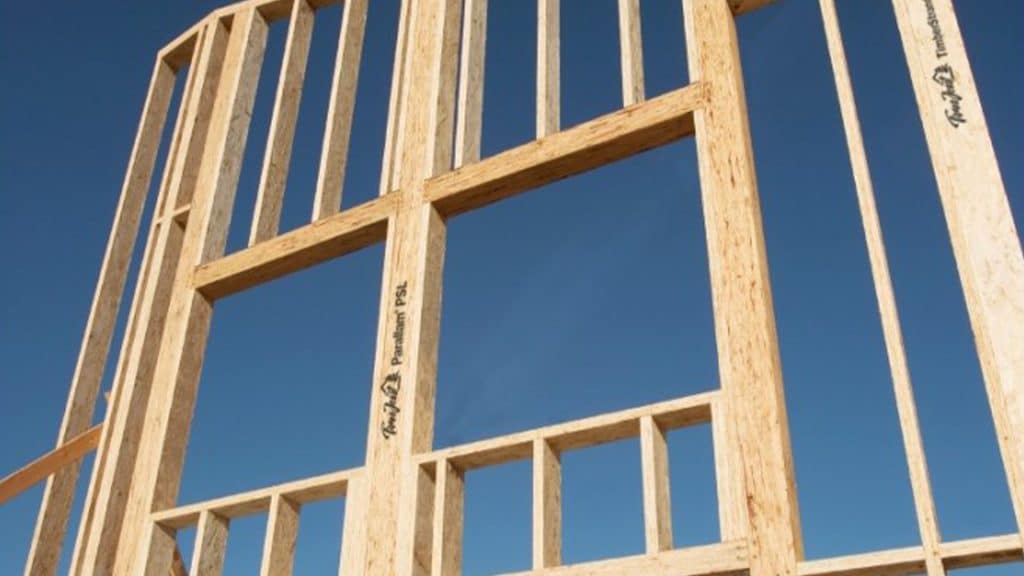
While many designers are familiar with engineered wood products such as I‐joists and structural composite lumber, it is important to understand the structural requirements associated with each in order to achieve proper performance—especially in mid‐rise Construction. With an emphasis on products used in commercial and multi‐family buildings, this presentation will cover engineered wood product acceptance, testing requirements, lateral design, and proper detailing.

Learning Objectives

  1. Testing requirements and acceptance of wood I‐joists and structural composite Lumber (SCL) products.
  2. Dimension stability in regards to moisture content changes and the differences between solid wood products.
  3. Lateral design, including information on I‐joist diaphragm capacities and the detailing of rim board connections.
  4. Fire resistance design, including wood I‐joist assembly requirements and SCL char rate equivalency to solid wood.

Course Video

Speaker Bio

Jeff Olson, P.E., P.Eng.
Boise Cascade EWP, White City, OR

Jeff is currently the Technical Services Manager for Boise Cascade, Engineered Wood Products division. He has over 30 years of experience in the design and testing of engineered wood products and is licensed as a Professional Engineer in several western Canadian provinces and U.S. states.

Sizer Course
Webinar: Efficient Tall Wall Framing using Engineered Wood Products
Webinar: Diversify Your Structural Portfolio: Wood in Low-Rise Commercial Construction
Aspen Art Museum: Creating an Innovative Wood Structure
Online Tools for Wood Construction
Insuring Timber Buildings: Best Practices for the Best Rates!
Wood in Low-Rise Commercial Buildings
CLT Design Considerations
Excellence and Innovation: Inspirational Wood Buildings in the UK
Practical Aspects of Wood Quality for Architects and Engineers
Mid Rise Engineering Considerations for Engineered Wood Products – 2024 Edition
Purpose:This publication provides detailed guidance on the BC Building Code 2024 requirements for lateral bracing in Part 9 wood-frame houses. It explains the building...
Course Overview The Sizer Course provides an in-depth introduction to the WoodWorks Sizer Program, a powerful tool for designing and analyzing structural elements such as...
Course Overview The Aspen Art Museum, designed by architect Shigeru Ban, includes a long-span three-dimensional wood space-frame roof. Ban’s charge was to create a wood...
Course Overview This course will cover two new free online tools developed by CWC: CodeCHEK and FRR & STC Tool. CodeCHEK helps designers to determine if and when...
Course Overview Recent code changes and advancements in timber products are allowing for larger and more complex buildings to be built in timber. These multi storey, complex...
Course Overview In Canada, we are fortunate to have both structural engineers and architects who, because of the numerous benefits, would like to work with wood whenever they...
Course Overview Mass Timber has arrived in the world capital infrastructure marketplace while architects and structural engineers are trying to get educated about how to...
Course Overview This presentation will highlight recent award winning timber projects recognized in the UK including several beautiful wood buildings that were featured in...
Course Overview Born out of years of research and real world experience Les Jezsa applies his unique perspective in exploring the wood quality attributes of: strength...
Course Overview While many designers are familiar with engineered wood products such as I‐joists and structural composite lumber, it is important to understand the...

Get Access to Our Resources

Stay in the loop and don’t miss a thing!

1
2
3

Get Access to Our Resources

Stay in the loop and don’t miss a thing!

What’s Your Occupation?

Help us personalize the content for you.

What Interests You the Most?

Help us personalize the content for you.

Filters

Expertise Icon
Field of Expertise
Province Icon
Province
Member Type Icon
WoodWork National Partners

Filters

Post Type Icon
Post Type
Persona Icon
Persona
Language Icon
Language
Tags Icon
Tags
Mass Timber Plus Icon Environment Plus Icon Safety Plus Icon Durability Plus Icon Design Systems Plus Icon Budget Plus Icon Construction Management Plus Icon Fire Resistance Plus Icon Tall Buildings Plus Icon Short Buildings Plus Icon
Date Icon
Date
Line Separator