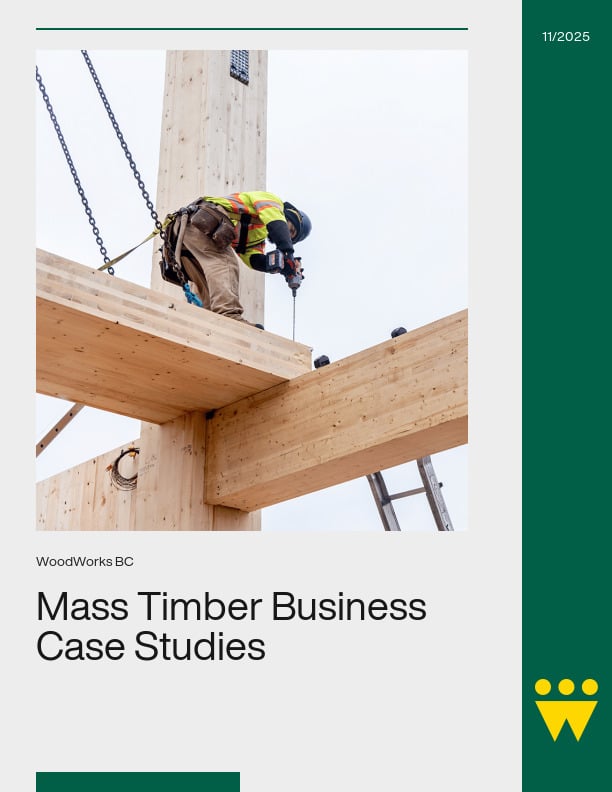
This dynamic session explores cutting-edge applications of mass timber in Canadian construction through three compelling case studies that showcase how timber is revolutionizing the building industry. Attendees will discover Spearhead’s visionary approach to next-generation manufacturing through their innovative glulam facility in British Columbia. This groundbreaking project challenges conventional thinking and reimagines timber production processes, setting new standards for what’s possible in wood manufacturing. The session will also feature Intelligent City’s remarkable achievement—Canada’s first tall timber Passive House facade. This case study reveals how mass timber building envelopes can deliver exceptional environmental performance while meeting the most demanding energy efficiency standards, creating sustainable structures that perform as beautifully as they look. Finally, the session will present ETRO’s 837 Beatty project, where heritage preservation meets modern timber innovation. This thoughtful integration creates a harmonious dialogue between historical architecture and forward-thinking construction methodologies, demonstrating timber’s versatility across different building contexts.
Shaun St-Amour
Retrofit (Revive) Manager
ETRO Construction
Shaun brings a unique combination of expertise, leadership, and passion for high-performance buildings. With extensive knowledge of high-performance building standards and hands-on experience with sustainable materials and methods, he bridges the gap between design intent and construction execution. Beyond ETRO, Shaun contributes to the Passive House Accelerator, organizes Zero Carbon Building Tours with ZEBx, and hosts building science meet-ups. His expertise plays a key role in driving decarbonization, resiliency, and efficiency in both new and existing buildings.
Josh Hall
Partner, Director of Business Development
Spearhead
Josh is a Partner and Director of Business Development at Spearhead, where he helps shape the company’s vision and strategic direction. With over fifteen years of experience spanning architecture, digital fabrication, and commercial construction, his knowledge of design, process, and project delivery plays a key role in guiding Spearhead’s continued growth and evolution. Josh holds a Master of Architecture from the University of British Columbia and a Bachelor of Architectural Science from the British Columbia Institute of Technology.
Shawn Keyes
VP, Strategic Growth & Business Development
Intelligent City
Shawn is a structural engineer and commercial executive with more than a decade of experience leading innovation in mass timber and industrialized construction. As Vice President of Strategic Growth at Intelligent City, he leads commercialization, market strategy, and partnerships to scale the company’s prefabricated housing systems. Previously, Shawn served as Executive Director of WoodWorks BC, where he led a strategic transformation that strengthened partnerships, technical leadership, and influence across the development, AEC, and policy sectors. Before that, he spent over six years at Fast + Epp, developing deep expertise in mass timber and hybrid structural systems. Shawn’s teams have supported more than 150 mass timber projects across Canada, and he has served on advisory councils for BC Housing, BCIT, and the BC Office of Mass Timber Implementation. He holds an MBA from UBC Sauder, a Master of Engineering from Carleton University, and is a licensed Professional Engineer in BC and Ontario.