en-ca

Searching for: Wood

Searching results for “Wood”
390 results found...
Sort By Dropdown Icon

Canadian Wood Council Unveils New Brand Identity for WoodWorks Program

OTTAWA, Ontario – September 27, 2023 – The Canadian Wood Council (CWC) is delighted to announce the launch of an updated brand identity for its WoodWorks program. This reimagined look created in partnership with agency partner BBDO Canada, improves the accessibility of the brand and establishes an independent visual identity for the Canadian WoodWorks program within a rapidly evolving marketplace.

With its simplified, modern design, the brand embraces inclusivity and invites a broader audience to explore the benefits of wood construction and the important role it must play in the future of sustainable development. The newly unveiled brand identity embodies the WoodWorks program’s dedication to technical excellence, environmental responsibility, and service to communities and individuals across Canada.

Martin Richard, Vice-President Communications and Market Development at the Canadian Wood Council, expressed his enthusiasm for the rebrand, stating, “We are pleased to launch this new brand identity which better reflects the quality of WoodWorks’s technical leadership and purpose of the program while signaling our commitment to the environment and people the program serves. It’s an exciting step toward ensuring that the program is clear and accessible to all, reinforcing our dedication to advancing wood construction and sustainable development in Canada and beyond.”

The WoodWorks program, under its new brand identity, is focused on expert led technical support to developers, architects, engineers, builders, and other industry professionals who want to expand their capacity for wood design and construction. The program remains committed to the pursuit of technical excellence and to connecting professionals with the information and resources they need to pursue wood construction in all its forms as well as providing valuable resources and educational opportunities.

The design ethos of the new brand identity pays homage to Canadian Modernism, honouring a style that is timeless in its simplicity and functionality. The symbol showcases the strength of our collaboration with the AEC+D community in enabling construction with wood. The refreshed colour palette draws inspiration from the organic hues found in our forests, wood products and the many construction sites across Canada.

The Canadian Wood Council invites everyone to reacquaint themselves with the WoodWorks program and its new brand identity.

High-resolution images of the new brand identity and logos are available upon request.

Promoting Health and Wellness with Wood Architecture

The year 2020 will forever be synonymous with COVID-19. After experiencing the pandemic and its ripple effects, few would question the importance of health and wellness. What people may not consider is the impact that our surrounding environments have on our health. Research shows that incorporating wood and other natural elements into buildings can have a positive effect on occupants’ overall health and well-being. The term for this effect is called biophilia, which refers to humanity’s innate need to connect with nature.

Many industries are embracing biophilic design and its benefits. Employers are eager to create inviting spaces for their teams, hospital designs have shifted from cold and industrial-like to bright environments with wayfinding elements, and homeowners are expanding their living spaces with decks, fences, and pergolas so they can gather with friends and family outdoors. The wellness impacts of wood extend beyond the biophilic advantages of finished spaces. Mass timber buildings also benefit workers throughout the construction process by reducing construction time, and prefabricated elements contribute to cleaner, safer building sites.

The team at the Canadian Wood Council/Wood WORKS! is committed to providing design and construction professionals with the tools and information needed to build with wood. We’re going taller, we’re getting bigger, and, from coast to coast, we’re not stopping. Building with wood is the right choice, for the environment and for everyone’s well-being.

Wood Design Awards, 2022

Specification Guide for Non-Residential Pressure Treated Wood Products

Wood is the only renewable building material within the three major building material types. In exterior applications, wood is subject to deterioration from natural elements and biological attack, but when properly protected, its service life can be extended for many years. The most effective way of protecting exposed wood is the use of wood preservatives. Preserved wood products can have 5 to 10 times the service life of untreated wood. This extension of life saves the equivalent of 12.5% of Canada’s annual log harvests (source durable-wood.com).

The preservation of the wood is important, especially when it is specified for use in critical infrastructure applications such as railway ties, bridge timbers, utility poles and guardrail posts for highways. Pressure treated wood ensures that these critical structures remain strong and safe for the duration of their service lives. Pressure treated wood products are also commonly used in agricultural applications such fence rails, posts and building poles, as well as in commercial decks, fences, and other heavy duty outdoor applications. Depending on the required application and the level of protection needed for the wood products, there are a variety pressure treatment methods and approved preservatives that are available in Canada.

Pressure treatment is a process that forces preservatives into the wood to protect against fungal decay and destructive insects such as termites and marine borers. In Canada, wood preservatives are registered with Health Canada’s Pest Management Regulatory Agency (PMRA). Individual treating facilities undergo regular environmental assessments and follow the recommendations for the design and operation of wood preservative facilities as outlined in Environment Canada’s Technical Recommendation Document (TRD).

Wood Design Awards, 2021

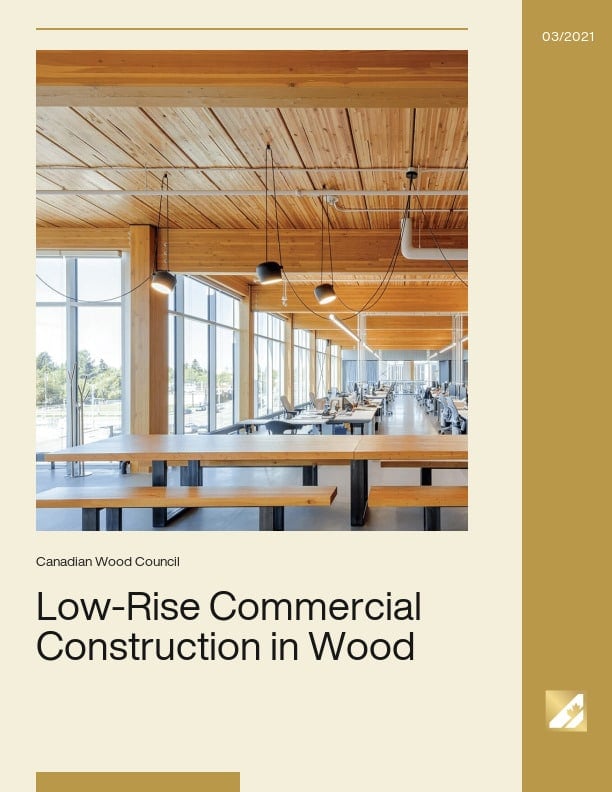
Low-Rise Commercial Construction in Wood

Across Canada, the low-rise non-residential sector—think offices, retail stores, warehouses, and restaurants—presents a major growth opportunity for structural wood systems, including light wood-frame, heavy timber, mass timber, and hybrid construction.

Together, retail, office, and light industrial warehouse buildings account for nearly 75% of new floor space in this market each year. Yet despite their scale, these segments continue to show low uptake of structural wood.

As retailers adapt to the shift toward online shopping and businesses compete to attract talent, the design and performance of their buildings matter more than ever. Wood offers a sustainable, visually appealing solution that enhances employee well-being and elevates commercial spaces.

This new technical publication explores the market potential, challenges, and the role wood can play in redefining this sector.

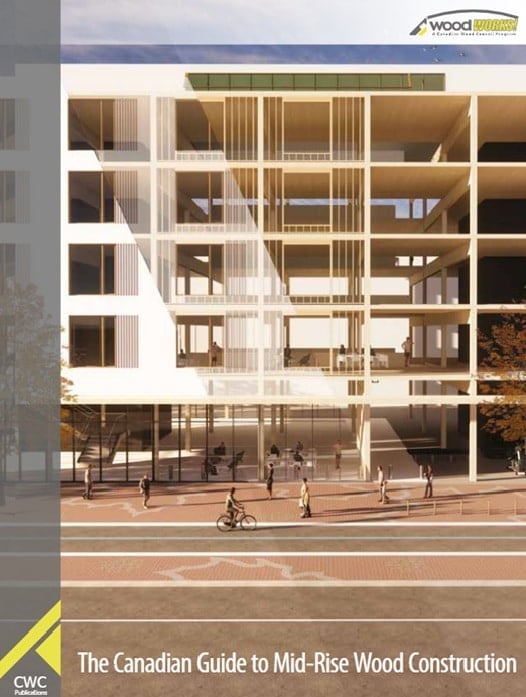
The Canadian Guide to Mid-Rise Wood Construction 2021

The Mid-Rise project and the ensuing publication were conceived in order to provide a guide for opportunities that have been created by Canadian Code Provisions progressing, allowing 6 storey wood buildings over at least a decade.

The foundation for some of the ideas contained within, came from the Wood WORKS! program hosting regional focus groups, made up of key industry stakeholders. They were held at various locations across Canada during 2019. From the focus-group conversations and the research gathered and analyzed, it was evident that each province was at varying degrees of adoption, understanding and application for wood buildings up to 6 storeys. The opportunities that are available for wood use in mid-rise development are varied and many and it is hoped that some of the illustrations and information contained inside this guide will continue to inspire the design and construction industry.

The Code Matrix captures the variations of code provisions currently in use in each of the Canadian provinces, and highlights Part 3,4 and 5 requirements for wood buildings up to 6 storeys in height. Permissible building types, heights and areas, permitted mixed major occupancies, required fire resistance ratings and sprinkler provisions are illustrated.

The flow of the sections is laid out to mirror basic project planning steps that are generally undertaken by design teams. A keen understanding of what is allowed by code, creates the conversation around ideas for buildings and potential project opportunities. The location of a site, how it fits into local planning and zoning regulations, and a business case that makes it achievable, are all stages a design team navigates early with a client. Many factors drive the business case. Goals set early for greener and environmentally sustainable development, applications of sustainable materials having significantly lower embodied carbon, can be incorporated into design principles. Schedule often drives design and project efficiency, creating consideration into using prefabricated and modular wood structural systems.

Part 5 of the guide contains some technical considerations for 5- and 6- storey wood buildings is laid out to help designers better understand some of the practical considerations needed for the construction and design of mid-rise wood buildings. It is written for design professionals in the construction industry, and builders with the necessary skills to consider taller wood buildings.

This guide is illustrated to be relevant to all design and building professionals involved in building our future environments, including architects, engineers, the development community, material suppliers, manufacturers, building inspectors, municipal officials and planners, project managers, contractors, innovators, and the general public at large.

Wood Design Awards, 2020

Surface Flammability and Flame-Spread Ratings

The rate at which flame spreads on the exposed interior surfaces or a room or space can have an impact on the rate of fire growth within an area, especially if the materials of the exposed surfaces are highly flammable. Therefore, the National Building Code of Canada (NBC)¹ regulates the surface flammability of any material that forms part of the interior surface of walls, ceilings and, in some cases, floors, in buildings. Based on a standard fire-test method, the NBC uses a rating system to quantify surface flammability that allows comparison of one material to another, and the ratings within that system are called flame-spread ratings (FSR).

For some buildings, the smoke generated by materials or products lining some areas of the building when they burn is also regulated by the NBC. Since it may take some additional time for occupants to exit the building, this applies to all unsprinklered high buildings and all elevators or Group B occupancies in high buildings. The FSR and SDC is also regulated for some materials used in ducts and plenums. The smoke produced from a material or product is measured and quantified through another rating system, based on a standard fire-test method — the smoke developed classification (SDC). For most wood products used as interior finishes, both of these properties — the FSR and the SDC — are to be determined in accordance with CAN/ULC-S102, “Standard Method of Test for Surface Burning Characteristics of Building Materials and Assemblies.”² For flooring, CAN/ULC-S102.2 “Standard Method of Test for Surface Burning Characteristics of Flooring, Floor Coverings, and Miscellaneous Materials and Assemblies is to be used when a SDC or FSR is required.

Tall Wood Course of Construction Site Fire Safety

The vulnerability of any building, regardless of the material used, in a fire situation is higher during the construction phase when compared to the susceptibility of the building after it has been completed and occupied. This is because the risks and hazards found on a construction site differ both in nature and potential impact from those in a completed building; and these risks are occurring at a time when the fire prevention elements that are designed to be part of the completed building are not yet in place. For these reasons, construction site fire safety includes some unique challenges. Developing an understanding of these hazards and their potential risks is the first step towards fire prevention and mitigation during the course of construction (CoC).

Four-Storey Wood School Design in British Columbia: Life Cycle Analysis Comparisons

Climate change is one of the largest threats facing the planet today. The construction industry accounts for 11% of global carbon emissions, playing a significant part in the climate crisis. To determine the best solution for future school buildings, not only does practicability, economy and constructability play a part, so does sustainability.

In order to better understand the embodied carbon emissions associated with the construction of new school buildings in British Columbia, the embodied carbon content associated with the four framing systems examples in the companion report, An Analysis of Structural System Cost Comparisons (costing study), was assessed. The purpose of this study is to allow the embodied carbon associated with these systems to become an important factor when choosing a viable scheme.

Embodied carbon is the carbon footprint of a material or product. To determine the embodied carbon of a building you must consider the quantity of greenhouse gases associated with the building. The most effective way to measure this is through Life Cycle Analysis (LCA), a study which determines the embodied carbon from cradle to grave (material extraction to building demolition). Consequently, an LCA was conducted for each of the four schemes presented in the costing study. Additionally, for wood frame Options A and B, WoodWorks online carbon calculator was used to determine the potential carbon savings associated with carbon sequestering.

Four-Storey Wood School Design in British Columbia: An Analysis of Structural System Cost Comparisons

As land values continue to rise, particularly in higher-density urban environments, schools with smaller footprints will become increasingly necessary to satisfy enrollment demands. There are currently several planned new school projects throughout British Columbia that anticipate requiring either three-or four storey buildings, and it is forecast that demand for school buildings of this size will continue to rise.

Though timber construction would offer a viable structural material option for these buildings, the British Columbia Building Code (BCBC 2018) currently limits schools comprised of timber construction to a maximum of two storeys, while also imposing limits on the overall floor area. Given these constraints, the development of viable structural options that would accommodate larger and taller schools constructed primarily with timber materials has not been a key focus.

With the above factors in mind, the purpose of this report is to build upon the findings of the previously published Design Options for Three- and Four-Storey Wood School Buildings in British Columbia prepared by Fast + Epp and Thinkspace dated November 2019. Specifically, this report supplements the previous one by providing guidance in assessing and comparing the various framing options considered in the previous report primarily on a cost basis.

The Mosaic Centre for Conscious Community and Commerce – Edmonton, Alberta
Edmonton Transit System – LRT Stations
R-Town Vertical 6 | Mass Timber Midrise
Red Deer College Student Residence – Red Deer, Alberta
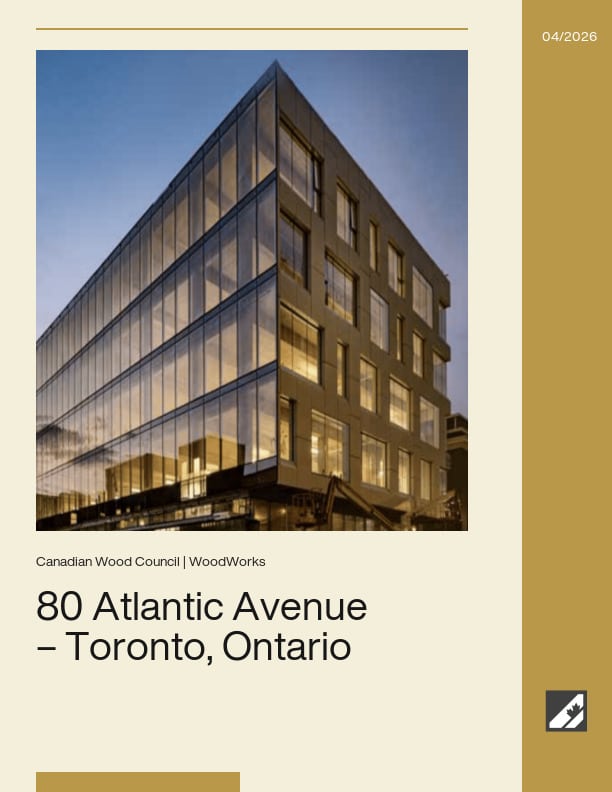
80 Atlantic Avenue – Toronto, Ontario
Green Gables Visitors’ Centre – Cavendish, PE
Laurentian University McEwen School of Architecture – Sudbury, ON
IBS4 – Sustainability and Life Cycle Analysis for Residential Buildings
Located in Edmonton, Alberta, the Mosaic Centre for Conscious Community and Commerce was designed to be the province’s first “net-zero energy” commercial building and...
Edmonton, the capital of Alberta, is a fast-growing city with a population of 1,200,000 people in the overall metropolitan area. It boasts comprehensive bus and light-rail...
Throughout history, protecting commercial structures from fire has been important. Fire poses risk in terms of safety to occupants, building integrity, business interruption...
The R-Town V6 pilot project is the first 6-storey, mixed-use, multi-unit residential building developed in Ontario that fully employs mass timber as the main structural...
Red Deer College (RDC) Student Residence is a 5,800-sq.m. (60,000-sq.ft.), five-storey wooden structure with 145 units, designed and completed to meet the 300-bed demand for...
This case study examines two wood buildings, both with primary retail commercial occupancies, but which employ different mass timber products to achieve very different...
Ontario’s first mass timber commercial building in over 100 years, 80 Atlantic pioneers a new urban office typology for potentially many more timber-frame projects across...
Mark Twain called Anne of Green Gables, “The sweetest creation of child life yet written.” He sent the author Lucy Maud Montgomery a letter of praise, congratulating her...
In 2009, the British Columbia Building Code (BCBC) was amended to permit residential buildings of up to six storeys to be constructed in wood. Since then, through a five-year...
Located in Sudbury, Ontario, Laurentian University’s McEwen School of Architecture is the first new school of architecture to be built in Canada in 40 years. Its mandate is...
Environmental awareness in building design, construction and operation is stronger than ever. But how can we meet the world’s rapidly growing need for buildings and still...
Movement in structures due to environmental condition changes and loads must be considered in design. Temperature changes will cause movement in concrete, steel and masonry...

Get Access to Our Resources

Stay in the loop and don’t miss a thing!

1
2
3

Get Access to Our Resources

Stay in the loop and don’t miss a thing!

What’s Your Occupation?

Help us personalize the content for you.

What Interests You the Most?

Help us personalize the content for you.

Filters

Expertise Icon
Field of Expertise
Province Icon
Province
Member Type Icon
WoodWork National Partners

Filters

Post Type Icon
Post Type
Persona Icon
Persona
Language Icon
Language
Tags Icon
Tags
Mass Timber Plus Icon Environment Plus Icon Safety Plus Icon Durability Plus Icon Design Systems Plus Icon Budget Plus Icon Construction Management Plus Icon Fire Resistance Plus Icon Tall Buildings Plus Icon Short Buildings Plus Icon
Date Icon
Date
Line Separator