en-ca

Searching for: Wood

Searching results for “Wood”
390 results found...
Sort By Dropdown Icon

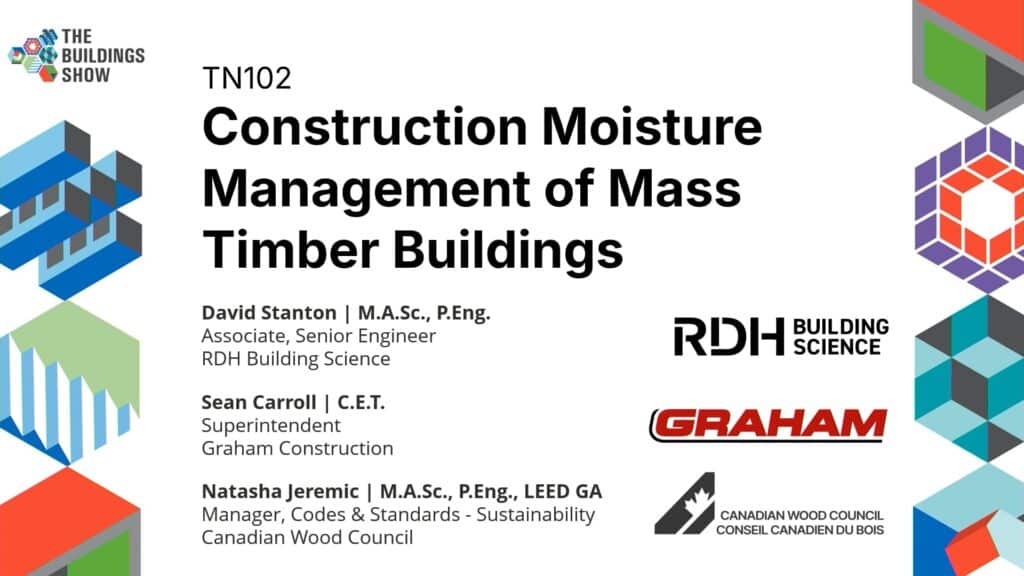
Construction Moisture Management of Mass Timber Buildings

Course Overview

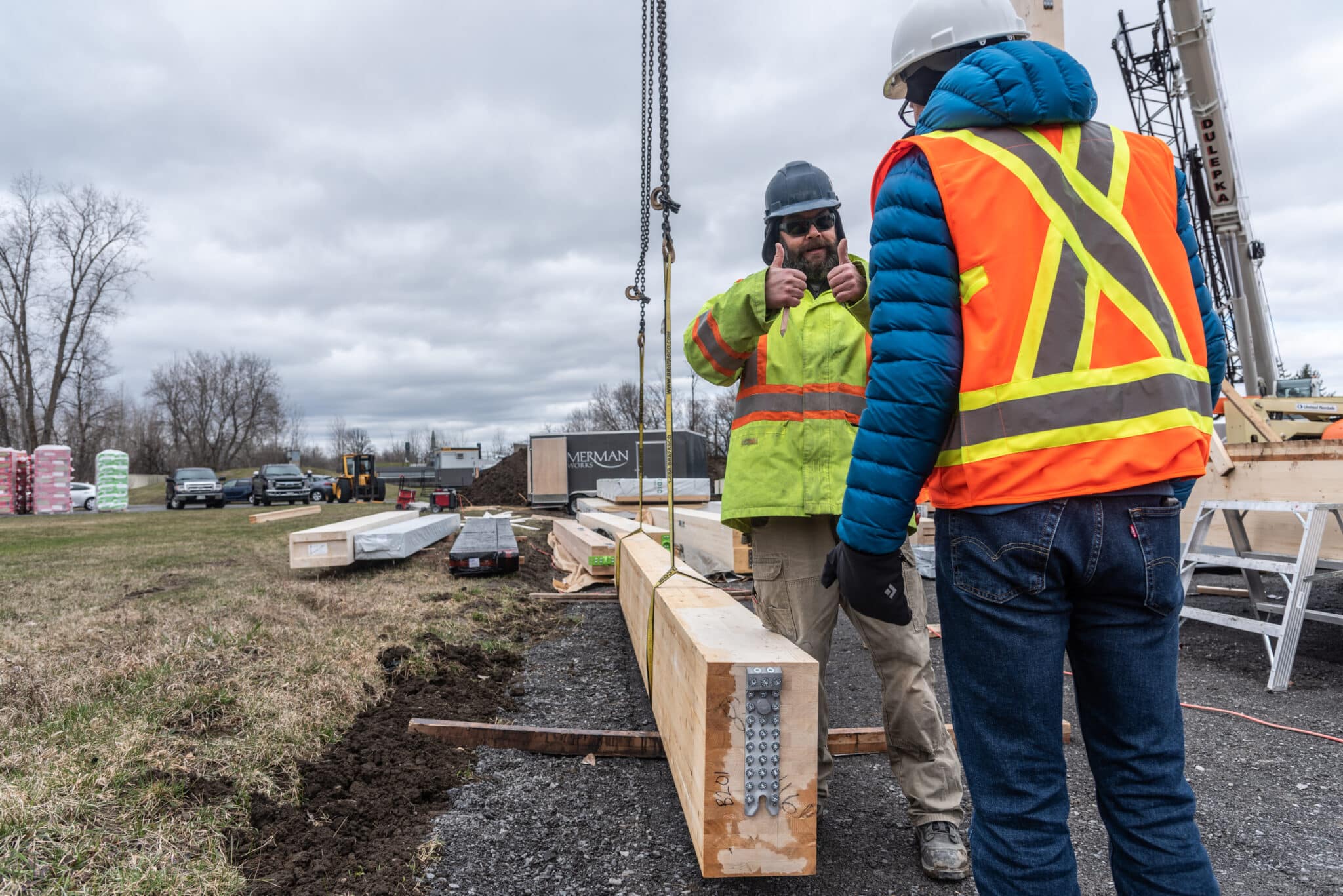
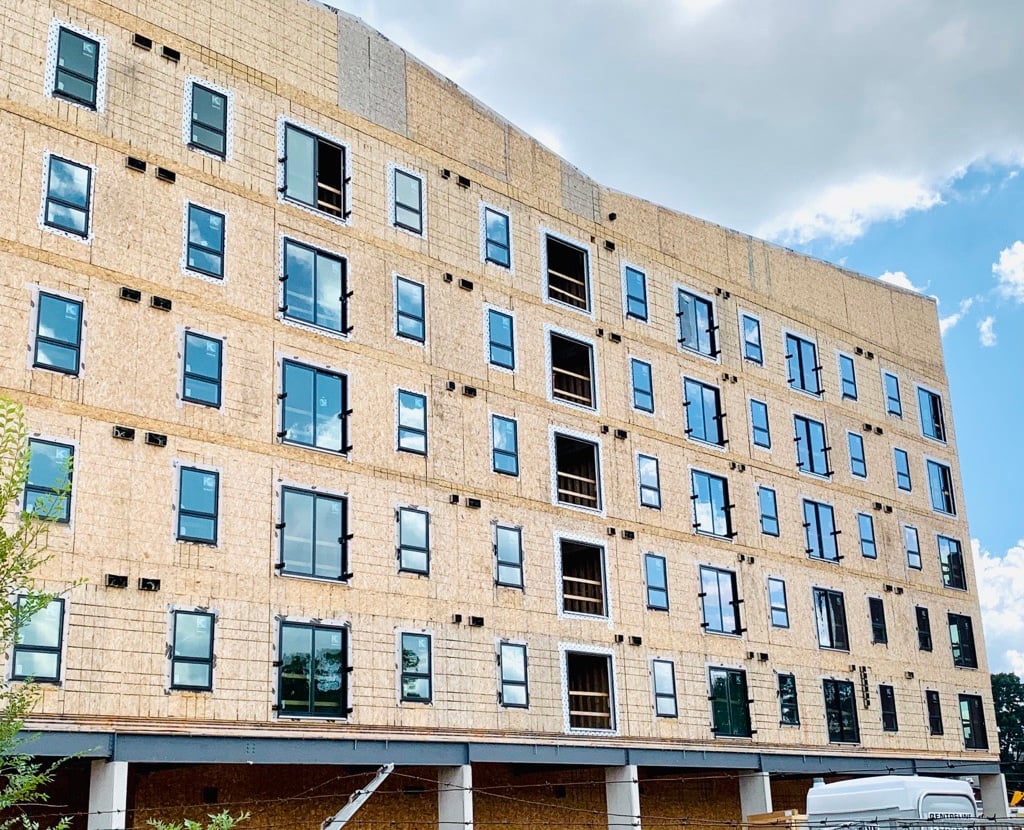
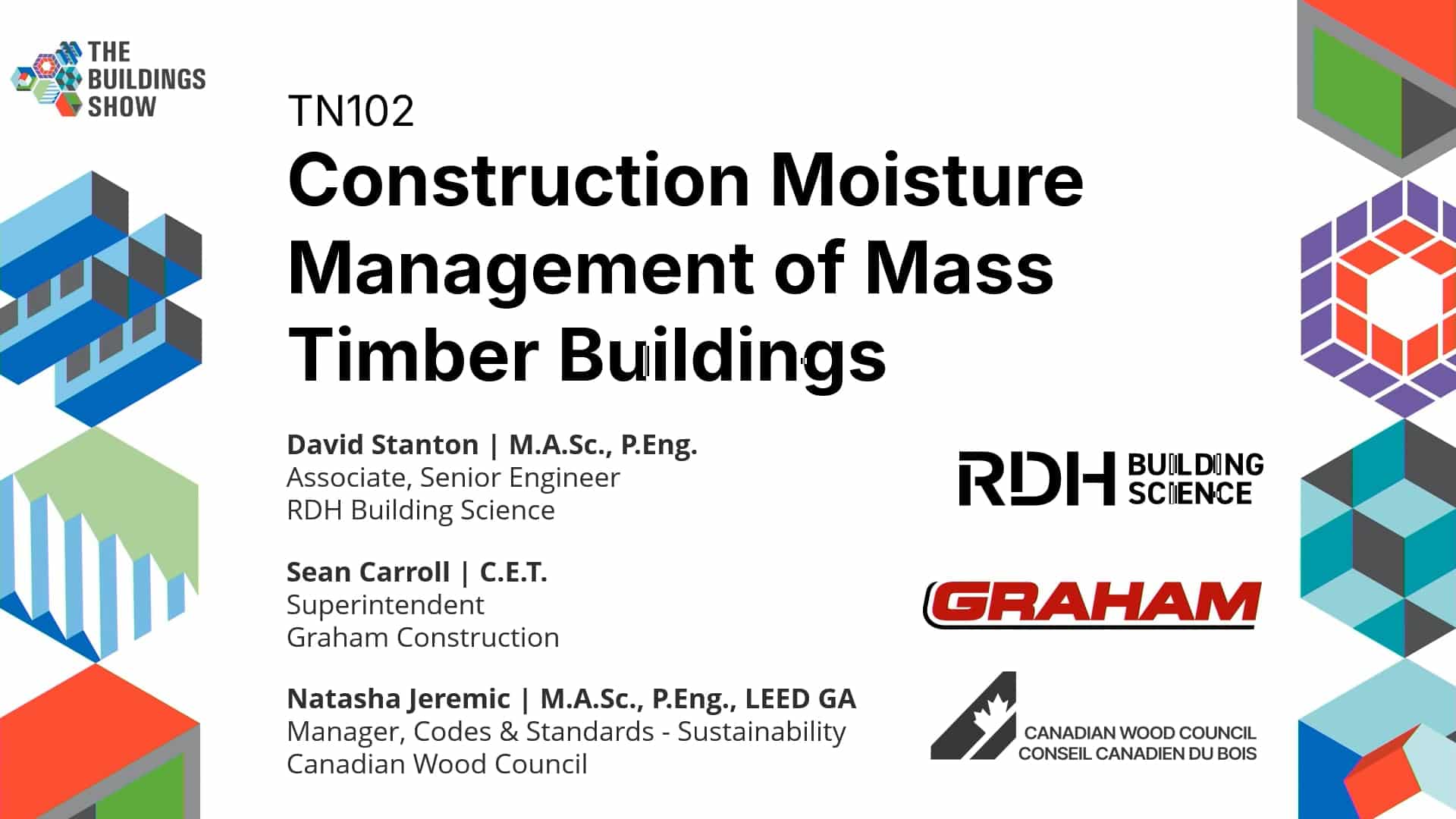
Mass timber buildings are transforming the way we build—but with new materials come new challenges. This session will explore how moisture risks in mass timber construction and how to take a proactive approach to moisture management. Participants will gain practical insights into effective protection strategies during the construction phase and learn how to develop a tailored moisture management plan to safeguard both the mass timber structure and project timelines. 

Learning Objectives

  1. Identify key moisture risks specific to mass timber construction and understand how they differ from traditional structural systems.
  2. Apply practical construction-phase moisture protection strategies that align with project sequencing, site conditions, and contractor workflows.
  3. Develop or evaluate a project-specific moisture management plan to protect mass timber elements, reduce delays, and ensure long-term durability.

Course Video

Speakers Bio

David Stanton
Associate, Senior Engineer – Building Enclosure
RDH Building Science Inc.

David is an Associate and Senior Building Science Engineer in RDH Building Science’s Toronto office. David’s exposure to mass timber projects started with the Brock Commons project in BC as a coop student and then with the Catalyst building in Spokane, WA—a 4-storey mass timber building for Eastern Washington University—when he started working full-time in the Building Science field. Since moving back to Toronto, David has continued to work on large scale mass timber projects, including the Lawson Center for Sustainability and the Academic Wood Tower projects at UofT.

Sean Carroll
Senior Superintendent
Graham Construction

Sean Carroll is a Senior Superintendent with Graham Construction, bringing over 32 years of experience across Canada, Europe, and the UK. A civil engineer and journeyman carpenter, Sean has led complex projects in the commercial, residential, pharmaceutical, and educational sectors—including several involving advanced Mass Timber construction. Over his 11 years with Graham, split between Alberta and Ontario, Sean has been at the forefront of integrating sustainable building methods, particularly in the use of engineered timber systems. He brings a deep understanding of Mass Timber coordination, sequencing, and tolerances, along with a strong commitment to safety, quality, and team leadership. Known for his hands-on approach and global perspective, Sean combines technical precision with a collaborative leadership style—driving successful project outcomes from concept through completion.

Natasha Jeremic
Manager, Codes and Standards – Sustainability
Canadian Wood Council

Natasha Jeremic is a Professional Engineer in the building industry, with a background in design, building performance, and project management. She is currently the Sustainability Manager for Codes and Standards at the Canadian Wood Council, where she leads strategic initiatives focused on low-carbon construction, energy efficiency, durability, and circularity. Natasha leverages her expertise in structural design, building envelope consulting, and whole life carbon accounting to showcase how wood products contribute to a sustainable, low-carbon built environment. She is passionate about raising awareness of wood’s role as a viable solution in advancing climate-conscious construction.

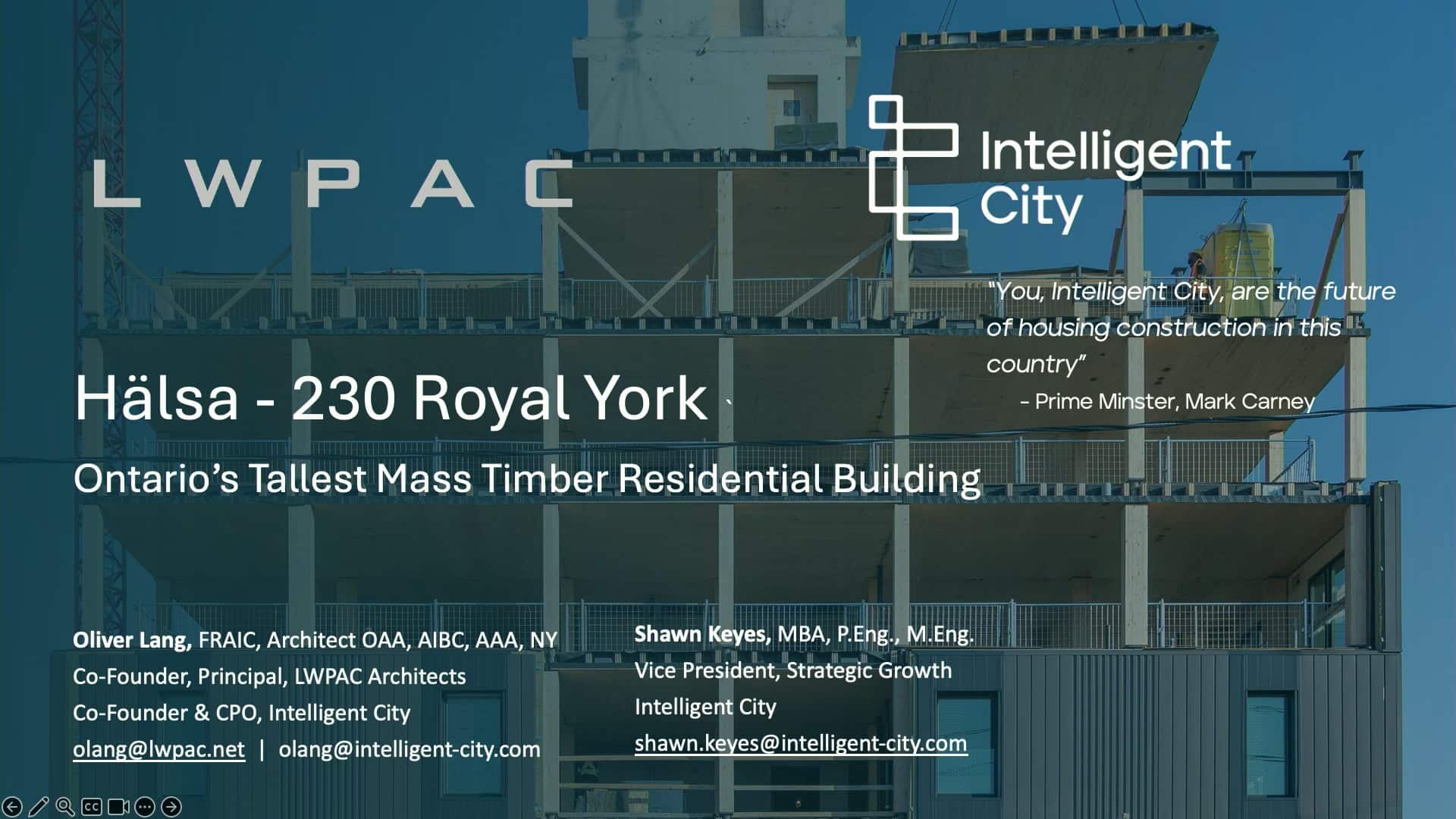
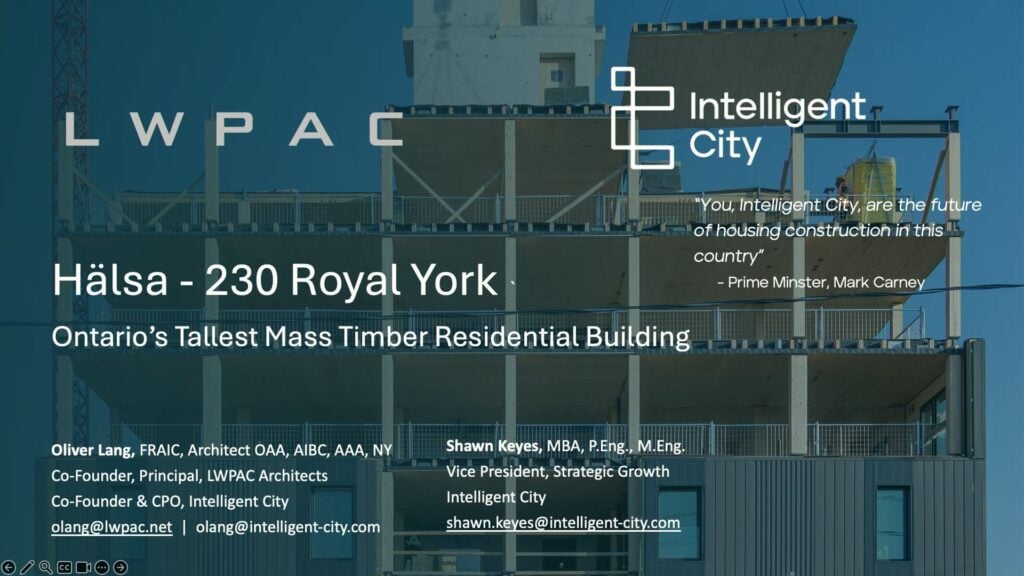
Halsa 230 Royal York: Ontario’s Tallest Mass Timber Residential Building

Course Overview

Halsa 230 Royal York is setting new standards as Toronto’s pioneering 9-storey prefabricated mass timber rental building, demonstrating the viability of carbon-neutral communities within Toronto’s Right of Way zoning. Through a case study of the building, this session will present the advantages of integrated design and prefabricated mass timber building systems components.

Learning Objectives

  1. Explain the integrated design and prefabrication strategies used in mass timber residential construction: Learners will be able to describe how collaborative design, advanced manufacturing, and prefabricated building systems contribute to project efficiency, quality, and scalability.
  2. Analyze the technical features and performance benefits of mass timber floor cassettes and curtain wall systems: Learners will understand the structural, acoustic, fire resistance, and thermal properties of the building’s mass timber components, and how these features address common challenges in high-rise construction.
  3. Evaluate the sustainability, regulatory, and operational considerations in developing carbon-neutral mass timber buildings: Learners will assess how material sourcing, certification, lifecycle carbon analysis, and code compliance shape the viability and impact of mass timber projects in urban environments.

Course Video

Speakers Bio

Oliver Lang
Co-Founder, Chief Product Officer, Intelligent City
Co-Founder, Principal, LWPAC

Oliver Lang is a German-Canadian architect and urban entrepreneur with 25+ years of experience and a recognized leader in design innovation and integration of complex urban projects, mixed-use housing, advanced prefabrication, and green building strategies. He is a graduate of Columbia University’s Graduate School of Architecture Planning and Preservation, with a Master of Science in Advanced Architectural Design, and he holds a professional degree (Diplom-Ingenieur Architektur) from the University of Technology Berlin with two-year studies at the ETSA Barcelona UPC. Prior to founding LWPAC in 1998, Oliver researched and practiced in digitally assisted design and fabrication with Smith-Miller & Hawkinson in New York, while teaching digital design at Princeton University, Columbia University, and University of Pennsylvania. He subsequently has taught advanced design and digital technology at SCI_ARC, the Berlage Institute, TU Berlin, UTF Santa Maria, and University of British Columbia (UBC).

Shawn Keyes
VP – Strategic Growth and Business Development
Intelligent City

Shawn is a structural engineer and commercial executive with more than a decade of experience leading innovation in mass timber and industrialized construction. As Vice President of Strategic Growth at Intelligent City, he leads commercialization, market strategy, and partnerships to scale the company’s prefabricated housing systems. Previously, Shawn served as Executive Director of WoodWorks BC, where he led a strategic transformation that strengthened partnerships, technical leadership, and influence across the development, AEC, and policy sectors. Before that, he spent over six years at Fast + Epp as a Senior Structural Engineer, developing deep technical expertise. Over his career, Shawn has supported more than 150 mass timber and hybrid projects across Canada, and has served on advisory councils for BC Housing, BCIT, the BC Office of Mass Timber Implementation, Forestry Innovation Investment, and Natural Resources Canada. He holds an MBA from UBC Sauder, a Master of Engineering from Carleton University, and is a licensed Professional Engineer in BC and Ontario.

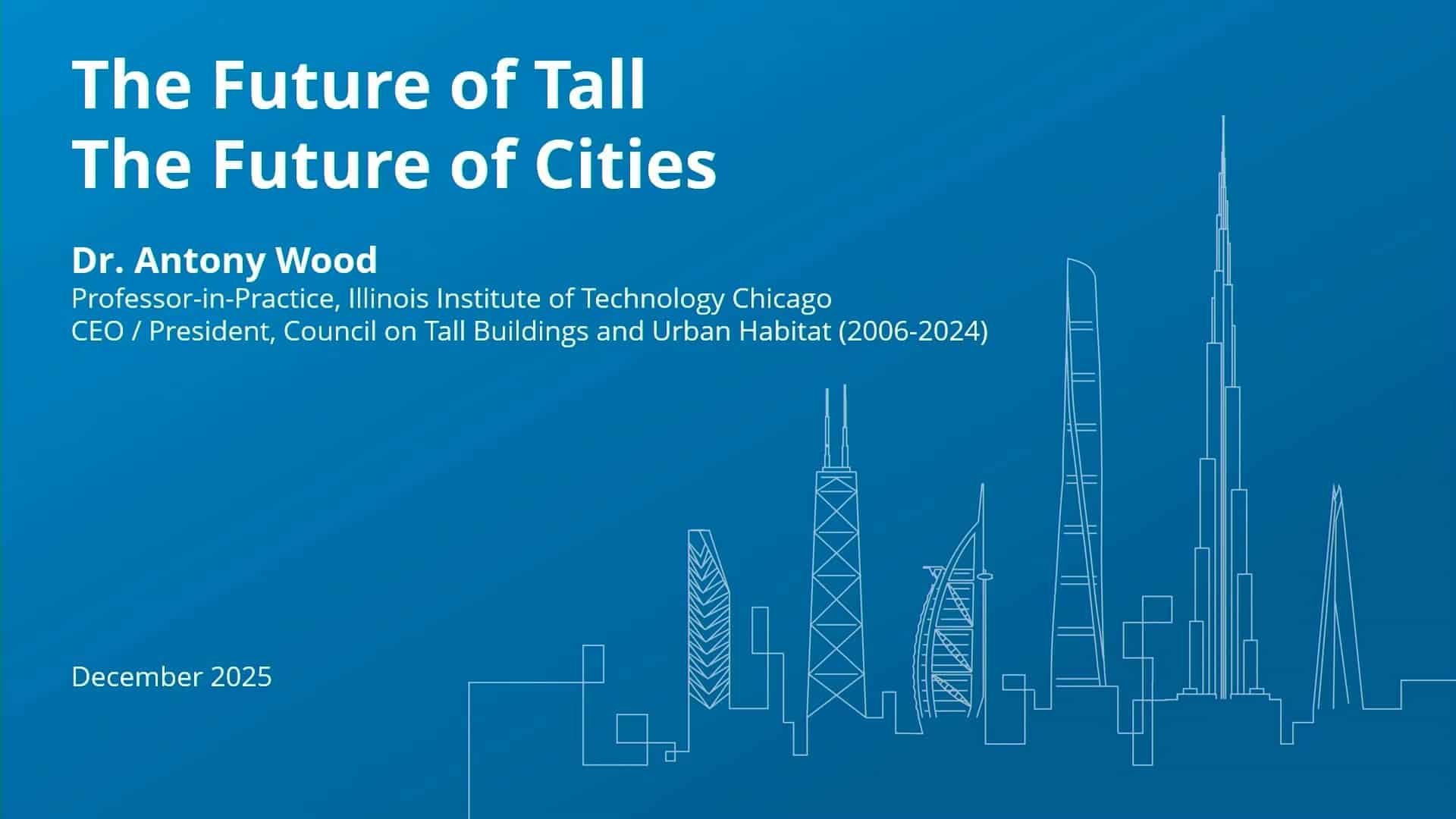
The Future of Tall: The Future of Cities

Course Overview

Over the past two decades, tall buildings have enjoyed a major uptake in almost all major cities globally. But is the push for greater urban density and taller buildings creating habitats and patterns of life that are truly sustainability, in terms of social, cultural and economic sustainability, as well as the carbon equation? Through examples from around the world, this session outlines areas where the typology, and cities, need to develop.

Learning Objectives

  1. Understand the sustainability challenges and opportunities in tall building design: Explore how social, cultural, economic, and environmental factors influence the development of high-rise structures and urban density.
  2. Identify innovative strategies for integrating mass timber and other sustainable materials in tall buildings: Learn how material choices impact carbon reduction, energy efficiency, and structural performance in high-rise construction.
  3. Analyze global case studies to evaluate future trends in urban development and tall building typologies: Gain insights into design approaches that promote livable, resilient, and sustainable cities.

Course Video

Speakers Bio

Dr. Antony Wood
CEO
Antony Wood Consulting

Dr. Antony Wood is the former President of the Council on Tall Buildings and Urban Habitat (CTBUH), responsible for leading the Council’s thought leadership, research, and academic initiatives. Prior to this, he was CTBUH chief executive officer (CEO) from 2006-2022. During his sixteen-year tenure as CEO, CTBUH significantly increased its outputs and initiatives across all areas globally. Wood’s PhD dissertation explored the multi-disciplinary aspects of skybridge connections between tall buildings. He is associate editor of the CTBUH Journal and serves on the editorial board of several other journals. He is the author of numerous books and papers in the fields of tall buildings, sustainability, and related fields. Wood has been conference chair and chair of the scientific committee at all CTBUH conferences since 2006. He has also presented at numerous conferences, and lectures regularly around the world.

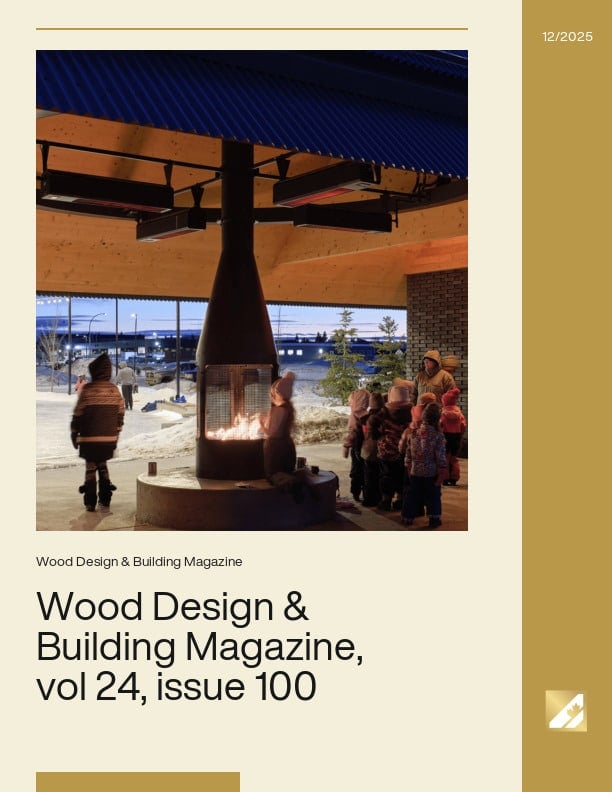
Wood Design & Building Magazine, vol 24, issue 100

Reaching one hundred issues is a milestone worthy of both celebration and reflection. Wood Design & Building, once upon a time called Wood le Bois, began as a modest trade magazine dedicated to showcasing excellence in wood architecture. Over the years we added special features and technical content that helped us grow a loyal readership and community of wood design advocates.

Recently, our cherished print magazine evolved into a digital, multi-media publication. While this transformation involved a small sense of loss for the printed ways of our past, we remain excited by the expanded potential the new format affords, with a reach far wider than we ever imagined at the outset of this journey. So, while the format may have changed, and content options expanded, our purpose has remained remarkably steady. Issue after issue, we have tried to capture not just great buildings, but the innovations, insights, and architectural aspirations that continue to expand wood’s role in contemporary design and construction.

As we look back, there is a sense of gratitude for all that has unfolded across these pages. Past editions captured early explorations in modern timber construction, the resurgence of adaptive reuse, and the steady shift toward high-performance, low-carbon buildings. Today, advances in mass timber systems, hybrid approaches, and industrialized processes are reshaping how buildings come together. Throughout this evolution, wood has been at the center of conversations about sustainability, long-term value, and design expression. The body of work published over the years reflects not only changing technologies but the steady influence of a material with deep cultural and environmental roots.

It is fitting that our 100th issue is also our special awards edition, honouring the winners of the 2025 Wood Design & Building Awards. These celebrated projects are the latest chapter in the architectural story we have been privileged to document for decades. What distinguishes them is not only their accomplishment today, but what they suggest about tomorrow: a more sustainable built environment defined by technical excellence, architectural warmth, and memorable experiences that transcend program or scale.

To everyone who has contributed, read, shared, and championed this publication—thank you. Reaching 100 issues is deeply meaningful, not because of the number alone, but because it represents a sustained conversation within a community that cares about design, innovation, and the future of building. We remain committed to documenting that evolution, and we look forward to continuing the conversation with you, discovering new stories, and celebrating the work yet to come.

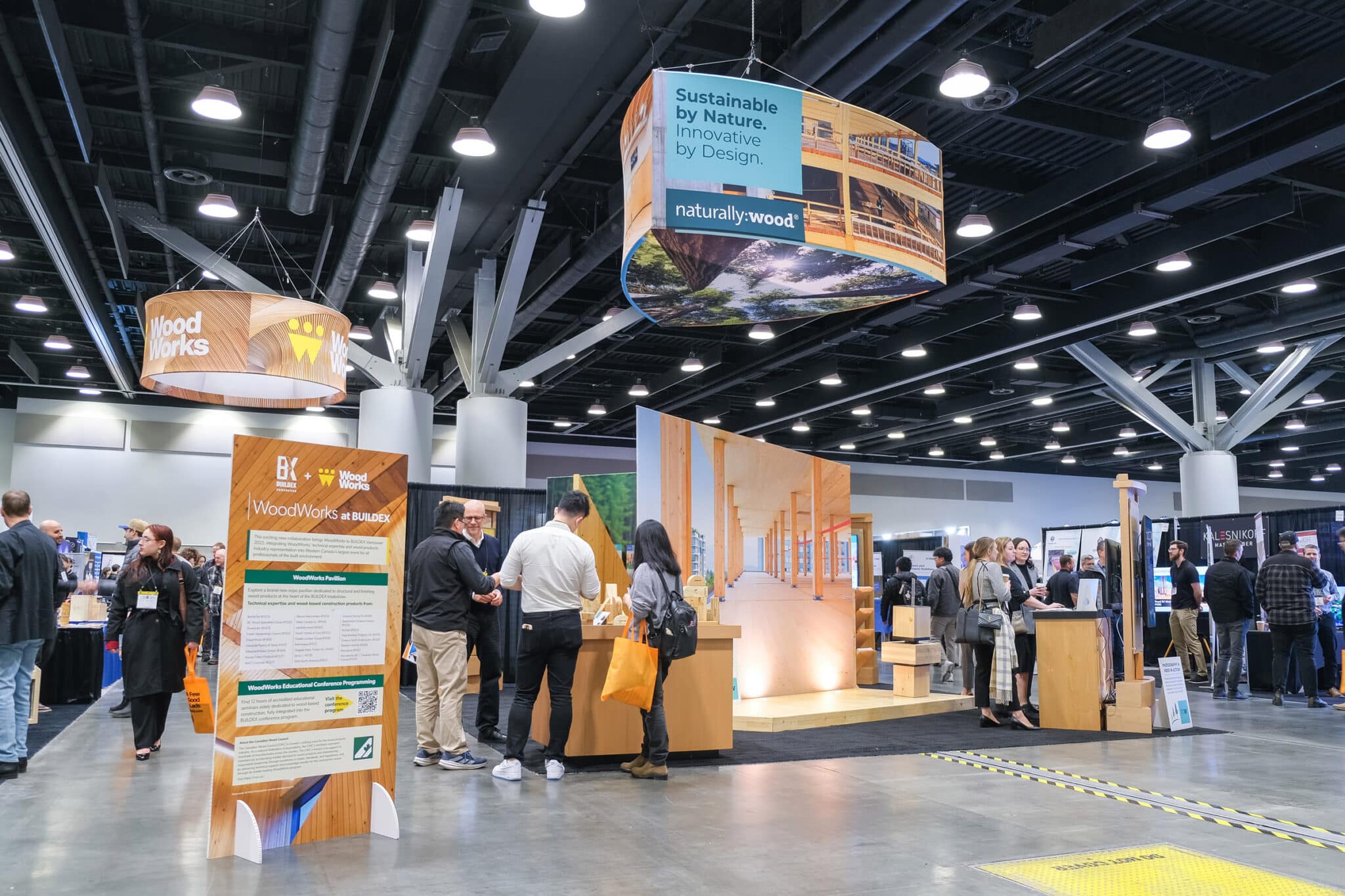
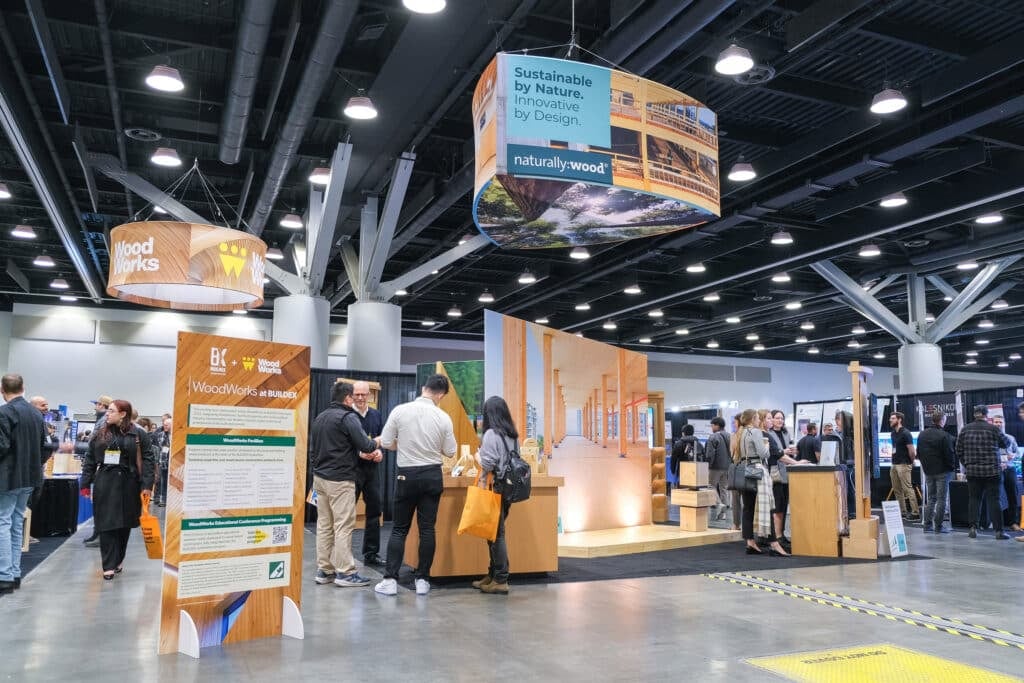
WoodWorks at BUILDEX

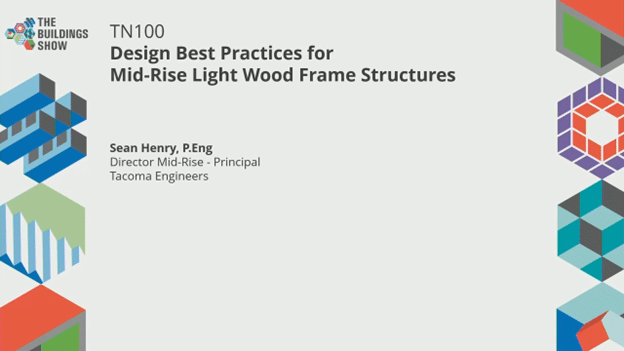
Design Best Practices for Mid-Rise Light Wood Frame Structures

Course Overview

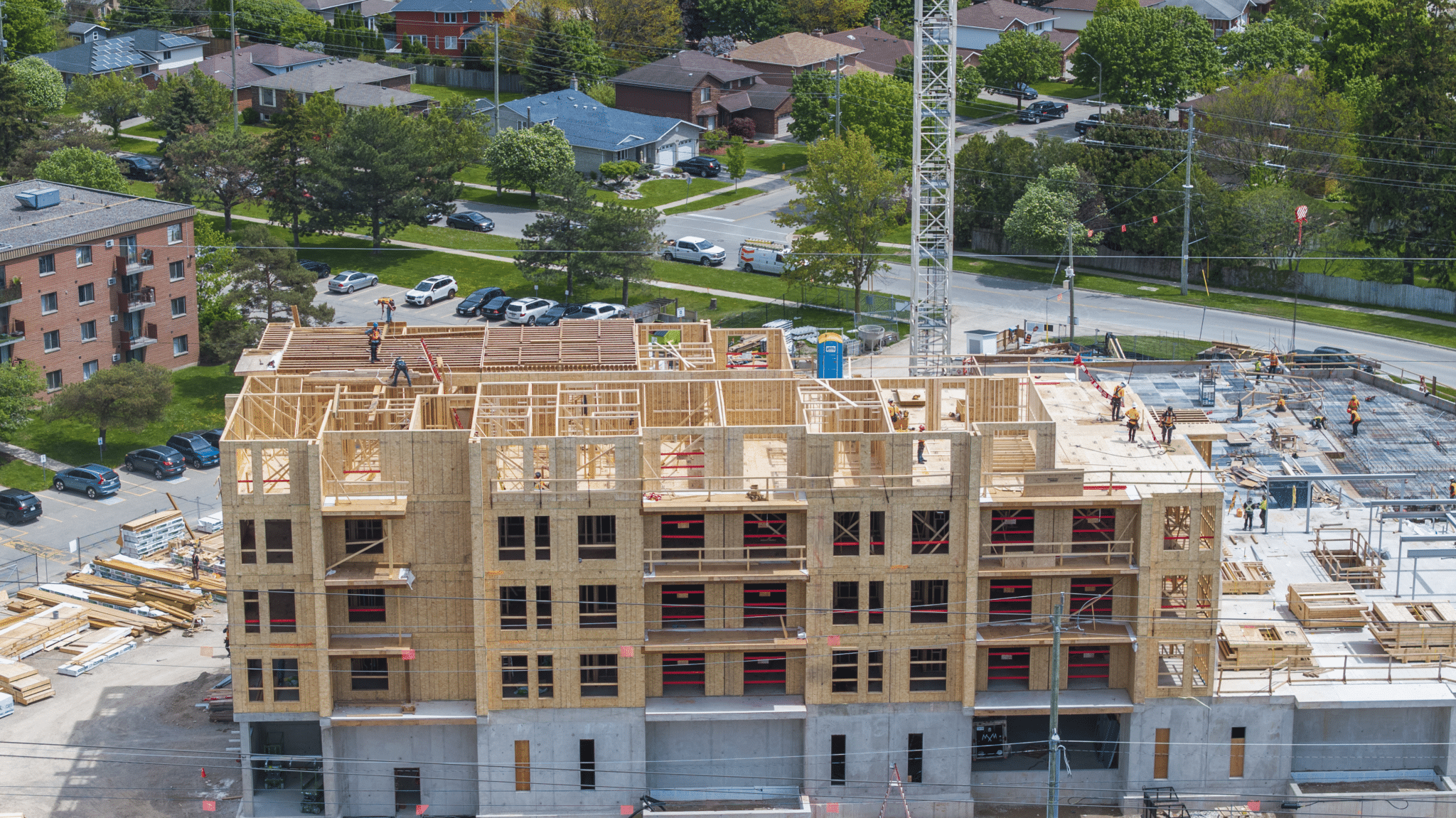
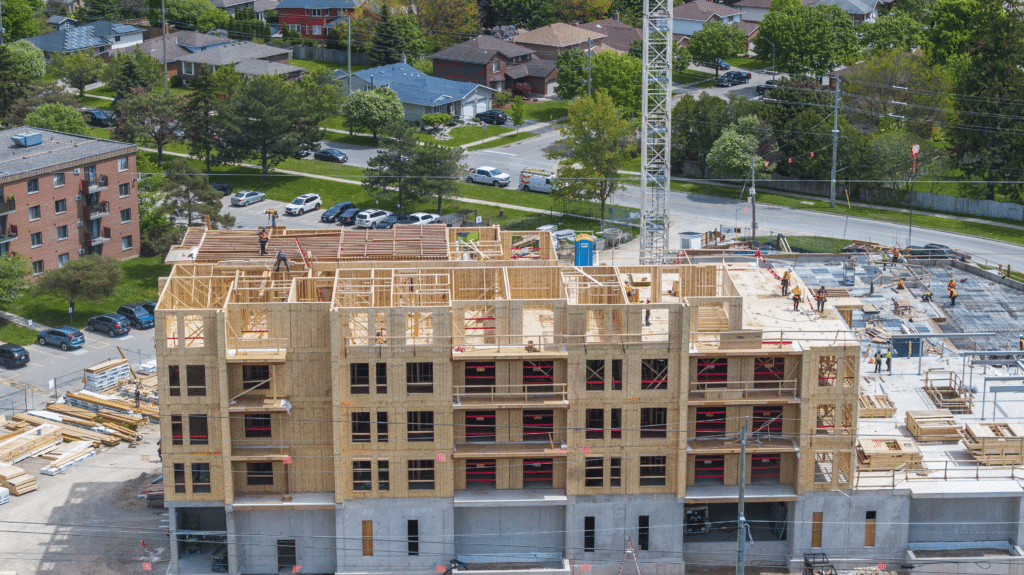
Light wood frame (LWF) construction is an accessible, cost-effective, low-carbon solution for mid-rise multi-family buildings. This session will clarify fundamental differences in approach between traditional low-rise LWF construction and modern mid-rise construction methods. LWF is an attractive option for mid-rise development and participants will gain practical insights into design efficiencies, from meeting seismic demands and other key structural considerations to how engineered wood products and specialty hardware can be used to optimize design. The session will also explore prefabrication strategies, highlighting the challenges and opportunities offsite construction presents for streamlined, higher-quality construction. Whether attendees are new to mid-rise wood design or looking to optimize their next project, this session will share valuable information they can apply to their next mid-rise building.

Learning Objectives

  1. Distinguish key differences between traditional low-rise and modern mid-rise light wood frame construction, including changes in design loads, seismic requirements, and code updates.
  2. Apply practical design strategies to optimize mid-rise wood structures—such as efficient stacked framing, engineered wood products, specialty hardware, and solutions for wood shrinkage and differential movement.
  3. Evaluate prefabrication and offsite construction methods for mid-rise projects, identifying both challenges and opportunities to improve construction quality, speed, and coordination.

Course Video

Speakers Bio

Sean Henry  
Director – Mid-Rise, Principal
Tacoma Engineers

Sean is the Director of Mid-Rise and a Principal at Tacoma Engineers, bringing 20 years of structural engineering experience to the role. Since joining the firm in 2005, Sean has led the design of a wide range of building types, with a particular focus on mid-rise developments including multi-family, seniors and affordable housing projects. He is especially recognized for his expertise in light wood frame construction with multiple projects designed and built since the adoption of 6 storey wood framed buildings in Ontario. He also has extensive experience with cold-formed steel, structural steel, reinforced concrete, precast, and concrete block building systems. Sean focuses on delivering practical, efficient structural solutions that support design intent while meeting the demands of constructability and cost-effectiveness.

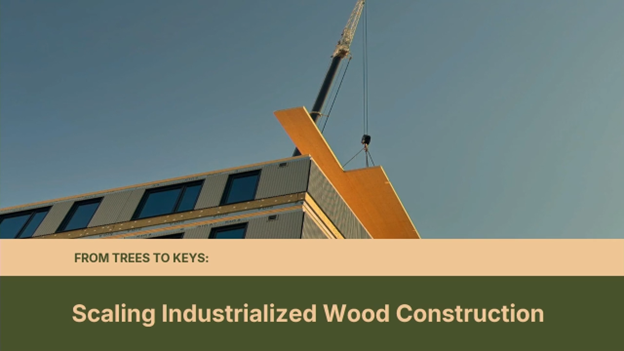
From Trees to Keys: Scaling Industrialized Wood Construction

Course Overview

This session brings together a panel of experts to discuss lessons learned and visions for wood-based manufactured housing solutions. The panel will address key challenges in scaling modular and panelized wood construction, including design for manufacture and assembly, systems integration, workforce transformation, and product standardization. Innovators throughout the supply chain will explore requirements for bringing scalable mass timber housing into the mainstream, from procurement to policy and from urban infill to supply chain readiness. The discussion will focus on how factory-built housing and wood innovation can contribute to addressing Canada’s housing crisis.

Learning Objectives

  1. Assess practical lessons learned from implementing modular, panelized, and mass-timber housing projects, including challenges related to design coordination, manufacturing constraints, and on-site assembly.
  2. Explain how integrated approaches across structure, envelope, and mechanical systems enable scalable, high-performance wood-based housing solutions, drawing on examples from factory-built and turnkey delivery models.
  3. Evaluate the roles of standardization, procurement models, workforce capabilities, and policy alignment in advancing wood-based manufactured housing as a viable response to Canada’s housing crisis.

Course Video

Speakers Bio

Hailey Quiquero  
Technical Manager
WoodWorks Ontario

Hailey is a structural engineer and has focused her career specializing in sustainable architecture and the advancement of timber building systems. Hailey spent several years of her career in research on the behaviour and fire safety of mass timber, as a structural designer with Entuitive in Toronto, and working to develop affordable housing products built of high-performance timber panels, contributing to the successful completion of several turnkey housing projects with Assembly Corp. (previously R-Hauz). In her current role as a Technical Manager for the Canadian Wood Council’s WoodWorks program, Hailey works with the team to aid project teams with technical support and to bring resources and education to industry stakeholders, advocating for the successful implementation of a beautiful and sustainable building material in our built environment.

Ben Chicoine  
President
Fab Structures

Ben Chicoine is an accomplished entrepreneur with over 20 years of hands-on experience in the construction industry. As the co-founder of Fab Structures, he has built a multi-million dollar company specializing in mass timber and panelized construction, with energy efficiency at its core. Certified in Passive House design, Ben now consults on high-performance building strategies, championing innovative solutions that push the boundaries of sustainable construction in Canada.

Kyle Power  
Director of Construction
Assembly Corp.

Kyle is Director of Construction at Assembly. He brings 15+ years of end-to-end construction management experience with Canada’s largest general contractor. Kyle held key leadership roles in the delivery of several high-profile projects in the GTA, including commercial high rise, complex retail renovations, and high rise residential. He is responsible for successful project construction delivery from the pre-construction planning stages to close-out. Kyle successfully executes the construction of Assembly’s unique end-to-end housing product and the delivery strategy underpinning its mission of creating faster, more sustainable housing.

Cara Sloat  
Mechanical Principal
Hammerschlag and Joffe Inc.

Cara Sloat brings over 20 years of increasingly complex experience in high-performance mechanical design and energy efficiency expertise to Hammerschlag and Joffe. She has worked extensively with decarbonizing building portfolios, including for Fortune 50 companies, and has worked in high-performance mechanical system design, with a career focus on energy efficiency, energy exchange, and indoor environmental quality. In our current housing crisis, she is also passionate about finding better mechanical solutions for the Canadian housing market. She delivers projects at every scale, and believes every building deserves a quality and well thought out mechanical system. She has LEED certified over half a million square feet of new construction real estate projects, and provided energy audits for over 5 million square feet of commercial properties, identifying millions in potential energy savings.

Webinar: FRAMEWORK for Success: Prefabricated Wood Systems and Design Innovation

2025 Catherine Lalonde Memorial Scholarships Recognize Students Advancing the Next Generation of Wood Solutions

Ottawa, ON, December 16, 2025 – The Canadian Wood Council (CWC) is pleased to announce three recipients of the 2025 Catherine Lalonde Memorial Scholarship: Houman Ganjali (University of Northern British Columbia), Kalkidan Tesfaye Shewandagn (McGill University), and Henri Monette (University of Toronto). These exceptional graduate students were selected for their academic excellence and their cutting-edge research advancing innovation in structural wood products and wood-based construction systems.

Established twenty years ago, the memorial scholarships honour the legacy of Catherine Lalonde, whose leadership as a professional engineer and president of the CWC helped shape the trajectory of wood design and construction in Canada. Each year, the awards recognize graduate students whose research reflects the same commitment to scientific excellence, industry impact, and passion for wood that Catherine championed throughout her career.

This year, the Canadian Wood Council received 51 submissions, a record for the program. The submissions reflected a high level of academic discipline and a strong orientation toward industry-relevant challenges, an indication of both the vitality of the research community and the growing importance of wood-based solutions in the built environment.

2025 Catherine Lalonde Memorial Scholarships Recognize Students Advancing the Next Generation of Wood Solutions

Houman Ganjali
Houman is a 5th year PhD candidate in Engineering at the University of Northern British Columbia. His research investigates the structural performance of point-supported cross-laminated timber (CLT) floors, focusing on the rolling-shear strength of CLT panels and the punching-shear capacity of point-supported systems. His work also examines improved connection strategies along the minor strength axis, reinforcement approaches for point supports, and the creep and vibration behaviour of point-supported floors. Houman’s research culminated in the development of a design proposal for the resistance of point-supported CLT floors, which will be presented to the CSA O86 Technical Committee for potential inclusion in future editions of the standard.

 

2025 Catherine Lalonde Memorial Scholarships Recognize Students Advancing the Next Generation of Wood Solutions

Kalkidan Tesfaye Shewandagn
Kalkidan is a 2nd year PhD student in Civil Engineering at McGill University. Her research focuses on the seismic design and performance assessment of wood-frame buildings constructed over podium structures. By integrating experimental testing, nonlinear modelling (OpenSeesPy), and performance-based assessment, her work quantifies the interaction between wood-frame systems and podiums. The resulting guidelines aim to support broader adoption of wood in multi-storey and hybrid buildings across Canada.

 

2025 Catherine Lalonde Memorial Scholarships Recognize Students Advancing the Next Generation of Wood Solutions

Henri Monette
Henri is a 4th year PhD candidate in Civil and Mineral Engineering at the University of Toronto. His research explores the development of a high-resistance connector for mass timber structures—an innovative system designed to optimize fibre use by mobilizing the full sectional resistance of connected timber members. By addressing the strength and resilience limitations of current connection technologies, Henri’s work supports mass timber’s ability to compete with and displace traditional materials such as steel and concrete.


“The large number of submissions we received this year signals the impressive depth of wood-focused research underway across Canada,” said Blériot Feujofack, Manager of Wood Education at the Canadian Wood Council. “This year’s scholarship recipients stand as strong examples of the academic excellence demonstrated throughout the applicant pool, distinguished by their clear methodological strength and practical relevance. Their findings hold meaningful value for practitioners, code developers, and industry partners, and will contribute to the continued advancement of wood construction in Canada.”

About the Canadian Wood Council

The Canadian Wood Council (CWC) is Canada’s unifying voice for the wood products industry. As a national federation of associations, its members represent hundreds of manufacturers across the country. CWC supports its members by accelerating market demand for wood products and championing responsible leadership through excellence in codes, standards, and regulations. CWC also delivers technical support and knowledge transfer for the construction sector through its market leading WoodWorks program.

Canadian Wood Council Advances Wood Innovation and Education

Toronto, ON – December 15, 2025 – The Canadian Wood Council (CWC) welcomes the announcement made today by the Honourable Tim Hodgson, Minister of Energy and Natural Resources, at the Toronto and Region Conservation Authority. The event celebrated funding for projects that strengthen Canada’s forestry sector and foster innovation in wood-based solutions.

CWC received $8.5 million since 2023 to expand the use of wood-based products, broaden education on wood construction and contribute to the advancement of the National Building Code.

The Canadian Wood Council deeply values the Government of Canada’s continued leadership in advancing innovative, low-carbon construction through the GCWood Program. This funding has allowed CWC and its WoodWorks program to support design and construction professionals with expert resources, tools, and guidance that help accelerate the adoption of wood construction nationwide. As we continue this work, we will help catalyze sustainable demand for construction solutions that are not only innovative but also replicable and rapidly deployed, approaches that will help address Canada’s housing and affordability challenges at scale.

CWC and WoodWorks provide:

  • project based technical assistance to architects, engineers, developers, and builders on wood design and construction;
  • education and training through specialized programs, conferences, webinars, and resources developed for post-secondary students, tradespeople, and construction professionals to support advanced wood construction technologies including mass timber and engineered wood products;
  • expert network development opportunities for industry professionals to connect and share best practices; and
  • sector engagement in national code development to facilitate greater understanding and adoption of advanced, performance-based wood construction.


“GCWood support enables us to provide critical technical advisory services, deliver wood-focused education and training to existing and future practitioners, and contribute to code developments that reflect the evolving strengths of modern wood products and systems. GCWood investments are important, strategic inputs that strengthen Canada’s forestry, manufacturing, and construction sectors. We look forward to building on our work to date as we engage with partners nationwide to accelerate the adoption of sustainable wood solutions and modern methods of construction.” – Rick Jeffrey, President and CEO, Canadian Wood Council.

The Canadian Wood Council looks forward to collaborating with partners and stakeholders as these projects move forward, supporting Canada’s leadership in sustainable construction and forestry.

Background

  • The Canadian Wood Council received $4,999,536 to increase the use of wood-based solutions, systems, and products in Canada by building proficiency in the use of wood as a construction material through direct technical support, training, awareness, and networking.
  • The Canadian Wood Council received $2,942,610 for a second project to increase the number of educational offerings and content related to wood construction education in order to increase the understanding and acceptance of wood as a building material by post-secondary students, trades and other construction industry professionals.
  • The Canadian Wood Council received $594,000 for a third project to enable the forest industry’s participation over the next three years for code change proposals allowing for the increased use of low-carbon building materials and mass timber in wood buildings for the 2025 and 2030 editions of the National Building Code and to accelerate the adoption of performance-based building codes.


About the Canadian Wood Council

The Canadian Wood Council (CWC) is Canada’s unifying voice for the wood products industry. As a national federation of associations, CWC members represent hundreds of manufacturers across the country. CWC’s mission is to support its members by accelerating market demand for wood products and championing responsible leadership through excellence in codes, standards, and regulations. CWC also delivers technical support and knowledge transfer for the construction sector through its market leading WoodWorks program.
About the National WoodWorks Program

The Canadian Wood Council’s WoodWorks Program a national outreach initiative dedicated to advancing the use of wood in construction by providing educational opportunities and direct technical support. The program helps architects, engineers, developers and other industry professionals expand their capacity for wood design and construction, contributing to a more sustainable built environment.

SOLD OUT! Workshop: Mid-Rise Wood Design Essentials for Structural Engineers – Ottawa

SOLD OUT! Workshop: Mid-Rise Wood Design Essentials for Structural Engineers -Kitchener

Construction Moisture Management of Mass Timber Buildings
Halsa 230 Royal York: Ontario’s Tallest Mass Timber Residential Building
The Future of Tall: The Future of Cities
Wood Design & Building Magazine, vol 24, issue 100
WoodWorks at BUILDEX
Design Best Practices for Mid-Rise Light Wood Frame Structures
From Trees to Keys: Scaling Industrialized Wood Construction
Webinar: FRAMEWORK for Success: Prefabricated Wood Systems and Design Innovation
Three women wearing safety vests and hard hats at a construction site, symbolizing collaboration and innovation in the wood industry.
2025 Catherine Lalonde Memorial Scholarships Recognize Students Advancing the Next Generation of Wood Solutions
Canadian Wood Council Advances Wood Innovation and Education
SOLD OUT! Workshop: Mid-Rise Wood Design Essentials for Structural Engineers – Ottawa
SOLD OUT! Workshop: Mid-Rise Wood Design Essentials for Structural Engineers -Kitchener
Course Overview Mass timber buildings are transforming the way we build—but with new materials come new challenges. This session will explore how moisture risks in mass...
Course Overview Halsa 230 Royal York is setting new standards as Toronto’s pioneering 9-storey prefabricated mass timber rental building, demonstrating the viability of...
Course Overview Over the past two decades, tall buildings have enjoyed a major uptake in almost all major cities globally. But is the push for greater urban density and...
Reaching one hundred issues is a milestone worthy of both celebration and reflection. Wood Design & Building, once upon a time called Wood le Bois, began as a modest...
Course Overview Light wood frame (LWF) construction is an accessible, cost-effective, low-carbon solution for mid-rise multi-family buildings. This session will clarify...
Course Overview This session brings together a panel of experts to discuss lessons learned and visions for wood-based manufactured housing solutions. The panel will address...
Ottawa, ON, December 16, 2025 – The Canadian Wood Council (CWC) is pleased to announce three recipients of the 2025 Catherine Lalonde Memorial Scholarship: Houman Ganjali...
Toronto, ON – December 15, 2025 – The Canadian Wood Council (CWC) welcomes the announcement made today by the Honourable Tim Hodgson, Minister of Energy and Natural...

Get Access to Our Resources

Stay in the loop and don’t miss a thing!

1
2
3

Get Access to Our Resources

Stay in the loop and don’t miss a thing!

What’s Your Occupation?

Help us personalize the content for you.

What Interests You the Most?

Help us personalize the content for you.

Filters

Expertise Icon
Field of Expertise
Province Icon
Province
Member Type Icon
WoodWork National Partners

Filters

Post Type Icon
Post Type
Persona Icon
Persona
Language Icon
Language
Tags Icon
Tags
Mass Timber Plus Icon Environment Plus Icon Safety Plus Icon Durability Plus Icon Design Systems Plus Icon Budget Plus Icon Construction Management Plus Icon Fire Resistance Plus Icon Tall Buildings Plus Icon Short Buildings Plus Icon
Date Icon
Date
Line Separator