
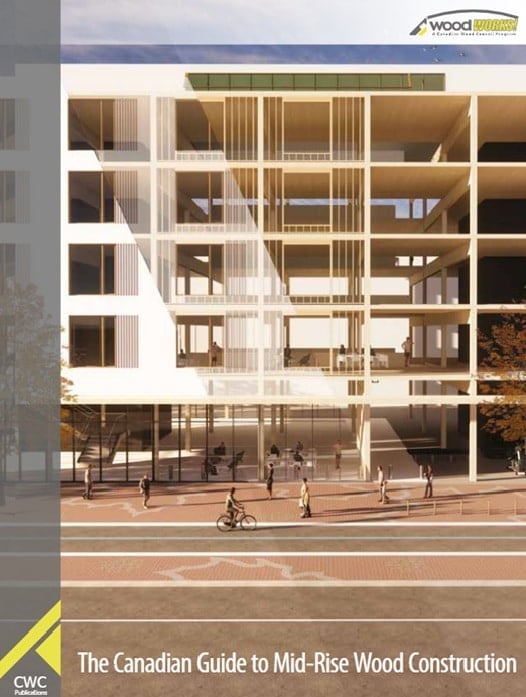
The Mid-Rise project and the ensuing publication were conceived in order to provide a guide for opportunities that have been created by Canadian Code Provisions progressing, allowing 6 storey wood buildings over at least a decade.
The foundation for some of the ideas contained within, came from the Wood WORKS! program hosting regional focus groups, made up of key industry stakeholders. They were held at various locations across Canada during 2019. From the focus-group conversations and the research gathered and analyzed, it was evident that each province was at varying degrees of adoption, understanding and application for wood buildings up to 6 storeys. The opportunities that are available for wood use in mid-rise development are varied and many and it is hoped that some of the illustrations and information contained inside this guide will continue to inspire the design and construction industry.
The Code Matrix captures the variations of code provisions currently in use in each of the Canadian provinces, and highlights Part 3,4 and 5 requirements for wood buildings up to 6 storeys in height. Permissible building types, heights and areas, permitted mixed major occupancies, required fire resistance ratings and sprinkler provisions are illustrated.
The flow of the sections is laid out to mirror basic project planning steps that are generally undertaken by design teams. A keen understanding of what is allowed by code, creates the conversation around ideas for buildings and potential project opportunities. The location of a site, how it fits into local planning and zoning regulations, and a business case that makes it achievable, are all stages a design team navigates early with a client. Many factors drive the business case. Goals set early for greener and environmentally sustainable development, applications of sustainable materials having significantly lower embodied carbon, can be incorporated into design principles. Schedule often drives design and project efficiency, creating consideration into using prefabricated and modular wood structural systems.
Part 5 of the guide contains some technical considerations for 5- and 6- storey wood buildings is laid out to help designers better understand some of the practical considerations needed for the construction and design of mid-rise wood buildings. It is written for design professionals in the construction industry, and builders with the necessary skills to consider taller wood buildings.
This guide is illustrated to be relevant to all design and building professionals involved in building our future environments, including architects, engineers, the development community, material suppliers, manufacturers, building inspectors, municipal officials and planners, project managers, contractors, innovators, and the general public at large.