en-ca

Searching for: wood

Searching results for “wood”
251 results found...
Sort By Dropdown Icon

Fire Safety Challenges of Tall Wood Buildings

Acknowledging the growing importance of designing sustainable buildings and addressing overpopulation concerns, the development of engineered wood products has introduced the possibility of constructing high-rise timber structures that can improve both these conditions. However, as a combustible material, one of the biggest barriers to construction of tall timber buildings is the potential fire risk resulting from the combustible structure. In November 2012, the Fire Protection Research Foundation commissioned the Fire Safety Challenges of Tall Wood Buildings study to address this concern. Phase I of this two-phase study seeks to collect the available knowledge of fire safety in timber structures and identify gaps in knowledge that would further the understanding of fire performance of tall timber buildings. Results of the study, including a summary of timber construction and fire dynamics, is presented herein.

Wood Design Awards, 2013

Wood Design Awards, 2012

The Case for Tall Wood Buildings

Wood is the most significant building material we use today that is grown by the sun. When harvested responsibly, wood is arguably one of the best tools architects and engineers have for reducing greenhouse gas emissions and storing carbon in our buildings. The Case for Tall Wood Buildings expands the discussion of where we will see wood and specifically Mass Timber in the future of the world’s skylines. As we pursue the solar and green energy solutions that Thomas Edison spoke of over 80 years ago, we must consider that we are surrounded by a building material that is manufactured by nature, a material that is renewable, durable and strong.

This report introduces a major opportunity for systemic change in the building industry. For the last century there has been no reason to challenge steel and concrete as the essential structural materials of large buildings. Climate change now demands that we do. The work of thousands of scientists with the United Nations Intergovernmental Panel on Climate Change (IPCC) has defined one of the most significant challenges of our time. How we address climate change in buildings is a cornerstone in how the world will tackle the need to reduce emissions of green house gases and indeed find ways to store those same gases that are significantly impacting the health of our planet. Just as the automobile industry, energy sector and most other industries will see innovations that challenge the conventions of the way we will live in this century, the building industry must seek innovation in the fundamental materials that we choose to build with. In a rapidly urbanizing world with an enormous demand to house and shelter billions of people in the upcoming decades we must find solutions for our urban environments that have a lighter climate impact than today’s incumbent major structural materials. This report is a major step in that direction. Indeed it introduces the first significant challenge to steel and concrete in tall buildings since their adoption more than a century ago.

Wood Design Awards, 2011

Wood Design Awards, 2010

Wood Reference Handbook

The Wood Reference Handbook is much more than a guide to the architectural use of wood in building construction – it is a beautifully assembled homage to fine wood craftsmanship throughout the world.

Introduction to Wood Building Technology

Engineers, architects, building code officials, builders, developers, students and professors all turn to Introduction to Wood Building Technology – the most current guide to the construction of wood buildings.

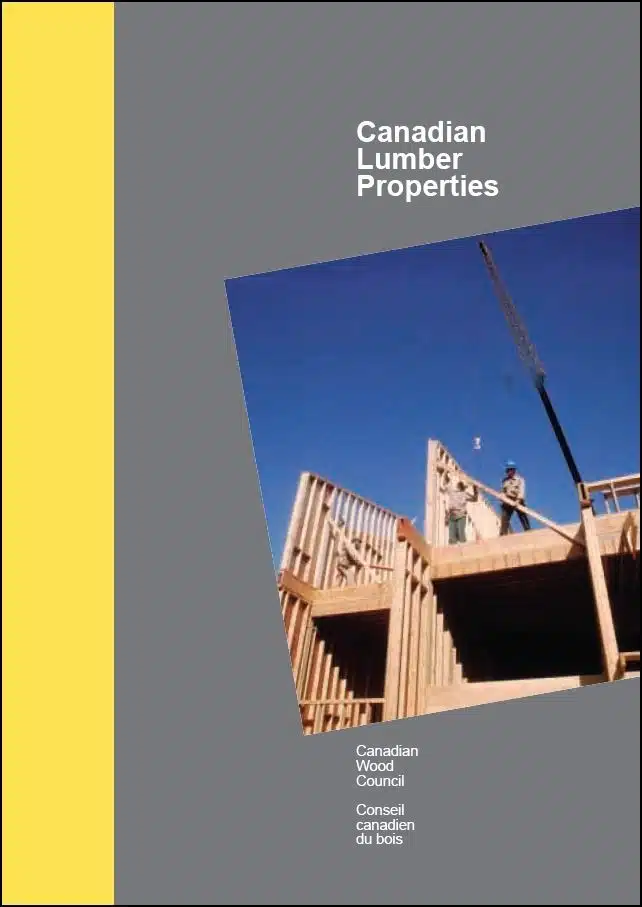
Canadian Lumber Properties

Canadian Lumber Properties is a source of information on the structural properties of Canadian softwood lumber derived from full-size (“in-grade”) tests.

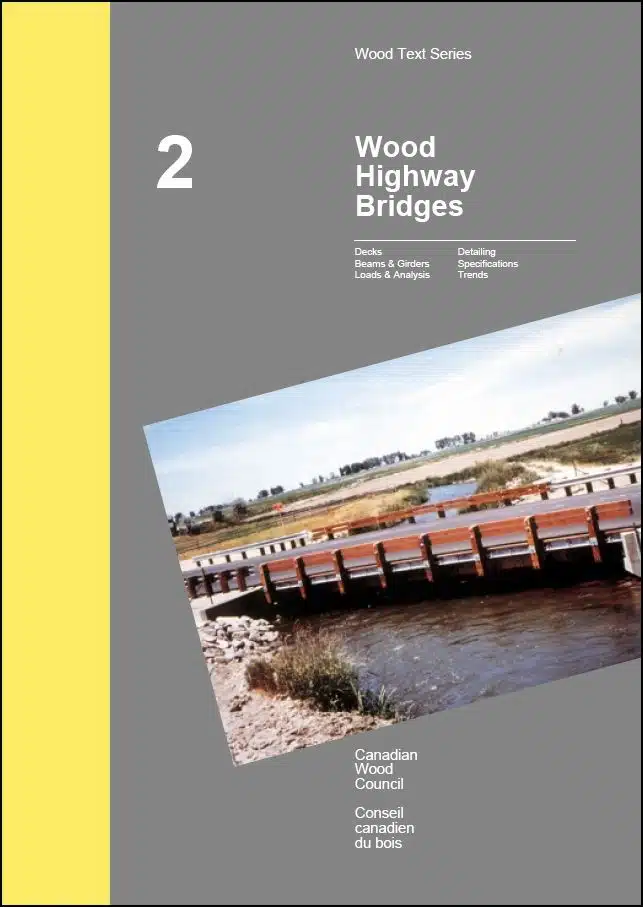
Wood Highway Bridges

Wood Highway Bridges demonstrates how wood bridges can be designed to be assembled rapidly, resist deterioration caused by de-icing chemicals, and utilize stress-laminating in decks to provide long-term performance.

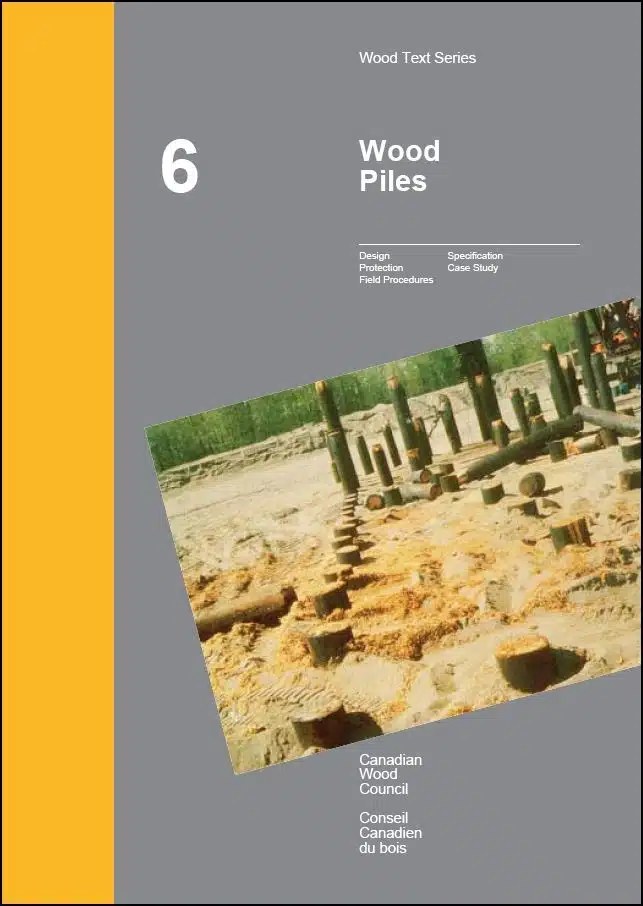
Wood Piles

Wood Piles provides clear and concise coverage of a topic that is often considered obscure However, wood piling has been used around the world to support heavy loads for centuries – and it is still in use today

Tall Wood Buildings – Research
...Floor and Wall Assemblies for Tall Wood Buildings, by the National Research Council (December 2014) Measurement of Airborne Sound Insulation of Wall & Floor Assemblies Visit Think Wood’s Research Library...
Mid-Rise Buildings – Research
...Determining Deflections of Stacked Multi-storey Wood-based Shearwalls Design of Stacked Multi-storey Wood Shearwalls using a Mechanics Based Approach Linear Dynamic Analysis for Wood Based Shear Walls and Podium Structures Design...
Green
...that wood products yield clear environmental advantages over other building materials at every stage. Wood buildings can offer lower greenhouse gas emissions, less air pollution, lower volumes of solid waste...
Energy Efficiency
...materials, largely because of reduced thermal bridging through the wood structural elements, including the wood studs, columns, beams, and floors. Wood loses less heat through conduction than other building materials...
Climate Change
...Forest Products Industry “30 by 30” Climate Change Challenge (Forest Products Association of Canada) www.naturallywood.com www.thinkwood.com Building with wood = Proactive climate protection (Binational Softwood Lumber Council and State University...
Life Cycle Assessment
...and contributing to the circular economy. Life cycle of wood construction products Photo source: CEI-Bois For further information, refer to the following resources: www.naturallywood.com Athena Sustainable Materials Institute Building for...
Codes & Standards
...of Canada Wood in non-combustible buildings Wood Standards CSA O86 Engineering design in wood CSA S-6 Canadian Highway Bridge Design Code CSA S406 Permanent Wood Foundations CSA 080 Wood Preservation...
Energy Code
...in contact with ground, e.g., permanent wood foundations. In addition, the NECB specifies the maximum fenestration and door to wall ratio based on the climate zone in which the building...
Acoustics
Wood is composed of many small cellular tubes that are predominantly filled with air. The natural composition of the material allows for wood to act as an effective acoustical insulator...
Combustible construction
...Code of Canada (NBC) categorizes wood buildings as ‘combustible construction’. Despite being termed combustible, common construction techniques can give wood frame construction fire-resistance ratings up to two hours. When designed...
Encapsulated mass timber construction
...for EMTC is determined through the ULC S146 test method. In order for structural wood elements to be considered ‘mass timber’, they must meet minimum size requirements, which are different...
Lumber properties
...known as in-grade testing. In the early 1980s, the Canadian lumber industry conducted a major research program through the Canadian Wood Council Lumber Properties Program for bending, tension and compression...

Get Access to Our Resources

Stay in the loop and don’t miss a thing!

1
2
3

Get Access to Our Resources

Stay in the loop and don’t miss a thing!

What’s Your Occupation?

Help us personalize the content for you.

What Interests You the Most?

Help us personalize the content for you.

Filters

Expertise Icon
Field of Expertise
Province Icon
Province
Member Type Icon
WoodWork National Partners

Filters

Post Type Icon
Post Type
Persona Icon
Persona
Language Icon
Language
Tags Icon
Tags
Mass Timber Plus Icon Environment Plus Icon Safety Plus Icon Durability Plus Icon Design Systems Plus Icon Budget Plus Icon Construction Management Plus Icon Fire Resistance Plus Icon Tall Buildings Plus Icon Short Buildings Plus Icon
Date Icon
Date
Line Separator