en-ca

Searching for: wood

Searching results for “wood”
250 results found...
Sort By Dropdown Icon

Ontario Mid-Rise Reference Guide

On September 23, 2014, after many years of research, development, stakeholder feedback and discussion, the Ontario Ministry of Municipal Affairs and Housing announced amendments to the 2012 Ontario Building Code (OBC) that permit 5- and 6-storey combustible construction for Group C and D occupancies. e amendments to the OBC increase opportunities for designers and builders to create versatile and affordable new buildings. The changes recognize the advancements in wood products and systems as well as in fire detection, suppression, and containment systems.

Densification is mandated in almost all municipal growth plans in the province. Mixed-use mid-rise buildings are seen as an important solution that will help create higher density and attract businesses and families to urban centres. Previous code restrictions on combustible construction made non-combustible solutions the only option for mid-rise development and many potential developments were stalled because they were deemed cost-prohibitive. Developers now have a new, cost effective option to provide mid-rise solutions.

Decisions about how and where we build our communities have significant impacts on the natural environment and on human health. Wood is a natural, sustainable material and the processing of raw material into building materials has a lower environmental impact when compared to other major building components. e use of sustainable materials and components reduces the negative impact our buildings have on the environment and assists in mitigating climate change. The amendments to the OBC have created exciting new opportunities but there are also new design and construction challenges to consider. Ontario Wood WORKS! developed this guide to explain the new provisions in the OBC and to discuss the opportunities as well as the challenges.

Design Example of Wood Diaphragm on Reinforced CMU Shearwalls

This document is design example of Wood Diaphragm on Reinforced CMU Shearwalls. It uses a school gymnasium located in Surrey, British Columbia as the example. The plan dimensions are 20m x 30m, with a total building height of 7m. The walls are 190 mm reinforced CMU, and the roof diaphragm consists of plywood sheathing and SPF framing members. The roof plan is shown in Figure 1. The site is Seismic Class ‘C’. Wind, snow and seismic data specific to the project location are taken from the latest version of the National Building Code (2010). Roof dead load is assumed to be 0.9 kPa and the wall weight is 2.89 kPa. The weight of non-structural items including mechanical equipment has not been included in this example for simplicity.

Design Example of Wood Diaphragm Using Envelope Method

This document is a design example of Wood Diaphragm Using Envelope Method. it uses a typical one-storey commercial building located in Vancouver, BC as the example. The plan dimensions are 30.5 m x 12.2 m (100’ x 40’), with a building height of 5 m. The walls are woodbased shearwalls, with a wood diaphragm roof and a steel moment frame at the storefront. The roof plan is shown in Figure 1. The site is Seismic Class ‘C’. Wind, snow and seismic figures specific to the project location are taken from the current version of the British Columbia Building Code (2012). Roof dead load is assumed to be 1.0 kPa and the wall weight is 0.5 kPa. The weight of nonstructural items including mechanical equipment and the storefront façade has not been included in this example for simplicity.

A Mechanics-Based Approach for Determining Deflections of Stacked Multi-Storey Wood-Based Shearwalls

The 2009 edition of CSA Standard O86, Engineering Design in Wood (CSA 2009), provides an equation for determining the deflection of shear walls. It is important to note that this equation only works for a single-storey shear wall with load applied at the top of the wall. While the equation captures the shear and flexural deformations of the shear wall, it does not account for moment at the top of the wall and the cumulative effect due to rotation at the bottom of the wall, which would be expected in a multi-storey structure. In this fact sheet, a mechanics-based method for calculating deflection of a multi-storey wood-based shear wall is presented.

Design of Stacked Multi-Storey Wood Shearwalls Using A Mechanics Based Approach

This document is a Design example of Stacked Multi-Storey Wood Shearwalls Using A Mechanics Based Approach. It shows a floor plan and elevation along with the preliminary shear wall locations for a six=storey wood-frame building. It is assumed some preliminary calculations have been provided to determine the approximate length of wall required to resist the lateral seismic loads.

Linear Dynamic Analysis for Wood Based Shear Walls and Podium Structures

With the height limit for combustible construction limited to four stories under the National Building Code of Canada, it was uncommon for designers to perform detailed analysis to determine the stiffness of shear walls, distribution of forces, deflections, and inter-storey drifts. It was only in rare situations where one may have opted to check building deflections. With the recent change in allowable building heights for combustible buildings from four to six storeys under an amendment to the 2006 BC Building Code, it has become even more important that designers consider more sophisticated methods for the analysis and design of wood-based shear walls. As height limits increase, engineers should also be more concerned with the assumptions made in determining the relative stiffness of walls, distribution of forces, deflections, and inter-storey drifts to ensure that a building is properly detailed to meet the minimum Code objectives.

Although the use of LDA has not been common practice, the more rigorous analysis, as demonstrated in the APEGBC bulletin on 5- and 6-storey wood-frame residential building projects (APEGBC 2011), could be considered the next step which allows one to perform an LDA. This fact sheet provides a method to assist designers who may want to consider an LDA for analyzing wood-frame structures. It is important to note that while LDA may provide useful information as well as streamline the design of wood-frame structures, it most often will not be necessary. However, designers may consider using LDA for the following reasons:

Consider the effect of higher mode participation on force distributions and deflections.

Better determine building deflections and floor drifts.

Allow for three-dimensional modelling.

Reduce the minimum Code torsional effect required under the equivalent static design.

Better consider the effect of podium structures (vertical changes in RdRo).

Compare the stiffness of various shear wall systems where mixed systems are used.

Algonquin College Perth Campus

Algonquin College is a major provider of post-secondary education in Eastern Ontario, with campuses in Ottawa, Perth and Pembroke. The Perth Campus is located in the Town of Perth, approximately 65 km west of Ottawa. In keeping with Perth’s historic involvement with the Rideau Canal World Heritage Site, the Perth Campus’ area of excellence is heritage preservation training, which draws students from the local community and from around the world.

In 2009, planning began for a new building capable of accommodating more students. During construction of the new building, comprised of the Academic Hall and the Construction Wing (Figure 1), classes continued in an old building that was subsequently demolished. A new outdoor construction pad is located over the footprint of the old building. The new building was ready for classes in September 2011, one year after the start of construction.

The town of Perth has a rich history, reflected in the nineteenth-century mills and factory buildings along the Tay River, Victorian storefronts and grand, century-old, timber-frame buildings. The Algonquin College Perth Campus building sought to blend with this fabric through the use of traditional forms, locally sourced materials, and woodframe construction.

Community Resource Centre

The Greenfield Community Resource Centre and Elementary School is located in a small, isolated forestry community in Nova Scotia where 16.1 % of employment is provided by the forestry sector. This forestry based community is proud of its local heritage. Indeed, in 1987 it was dubbed the “Forestry Capital of Canada” and to this day has a “Build First with Wood” policy in place for new construction. The Resource Centre, valued at $1.3 million Canadian dollars, was built by a non-profit community group to replace an insufficient and outdated building that was over 60 years old.

Richmond Olympic Oval

The Richmond Olympic Oval is the largest structure to be built for the Vancouver 2010 Olympic Winter Games. Designed to accommodate the long track speed-skating events before an audience of more than 8000 spectators, the building features a 6 acre (2.5 hectare) free spanning roof that is a precedent setting example of British Columbia’s and Canada’s advanced wood engineering and prefabrication capabilities. The building is located a short distance from Vancouver’s International Airport in the City of Richmond, where after the Games, it will be transformed into a multi-sports training and recreation facility at the centre of a new residential and commercial neighbourhood. Construction of the project began in 2005, and the building was opened on time and under budget in December 2008.

Wood Design Awards, 2014

Engineering Guide for Wood Frame Construction 2014

The Engineering Guide for Wood Frame Construction has been produced by CWC to provide guidance to engineers, building designers, building officials, builders, and students of these disciplines on the structural design of wood elements and connections for wood frame buildings that fall within the scope of Part 9 of the NBC. The Guide was revised, in this 2014 Edition, in order to conform to changes in the 2015 edition of the NBC.

Fire Safety Challenges of Tall Wood Buildings

Acknowledging the growing importance of designing sustainable buildings and addressing overpopulation concerns, the development of engineered wood products has introduced the possibility of constructing high-rise timber structures that can improve both these conditions. However, as a combustible material, one of the biggest barriers to construction of tall timber buildings is the potential fire risk resulting from the combustible structure. In November 2012, the Fire Protection Research Foundation commissioned the Fire Safety Challenges of Tall Wood Buildings study to address this concern. Phase I of this two-phase study seeks to collect the available knowledge of fire safety in timber structures and identify gaps in knowledge that would further the understanding of fire performance of tall timber buildings. Results of the study, including a summary of timber construction and fire dynamics, is presented herein.

Advanced Wood Construction Action Plan
As part of Sustainable Growth: Ontario’s Forest Sector Strategy, the Government of Ontario committed to increasing the use of wood in construction to grow and diversify the market for Ontario’s...
Guideline to Insuring Timber in Canada
...leading to changes in insurance rates as well. The methodology for determining insurance rates for taller wood buildings is similar to that of low-rise builds. Combine that with the relatively...
Insuring Timber Strategy
Recognizing the barriers to adoption, the Canadian Wood Council has proactively mobilized a response strategy. As a first step, we have commissioned several studies to investigate and understand the workings...
ICC-ES Listing report for self-tapping screws for Canada
...screw systems. Developed as a compliance and reference document, the ICC-ES Listing Report supports informed decision-making and facilitates code acceptance for self-tapping screws used in wood and hybrid construction in...
Hybrid buildings: what they are and why they’re gaining ground in the construction industry
...document provides an overview of how wood is combined with materials such as steel and concrete to achieve performance, efficiency, and design objectives. The document outlines common hybrid building configurations,...
Timber screws and connections: preventing failure through correct installation
...document highlights how improper installation practices can compromise load capacity, durability, and overall structural performance in wood construction. The document examines common causes of connection failure, including incorrect screw selection,...
Historical Tall-Wood Toronto
Courtesy of the Mass Timber Institute There is much to learn from the resilient and adaptable warehouse buildings that line the streets of Canada’s historic manufacturing districts. ‘Historical Tall-Wood Toronto’...
Durability
...North American buildings built in the 1800s, wood construction has proven it can stand the test of time. Although wood building technology has been changing over time, wood’s natural durability...
Wood Design & Building Magazine, vol 23, issue 94
Buildings
...Office has updated the “Best Practice Guide for Wood-Frame Envelopes in the Coastal Climate of British Columbia” originally developed by Canada Mortgage and Housing Corporation and published “Building Enclosure Design...
Environmental Issues
...with all woodworking. Here are a few key points specific to treated wood: Pressure-treated wood is not a pesticide, and it is not a hazardous product. In most municipalities, you...
Treated Wood
Treated Wood
...preservative-treated wood can have 5 to 10 times the service life of untreated wood. This extension of life saves the equivalent of 12.5% of Canada’s annual log harvest. Preserved wood...
In the National Building Code of Canada (NBC) “fire-resistance rating” is defined in part as: “the time in minutes or hours that a material or assembly of materials...
The vulnerability of any building in a fire situation is higher during the construction phase when compared to the susceptibility of the building after it has been completed...
A structure must be designed to resist all the loads expected to act on the structure during its service life. Under the effects of the expected applied loads, the structure...
For many years, the design values of Canadian dimension lumber were determined by testing small clear samples. Although this approach had worked well in the past, there were...
A permanent wood foundation (PWF) is an engineered construction system that uses load-bearing exterior light-frame wood walls in a below-grade application. A PWF consists of...
“Durability by design” is the most important aspect of durable solutions.  It starts with using dry wood, storing it appropriately to ensure it stays dry, and then...
For outdoor applications of wood, we have a strong tradition here in North America of using our naturally durable species: Western red cedar, Eastern white cedar, yellow...
Treating Methods There are two basic methods of treating: with and without pressure. Non-pressure methods are the application of preservative by brushing, spraying or dipping...
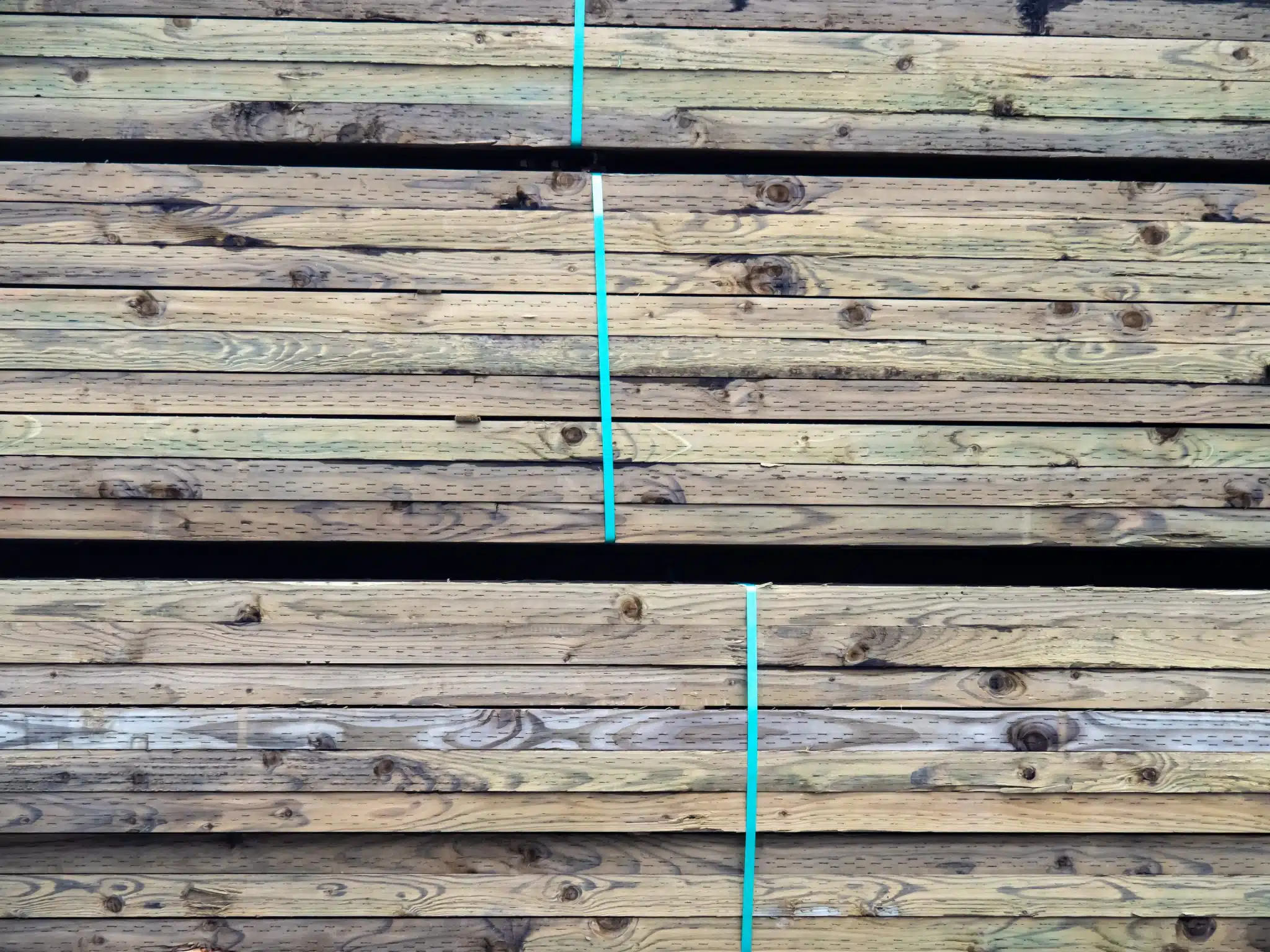
The appearance of wood can be modified with the application of an architectural coating. Architectural coatings are surface coverings such as paints and stains applied...
Non-Pressure Treated Wood For most treated wood, preservatives are applied in special facilities using pressure. However, sometimes this isn’t possible, or the need for...
Preservative-treated wood is typically pressure-treated, where the chemicals are driven a short distance into the wood using a special vessel that combines pressure and...
The VanDusen Botanical Garden in Vancouver, British Columbia, was founded in 1971; doors opened to the public in 1975. By the year 2000, two existing buildings, the Floral...

Get Access to Our Resources

Stay in the loop and don’t miss a thing!

1
2
3

Get Access to Our Resources

Stay in the loop and don’t miss a thing!

What’s Your Occupation?

Help us personalize the content for you.

What Interests You the Most?

Help us personalize the content for you.

Filters

Expertise Icon
Field of Expertise
Province Icon
Province
Member Type Icon
WoodWork National Partners

Filters

Post Type Icon
Post Type
Persona Icon
Persona
Language Icon
Language
Tags Icon
Tags
Mass Timber Plus Icon Environment Plus Icon Safety Plus Icon Durability Plus Icon Design Systems Plus Icon Budget Plus Icon Construction Management Plus Icon Fire Resistance Plus Icon Tall Buildings Plus Icon Short Buildings Plus Icon
Date Icon
Date
Line Separator