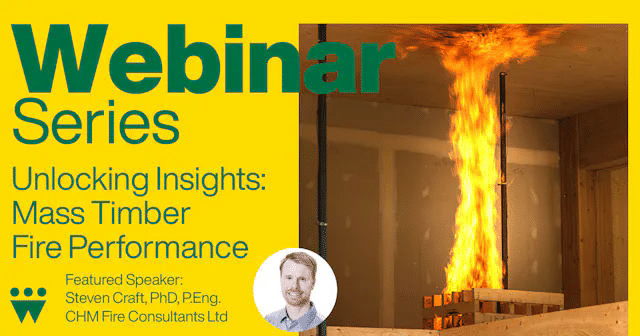
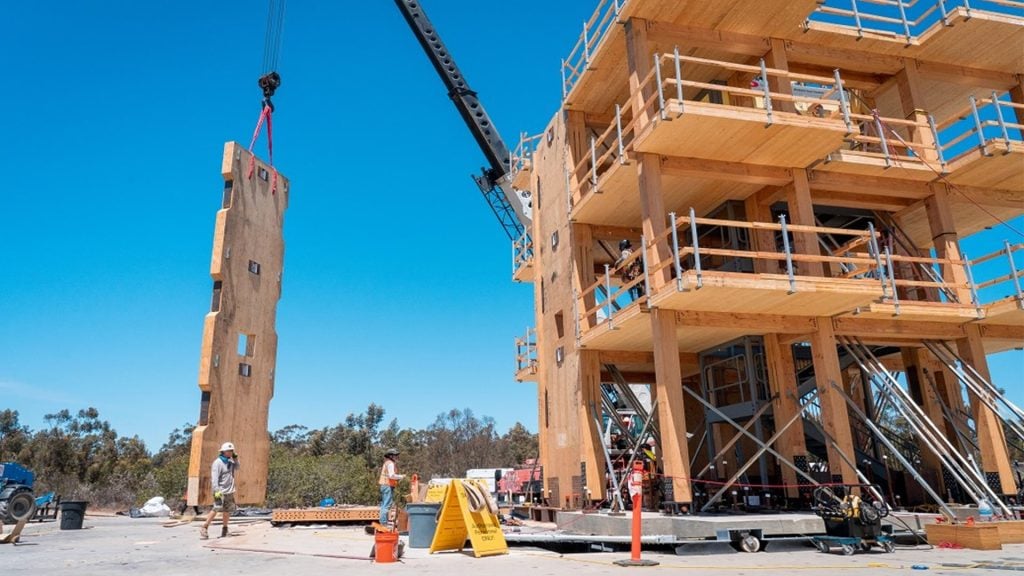
The presentation will be focused on providing a summary of the Mass Timber Demonstration Fire Test Program’s results and include the following segments:
Introduction and background on what led to the demonstration fire tests.
Overview of research prior to the demonstration fire tests and the contribution of the demonstration fire tests to the understanding of the fire performance of mass timber construction.
Review of the five fire scenarios including the design, videos of the tests, and discussion of the results.
Overview of National Research Council’s report including data collection, analysis, and conclusions.
Q&A session to allow participants the opportunity to seek clarification or additional information.
Course Video
Speaker Bio
Steven Craft, PhD, P.Eng. Founding Partner CHM Fire Consultants Ltd
Dr. Steven Craft is a founding partner of CHM Fire Consultants Ltd located in Ottawa and Toronto, ON. He served as an Adjunct Professor in the Fire Safety Engineering Program at Carleton University from 2010- 2019 and was a Research Scientist with Canada’s National Forest Products Research Institute (FPInnovations) from 2006-2011. He has an undergraduate degree in Forest Engineering from the University of New Brunswick and a PhD in Fire Safety Engineering from Carleton University. He is the Chair of the ULC Fire Test Committee, is a Vice-chair of ASTM Committee on Fire Standards and is on the Technical Committee for the Canadian Wood Design Standard, CSA O86, where he Chairs the Task Group on Fire Resistance. Dr. Craft has been involved in over 20 significant mass timber building projects across Canada and multiple large-scale fire tests on mass timber construction.
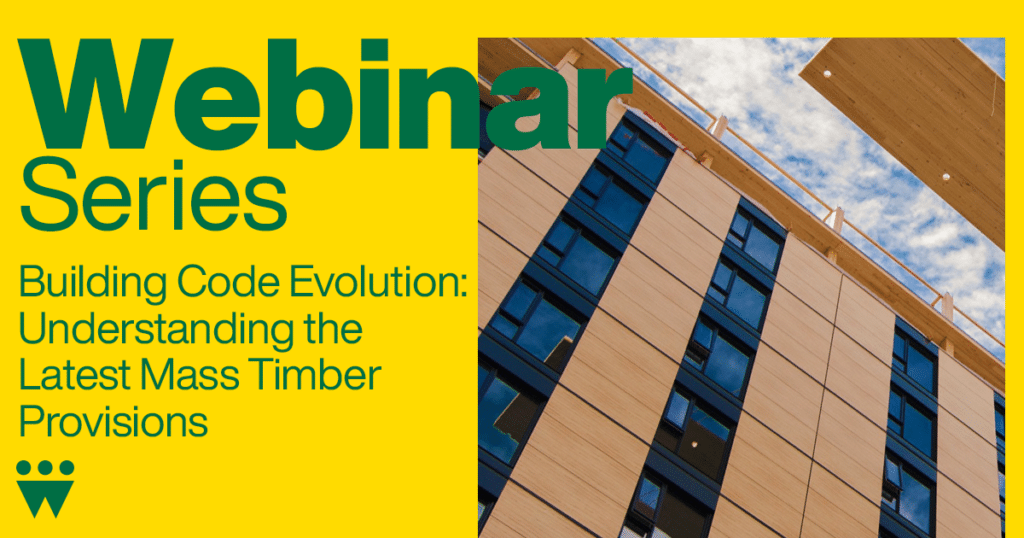
Building Code Evolution: Understanding the Latest Mass Timber Provisions
Course Overview
WoodWorks and the BC Office of Mass Timber Implementation present a brief, but detailed technical webinar focusing on the recently adopted provincial code provisions.
Learning Objectives
Beyond the introduction of a new, 18 storey limit, you will:
Learn the additional changes for various different occupancies, building heights, and construction requirements that will help you enhance your future projects with exposed or encapsulated mass timber.
Gain insights into the national landscape, understanding how these code amendments might reverberate across other provinces in Canada.
Course Video
Speaker Bio
Cameron McDonald Technical Solutions Lead, Office of Mass Timber Implementation Ministry of Jobs, Economic Development and Innovation
Cam is a former level 3 building official and BOABC member. He now works in the Office of Mass Timber Implementation, under the Ministry of Jobs, Economic Development and Innovation, as the Lead of Technical Solutions and played an active role in the development of the new code provisions for EMTC in BC.
Derek Ratzlaff, P.Eng., Struct.Eng., PE Technical Director, WoodWorks BC Canadian Wood Council
Derek began his career in the wood industry in high school working on single and multi-family light wood construction, after university and almost 20 years of structural consulting experience, Derek has worked in all types of wood construction and played key roles in the delivery of iconic BC wood structures, the Richmond Olympic Oval and Grandview Heights Aquatic Centre. He brings his experience in design and construction to support the industry as the Woodworks BC Technical Director.
Light-Frame Solutions for Mid-Rise Buildings in High Seismic Zones
Course Overview
With recent Code changes including more stringent seismic requirements, finding efficient and high-performing structural layouts is more important than ever. It is expected that light wood frame residential mid-rise buildings will be the most affected by these changes. Join the WoodWorks BC team for this 1-hour webinar as we explore current and future strategies to meet these increased requirements through structural optimization and high-strength solutions.
Learning Objectives
Analyze the most recent Code developments and how they affect the lateral design of LWF mid-rise buildings.
Review typical lateral layouts and strategies to mitigate increased seismic forces.
Discover alternate shearwall designs and how to review the construction of different solutions.
Explore different analysis methods and their effect on lateral force distribution.
Course Video
Speaker Bio
Alejandro Coronado, P.Eng. Technical Advisor, WoodWorks BC Canadian Wood Council
Alejandro brings a breadth of experience having worked throughout the design and construction industry in contractor, supplier, and consulting engineering roles. Alejandro holds both a Diploma and a Bachelor’s Degree with Distinction in Civil Engineering from BCIT, specializing in structural engineering. Initially involved in single-family homes, Alejandro worked his way through the industry to eventually work on state-of-the-art, high-profile projects such as the Centre Block Base Isolation at Parliament Hill, the UBC Museum of Anthropology Great Hall Renewal Project, Royal BC Museum PARC Campus, and a mass timber campus in Silicon Valley. He was initially attracted to Mass Timber for to its unique architectural expression. However, he quickly expanded his understanding of how Mass Timber can help us tackle current social challenges. Through many years of hands-on experience, Alejandro has become a champion for sustainable construction and simple yet effective structural solutions.
Derek Ratzlaff, P.Eng., Struct.Eng., PE Technical Director, WoodWorks BC Canadian Wood Council
Derek began his career in the wood industry in high school working on single and multi-family light wood construction, after university and almost 20 years of structural consulting experience, Derek has worked in all types of wood construction and played key roles in the delivery of iconic BC wood structures, the Richmond Olympic Oval and Grandview Heights Aquatic Centre. He brings his experience in design and construction to support the industry as the Woodworks BC Technical Director.
T3 Bayside
Course Overview
Coming Soon
Learning Objectives
Understand the design and sustainability features of the T3 Bayside project, emphasizing mass timber construction.
Analyze the challenges and solutions in implementing mass timber in large-scale commercial projects – logistical, regulatory, and construction.
Evaluate the benefits of mass timber in terms of construction efficiency and workplace environment – understand how mass timber construction impacts project timelines, cost-effectiveness, and creates biophilic, worker-friendly environments.
Discuss the implications of mass timber construction for commercial buildings in urban settings.
Course Video
Speaker Bio
Michael Gross Vice President Construction Hines Canada
Michael has become a key member of the Hines Canada platform since returning to Toronto in 2014. He leads several projects, provides support to the business generation team, and takes pride in mentoring junior colleagues.
Michael’s main responsibility has been leading the delivery of Hines’ 13-acre Bayside Toronto mixed-use master planned community which includes 1,300 residential units, 500,000 sq. ft. of office space, and 115,000 sq. ft. of retail space, and several public amenities. He led a trailblazing building code approval effort for the 10-storey T3 Bayside heavy timber office project and leads the design and construction of that project. He also provides senior leadership and guidance to other construction teams across Canada– most recently for the 64-86 Bathurst Multifamily project and T3 Sterling Road.
Michael joined Hines in 2007 to work on the Dr. Philips Center for the Performing Arts in Orlando Florida after having spent a considerable part of his early career on the development and construction of arts and cultural venues. He is passionate about the quality of the built environment and the livability of cities, and this passion informs his approach to his work at Hines. Michael has served as a Board Member of St. Hilda’s Towers and Lewis Garnsworthy Residence in Toronto and the Mad Cow Theatre in Orlando.
Michael holds a Bachelor of Applied Science in Mechanical Engineering from the University of Toronto and a Bachelor of Architecture from McGill University. Outside the office, he enjoys spending time with his family, entertaining, and canoe trips.
Nicola Casciato OAA, MRAIC, AANB Principal WZMH
Since joining the firm in 2005, Nicola has brought a high level of energy and creativity to the design of a number of major projects, including the Durham Consolidated Courthouse, Bay-Adelaide Centre and the Caesar’s Casino in Windsor, Ontario. He joined WZMH as a Senior Designer with experience in institutional, multi-unit residential and recreational buildings. Nicola’s strengths lie within the realm of design with a deeply rooted connection to the architecture of humanism while maintaining a full understanding of the production of contract documents and contract administration. His skills were acquired through six years as an associate at Montgomery Sisam Architects, a distinguished Toronto practice, and four years of formative training at Perkins and Will, an internationally renowned Chicago practice. In recognition of his outstanding contribution to the firm, Nicola was appointed a Principal of WZMH in 2010. Nicola has a Master of Architecture from the University of Illinois and a Bachelor of Technology in Architectural Science from Ryerson University.
Jack Keays Principal Vortex Fire
Jack is an accomplished fire safety engineer, building code expert, and mass timber innovator with extensive project experience in Canada, Singapore, the Middle East, and North Africa. He has advanced analytical skills with the ability to recognize and address fire safety challenges while developing practical engineering solutions. With each project, Jack engages both internal and external stakeholders in constructive and collaborative relationships. Jack brings value to each project by taking a holistic approach to fire and life safety and by working closely with a cross section of disciplines to deliver optimal solutions.
Lucas Driussi Project Manager Eastern Construction
Lucas Driussi, project manager, is a sought-after project management resource within Eastern Construction, who provides critical leadership and direction to help guide his team and project stake holders through all phases of a project. Lucas has amassed an impressive list of diverse projects, clients, and delivery methods gained over a career that spans more than 15-years in the construction industry.
Starting as a Project Coordinator, then serving stints in the field and estimating, and then taking on the role of Assistant Project Manager and subsequently Project Manager on large-scale projects, Lucas offers extensive expertise with construction management coupled with a strong appreciation for LEAN Construction practices. Currently, Lucas is managing T3 Bayside, a LEED Gold, high-performance, mass timber commercial office building located along Toronto’s waterfront. Once complete, T3 Bayside will be the tallest wood tower constructed in North America.
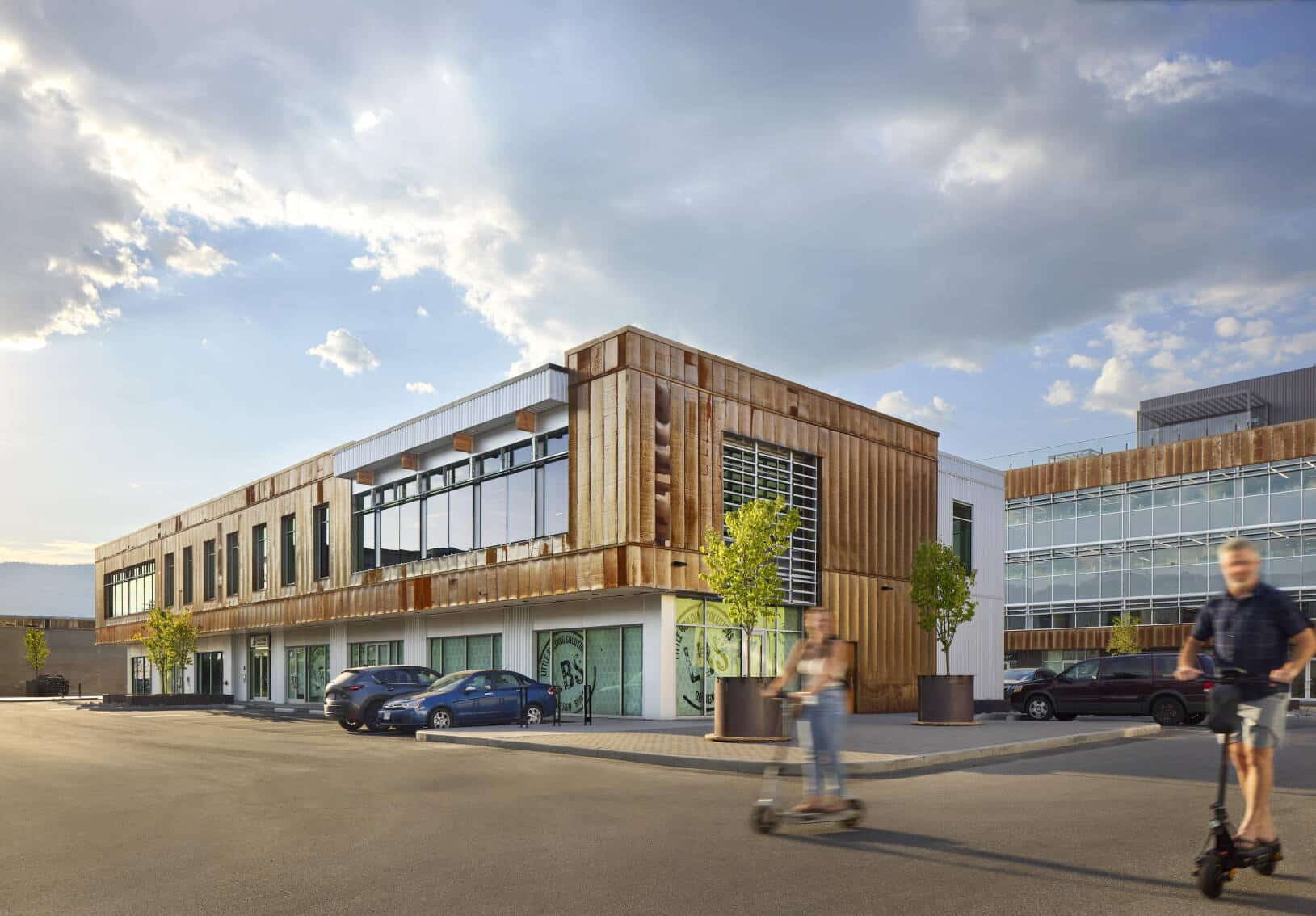
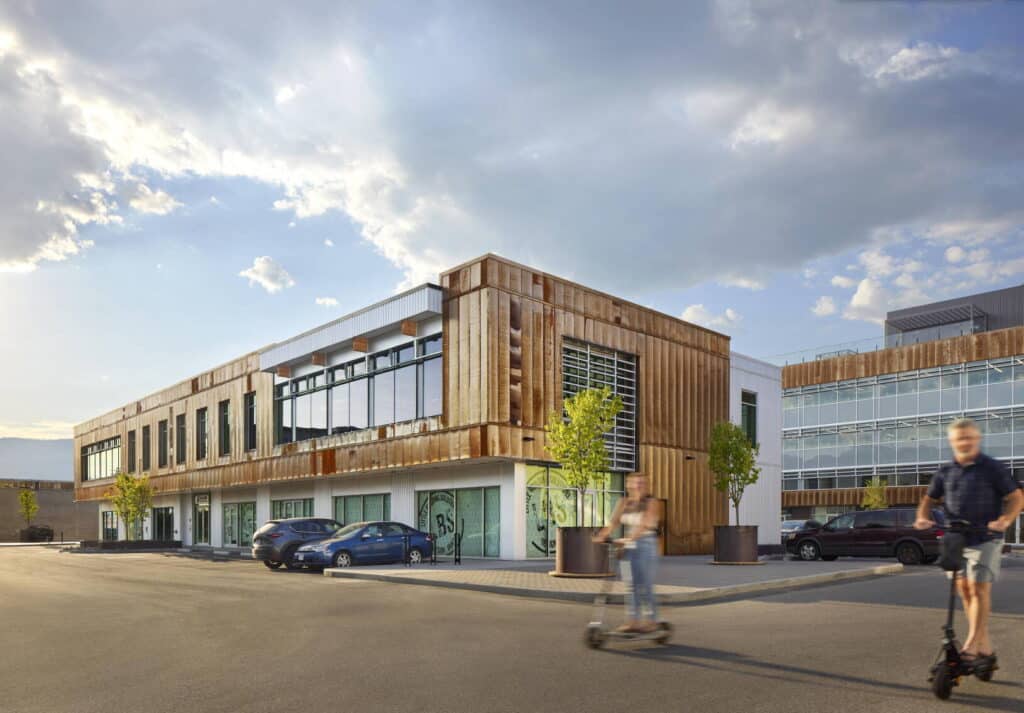
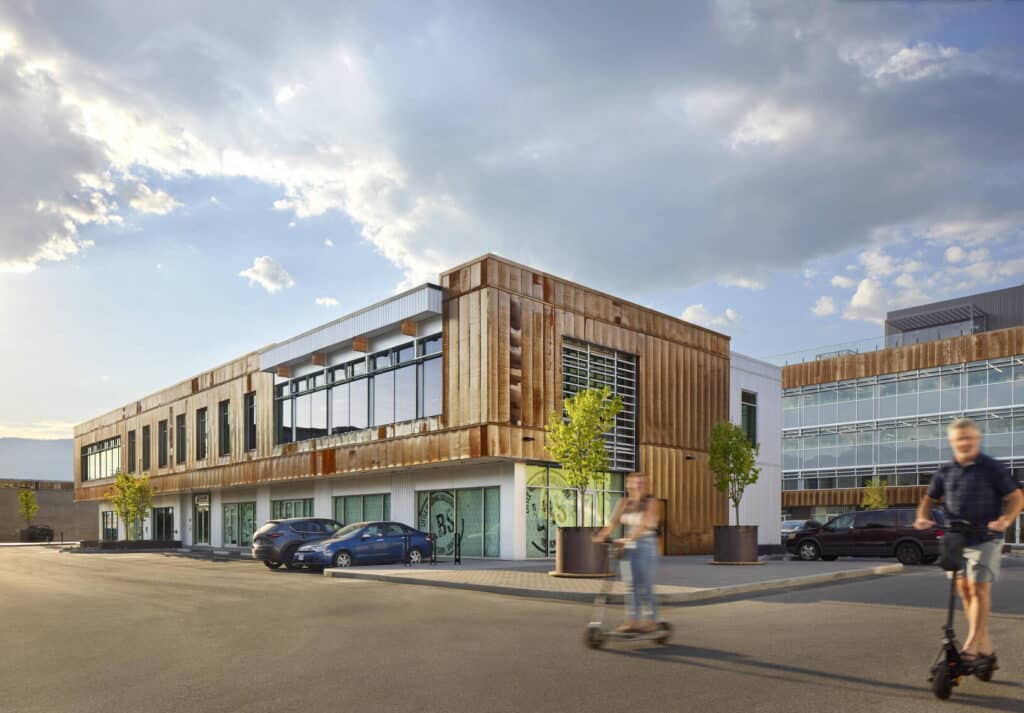
In Kelowna, British Columbia’s evolving industrial north end, The Exchange stands as a forward-thinking demonstration of what’s possible when architectural ambition meets technical precision. Designed and developed by Faction Architecture and Faction Projects, the building blends mass timber with conventional materials in a hybrid system that highlights both structural performance and environmental responsibility.
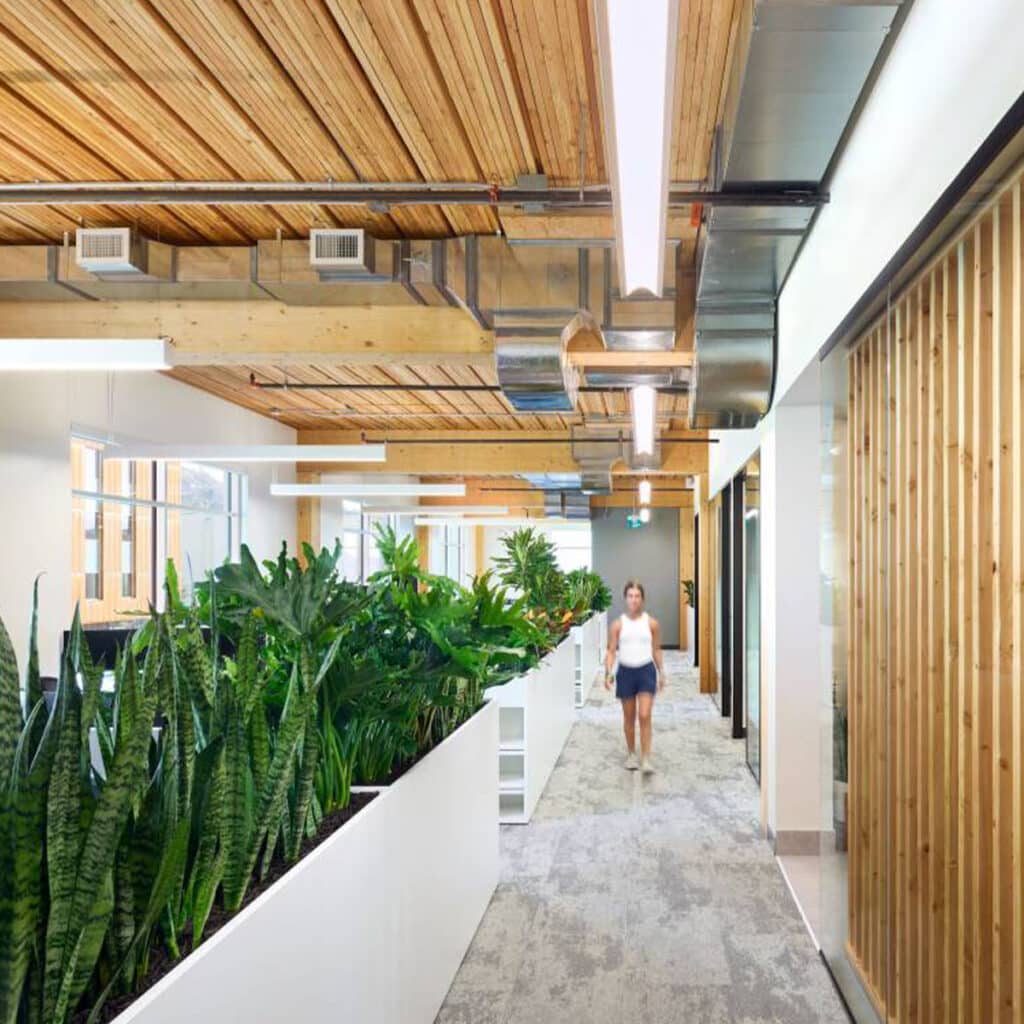
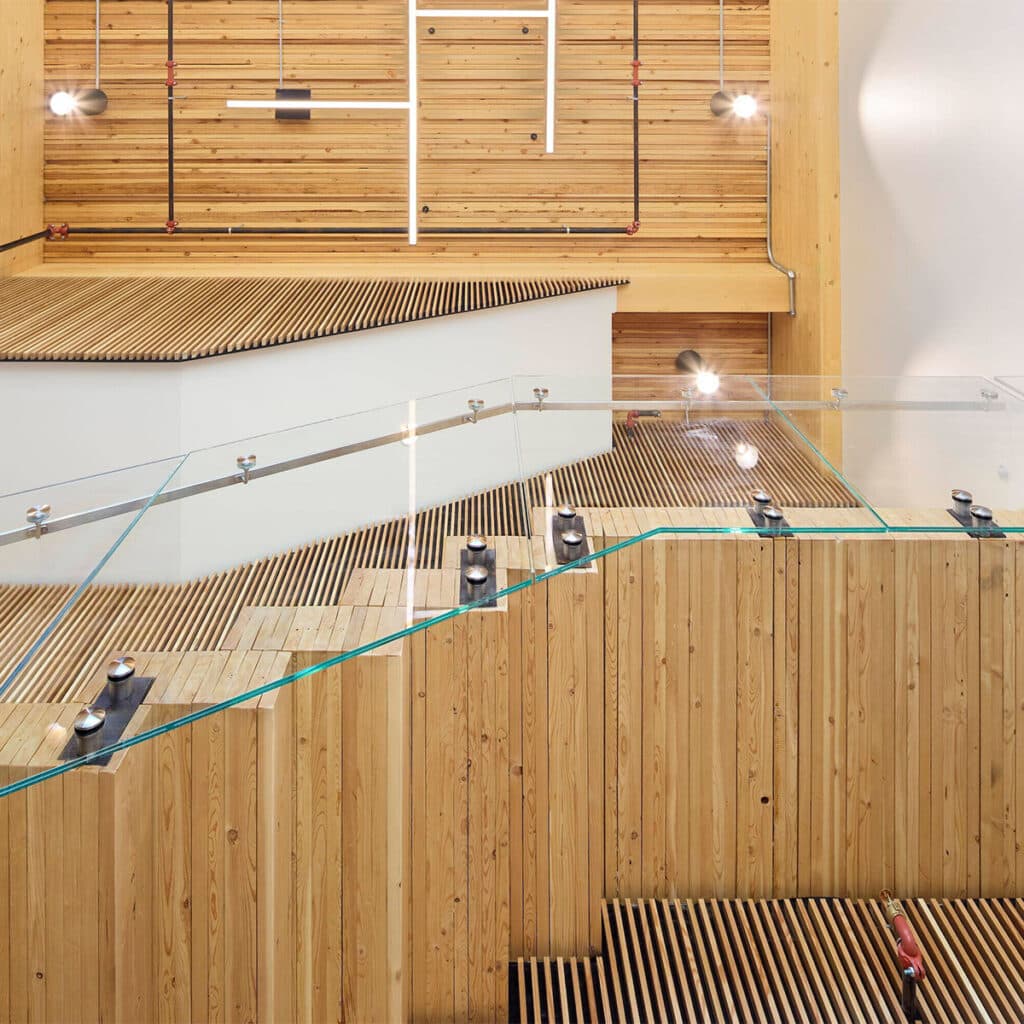
At the heart of the structural system is nail-laminated timber (NLT), used for both floor and roof assemblies. NLT is a mass timber product formed by mechanically fastening dimensional lumber together to create solid panels—an approach well-suited to exposed timber applications that value durability, texture, and straightforward fabrication. For this project, the team fabricated the panels in-house using locally sourced materials and trades. While this gave them greater control over cost and scheduling, it also introduced design and compliance challenges.
The team opted for a fluted NLT profile to enhance visual appeal and improve acoustic performance. Because the panel design differed from prescriptive norms, it required approval as an alternative solution under the BC Building Code. Extensive analysis was conducted to demonstrate compliance with fire-resistance, vibration, and load-bearing requirements. Informed by existing NLT fire test data, the design team minimized voids between laminations to enhance charring behaviour and performed physical load testing at Okanagan College to confirm strength and stiffness performance.
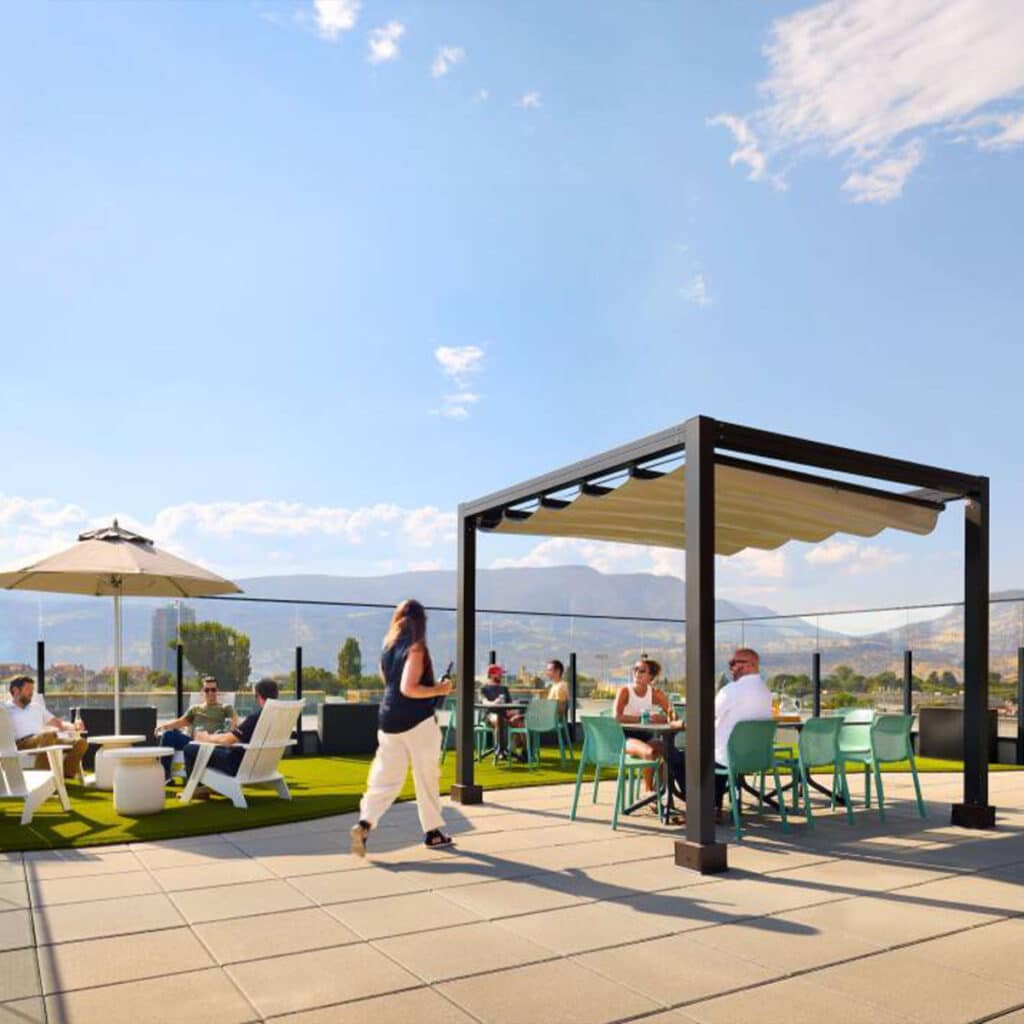
Complementing the NLT panels is a glulam post-and-beam system that forms the substructure, supported by concrete elevator and stair cores. Together, these elements support a program that includes retail and light industrial space at grade, with two to three storeys of open-plan office space above. A rooftop patio offers sweeping views, reinforcing the project’s appeal to creative businesses and environmentally conscious tenants.
The Exchange also showcases a thoughtful approach to the building envelope, a key factor in achieving Step 3 of the BC Energy Step Code—the highest step currently applicable to non-residential buildings in the region. The high-performance envelope includes a combination of weathering steel and corrugated metal cladding, high-performance glass windows, semi-rigid exterior insulation, breathable weather barrier, plywood sheathing, lumber studs, batt insulation, gypsum board and a polyethylene vapour barrier. The light-frame wood walls contribute to envelope performance in two important ways: 1) wood has lower thermal conductivity than other materials, so thermal bridging is dramatically reduced, and 2) the stud wall configuration allowed for thicker insulation in the cavities between studs.
This integrated approach—combining exposed timber construction, envelope efficiency, and locally supported fabrication—enabled the project team to deliver a space that performs as well technically as it does aesthetically. And with over 90% of the leasable area spoken for at completion, it’s clear that tenants are responding to both the look and the logic of the building.
The Exchange sets a precedent for accessible mass timber construction in smaller markets, particularly in contexts where a streamlined fabrication process and strong design-control loop can help close the gap between sustainable ambition and budgetary constraints.
As Faction Projects continues work on the remaining phases of the development, The Exchange stands as both a technical prototype and a commercial success—proof that high-performance, low-carbon construction can be as practical as it is inspiring.
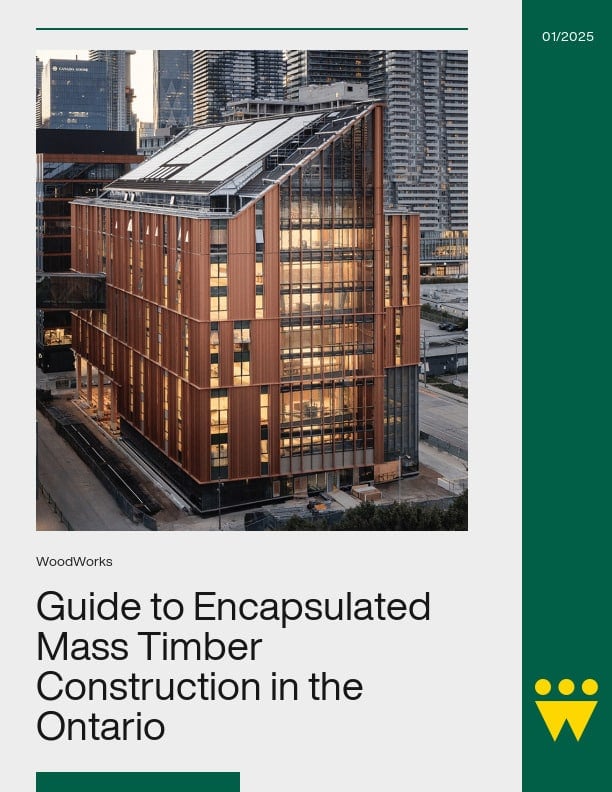
Guide to Encapsulated Mass Timber Construction in the Ontario Building Code
The Guide to Encapsulated Mass Timber Construction in the Ontario Building Code – Second Edition is a comprehensive resource designed to help designers, code officials, and building professionals understand and apply the latest Ontario Building Code provisions for Encapsulated Mass Timber Construction (EMTC), effective January 1, 2025. Developed by the Canadian Wood Council / WoodWorks Ontario in collaboration with Morrison Hershfield (now Stantec), the guide explains the technical requirements, fire safety principles, and design considerations unique to EMTC, with clear references to relevant OBC articles. It covers everything from structural mass timber element specifications and encapsulation materials, to use and occupancy limits, mixed-use scenarios, and related provisions for structural design, environmental separation, and fire safety during construction. Intended to be read in conjunction with the Ontario Building Code, this is not a design guide, but rather a tool to distill complex regulations into practical, accessible information—equipping professionals to confidently design, review, and approve EMTC projects while ensuring compliance and optimizing performance.
Notice of Correction: A previous version of this document contained a small error on page 19. In this electronic version of the document (updated August 12, 2025) the 3rd major bullet of Section 5.1.1 has been corrected.
Unlocking Insights: Mass Timber Fire Performance
Building Code Evolution: Understanding the Latest Mass Timber Provisions
Light-Frame Solutions for Mid-Rise Buildings in High Seismic Zones
Course Overview Coming Soon Learning Objectives The presentation will be focused on providing a summary of the Mass Timber Demonstration Fire Test Program’s results and...
Course Overview WoodWorks and the BC Office of Mass Timber Implementation present a brief, but detailed technical webinar focusing on the recently adopted provincial code...
Course Overview With recent Code changes including more stringent seismic requirements, finding efficient and high-performing structural layouts is more important than ever....
Course Overview Coming Soon Learning Objectives Understand the design and sustainability features of the T3 Bayside project, emphasizing mass timber construction. Analyze the...
ARCHITECT: Faction Architecture Inc. STRUCTURAL ENGINEER: RJC Engineers DEVELOPER: Faction Projects Inc. CONSTRUCTION MANAGER: Faction Construction BUILDING CODE CONSULTANT:...
The Guide to Encapsulated Mass Timber Construction in the Ontario Building Code – Second Edition is a comprehensive resource designed to help designers, code officials, and...