en-ca

Searching for: Wood

Searching results for “Wood”
351 results found...
Sort By Dropdown Icon

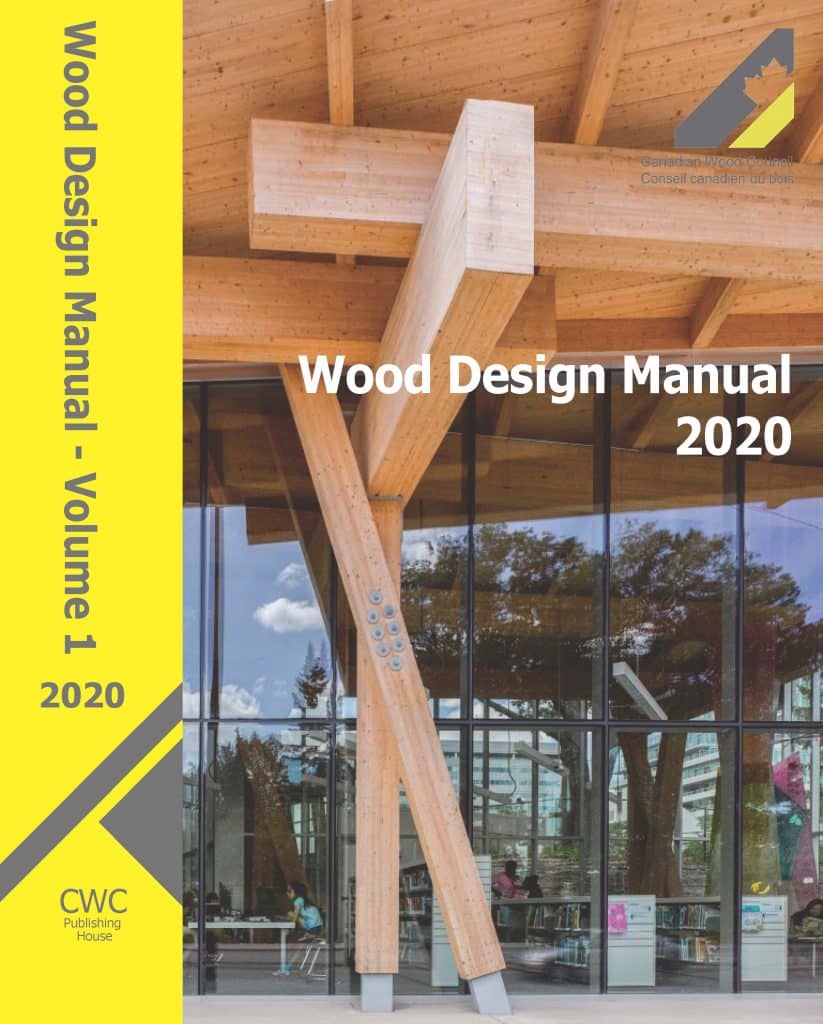
Wood Design Manual 2020

The Wood Design Manual is the Canadian reference on the design of timber structures, under gravity and lateral loadings, according to Part 4 of the National Building Code of Canada (NBC) and the “Engineering design in wood” standard (CSA O86). It provides guidance and design examples on sawn and engineered wood members, their connections and fire design. The most common design situations encountered by practicing engineers are covered through intuitive Selection Tables. In addition, the Wood Design Manual contains the latest CSA O86 Standard, as well as a technical commentary written by timber design experts including members of the Standard’s technical committee.

The 2020 Wood Design Manual includes a copy of the CSA O86:19 Standard, incorporating Update No.3 – July 2021. The main changes in this edition are:

  1. Updates to NBC 2020, including guidance on the new “transient live load” in serviceability load combinations.
  2. New sawn lumber joist vibration tables, based on the new vibration design method in O86:19 Annex A.
  3. Updated bending and tension tables for Hem-Fir beam and stringer grade, based on the changes in Hem-Fir design values in O86:19.
  4. Updated CLT deflection tables, based on the removal of the 1.2 form factor in O86:19.
  5. Updated CLT combined loading tables, again, based on the removal of the 1.2 form factor in O86:19.
  6. Improved bolt tables that can be directly used to obtain bolt resistances and failure modes.
  7. Updated shearwall and diaphragm selection tables based on the new alternative f1 equation.
  8. Updated design example of CLT shearwall to account for O86:19 additional provisions and provides design and deflection expressions for multi-panel CLT shearwalls.

Wood Design Awards, 2019

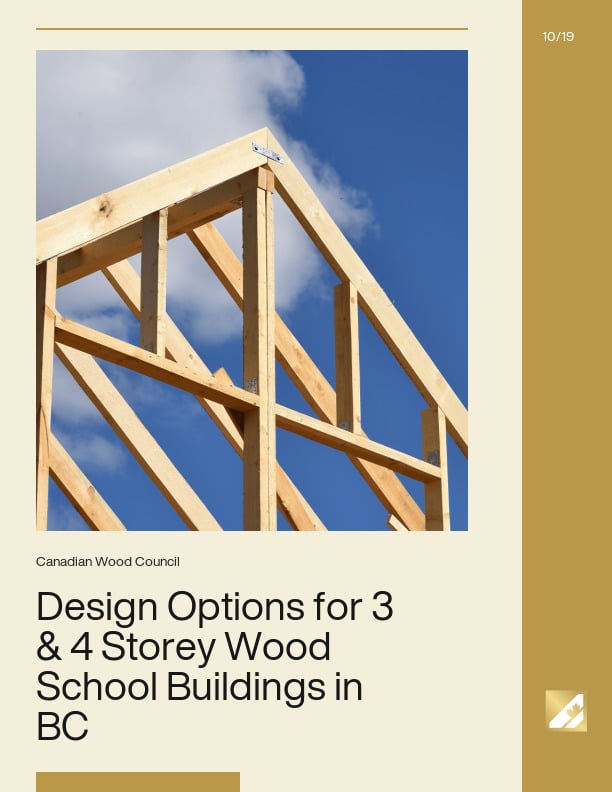
Design Options for Three- and Four Storey Wood School Buildings in British Columbia

As land values continue to rise, particularly in higher-density urban environments, schools with smaller footprints will become increasingly more necessary to satisfy enrollment demands. There are currently a number of planned new school projects throughout British Columbia that anticipate requiring either three-or four-storey buildings, and it is forecasted that the demand for school buildings of this size will continue to rise.

Though timber construction would offer a viable structural material option for these buildings, the British Columbia Building Code (BCBC 2018) currently limits schools comprised of timber construction to a maximum of two storeys, while also imposing limits on the overall floor area. Given these constraints, to date there has not been much effort put into the development of viable structural options that would accommodate larger and taller schools constructed primarily with timber materials.

With the above factors in mind, the purpose of this study is to illustrate the range of possible timber construction approaches for school buildings that are up to four storeys in height. Given this emphasis on four-storey construction, this study focuses on the main classroom blocks within a school building, as these portions of the building are the ones that are the most likely to take advantage of an increased number of storeys. While other portions of school buildings, such as gymnasiums, shops, and multi-purpose areas are also strong candidates for wood construction systems, since there are already numerous examples of this type of construction these areas are not emphasized in this report.

Wood Design Awards, 2018

Mid-Rise Best Practice Guide Proven Construction Techniques for Five-and Six-Storey Wood-Frame Buildings

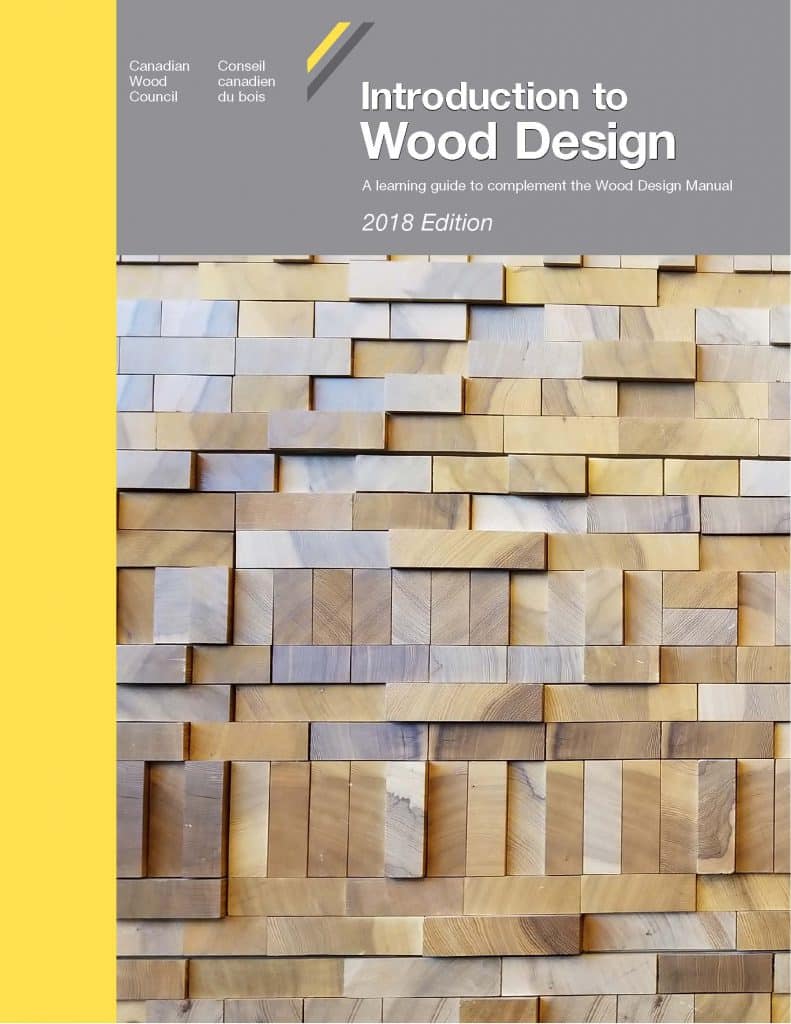
Introduction to Wood Design 2018

Wood Design Awards, 2017

Wood Use In Low Rise Educational Buildings Ontario Reference Guide 2012

Ontario Tall Wood Reference Guide

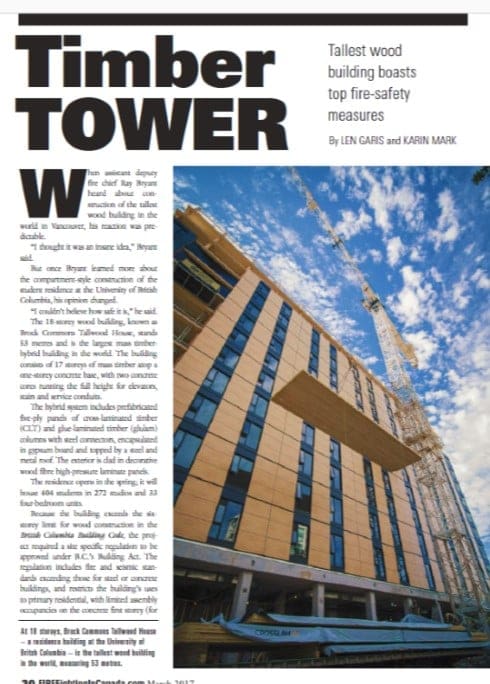
Fire Fighting in Canada Article – Timber Tower

Article by Len Garis and Karin Mark.

When assistant deputy fire chief Ray Bryant heard about construction of the tallest wood building in the world in Vancouver, his reaction was predictable. “I thought it was an insane idea,” Bryant said. But once Bryant learned about the compartment-style construction of the student residence at the University of British Columbia, his opinion changed. “I couldn’t believe how safe it is,” he said. Read the article.

Social & Economic Benefits of Wood Buildings

Resilient and Adaptive Design Using Wood

Permanent Wood Foundations
Durability by design
Durability by nature
Durability by treatment
Finishing Exterior Wood
Non-Pressure Treated Wood
Three women wearing safety vests and hard hats at a construction site, symbolizing collaboration and innovation in the wood industry.
2024 Catherine Lalonde Memorial Scholarships Celebrate Students Driving Innovation in the Wood Industry
Canadian Wood Council and Woodsure launch new partnership between the WoodWorks and Woodsure programs
Outstanding Wood Buildings (Bâtiments En Bois Exceptionnels)
Innovative Applications of Engineered Wood
Arbora – An Exposed Wood Structure in A Major Residential Project
A permanent wood foundation (PWF) is an engineered construction system that uses load-bearing exterior light-frame wood walls in a below-grade application. A PWF consists of...
“Durability by design” is the most important aspect of durable solutions.  It starts with using dry wood, storing it appropriately to ensure it stays dry, and then...
For outdoor applications of wood, we have a strong tradition here in North America of using our naturally durable species: Western red cedar, Eastern white cedar, yellow...
Treating Methods There are two basic methods of treating: with and without pressure. Non-pressure methods are the application of preservative by brushing, spraying or dipping...
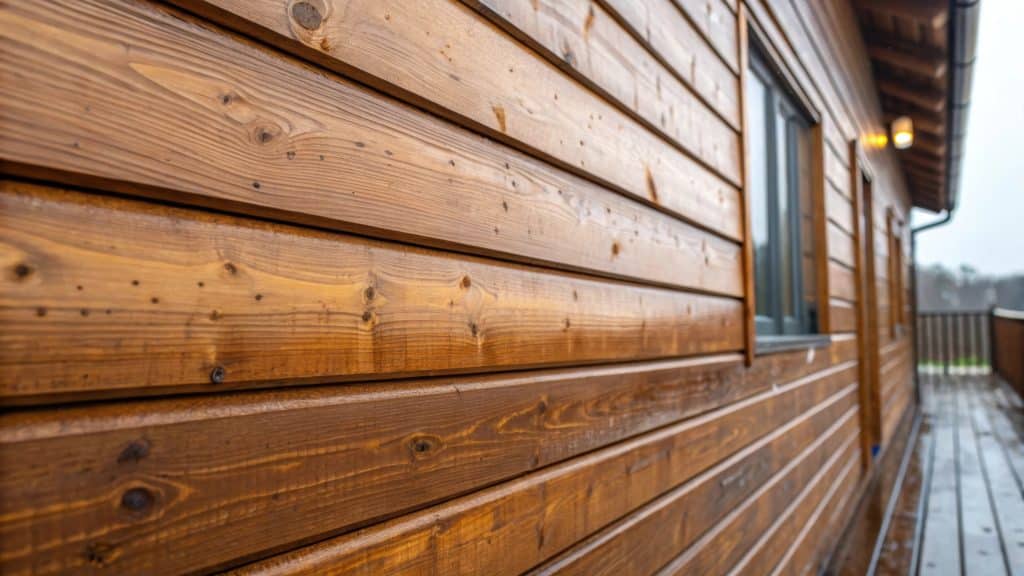
The appearance of wood can be modified with the application of an architectural coating. Architectural coatings are surface coverings such as paints and stains applied...
Non-Pressure Treated Wood For most treated wood, preservatives are applied in special facilities using pressure. However, sometimes this isn’t possible, or the need for...
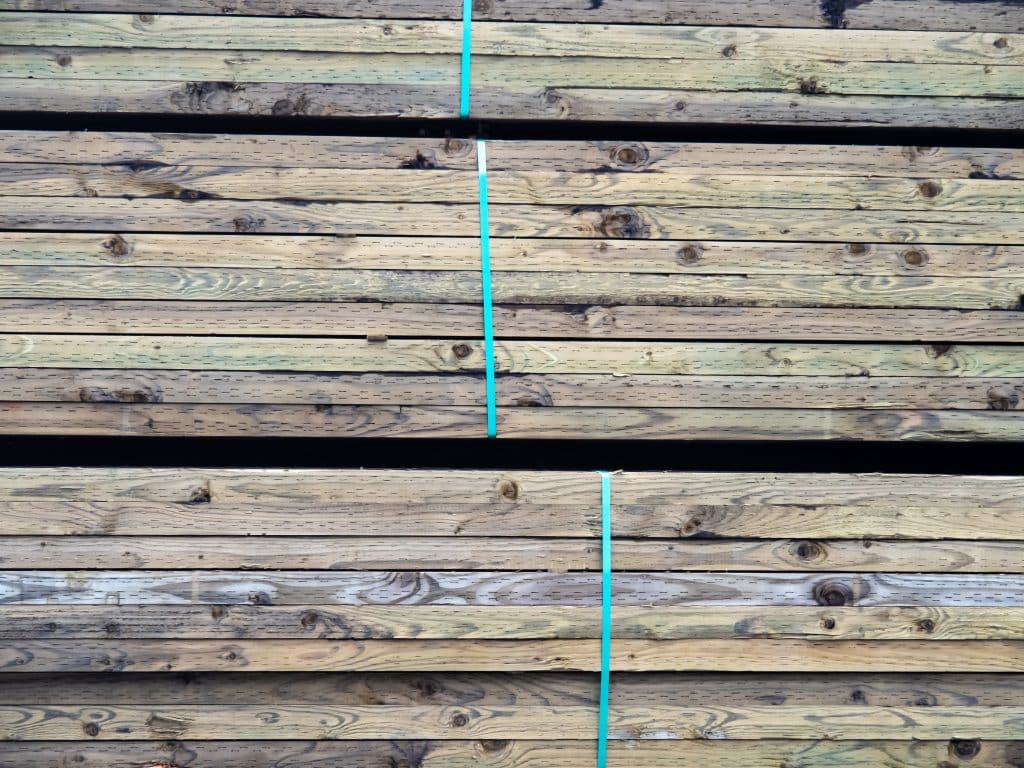
Preservative-treated wood is typically pressure-treated, where the chemicals are driven a short distance into the wood using a special vessel that combines pressure and...
Ottawa, ON, December 12, 2024 – The Canadian Wood Council (CWC) announced the recipients of the 2024 Catherine Lalonde Memorial Scholarships: Laura Walters (McMaster...
Ottawa, Ontario – September 17, 2024 — The Canadian Wood Council (CWC) and Woodsure (A division of Axis Insurance Managers Inc.) are pleased to announce a new partnership...

Get Access to Our Resources

Stay in the loop and don’t miss a thing!

1
2
3

Get Access to Our Resources

Stay in the loop and don’t miss a thing!

What’s Your Occupation?

Help us personalize the content for you.

What Interests You the Most?

Help us personalize the content for you.

Filters

Expertise Icon
Field of Expertise
Province Icon
Province
Member Type Icon
WoodWork National Partners

Filters

Post Type Icon
Post Type
Persona Icon
Persona
Language Icon
Language
Tags Icon
Tags
Mass Timber Plus Icon Environment Plus Icon Safety Plus Icon Durability Plus Icon Design Systems Plus Icon Budget Plus Icon Construction Management Plus Icon Fire Resistance Plus Icon Tall Buildings Plus Icon Short Buildings Plus Icon
Date Icon
Date
Line Separator