en-ca

Searching for: Wood

Searching results for “Wood”
394 results found...
Sort By Dropdown Icon

Wood Design & Building Magazine, vol 24, issue 98

What does it take to deliver better buildings? In this issue, we explore that question from a couple of different angles—primarily through a look at standout wood projects that demonstrate wood design excellence, but also through a thoughtful feature on offsite prefabrication that invites the construction industry to think critically about how we build and what it will take to build better. Through enhanced collaboration and the expanded use of technology, prefabricated construction—an approach especially well-suited to wood—is transforming the way we design and deliver buildings.

This fall, the Canadian Wood Council is proud to support Woodrise 2025, an international conference coming to Vancouver, British Columbia. As part of this event, the 5th International Congress on tall wood construction, we’ve curated nine immersive tours that offer attendees a unique opportunity to step inside some of the region’s most compelling wood projects for a firsthand look at the leadership and innovation happening here.

If you believe one of the best ways to learn about a building is to walk through it—this is your chance. The full tour lineup is available now at www.woodrise2025.com/offsite-tours. Join us to explore everything from sustainable forest management and advanced manufacturing to some of the region’s most iconic mass timber buildings – experiences that bring together the people, materials, and design approaches shaping the future of low-carbon construction in B.C. and beyond.

We hope this issue inspires you to keep exploring what’s possible with wood—whether in your own projects or out with us on tour.

Canadian Wood Council Applauds Nova Scotia’s Prioritization of Wood Products for Construction and Heating in Public Buildings

OTTAWA, ON, 18 July 2025 – The Canadian Wood Council (CWC) applauds the Province of Nova Scotia’s recent announcement regarding the prioritization of wood products for construction and heating in public buildings – a strategic move that supports economic growth, climate resilience, and innovation in the province’s forestry sector.

By committing to mass timber and other solid wood products for construction, alongside the use of wood pellets, biomass, and other products made from forest residuals for heat and energy, Nova Scotia is taking a leadership approach to development that aligns environmental stewardship with economic opportunity.

This initiative reinforces the principles of a circular economy built on sustainable forest management. This comprehensive approach to fibre utilization ensures the province is maximizing the value of harvested wood and reducing waste while simultaneously supporting jobs, stimulating rural economies, and strengthening local and regional supply chains across the forestry and construction sectors.

“This commitment from the province of Nova Scotia not only supports local forestry and bioeconomy innovation, but also delivers practical solutions to reduce emissions, improve energy security, and build with a lighter carbon footprint,” says Rick Jeffery, President & CEO of the Canadian Wood Council. It’s a smart and timely commitment to sustainability that will strengthen local industries while advancing practical, low-carbon building solutions.”

View the announcement from Nova Scotia Public Works and Nova Scotia Natural Resources here: https://news.novascotia.ca/en/2025/07/17/government-promotes-wood-construction-heating
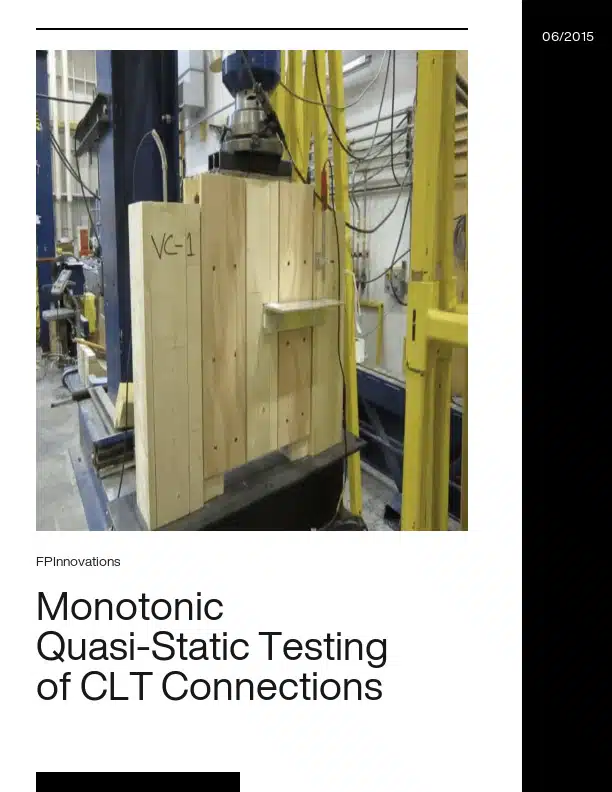
Feasibility of Point-Supported Mass Timber

Tall wood buildings offer tremendous potential for low-carbon, high-performance construction, but they also introduce a distinct set of challenges not typically encountered in conventional approaches. Design teams new to this form of construction may be unfamiliar with the systematic approach needed to enhance affordability and efficiency in these buildings.

Within the spectrum of structural solutions for mass timber, point-supported CLT is a compelling option for tall building applications. Teams must understand how to harness its unique benefits and navigate its limitations to unlock its full potential. When applied effectively, point-supported approaches can improve efficiency, reduce material usage, and unlock new pathways to cost-competitive tall timber construction.

Canadian Wood Council Supports Ontario’s Advanced Wood Construction Action Plan

KITCHENER, ON — The Canadian Wood Council (CWC) was proud to participate in a significant announcement by the Government of Ontario yesterday, where the Honourable Mike Harris, Minister of Natural Resources, and the Honourable Kevin Holland, Associate Minister of Forestry and Forest Products, launched Ontario’s Advanced Wood Construction Action Plan.

The Action Plan outlines a strong, strategic commitment to advancing the use of mass timber and prefabricated wood systems—technologies that can deliver high-performance buildings while supporting job creation and investment across Ontario’s forestry, manufacturing, and construction sectors.

As the national association representing manufacturers of Canadian wood products, CWC welcomes this important step forward. Through its technical resource program, WoodWorks, the Council is committed to supporting the growth of advanced wood construction by providing guidance, education, and project support to professionals across the building sector.

“This is about solving today’s challenges while laying the groundwork for long-term economic growth—with industrialized wood construction driving that transformation forward,” said Steven Street, Executive Director of WoodWorks Ontario.

The Action Plan includes investments in research, education, training, and manufacturing, positioning Ontario as a leader in low-carbon, efficient, and sustainable construction. CWC applauds the province’s leadership and looks forward to continuing its collaboration with public and private partners to advance the adoption of made-in-Ontario wood solutions.

To read the full plan, visit: https://www.ontario.ca/page/advanced-wood-construction-action-plan

Canadian Wood Council’s 2024 Annual Report Now Available

The Canadian Wood Council is pleased to share it’s 2024 Annual Report, offering a clear view of the progress, resilience, and impact achieved over the past year.

In his message, Chairman Kevin Pankratz reflects on the Council’s strategic leadership during a year marked by economic pressures and shifting market conditions. Emphasis is placed on the value of collaboration, strong governance, and industry alignment as essential to maintaining momentum and ensuring long-term competitiveness. The report reinforces the importance of maintaining a united voice across our membership and fostering clarity in our purpose as a national federation.

From the President & CEO’s perspective, Rick Jeffery outlines how the organization navigated 2024 with focus and adaptability—delivering trusted technical guidance, growing influence in codes and standards, and expanding national education and outreach efforts. With renewed government investment and increased awareness of low-carbon construction, the Council is well-positioned to lead the next chapter of growth for Canada’s wood sector.

View the full report: English | Francais

2024 CWC Annual Report

We are pleased to share the Canadian Wood Council’s 2024 Annual Report, offering a clear view of the progress, resilience, and impact achieved over the past year.

In his message, Chairman Kevin Pankratz reflects on the Council’s strategic leadership during a year marked by economic pressures and shifting market conditions. Emphasis is placed on the value of collaboration, strong governance, and industry alignment as essential to maintaining momentum and ensuring long-term competitiveness. The report reinforces the importance of maintaining a united voice across our membership and fostering clarity in our purpose as a national federation.

From the President & CEO’s perspective, Rick Jeffery outlines how the organization navigated 2024 with focus and adaptability—delivering trusted technical guidance, growing influence in codes and standards, and expanding national education and outreach efforts. With renewed government investment and increased awareness of low-carbon construction, the Council is well-positioned to lead the next chapter of growth for Canada’s wood sector.

Wood Design & Building Magazine, vol 24, issue 97

In wood construction, success is rarely improvised. It’s the earned result of early design coordination, clearly communicated expectations, and a shared commitment to getting the details right—from design concept through to completion. Whether a project’s priority is accelerated construction timelines, lasting architectural impact, future disassembly and reuse, or all these things and more, the through line is thoughtful, deliberate planning.

As a structural system, timber calls for a high degree of coordination—especially as its applications continue to evolve and expand. It rewards teams who design with intent: those who understand that every exposed surface carries architectural weight, that detecting clashes early in the design phase avoids costly rework during construction, and that planning for a building’s end-of-life is just as essential as designing its first impression.

Society’s growing demand for low-carbon construction brings new urgency—and opportunity—to these conversations. As we continue to advance prefabricated, high-performance, and demountable wood building systems, the need for early alignment—between architect and engineer, builder and client—is not just integral to the success of individual projects, but to the advancement of the industry as a whole.

This issue of Wood Design & Building leans into that reality. As construction methods evolve, we examine how clear communication and coordination don’t just mitigate risk—they drive better outcomes for the built environment. In a construction landscape that values speed, efficiency, and low-carbon outcomes, it’s advanced planning and clear communication that turn ambition into meaningful results.

We’re not just building with wood. We’re building with purpose, intention, and care. And that process starts long before the first beam or panel is lifted into place.

Sizer Course – US

Sizer Course - US

Course Overview

The Sizer Course provides an in-depth introduction to the WoodWorks Sizer Program, a powerful tool for designing and analyzing structural elements such as beams, columns, wall studs and panels. The course covers key features, including load input, load patterns, bearing design, beam design, column design, lateral support considerations, and “concept mode” for preliminary structural modelling.

You will explore how the program optimizes designs by automatically generating load patterns, checking compliance with building codes, and refining structural elements for improved performance.

Course Learning Outcomes

By the end of this course, you will be able to:

  • Design and analyze structural elements using the WoodWorks Sizer Program, including beams, columns, and CLT panels, while considering material selection, loading conditions, and code compliance.
  • Evaluate load distribution and structural stability by applying Sizer’s automated features for pattern loading, lateral support analysis, and fire resistance adjustments.
  • Optimize structural designs through Concept Mode and detailed element analysis, ensuring efficient material use, proper load transfer, and adherence to engineering best practices.

Course Structure

This course consists of six (6) lessons. Each lesson is comprised of a lesson overview, learning outcomes, instructional videos, assessment questions and an assignment. Through these elements, you will gain practical experience in using the Sizer Woodworks Program for real-world applications.

Once you have completed all assessment questions and assignment submissions, a certificate of completion will be digitally awarded.

Time for Completion

This course is comprised of eight videos for a total run time of 53 minutes.

To complete the assessments in this course you can expect to spend ~ 85 minutes.

Program Download

In order to complete this course you will need to download a trial version of the Sizer Program.

Complete these steps to download the program:

  1. Navigate to the program download page by clicking here.
  2. Click on the “Download Now” button for the US Sizer Program.
  3. Locate and click on the download either in your browser or on your computer.
  4. Follow the prompts provided by your computer to complete installation.

*Note: the trial version of the program is only valid for 10 days upon installation.

Shearwalls Course – US

Shearwalls Course - US

Course Overview

The Shearwalls Course introduces learners to the WoodWorks Shearwalls Program, a tool designed for modeling and analyzing wood-frame structures. This course covers the design of complete structures, including walls, roofs, and openings, while ensuring proper load distribution and structural stability.  

You will explore the program’s capabilities in generating and distributing seismic and wind loads, optimizing shearwall configurations, and verifying compliance with building codes.

Course Learning Outcomes

By the end of this course, you will be able to:

  • Design and analyze wood-frame shearwalls using the Shearwalls Program, including load distribution for seismic and wind resistance.
  • Evaluate shearwall performance and compliance with building codes by interpreting program-generated structural analyses.
  • Optimize shearwall configurations for enhanced structural integrity, adjusting materials and design parameters based on engineering best practices.

Course Structure

This course consists of seven (7) lessons. Each lesson is comprised of a lesson overview, learning outcomes, instructional videos, assessment questions and an assignment. Through these elements, you will gain practical experience in using the Shearwalls Woodworks Program for real-world applications.

Once you have completed all assessment questions and assignment submissions, a certificate of completion will be digitally awarded.

Time for Completion

This course is comprised of 19 videos for a total run time of 115 minutes.

To complete the assessments in this course you can expect to spend ~ 95 minutes.

Program Download

In order to complete this course you will need to download a trial version of the Shearwalls Program.

Complete these steps to download the program

  1. Navigate to the program download page by clicking here.
  2. Scroll down to the Shearwalls section
  3. Click on the “Download Now” button for the US Shearwalls Program.
  4. Locate and click on the download either in your browser or on your computer.
  5. Follow the prompts provided by your computer to complete installation.

*Note: the trial version of the program is only valid for 10 days upon installation.

Program Overview

WoodWorks Shearwalls is a powerful program designed for comprehensive shearwall design and lateral load analysis in multi-storey wood-frame buildings. It supports both flexible and rigid diaphragm analysis, calculates hold-down and drag-strut forces, and allows for detailed customization including openings, varied roof shapes, and imported CAD footprints. With capabilities to design up to six-storey structures and generate elevation views, it streamlines the structural design process for engineers and designers alike.

Connections Course – US

Connections Course - US

The Connections Course provides an introduction to the WoodWorks Connections Program, a tool designed to assist engineers and designers in the creation and evaluation of wood connections. This course covers the design of new connections using bolts, nails, rivets, or shear plates and explains how to assess their capacity.You will gain an understanding of the program’s functionality, its application in real-world scenarios, and best practices for optimizing wood connections.

Course Learning Outcomes

By the end of this course, you will be able to:

  • Design and analyze wood connections using the Connections Program, incorporating bolts, nails, rivets, and shear plates.
  • Evaluate connection capacity and compliance with industry standards by interpreting program-generated results.
  • Optimize wood connection designs by applying best practices and modifying existing configurations for improved structural performance.

Course Structure

This course consists of two (2) lessons. Each lesson is comprised of a lesson overview, learning outcomes, instructional videos, assessment questions and an assignment. Through these elements, you will gain practical experience in using the Connections Woodworks Program for real-world applications.

Once you have completed all assessment questions and assignment submissions, a certificate of completion will be digitally awarded.

Time for Completion

This course is comprised of 2 videos for a total run time of 8:12 minutes.

To complete the assessments in this course you can expect to spend ~ 20 minutes.

Program Download

In order to complete this course you will need to download a trial version of the Connections Program.

Complete these steps to download the program:

  1. Navigate to the program download page by clicking here.
  2. Scroll down to the Connections section
  3. Click on the “Download Now” button for the US Connections Program.
  4. Locate and click on the download either in your browser or on your computer.
  5. Follow the prompts provided by your computer to complete installation.

*Note: the trial version of the program is only valid for 10 days upon installation.

2025 Wood Design & Building Awards Call for Submissions Now Open

OTTAWA, ON, 23 APR 2025 – The Canadian Wood Council is accepting submissions for the 2025 Wood Design & Building Awards. Now in its 41st year, this annual program invites architects, designers, and project teams from across North America and around the world to submit their most inspiring wood projects for consideration.

“At its core, this program is a celebration of architectural excellence,” says Martin Richard, VP Market Development & Communications at the Canadian Wood Council. “Each year, we’re inspired by the many ways designers harness wood’s versatile beauty—from bold, expressive forms to quietly transformative spaces.”

Over the decades, we’ve seen the creativity and talent of hundreds of project teams bring important changes to the built environment—elevating wood from a niche material to a sustainable, mainstream design ambition. While the awards program has always shone a light on architectural excellence in wood, winning projects in recent years also frequently demonstrate innovation, technical achievement, and a strong commitment to sustainability.

Submissions will be reviewed by a distinguished jury of Canadian and American architects. Projects will be evaluated based on creativity, design excellence, and the innovative and appropriate use of wood to achieve project objectives.

Award categories for 2025 include:

  • Non-residential
  • Residential
  • Adaptive Reuse, Additions, and Renovations
  • International Building
  • Other (e.g. exterior structures, bridges)


The program also includes several specialty awards:

  • Sustainable Forestry Initiative (SFI) Award
  • Sansin Award
  • Real Cedar Award
  • Wood Preservation Canada (WPC) Award
  • Regional WoodWorks Awards for Ontario, British Columbia, and the Prairies


Winners will receive a custom wood trophy and be recognized through a media announcement, social media, a feature profile on the Wood Innovation Network, and editorial coverage in Wood Design & Building Magazine (digital edition).

Key Dates
Early Bird Deadline: May 31, 2025
Final Submission Deadline: June 27, 2025

For more information and to submit your project, please visit: https://cwc.ca/wood-design-and-building-awards/


Wood Design and Building Awards

We are pleased to open our Call for Entries and invite North American and International submissions to the 2026 Wood Design and Building Awards program celebrating excellence in wood architecture and construction. 

Entries should showcase the use of wood products in any, or several, of their many forms and applications, demonstrating an understanding of the special properties of wood including strength, durability, beauty, and cost-effectiveness. To be eligible, projects must have been completed within the past three years and must be fully constructed, with finished photography available, by July 1, 2026. 

Awards will be presented at the discretion of the jury in the following categories: Honor, Merit, and Citation. Winners will receive a custom wood trophy recognizing their achievement and will also:

  • Be announced in a media release and on social media
  • Receive a feature profile on the Wood Innovation Network
  • Be featured in Wood Design & Building Magazine (digital)
  • Receive and invitation to an exclusive Awards Reception, where winners are celebrated among industry leadersoffering valuable exposure, networking opportunities, and a memorable evening in recognition of your success. 


Projects can be submitted in the following categories:

  • Non-residential
  • Residential
  • Adaptive Reuse, Additions, and Renovations
  • International Building
  • Other (Exterior Structures, Bridges etc.)


Plus, don’t miss our specialty awards:

Sponsored by WoodWorks
Sustainable Forestry Initiative (SFI)
Real Cedar
Wood Preservation Canada (WPC)

Ontario region
British Columbia region
Prairie region

Note: The WoodWorks Awards (ON, BC & Prairie) recognize institutional, commercial and industrial projects, including tall, multi-unit residential, mixed use and mid-rise buildings. 

Entry Fees

Early Bird Entry Fees
(applicable until May 31, 2026)
Regular Entry Fees
First Entry – $150.00 USD
Subsequent Entries – $140.00 USD
First Entry – $175.00 USD
Subsequent Entries – $165.00 USD


Deadline to Submit: June 26, 2026, at midnight PST


Wood Design & Building Magazine, vol 24, issue 98
Canadian Wood Council Applauds Nova Scotia’s Prioritization of Wood Products for Construction and Heating in Public Buildings
Feasibility of Point-Supported Mass Timber
Canadian Wood Council Supports Ontario’s Advanced Wood Construction Action Plan
Canadian Wood Council’s 2024 Annual Report Now Available
2024 CWC Annual Report
Wood Design & Building Magazine, vol 24, issue 97
Sizer Course – US
Shearwalls Course – US
Connections Course – US
2025 Wood Design & Building Awards Call for Submissions Now Open
Wood Design and Building Awards
In 2009, the British Columbia Building Code (BCBC) was amended to permit residential buildings of up to six storeys to be constructed in wood. Since then, through a five-year...
Located in Sudbury, Ontario, Laurentian University’s McEwen School of Architecture is the first new school of architecture to be built in Canada in 40 years. Its mandate is...
Environmental awareness in building design, construction and operation is stronger than ever. But how can we meet the world’s rapidly growing need for buildings and still...
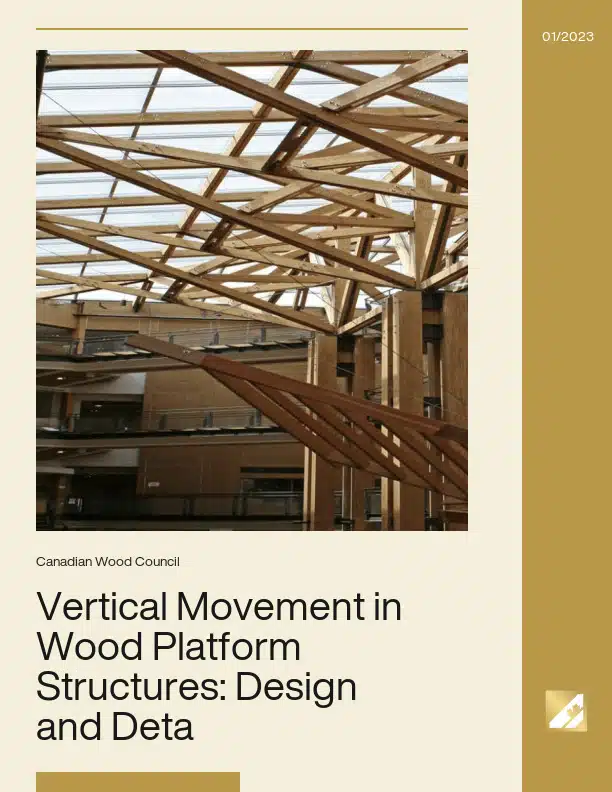
Movement in structures due to environmental condition changes and loads must be considered in design. Temperature changes will cause movement in concrete, steel and masonry...
Most buildings are designed to accommodate a certain range of movement. In design, it is important for designers to identify locations where potential differential movement...
It is not possible or practical to precisely predict the vertical movement of wood structures due to the many factors involved in construction. It is, however, possible to...
June 13, 2024 (Ottawa)– Earlier today, The Transition Accelerator unveiled The Mass Timber Roadmap at the Press Conference Room in the West Block on Parliament Hill. The...
Toronto, ON – The Canadian Wood Council is pleased to announce the winning projects of the 40th annual Wood Design & Building Awards program. This prestigious awards...
Province: OntarioCity: TorontoProject Category: InstitutionalMajor Classification: D  - OfficesHeight: 14 StoreysBuilding Area: 176,549 ft2 Description: The University...
Vancouver, BC, September 19, 2024 – Informa Connect and the Canadian Wood Council announce their collaboration, WoodWorks at BUILDEX, integrating WoodWorks’ technical...
While alternative solutions have been an important feature of the National Building Code of Canada since 2005, there remains a lack of understanding among building...

Get Access to Our Resources
Stay in the loop and don’t miss a thing!

1
2
3

Get Access to Our Resources

Stay in the loop and don’t miss a thing!

What’s Your Occupation?

Help us personalize the content for you.

What Interests You the Most?

Help us personalize the content for you.

Filters

Expertise Icon
Field of Expertise
Province Icon
Province
Member Type Icon
WoodWork National Partners

Filters

Post Type Icon
Post Type
Persona Icon
Persona
Language Icon
Language
Tags Icon
Tags
Mass Timber Plus Icon Environment Plus Icon Safety Plus Icon Durability Plus Icon Design Systems Plus Icon Budget Plus Icon Construction Management Plus Icon Fire Resistance Plus Icon Tall Buildings Plus Icon Short Buildings Plus Icon
Date Icon
Date
Line Separator