en-ca

Searching for: Wood

Searching results for “Wood”
355 results found...
Sort By Dropdown Icon

Glulam

Glulam (glued-laminated timber) is an engineered structural wood product that consists of multiple individual layers of dimension lumber that are glued together under controlled conditions. All Canadian glulam is manufactured using waterproof adhesives for end jointing and for face bonding and is therefore suitable for both exterior and interior applications. Glulam has high structural capacity and is also an attractive architectural building material.

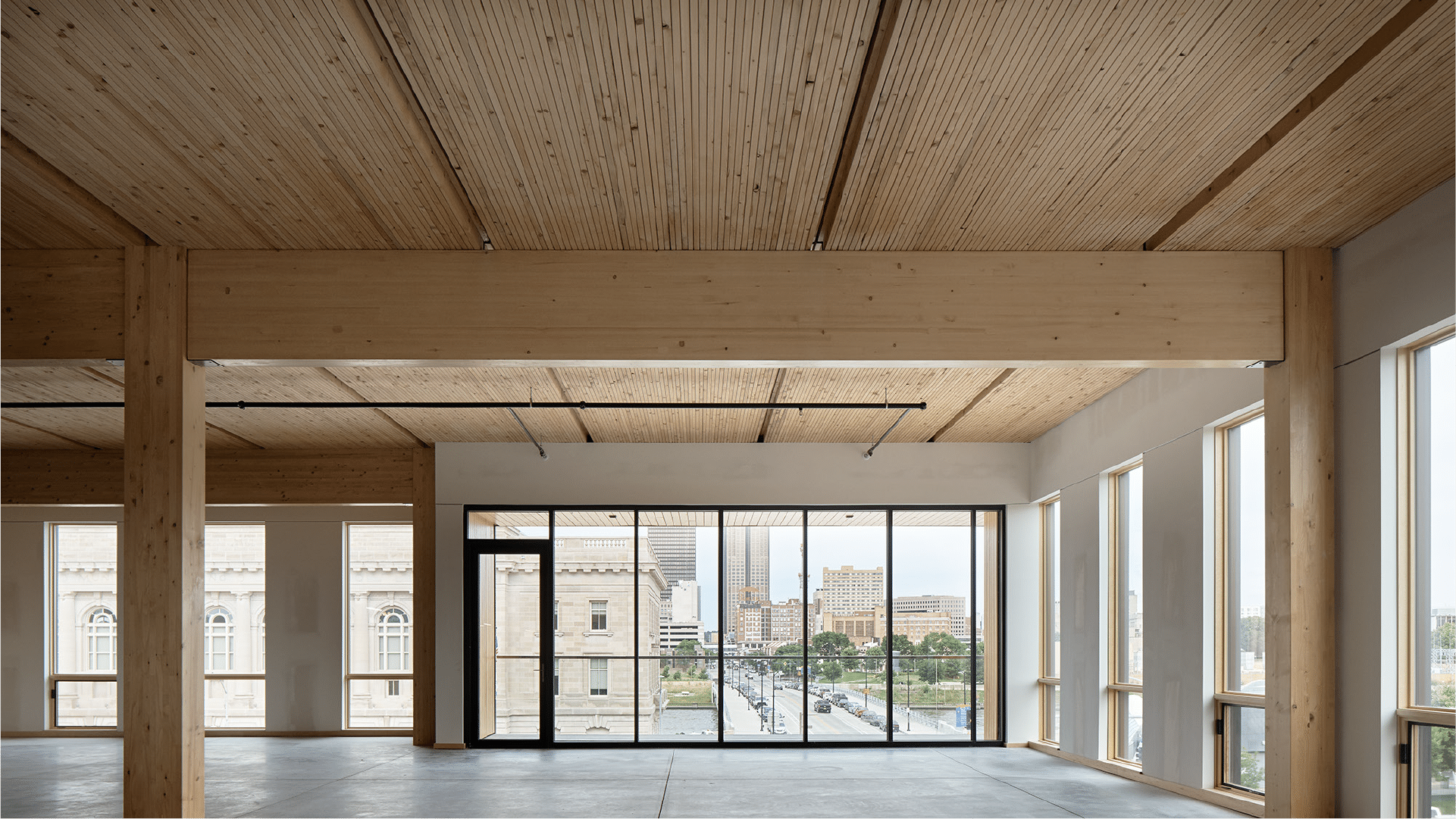
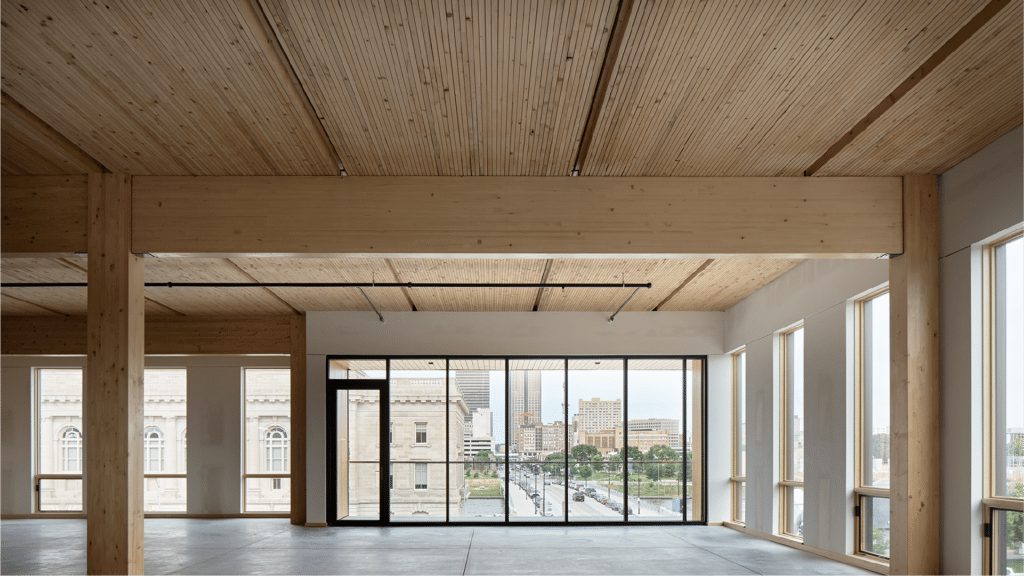
Glulam is commonly used in post and beam, heavy timber and mass timber structures, as well as wood bridges. Glulam is a structural engineered wood product used for headers, beams, girders, purlins, columns, and heavy trusses. Glulam is also manufactured as curved members, which are typically loaded in combined bending and compression. It can also be shaped to create pitched tapered beams and a variety of load bearing arch and trusses configurations. Glulam is often employed where the structural members are left exposed as an architectural feature.

Glulam block

Available sizes of glulam

Standard sizes have been developed for Canadian glued-laminated timber to allow optimum utilization of lumber which are multiples of the dimensions of the lamstock used for glulam manufacture. Suitable for most applications, standard sizes offer the designer economy and fast delivery. Other non-standard dimensions may be specially ordered at additional cost because of the extra trimming required to produce non-standard sizes. The standard widths and depths of glulam are shown in Table 6.7, below. The depth of glulam is a function of the number of laminations multiplied by the lamination thickness. For economy, 38 mm laminations are used wherever possible, and 19 mm laminations are used where greater degrees of curvature are required.

Standard widths of glulam

Standard finished widths of glulam members and common widths of the laminating stock they are made from are given in Table 4 below. Single widths of stock are used for the complete width dimension for members less than 275 mm (10-7/8″) wide. However, members wider than 175 mm (6-7/8″) may consist of two boards laid side by side. All members wider than 275 mm (10-7/8″) are made from two pieces of lumber placed side by side, with edge joints staggered within the depth of the member. Members wider than 365 mm (14-1/4″) are manufactured in 50 mm (2″) width increments, but will be more expensive than standard widths. Manufacturers should be consulted for advice.

Initial width of glulam stock Finished width of glulam stock
mm. in. mm. in.
89 3-1/2 80 3
140 5-1/2 130 5
184 7-1/4 175 6-7/8
235 (or 89 + 140) 9-1/4 (or 3-1/2 + 5-1/2) 225 (or 215) 8-7/8 (or 8-1/2)
286 (or 89 + 184) 11-1/4 (or 3-1/2 + 7-1/4) 275 (or 265) 10-7/8 (or 10-1/4)
140 + 184 5-1/2 + 7-1/4 315 12-1/4
140 + 235 5-1/2 + 9-1/4 365 14-1/4

Notes:

  • Members wider than 365 mm (14-1/4″) are available in 50 mm (2″) increments but require a special order.
  • Members wider than 175 mm (6-7/8″) may consist of two boards laid side by side with logitudinal joints staggered in adjacent laminations.

Standard depths of glulam

Standard depths for glulam members range from 114 mm (4-1/2″) to 2128 mm (7′) or more in increments of 38 mm (1-1/2″) and l9 mm (3/4″). A member made from 38 mm (1-1/2″) laminations costs significantly less than an equivalent member made from l9 mm (3/4″) laminations. However, the l9 mm (3/4″) laminations allow for a greater amount of curvature than do the 38 mm (1-1/2″) laminations.

Width in. Depth range
mm in.
80 3 114 to 570 4-1/2 to 22-1/2
130 5 152 to 950 6 to 37-1/2
175 6-7/8 190 to 1254 7-1/2 to 49-1/2
215 8-1/2 266 to 1596 10-1/2 to 62-3/4
265 10-1/4 342 to 1976 13-1/2 to 77-3/4
315 12-1/4 380 to 2128 15 to 83-3/4
365 14-1/4 380 to 2128 15 to 83-3/4

Note:
1. Intermediate depths are multiples of the lamination thickness, which is 38 mm (1-1/2″ nom.) except for some curved members that require 19 mm (3/4″ nom.) laminations.

Laminating stock may be end jointed into lengths of up to 40 m (130′) but the practical limitation may depend on transportation clearance restrictions. Therefore, shipping restrictions for a given region should be determined before specifying length, width or shipping height.

Glulam appearance grades

In specifying Canadian glulam products, it is necessary to indicate both the stress grade and the appearance grade required. The appearance of glulam is determined by the degree of finish work done after laminating and not by the appearance of the individual lamination pieces.

Glulam is available in the following appearance grades:

  • Industrial
  • Commercial
  • Quality

The appearance grade defines the amount of patching and finishing work done to the exposed surfaces after laminating (Table 6.8) and has no strength implications. Quality grade provides the greatest degree of finishing and is intended for applications where appearance is important. Industrial grade has the least amount of finishing.

Grade Description
Industrial Grade Intended for use where appearance is not a primary concern such as in industrial buildings; laminating stock may contain natural characteristics allowed for specified stress grade; sides planed to specified dimensions but occasional misses and rough spots allowed; may have broken knots, knot holes, torn grain, checks, wane and other irregularities on surface.
Commercial Grade Intended for painted or flat-gloss varnished surfaces; laminating stock may contain natural characteristics allowed for specified stress grade; sides planed to specified dimensions and all squeezed-out glue removed from surface; knot holes, loose knots, voids, wane or pitch pockets are not replaced by wood inserts or filler on exposed surface.
Quality Grade Intended for high-gloss transparent or polished surfaces, displays natural beauty of wood for best aesthetic appeal; laminating stock may contain natural characteristics allowed for specified stress grade; sides planed to specified dimensions and all squeezed-out glue removed from surface; may have tight knots, firm heart stain and medium sap stain on sides; slightly broken or split knots, slivers, torn grain or checks on surface filled; loose knots, knot holes, wane and pitch pockets removed and replaced with non-shrinking filler or with wood inserts matching wood grain and colour; face laminations free of natural characteristics requiring replacement; faces and sides sanded smooth.

Glulam camber

For long straight members, glulam is usually manufactured with a built in camber to ensure positive drainage by negating deflection. This ability to provide positive camber is a major advantage of glulam. Recommended cambers are shown in Table 5 below.

Table 5: Camber Recommendations for Glulam Roof Beams
Type of Structure Recommendation
Simple Glulam Roof Beams Camber equal to deflection due to dead load plus half of live load or 30 mm per 10 m (1″ per 30′) of span; where ponding may occur, additional camber is usually provided for roof drainage.
Simple Glulam Floor Beams Camber equal to dead load plus one quarter live load deflection or no camber.
Bowstring and Pitched Trusses Only the bottom chord is cambered. For a continuous glulam bottom chord; camber in bottom chord equal to 20 mm per 10 m (3/4″ in 30′) of span.
Flat Roof Trusses (Howe and Pratt Roof Trusses) Camber in top and bottom glulam chords equal to 30 mm per 10 m (1″ in 30′) of span.

Glulam manufacture

The dimension lumber pieces that make up glulam are end jointed and arranged in horizontal layers or laminations. The lumber used for the manufacture of glulam is a special grade (lamstock) that is purchased directly from lumber mills. The lamstock is dried to a maximum moisture content of 15 percent and planed to a closer tolerance than that required for visually graded lumber. Laminating multiple pieces together is an effective way of using high strength dimension lumber of limited length to manufacture glulam members in many cross sectional shapes and lengths. The special grade of lumber used for glulam, lamstock, is received and stored at the laminating plant under controlled conditions. The lamstock must be dried to a moisture content of between 7 and 15% before laminating to maximize adhesion and minimize shrinkage in service. The lumber laminations (lamstock) are visually and mechanically sorted for strength and stiffness into lamstock grades. The assessments of strength and stiffness are used to determine where a given piece will be situated in a beam or column. For example, high strength pieces are placed in the outermost laminations of a beam where the bending stresses are the greatest and for columns and tension members, the stronger laminations are more equally distributed. This blending of strength characteristics is known as grade combination and ensures consistent performance of the finished product. The laminations are glued under pressure using a waterproof adhesive. See Figure 3.7, below, for a schematic representation of glulam manufacture. Glulam beams may also be cambered, which means that they may be produced with a slight upward bow so that the amount of deflection under service loads is reduced. A typical camber is 2 to 4 mm per metre of length. Glulam is manufactured to meet the requirements outlined in CSA O122 Structural GluedLaminated Timber.

Quality Control

Glulam is an engineered wood product requiring exacting quality control at all stages of manufacture. Certified manufacturing plants adhere to quality control standards that govern lumber grading, finger joining, gluing and finishing. Canadian manufacturers of glulam are required to be qualified and certified under CSA O177 Qualification Code for Manufacturers of Structural Glued- Laminated Timber. This standard sets mandatory guidelines for equipment, manufacturing, testing and record keeping procedures. As a mandatory manufacturing procedure, tests must be routinely performed on several critical manufacturing steps, and recording of test results must be done. For example, representative samples are tested for adequacy of glue bond and all end joints are stress tested to ensure that each joint exceeds the design requirements. Each member fabricated has a quality assurance record indicating glue bond test results, lumber grading, end joint test and laminating conditions for each member fabricated, including glue spread rate, assembly time, curing conditions and curing time. In addition, mandatory quality audits are performed by independent certification agencies to ensure that in-plant procedures meet the requirements of the manufacturing standard. A certificate of conformance to manufacturing standards for a given glulam order is available upon request.

Glulam species

Glulam is primarily produced in Canada from two species groups; Douglas fir-Larch and SprucePine. Hem-Fir species are also used occasionally.

Canadian Glulam – Commercial Species
Commercial Species Group Designation Species in Combination Wood Characteristics
Douglas Fir-Larch (D.Fir-L) Douglas fir, western larch Woods similar in strength and weight. High degree of hardness and good resistance to decay. Good nail holding, gluing and painting qualities. Colour ranges from reddish-brown to yellowish-white.
Hem-Fir Western hemlock, amabilis fir, Douglas fir Lightwoods that work easily, take paint well and hold nails well. Good gluing characteristics. Colour range is yellow-brown to white.
Spruce-Pine Spruce (all species except coast sitka spruce), lodgepole pine, jack pine Woods of similar characteristics, they work easily, take paint easily and hold nails well. Generally white to pale yellow in colour.

Glulam strength grades

In specifying Canadian glulam products, it is necessary to indicate both the stress grade and the appearance grade required. The specification of the appropriate stress grade depends on whether the intended end use of a member is for a beam, a column, or a tension member as shown in Table 2.

Table 2: Canadian Glulam – Stress Grades
Stress Grade Species Description
Bending Grades 20f-E and 20f-EX D.Fir-L or Spruce Pine Used for members stressed principally in bending (beams) or in combined bending and axial load.
24f-E and 24f-EX D.Fir-L or Hem-Fir Specify EX when members are subject to positive and negative moments or when members are subject to combined bending and axial load such as arches and truss top chords.
Compression Grades 16c-E 12c-E D.Fir-L Spruce Pine Used for members stressed principally in axial compression, such as columns.
Tension Grades 18t-E 14t-E D.Fir-L Spruce Pine Used for members stressed principally in axial tension, such as bottom chords of trusses.

For the bending grades of 20f-E, 20f-EX, 24f-E and 24f-EX, the numbers 20 and 24 indicate allowable bending stress for bending in Imperial units (2000 and 2400 pounds per square inch). Similarly the descriptions for compression grades,16c-E and 12c-E, and tension grades,18t-E and 14t-E indicate the allowable compression and tension stresses. The “E” indicates that most laminations must be tested for stiffness by machine. The lower case letters indicate the use of the grade as follows: “f” is for flexural (bending) members, “c” is for compression members, and “t” is for tension members. Stress grades with EX designation (20f-EX and 24f-EX) are specifically designed for cases where bending members are subjected to stress reversals. In these members the lamination requirements in the tension side are the mirror image of those in the compression side. Unlike visually graded sawn timbers where there is a correlation between appearance and strength, there is no relationship between the stress grades and the appearance grades of glulam since the exposed surface can be altered or repaired without affecting the strength characteristics.

Moisture Control of Glulam

The checking of wood is due to differential shrinkage of the wood fibres in the inner and outer portions of a wood member. Glulam is manufactured from lamstock having a moisture content of 7 to 15 percent. Because this range approximates the moisture conditions for most end uses, checking is minimal in glulam members. Proper transit, storage and construction methods help to avoid rapid changes in the moisture content of laminated members. Severe moisture content changes can result from the sudden application of heat to buildings under construction in cold weather, or from exposure of unprotected members to alternate wet and dry conditions as might occur during transit and storage. Canadian glulam routinely receives a coat of protective sealer before shipping and is wrapped for protection during shipping and erection. The wrapping should be left in place as long as possible and ideally until permanent protection from the weather is in place. During on-site storage, glulam should be stored off the ground with spacer blocks placed between members. If construction delays occur, the wrapping should be cut on the underside to prevent the accumulation of condensation.

Treatment and sealant for glulam

Preservative treatment is not often required but should be specified for any application where ground contact is likely. Advice on suitable preservative treatment should be sought from the manufacturer. Untreated glulam can be used in humid environments such as swimming pools, curling rinks or in industrial buildings which use water in their manufacturing process. Where the ends of glulam members will be subject to wetting, protective overhangs or flashings should be provided. In applications where direct water contact is not a factor, a factory applied sealer will prevent large swings in moisture content. The alkyd sealer applied to glulam members in the factory provides adequate protection for most high-humidity applications. Since wood is corrosion-resistant, glulam is used in many corrosive environments such as salt storage domes and potash warehousing.

Common glulam shapes

For more information on individual glulam manufacturers in Canada, refer to the following links:

Western Archrib
Mercer Mass Timber
Nordic Structures
Goodfellow
Kalesnikoff Mass timber
Element5

Plank Decking

Plank decking may be used to span farther and carry greater loads than panel products such as plywood and oriented strand board (OSB). Plank decking is often used where the appearance of the decking is desired as an architectural feature or where the fire performance must meet the heavy timber construction requirements outlined in Part 3 of the National Building Code of Canada. Plank decking is usually used in mass timber or post and beam structures and is laid with the flat or wide face over supports to provide a structural deck for floors and roofs.

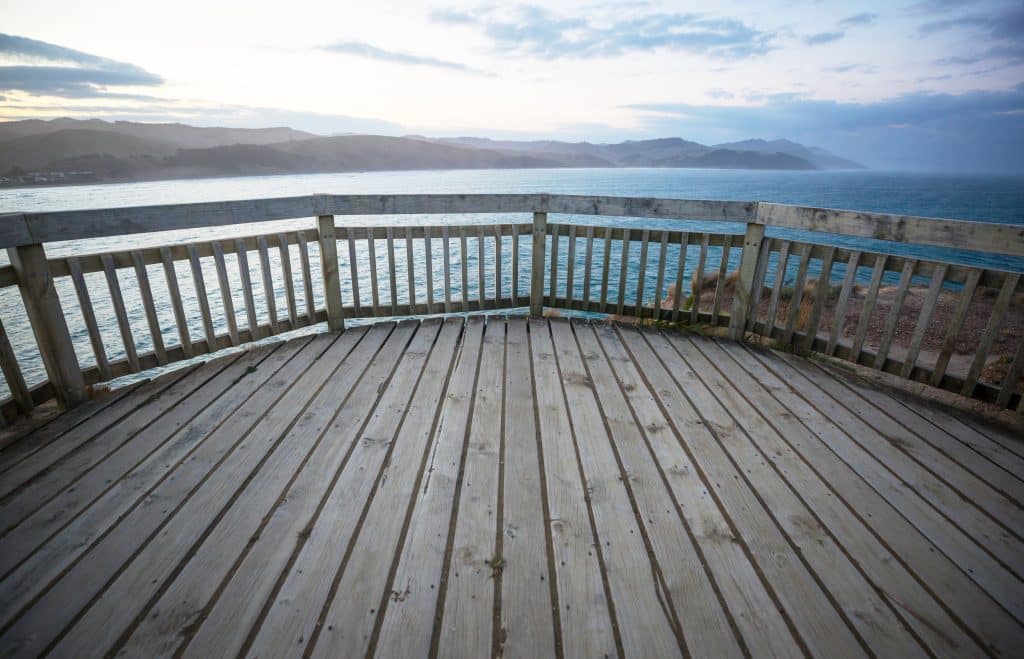
Plank decking can be used in either wet or dry service conditions and can be treated with preservatives, dependent on the wood species. Nails and deck spikes are used to fasten adjacent pieces of plank decking to one another and are also used to fasten the deck to its supports.

Decking is generally available in the following species:

  • Douglas fir (D.Fir-L species combination)
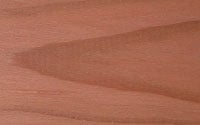
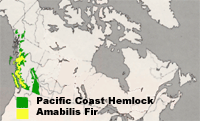
  • Pacific coast hemlock (Hem-Fir species combination)
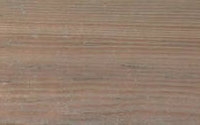
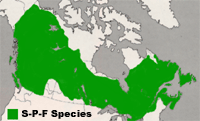
  • Various species of spruce, pine and fir (S-P-F species combination)
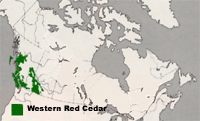
  • Western red cedar (Northern species combination)

In order to product plank decking, sawn lumber is milled into a tongue and groove profile with special surface machining, such as a V-joint. Plank decking is normally produced in three thicknesses: 38 mm (1-1/2 in), 64 mm (2-1/2 in) and 89 mm (3-1/2 in). The 38 mm (1-1/2 in) decking has a single tongue and groove while the thicker sizes have a double tongue and groove. Thicknesses greater than 38 mm (1-1/2 in) also have 6 mm (1/4 in) diameter holes at 760 mm (2.5 ft) spacing so that each piece may be nailed to the adjacent one with deck spikes. The standard sizes and profiles are shown below.

Plank decking is most readily available in random lengths of 1.8 to 6.1 m (6 to 20 ft). Decking can be ordered in specific lengths, but limited availability and extra costs should be expected. A typical specification for random lengths could require that at least 90 percent of the plank decking be 3.0 m (10 ft) and longer, and at least 40 percent be 4.9 m (16 ft) and longer.

Plank decking is available in two grades:

  • Select grade (Sel)
  • Commercial grade (Com)

Select grade has a higher quality appearance and is also stronger and stiffer than commercial grade.

Plank decking is required to be manufactured in accordance with CSA O141 and graded under the NLGA Standard Grading Rules for Canadian Lumber. Since plank decking is not grade stamped like dimensional lumber, verification of the grade should be obtained in writing from the supplier or a qualified grading agency should be retained to check the supplied material.

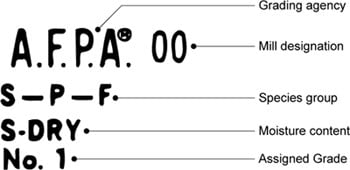
To minimize shrinkage and warping, plank decking consists of sawn lumber members that are dried to a moisture content of 19 percent or less at the time of surfacing (S-Dry). The use of green decking can result in the loosening of the tongue and groove joint over time and a reduction in structural and serviceability performance.

Individual planks can span simply between supports, but are generally random lengths spanning several supports for economy and to take advantage of increased stiffness. There are three methods of installing plank decking: controlled random, simple span and two span continuous. A general design rule for controlled random plank decking is that spans should not be more than 600 mm (2 ft) longer than the length which 40 percent of the decking shipment exceeds. Both the latter methods of installation require planks of predetermined length and a consequently there could be an associated cost premium.


Plank Decking


Profiles and Sizes of Plank Decking

Plank Decking

Tall Wood Buildings

With advanced construction technologies and modern mass timber products such as glued-laminated timber, cross-laminated timber and structural composite lumber, building tall with wood is not only achievable but already underway – with completed contemporary buildings in Australia, Austria, Switzerland, Germany, Norway and the United Kingdom at 9 storeys and taller. Increasingly recognized by the construction sector as an important, new, and safe construction choice, the reduced carbon footprint and embodied / operational energy performance of these buildings is appealing to communities that are committed to sustainable development and climate change mitigation.

Tall wood buildings, built with renewable wood products from sustainably managed forests, have the potential to revolutionize a construction industry increasingly focused on being part of the solution when it comes to urban intensification and environmental impact reduction. The Canadian wood product industry is committed to building on its natural advantage, through the development and demonstration of continuously improving wood-based building products and building systems.

A tall wood building is a building over six-storeys in height (top floor is higher than 18 m above grade) that utilizes mass timber elements as a functional component of its structural support system. With advanced construction technologies and modern mass timber products such as glued-laminated timber (glulam), cross-laminated timber (CLT) and structural composite lumber (SCL), building tall with wood is not only achievable but already underway – with completed contemporary buildings in Canada, US, Australia, Austria, Switzerland, Germany, Norway, Sweden, Italy and the United Kingdom at seven-storeys and taller.

Tall wood buildings incorporate modern fire suppression and protection systems, along with new technologies for acoustic and thermal performance. Tall wood buildings are commonly employed for residential, commercial and institutional occupancies.

Mass timber offers advantages such as improved dimensional stability and better fire performance during construction and occupancy. These new products are also prefabricated and offer tremendous opportunities to improve the speed of erection and quality of construction.

Some significant advantages of tall wood buildings include:

  • the ability to build higher in areas of poor soils, as the super structure and foundations are lighter compared to other building materials;
  • quieter to build on site, which means neighbours are less likely to complain and workers are not exposed to high levels of noise;
  • worker safety during construction can be improved with the ability to work off large mass timber floor plates;
  • prefabricated components manufactured to tight tolerances can reduce the duration of construction;
  • tight tolerances in the building structure and building envelope coupled with energy modelling can produce buildings with high operational energy performance, increased air tightness, better indoor air quality and improved human comfort

Design criteria for tall wood buildings that should be considered include: an integrated design, approvals and construction strategy, differential shrinkage between dissimilar materials, acoustic performance, behaviour under wind and seismic loads, fire performance (e.g., encapsulating the mass timber elements using gypsum), durability, and construction sequencing to reduce the exposure of wood to the elements.

It is important to ensure early involvement by a mass timber supplier that can provide design assistance services that can further reduce manufacturing costs through the optimization of the entire building system and not just individual elements. Even small contributions, in connection designs for example, can make a difference to the speed of erection and overall cost. In addition, mechanical and electrical trades should be invited in a design-assist role at the outset of the project. This allows for a more complete virtual model, additional prefabrication opportunities and quicker installation.

Recent case studies of modern tall wood buildings in Canada and around the world showcase the fact that wood is a viable solution for attaining a safe, cost-effective and high-performance tall building.

For more information, refer to the following case studies and references:

Brock Commons Tall Wood House (Canadian Wood Council)

Origine Point-aux-Lievres Ecocondos,Quebec City (Cecobois)

Wood Innovation and Design Centre (Canadian Wood Council)

Technical Guide for the Design and Construction of Tall Wood Buildings in Canada (FPInnovations)

Ontario’s Tall Wood Building Reference (Ministry of Natural Resources and Forestry & Ministry of Municipal Affairs)

Summary Report: Survey of International Tall Wood Buildings (Forestry Innovation Investment & Binational Softwood Lumber Council)

www.thinkwood.com/building-better/taller-buildings

Mid-Rise Buildings

When it comes to wood construction, many people think of basic 2×4 framing, panels or flooring for single-family homes. However, advances in wood science and building technology have resulted in stronger, more sophisticated and robust products that are expanding the options for wood construction, and providing more choices for builders and architects.

The Canadian Wood Council’s support for mid-rise construction is not unique In Ontario, Home Builders, through organizations such as RESCON, BILD and the Ontario Home Builders Association are also highlighting this opportunity.

  • Mid-rise buildings made of wood are a new construction option for builders. That’s good news for main-street Canada, where land is so expensive. The net benefit of reduced construction costs is increased affordability for home buyers.
  • In terms of new economic opportunity, the ability to move forward “now” creates new construction jobs in cities and supports employment in forestry communities. This also offers increased export opportunities for current and innovative wood products, where adoption in Canada provides the example for other countries.
  • This also reflects a new standard of engineering in that structural, fire and seismic concerns have all been addressed by the expert committees of the Canadian Commission on Building and Fire Codes.

In the end, when occupied, mid-rise buildings fully meet the same requirements of the Building Code as any other type of construction from the perspective of health, safety and accessibility.


Bridges

Timber bridges have a long history as vital components of the roadway, railway and logging road networks within Canada. Dependent on the availability of materials, technology, and labour, the design and construction of wood bridges has evolved significantly over the last 200 hundred years throughout North America. Wood bridges take on many forms and use alternative support systems; including simple span log bridges, different types of trussed bridges, and stress-laminated or composite bridge decks and components. Timber bridges remain an important part of our transportation network in Canada.

  • reduced initial cost, particularly for remote areas;
  • speed of construction, through the use of prefabrication;
  • sustainability advantages;
  • aesthetics;
  • lighter foundations;
  • lower earthquake loads, coupled with less complex connections to substructures;
  • smaller temporary structures and cranes; and
  • lower transportation costs associated with lower weight materials.

The benefits of building modern timber bridges include:

The different types of materials used to construct wood bridges include: sawn lumber, round logs, straight and curved glued-laminated timber (glulam), laminated veneer lumber (LVL), parallel strand lumber (PSL), cross-laminated timber (CLT), nail-laminated timber (NLT), and composite systems such as stress-laminated decks, wood-concrete laminated decks, and fibre-reinforced polymers.

Two main wood species used for wood bridge construction in Canada are Douglas fir and the Spruce-Pine-Fir species combination. Other species within the Hem-Fir and Northern species combinations are also recognized under CSA O86, however, they are less commonly used in bridge construction.

All metal fasteners used for bridges must be protected against corrosion. The most common method for providing protection is hot dip galvanizing, a process whereby a sacrificial metal is added to exterior of the fastener. Different fastener types that are used in wood bridge construction include, but are not limited to, bolts, lag screws, split rings, shear plates, and nails (for deck laminations only).

All highway bridges in Canada must be designed to meet the requirements outlined in CSA S6 and CSA O86. The CSA S6 standard requires that the main structural components of any bridge in Canada, regardless of construction type, be able to withstand a minimum of 75 years of loading during its service life.

The style and span of bridges varies greatly depending on the application. In hard to reach locations with deep valleys, timber trestle bridges were common at the end of the 19th century and into the beginning of the 20th century. Historically, trestle bridges relied heavily on ample timber resources and in some cases, were considered to be temporary. Initial construction of North America’s transcontinental railways would not have been possible without the use of timbers to construct bridges and trestles.

Many examples of trussed timber bridges for have been built for well over a century. Trussed bridges allow for longer spans compared to simple girder bridges and historically had spans in the range of 30 to 60 m (100 to 200 ft). Bridges that are designed with trusses located above the deck provide a great opportunity to build a roof over the roadway. Installing a roof overhead is an excellent way to shed water away from the main bridge structure and protect it from the sun. The presence of these covered roofs is the main reason these century-old covered bridges remain in service today. The fact that they remain part of our landscape is as much a testament to their hardiness as to their attractiveness.

Although originally devised as a rehabilitation measure for aging bridge decks, the stress-laminating technique has been extended to new bridges through the application of stressing at the time of original construction. Stress-laminated decks provide improved structural behaviour, through their excellent resistance to the effects of repeated loading.

Three main considerations related to durability of wood bridges include protection by design, preservative treatment of wood, and replaceable elements. A bridge can be designed such that it is inherently self-protecting by deflecting water away from the structural elements. Preservative treated wood has the ability to resist the effects of de-icing chemicals and attack by biotic agents. Lastly, the bridge should be designed such that, at some point in its future, a single element can be replaced relatively easily, without significant disruption or cost.

For further information, refer to the following resources:

Wood Highway Bridges (Canadian Wood Council)
Ontario Wood Bridge Reference Guide (Canadian Wood Council)
CSA S6 Canadian Highway Bridge Design Code
CSA O86 Engineering design in wood

Tall Wood Buildings – Research

Tests

Current research includes the World’s largest mass timber fire test – click here for updates on the test results currently being conducted https://firetests.cwc.ca/

Studies

Reports

Fire Research

Acoustics Research and Guides

Tall Wood Building Demonstration Initiative Test Reports
(funding provided by Natural Resources Canada)

Visit Think Wood’s Research Library for additional resources

Mid-Rise Buildings – Research

Studies

General

Structural & Seismic

Vertical Movement in Wood Platform Frame Structures (CWC Fact Sheets)

Design of multi-storey wood-based shearwalls: Linear dynamic analysis & mechanics based approach

Testing

Other Reports

Visit Think Wood’s Research Library for additional resources

banner for research.thinkwood.com

Green

Wood is the only major building material that grows naturally and is renewable. With growing pressure to reduce the carbon footprint of the built environment, building designers are increasingly being called upon to balance function and cost objectives of a building with reduced environmental impact. Wood can help to achieve that balance. Numerous life cycle assessment studies worldwide have shown that wood products yield clear environmental advantages over other building materials at every stage. Wood buildings can offer lower greenhouse gas emissions, less air pollution, lower volumes of solid waste and less ecological resource use.

Energy Efficiency

Of all the energy used in North America, it is estimated that 30 to 40 percent is consumed by buildings. In Canada, the majority of operational energy in residential buildings is provided by natural gas, fuel oil, or electricity, and is consumed for space heating. Given the fact that buildings are a significant source of energy consumption and greenhouse gas emissions in Canada, energy efficiency in the buildings sector is essential to address climate change mitigation targets.

As outlined in the Pan-Canadian Framework on Clean Growth and Climate Change, the federal, provincial and territorial governments are committed to investment in initiatives to support energy efficient homes and buildings as well as energy benchmarking and labelling programs.

Despite the expanding number of choices for consumers, the most cost-effective way to increase building energy performance has remained unchanged over the decades:

• maximize the thermal performance of the building envelope by adding more insulation and reducing thermal bridging; and

• increase the airtightness of the building envelope.

The building envelope is commonly defined as the collection of components that separate conditioned space from unconditioned space (exterior air or ground). The thermal performance and airtightness of the building envelope (also known as the building enclosure) effects the whole-building energy efficiency and significantly affects the amount of heat losses and gains. Building and energy codes and standards within Canada have undergone or are currently undergoing revisions, and the minimum thermal performance requirements for wood-frame building enclosure assemblies are now more stringent. The most energy efficient buildings are made with materials that resist heat flow and are constructed with accuracy to make the best use of insulation and air barriers.

To maximize energy efficiency, exterior wall and roof assemblies must be designed using framing materials that resist heat flow, and must include continuous air barriers, insulation materials, and weather barriers to prevent air leakage through the building envelope.

The resistance to heat flow of building envelope assemblies depends on the characteristics of the materials used. Insulated assemblies are not usually homogeneous throughout the building envelope. In light-frame walls or roofs, the framing members occur at regular intervals, and, at these locations, there is a different rate of heat transfer than in the spaces between the framing members. The framing members reduce the thermal resistance of the overall wall or ceiling assembly. The rate of heat transfer at the location of framing elements depends on the thermal or insulating properties of the structural framing material. The higher rate of heat transfer at the location of framing members is called thermal bridging. The framing members of a wall or roof can account for 20 percent or more of the surface area of an exterior wall or roof and since the thermal performance of the overall assembly depends on the combined effect of the framing and insulation, the thermal properties of the framing materials can have a significant effect on the overall (effective) thermal resistance of the assembly.

Wood is a natural thermal insulator due to the millions of tiny air pockets within its cellular structure. Since thermal conductivity increases with relative density, wood is a better insulator than dense construction materials. With respect to thermal performance, wood-frame building enclosures are inherently more efficient than other common construction materials, largely because of reduced thermal bridging through the wood structural elements, including the wood studs, columns, beams, and floors. Wood loses less heat through conduction than other building materials and wood-frame construction techniques support a wide range of insulation options, including stud cavity insulation and exterior rigid insulation.

Research and monitoring of buildings is increasingly demonstrating the importance of reducing thermal bridging in new construction and reducing thermal bridges in existing buildings. The impact of thermal bridges can be a significant contributor to whole building energy use, the risk of condensation on cold surfaces, and occupant comfort.

Focusing on the building envelope and ventilation at the time of construction makes sense, as it is difficult to make changes to these systems in the future. High performance buildings typically cost more to build than conventional construction, but the higher purchase price is offset, at least in part, by lower energy consumption costs over the life cycle. What’s more, high performance buildings are often of higher quality and more comfortable to live and work in. Making buildings more energy efficient has also been shown to be one of the lowest cost opportunities to contribute to energy reduction and climate change mitigation goals.

Several certification and labeling programs are available to builders and consumers address reductions in energy consumption within buildings.

Natural Resources Canada (NRCan) administers the R-2000 program, which aims to reduce home energy requirements by 50 percent compared to a code-built home. Another program administered by NRCan, ENERGY STAR®, aims to be 20 to 25 percent more energy efficient than code. The EnerGuide Rating System estimates the energy performance of a house and can be used for both existing homes and in the planning phase for new construction.

Other certification programs and labelling systems have fixed performance targets. Passive House is a rigorous standard for energy efficiency in buildings to reduce the energy use and enhance overall performance. The space heating load must be less than 15 kWh/m2 and the airtightness must be less than 0.6 air changes per hour at 50 Pa, resulting in ultra-low energy buildings that require up to 90 percent less heating and cooling energy than conventional buildings.

The NetZero Energy Building Certification, a program operated by the International Living Future Institute, is a performance-based program and requires that the building have net-zero energy consumption for twelve consecutive months.

Green Globes and Leadership in Energy and Environmental Design (LEED) are additional building rating systems that are prevalent in the building design and construction marketplace.


For further information, refer to the following resources:

Thermal Performance of Light-Frame Assemblies – IBS No.5 (Canadian Wood Council)

National Energy Code of Canada for Buildings

Natural Resources Canada

BC Housing

Passive House Canada

Green Globes

Canadian Green Building Council

North American Insulation Manufacturers Association (NAIMA)

International Living Future Institute

Climate Change

Concerns about climate change are encouraging decarbonization of the building sector, including the use of construction materials responsible for fewer greenhouse gas (GHG) emissions and improvements in operational performance over the life cycle of buildings. Accounting for over 10 percent of total GHG emissions in Canada, the building sector plays an important role in climate change mitigation and adaptation. Decreasing the climate change impacts of buildings offers high environmental returns for relatively low economic investment.

The Government of Canada, as a signatory to the Paris Agreement, has committed to reducing Canada’s GHG emissions by 30 percent below 2005 levels by 2030. In addition, the Pan-Canadian Framework on Clean Growth and Climate Change acknowledges that forest and wood products have the ability to contribute to the national emissions reductions strategy through:

  • enhancing carbon storage in forests;
  • increasing the use of wood for construction;
  • generating fuel from bioenergy and bioproducts; and
  • advancing innovation in bio-based product development and forest management practices.

The importance of the forestry and wood products sector as a critical component toward mitigating the effects of climate change is also echoed by the Intergovernmental Panel on Climate Change (IPCC); stating that a sustainable forest management strategy aimed at maintaining or increasing forest carbon stocks while producing timber, fibre, or energy, generates the largest sustained benefit to mitigate climate change. In addition, the IPCC proclaims that “mitigating options by the forest sector include extending carbon retention in HWP [harvested wood products], product substitution, and producing biomass for bioenergy.”

The Canadian forest industry is pledging to remove 30 megatons of carbon dioxide (CO2) a year by 2030, equivalent to 13 percent of Canada’s national commitments under the Paris Agreement. Several mechanisms will be employed to meet this challenge, including:

  • product displacement, using bio-based products in place of fossil fuel-derived products and energy sources;
  • forest management practices, including increased utilization, improved residue use and land use planning, and better growth and yields;
  • accounting for long-lived bio-based product carbon pools; and
  • higher efficiencies in wood product manufacturing processes

Canada is home to 9 percent of the world’s forests, which have the ability to act as enormous carbon sinks by absorbing and storing carbon. Annually, Canada harvests less than one-half of one percent of its forest land, allowing for the forest cover in Canada to remain constant for last century. Sustainable forest management and legal requirements for reforestation continue to maintain this vast carbon reservoir. A forest is a natural system that is considered carbon neutral as long as it is managed sustainably, which means it must be reforested after harvest and not converted to other land uses. Canada has some of the strictest forest management regulations in the world, requiring successful regeneration after public forests are harvested. When managed with stewardship, forests are a renewable resource that will be available for future generations.

Canada is also a world leader in voluntary third-party forest certification, adding further assurance of sustainable forest management. Sustainable forest management programs and certification schemes strive to preserve the quantity and quality of forests for future generations, respect the biological diversity of the forests and the ecology of the species living within it, and respect the communities affected by the forests. Canadian companies have achieved third-party certification on over 150 million hectares (370 million acres) of forests, the largest area of certified forests in the world.

The forest represents one carbon pool, storing biogenic carbon in soils and trees. The carbon remains stored until the trees die and decay or burn. When a tree is cut, 40 to 60 percent of the biogenic carbon remains in the forest; the rest is removed as logs and much of it is transferred to the wood products carbon pool within the built environment. Wood products continue to store this biogenic carbon, often for decades in the case of wood buildings, delaying or preventing the release of CO2 emissions.

Wood products and building systems have ability to store large amounts of carbon; 1 m3 of S-P-F lumber stores approximately 1 tonne of CO2 equivalent. The amount of carbon stored within a wood product is directly proportional the density of the wood. The average single-family home in Canada stores almost 30 tonnes of CO2 equivalent within the wood products used for its construction. Most bio-based construction products actually store more carbon in the wood fibre than is released during the harvesting, manufacturing and transportation stages of their life cycle.

In general, bio-based products like wood that are naturally grown with help from the sun have lower embodied emissions. The embodied emissions arise through the production processes of building materials, starting with resource extraction or harvesting through manufacturing, transportation, construction, and end-of-life. Bioenergy produced from bio-based residuals, such as tree bark and sawdust, is primarily used to generate energy for the manufacture of wood products in North America. Wood construction products have low embodied GHG emissions because they are grown using renewable solar energy, use little fossil fuel energy during manufacturing, and have many end-of-life options (reuse, recycle, energy recovery).

Wood products have the ability to substitute for other more carbon-intensive building materials and energy sources. GHG emissions are thereby avoided by using wood products instead of other more GHG-intensive building products. Displacement factors (kg CO2 avoided per kg wood used) have been estimated to calculate the amount of carbon avoided through the use of wood products in building construction.


For further information, refer to the following resources:

Addressing Climate Change in the Building Sector – Carbon Emissions Reductions (Canadian Wood Council)

Resilient and Adaptive Design Using Wood (Canadian Wood Council)

CWC Carbon Calculator

Canada’s Forest Products Industry “30 by 30” Climate Change Challenge (Forest Products Association of Canada)

www.naturallywood.com

www.thinkwood.com

Building with wood = Proactive climate protection (Binational Softwood Lumber Council and State University of New York)

Natural Resources Canada

Pan-Canadian Framework on Clean Growth and Climate Change (Government of Canada)

Intergovernmental Panel on Climate Change

Life Cycle Assessment

Construction products and the building sector as a whole have significant impacts on the environment. Policy instruments and market forces are increasingly pushing governments and businesses to document and report environmental impacts and track improvements. One tool that is available to help understand the environmental aspects related to new construction, renovation, and retrofits of buildings and civil engineering works is life cycle assessment (LCA). LCA is a decision-making tool that can help to identify design and construction approaches that yield improved environmental performance.

Several European jurisdictions, including Germany, Zurich and Brussels, have made LCA a mandatory requirement prior to issuing a building permit. In addition, the application of LCA to building design and materials selection is a component of green building rating systems. LCA can benefit manufacturers, architects, builders, and government agencies by providing quantitative information about potential environmental impacts and providing data to identify areas for improvement.

LCA is a performance-based approach to assessing the environmental aspects related to building design and construction. LCA can be used to understand the potential environmental impacts of a product or structure at every stage of its life; from resource extraction or raw material acquisition, transportation, processing and manufacturing, construction, operation, maintenance and renovation to the end-of-life.

LCA is an internationally accepted, science-based methodology which has existed in alternative forms since the 1960s. The requirements and guidance for conducting LCA has been established through international consensus standards; ISO 14040 and ISO 14044. LCA considers all input and output flows (materials, energy, resources) associated with a given product system and is an iterative procedure that includes goal and scope definition, inventory analysis, impact assessment, and interpretation.

The inventory analysis, also known as the life cycle inventory (LCI), consists of data collection and the tracking of all input and output flows within a product system. Publicly available LCI databases, such as the U.S. Life Cycle Inventory Database, are accessible free of charge in order to source this LCI data. During the impact assessment phase of the LCA, the LCI flows are translated into potential environmental impact categories using theoretical and empirical environmental modelling techniques. LCA is able to quantify potential environmental impacts and aspects of a product, such as:

  • Global warming potential;
  • Acidification potential;
  • Eutrophication potential;
  • Ozone depletion potential;
  • Smog potential;
  • Primary energy consumption;
  • Material resources consumption; and
  • Hazardous and non-hazardous waste generation.

LCA tools are available to building designers that are publicly accessible and user friendly. These tools allow designers to rapidly obtain potential environmental impact information for an extensive range of generic building assemblies or develop full building life cycle assessments on their own. LCA software offers building professionals powerful tools for calculating the potential life cycle impacts of building products or assemblies and performing environmental comparisons.

It is also possible to use LCA to perform objective comparisons between alternate materials, assemblies and whole buildings, measured over the respective life cycles and based on quantifiable environmental indicators. LCA enables comparison of the environmental trade-offs associated with choosing one material or design solution over another and, as a result, provides an effective basis for comparing relative environmental implications of alternative building design scenarios.

An LCA that examines alternative design options must ensure functional equivalence. Each design scenario considered, including the whole building, must meet building code requirements and offer a minimum level of technical performance or functional equivalence. For something as complex as a building, this means tracking and tallying the environmental inputs and outputs for the multitude of assemblies, subassemblies and components in each design option. The longevity of a building system also impacts the environmental performance. Wood buildings can remain in service for long periods of time if they are designed, built and maintained properly.

Numerous LCA studies worldwide have demonstrated that wood building products and systems can yield environmental advantages over other building materials and methods of construction. FPInnovations conducted a LCA of a four-storey building in Quebec constructed using cross-laminated timber (CLT). The study assessed how the CLT design would compare with a functionally equivalent concrete and steel building of the same floor area, and found improved environmental performance in two of six impact categories, and equivalent performance in the rest. In addition, at the end-of-life, bio-based products have the ability to become part of a subsequent product system when reused, recycled or recovered for energy; potentially reducing environmental impacts and contributing to the circular economy.

Life cycle of wood construction products

Life Cycle Assessment
Photo source: CEI-Bois

For further information, refer to the following resources:

www.naturallywood.com

Athena Sustainable Materials Institute

Building for Environmental and Economic Sustainability (BEES)

FPInnovations. A Comparative Life Cycle Assessment of Two Multistory Residential Buildings: Cross-Laminated Timber vs. Concrete Slab and Column with Light Gauge Steel Walls, 2013.

American Wood Council

U.S. Life Cycle Inventory Database

ISO 14040 Environmental management – Life cycle assessment – Principles and framework

ISO 14044 Environmental management – Life cycle assessment – Requirements and guidelines

Codes & Standards

BUILDING CODES & STANDARDS (THE REGULATORY SYSTEM)

The construction industry is regulated through building codes which are informed by:

  • Design standards that provide information on “how to” build with wood,
  • Product standards that define the characteristics of the wood products that can be used in design standards, and
  • Test standards that set out the methodology for establishing a wood product’s characteristics

CWC is active in a technical capacity in all areas of the Regulatory System. This includes:

BUILDING CODES – CWC participates extensively in the development process of the Building Codes in Canada. CWC is a member of both National and Provincial Building Code Committees. These Committees are balanced and representation is limited to about 25 members on each Committee. Competing interests (i.e. steel and concrete) sit on the same Committees. This is an arena where CWC can win or lose ground for members’ products.

DESIGN STANDARDS – Each producer of structural materials develops engineering design standards that provide information on how to use their products in buildings. CWC holds the Secretariat for Canada’s wood design standard (CSA O86 “Engineering Design in Wood”), providing both technical expertise and administrative support for its development. CWC is also a member of the American Wood Council (AWC) committee that is responsible for the U.S. National Design Specification for wood design.

PRODUCT STANDARDS – CWC is involved in the development of Canadian, U.S. and international standards for its wood building product producers.

TEST STANDARDS – CWC is involved in developing Canadian, U.S. and international test standards in areas that affect wood products, such as fire performance.

Detailed building codes & standards pages:

Plank Decking
Tall Wood Buildings
Mid-Rise Buildings
Bridges
Tall Wood Buildings – Research
Mid-Rise Buildings – Research
Green
Energy Efficiency
Climate Change
Life Cycle Assessment
Codes & Standards
Glulam (glued-laminated timber) is an engineered structural wood product that consists of multiple individual layers of dimension lumber that are glued together under...
Plank decking may be used to span farther and carry greater loads than panel products such as plywood and oriented strand board (OSB). Plank decking is often used where the...
With advanced construction technologies and modern mass timber products such as glued-laminated timber, cross-laminated timber and structural composite lumber, building tall...
When it comes to wood construction, many people think of basic 2×4 framing, panels or flooring for single-family homes. However, advances in wood science and building...
Timber bridges have a long history as vital components of the roadway, railway and logging road networks within Canada. Dependent on the availability of materials...
Tests Current research includes the World’s largest mass timber fire test – click here for updates on the test results currently being conducted https://firetests.cwc.ca/...
Studies General “The Historical Development of the Building Size Limits in the National Building Code of Canada“, by Sereca for CWC (2015)  (17 Mb) Structural &...
Wood is the only major building material that grows naturally and is renewable. With growing pressure to reduce the carbon footprint of the built environment, building...
Of all the energy used in North America, it is estimated that 30 to 40 percent is consumed by buildings. In Canada, the majority of operational energy in residential...
Concerns about climate change are encouraging decarbonization of the building sector, including the use of construction materials responsible for fewer greenhouse gas (GHG)...
Construction products and the building sector as a whole have significant impacts on the environment. Policy instruments and market forces are increasingly pushing...
BUILDING CODES & STANDARDS (THE REGULATORY SYSTEM) The construction industry is regulated through building codes which are informed by: Design standards that provide...

Get Access to Our Resources

Stay in the loop and don’t miss a thing!

1
2
3

Get Access to Our Resources

Stay in the loop and don’t miss a thing!

What’s Your Occupation?

Help us personalize the content for you.

What Interests You the Most?

Help us personalize the content for you.

Filters

Expertise Icon
Field of Expertise
Province Icon
Province
Member Type Icon
WoodWork National Partners

Filters

Post Type Icon
Post Type
Persona Icon
Persona
Language Icon
Language
Tags Icon
Tags
Mass Timber Plus Icon Environment Plus Icon Safety Plus Icon Durability Plus Icon Design Systems Plus Icon Budget Plus Icon Construction Management Plus Icon Fire Resistance Plus Icon Tall Buildings Plus Icon Short Buildings Plus Icon
Date Icon
Date
Line Separator